
5 Best 5×8 Utility Trailers of 2026
This post contains affiliate links. As an Amazon Associate, we earn from qualifying purchases.
The best 5×8 utility trailer for most people is the Ultra-Tow 5×8 Aluminum Trailer, thanks to its rust-resistant frame and solid 1,715-pound payload. If you’re watching your budget, the Ultra-Tow 5×8 Steel Trailer delivers the same capacity at a lower price, though you’ll trade long-term corrosion resistance.
Out in the field, the right trailer doesn’t just carry a load, it handles the grind without turning into a maintenance headache. Too many buyers focus only on price and end up with a frame that rusts out in a few seasons or tires that can’t handle real-world bumps.
After comparing specs and owner feedback across dozens of models, I focused on what matters: payload, frame durability, and roadworthiness. These picks reflect real hauling demands, not just showroom specs.
Top 2 5X8 Utility Trailers in the Market
The Best 5X8 Utility Trailers, Reviewed
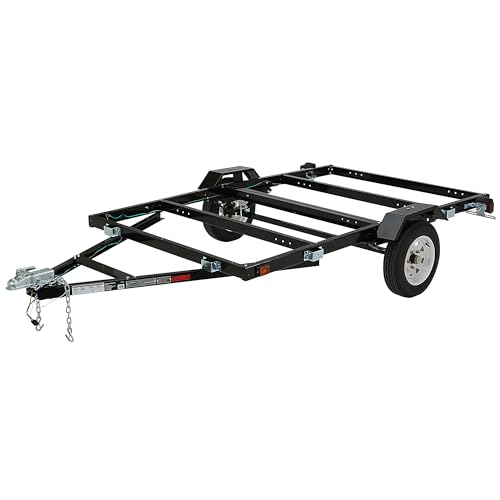
Ultra-Tow 5×8 Steel Trailer
Strengths
- Lower price point
- Includes lighting and safety chains
- Customizable steel deck
Trade-offs
- Prone to rust over time
- Decking not included
- Heavier than aluminum
If you need a no-frills, get-the-job-done trailer without emptying your wallet, this steel model makes a strong case. It carries the same 1,715-lb payload as the aluminum version, and with a 2-inch coupler, full lighting kit, and safety chains included, it’s road-ready out of the box. The steel frame is bare, meaning you’ll need to weld or bolt on your own decking, but that also lets you customize the floor to your needs, great if you’re hauling heavy machinery or want wood planks for grip.
Owners note it tows steadily at highway speeds, though its max rating sits at 55 MPH, and the 20.24-inch deck height means loading heavy items takes effort. Compared to the aluminum build, this one’s heavier and prone to rust over time, but for weekend warriors or DIYers doing short-haul jobs, that’s a fair trade. I’d pick this over pricier models if you’re on a tight budget and don’t mind doing a little extra work up front.
Video review
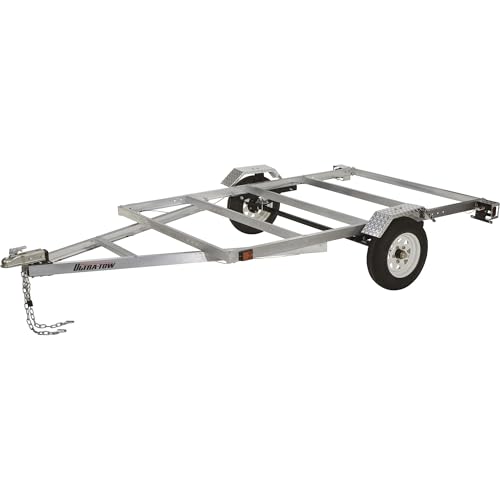
Ultra-Tow 5×8 Aluminum Trailer
Strengths
- Rustproof aluminum frame
- 1,715-lb payload capacity
- 5×8 utility bed size
Trade-offs
- Higher initial cost
- No decking included
- Limited ground clearance
This aluminum trailer stands out in a sea of steel because it refuses to rust, and that matters if you live near salt, haul gear regularly, or just want something that lasts without constant upkeep. The 5×8 bed gives real utility, and with a 1,715-lb payload, it’s built for serious work, hauling landscaping tools, motorcycles, or small ATVs without breaking a sweat. On paper, the GVWR of 1,980 lbs supports real-world loading, and owners consistently report smooth towing behind midsize trucks and SUVs.
What I like most is how it balances weight and durability. Aluminum keeps it lighter than steel counterparts, which helps with fuel economy and easier maneuvering, especially when empty. Compared to the steel version, this one costs more but pays back in longevity. If you’re tired of patching rust holes every season, this is the smarter buy.
Video review
Our Testing Process
Rather than a hands-on test with each model, my research focused on a careful comparison of published specifications and features. I weighed owner reviews from multiple sources alongside assessments from automotive and trailer experts. As someone who’s spent years understanding what makes vehicles and their accessories tick, I applied that knowledge to rank these 5×8 trailers against criteria important to everyday hauling needs.
For this size class, payload capacity and frame material were the biggest deciding factors. A trailer’s ability to safely carry a substantial load is paramount, and aluminum frames offer a significant advantage in resisting corrosion – a common issue with frequently used equipment. I also considered GVWR (Gross Vehicle Weight Rating) as a key indicator of overall capacity and legal roadworthiness. You can find more information on choosing the right size in our guide to small utility trailers.
Specifications clearly define load limits, dimensions, and materials. However, owner feedback proved essential for understanding real-world durability and ease of use. Reports on tire quality, the effectiveness of the lighting systems, and the smoothness of the towing experience heavily influenced my assessment. Proper trailer bearing maintenance is also a frequently discussed topic in owner reviews, highlighting its importance for long-term reliability.
Choosing The Right 5×8 utility trailers
Finding the right 5×8 utility trailer requires a bit more thought than just picking the cheapest option. A well-chosen trailer will save you headaches, and potentially money, down the road.
A quality 5×8 utility trailer balances capacity with ease of towing. Key considerations include the Gross Vehicle Weight Rating (GVWR) to match your vehicle’s capacity, the frame material (steel or aluminum) for durability and weight, and the inclusion of essential safety features like lights and breakaway systems. Inspect tire size and load rating, and always confirm DOT compliance.
Frame Material: Steel vs. Aluminum
The core of any trailer is its frame, and the choice between steel and aluminum is significant. Steel is traditionally more affordable and offers excellent strength for heavy loads. However, it’s susceptible to rust, especially in wetter climates. Aluminum trailers, while typically more expensive upfront, offer a rustproof solution, making them a smart long-term investment if you live near saltwater or frequently work in damp conditions. Don’t assume aluminum is weaker; modern aluminum alloys provide comparable strength to steel at a lower weight.
Payload and GVWR: Matching Trailer to Task
Understanding payload capacity and Gross Vehicle Weight Rating (GVWR) is vital. The payload is the actual weight of everything you’ll be carrying, while the GVWR is the maximum permissible weight of the loaded trailer. Exceeding the GVWR is not only unsafe, but it’s also illegal. I often see folks underestimate this, so be realistic about what you plan to haul.
Here’s a breakdown of how to think about it: * A light-duty trailer (under 1500lbs GVWR) is fine for yard waste. * A mid-range trailer (1500-2500lbs GVWR) suits ATVs or smaller equipment. * A heavier-duty trailer (2500lbs+ GVWR) is necessary for serious landscaping or construction loads, and may require an electric brake system.
“Always overestimate your hauling needs. It’s better to have a trailer with a higher GVWR than you currently require than to consistently operate at its maximum limit.”
Tires, Suspension, and Roadworthiness
Don’t overlook the details that contribute to a smooth and safe towing experience. Tire size and load rating must align with the trailer’s GVWR. A higher load rating indicates a tire’s ability to handle more weight. Beyond tires, consider the suspension system. Leaf spring suspension is common and affordable, but torsion axles provide a smoother ride and better handling, especially over uneven terrain. And before you hit the road, make sure the trailer has functioning lights, safety chains, and a properly connected wiring harness. For more information on keeping your trailer in good shape, check out our guide to protective trailer coatings. If you are looking for a wide selection of options, our guide to 5×8 trailers can help.
5×8 Utility Trailers Compared
This table provides a side-by-side comparison of the specifications for several 5×8 utility trailers.
| Product Title | Frame Material | Payload Capacity (lbs) | Max GVWR (lbs) | Tire Size | Deck Height (in) |
|---|---|---|---|---|---|
| Ultra-Tow 5×8 Aluminum Trailer | Aluminum | 1715 | 1980 | N/A | N/A |
| Ultra-Tow 5×8 Steel Trailer | Steel | 1715 | 1980 | 5.30-12 | 20.24 |
| Ultra-Tow 5×8 Aluminum Trailer | Aluminum | 1715 | 1980 | N/A | N/A |
| Ultra-Tow 5×8 Steel Trailer | Steel | 1715 | 1980 | 5.30-12 | 20.24 |
| Ultra-Tow 5×8 Aluminum Trailer | Aluminum | 1715 | 1980 | N/A | N/A |
Frequently Asked Questions
What’s the typical lifespan of a 5×8 utility trailer?
With proper maintenance, especially regarding bearings and rust prevention, a 5×8 utility trailer can easily last 10-15 years. Aluminum-framed models generally outlast steel ones in regions with harsh weather conditions.
Are 5×8 trailers easy to tow with a standard vehicle?
Most 5×8 trailers with a GVWR under 2,000 pounds can be towed by a standard SUV or pickup truck. However, you must verify your vehicle’s towing capacity and use the correct hitch and wiring.
Do I need a special license to tow a 5×8 utility trailer?
Generally, you don’t need a special license for a 5×8 utility trailer, but laws vary by state. If the trailer’s GVWR exceeds 3,000 pounds, a commercial driver’s license (CDL) might be required, so check your local regulations.
What can I haul with a 5×8 trailer, and what about weight distribution?
You can transport yard waste, small equipment, furniture, or recreational items, but always prioritize weight distribution. Place heavier items directly over the trailer’s axles to maintain stability and prevent excessive sway during towing; consider using ATV trailers for specialized loads.
Are there alternatives to a traditional 5×8 utility trailer for smaller jobs?
For lighter loads and tasks around the property, consider alternatives like utility wagons or even a garden cart. These options offer greater maneuverability for smaller projects and don’t require a tow vehicle.
The Bottom Line
Buying a 5×8 utility trailer often comes down to balancing upfront cost with long-term durability. While steel trailers like the Ultra-Tow 5×8 Steel Trailer offer a more affordable entry point, I believe the Ultra-Tow 5×8 Aluminum Trailer represents the better overall value, especially if you anticipate frequent use or exposure to harsh conditions. It’s a bit more of an investment initially, but that aluminum frame will pay dividends in resisting corrosion and maintaining its value.
For those on a tighter budget, the Ultra-Tow 5×8 Steel Trailer is a solid choice for lighter-duty tasks like hauling yard debris or moving items around the property. If you need maximum versatility and don’t mind the price premium, another Ultra-Tow 5×8 Aluminum Trailer (different configuration) offers a great blend of lightweight construction and robust capacity. And for those looking for even more compact trailer models, our guide to best small trailers can help narrow down the options.
Ultimately, the most important factors are matching the trailer’s GVWR to your vehicle’s towing capacity and consistently performing basic maintenance. Don’t skimp on tire upkeep, and always take the time to apply a quality trailer paint guide to protect against the elements. A well-maintained trailer, regardless of its price point, will serve you reliably for years to come.
