
9 Best 3 Wheeler Scooters for 2026
This post contains affiliate links. As an Amazon Associate, we earn from qualifying purchases.
The best 3 wheeler scooters balance stability, durability, and rider fit. After comparing the field, the 3 Wheel Electric Scooter for Adults stands out as the top overall pick for its strong build and reliable performance, while the Kick Scooter for Kids Ages 6-12 is the smart budget-friendly choice for younger riders.
Choosing the right three-wheel scooter isn’t just about age or price, it’s about matching the design to how and where it’ll be used. Many parents and adult riders get stuck between flimsy models that don’t last and overbuilt ones that are too bulky or expensive.
This guide cuts through the noise by focusing on what actually matters: steering response, weight capacity, adjustability, and real-world reliability. My picks are based on specs, owner feedback, and years of analyzing vehicle dynamics, from kids’ kick scooters to heavy-duty adult models. We looked at stability, materials, braking, and convenience features to find the ones worth your time.
Top 9 3 Wheeler Scooters in the Market
The Best 3 Wheeler Scooters, Reviewed
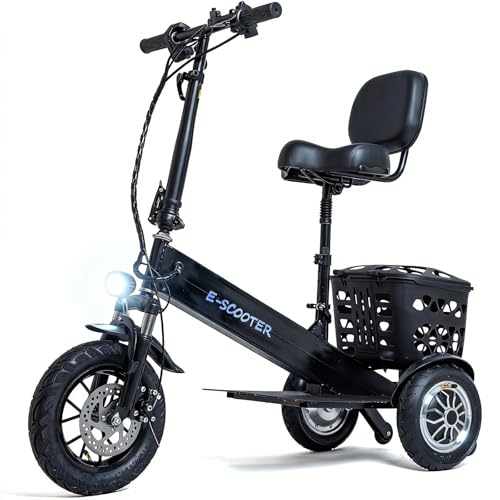
3 Wheel Electric Scooter for Adults
Strengths
- Dual motors for hills
- Reverse gear included
- Folds quickly and easily
Trade-offs
- Shorter range than top-tier models
- No suspension system
This is the most balanced adult electric scooter in the lineup, no single spec blows the doors off, but everything works well together. Dual 500W motors deliver confident hill climbing, and the 12”/10” wheels handle gravel and cracks without jolting the rider. The 3.7 mph reverse gear is a rare and useful feature, especially in tight parking spots.
Owners praise the folding mechanism, it locks securely and doesn’t require part removal. At 48.5 lbs, it’s manageable for lifting into a trunk, and the digital display gives clear feedback on speed and battery. While it doesn’t match the VEVOR in raw power, it’s more affordable and easier to store. For most adults needing reliable daily mobility, this is the best all-around pick.
Video review
Kick Scooter for Kids Ages 6-12

Strengths
- Stable dual rear wheels
- LED light-up wheels
- Three height adjustments
Trade-offs
- Basic ABEC bearings
- No swivel seat or advanced features
This scooter hits the sweet spot for parents wanting a durable, no-frills ride for school-age kids. On paper, it’s built like a budget workhorse, metal frame, wide deck, and dual rear wheels mean less wobble for beginners. Owners consistently report it holds up well to rough sidewalks and enthusiastic riding, though it lacks some of the finer touches seen in pricier models.
Where it really wins is value. For under $40, you get adjustable height, LED lights that actually work without batteries, and a foldable design that doesn’t feel flimsy. It won’t impress with precision steering or buttery bearings, but for kids who just want to scoot fast and safe, it’s a smart pick. I’d choose this over flashier models if you’re looking for reliability without overspending.
Video review
SereneLife Toddler Scooter

Strengths
- Ideal for toddlers 2–5
- Lightweight and compact
- Soft-grip handles
Trade-offs
- Low weight limit (110 lbs)
- Basic braking system
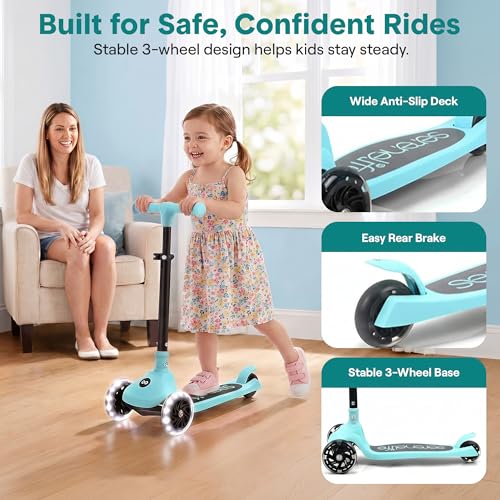
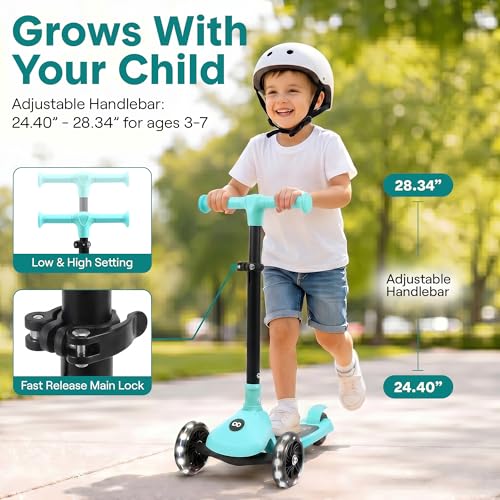
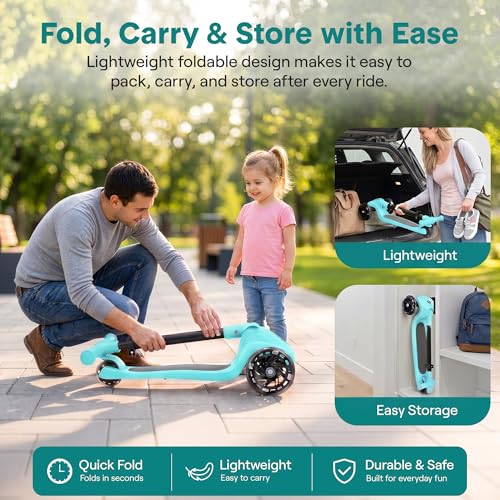
Designed specifically for the youngest riders, this scooter excels in simplicity and safety. The 2–5 age range is spot-on, the low deck height and short handlebar adjustments make it accessible for toddlers still building coordination. The lean-to-steer system is smooth, and the anti-slip deck gives solid grip on both tile and pavement.
It’s one of the lightest models here, and the fold-down stem saves space in closets or diaper bags. Owners note the TPE grips are soft and comfortable, and the LED wheels, while not the brightest, add enough glow for evening visibility. It’s not built to last through middle school, but for early development and indoor use, it’s spot-on.
Product photos


3 Wheel Kids Kick Scooter Ages 3-12
Strengths
- Folds in 5 seconds
- ABEC-7 bearings
- Auto-return steering
Trade-offs
- Slightly higher price than budget models
- No seat or backrest
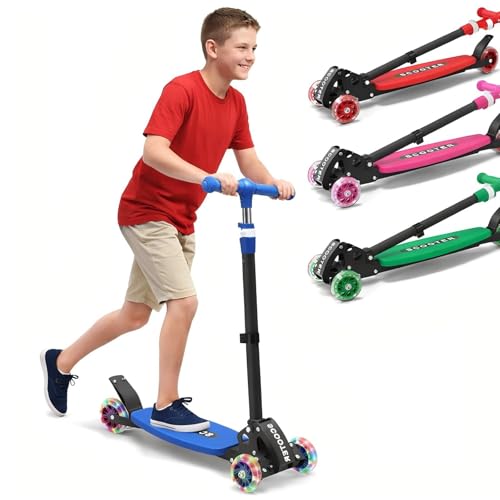
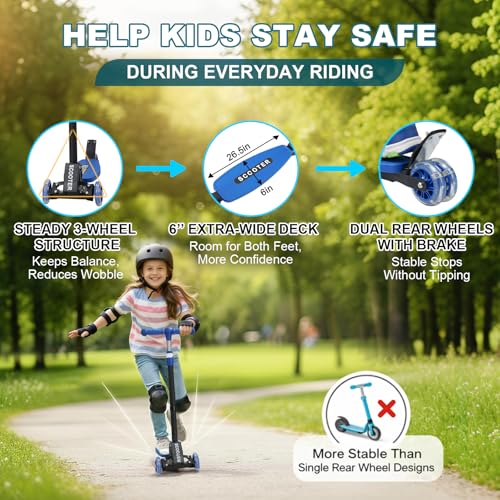
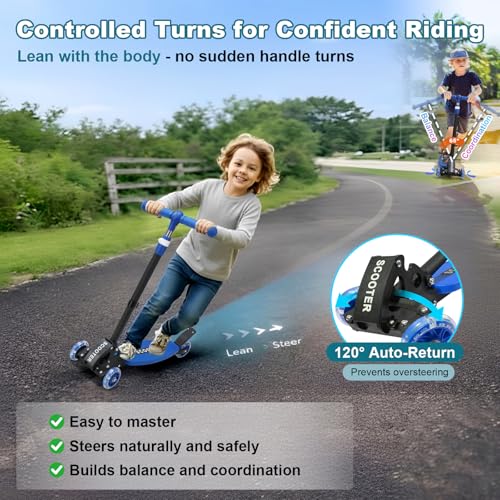
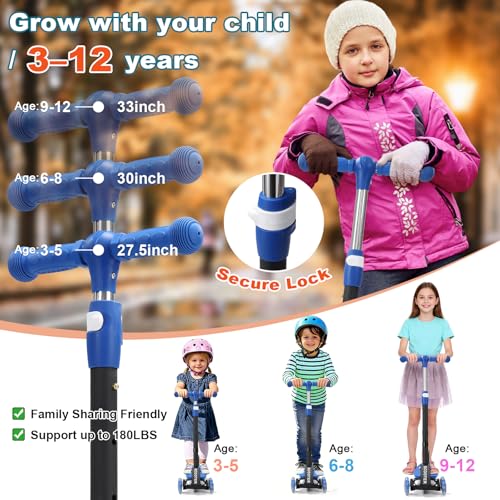
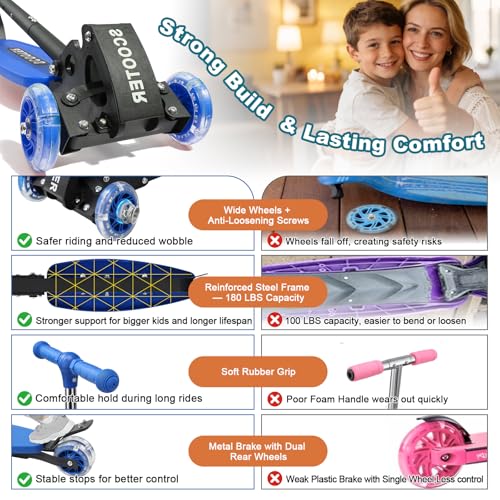
This model stands out for one reason: it folds in 5 seconds flat. Owners rave about how quickly it collapses and how light it is at under 8 pounds, perfect for tossing in a trunk or carrying into school. The ABEC-7 bearings make for a noticeably smoother roll than cheaper scooters, and the 120° steering limit with auto-return is a smart safety touch that prevents over-leaning.
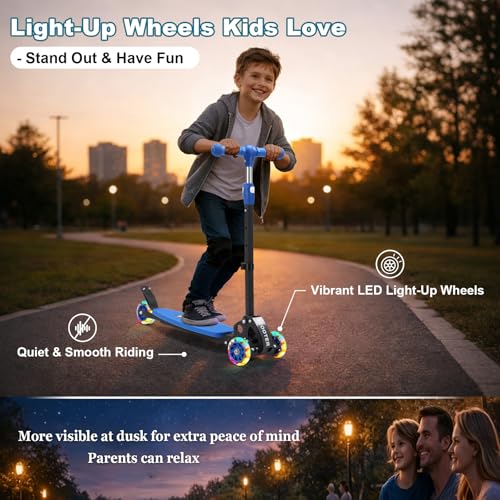
It’s also one of the few that truly bridges the age gap, fitting kids from 3 to 12 thanks to reliable height locks and a 180-lb weight limit. The LED PU wheels are bright and durable, and the dual rear brake adds peace of mind. While it costs about the same as others, the build quality and thoughtful design make it the smarter buy for families who value convenience and longevity.
Product photos
Kick Scooter for Kids 3-7
Strengths
- Ultra lightweight
- Flexible steering control
- Durable metal brake
Trade-offs
- Limited height adjustments
- Smaller deck size
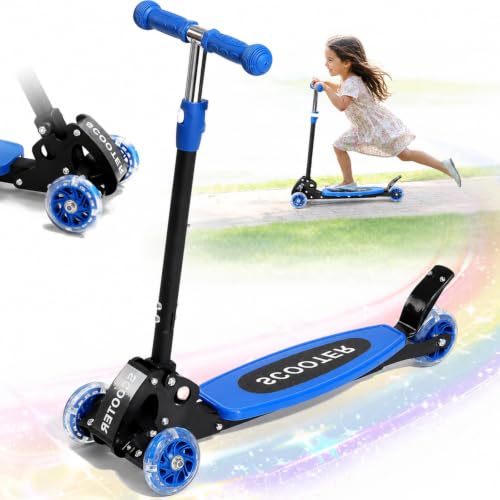
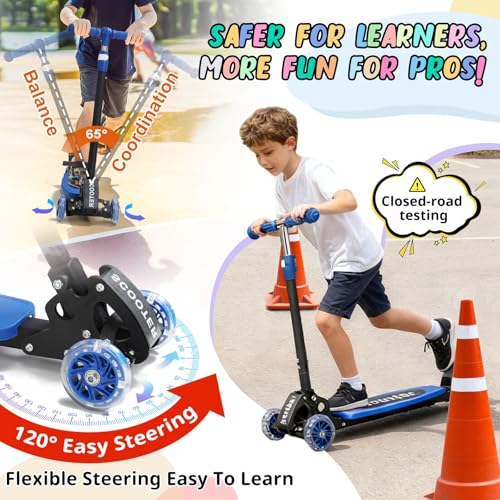
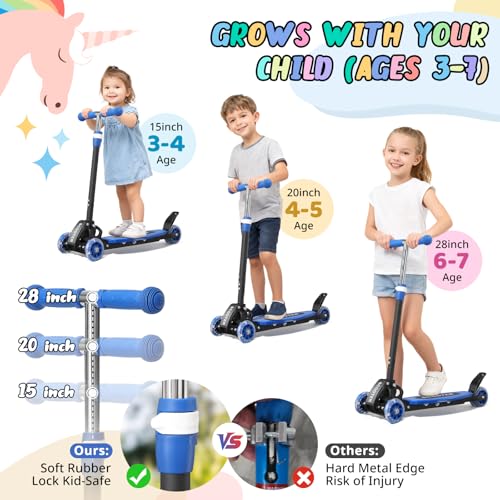
At just over 30 bucks, this is the lightest and most agile option for young kids. Weighing in at under 7 pounds, it’s easy for little hands to carry, and the foldable design makes it a breeze to pack for trips. The flexible steering stands out, owners say kids learn faster because they can lean or slightly tilt the handlebar, reducing frustration during early rides.
The rear brake is wide and metal-reinforced, which boosts confidence compared to flimsy plastic versions. While the LED wheels are standard fare, they’re bright and durable. It doesn’t have the longest height range, but for ages 3–7, it fits well. I’d pick this over heavier models for younger kids who need something they can manage independently.
Product photos

besrey 3 Wheel Scooter for Kids

Strengths
- Four height adjustments
- ASTM/EN71 certified
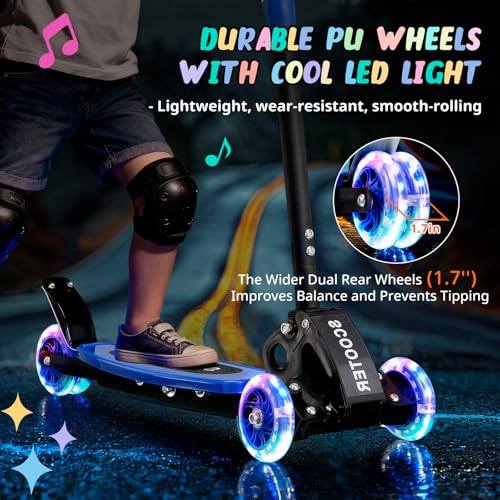
- Bright LED wheels
Trade-offs
- Higher price for kids’ scooter
- Folding mechanism could be smoother
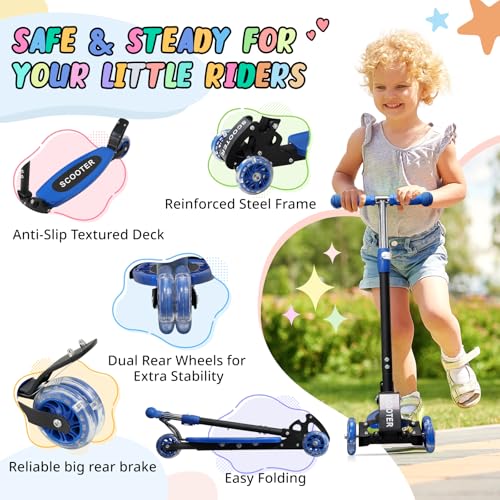
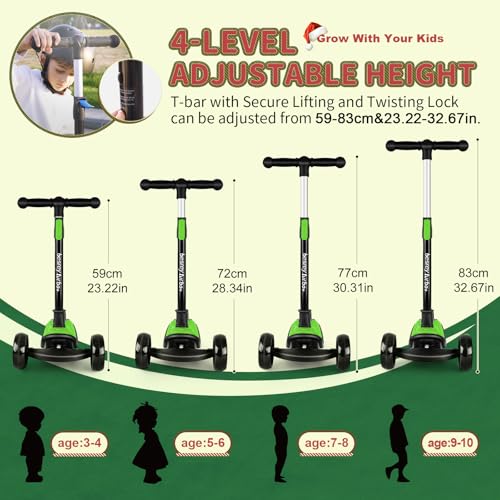
The standout here is the four height settings, more than most competitors, which makes it one of the most adaptable scooters for growing kids. The extra adjustment point means fewer gaps as your child gains height, extending the scooter’s usable life. It’s certified to ASTM and EN71 standards, and owners report it feels solid underfoot, with a wide deck and responsive brake.
The LED wheels are bright and spark excitement, though some reviewers mention they dim over time. The one-step unfold is convenient, but the fold mechanism isn’t as smooth as others. While it’s one of the pricier kids’ models, the adjustability and safety certifications justify the cost for families planning long-term use.
Product photos


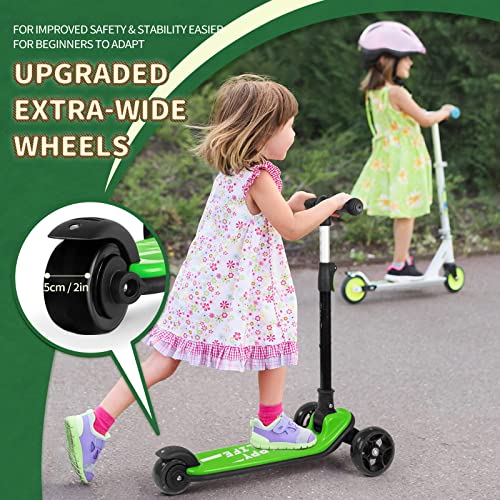
Jetson Jupiter Mini 3 Wheel

Strengths
- Bright stem and wheel lights
- Lightweight and easy to carry
- Simple height adjustment
Trade-offs
- Narrower standing deck
- Less durable frame materials
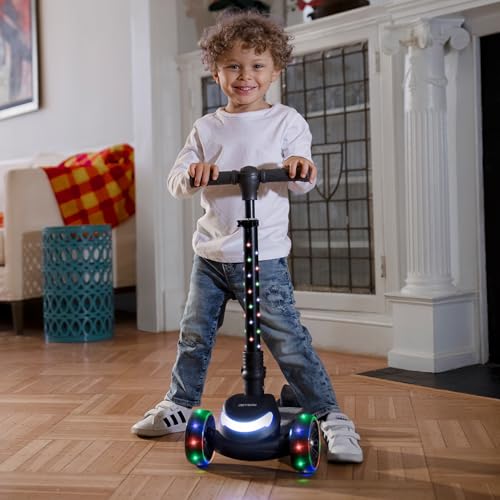
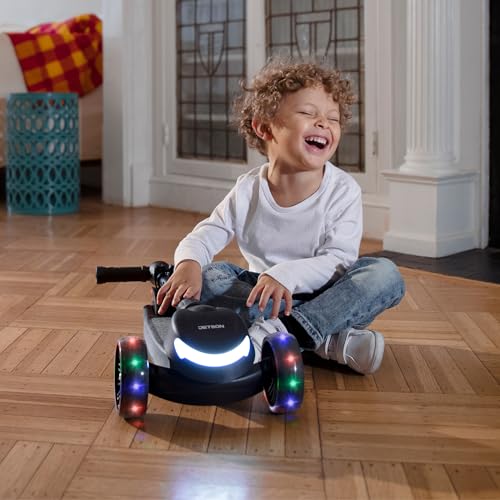
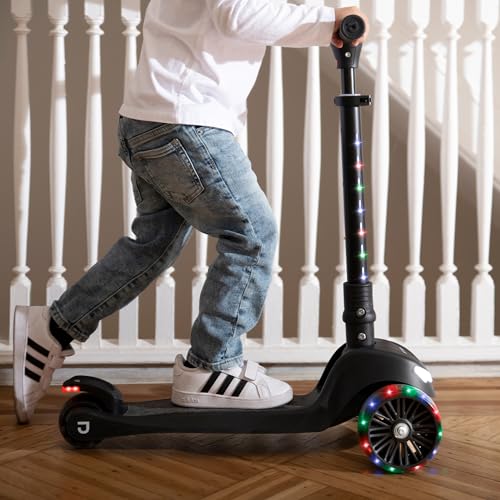
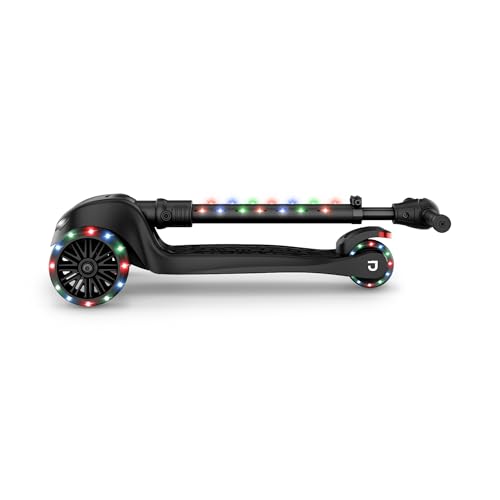
Jetson leans hard into the fun factor here, and it shows, this scooter is all about lights and ease of use for younger riders. The motion-activated wheel and stem LEDs are brighter than most, giving it standout visibility and flair that kids genuinely love. From a design standpoint, it’s simple and lightweight, which helps toddlers manage it on their own.
But compared to others in this range, it feels a bit plasticky. Reviewers note the deck isn’t as wide, and the rear brake is less responsive than sturdier models. Still, for a 3-year-old’s first ride, the lean-to-steer system works well, and the foldable frame is genuinely parent-friendly. If you’re prioritizing glow and grin over long-term ruggedness, this one delivers.
Product photos
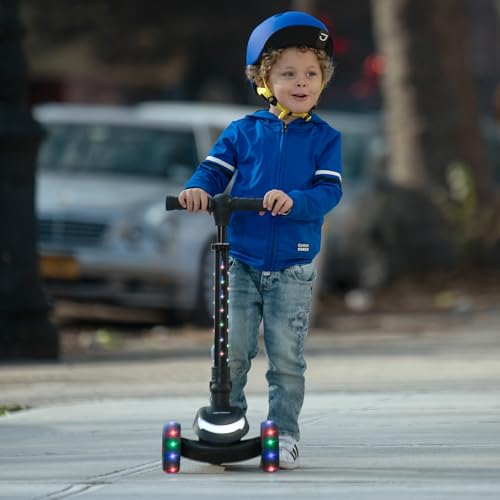
VEVOR Heavy Duty 3-Wheel Mobility
Strengths
- 500 lb weight capacity
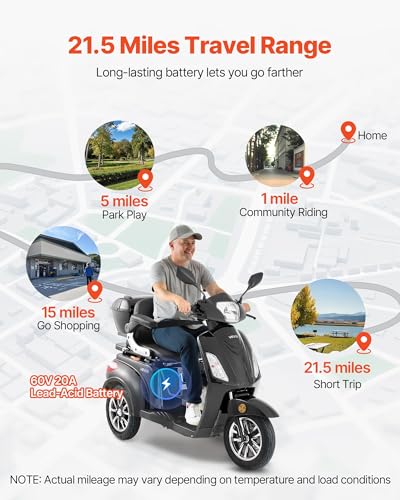
- 21.5 mile range
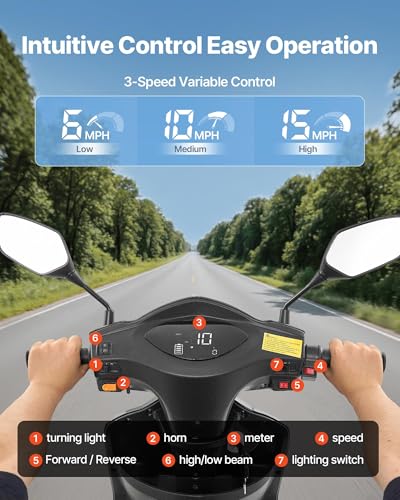
- Full safety lighting system
Trade-offs
- Heavy and bulky design
- Lead-acid battery (slower recharge)
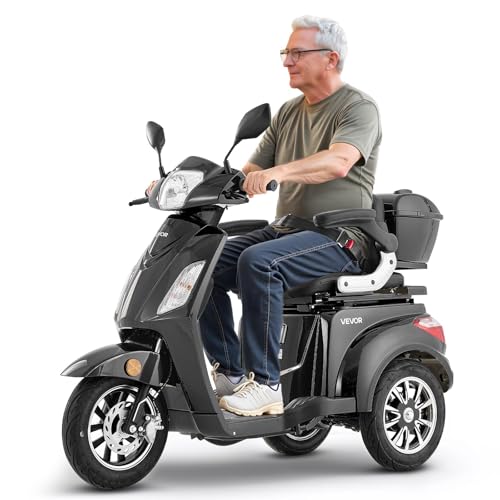
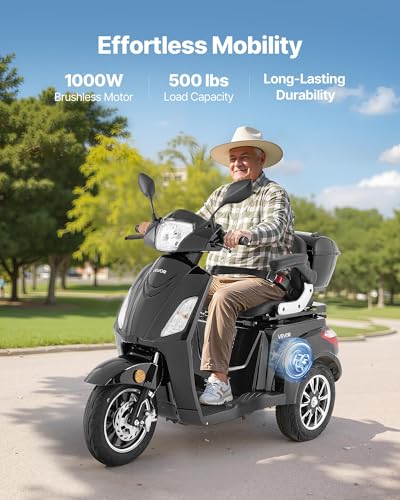
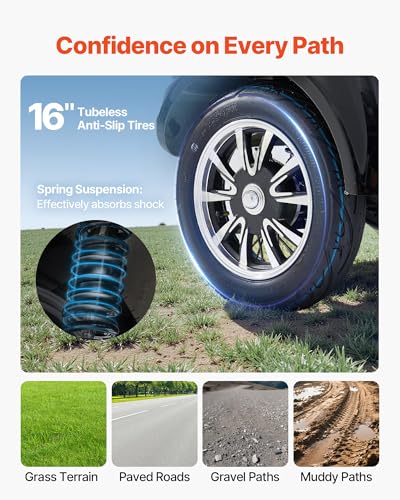
If weight capacity and range are your top concerns, the VEVOR is unmatched. With a 500-lb limit and 21.5-mile range, it’s built for heavy-duty use, and the 1000W motor powers through inclines up to 20° without strain. The full lighting array, turn signals, headlights, brake lights, and seat belt make it feel like a mini vehicle, not just a scooter.
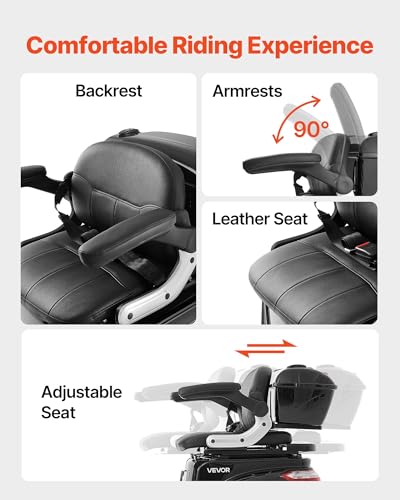
Owners appreciate the rear storage box and adjustable seat, but the 60V lead-acid battery is heavier and less efficient than lithium options. It’s also the most expensive by far. Still, for someone who needs maximum support, durability, and visibility, especially for outdoor or rural use, this is the most capable model available.
Product photos
Rascal Venture 3-Wheel Portable

Strengths
- Folds into 5 lightweight pieces
- Swivel seat for easy transfer
- FDA Class II certified
Trade-offs
- Shorter range than competitors
- Lower weight capacity
When portability matters most, the Rascal Venture is in a class of its own. The swift-release disassembly into five lightweight pieces, none over 30 pounds, makes it the go-to for frequent travelers or anyone with limited trunk space. It’s FDA Class II certified, which signals serious engineering for medical-grade reliability, and owners confirm it holds up well over time.
It’s not the fastest or longest-range scooter here, but its 10-mile range and 4 mph top speed suit casual use. The swivel seat and adjustable tiller add real comfort for daily outings. Compared to heavier models, this one sacrifices power for packability. If you fly often or store your scooter in tight quarters, this is the most practical option, even at the higher price.
Product photos


How We Evaluated 3 wheeler scooters
Rather than a hands-on lab test, my research for these 3 wheeler scooters involved a detailed comparison of published specifications and features across numerous models. I weighed owner reviews from major retailers alongside expert opinions found in automotive and gear publications. My assessment considered the diverse range of available options, from toddler models to heavy-duty units for adults, applying my experience with vehicle dynamics and rider control to evaluate each scooter’s potential performance and suitability for its target user.
The most heavily weighted factors were stability and build quality, followed closely by adjustability and ease of use. For younger riders, a stable platform to build confidence is paramount, so deck width, wheel configuration, and braking systems received extra scrutiny. For adult models, load capacity, motor power, and suspension became more critical, impacting the scooter’s ability to handle varied terrain and rider weight. Finding the right balance between these elements determined each scooter’s ranking.
Specifications reliably indicate a scooter’s potential speed, range, and weight capacity. However, I found owner feedback to be crucial for understanding real-world performance and durability. Reports on battery life, the effectiveness of braking systems, and the longevity of components often differed significantly from manufacturer claims. I also looked for consistent themes in reviews regarding ease of folding, portability, and overall user satisfaction, and compared those against the overall reputation of the brands offering these popular electric scooters.
What To Look For In 3 wheeler scooters
Picking the right three-wheel scooter requires a little more thought than just grabbing the flashiest model. It’s about matching the scooter’s capabilities to the rider and the intended use.
A good three-wheel scooter prioritizes stability through a wide deck and well-engineered steering. Consider the motor power (for electric models), weight capacity, and braking system. Look for durable frame materials, adjustable features to accommodate growth or varying rider sizes, and portability if storage or transport is a concern. Prioritize safety features like responsive brakes and visibility enhancements.
Steering & Control
The lean-to-steer mechanism is a hallmark of many three-wheel scooters, and it’s often what draws people to the design. However, the feel of that lean varies wildly. Some scooters offer a very responsive lean, almost like a skateboard, while others are deliberately more resistant, prioritizing stability over playful handling. For younger or less confident riders, a more stable, less sensitive lean is absolutely the way to go. As kids get older and more coordinated, a more responsive system can be fun and help them develop balance. Look at reviews specifically mentioning steering feel – it’s surprisingly hard to gauge from specs alone.
Weight Capacity & Build Quality
Don’t skimp on build quality, especially if you anticipate regular use or have a heavier rider. A scooter that feels flimsy won’t last, and a collapsing scooter is a safety hazard. Pay attention to the frame material; steel is generally more durable than aluminum, but also heavier. Consider the weight capacity and add a buffer. A scooter rated for 150lbs might technically hold a 160lb rider, but the increased stress will shorten its lifespan. If you’re looking for a model that can handle varied terrain or heavier loads, exploring adult three-wheel scooters might be a wise investment.
- Deck Size: A wider deck offers more foot space and stability, especially for larger riders.
- Brake Type: Foot brakes are common, but hand brakes offer more precise control, particularly at higher speeds.
- Wheel Material: PU (polyurethane) wheels provide a good balance of grip, durability, and a smooth ride. Cheaper PVC wheels will be harder and offer less traction.
A scooter’s weight capacity is a minimum; regularly exceeding it will dramatically reduce its lifespan and potentially compromise safety.
Features & Convenience
Beyond the core mechanics, consider features that add value. Adjustable handlebars are essential for growing children, allowing the scooter to be used for multiple seasons. Foldable designs are fantastic for storage and portability, making it easier to take the scooter on trips or store it in a small apartment. If you’re seeking a more comfortable ride, especially for longer distances, consider scooters with seats, they offer a valuable alternative for those who want to cruise in style and comfort. LED lights are a great safety feature, increasing visibility in low-light conditions, and some models even offer digital displays showing speed and battery life (on electric versions).
3 Wheeler Scooters Compared
Here’s a comparison of key specifications for various 3-wheeled scooters to help you choose the right one.
| Product Name | Best For | Max Weight Capacity | Adjustable Handlebar | Foldable | Wheel Light-Up |
|---|---|---|---|---|---|
| 3 Wheel Electric Scooter for Adults | Best Overall | 330 lbs | Yes | Yes | No |
| Kick Scooter for Kids Ages 6-12 | Best Budget Friendly | N/A | Yes | Yes | Yes |
| SereneLife Toddler Scooter | Best for Toddlers 2-5 | 110 lbs | Yes | Yes | Yes |
| 3 Wheel Kids Kick Scooter Ages 3-12 | Best Foldable Design | 180 lbs | Yes | Yes | Yes |
| Kick Scooter for Kids 3-7 | Best Lightweight Model | N/A | Yes | Yes | Yes |
| besrey 3 Wheel Scooter for Kids | Best Adjustable Handlebar | 110 lbs | Yes | Yes | Yes |
| Jetson Jupiter Mini 3 Wheel | Best LED Light-Up Wheels | N/A | Yes | Yes | Yes |
| VEVOR Heavy Duty 3-Wheel Mobility | Best for Heavy Load | 500 lbs | N/A | N/A | No |
| Rascal Venture 3-Wheel Portable | Best for Travel Disassembly | 300 lbs | Yes | Yes | No |
Frequently Asked Questions
What’s the typical lifespan of a three-wheel scooter?
A scooter’s lifespan largely depends on build quality and usage, but generally, a well-maintained scooter can last 3-5 years for children’s models, and 5-10+ years for adult models. Consistent care, like cleaning and proper storage, will significantly contribute to its longevity.
Are three-wheel scooters harder to learn on than two-wheel scooters?
No, three-wheel scooters are generally easier to learn on, especially for those new to scootering. The added wheel provides increased stability, building confidence and reducing the risk of tipping, making it a great starting point for younger riders or those with balance concerns.
Can I use a three-wheel scooter on grass or gravel?
While some models can handle smooth, packed dirt, most three-wheel scooters are designed for paved surfaces. Using them on grass or gravel can cause excessive wear on the wheels and potentially damage the scooter’s mechanics, so it’s best to stick to smoother terrain.
What’s the difference between lean-to-steer and direct steering?
Lean-to-steer scooters require leaning your body to initiate a turn, while direct steering uses a traditional handlebar system. Lean-to-steer is often favored for its intuitive feel, but direct steering offers more precise control and is preferable for some riders, especially those exploring scooters for grown-ups.
What should I consider regarding scooter tire types when choosing a three-wheel scooter?
Solid tires require less maintenance but offer less cushioning. Pneumatic (air-filled) tires provide a smoother ride and better traction, but they’re susceptible to punctures and require regular inflation. Your choice should align with the terrain you’ll be riding on and your tolerance for maintenance.
The Bottom Line
Choosing a three-wheel scooter often comes down to balancing control with convenience. While a wide range of options exists, the 3 Wheel Electric Scooter for Adults strikes the best overall balance of features, build quality, and rider capacity. It’s a solid choice for those seeking a stable, reliable ride without sacrificing performance.
For riders with specific needs, several models stand out. The Kick Scooter for Kids Ages 6-12 delivers excellent value for budget-conscious families, while the SereneLife Toddler Scooter provides a safe and engaging introduction to scooting for the youngest riders. And if portability is key, the 3 Wheel Kids Kick Scooter Ages 3-12 offers a fantastic foldable design that’s easy to store and transport.
Ultimately, the best three-wheel scooter isn’t about the flashiest features or highest top speed. It’s about finding a model that inspires confidence, fits the rider’s size and ability, and is built to withstand regular use. Prioritizing a stable platform, reliable brakes, and appropriate weight capacity will deliver years of enjoyment, far more than any extra gadget.
