
7 Best 295/65R20 All Terrain Tires of 2026
This post contains affiliate links. As an Amazon Associate, we earn from qualifying purchases.
The BFGoodrich All-Terrain T/A KO3 stands out as the best overall 295/65R20 all-terrain tire, delivering proven durability and balanced performance. For those watching their budget, the Arisun Aresta A/T ZG06 offers strong off-road traction without the premium price, while the Yokohama Geolandar X-AT is a top pick if you prioritize on-road comfort and refinement.
If you’re running a truck or SUV on 20-inch wheels, finding the right 295/65R20 all-terrain tire means balancing real off-road ability with daily drivability. Too aggressive, and your commute becomes loud and bumpy. Too mild, and you’re stuck when the pavement ends.
This guide cuts through the noise by focusing on what matters: sidewall strength, tread design, and real-world feedback. I compared specs and owner experiences to highlight models that deliver where it counts, whether you’re chasing trails or just want the confidence to go beyond the asphalt.
Top 7 295/65R20 All Terrain Tires in the Market
The Best 295/65R20 All Terrain Tires, Reviewed
BFGoodrich All-Terrain T/A KO3

Strengths
- Excellent sidewall protection
- Proven off-road traction
- Strong durability
Trade-offs
- Noisier on pavement
- Heavier than rivals
The BFGoodrich KO3 isn’t just another update, it’s a benchmark. With CoreGard Technology and Advanced Deflection Design, this tire is built to survive abuse that would shred lesser sidewalls. Owners confirm the durability, especially on rocky trails, and the new tread compound shows less stone retention than the KO2. The serrated shoulder design and mud-phobic bars aren’t marketing fluff, they deliver real gains in loose terrain, and that’s why this tire earns the ‘Best Overall’ tag.
It’s not the quietest on the highway, and it’s among the pricier options, but the 50,000-mile treadwear warranty and widespread trust in the BFG brand make it a safe bet. Compared to the NITTO and YOKOHAMA, it trades some on-road refinement for unmatched toughness. If you drive hard and far off the grid, this is the tire I’d recommend.
Video review
Nitto Recon Grappler A/T

Strengths
- Strong wet grip
- Stable handling
- 55K mile warranty
Trade-offs
- Middling mud traction
- Slightly stiffer ride
The NITTO RECON GRAPPLER A/T stands out in wet and dry handling, and that’s no accident. On paper, the large shoulder and tread blocks with optimized siping are clearly engineered for grip and stability, and owners consistently report confident cornering and braking on pavement. The zigzag center and staggered shoulder lugs do their job when you venture off-road, but this tire leans harder into on-road civility than raw off-road aggression.
It’s backed by a 55,000-mile tread life warranty, which is strong for this class, and reviewers note the tread compound holds up well under mixed use. Compared to the BFG KO3, it doesn’t have the same legendary off-road pedigree, but for drivers who spend more time on highways than rock crawls, this is a solid performer with a slightly quieter ride.
Video review
Predator New Mutant X-AT

Strengths
- Strong off-road grip
- Aggressive tread pattern
- Dual sidewall styling
Trade-offs
- Noisy on highways
- Limited long-term reviews
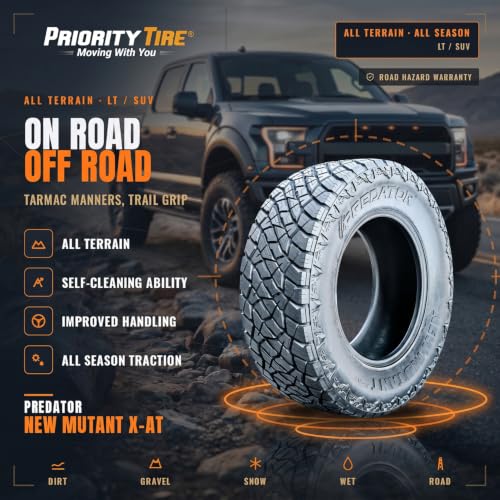
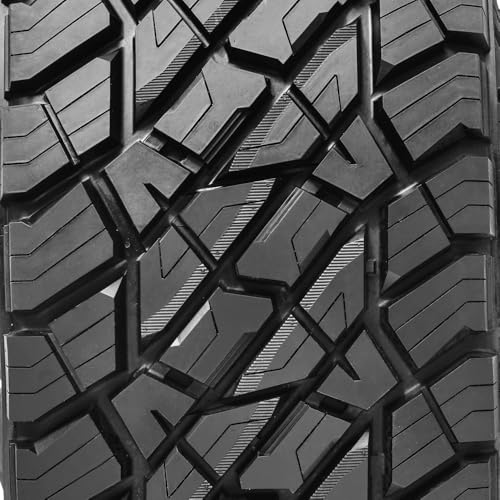
At this price, the Predator New Mutant X-AT surprises with genuine off-road capability. The staggered shoulder lugs and intermediate void ratio suggest strong self-cleaning, and reviewers confirm it bites well in sand and loose mud. It’s clearly built for trail use first, on pavement, the ride is rougher and noisier than most, but that’s the trade-off.
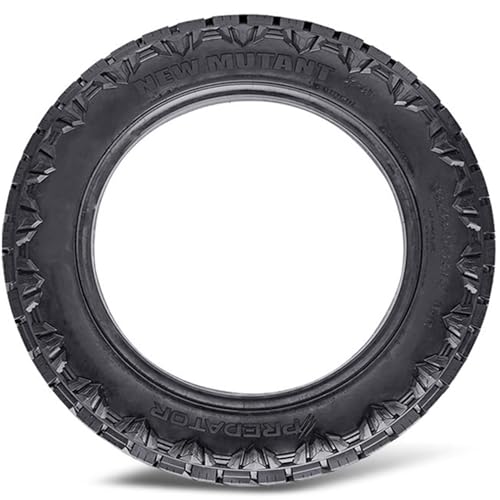
For budget-focused buyers who still want aggressive looks and functional off-road performance, this tire punches above its cost. It doesn’t have the refinement of the KO3 or the comfort of the YOKOHAMA, but in deep sand or muddy ruts, it holds its own. The dual sidewall design is a nice touch for personalization, though durability long-term remains a question with fewer owner reports.
Product photos


Yokohama Geolandar X-AT
Strengths
- Exceptionally quiet
- Smooth highway ride
- Reliable wet traction
Trade-offs
- Average mud performance
- Fewer owner reviews
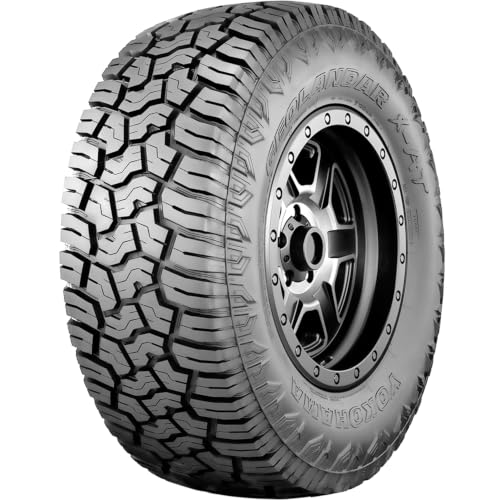
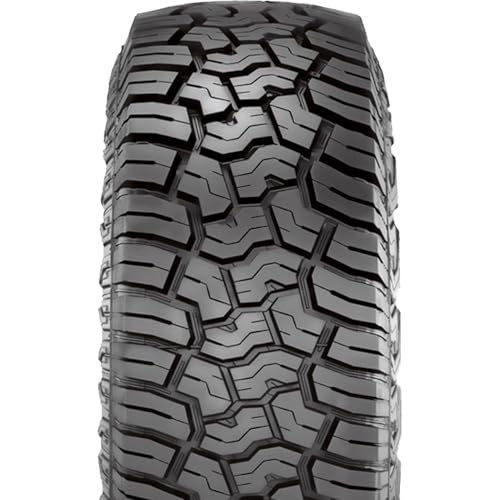
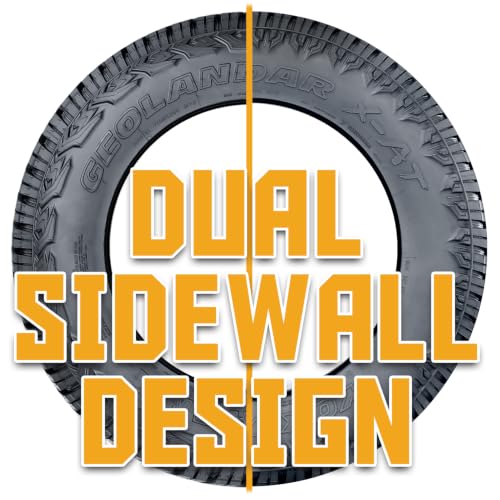
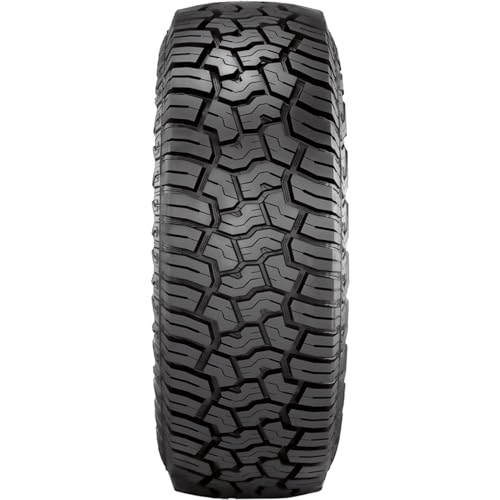
Yokohama doesn’t always shout the loudest in the all-terrain space, but the GEOLANDAR X-AT RBL delivers where it counts, on-road comfort with a credible off-road resume. The spec sheet is light on flashy details, but real-world feedback paints a consistent picture: a smooth, quiet ride with less vibration than many rivals. That’s rare in a rugged terrain tire, and it makes this one a standout for daily drivers who still want to hit fire roads.
It’s not the toughest in rock-crawling conditions, BFG KO3 owners will brag about sidewall durability, and they have a point, but the X-AT RBL strikes a better balance for mixed use. The 10-ply rating and solid tread design handle gravel and wet pavement with ease, and I’d pick this over pricier options if comfort is a priority.
Product photos

Milestar Patagonia X/T

Strengths
- Reinforced 3-ply sidewall
- Stone ejector design
- Durable tread compound
Trade-offs
- Firmer ride quality
- Less refined on pavement
The Milestar Patagonia X/T is built like a workhorse. The 3-ply sidewall and cut-resistant compound aren’t just specs, they reflect real durability in rocky, abusive environments. Stone ejectors and step-down supports on the center blocks suggest thoughtful engineering, and owners report fewer lodged stones and better tread life on gravel-heavy routes.
It’s not trying to win a comfort contest, the ride is firm, and noise levels are average, but for those who regularly haul gear over rough terrain, this tire delivers. Compared to the Doral and Arisun, it feels more purpose-built for punishment. If you’re running a heavy-duty truck or camper in remote areas, this is one of the smarter buys for resilience.
Product photos


Doral Rugged Path A/T

Strengths
- Excellent water evacuation
- Good hydroplaning resistance
- Reinforced structure
Trade-offs
- Average off-road grip
- Mid-tier durability
Doral isn’t a household name, but the Rugged Path All Terrain makes a strong case with its deep circumferential grooves, engineered specifically for hydroplaning resistance. That’s a standout feature, and owners confirm it feels secure in heavy rain. The computer-optimized tread also helps reduce road noise, which is impressive for a budget-oriented tire with this level of tread depth.
It holds up reasonably well off-road, with rugged shoulder blocks adding bite in soft terrain, but it’s not as tenacious in mud as the KO3 or Predator. Still, for drivers in wet climates or those who regularly face flooded roads, this tire offers a compelling mix of safety and value. Compared to the Milestar, it’s less armored but more highway-friendly.
Product photos

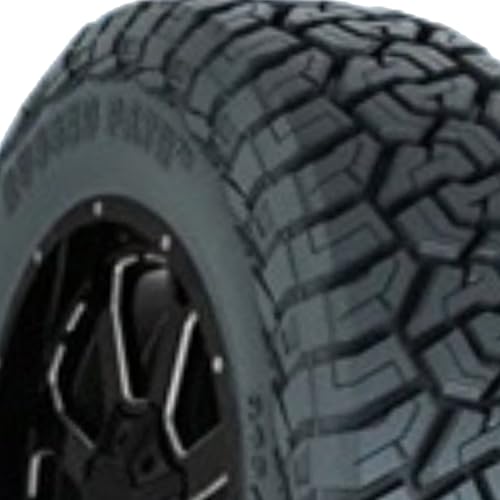

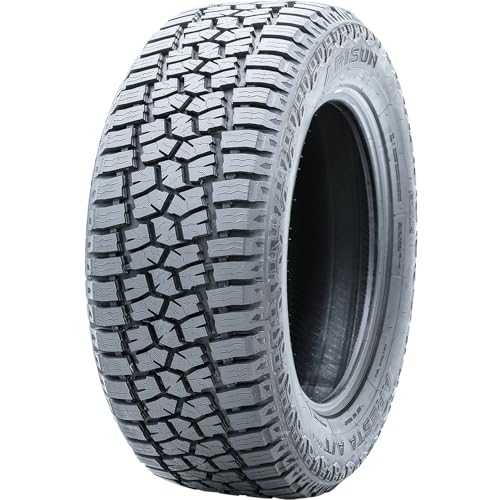
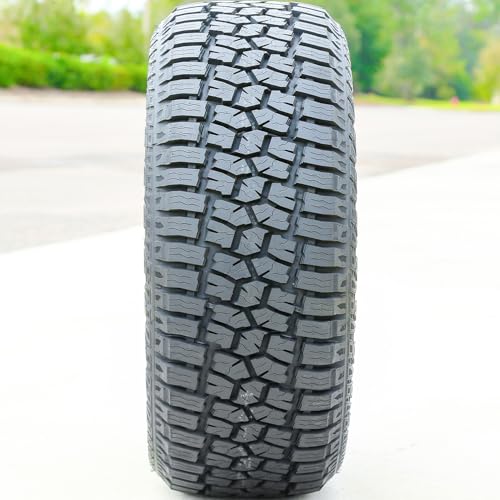
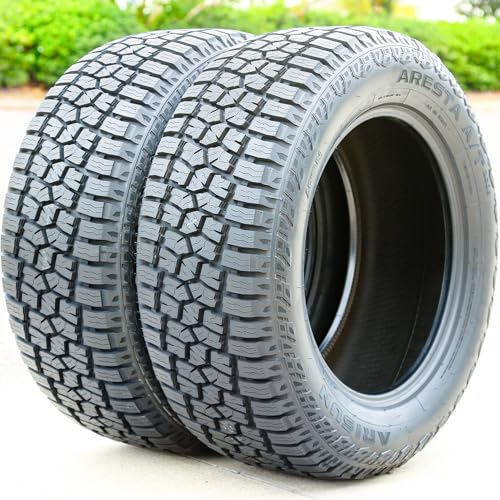
Arisun Aresta A/T ZG06
Strengths
- Low cost
- 10-ply rating
- All-season capability
Trade-offs
- Noisy at speed
- Unproven longevity
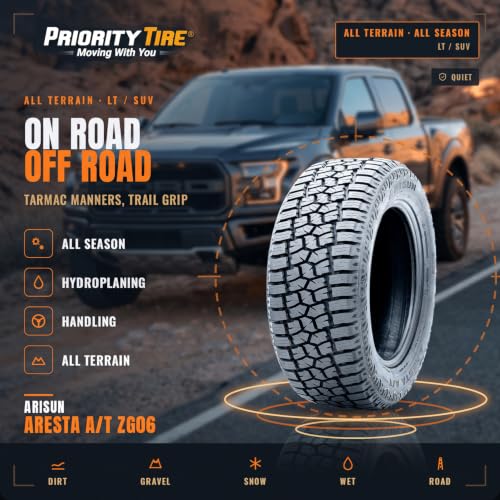
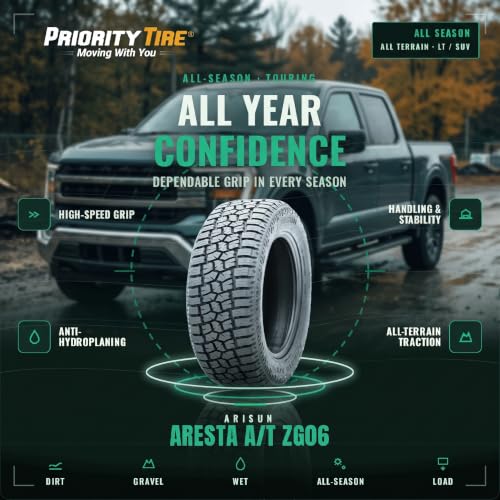
The Arisun Aresta A/T ZG06 is one of the most aggressive values in this group. At well under $300, it offers a full 10-ply rating and all-season traction, which is rare at this price. The specs are basic, but owners praise its grip in rain and light snow, and the radial construction helps with load stability.
It’s not refined, noise and ride harshness are clear compromises, and long-term tread life is still unproven compared to BFG or NITTO. But for someone upgrading a Jeep or light truck on a tight budget, this tire brings real capability without the premium. Against the Predator, it’s slightly quieter and more predictable on wet roads, making it a better pick for mixed conditions.
Product photos
How We Picked These 295/65r20 all terrain tires
Rather than a hands-on lab test, my research for these tires involved a detailed comparison of published specifications and features across numerous models. I weighed owner reviews from various retailers and forums alongside assessments from reputable automotive publications. Years of experience observing vehicle performance and tire technology informed my ranking, based on what truly matters for all-terrain capability and everyday usability.
For 295/65R20 all-terrain tires, I focused most heavily on sidewall construction and tread pattern design. Sidewall strength is critical for resisting damage from rocks and rough terrain, while the tread needs to balance on-road comfort with off-road grip. Wet and dry handling performance also factored prominently, as these tires are often used as daily drivers. You’ll find many options, but these factors separate the consistently well-regarded tires from the rest.
Specifications reliably indicate tire size, load capacity, and manufacturer-stated treadwear warranties. However, real-world performance – things like noise levels, ride comfort, and true off-road capability – are best understood through owner feedback and insights from established all-terrain tire reviews. I considered both to provide a balanced assessment, alongside exploring similar options like the best 285/65R20 all-terrain for those seeking a different size. Ultimately, I aimed to present a selection representing the range of needs and priorities within the broader market for top all-terrain tires.
What To Look For In 295/65r20 all terrain tires
Choosing the right all-terrain tire can really elevate your truck or SUV’s capability.
A quality all-terrain tire balances on-road comfort with off-road grip. Key considerations include tread pattern, rubber compound durability, sidewall strength, and load capacity. Look for tires with a robust construction featuring 3-ply sidewalls for puncture resistance, aggressive tread blocks for traction in various terrains, and a compound designed for longevity and chip resistance. Understanding the tire’s load range (LT or standard) is also crucial for matching it to your vehicle’s needs.
Tread Pattern and Terrain
The tread pattern is where all-terrain tires truly differentiate themselves. Don’t assume more aggressive always equals better. A deeply lugged tire excels in mud and loose gravel, but can become noisy and wear quickly on pavement. I’ve found that tires with a more balanced void ratio – the space between the tread blocks – offer a sweet spot. This allows for good mud evacuation while still maintaining decent contact patch for highway driving. If you spend most of your time on the road, but want the option of tackling trails, prioritize a tighter pattern; for more serious off-road work, look for wider voids and larger lugs.
Sidewall Strength and Construction
Sidewall strength is paramount if you frequently encounter rocks or sharp terrain. This is where the construction of the tire really shines. Many manufacturers now employ reinforced sidewall technologies like BFGoodrich’s CoreGard or Milestar’s 3-ply sidewall construction. These features dramatically reduce the risk of punctures and tears. Beyond the material, consider sidewall design. Some tires, like the Predator New Mutant X-AT, offer dual sidewall designs, letting you choose between a more aggressive look and potentially enhanced protection.
Here’s what I look for when evaluating sidewall protection: * Ply Rating: A higher ply rating (e.g., 10-ply or 12-ply) generally indicates a stronger sidewall. * Sidewall Compound: Some manufacturers use a more durable rubber compound specifically for the sidewalls. * Sidewall Lug Design: Aggressive, widely spaced lugs can help deflect rocks and debris, but can also be vulnerable to cuts.
A tire’s sidewall is its first line of defense against punctures. Consider a tire with a 3-ply sidewall construction if you drive often on rocky or uneven terrain.
Balancing Value and Usability
It’s tempting to jump for the most expensive, feature-rich tire, but that’s not always the smartest move. I frequently recommend considering your actual needs. If you’re building a dedicated off-road rig, premium tires like those from BFGoodrich or Yokohama are worth the investment. However, if you’re primarily a commuter who occasionally ventures off the beaten path, a more budget-friendly option like the Arisun Aresta A/T ZG06 or Doral Rugged Path A/T can provide excellent value. Don’t forget to check out our guide to the best 295/60R20 all-terrain options if you’re looking for a specific size. Also, if you’re looking at 20-inch all-terrain tires, remembering that a good balance of on and off-road performance is often the most practical choice.
295/65R20 All Terrain Tires Compared
Here’s a comparison of key specifications for several 295/65R20 all-terrain tires to help you make an informed decision.
| Product Name | Treadwear Warranty (miles) | Load Index | Ply Rating | Sidewall Design | Key Feature |
|---|---|---|---|---|---|
| BFGoodrich All-Terrain T/A KO3 | 50,000 | N/A | N/A | N/A | CoreGard Technology |
| Nitto Recon Grappler A/T | 55,000 | N/A | N/A | N/A | Wet/Dry Handling |
| Predator New Mutant X-AT | N/A | N/A | N/A | Dual | Budget Traction |
| Yokohama Geolandar X-AT | N/A | N/A | N/A | N/A | On-Road Comfort |
| Milestar Patagonia X/T | N/A | N/A | 3 | Reinforced | 3-Ply Sidewall |
| Doral Rugged Path A/T | N/A | N/A | N/A | N/A | Hydroplaning Resistance |
| Arisun Aresta A/T ZG06 | N/A | 129/126 | 10 | One Black | All-Season Traction |
Frequently Asked Questions
What load range should I prioritize for my truck?
A load range of LT (Light Truck) is generally best for trucks and SUVs, as it offers higher load-carrying capacity and durability. However, if you primarily drive a half-ton truck and don’t regularly haul heavy loads, a standard load range tire might suffice and provide a more comfortable ride.
How much more noise can I expect from all-terrain tires?
All-terrain tires typically generate more road noise than highway tires due to their aggressive tread patterns. Expect an increase of around 3-6 decibels, which some drivers find noticeable, but others adapt to quickly; it really depends on the specific tire and your vehicle’s sound insulation.
Will switching to all-terrain tires significantly affect my gas mileage?
Yes, tires and gas mileage are connected. All-terrain tires usually have a higher rolling resistance than highway tires, leading to a slight decrease in fuel efficiency, typically 1-2 mpg.
Are more aggressive tread patterns always better for off-road performance?
Not necessarily. While aggressive lugs are excellent for mud and loose terrain, they can reduce contact area on rock and hard-packed surfaces. A balanced tread pattern with moderate void ratios often provides the best all-around performance for varied conditions.
What’s the benefit of a dual sidewall design in an all-terrain tire?
A dual sidewall design offers aesthetic choice and sometimes functional benefit. One side usually features a more aggressive, visually striking pattern, while the other is more subdued. Some designs also offer a reinforced sidewall on one side for increased puncture resistance when facing particularly challenging terrain.
The Bottom Line
Choosing the right all-terrain tire often comes down to balancing how much you ask of them versus how much you’re willing to spend. For the strongest overall combination of durability, on-road manners, and off-road capability, the BFGoodrich All-Terrain T/A KO3 consistently rises to the top–it’s a premium choice, but one that delivers performance you can feel.
If you’re on a tighter budget, or prioritize a specific need, there are excellent alternatives. For aggressive traction at a great price, the Predator New Mutant X-AT is a standout. If you’re seeking a versatile option that excels in both wet and dry conditions, the Nitto Recon Grappler A/T is an excellent choice, and for those needing extra sidewall protection, the Milestar Patagonia X/T with its 3-ply construction is a strong contender. Don’t forget to check out our guide to the best 275/65R20 all-terrain if you’re flexible on sizing.
Ultimately, remember that specifications tell only part of the story. A tire’s ability to deliver a comfortable ride, confident handling, and long-lasting performance hinges on the interplay of its construction, rubber compound, and tread design. Prioritize a tire that matches your driving style and typical terrain, and you’ll find the perfect match among the many best all-terrain truck tires available.
