
8 Best 275/70R18 All Terrain Tires of 2026
This post contains affiliate links. As an Amazon Associate, we earn from qualifying purchases.
The BFGoodrich All-Terrain T/A KO3 stands out as the best overall 275/70r18 all-terrain tire, combining rugged construction with confident on-road manners. For those watching their budget, the Travelstar Ecopath AT delivers solid value without sacrificing durability, while the Falken Wildpeak A/T4W is our top pick for drivers needing strong winter performance with 3PMSF certification.
Out in the wild or just commuting through rough weather, the wrong tire can turn an adventure into a headache. Many drivers struggle to find a true balance between off-road toughness, everyday comfort, and all-season reliability, especially when specs look similar on paper but perform very differently in practice.
This guide cuts through the noise by analyzing real-world feedback, construction details, and key performance markers like sidewall strength and snow rating. I looked at what matters most for trucks and SUVs running 275/70r18 fitments, so you can pick a tire that matches your driving life, not just your wheel size.
Top 8 275/70R18 All Terrain Tires in the Market
The Best 275/70R18 All Terrain Tires, Reviewed
BFGoodrich All-Terrain T/A KO3

Strengths
- Exceptional sidewall protection
- Superior off-road grip
- Long-lasting tread
Trade-offs
- Premium price
- Noticeable road noise
The BFGoodrich KO3 isn’t just another all-terrain, it’s the benchmark. With CoreGard sidewall tech and Advanced Deflection Design, it’s built to survive the kind of abuse that would shred lesser tires. The tread compound is tougher than the Falken’s, and the serrated shoulder blocks deliver noticeable gains in mud and rock traction over the KO2. It’s not silent on highway, but it’s quieter than you’d expect for how aggressive it is off-road.
Owners consistently rate it for longevity, especially on rocky trails and desert runs. Yes, it’s among the priciest here, but you’re paying for proven durability and off-road authority. I’d take it over the Goodyear Duratrac for overlanding, and over the Falken if you spend more time off pavement.
Video review
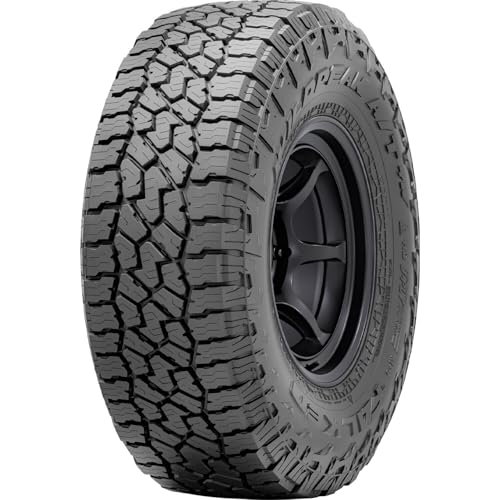
Falken Wildpeak A/T4W
Strengths
- All-weather rated
- Strong snow performance
- Durable tread compound
Trade-offs
- Pricier than budget options
- Slightly softer ride than expected
The Falken Wildpeak A/T4W stands out in the all-terrain space for its all-weather confidence, especially if you live where winters get serious but you still want solid off-road chops. On paper, it’s built for balance, aggressive enough tread to claw through mud and snow, yet tuned to stay quiet and predictable on highway stretches. Owners consistently report strong wet and cold-weather grip, and the 3PMSF certification backs up its winter readiness without leaning on studding.
It’s not the toughest sidewall in this lineup, BFG’s KO3 still wins there, but for drivers who want one set of tires that won’t quit in snowstorms or on backcountry trails, this is a smart middle ground. I’d pick it over the Thunderer or Westlake if you value safety in winter over upfront savings.
Video review
Travelstar Ecopath AT

Strengths
- Excellent bulk value
- Road hazard warranty
- High load capacity
Trade-offs
- Inconsistent tread wear
- Limited brand service network
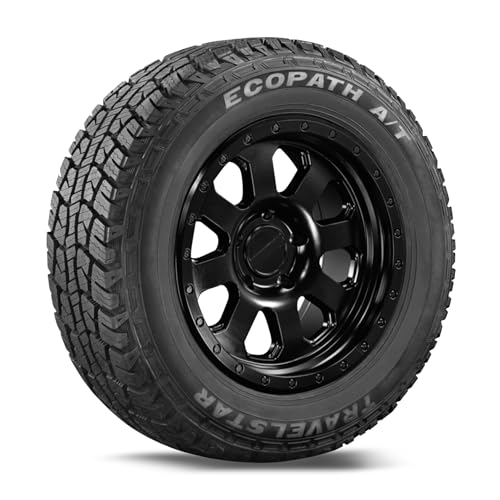
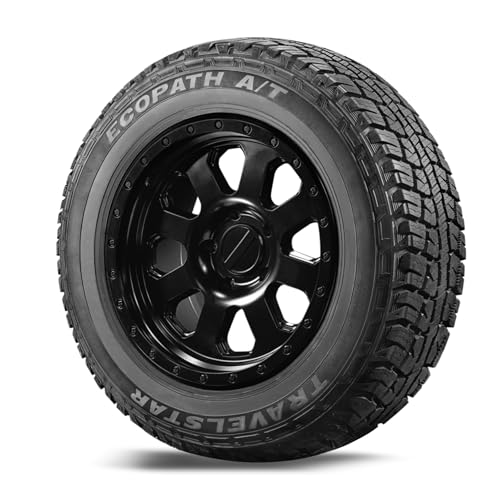
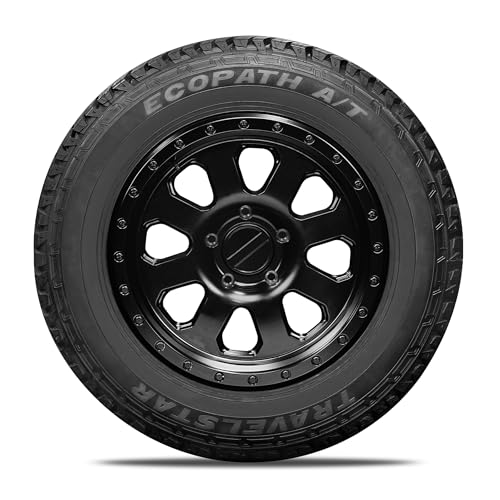
Buying tires in a set of four changes the value equation, and the Travelstar Ecopath AT bundle makes a strong play for best overall value when purchasing multiple tires. At this price per set, having a 50,000-mile tread warranty and a 3-year road hazard policy is impressive, most budget brands skip the latter. The 10-ply rating and high load capacity mean it can handle heavy trucks and towing duty without flinching.
On paper, the specs are well-rounded, but owner feedback highlights inconsistent quality control between individual tires in a set. Some report great wear, others mention early cupping. It’s not as proven as BFG or Goodyear, but for a fleet vehicle or work truck where cost per tire matters, it’s hard to ignore.
Product photos

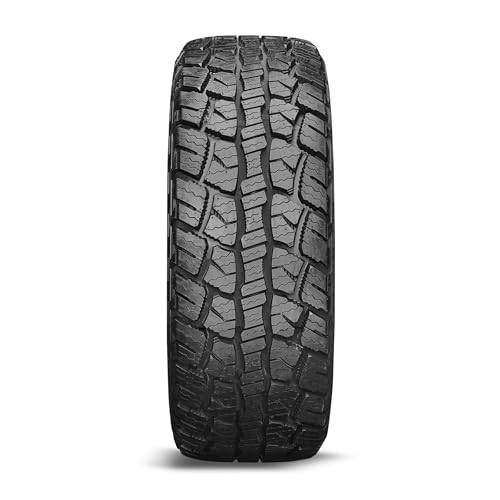
Thunderer Ranger ATR

Strengths
- High tread warranty
- Stud-capable
- Strong load rating
Trade-offs
- Noisy on pavement
- Mud traction is average
Thunderer has long played the value game, and the Ranger ATR delivers where it counts: durability on a budget. With a 55,000-mile tread warranty, full nylon overwrap, and 3D sipes for wet and winter traction, it’s surprisingly well-equipped for the price. The ability to stud it, where legal, is a rare perk in this segment and makes it a stealth pick for rural drivers facing icy backroads.
It’s not going to match the BFGoodrich or Falken in mud or rock, and road noise is a known issue from owner feedback. But if you’re running a work truck or a weekend trail rig and don’t want to blow your whole budget on tires, this one earns respect.
Product photos
Sailun Terramax RT

Strengths
- Excellent snow performance
- Studdable
- Strong off-road tread
Trade-offs
- Firmer ride quality
- Higher road noise
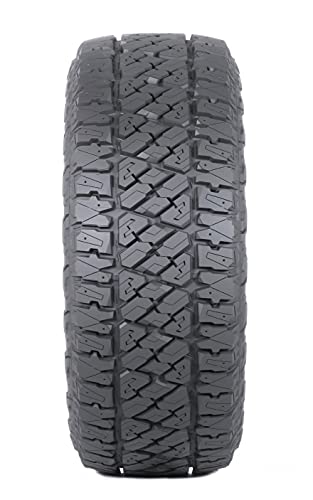
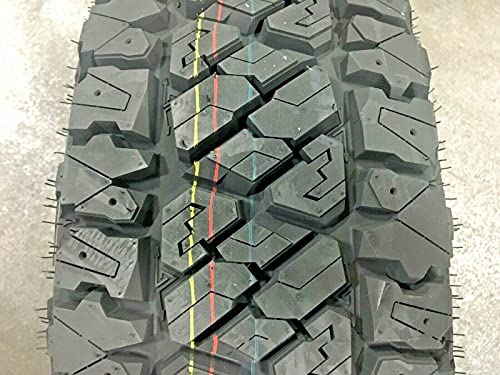
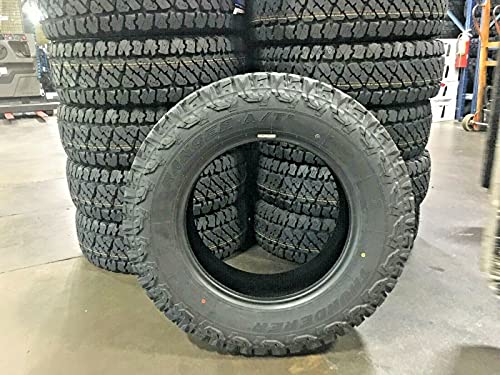
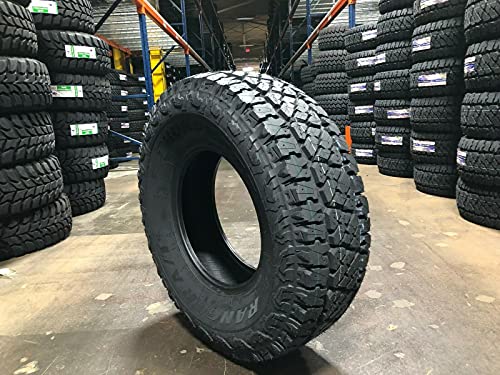
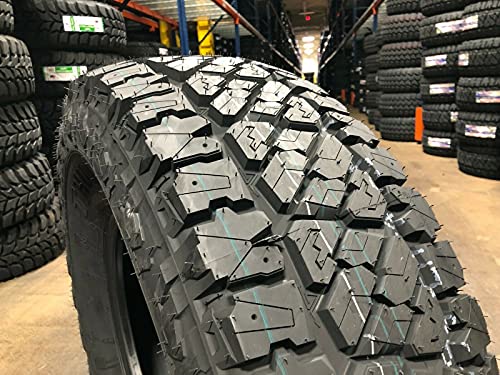
The Sailun Terramax RT blurs the line between all-terrain and rugged terrain, and that’s its biggest strength, if you’re okay with the trade-offs. It’s 3PMSF certified with studdable lugs, making it one of the best bets here for severe winter conditions. The staggered shoulder blocks and stone ejectors suggest real off-road intent, and Finite Element Analysis in the design helps keep noise down, which is rare for a rugged terrain pattern.
But that aggressive tread comes with a cost: a firmer ride and quicker center wear if alignment isn’t spot-on. Compared to the Crosswind, it’s louder; compared to the Falken, it’s less refined on highway. But for winter warriors who still hit trails, it’s a compelling hybrid.
Product photos
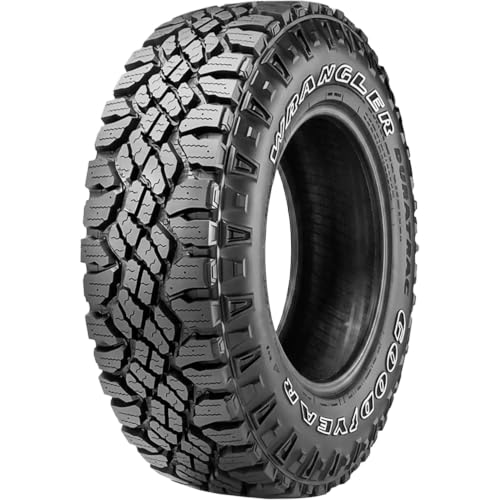
Goodyear Wrangler Duratrac
Strengths
- Outstanding mud grip
- Aggressive sidewall look
- Made in USA
Trade-offs
- No 3PMSF rating
- High road noise
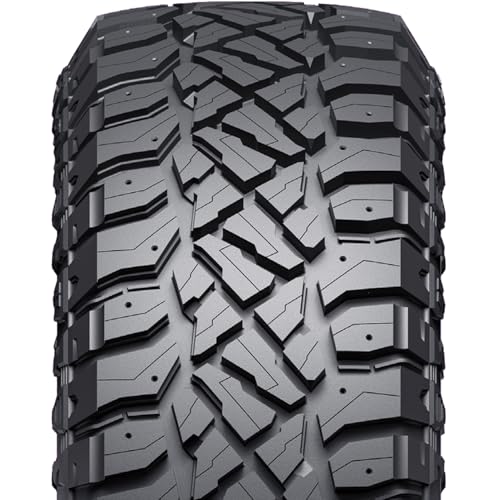
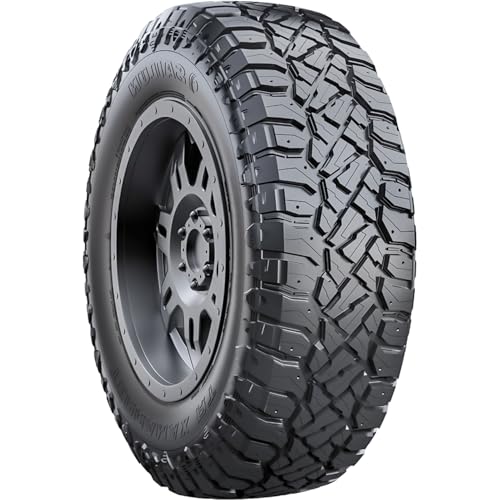
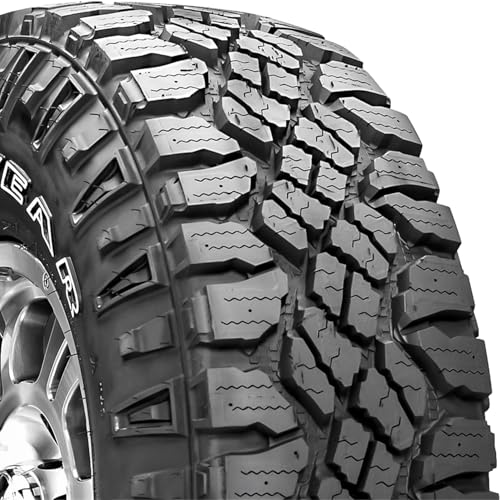
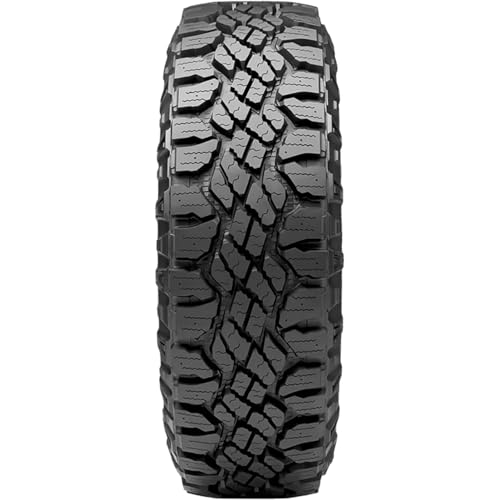
The Goodyear Wrangler Duratrac is a brute when it comes to mud and rock traction, and that’s where it shines brightest. The chunky tread blocks and self-cleaning design mean it doesn’t clog easily, and the OWL (Outline White Letter) sidewall gives it that classic off-road look many Jeep and truck owners love. It’s made in the USA, which still matters to some buyers, and the load capacity is solid for heavy-duty applications.
But that aggression comes at a cost: it’s louder than the Falken or Crosswind, and while it handles snow decently, it lacks 3PMSF certification. Compared to the KO3, it’s slightly less refined on long hauls. Still, if you’re crawling over boulders or mudding on weekends, this tire won’t let you down.
Product photos


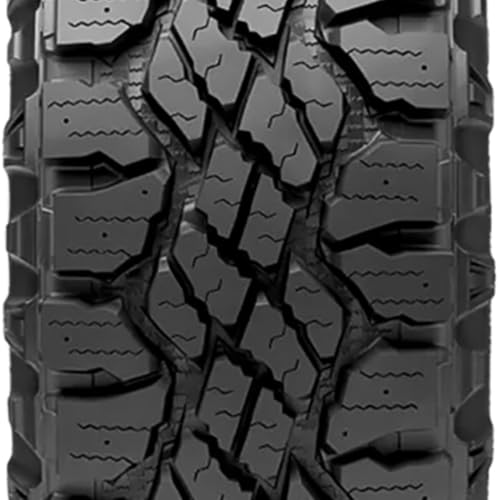
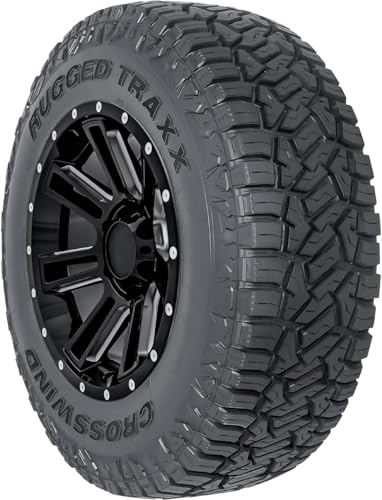
Crosswind Rugged Traxx
Strengths
- Quiet ride
- Good snow rating
- Affordable price
Trade-offs
- Limited off-road tenacity
- Tread wears faster under heavy loads
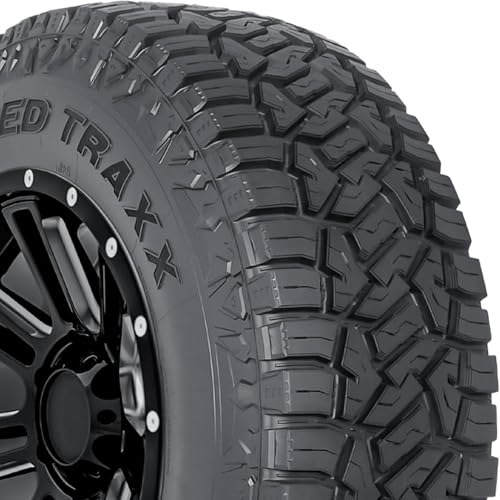
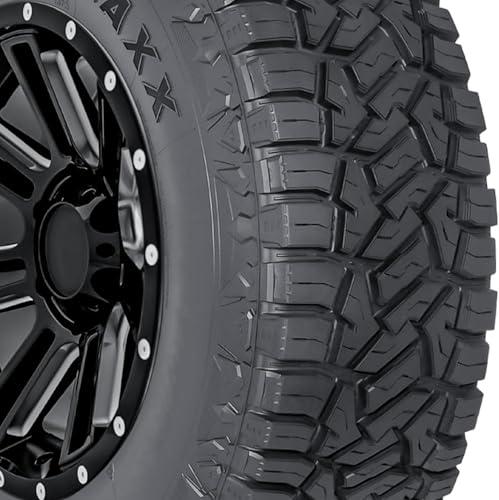
Crosswind isn’t a legacy name in off-roading, but the Rugged Traxx makes a real case for ride comfort at a low price. With a focus on reduced road noise and vibration, it’s clearly engineered with daily drivers in mind, especially Jeep and SUV owners who want a plush feel after a long commute. The 50,000-mile tread warranty is solid for the cost, and the 3PMSF rating means it won’t fold when snow hits.
Still, there’s no escaping that this tire leans softer on tread block rigidity. Reviewers note it handles gravel and packed dirt well, but it starts to squirm in deep mud or on sharp rock. Compared to the BFG KO3 or Goodyear Duratrac, it’s not built for punishment.
Product photos
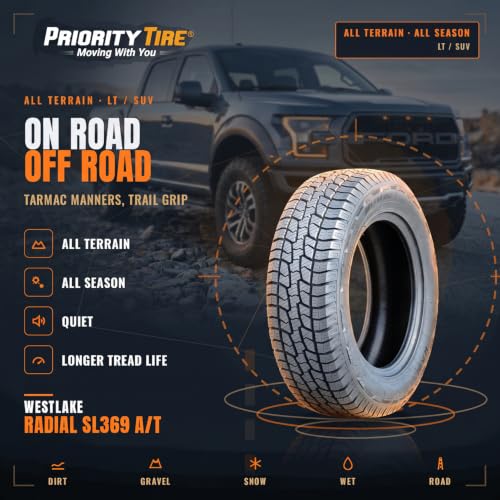
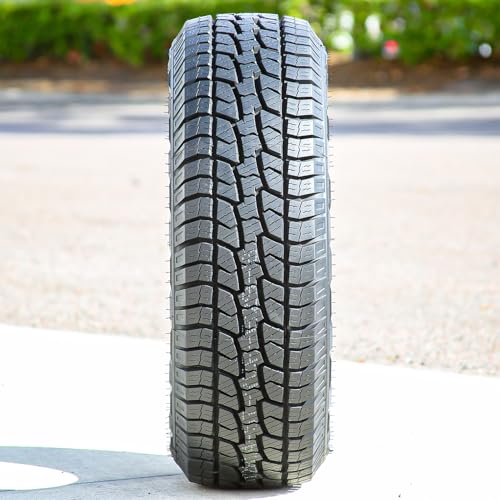
Westlake SL369 All Terrain

Strengths
- Lowest upfront cost
- Decent load rating
- Simple fitment
Trade-offs
- No tread warranty
- Poor snow performance
- Shorter tread life
The Westlake SL369 is the budget king on price alone, but you’re paying for what you get, basic capability at a rock-bottom cost. It’s a no-frills all-terrain with a 10-ply rating and decent load specs, so it can handle light truck duties without issue. But there’s no tread warranty listed, no 3PMSF rating, and no advanced sidewall tech.
Owners report it’s fine for paved roads and dry trails, but it struggles in snow and wears quickly on rough terrain. Compared to the Thunderer or Travelstar, it offers less support and fewer features. It works as a temporary fix or for a seldom-used vehicle, but I wouldn’t trust it on a long overland trip.
Product photos


How We Chose These 275/70r18 all terrain tires
My research for TheAutoZenith focused on a detailed comparison of specifications and features across numerous 275/70r18 all-terrain tires. I weighed published data – tread patterns, construction materials, load ratings – alongside extensive owner feedback from online retailers and dedicated tire forums. Reputable expert reviews from automotive publications were also considered, allowing me to build a ranking based on real-world performance indicators rather than a hands-on lab test.
For this category, sidewall strength and all-weather capability were the most heavily weighted factors. A tire’s ability to resist damage from rocks and rough terrain is paramount for most all-terrain users, and that ties directly into construction details like ply rating and CoreGard Technology (as seen in the BFGoodrich KO3). Equally important is performance beyond dry pavement; many drivers want a tire that confidently handles snow, ice, and wet conditions, so 3PMSF certification became a key differentiator. You can find similar considerations when looking at 275/65R18 all-terrain tires as well.
Published specifications reliably indicate a tire’s basic construction, ply rating, load capacity, and speed rating, and provide a foundation for comparison. However, real-world durability and ride comfort are best assessed through owner reviews. These sources reveal how tires perform over the long term and identify potential weaknesses not apparent in marketing materials. For those prioritizing robustness, exploring 10-ply all-terrain tires is a good starting point.
Choosing The Right 275/70r18 all terrain tires
Choosing the right all-terrain tire is about more than just looks; it’s about matching capability to your actual needs.
A good all-terrain tire balances on-road comfort with off-road grip. Key factors include tread pattern design, rubber compound durability, load rating, and sidewall construction. Look for tires with 3 Peak Mountain Snowflake (3PMS) certification if winter performance is a priority, and carefully consider the tire’s intended use, mud, gravel, snow, or a mix, to find the best fit.
Tread Pattern and Compound
The tread is where the rubber meets the road (and everything else), so pay attention to the details. Aggressive, widely spaced tread blocks excel in mud and loose gravel, but can generate more road noise. Denser patterns offer quieter highway driving but may struggle in deep muck. Consider the rubber compound too. Softer compounds grip better but wear faster, while harder compounds last longer but sacrifice some bite. If you’re often on pavement, a dual-compound tire, harder in the center for mileage, softer on the shoulders for grip, can be a good compromise.
Sidewall Strength and Construction
Don’t underestimate the importance of a robust sidewall. All-terrain tires are meant to withstand abuse, and sidewall punctures are a common off-road issue. Look for tires featuring reinforced sidewalls, often utilizing CoreGard (BFGoodrich) or similar technologies. The ply rating also matters. For heavier trucks or those frequently carrying loads, opting for a 10-ply construction provides superior strength and stability. You can find more information on durable 275/70R18 tires if you need extra toughness.
Balancing Cost and Capability
It’s easy to get caught up in top-tier features, but budget-friendly options can offer surprisingly good performance. The Travelstar Ecopath AT and Thunderer Ranger ATR, for example, provide a solid entry point for those who don’t demand the absolute highest levels of off-road prowess. Here’s what to keep in mind when balancing cost and performance:
- Warranty: A longer treadwear warranty suggests the manufacturer has confidence in the tire’s durability.
- Ply Rating: Don’t skimp on this if you haul heavy loads or drive on rough terrain. A higher ply rating means a stronger tire.
- Reviews: Read owner reviews carefully. They’ll give you real-world insights into how a tire performs over time, including wear patterns and noise levels.
A tire’s load range should always exceed the heaviest load your vehicle is expected to carry. Underestimating this can lead to premature failure, reduced handling, and a compromised ride.
If you’re considering a larger size, like a 295/70R18 all-terrain tires, remember to check for adequate clearance in your vehicle’s wheel wells.
275/70R18 All Terrain Tires Compared
The following table provides a specification comparison of various 275/70R18 all terrain tires.
| Tire Model | Load Range | Tread Wear Warranty (Miles) | Speed Rating | 3PMS Rating | Ply Rating |
|---|---|---|---|---|---|
| BFGoodrich All-Terrain T/A KO3 | N/A | 50,000 | N/A | No | N/A |
| Falken Wildpeak A/T4W | N/A | N/A | N/A | Yes | N/A |
| Travelstar Ecopath AT | E | 50,000 | S (112 mph) | No | 10 |
| Thunderer Ranger ATR | N/A | 55,000 | N/A | No | N/A |
| Sailun Terramax RT | N/A | N/A | N/A | Yes | 10 |
| Goodyear Wrangler Duratrac | N/A | N/A | N/A | Yes | N/A |
| Crosswind Rugged Traxx | N/A | 50,000 | N/A | Yes | N/A |
| Westlake SL369 All Terrain | N/A | N/A | N/A | No | N/A |
Frequently Asked Questions
What load range should I prioritize for a heavily loaded truck?
A load range E is generally best for heavier trucks or those frequently towing, as it offers the highest load-carrying capacity and improved stability. Lower load ranges (like C or D) may suffice for lighter duty use, but exceeding the tire’s load capacity is a safety risk.
Are 3PMSF-rated tires truly better in winter conditions?
Yes, tires with the 3 Peak Mountain Snowflake (3PMSF) symbol have met specific performance criteria for snow traction. While not a replacement for dedicated winter tires, 3PMSF-rated all-terrain tires offer a significant advantage over those without the rating in snowy or icy conditions.
How do I decipher a tire’s speed rating?
A tire’s speed rating (like S, T, or H) indicates the maximum speed at which the tire can safely carry a load. It’s represented by a letter, with higher letters corresponding to higher speeds; for example, an ‘S’ rating equates to 112 mph. Always adhere to the vehicle manufacturer’s recommendations.
What’s the difference between a 6-ply and a 10-ply tire?
A 10-ply tire has more layers of reinforcing material in its sidewall, making it significantly stronger and more resistant to punctures and damage. While 6-ply tires are suitable for lighter use, a 10-ply construction is preferable for off-roading, hauling, or driving on rocky terrain. You might also consider looking at best truck all-terrain tires for enhanced durability.
Will a more aggressive tread pattern significantly impact fuel economy?
Generally, yes. Aggressive tread patterns with larger tread blocks increase rolling resistance, which can lead to a slight decrease in fuel economy. However, the difference is usually minimal for most drivers and may be offset by the improved traction and capability. If you’re looking for a slightly smaller size, you might also evaluate 265/70R18 all-terrain tires as an option.
The Bottom Line
Choosing all-terrain tires often comes down to balancing outright capability with everyday usability. For the broadest appeal – a tire that truly delivers on the all-terrain promise without significant compromises – the BFGoodrich All-Terrain T/A KO3 stands out as the strongest overall pick. It’s a tire built on a legacy of toughness and proven performance, and while it carries a premium price, the durability and grip are hard to beat.
If budget is a primary concern, the Travelstar Ecopath AT offers a surprisingly capable option for the price. Those who need maximum versatility, especially a tire that confidently handles winter conditions, will find the Falken Wildpeak A/T4W to be an excellent choice, and it consistently ranks among the best all-terrain tires for good reason. If you’re willing to step up in size, be sure to check out our guide to 285/70R18 all-terrain tires as well.
Ultimately, specifications and features are just pieces of the puzzle. Remember that sidewall strength, tread pattern, and load rating are all important, but they’re most effective when matched to your driving style and typical terrain. Don’t get lost in the details; prioritize a tire that suits your needs and enjoy the ride.
