
7 Best 26 MTB Tires of 2026
This post contains affiliate links. As an Amazon Associate, we earn from qualifying purchases.
The Maxxis Minion DHF stands out as the best 26 mtb tire for its confident grip and durable EXO casing, making it ideal for trail and enduro riding. For budget-minded riders, the Fincci 26×2.10 offers solid performance at a lower price, while the Maxxis Ikon is a great lightweight option for cross-country riders who value speed and efficiency.
Riders still running 26-inch wheels often face limited choices, with many brands shifting focus to 27.5 and 29ers. But for those of us with older frames, single-speed builds, or specific handling preferences, finding a capable 26” tire matters. After researching the current market, comparing specs, and reviewing owner feedback across forums and retailers, I focused on models that deliver real-world durability, grip, and value.
This guide breaks down what actually matters, tread design, casing quality, and width, so you can pick a tire that matches your terrain and riding style without getting lost in outdated or overhyped options.
Top 7 26 Mtb Tires in the Market
The Best 26 Mtb Tires, Reviewed
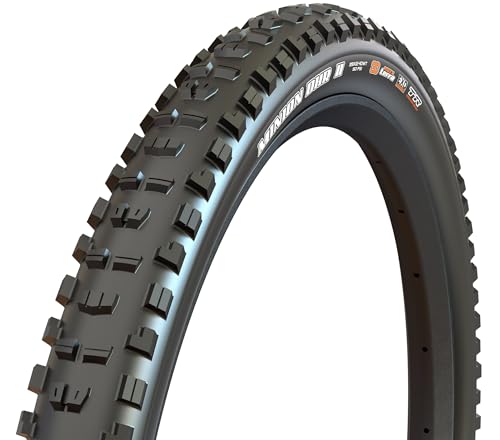
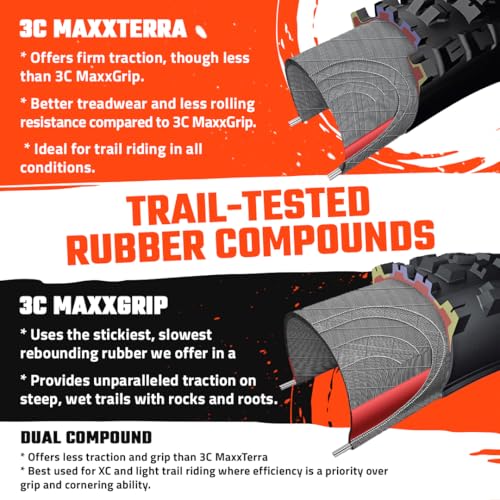
Maxxis Minion DHR II 26×2.30
Strengths
- Excellent braking traction
- Dual compound grip
- EXO sidewall protection
Trade-offs
- Higher rolling resistance
- Pricier than budget options
The Minion DHR II has earned its reputation as a do-it-all rear tire, and in 26-inch form, it’s a rare gem for riders keeping older or smaller-frame rigs alive. The dual compound rubber gives you sticky cornering grip without turning the ride into a slog, and the EXO sidewall protection helps fend off cuts on rocky trails. Owners praise its braking traction, especially on loose or wet descents, making it a confident match for technical terrain.
While it’s often paired with the DHF up front, the DHR II can work solo on less aggressive builds. The E25 rating means it’s safe for light e-MTB use, which is a plus for modernized retrofits. At this price, it’s not cheap, but it’s the kind of tire you buy when you want performance that matches real trail demands.
Video review
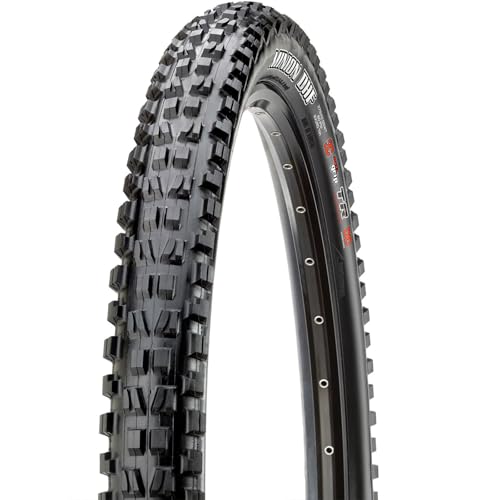
Maxxis Minion DHF 26×2.30
Strengths
- Superior cornering grip
- Proven tread design
- EXO sidewall durability
Trade-offs
- Heavy for XC use
- Slower rolling on pavement
The Minion DHF is the gold standard for front MTB tires, and in 26×2.30 with dual compound and EXO protection, it’s a dream for riders keeping vintage or smaller-wheeled trail bikes alive. The widely spaced, ramped knobs offer superb braking traction and predictable cornering bite, especially in loose or overgrown conditions. Reviewers often say it inspires confidence when other tires wash out.
It’s not the fastest-rolling tire, but that’s the trade-off for its legendary grip. The E25 rating means it can handle light e-MTB builds, which is a bonus. Compared to the DHR II, it’s better suited up front, though some run it solo. If you’re chasing real trail performance and still riding 26-inch, this is the tire to beat.
Video review
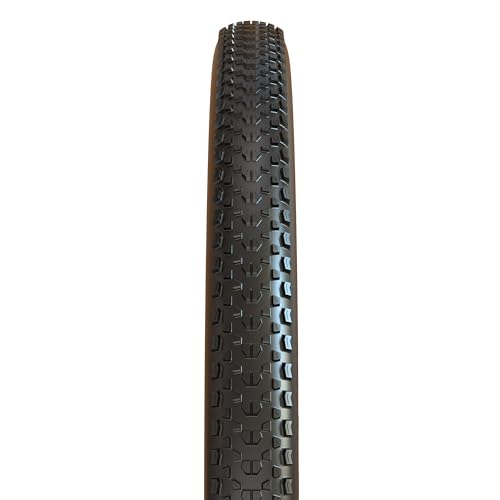
Maxxis Ikon 26×2.20

Strengths
- Low rolling resistance
- Reliable hardpack grip
- EXO puncture protection
Trade-offs
- Less grip in wet mud
- Single compound limits cornering stickiness
The Maxxis Ikon is one of those tires that keeps showing up on well-built XC rigs for a reason. In 26×2.20 with EXO protection, it strikes a smart balance: light enough for climbing, with a tread pattern that bites well on hardpack and loose-over-hard surfaces. The single compound rubber keeps rolling resistance low, which XC riders will appreciate, even if it means sacrificing a bit of sticky grip in wet corners.
Owners consistently report long tread life and predictable handling, especially on fire roads and flow trails. The E25 rating adds versatility for e-bike conversions, though purists might skip the extra weight. Compared to the DHF or DHR II, it’s not meant for aggressive terrain, but that’s not its job. For cross-country riders who value efficiency, it’s hard to beat.
Product photos

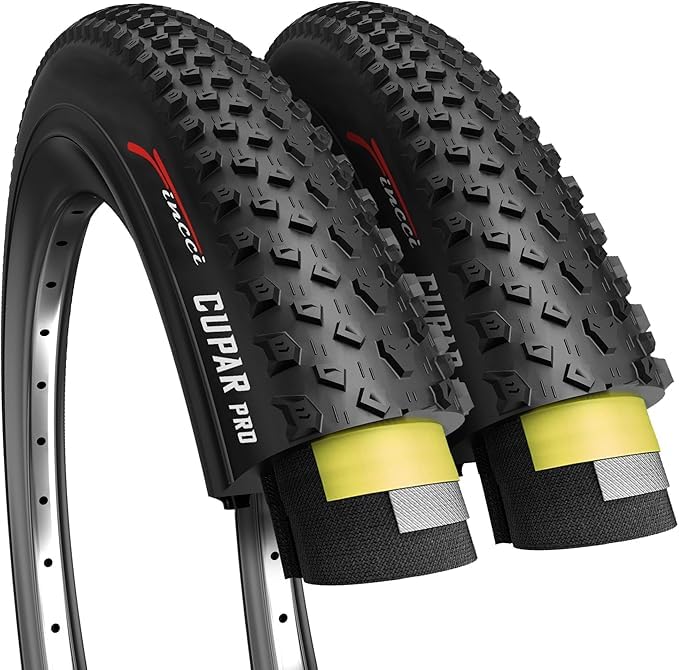
Fincci 26×2.10 Foldable Tire
Strengths
- Puncture resistant
- Foldable Kevlar bead
- 60 TPI casing
Trade-offs
- Tread lacks bite off-road
- Tight installation reported
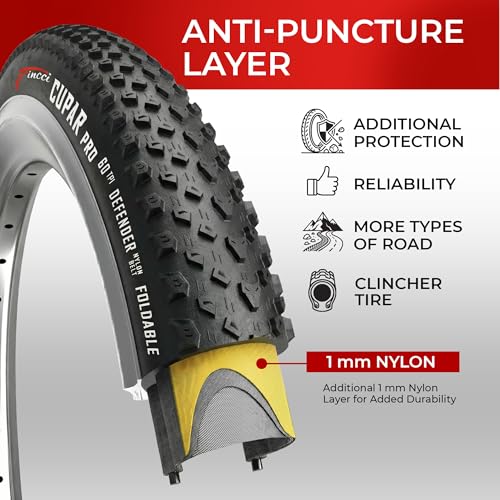
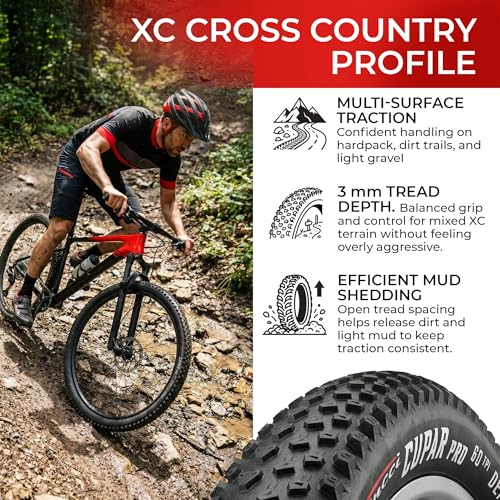
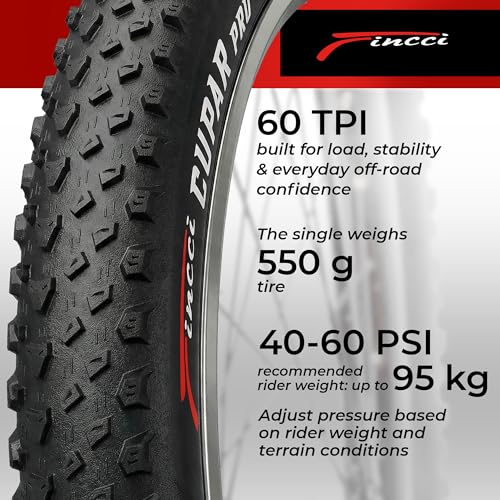
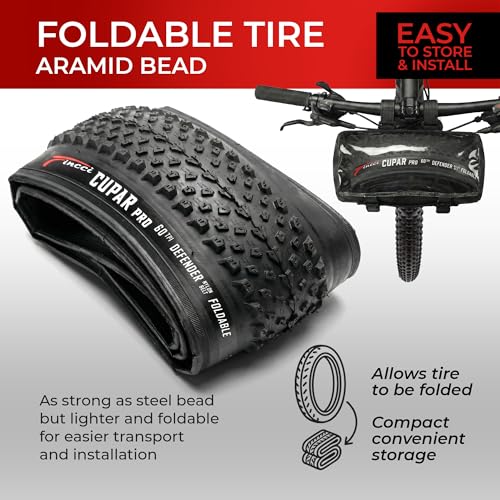
If you’re tired of pinch flats on city rides or light trail commutes, the Fincci 26×2.10 tires make a solid case for themselves. The 1mm nylon puncture-proof layer stands out on paper, and owners consistently report fewer flats compared to basic commuter tires. With a 60 TPI casing and foldable Kevlar bead, they’re lighter than many budget options and roll surprisingly well on pavement and packed gravel.
The cross-country tread profile isn’t aggressive, so don’t expect confidence on loose descents. But for hybrid use, commuting, bike paths, light trails, it’s a balanced pick. Reviewers note the fit can be tight on some rims, but once seated, they hold air without issues. For the price, it’s a dependable upgrade over OEM tires, especially if durability is your priority.
Product photos

26×2.10 MTB Tire Set
Strengths
- Complete package included
- Affordable 2-pack
- Foldable for storage
Trade-offs
- Basic 30 TPI construction
- Tubes not high-end
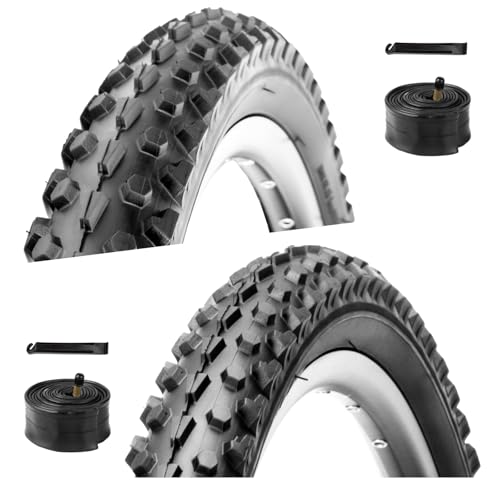
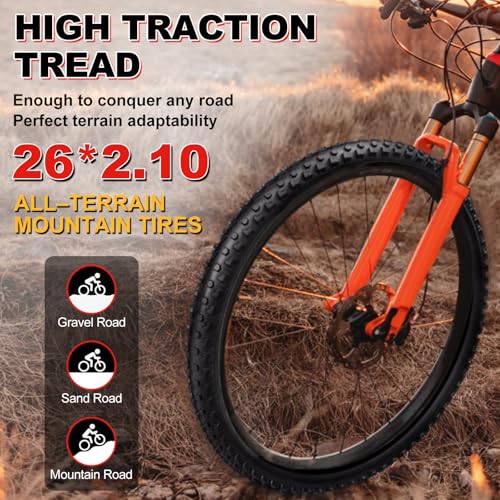
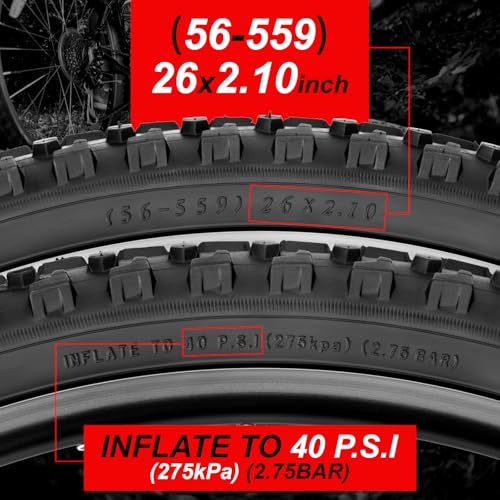
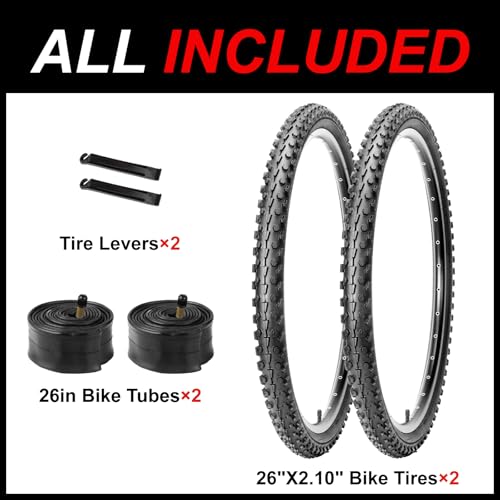
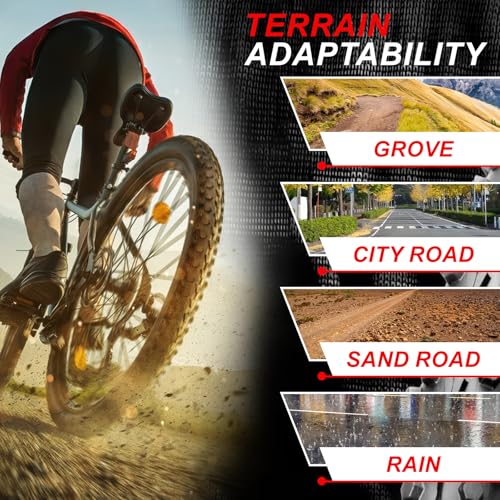
At this price, getting two tires, two tubes, and tire levers feels like a no-brainer for someone replacing worn-out rubber or kitting out a backup bike. The 30 TPI casing and rubber compound aren’t high-end, but owners confirm they hold up fine for casual trail use and neighborhood rides. The tread pattern is compact but delivers decent grip on dry dirt and pavement, making it a practical choice for entry-level MTBs.
Where it shines is convenience. Having tubes and levers included saves time and hassle, especially for first-time changers. The foldable design helps with storage, though the durability isn’t on par with premium brands. If you’re not pushing hard on the trails and want a set-and-forget solution, this pack delivers real value.
Product photos

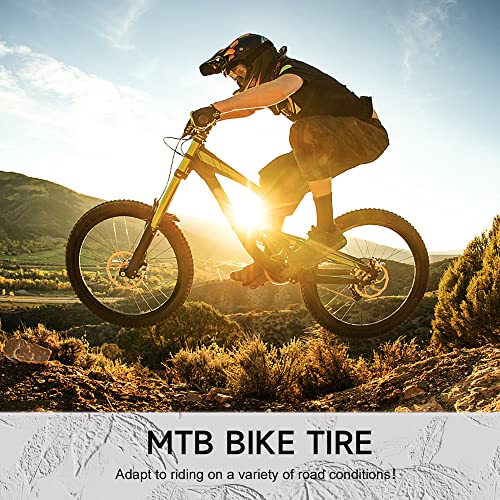
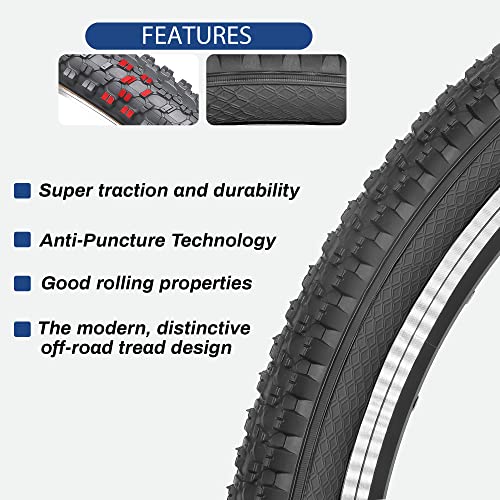
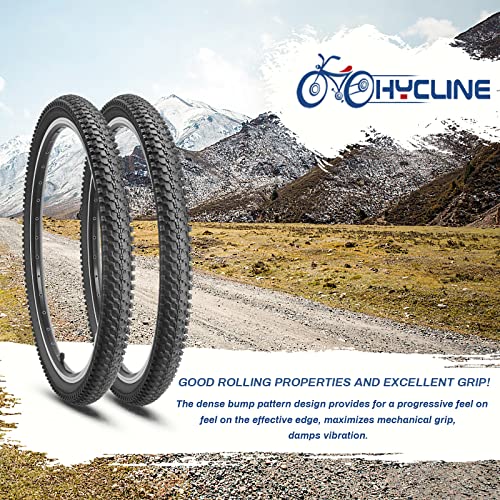
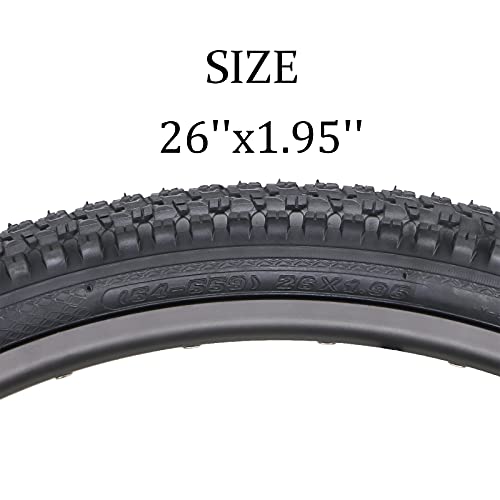
Hycline 26×1.95 Tire 2-Pack

Strengths
- Aggressive tread for price
- Puncture-resistant layer
- Includes tire levers
Trade-offs
- Steel bead limits folding life
- Average ride quality
At under $30 for two, the Hycline 26×1.95 tires are a standout for budget-focused riders who still want some trail capability. The open tread design looks aggressive on paper, and owners confirm it sheds mud better than most tires in this range. The puncture-resistant layer helps, though it’s not as robust as Maxxis’ EXO or Fincci’s 1mm nylon. Still, for the price, the added durability is a welcome touch.
Installation is eased by the included tire levers, and the carbon steel bead allows folding without damage, useful for spares. They’re not fast-rolling or supple, but for weekend trail rides or a kid’s bike upgrade, they get the job done. I’d pick these over generic no-name tires any day.
Product photos

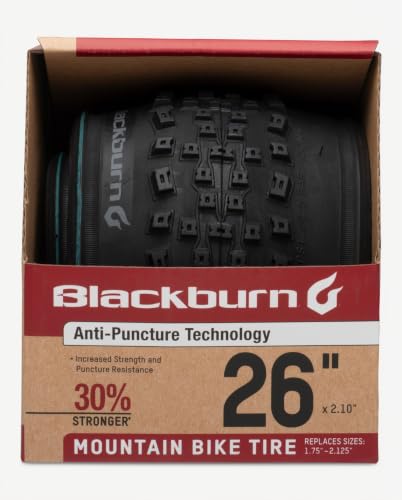
Blackburn 26″ x 1.75-2.25

Strengths
- Very lightweight
- Low price
- Tall tread for grip
Trade-offs
- Limited puncture protection
- Steel bead less durable
The Blackburn 26-inch tire leans hard into the lightweight, low-resistance niche, and at under $17, it’s one of the most affordable options here. With a tall, knobby tread, it offers decent grip on dry trails and hardpack, but the focus is clearly on reducing weight and rolling drag. The carbon steel bead allows folding, though it won’t last as long as Kevlar under repeated flexing.
Owners report mixed durability, fine for occasional trail use or fair-weather commuting, but prone to cuts on rocky paths. It’s not built for aggressive riding, and the single-layer protection won’t stop sharp thorns like higher-end models. But for a spare tire or a commuter bike that sees occasional dirt, it’s a serviceable, no-frills pick.
Product photos


How We Picked These 26 mtb tires
Rather than a hands-on lab test, my research focused on a detailed comparison of published specifications and features across numerous 26-inch mountain bike tire models. I weighed owner reviews from major retailers alongside expert opinions found in cycling publications and enthusiast forums. This allowed me to build a ranking based on real-world feedback and technical data, factoring in intended use cases like cross-country, trail riding, and all-around performance.
For 26” MTB tires, grip, durability, and rolling resistance are the primary differentiators. Aggressive tread patterns contribute to superior grip on loose surfaces, but often at the expense of speed on pavement. Sidewall protection, like EXO or similar compounds, heavily influences resistance to cuts and abrasions. Ultimately, the ideal balance between these factors depends on the rider’s typical terrain and riding style. You might even consider tires for mixed surfaces if you regularly transition between on and off-road conditions.
Specifications reliably indicate tire width, TPI (threads per inch – a measure of casing flexibility), and PSI (pounds per square inch) range. However, owner feedback proved crucial for assessing real-world puncture resistance and tread wear. Concerns about new tire slipperiness were also noted in reviews, highlighting the importance of proper break-in procedures to maximize grip. Reputation and brand consistency played a role in evaluating overall quality and reliability.
Choosing The Right 26 mtb tires
Choosing the right mountain bike tire can dramatically transform your ride, impacting everything from speed and control to comfort and confidence.
A good mountain bike tire balances rolling resistance, grip, durability, and weight. Key considerations include tread pattern suited to terrain, casing construction for puncture protection and sidewall stability, rubber compound for grip in various conditions, and appropriate tire width for rider weight and riding style. Don’t overlook ETRTO sizing to ensure compatibility with your rims.
Tread Pattern & Terrain
The tread is where the rubber meets the dirt, and selecting the right pattern is critical. Aggressive, widely spaced knobs excel in loose conditions like mud and loam, digging in for maximum traction. However, these can feel slow and inefficient on hardpack. Conversely, tighter, smaller knobs roll faster on smoother surfaces but may struggle for grip when things get slick. Consider where you ride most often. If you’re frequently tackling technical trails, you’ll want something like the Maxxis Minion DHF, which balances rolling speed with braking and cornering traction. If you spend more time on flow trails or cross-country courses, a faster-rolling option is better.
Casing & Puncture Protection
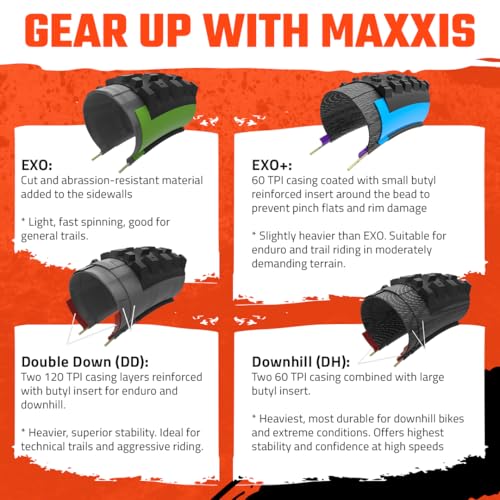
The tire casing is the foundation of its durability and ride feel. A lighter casing will be more supple and offer better grip, but it’s also more susceptible to punctures and damage. Heavier casings provide more protection but can feel sluggish. Many tires, like those from Maxxis, incorporate features like EXO sidewall reinforcement, which adds a layer of cut and abrasion resistance without a significant weight penalty. For riders concerned about flats, especially on rocky terrain, prioritizing a robust casing is wise.
- A basic casing is fine for well-maintained trails and lighter riders.
- A reinforced casing (like EXO) is a good all-around choice, balancing protection and weight.
- A downhill-rated casing with multiple layers is essential for aggressive riding and rocky terrain – it will add significant weight, but minimizes the risk of pinch flats and sidewall tears.
Understanding casing ply (measured in TPI – threads per inch) is useful. Higher TPI casings are more supple, but lower TPI casings are more durable.
A tire’s casing is its skeleton. Prioritize puncture protection if you ride rocky or thorny trails, even if it means a slight weight increase.
Width & Rider Weight
Tire width impacts both comfort and handling. Wider tires offer more cushioning and grip, especially at lower pressures. This is particularly beneficial for heavier riders or those riding rough terrain. However, wider tires can also feel slower and less precise. As a general rule, heavier riders benefit from wider tires. If you’re looking for fast rolling MTB tires for cross-country racing, a narrower width (around 2.2 inches) is often preferred. For more aggressive trail riding, 2.3 to 2.5 inches is a common sweet spot. Don’t underestimate the impact of tire width and snow if you plan to ride through winter conditions.
26 MTB Tires Compared
Here’s a comparison of specifications for various 26-inch mountain bike tires to help you make an informed purchase.
| Product Name | Size | Width (in) | PSI Range | TPI | EXO | E25 |
|---|---|---|---|---|---|---|
| Maxxis Minion DHR II | 26×2.30 | 2.30 | N/A | N/A | Yes | Yes |
| Maxxis Minion DHF | 26×2.30 | 2.30 | N/A | N/A | Yes | Yes |
| Maxxis Ikon | 26×2.20 | 2.20 | N/A | N/A | Yes | Yes |
| Fincci 26×2.10 | 26×2.10 | 2.10 | N/A | 60 | N/A | N/A |
| 26×2.10 MTB Tire Set | 26×2.10 | 2.10 | 40 | 30 | N/A | N/A |
| Hycline 26×1.95 | 26×1.95 | 1.95 | 30-80 | 30 | N/A | N/A |
| Blackburn 26″ x 1.75-2.25 | 26×1.75-2.25 | 1.75-2.25 | 35-65 | N/A | N/A | N/A |
Frequently Asked Questions
What tire width is best for a heavier rider on a 26” MTB?
Generally, a wider tire is preferable for heavier riders. A 2.3 to 2.5-inch width will provide more cushioning and grip at lower pressures, improving both comfort and control, but always check your frame and fork clearance.
Do tires with EXO sidewall protection significantly increase weight?
EXO protection adds a layer of cut and abrasion resistance with a minimal weight penalty. Most riders won’t notice a substantial difference in weight, and the added durability is a worthwhile tradeoff for many trail conditions.
What PSI should I run in my 26” MTB tires?
Ideal PSI depends on your weight, riding style, and the terrain, but most 26” tires have a recommended range printed on the sidewall. Starting in the middle of that range and adjusting based on feel is best; lower pressures improve grip, while higher pressures reduce rolling resistance.
How do I know if my 26” tires are compatible with my rims?
Checking the ETRTO sizing (bead seat diameter) is crucial for compatibility. Most 26” mountain bike rims use a 559mm ETRTO size, but it’s always best to verify this matches the tire specifications before purchasing to avoid installation issues.
Can I use all-terrain tires on a mountain bike for some road riding?
While possible, it’s not ideal. All-terrain tires will significantly increase rolling resistance on pavement, making your ride less efficient and slower, so a tire designed for mixed surfaces or a dedicated road/gravel tire is a better choice if you regularly ride on roads.
The Bottom Line
Choosing 26” mountain bike tires always involves a trade-off between speed, grip, and durability. If you want a single tire that delivers a great balance of these qualities, the Maxxis Minion DHF stands out as a remarkably versatile option; its reputation for reliable performance across varied terrain is well-deserved. Really, though, there’s no single “best” – it all depends on how and where you ride.
For riders on a tighter budget, the Fincci 26×2.10 offers a surprisingly capable experience without breaking the bank. If you prioritize all-out speed for cross-country racing, the Maxxis Ikon delivers a fast-rolling design that minimizes drag. However, remember that neglecting bald tires can create a dangerous situation, so keep an eye on tread wear.
Ultimately, the most important factors aren’t PSI ranges or TPI counts, but how well the tire matches your riding style and the trails you frequent. Don’t get caught up chasing the latest tech; focus on finding a tire that inspires confidence and allows you to enjoy the ride. Considering advantages of bigger tires can also help you dial in the right fit for your needs.
