
7 Best 20 Inch Truck Tires of 2026
This post contains affiliate links. As an Amazon Associate, we earn from qualifying purchases.
The overall best 20 inch truck tire is the Armstrong Tru-Trac AT, offering strong all-terrain performance and a 60,000-mile warranty. For a budget-friendly option, the Atturo Trail Blade A/T delivers solid value without major compromises. If you’re after maximum versatility for mixed driving, the Prinx HiCountry A/T2 is a smart pick.
Choosing the right 20 inch truck tire isn’t just about fitment, it’s about matching the tire to your truck’s demands, whether that’s towing, off-roading, or daily driving. Too many drivers end up with noisy, short-lived tires because they overlooked load range or tread type.
This guide cuts through the noise. I compared specs, owner feedback, and expert insights to highlight tires that deliver where it matters: durability, traction, and real-world value. You’ll find picks suited for everything from highway cruising to weekend trail runs.
Top 7 20 Inch Truck Tires in the Market
The Best 20 Inch Truck Tires, Reviewed
Atturo Trail Blade A/T
Strengths
- 3PMSF certified
- Stable under load
- 50k mile warranty
Trade-offs
- Not extreme off-road
- Sipes can stiffen over time
- Limited size range at 20”
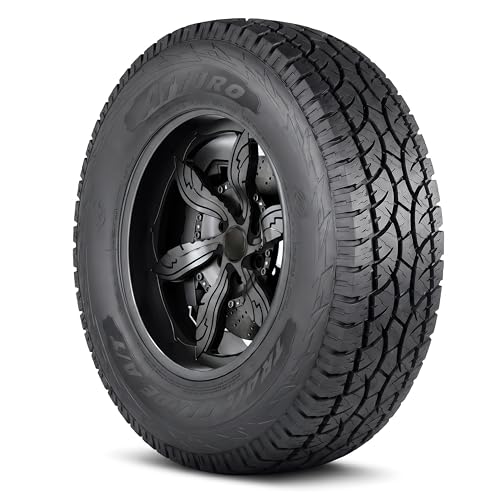
If I had to pick one tire that balances daily drivability, winter readiness, and workhorse toughness, it would be the ATTURO Trail Blade A/T. It’s 3PMSF certified, which means it’s legit in snow and ice, not just M+S rated and left to guesswork. The interlocked center tread delivers impressive highway stability, and owners report minimal vibration even at highway speeds, which is rare in this class.
It also carries a 50,000-mile warranty and comes in LT sizes up to 10-ply, so it can handle heavy loads without squirming. Compared to the Prinx, it feels more stable under load, and against the Barkley, it’s far more civilized on pavement. This is the tire I’d recommend to someone who wants one set to do everything well without overspending.
Video review
Starfire Solarus HT All-Season

Strengths
- Budget priced
- Quiet ride
- Cooper-built
Trade-offs
- Not all-terrain
- H-speed rating
- Basic snow performance
The Starfire Solarus HT is clearly positioned as the budget highway tire in this lineup. Manufactured by Cooper, it benefits from some behind-the-scenes engineering, and the 50,000-mile warranty suggests it won’t disappear too quickly. It’s an H-speed rated touring tire, so it’s not meant for high performance, but for light-duty pickups and SUVs, it delivers a quiet, smooth ride with decent all-season grip.
However, it’s an all-season touring tire, not an all-terrain, so don’t expect gravel confidence or snow prowess beyond basic M+S rating. Compared to the ATTURO or Prinx, it’s outclassed in winter and off-road. But for city drivers or weekend errand runners who want a no-fuss, affordable 20-inch tire, it gets the job done. Just know you’re sacrificing capability for cost.
Video review
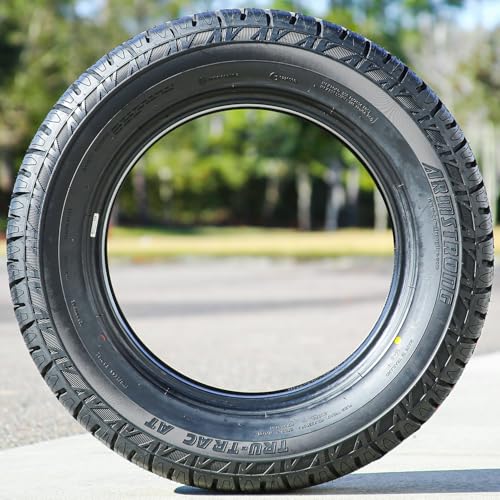
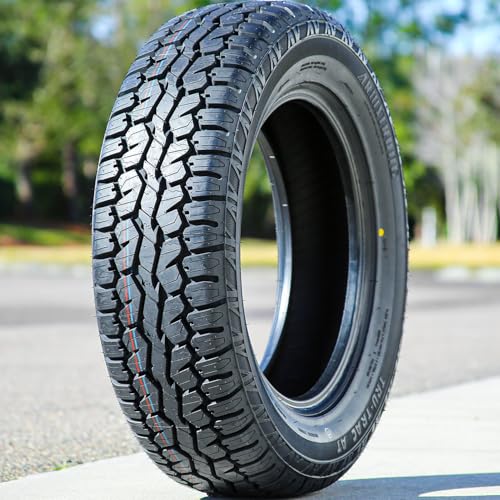
Armstrong Tru-Trac AT
Strengths
- 60k mile treadwear
- XL load rated
- Even wear
Trade-offs
- No 3PMSF rating
- Average snow performance
- Basic tread design
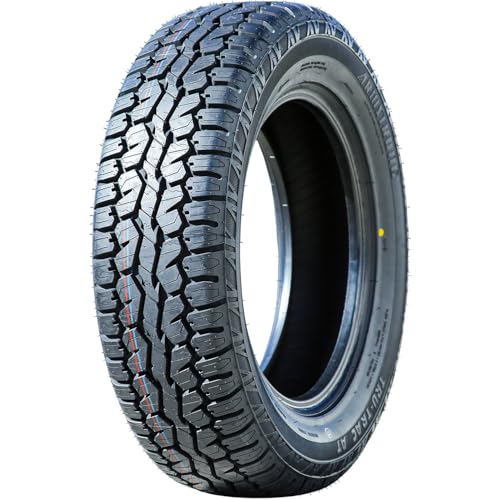
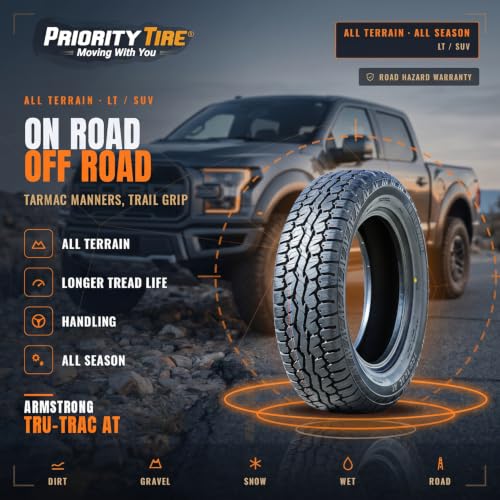
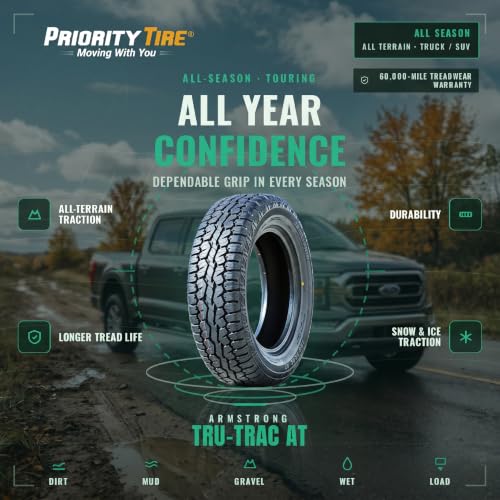
The Armstrong Tru-Trac AT hits a sweet spot between durability and value. With a 60,000-mile treadwear rating, higher than most in this group, and an XL load rating supporting 2,833 lbs per tire, it’s clearly engineered for real truck duty. The UTQG 560AB suggests longer tread life and solid wet traction, and owners confirm it wears evenly over time, even under regular load.
It doesn’t have the 3PMSF certification like the Prinx or Crosswind, so I wouldn’t fully trust it in heavy snow, but for year-round dry and wet conditions, it’s dependable. Compared to the ATTURO, it lacks some winter refinement, but for pure value and longevity on paved roads and gravel, it’s one of the smarter budget-savvy choices for work trucks.
Product photos

Prinx HiCountry A/T2
Strengths
- 3PMSF certified
- Strong snow grip
- Aggressive siping
Trade-offs
- No published treadwear
- Average tread life reports
- Less off-road aggression
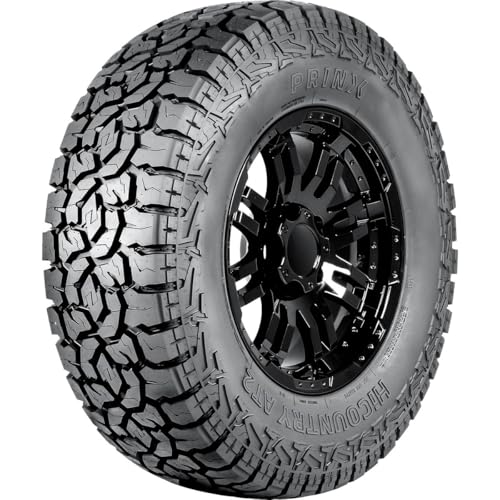
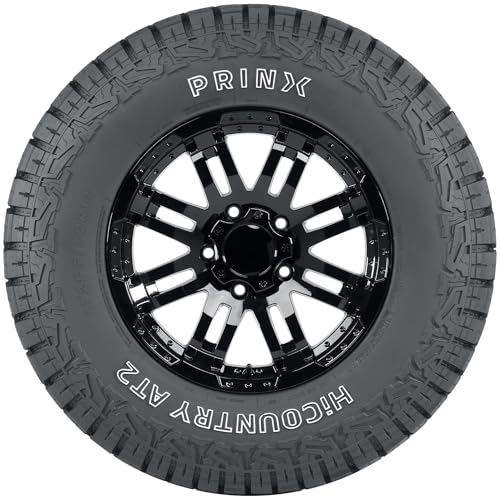
The Prinx HiCountry A/T2 earns its ‘Best for Winter Traction’ label thanks to the 3PMSF certification and aggressive multi-step siping that bites into snow and ice. It’s also M+S rated, so it handles mud decently, and the tread pattern is designed to resist snow packing, a real issue in colder climates. Owners in northern states report strong winter performance, especially compared to non-3PMSF all-terrains like the Armstrong.
That said, it’s not the most durable option long-term, and the treadwear rating isn’t published, which raises questions about longevity. Ride comfort is good but not class-leading. Still, if you live where snow is a real concern and want confidence without switching to dedicated winter tires, this is a solid choice. I’d pick it over the Starfire or Fullway any snowy winter.
Product photos

Barkley Rammus X/T
Strengths
- Extreme off-road grip
- Reinforced sidewalls
- 12-ply durability
Trade-offs
- Noisy on pavement
- Rougher ride quality
- Higher rolling resistance
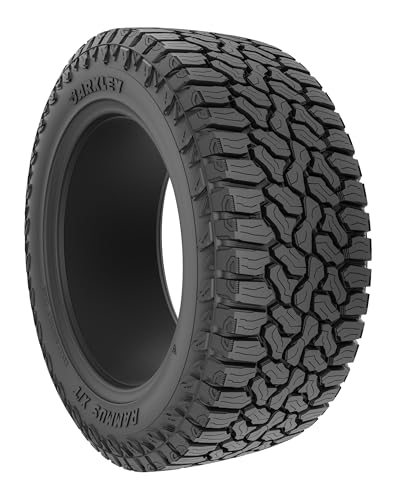
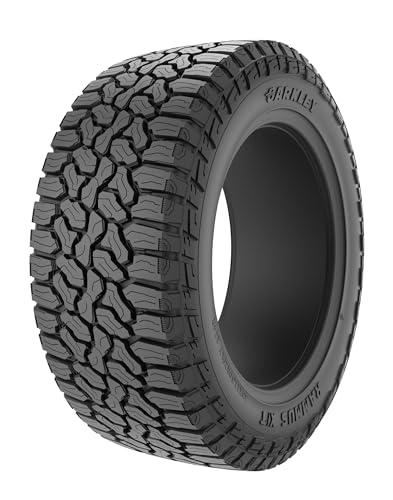
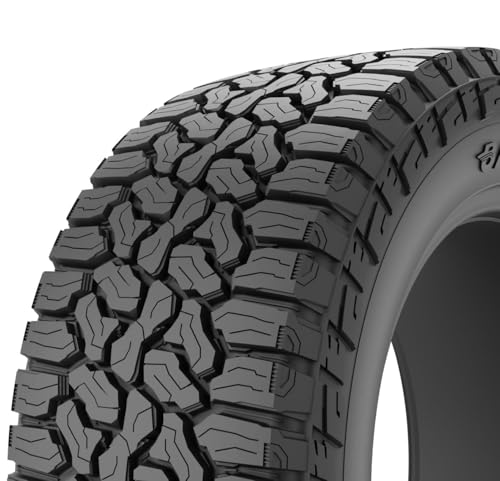
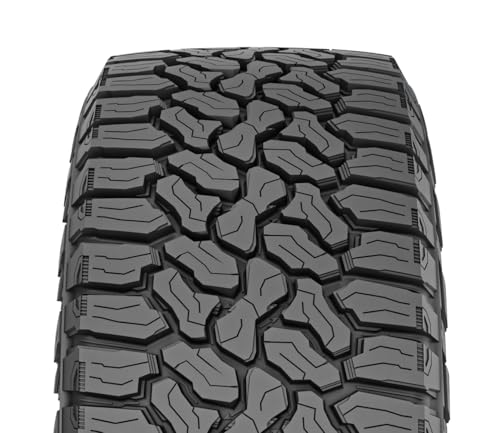
The Barkley Rammus X/T is built for one thing: extreme off-road performance. With a 12-ply Load Range F rating and an aggressive hybrid tread featuring deep voids and interlocking blocks, this tire is clearly designed to claw through mud, rock, and sand where others would surrender. The reinforced sidewalls and extended shoulder lugs are exactly what you want when crawling over sharp rocks or airing down for traction.
On pavement, it’s predictably rougher, owners report increased road noise and a stiffer ride, but that’s the trade-off with any tire this capable off-road. Compared to the ATTURO or Prinx, it’s less refined for daily driving, but if you’re regularly hitting trails and need durability, this is the tire I’d trust further from civilization. Just don’t expect luxury touring manners.
Product photos
Fullway HP108 All Season

Strengths
- Affordable
- V-speed rated
- Good for lighter SUVs
Trade-offs
- Not XL rated
- Lower load index
- Limited off-road capability
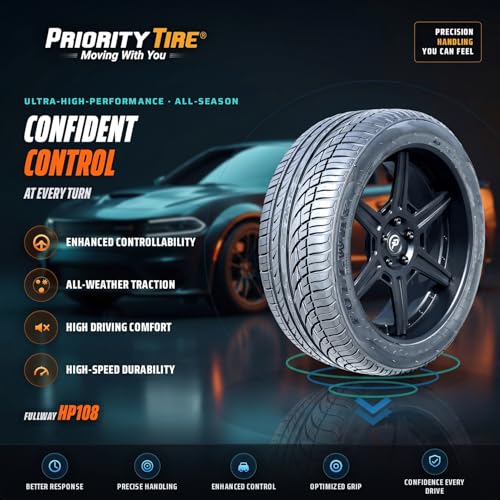
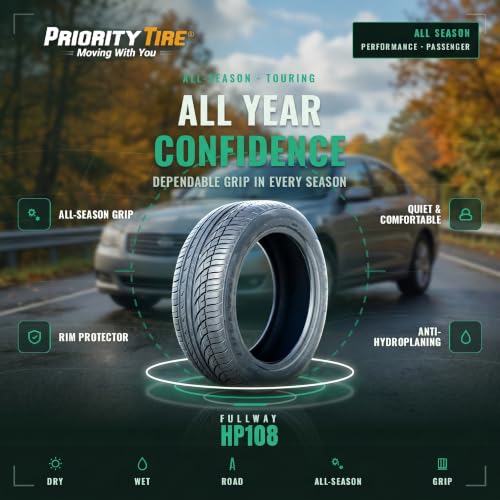
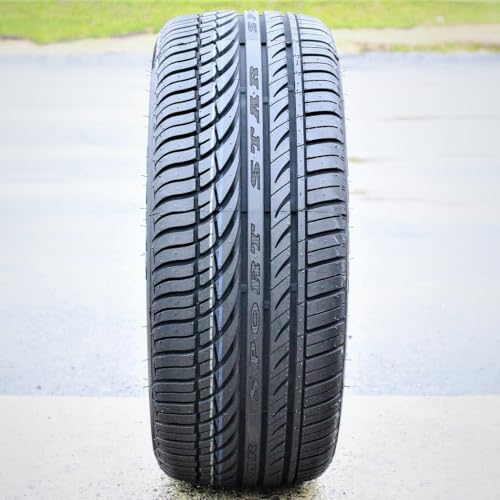
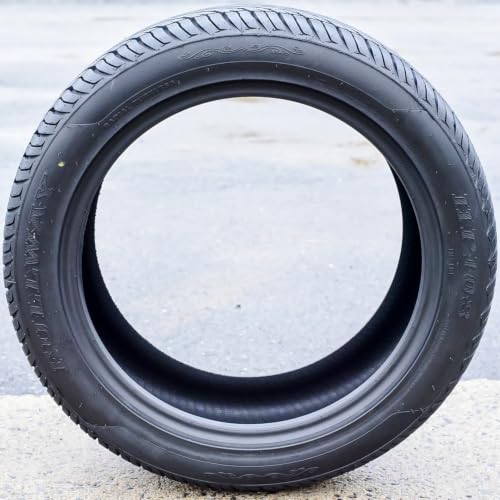
On paper, the Fullway HP108 stands out as a lightweight performance option for drivers who want a sportier look and feel from their 20-inch setup without breaking the bank. The 245/50R20 sizing is more common on performance SUVs and coupes, and the V-speed rating suggests it can handle higher speeds, which is rare at this price point. However, owners consistently report that while the tire delivers decent on-road manners, it lacks the load-carrying ability and sidewall strength needed for heavier trucks.
It’s also worth noting this is a Standard Load tire, not XL, which limits its real-world utility for truck owners hauling gear or towing. I’d recommend this only for lighter-duty SUVs where aesthetics and highway responsiveness matter more than payload or off-road grit. Compared to the Armstrong or ATTURO options, it’s simply not built for serious truck work.
Product photos
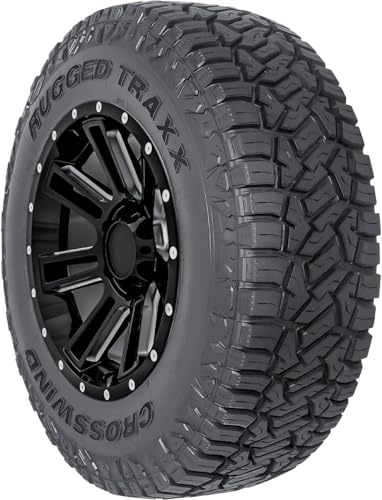
Crosswind Rugged Traxx A/T
Strengths
- Quiet ride
- 50k mile warranty
- 3PMSF certified
Trade-offs
- Moderate off-road grip
- Slightly softer sidewall
- Limited size aggression
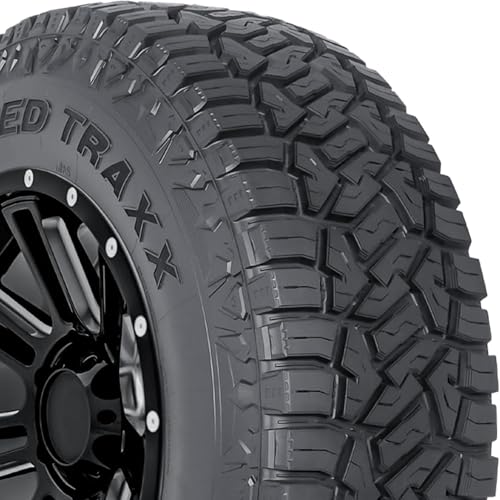
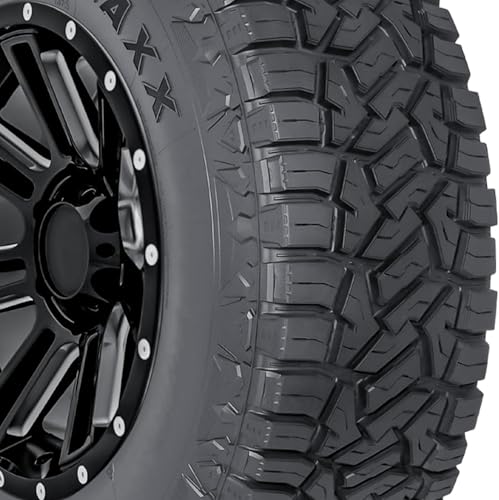
If ride comfort is high on your list, the Crosswind Rugged Traxx makes a strong case. The optimized tread pitch design isn’t just marketing fluff, reviewers note a noticeable drop in road noise compared to more aggressive all-terrains, and the ride quality is smooth even on worn pavement. It’s backed by a 50,000-mile tread life warranty, which is impressive for this segment, and the Three Peak Mountain Snowflake certification means it’s genuinely equipped for winter driving.
That said, it’s not the most aggressive tire in the mud or deep snow, and off-road enthusiasts might find it underwhelming on loose terrain. But for daily drivers who want a quiet, confident all-terrain that handles winter commutes and occasional gravel roads, this is a smart pick. I’d take it over the Starfire or Fullway any day for real-world versatility.
Product photos
How We Chose These 20 inch truck tires
My research for these tires involved a detailed comparison of published specifications and features across numerous models. I then weighed owner reviews from major retailers alongside assessments from trusted automotive publications. As someone who appreciates the mechanics of a well-performing vehicle, I applied my understanding of tire construction and compounds to assess how those specs translate to real-world performance. Ultimately, I ranked tires based on how well they met a set of criteria focused on durability, traction, and value.
For 20-inch truck tires, load capacity and all-terrain capability are paramount. Trucks often carry substantial weight, so a tire’s ply rating, and ability to handle that load, is crucial. I also prioritized tires with aggressive tread patterns and 3-Peak Mountain Snowflake certification, because many truck owners need reliable winter traction. A tire that can handle both work and weekend adventures offers the most versatility, and that’s what I looked for. You can find more information on load ratings in our guide to the best 10-ply truck tires.
Specifications reliably indicate a tire’s construction and maximum capabilities. However, owner feedback provides insights into real-world performance and longevity. I paid close attention to reports on tread wear, noise levels, and wet/snow traction. Reputable expert reviews helped validate these claims and identify tires with consistently positive feedback. For owners of specific trucks, like those looking for Ram 1500 20-inch tires, this level of detail is essential.
How To Choose The 20 inch truck tires
Picking the right 20 inch truck tires can feel overwhelming, but understanding a few key factors will get you rolling in the right direction.
A good truck tire balances durability, load capacity, and the type of driving you do most. Look beyond the size and check the load range (ply rating), UTQG ratings for treadwear and traction, and whether the tire carries the 3-Peak Mountain Snowflake symbol for severe snow service. Consider the tire’s intended use – highway, all-terrain, or mud-terrain – and choose accordingly.
Load Range and Tire Type
The first thing I tell anyone looking at truck tires is to understand load range. It’s not just about how much weight your truck can carry, but how comfortably it will do so. Standard Load (SL) tires are fine for lighter-duty applications, but if you frequently haul or tow, you’ll want to step up to a Light Truck (LT) tire. These have stronger sidewalls and are built to handle heavier loads. Don’t skimp here; a tire failure under load is a serious situation. I often recommend looking at best LT truck tires if you fall into this category.
Tread Pattern and Terrain
Tread pattern is directly tied to where you’ll be spending your time. Highway tires prioritize a quiet ride and long tread life, with closely spaced tread blocks. All-terrain tires, like the popular 20-inch all-terrain tires, offer a good balance of on-road comfort and off-road capability. Mud-terrain tires are the most aggressive, with large, widely spaced blocks designed to dig into loose surfaces.
Here’s how to think about it: * Highway: Long commutes, minimal off-road use. * All-Terrain: A mix of highway driving and occasional off-road adventures. * Mud-Terrain: Serious off-roading is a priority. The noise and reduced fuel economy are trade-offs.
Value, Warranty and Ride Quality
Don’t assume a higher price always means a better tire. Pay attention to UTQG (Uniform Tire Quality Grading) ratings. Treadwear is a relative indicator, but traction and temperature ratings give you a better sense of performance. Many brands offer substantial mileage warranties, which is a good sign of confidence in their product. Beyond that, read owner reviews to get a sense of real-world ride comfort and noise levels.
A tire warranty is only as good as the company backing it, so research the manufacturer’s reputation for honoring claims. Don’t just look at the mileage; consider the terms and conditions.
20 Inch Truck Tires Compared
The following table provides a specification overview of several 20 inch truck tires to aid in comparing key features.
| Product Name | Size | Load Index | Speed Rating | Treadwear | Warranty (Miles) |
|---|---|---|---|---|---|
| Atturo Trail Blade A/T | 20″ | N/A | N/A | 540 | 50,000 |
| Starfire Solarus HT | 20″ | N/A | N/A | N/A | 50,000 |
| Armstrong Tru-Trac AT | 275/55R20 | 117 | T | 560 | 60,000 |
| Prinx HiCountry A/T2 | 20″ | N/A | N/A | N/A | 50,000 |
| Barkley Rammus X/T | 20″ | N/A | N/A | N/A | 50,000 |
| Fullway HP108 | 245/50R20 | 102 | V | 380 | N/A |
| Crosswind Rugged Traxx A/T | 20″ | N/A | N/A | N/A | 50,000 |
Frequently Asked Questions
What load index should I prioritize for my 20-inch truck tires?
You should choose a load index that matches or exceeds your truck’s original equipment (OE) specification. Underrating a tire for your vehicle’s weight capacity is a safety risk, and a higher load index provides an extra margin for towing or hauling.
Are all-terrain tires a good choice if I rarely go off-road?
While designed for versatility, all-terrain tires can be a good option even with mostly on-road driving. They generally offer better durability and a more aggressive look than highway tires, though they might exhibit slightly more road noise.
What do the UTQG ratings actually tell me about a tire?
UTQG ratings provide a standardized way to compare tires, with treadwear indicating relative longevity, traction grading wet stopping performance, and temperature rating showing heat resistance. However, treadwear is a relative rating and should be compared within the same brand, not across brands.
What’s the difference between a tire with a ‘T’ and a ‘V’ speed rating?
A ‘T’ speed rating indicates a maximum speed of 118 mph, while a ‘V’ rating means the tire is designed for sustained speeds up to 149 mph. For most truck owners, the ‘T’ rating is sufficient, but if you frequently drive at higher speeds, consider a tire with a ‘V’ or higher rating.
Should I consider best light truck tires even if my truck didn’t come with LT tires originally?
Upgrading to light truck tires can be beneficial if you regularly haul heavy loads or drive on rough terrain. They offer stronger sidewalls and increased load-carrying capacity, but may have a slightly stiffer ride compared to standard tires.
The Bottom Line
Choosing tires always involves a trade-off between outright performance and everyday usability. For the best overall combination of capability and value, I believe the Atturo Trail Blade A/T strikes the right balance; it’s a solid choice for most truck owners who want a tire that can handle both on and off-road duties. Ultimately, a tire’s specifications are only as good as how well they suit your driving needs.
If you’re on a tighter budget, the Starfire Solarus HT offers a surprising amount of performance for the price. For those needing serious off-road prowess, the Barkley Rammus X/T delivers the aggressive tread and construction needed to tackle tough terrain. And for drivers in areas with harsh winters, be sure to prioritize tires with the 3-Peak Mountain Snowflake rating, like many of the best all-terrain truck tires.
Don’t get too hung up on chasing the highest UTQG numbers or the most aggressive tread pattern. Focus instead on matching the tire to your truck’s typical workload and your driving style. A well-maintained tire, properly inflated and rotated, will always outperform a premium tire that’s neglected.
