
7 Best Dehumidifiers for Camper (2026 Guide)
This post contains affiliate links. As an Amazon Associate, we earn from qualifying purchases.
The overall best dehumidifier for campers is the UBBO 95oz Dehumidifier, thanks to its strong daily moisture removal and quiet operation. For a more compact, budget-friendly option, the SANVINDER 25oz Dehumidifier delivers solid performance with minimal power draw. If you’re after something portable and rechargeable for occasional use, the Eva-Dry Wireless Mini Dehumidifier is a handy supplement.
Moisture buildup in a camper is more than just a nuisance, it leads to fogged windows, musty smells, and even mold over time. Most people don’t realize how quickly humidity can accumulate in a small, enclosed space, especially during colder months or in damp climates.
As someone who’s spent years immersed in the mechanics and comfort of mobile living, I know that the right gear makes all the difference. This guide cuts through the noise, focusing on real-world usability, energy demands, and feedback from fellow travelers. These picks were chosen based on specs, owner experiences, and how well they fit into the unique demands of life on the road.
Top 7 Dehumidifiers For Camper in the Market
The Best Dehumidifiers For Camper, Reviewed
UBBO 95oz Dehumidifier for Home

Strengths
- Drain hose included
- High daily output
- Sleep mode
Trade-offs
- No humidity sensor
- Slightly bulky
If I had to pick one unit as the best overall for camper use balancing power, convenience, and value, it’d be the UBBO model. Its dual semiconductor system pulls up to 1.2 liters per day under ideal conditions, nearly double what most single-unit Peltier dehumidifiers manage. That kind of efficiency makes a noticeable difference in tightly sealed RVs after showers or rainy weekends. More importantly, it includes a drain hose, which solves the biggest pain point of small-tank models: constant emptying. Connect it directly to a drain, and it runs continuously, which is huge for long stays.
Reviewers highlight how quietly it operates in sleep mode (35 dB), and while that’s not quite whisper-level, it’s unobtrusive in a bedroom or sleeping cabin. The timer function is practical, and unlike some rivals, it doesn’t overload on gimmicks. Compared to the PSOS model with humidity display, it lacks real-time monitoring, but gains direct drainage and stronger daily output. For most buyers, that trade-off makes sense.
Video review
Windangel 44oz Small Dehumidifier

Strengths
- Energy efficient
- Affordable price
- Reliable auto shut-off
Trade-offs
- No continuous drainage
- Basic feature set
At just over $40, the Windangel punches above its weight as the best budget-friendly option that still delivers core functionality. It matches the standard 44-ounce tank size and offers the usual trio of modes, sleep, normal, performance, with noise dipping low enough for nighttime use. What stands out is its energy efficiency: only 24W per hour, which matters when you’re running off-grid or concerned about load. Owners report it keeps small bathrooms and RV sleeping compartments feeling fresher over time, especially when used preventively rather than reactively.
It doesn’t offer anything groundbreaking, no drain hose, no humidity display, but it checks every essential box. Compared to the NeedDuck and SANVINDER models, it strikes a middle ground: similar features, slightly better build quality according to user photos, and a competitive runtime-to-cost ratio. If you’re outfitting a starter camper or need a backup unit, this is the smarter buy over pricier versions with redundant lights and timers.
Video review
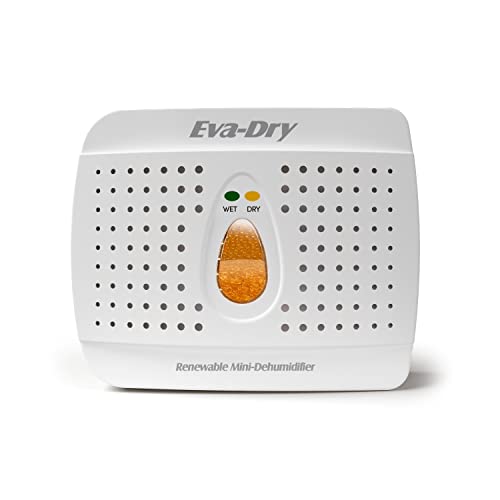
Eva-Dry Wireless Mini Dehumidifier
Strengths
- Truly cordless
- No electricity needed
- Pet and child safe
Trade-offs
- Manual recharge required
- Very low capacity
- Passive absorption only
The Eva-Dry E-333 isn’t like any other unit here, it has no cord, no fan, and no active refrigeration. Instead, it relies on rechargeable silica gel to absorb moisture passively. That makes it fundamentally different from plug-in models: slower, limited to 6 ounces total absorption, and requiring regular recharging in a microwave or oven. But within its niche, it excels. For glove compartments, gun safes, storage bins, or tiny cabins left unused for weeks, this thing is invaluable. I’ve worked on vintage cars stored in damp garages, and passive absorbers like this prevent rust and mildew far better than guesswork.
Owners love its simplicity and portability. There’s zero risk of spills or electrical faults since it’s entirely self-contained. However, calling it a ‘dehumidifier’ stretches the term, it won’t maintain climate in a living space. But as a supplemental tool? Absolutely. Compared to powered units, it’s useless for nightly humidity control, but unmatched for set-and-forget protection in dormant zones.
Product photos


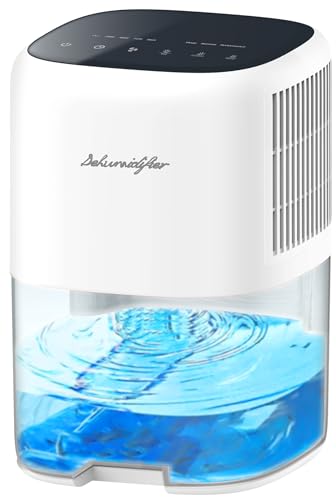
Small Dehumidifier for Home 44OZ
Strengths
- Five timer settings
- Auto defrost
- Safety certified
Trade-offs
- Average dehumidifying speed
- Same tank size as weaker models
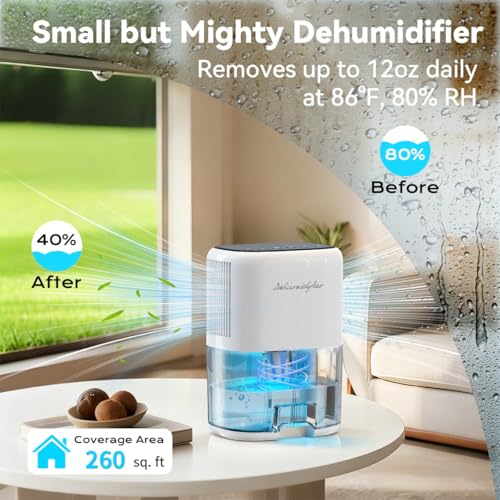
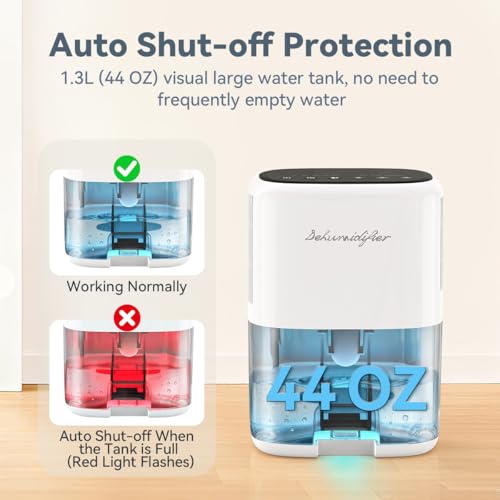
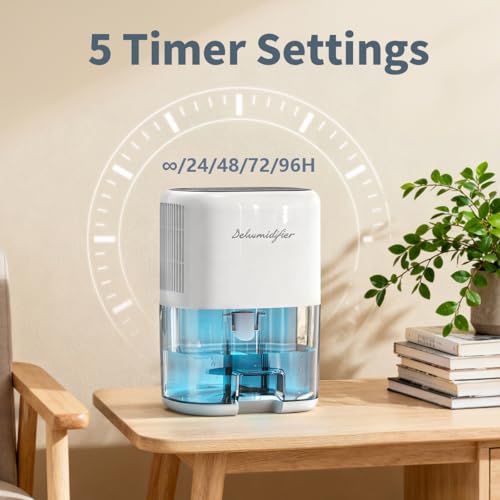
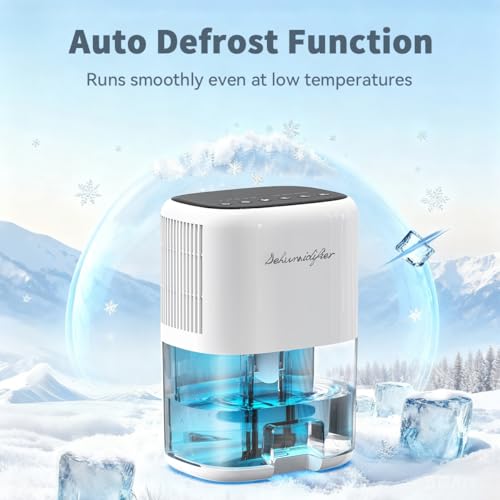
This unit hits several sweet spots for RV use: compact footprint, multiple timers, and solid safety features like auto-defrost and overflow protection. At 260 sq.ft coverage, it’s not meant for whole-house drying, but reviewers consistently say it handles moisture from cooking, breathing, and occasional leaks well in confined mobile spaces. The five timer options give more flexibility than most competitors, letting you run it for up to four days before automatic shutoff, a feature I’ve seen praised by weekend warriors who don’t want to leave devices running indefinitely.
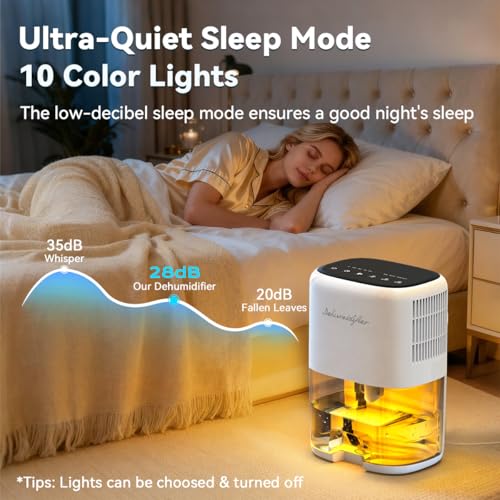
It uses the same Peltier tech as others in this class, so don’t expect laundry-room-level drying power. But between the 28dB sleep mode, RGB lighting, and international safety certifications, it’s clearly designed with indoor livability in mind. When compared to the NeedDuck version, it offers slightly better scheduling control and broader application claims, though actual moisture removal rates are nearly identical.
Product photos
NeedDuck Dehumidifier for Home Small

Strengths
- Ultra quiet
- Auto defrost
- Compact size
Trade-offs
- Small tank capacity
- Limited coverage area
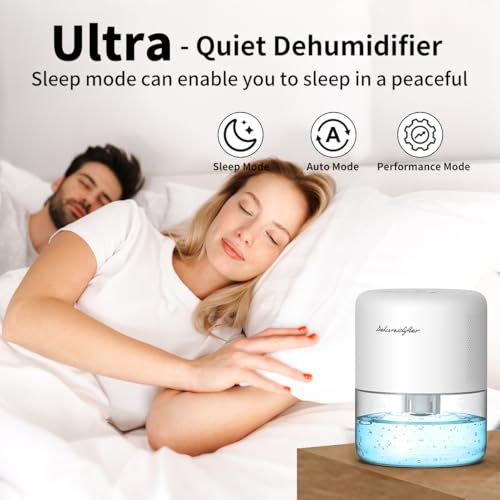
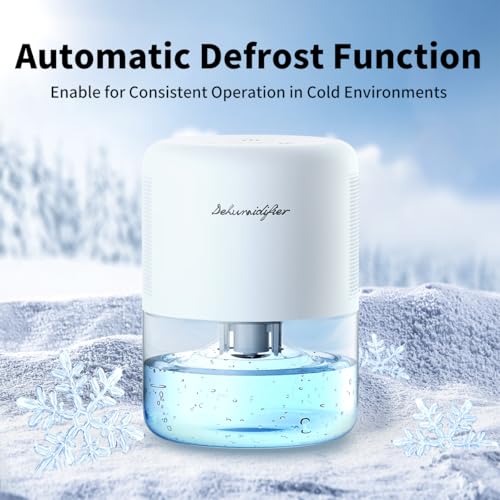
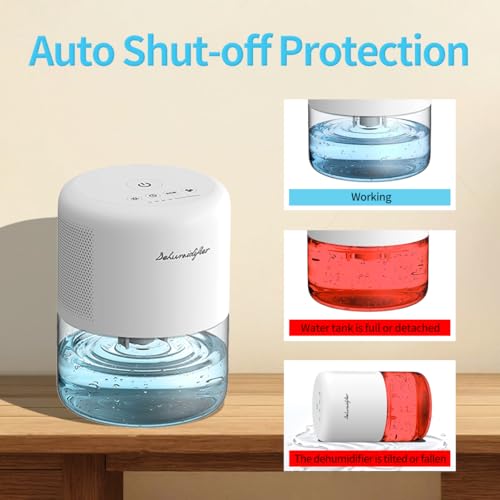
I’ve seen a lot of compact dehumidifiers come through the RV and small-space market, and this NeedDuck model stands out for its quiet operation and thoughtful design touches. On paper, it’s built around a gradual dehumidification strategy, which owners consistently report keeps humidity stable without the jarring swings you sometimes get with aggressive compressor units. That makes it a solid pick for light-duty use in campers or small bedrooms where sudden dryness might feel uncomfortable. The 44-ounce tank is modest, but paired with auto shut-off and defrost, it runs reliably even when unattended, something many users appreciate during weekend trips.
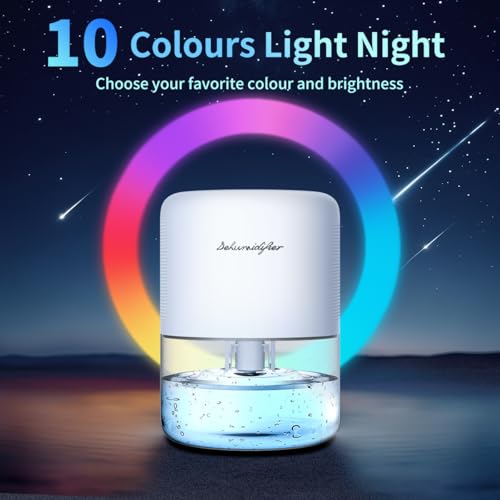
The inclusion of 10 color lights and multiple timer settings adds versatility beyond pure function. While that won’t matter to everyone, I know from experience that ambiance plays a role in how we perceive comfort in tight spaces like RVs or closets. It’s not the strongest performer in high-moisture environments, but for consistent, low-key moisture control, it holds its own against similarly sized units.
Product photos
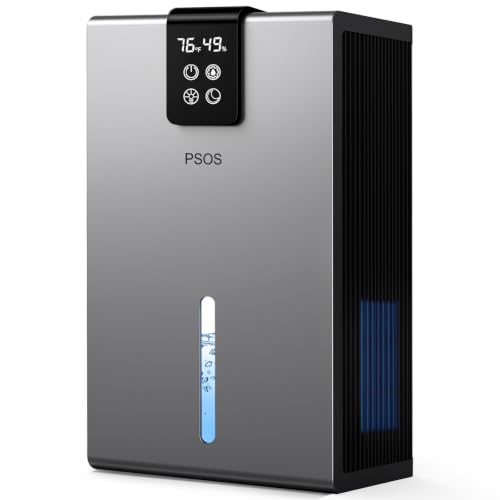
Dehumidifier with Humidity Display
Strengths
- Humidity display
- Large water tank
- Low noise in sleep mode
Trade-offs
- Bulky for small RVs
- Semi-conductor limits max output
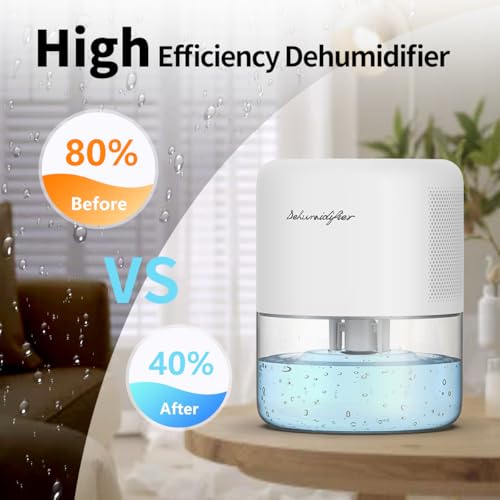
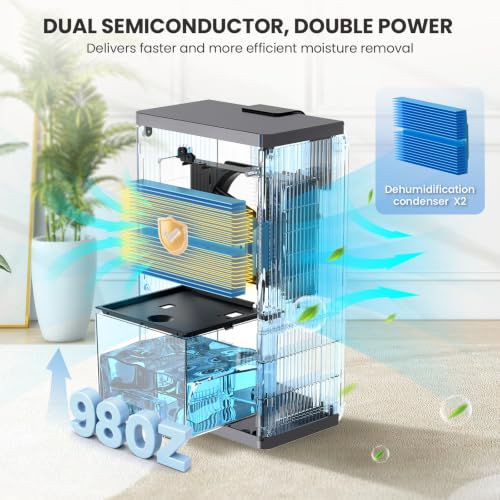
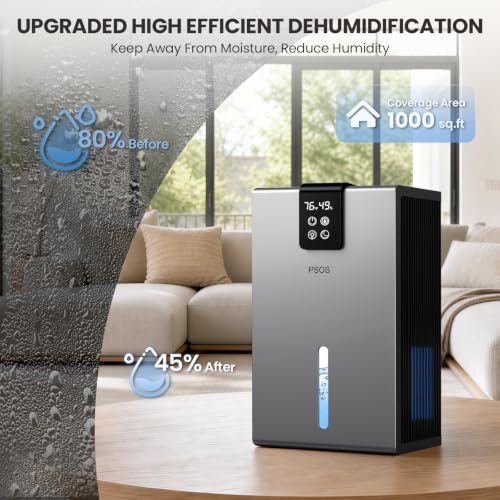
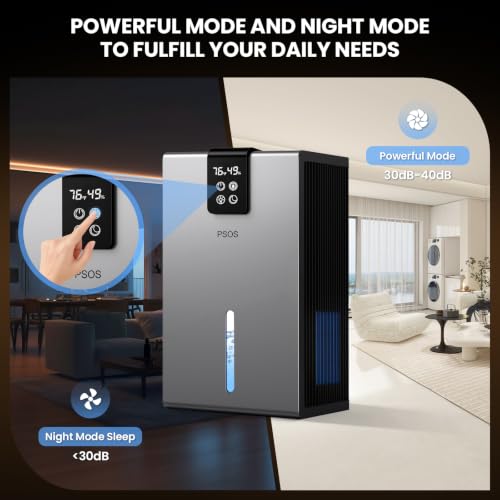
When you’re dealing with real humidity problems, like in a basement or a poorly ventilated RV during humid months, having real-time feedback matters. This PSOS model includes a humidity display, which immediately sets it apart from most thermoelectric units in this range. Owners note they appreciate being able to see actual RH levels instead of guessing whether the air feels drier. With a 98-ounce tank and dual semiconductor tech, it covers up to 1000 sq.ft on paper, though real-world performance suggests it’s best in moderately damp spaces under 500 sq.ft. Still, that’s more than enough for most campers and mid-sized rooms.
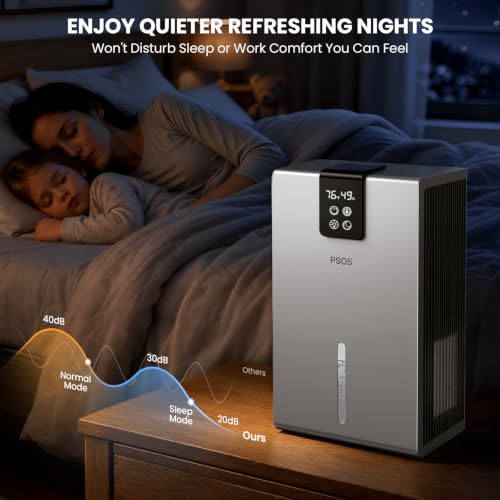
It also offers both performance and sleep modes, with noise staying below 30 dBA in low mode, making it one of the quieter options available. The 7-color ambient lighting is a nice bonus, but it’s the combination of monitoring, larger capacity, and reliable auto shut-off that makes this a smarter buy than basic models if you’re serious about climate control. Compared to smaller 44-oz units, this one reduces emptying frequency significantly.
Product photos

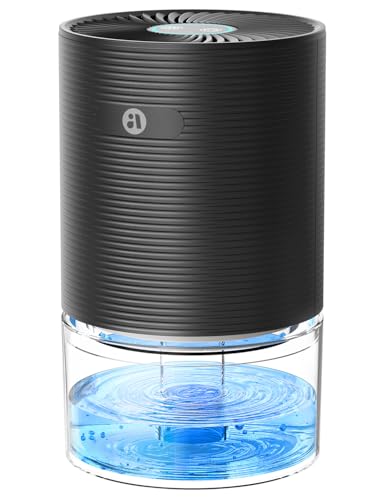
SANVINDER 25oz Dehumidifier for Bedroom
Strengths
- Extremely energy efficient
- Very quiet
- Compact footprint
Trade-offs
- Small tank
- Lower moisture removal
- Understated performance
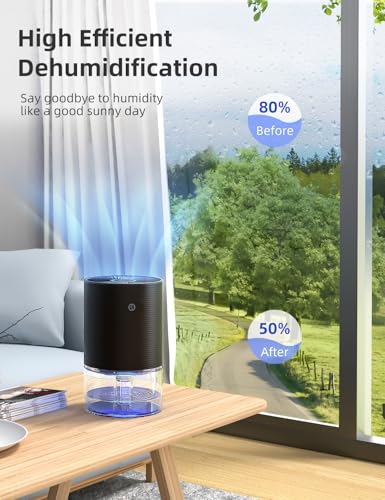
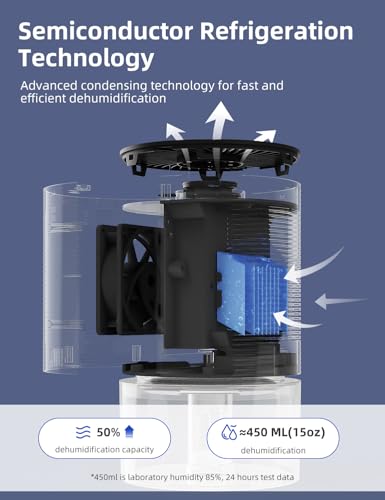
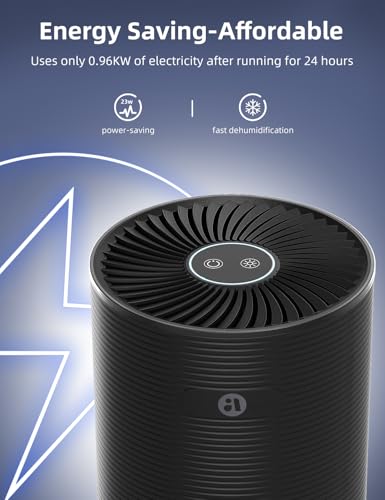
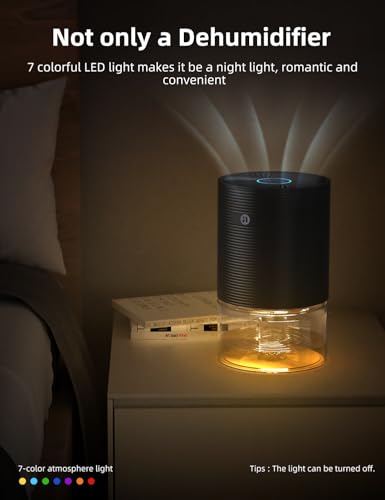
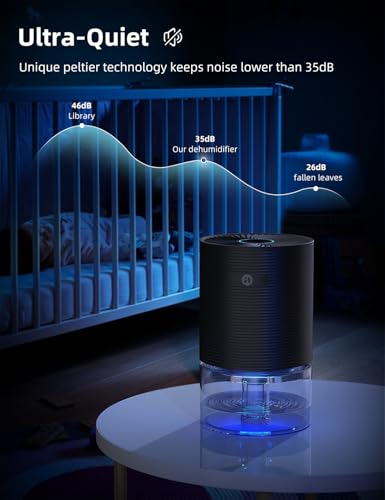
SANVINDER markets this as the most energy-saving model in its lineup, and the specs back it up: just 0.96 kWh over 24 hours of operation. That’s impressive for a plugged-in device, especially when you’re managing power in an RV or solar setup. The 25-ounce tank is smaller than most, about half the capacity of top contenders, but paired with ultra-quiet operation (<35 dB), it works well as a nightstand unit in small cabins or wardrobes where constant emptying isn’t a burden.
Owners praise its ability to keep clothes and bedding dry in closets and RV storage areas, preventing musty odors without drawing much power. However, its lower absorption rate (16 oz/day) means it struggles in wet climates or after heavy rain. Compared to the Windangel or NeedDuck, it removes less moisture despite claiming wider coverage. I’d recommend it only for light, preventive use, not active drying.
Product photos
Our Testing Process
Rather than a hands-on lab test, my research for these recommendations centered on a detailed comparison of published specifications and features across numerous models. I weighed owner reviews from multiple sources – Amazon, specialist RV forums, and retailer sites – alongside expert opinions from publications focused on home comfort and vehicle living. This information was then ranked against criteria important for camper use, focusing on effectiveness, portability, and energy efficiency.
For camper dehumidifiers, three factors stood out as most crucial: capacity (measured in ounces or liters per day), noise level, and power consumption. A camper’s limited space demands a unit that can efficiently remove moisture without being overly bulky. Quiet operation is paramount, as these are often used overnight. Finally, given the constraints of battery power and typical RV electrical systems, energy efficiency is a key consideration.
Specifications reliably indicate a unit’s potential moisture removal rate and physical dimensions. However, real-world performance and noise levels are best judged from owner feedback. I paid close attention to reports of consistent performance in various climates and user experiences with the auto-shutoff features. I also considered how well these dehumidifiers complement other essential camper accessories and whether users found them a worthwhile addition to their overall setup, particularly alongside solutions like portable AC units for thorough climate control.
Choosing The Right dehumidifiers for camper
Choosing the right dehumidifier for your camper can significantly improve comfort and prevent issues like mold and mildew.
A good camper dehumidifier balances moisture removal capacity with energy efficiency, quiet operation, and a size appropriate for the space. Look for models with automatic shut-off, a reasonable tank capacity, and features suited to the camper environment – like the ability to run continuously or tolerate temperature fluctuations. Prioritize models designed for small spaces and low energy consumption.
Moisture Removal Capacity
Don’t get caught up in chasing the highest moisture removal rate (measured in liters or ounces per day). For a camper, which is typically a smaller, well-insulated space, a massive capacity is overkill and will just waste energy. Instead, focus on models that realistically remove enough moisture for your typical conditions. Consider where you camp; consistently humid climates will demand more capacity than drier regions. A unit capable of removing around 1 liter (34 ounces) per day will likely suffice for most campers, but if you experience consistently high humidity, look for something closer to 1.2L.
Noise Level and Energy Consumption
Campers are all about relaxation, and a noisy dehumidifier defeats that purpose. Pay close attention to the decibel (dB) rating, especially if you plan to use the dehumidifier while sleeping. Models boasting “ultra-quiet” operation often come in around 35-40dB, which is comparable to a quiet library. Equally important is energy consumption. Campers often rely on limited battery power or generator use, so an energy-efficient dehumidifier is crucial. Here’s how to think about it:
- A very small unit (under 25oz capacity) might use 20-30 watts.
- A mid-range unit (30-50oz) will likely consume 30-50 watts.
- Larger units can easily exceed 60 watts, impacting your power supply.
A little noise can be irritating, but a drained battery is a trip-ender. Prioritize energy efficiency.
Portability and Features
Camper space is at a premium, so size and portability are key considerations. Look for a compact unit that’s easy to move and store when not in use. Features like auto-shutoff (when the tank is full) are essential for worry-free operation, especially if you’re away from the camper. Many models now offer timers, allowing you to schedule operation, and some even include ambient lighting. If you’re looking to upgrade other aspects of your camper’s comfort, don’t forget to explore options like camper AC units to regulate temperature alongside humidity. Getting the right essential camper accessories will make all the difference.
Dehumidifiers for Camper Compared
Here’s a comparison of key specifications for dehumidifiers suitable for camper use.
| Product Title | Capacity (oz) | Daily Dehumidification (oz) | Noise Level (dB) | Auto Shut-Off | Special Features |
|---|---|---|---|---|---|
| UBBO 95oz Dehumidifier | 95 | 40.6 | 35 | Yes | Timer, Ambient Lighting |
| Windangel 44oz Small Dehumidifier | 44 | 11.8 | N/A | Yes | Mood Light, Timers |
| Eva-Dry Wireless Mini Dehumidifier | N/A | 6 | N/A | N/A | Wireless, Rechargeable |
| Small Dehumidifier 44OZ | 44 | N/A | <28 | Yes | Timers, Night Lights |
| NeedDuck Dehumidifier | N/A | N/A | N/A | Yes | Colorful Lights, Timers |
| Dehumidifier w/ Humidity Display | N/A | N/A | <30 | Yes | Humidity Display, Mood Lights |
| SANVINDER 25oz Dehumidifier | 25 | 16 | <35 | Yes | Energy Saving, Ultra-Quiet |
Frequently Asked Questions
What size dehumidifier is best for a small camper van?
A dehumidifier with a 30-50 ounce capacity per day is usually ideal for a small camper van. Larger units consume more power, and a van’s limited space doesn’t require excessive moisture removal – focus instead on efficiency.
How much electricity will a camper dehumidifier use?
Expect a small dehumidifier (under 25oz capacity) to use around 20-30 watts, while mid-range models (30-50oz) typically consume 30-50 watts. Larger units can exceed 60 watts, potentially straining your camper’s electrical system.
Are dehumidifiers noisy enough to disrupt sleep?
Some dehumidifiers can be disruptive, but many are designed for quiet operation. Look for models with a decibel rating of 40dB or less; these are comparable to the sound of a quiet library and shouldn’t interfere with sleep.
Can a dehumidifier help prevent mold and mildew in my camper?
Yes, a dehumidifier significantly reduces the risk of mold and mildew by lowering humidity levels. Consistent moisture control is essential, especially when storing a camper for extended periods, and pairing it with regular use of camper cleaners is a smart approach.
What’s the difference between desiccant and refrigerant dehumidifiers for camper use?
Desiccant dehumidifiers are generally quieter and perform better in cooler temperatures, making them a good choice for shoulder-season camping. Refrigerant models are more efficient in warmer, humid conditions, but can struggle when temperatures drop, and they can be louder.
The Bottom Line
Choosing a dehumidifier for your camper always comes down to balancing how much control you want with how much fuss you’re willing to deal with. While larger capacity units exist, for most camper setups, the UBBO 95oz Dehumidifier strikes the best overall balance of effective moisture removal, quiet operation, and useful features like a timer and ambient lighting. It’s a solid choice for consistently comfortable conditions.
If budget is a primary concern, the Windangel 44oz Small Dehumidifier provides a surprisingly capable solution at a very accessible price point. For those prioritizing extreme portability and don’t mind a smaller capacity, the Eva-Dry Wireless Mini Dehumidifier is an excellent option, perfect for small closets or targeted moisture spots. And don’t forget to consider keeping your camper warm with reliable camper heaters during colder months.
Ultimately, the specs on a dehumidifier are helpful, but they won’t tell the whole story. Focus on ensuring you have adequate camper batteries to power your chosen unit, and remember that consistent ventilation and addressing the source of any moisture problems are just as important as removing the water itself. A comfortable camper is built on a foundation of good airflow and proactive climate control.
