
7 Best Camper Air Conditioners of 2026
This post contains affiliate links. As an Amazon Associate, we earn from qualifying purchases.
The Furrion Chill Cube 18K stands out as the most powerful option for larger campers needing serious cooling, while the Gidrox 10000 BTU is our top pick for off-grid efficiency and smart control. For those on a tighter budget, the Xenjum 11000BTU delivers strong performance at a lower price point.
Choosing the right camper air conditioner isn’t just about beating the heat, it’s about doing it without draining your battery, waking up your travel partner, or overloading your rig’s roof. Too many people buy based on BTU alone and end up with units that guzzle power or struggle with humidity.
This guide cuts through the noise. I compared specs and real-world feedback to find units that balance cooling power, energy draw, weight, and noise. Whether you’re vanlife full-time or weekend camping in a trailer, these picks meet the demands of life on the move.
Top 7 Camper Air Conditioners in the Market
The Best Camper Air Conditioners, Reviewed
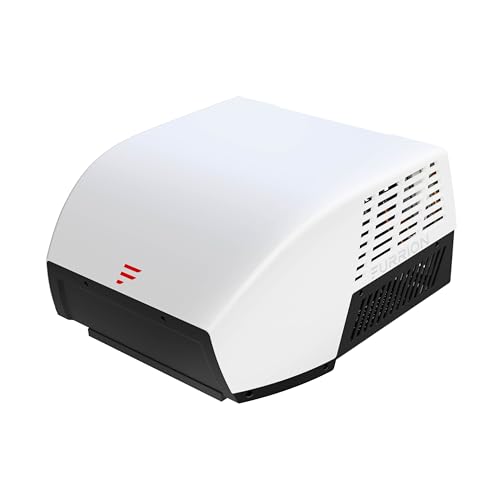
Furrion Chill Cube 18K Non-Ducted RV AC
Strengths
- Variable speed compressor
- High cooling capacity
- Aerodynamic design
- Energy efficient
- Lower noise during ramp-up
Trade-offs
- ADB sold separately
- Heavier installation lift
- Premium price tag
If you’re looking for sheer cooling authority in a high-end RV setup, the Furrion Chill Cube 18K makes a compelling case. With over one ton of cooling power, it’s built for larger motorhomes or hot-climate dwellers who need serious dehumidification and rapid cooldown. The variable speed compressor is the star here, owners note how it ramps up smoothly instead of slamming on like traditional units, which reduces amp spikes and mechanical stress. That translates to longer compressor life and better temperature stability.
It’s also one of the most aerodynamic rooftop units available, and at 10% lighter than average, it helps reduce drag and roof strain. But let’s be clear: this is a premium product with a matching cost. It requires a separate ADB kit, which adds to the total install complexity and price. When stacked against the Dometic FreshJet, it trades some ease of retrofitting for superior efficiency and runtime flexibility. For full-time RVers or those doing extended summer trips, this is the smarter buy if budget allows.
Video review
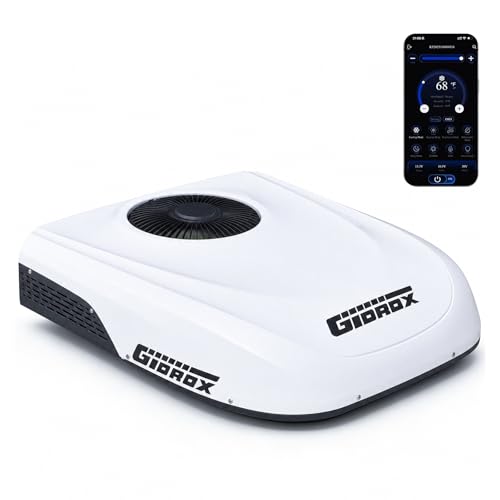
Gidrox 10000 BTU 12V DC RV Air Conditioner
Strengths
- Low power consumption
- App and remote control
- Ultra-quiet in sleep mode
- Lightweight design
- Easy installation
Trade-offs
- Cooling capacity limited
- No soft start feature
- Bluetooth range limited
For budget-focused buyers dipping into 12V DC air conditioning, the Gidrox 10000 BTU unit offers an impressive mix of efficiency, quietness, and tech smarts. At only 54 lbs and drawing around 350W during night operation, it’s clearly designed with off-grid usability in mind. The inverter technology means it modulates rather than cycles hard on and off, which aligns with what solar-powered vanlifers need, steady load management. Owners praise its ability to maintain temps all night without killing their batteries, especially when paired with decent lithium storage.
It’s not the most powerful unit here, 10K BTU works well for vans and small trailers but struggles in large RVs or direct desert sun, but for its class, it punches above its weight. The inclusion of app control via Bluetooth, three fan modes, and ultra-quiet sleep mode (40dB) gives it a modern feel rare at this price. Compared to the Sunster or Xenjum models, it lacks soft-start circuitry, but the overall package still delivers solid value. I’d recommend it as a starter inverter AC for weekend warriors.
Video review
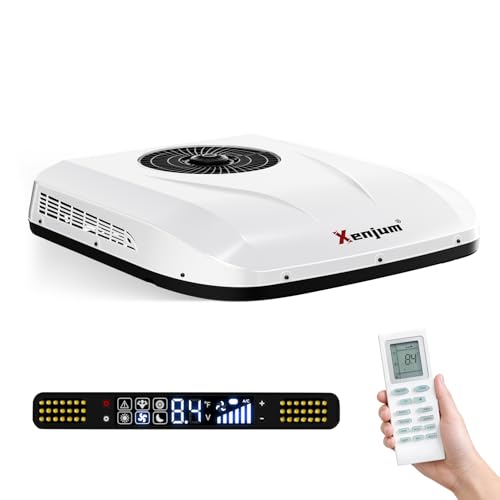
Xenjum 11000BTU 12V RV Air Conditioner
Strengths
- Ultra-quiet operation
- Soft start technology
- Low profile and lightweight
- High energy efficiency
- Battery-friendly power draw
Trade-offs
- Higher upfront cost
- No heating function
- App limited to Bluetooth
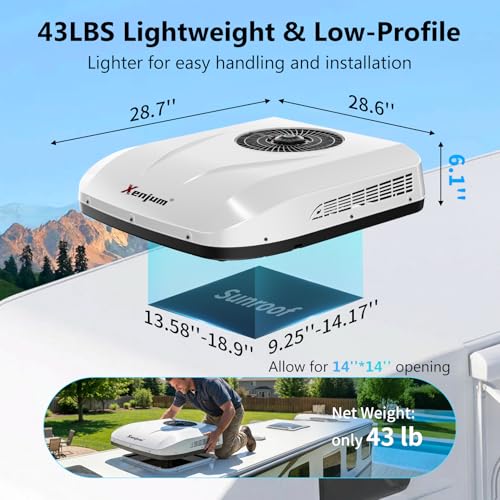
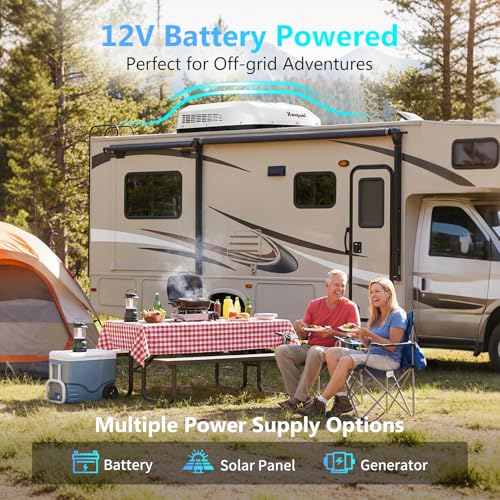
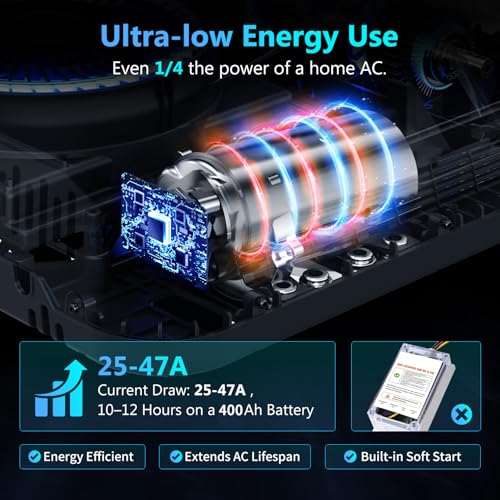
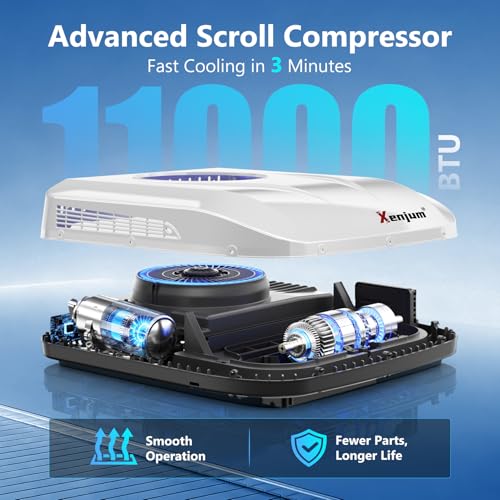
When off-grid reliability is the mission, the Xenjum 11000BTU unit rises to the top. Its 35 dB quiet operation is library-level hushed, owners regularly highlight how it runs all night without disturbing sleep. More importantly, the soft-start tech cuts startup surge by 70%, eliminating the need for hard-start kits or oversized inverters. That’s huge for protecting batteries and solar systems. Combined with inverter scroll compressor efficiency, it achieves up to 10 hours of runtime on a 600Ah lithium bank, according to owner reports.
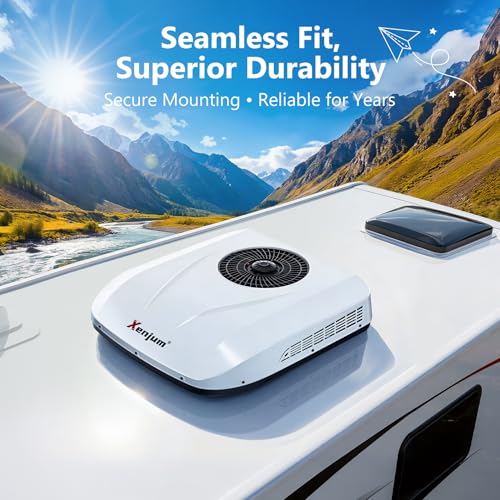
At just 43 lbs and 6.1 inches tall, it’s among the lightest and lowest-profile rooftop units available, making it perfect for sprinter vans and custom builds where weight and wind resistance matter. It also supports both ducted and non-ducted setups, adding versatility. Compared to the Gidrox, it’s pricier but more refined, with better insulation, multiple fan speeds, and swing airflow. My pick for serious boondockers who refuse to compromise.
Product photos
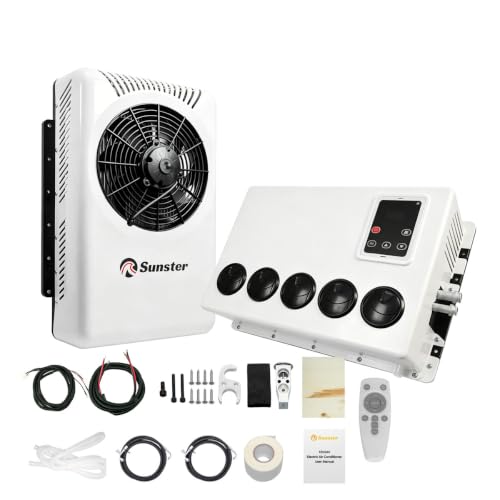
Sunster 12V RV Air Conditioner 12000 BTU
Strengths
- Split-system space saving
- Low voltage protection
- Efficient variable compressor
- Rugged build quality
- 12000 BTU cooling power
Trade-offs
- Requires refrigerant charging
- Installation more complex
- Limited smart features
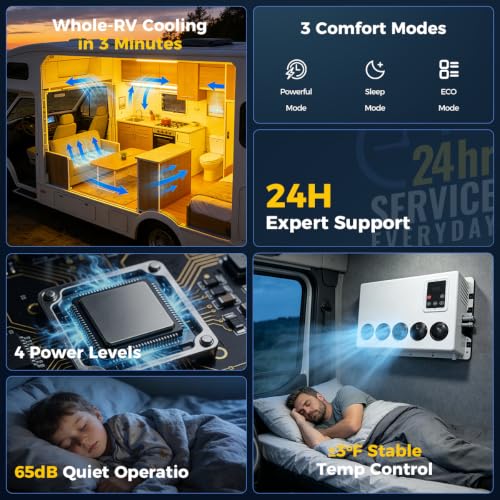
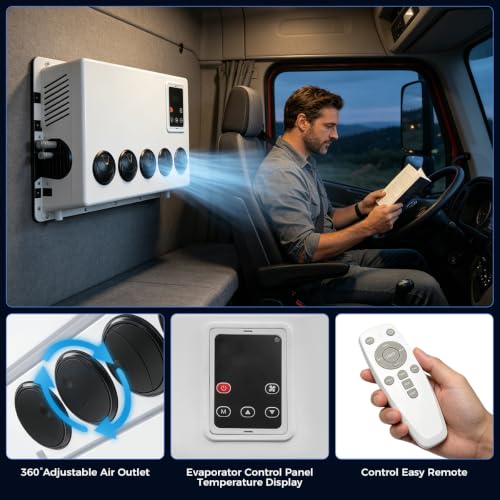
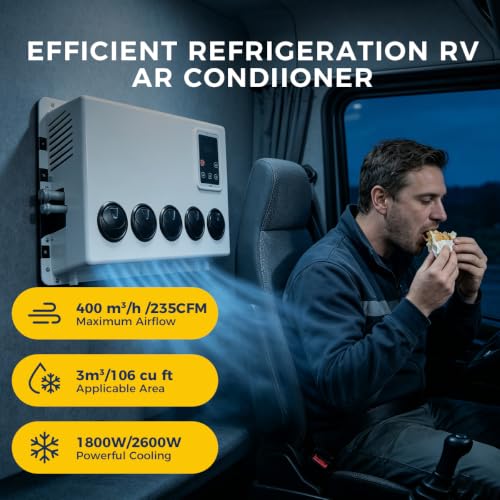
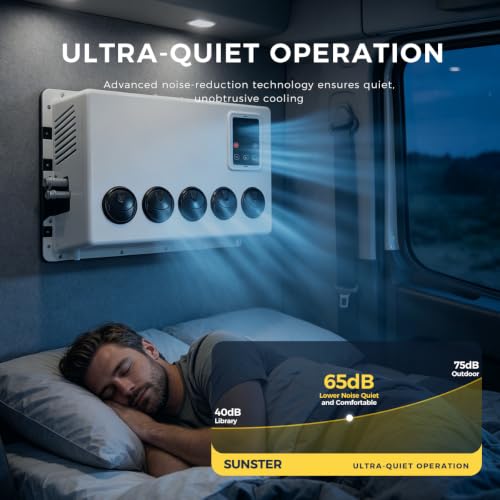
The Sunster 12000 BTU split-system AC is one of the few true value plays in the 12V DC market. By using a split design, it keeps the noisy condenser outside and frees up headroom inside, ideal for low-profile vans where ceiling height matters. The 12V variable-frequency compressor pulls less than 400W under load, making it viable for solar setups, and the low-voltage protection prevents battery drain, which owners appreciate during overnight stays.
But there’s a catch: this unit ships without refrigerant. You must vacuum and charge it with R134a before first use, a barrier for non-technical users. While experienced DIYers may not blink, it’s a red flag for others. Once running, feedback suggests solid performance: fast cooling, four modes including quiet Sleep, and durability in tough environments. Against the Xenjum or Gidrox, it trades some refinement for ruggedness and lower cost. If you know your way around HVAC systems, this is a smart bargain.
Product photos

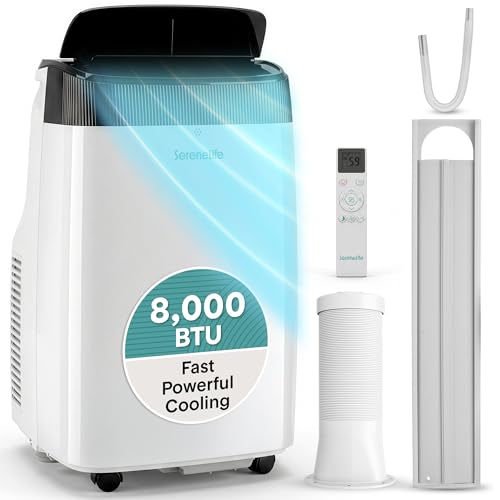
SereneLife Portable Air Conditioner 8000 BTU
Strengths
- Portable with wheels
- Dehumidifier included
- Three operating modes
- Remote control
- Good for small spaces
Trade-offs
- Not battery powered
- Hose setup cumbersome
- Noisy at high fan speed
- Takes up interior space
- Not vehicle-motion safe
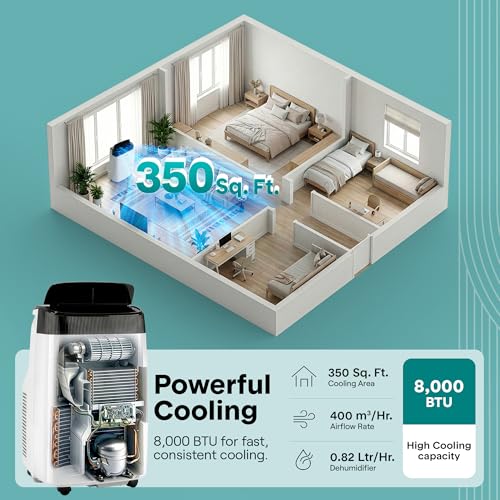
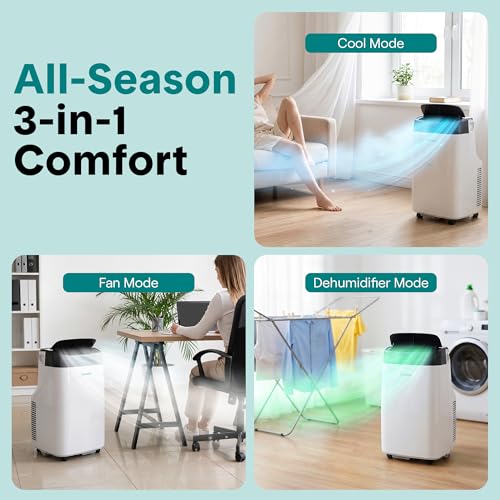
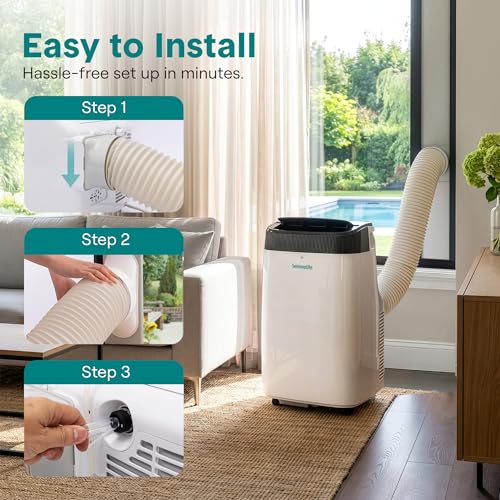
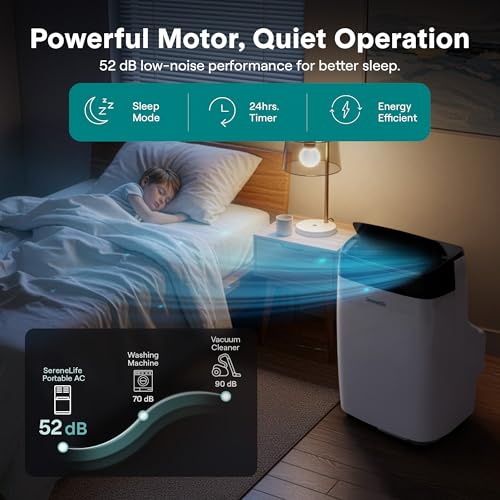
The SereneLife portable unit feels like a home appliance dropped into an RV context, and that’s both its strength and weakness. With 8,000 BTU and dual-motor airflow, it cools small interiors quickly and doubles as a dehumidifier and fan, which helps in muggy conditions. The portability factor is real: wheels and a compact body let you move it between rooms or even use it in a garage. For someone using a trailer occasionally or living in mild climates, this could be enough.
But as a dedicated camper AC? It falls short. It’s AC-powered, so no off-grid capability, and the exhaust hose setup can be awkward on a moving vehicle. Unlike rooftop units, it doesn’t integrate with your rig’s structure and eats up floor space. Still, reviewers note it works reliably in pop-ups, small campers, or when parked at hookups. Compared to the COSTWAY window model, it covers more area but lacks smart controls and mounting permanence. I see it as a temporary fix, not a long-term solution.
Product photos

COSTWAY RV Window Air Conditioner 6500 BTU
Strengths
- WiFi and voice control
- Multiple installation options
- Timer and sleep mode
- Dehumidifier function
- Easy setup
Trade-offs
- Window blockage issue
- Lower BTU for large spaces
- Build quality concerns
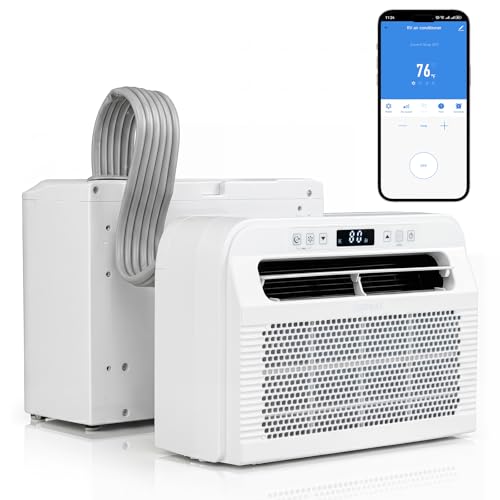
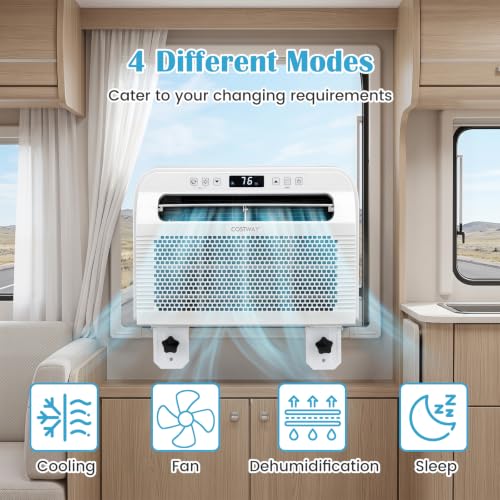
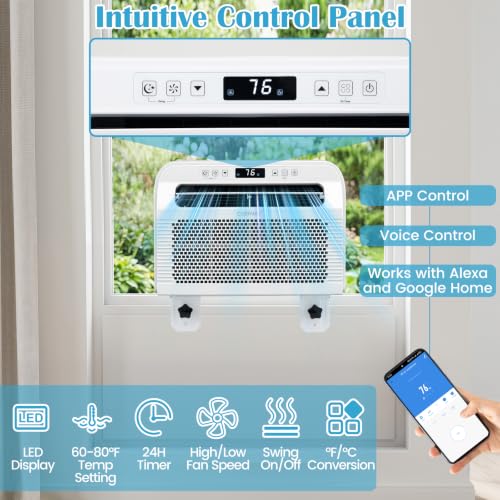
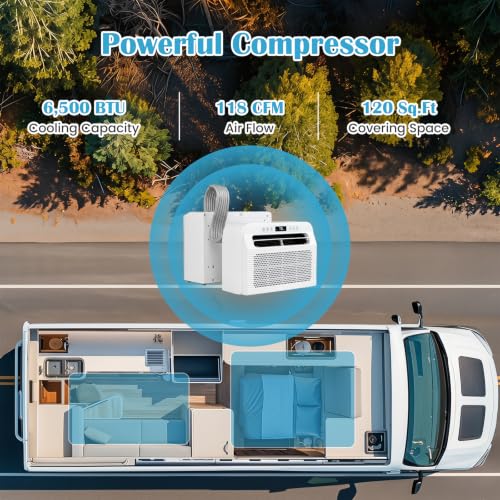
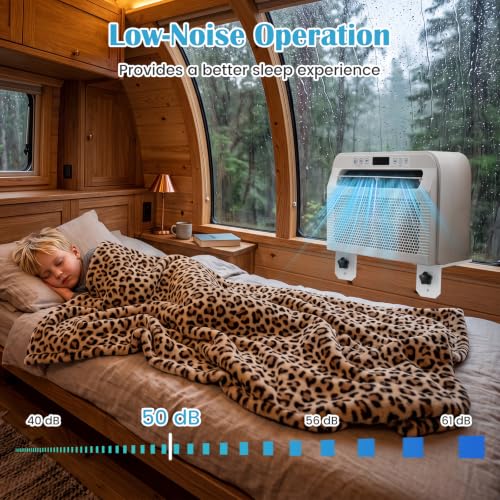
The COSTWAY 6500 BTU window unit brings smart features to a traditionally basic category. WiFi and voice control via Alexa and Google Home make adjusting temps from bed or outside the rig genuinely convenient, a rarity in this segment. At 6,500 BTU, it’s best for small to mid-sized RVs or cabins, and the 24-hour timer plus sleep mode add practicality for energy-conscious users. The 50 dB noise level is acceptable, though not class-leading.
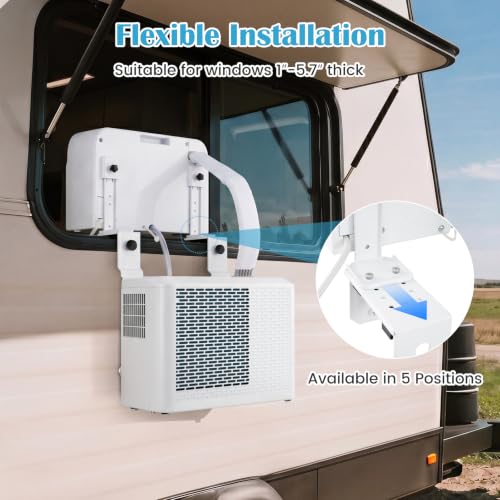
Its real advantage is flexibility: five installation positions and support for thick windows mean it fits non-standard openings where other units won’t. But being a window model, it blocks egress and isn’t ideal for moving vehicles. Compared to rooftop options, it’s easier to remove and store, but also less secure and insulated. Owners like its plug-and-play simplicity, but long-term durability questions linger. For seasonal users who park and stay, it’s a capable pick.
Product photos
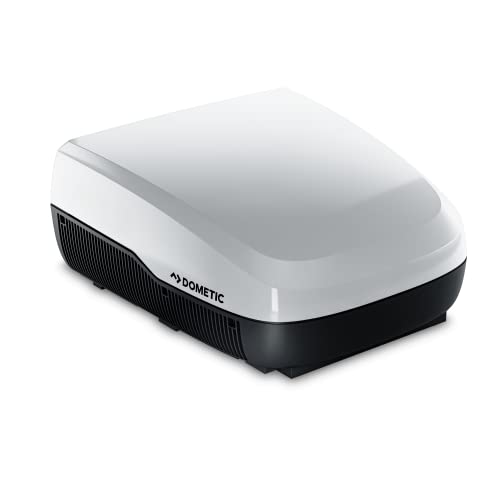
Dometic FreshJet 3 Series 13.5K BTU
Strengths
- High airflow
- Quiet operation
- Backward compatible
- Lighter than predecessor
- Strong cooling capacity
Trade-offs
- Higher power consumption
- No app or smart control
- Limited efficiency gains
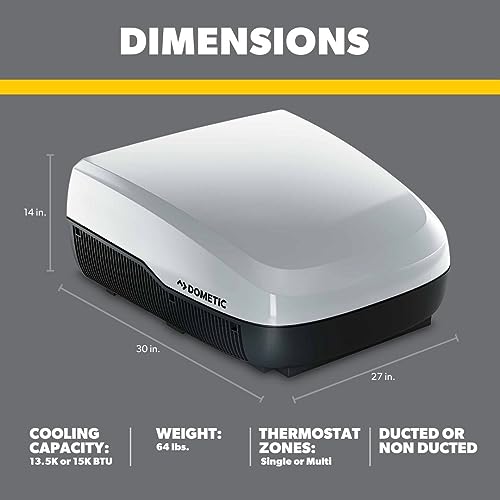
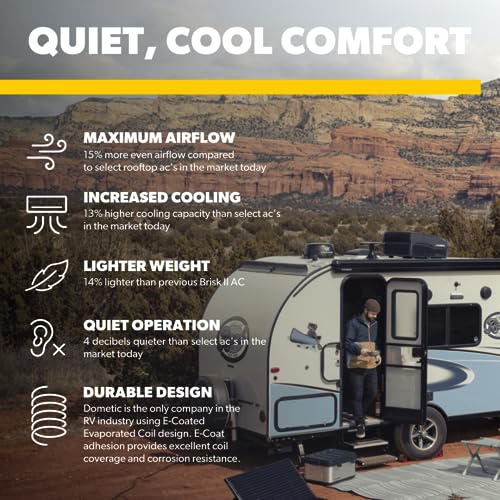
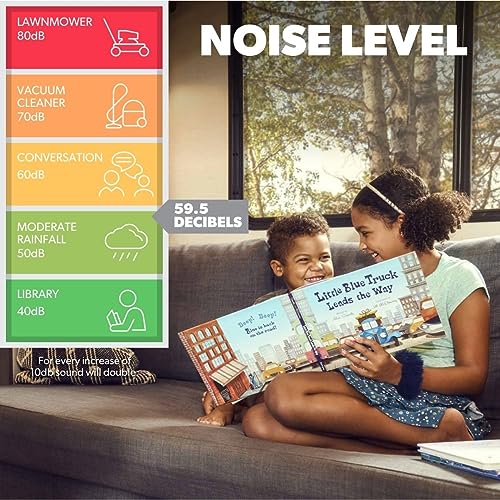
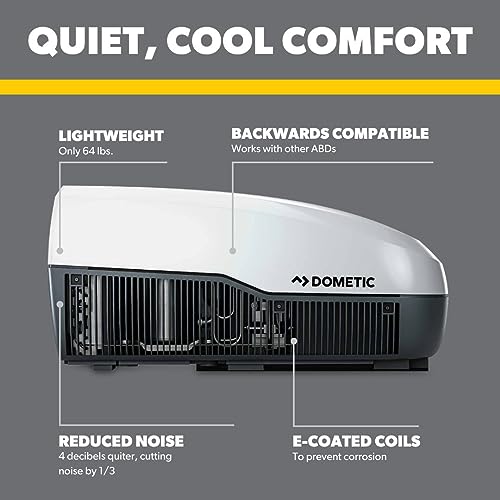
The Dometic FreshJet 3 Series stands out in a crowded field by delivering what many campers actually care about: real-world cooling power and quiet operation. On paper, the 13.5K BTU output is strong for mid-sized to large RVs, and owners consistently report that it cools faster and more evenly than older Dometic models and some competitors. The fact that it moves more air and runs 4 dB quieter than select rivals isn’t just marketing fluff, it shows up in user feedback, especially from those who value restful nights after long travel days.
Where it really wins is compatibility. If you’re upgrading from a legacy Dometic or even certain competitor units, the backward compatibility with existing air distribution boxes simplifies installation. That’s a big deal for DIYers who don’t want to rework ducting. Still, at this price point, I’d expect more smart features, this is a pure performance play. Compared to newer inverter-driven models, it’s less efficient on battery draw, so I wouldn’t pick it as a top choice for off-grid use.
Product photos
How We Chose These camper air conditioners
Rather than a hands-on lab test, this is a research-led comparison of specifications and owner feedback. I started by compiling a list of popular models, then meticulously compared their published cooling capacity (BTUs), power consumption, weight, and features. Crucially, I also weighed owner reviews from major retailers alongside expert opinions found in RV-focused publications. This allowed me to build a picture of real-world performance beyond the marketing claims.
For camper air conditioners, consistent cooling power and energy efficiency are paramount. I prioritized models offering a high BTU-to-weight ratio, as space and payload are always at a premium in RVs. Quiet operation also ranked highly, as few things disrupt the enjoyment of camping like a noisy AC unit. Finding models that balance these factors – and offer features like smart controls or off-grid compatibility – determined their final ranking.
Specifications reliably indicate potential cooling capacity and power draw, but owner reviews provided invaluable insight into actual performance and durability. Feedback on noise levels, ease of installation, and long-term reliability were key differentiators. I also considered the reputation of the manufacturer; established brands often offer better support and parts availability. If you are also considering a full build, checking out camper conversion vans is a good starting point. Ultimately, this research aims to help you choose from the wide range of RV air conditioners available.
How To Choose The camper air conditioners
Finding the right camper air conditioner can dramatically improve your travel experience. It’s not just about staying cool; it’s about power consumption, noise levels, and how well the unit integrates with your rig.
A good camper air conditioner prioritizes BTU output balanced with efficient power draw. Look for units utilizing inverter technology or variable-speed compressors. Consider both installation requirements (ducted vs. non-ducted, roof access) and the overall weight to avoid negatively impacting your vehicle’s handling and fuel economy. Noise levels, measured in decibels, are crucial for a peaceful night’s sleep.
Cooling Capacity & Power Needs
The BTU rating is the first number most people look at, and for good reason. Bigger isn’t always better. Over-sizing an AC unit leads to short-cycling, which actually reduces efficiency and can wear out the compressor faster. A general rule of thumb is 100 BTU per square foot of living space, but account for insulation quality, climate, and sun exposure. More importantly, consider how that cooling is delivered. Inverter-driven units, like the Gidrox, are becoming increasingly popular because they draw significantly less power than traditional models. This is especially important if you’re planning on boondocking or relying on limited battery capacity. Don’t fall into the trap of simply chasing the highest BTU number; a well-designed 10,000 BTU unit will often outperform a poorly-designed 13,500 BTU unit.
Installation & Unit Type
The type of installation needed dictates a lot about which air conditioner is right for you. Rooftop units, like the Furrion Chill Cube, require a 14×14 inch opening and solid roof construction. They provide substantial cooling power but are a more involved installation. Split systems, such as the Sunster, separate the compressor (typically mounted outside) from the evaporator unit inside the camper, saving interior space and potentially reducing noise. These are ideal for vans or trailers where interior room is at a premium. For those seeking a quicker, simpler solution, a portable AC for campers can be a good option, though they generally offer less cooling power and require a window or vent for exhaust.
Features & Control
Beyond basic cooling, think about the features that will enhance your comfort. Smart controls, found in the COSTWAY unit, allow you to adjust settings remotely via an app or voice commands. This is incredibly convenient, especially if you’re trying to cool down the camper before you arrive.
Here’s what to consider when prioritizing features:
- Remote Control: A basic convenience, but essential for adjusting settings from your bed.
- Multiple Fan Speeds: Allows you to fine-tune airflow and noise levels.
- Sleep Mode: Automatically adjusts temperature and fan speed for a comfortable night’s sleep, often reducing noise. This is a feature you’ll appreciate after a long day exploring in your small camper trailers.
A quiet air conditioner is a happy air conditioner. Don’t underestimate the value of a unit that operates below 55dB, especially for light sleepers.
Camper Air Conditioners Compared
Here is a comparison of specifications for various camper air conditioners to help you make an informed decision.
| Product Title | BTU Cooling | Voltage (V) | Weight (lbs) | Noise (dB) | Smart Control |
|---|---|---|---|---|---|
| Furrion Chill Cube 18K | 18000 | N/A | 72.4 | N/A | No |
| Gidrox 10000 BTU | 10000 | 12 | 54 | 40 | Yes (App) |
| Xenjum 11000BTU | 11000 | 12 | 43 | 35 | Yes (Remote) |
| Sunster 12V 12000 BTU | 12000 | 12 | N/A | N/A | No |
| SereneLife Portable 8000 BTU | 8000 | N/A | N/A | 55-57 | Yes (Remote) |
| COSTWAY RV 6500 BTU | 6500 | N/A | N/A | 50 | Yes (App/Voice) |
| Dometic FreshJet 3 Series 13.5K BTU | 13500 | N/A | N/A | N/A | No |
Frequently Asked Questions
What BTU air conditioner do I really need for a camper?
Generally, 100 BTU per square foot of living space is a good starting point, but consider your specific needs. If you camp in extremely hot or sunny climates, or have minimal insulation, you’ll likely want to increase that to 120-150 BTU per square foot.
Are 12V camper air conditioners as effective as 120V models?
12V models are becoming increasingly capable, particularly inverter-driven units like the Gidrox. While traditionally 120V units offered more cooling power, modern 12V options with variable-speed compressors provide efficient and consistent cooling without requiring a large inverter.
Can I install a camper air conditioner myself?
Installation difficulty varies significantly based on the unit type. Portable units require minimal setup, while rooftop units require more skill and tools, including cutting a hole in the roof. If you’re not comfortable working with electrical systems and roofing, professional installation is recommended.
How much does a camper air conditioner typically weigh?
Weight varies widely, from around 40 pounds for some smaller 12V units to over 70 pounds for larger rooftop models like the Furrion Chill Cube. Consider the weight carefully, as it impacts your vehicle’s towing capacity for campers and fuel efficiency.
What’s the difference between a ducted and non-ducted air conditioner?
Ducted systems distribute cool air through vents throughout the camper, providing more even cooling. Non-ducted systems blow cool air directly into the room, which can be less efficient but are simpler to install and often lighter. Choosing between the two also affects your overall camper mattresses and bedding setup.
The Bottom Line
Choosing a camper air conditioner always comes down to balancing your needs with your budget and available space. While powerful units like the Furrion Chill Cube offer substantial cooling, the Gidrox 10000 BTU strikes an excellent balance of efficiency, size, and smart features, making it our overall recommendation for most campers. It’s a great starting point for anyone looking to upgrade their cooling without breaking the bank or overwhelming their electrical system.
If you’re specifically battling heat and have the roof space, the Dometic FreshJet 3 Series 13.5K BTU provides serious cooling capability. For van lifers or those prioritizing interior space, the Sunster 12V 12000 BTU split system is a smart choice. And for those looking for a budget-friendly option or a quick solution, the SereneLife Portable 8000 BTU is a reasonable compromise, though you’ll sacrifice some power and quietness. Don’t forget to consider all your camper supplies when preparing for a trip!
Ultimately, the BTU rating and fancy features matter less than a well-sealed camper and adequate insulation. Spending time to improve your camper’s thermal envelope will reduce the load on any air conditioner, saving you power and ensuring more consistent comfort. Protecting your investment with quality protective RV covers will also help preserve its performance for years to come.
