
9 Best Electric Carts of 2026
This post contains affiliate links. As an Amazon Associate, we earn from qualifying purchases.
The WISELD GT3-4WD Rideable Electric Cart is the overall best for its rugged 4WD performance and impressive load capacity, while the SEESII Electric Wagon 330Lbs stands out as a smart budget-friendly pick with solid features for lighter hauling needs.
Most people don’t realize how quickly a flimsy or underpowered electric cart becomes a burden instead of a help. Whether you’re moving firewood, hauling garden supplies, or setting up a worksite, the wrong cart can leave you stranded with poor battery life, inadequate capacity, or wheels that won’t handle the terrain.
I looked closely at specs and real-world feedback to find models that deliver where it matters most, power, reliability, and practical design. These picks reflect what owners actually report, not just manufacturer claims.
Top 8 Electric Carts in the Market
The Best Electric Carts, Reviewed
Electric Wheelbarrow with DeWalt 20V
Strengths
- Uses DeWalt 20V batteries
- Hydraulic dump bed
- 661 lb capacity
- Downhill speed control
- LED work light
Trade-offs
- Batteries not included
- No folding design
- Heavier to store
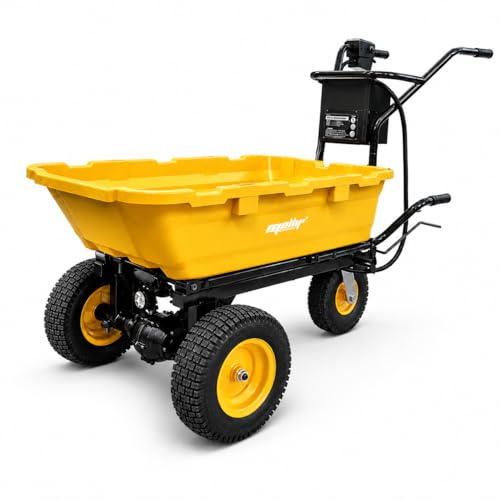
This DeWalt-compatible wheelbarrow is a clever solution for anyone already invested in the DeWalt ecosystem. I like that it uses two 20V MAX batteries for 40V output, no proprietary charger needed, which saves money and clutter. Contractors who own multiple DeWalt tools will appreciate being able to swap batteries mid-job. The hydraulic dump bed is another win, making unloading soil or mulch nearly effortless compared to manual tipping.
Performance-wise, the 300W brushless motor handles 661 lbs without strain, and the downhill speed control keeps loads stable on slopes. But the trade-off is clear: you’re buying functionality, not convenience. Without included batteries, the upfront cost jumps quickly. And while the LED light and pneumatic tires are solid touches, the lack of folding design limits storage options. It’s a specialist tool, not a general-purpose wagon.
Video review
SEESII Electric Wagon 330Lbs

Strengths
- Dual batteries included
- Low price
- Stepless speed control
- Easy folding
- Good traction
Trade-offs
- Plastic components feel cheap
- Shorter motor lifespan expected
- No advanced safety features
At this price, the SEESII punches above its weight. For under $150, you get two 4.0Ah batteries, rare at this tier, and a fully functional electric drive system that handles moderate loads with ease. Owners report it breezes through grass and gravel, and the dual-battery setup means you can swap and keep going instead of waiting to recharge. That’s huge for a day-long festival or extended gardening session.
It’s not built like the premium models, the frame feels lighter, and the 150L space fills up fast, but for the budget-conscious buyer, it delivers core functionality without gimmicks. The stepless speed control is surprisingly smooth, and the zero-assembly fold mechanism is genuinely user-friendly. If you’re testing the waters with electric wagons or need a secondary cart for groceries, this is the smart entry point.
Video review
Gonex 36″ Electric Foldable Wagon
Strengths
- 300W brushless motor
- 3-speed control
- Folds in seconds
- All-terrain wheels
- USB-C charging
Trade-offs
- 360 lb load limit
- Battery range on lower end
- No seat option
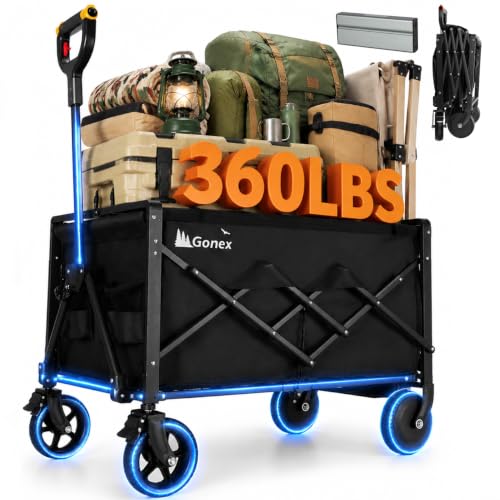
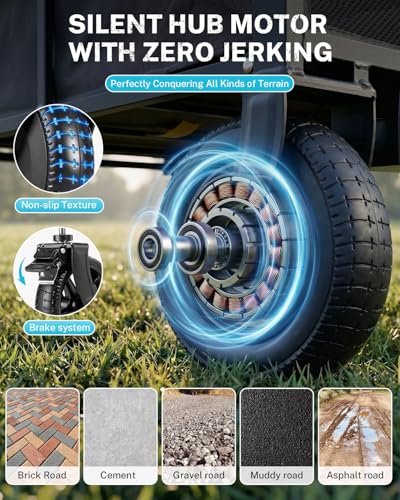
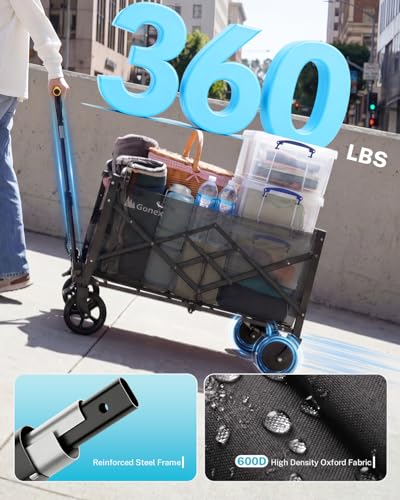
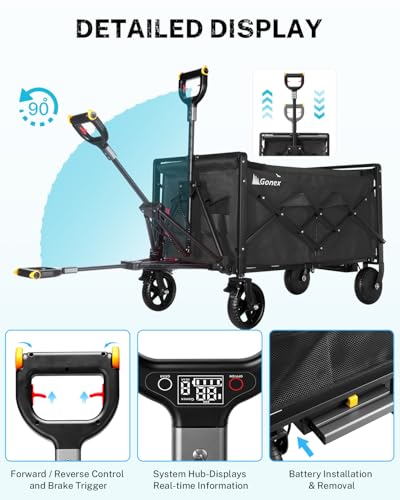
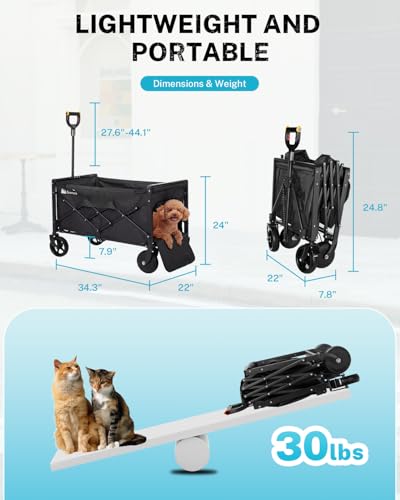
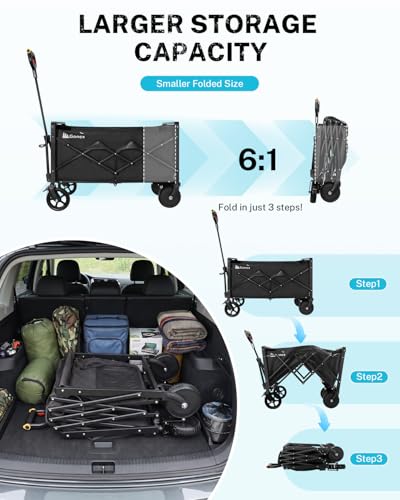
For weekend adventurers who want a no-fuss electric wagon that just works, the Gonex 36-inch model hits a sweet spot. On paper, the 300W brushless motor isn’t the strongest here, but owners consistently report it handles beach sand and garden slopes without drama, especially with lighter loads under 250 lbs. The real win is usability, three speeds that sync well with walking pace, forward/reverse controls on the handle, and a magnetic brake that actually holds on inclines.
Where it stands out is in portability. The one-hand fold mechanism delivers on its promise, collapsing into a compact unit that fits in even small SUVs. Paired with all-terrain wheels that don’t sink in soft ground, this makes it a top pick for campers and beachgoers who value convenience over brute strength. It’s not built for farm-scale hauling, but for what it’s meant to do, it does it cleanly.
Product photos
Landworks Electric Utility Cart 500lb

Strengths
- 500W 48V system
- 500 lb capacity
- 1000 lb towing
- Modular flatbed
- Quiet brushless motor
Trade-offs
- Bulky storage footprint
- Lead-acid battery heavier
- Slow charging
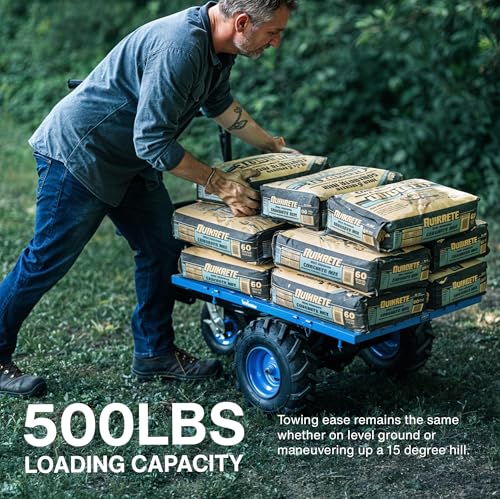
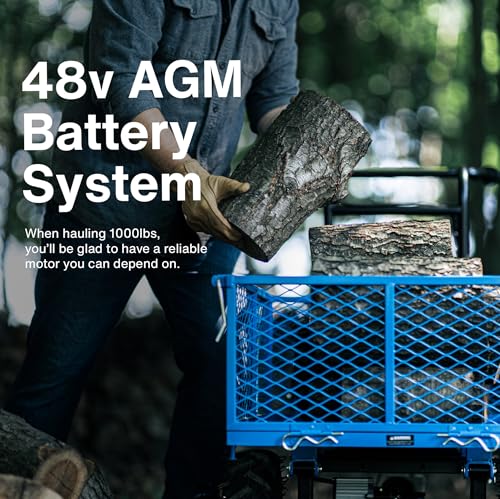
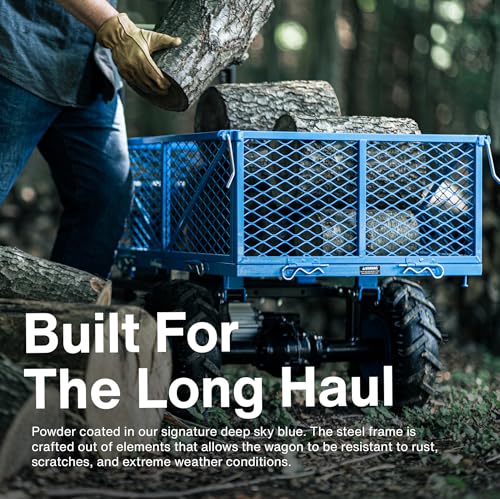
Landworks goes hard on industrial reliability with this 500W, 48V brushless system powered by lead-acid batteries. It’s one of the few carts using AGM deep-cycle tech, which means better cold-weather performance and longer cycle life, important for year-round outdoor use. The 500 lb load and 1000 lb towing capacity aren’t marketing fluff; commercial users report using it for pallets and equipment in warehouse settings.
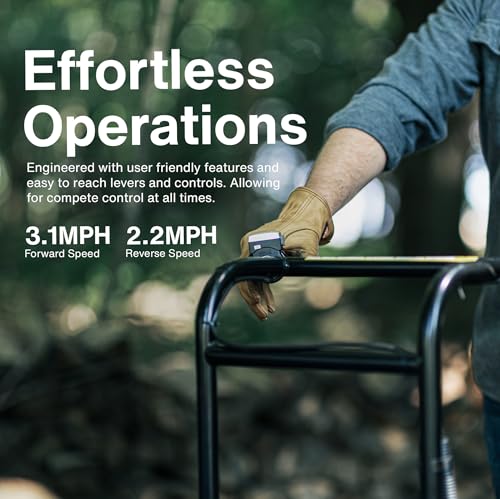
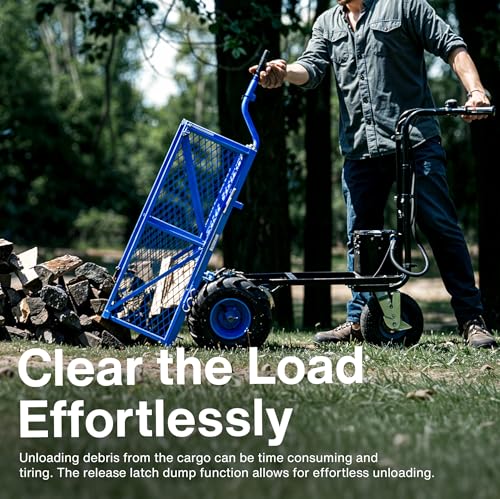
The modular 6 cu ft bed is a standout, convertible to flatbed in seconds, making it adaptable for odd-shaped loads. And despite its heft, the variable speed control delivers smooth acceleration, almost silently. Where it falters is portability. It’s big, heavy, and doesn’t fold as compactly as others. But if you’re replacing a gas-powered dolly or need warehouse-grade electric transport, this is the closest thing to a work truck in wagon form.
Product photos
VEVOR Electric Wagon 660Lbs
Strengths
- 500W motor
- 660 lb capacity
- Long battery life
- Electronic brakes
- Stable 4-wheel base
Trade-offs
- Bulky when folded
- Heavy frame
- Slower folding mechanism
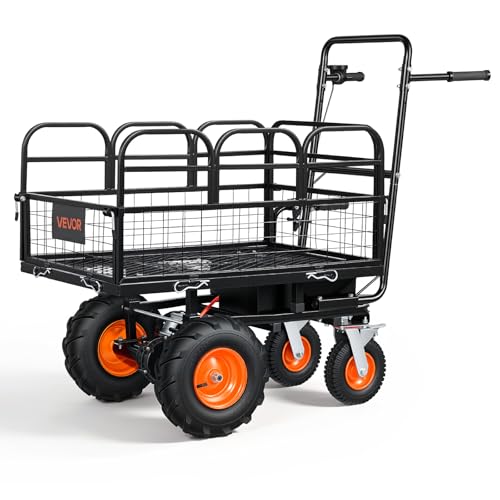
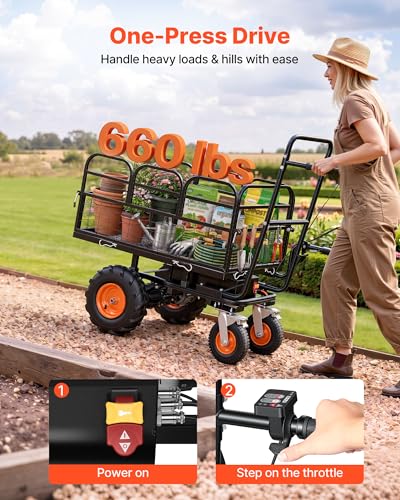
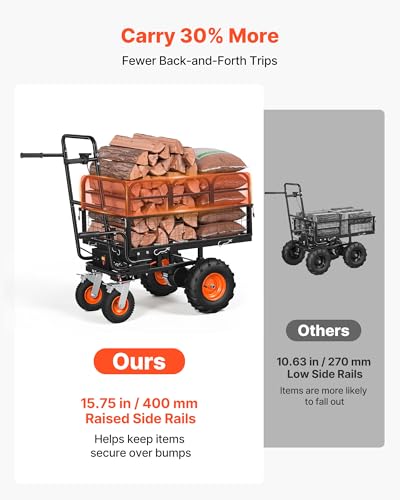
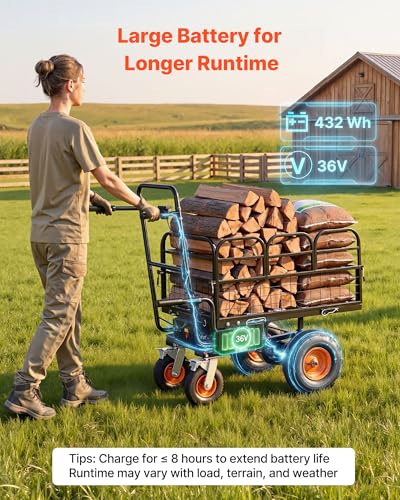
If you’re moving soil, mulch, or firewood week after week, the VEVOR cart earns respect through sheer workhorse design. With a 500W motor and a 432Wh battery, it offers longer runtime than most budget units, and reviewers note it powers through sloped yards without bogging down. The 660 lb capacity is legit, it’s reinforced steel from frame to mesh bed, and the high side rails keep bulky loads contained. This thing doesn’t flinch at construction debris or full bags of gravel.
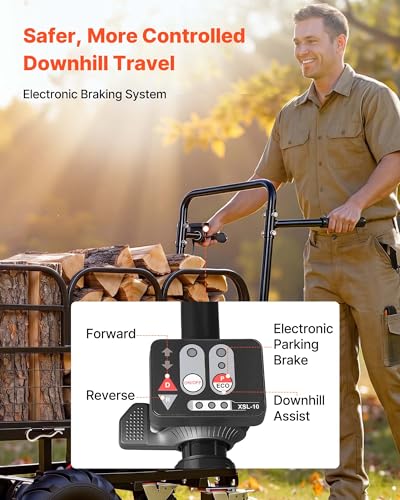
The electronic braking system is a quiet standout. Unlike basic carts that roll backward on hills, this one holds firm, which matters when you’re unloading on uneven ground. And while it’s not as portable as foldable models, the four-wheel setup adds stability many two-wheel wheelbarrows lack. For serious yard work or light farming, it bridges the gap between utility and durability better than most.
Product photos

WISELD GT3-4WD Rideable Electric Cart
Strengths
- 3000W 4WD motor
- Rideable with seat
- 18.6-mile range
- Folding steering system
- LiFePO4 battery
Trade-offs
- Very high price
- Two-part shipping
- Complex maintenance likely
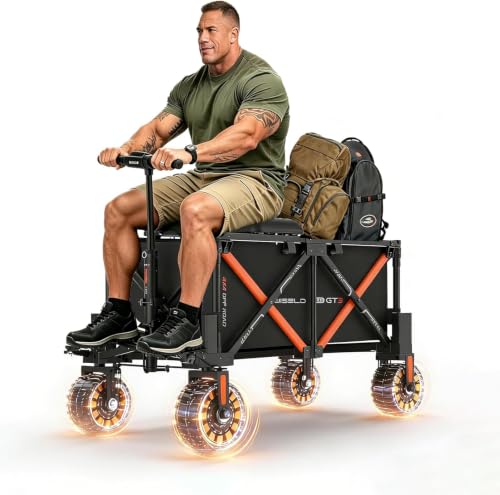
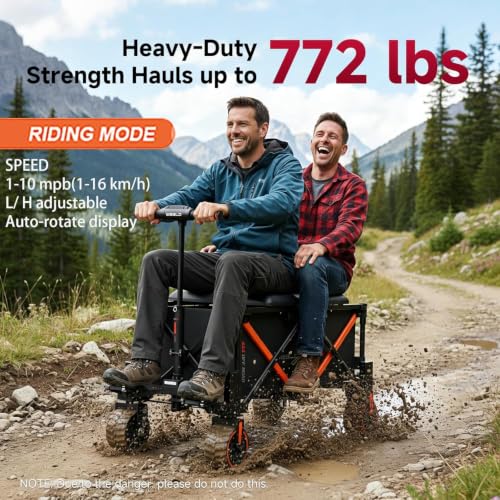
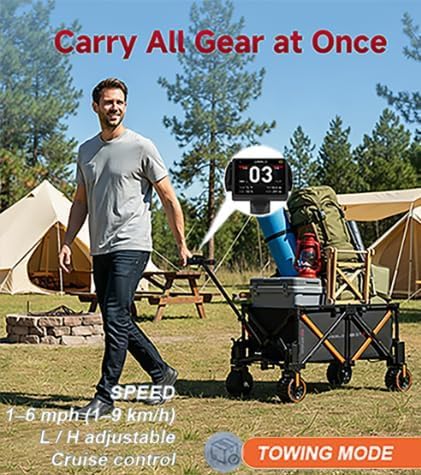
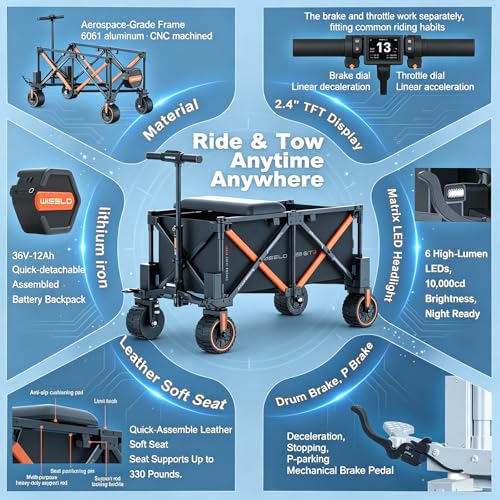
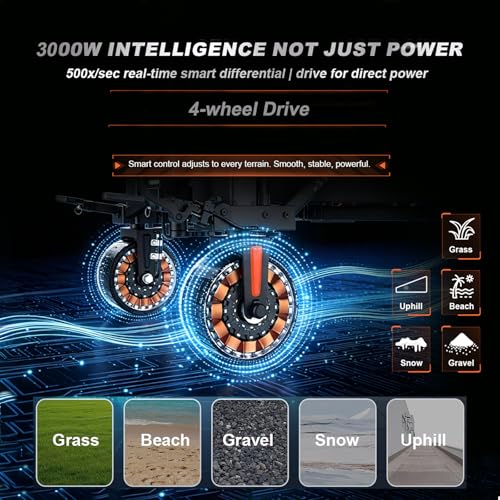
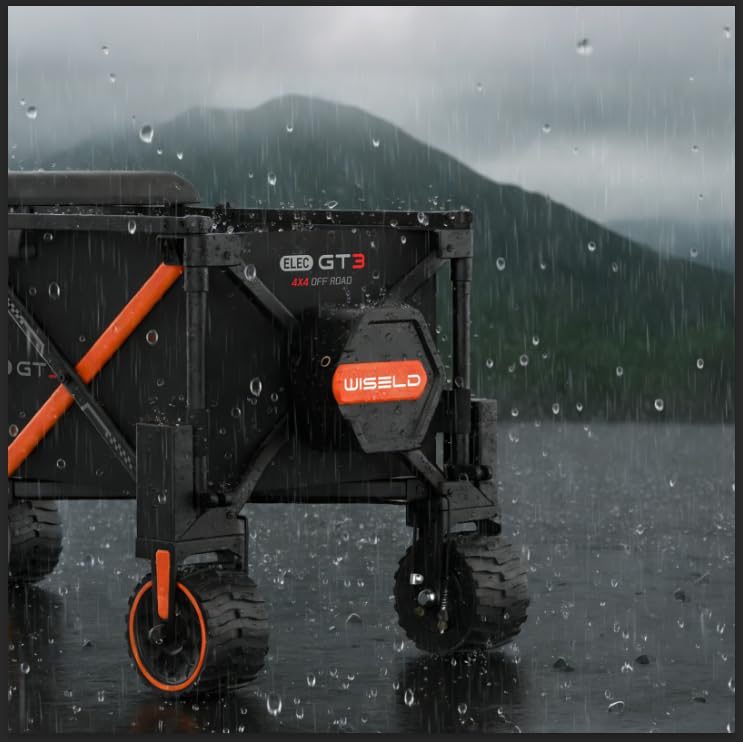
The WISELD GT3 isn’t just an electric cart, it’s a mini off-road vehicle. With a 3000W 4WD motor, 10 mph top speed, and ride-on capability, it redefines what these machines can do. The aerospace aluminum frame and LiFePO4 battery suggest serious engineering, and owners confirm it conquers 30% slopes and muddy trails where others stall. The folding Ackermann steering is a revelation, tight turns, reverse, cruise control, and regenerative braking make it feel more like driving than towing.
But let’s be clear: this is a luxury-grade tool. At nearly $2,000, it’s double the price of most competitors. However, if you’re setting up remote campsites, managing large properties, or need a mobile platform that can carry people or gear across rough land, the investment pays off. The 18.6-mile range in 2WD mode is unmatched, and the ability to tow while folded adds unique versatility. This isn’t for everyone, but for those who need it, nothing else compares.
Product photos
Litheli Electric Wagon 450Lbs
Strengths
- 450W motor
- Variable speed drive
- 450 lb capacity
- Removable battery
- Washable liner
Trade-offs
- Shorter runtime under load
- Smaller cargo area
- Folding latch feels stiff
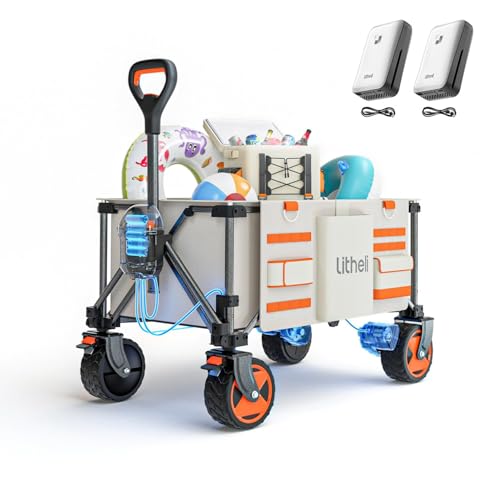
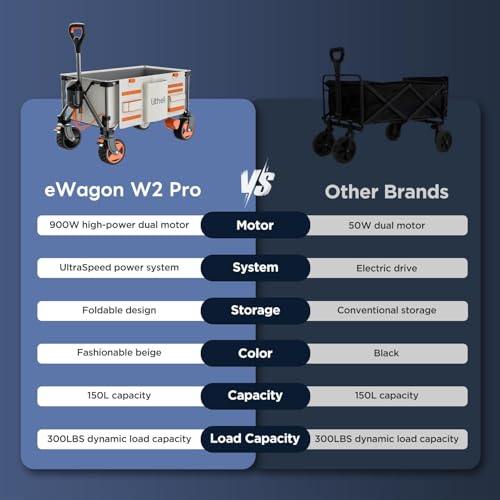
The Litheli packs a surprising punch for its size, blending variable speed control with a rugged 450 lb load rating, a rare combo in this class. The 450W motor gives strong hill-climbing ability, and the stepless speed adjustment (0.6–1.3 m/s) means you can creep along with kids or hustle through a crowded park without jerking. That kind of fine-tuned control sets it apart from fixed-speed rivals.
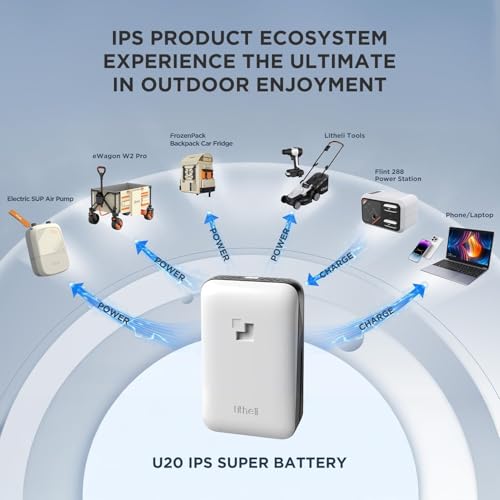
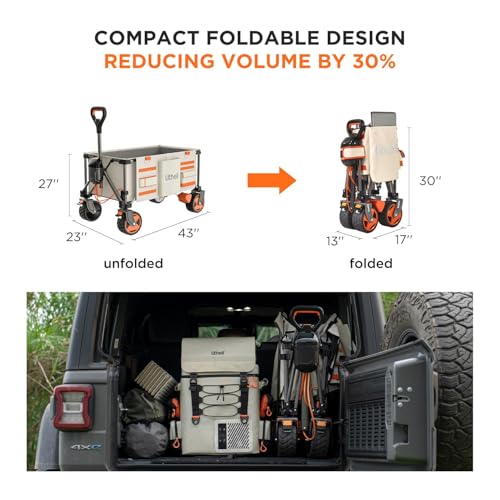
Owners praise the removable 20,000mAh battery and the washable 600D Oxford liner, small touches that add up during messy trips. The triple safety system (soft start, power lock, collision-guarded wheels) also makes it a smarter choice around kids or seniors. While the 150L bed is smaller than some, the tailgate reinforcement helps carry longer items securely. If you want precision and safety over raw volume, this one deserves your attention.
Product photos
Overmont 200L Electric Wagon
Strengths
- Quiet 300W motor
- 2-hour fast charging
- USB output
- Hand brake control
- Compact fold
Trade-offs
- Lower weight capacity
- Limited slope performance over 15°
- Battery not swappable
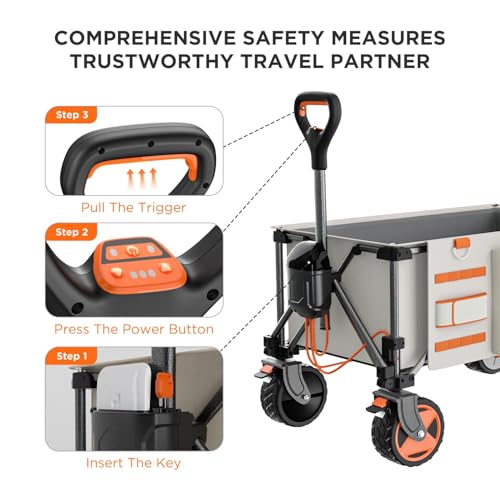
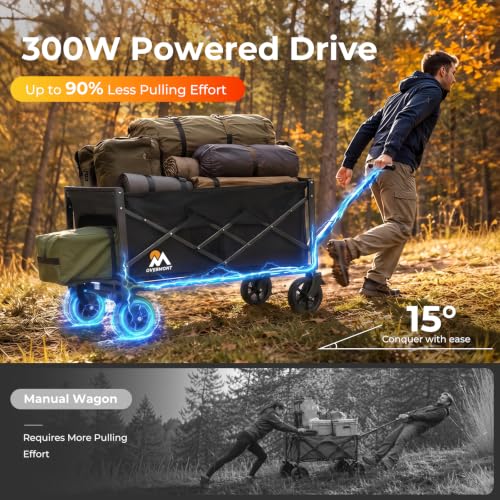
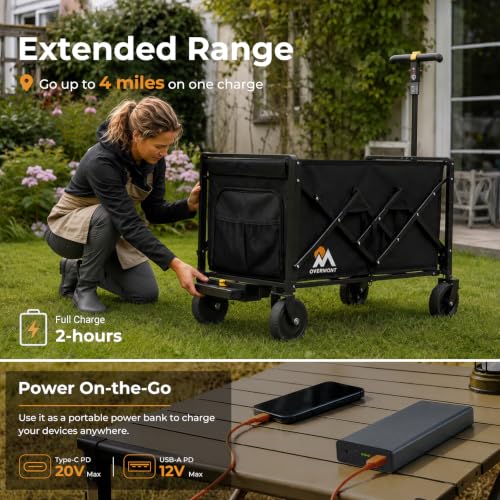
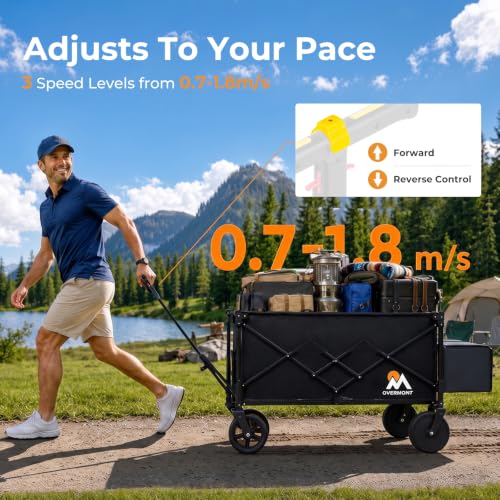
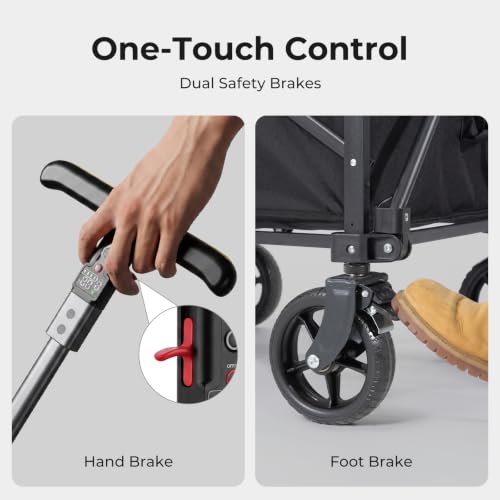
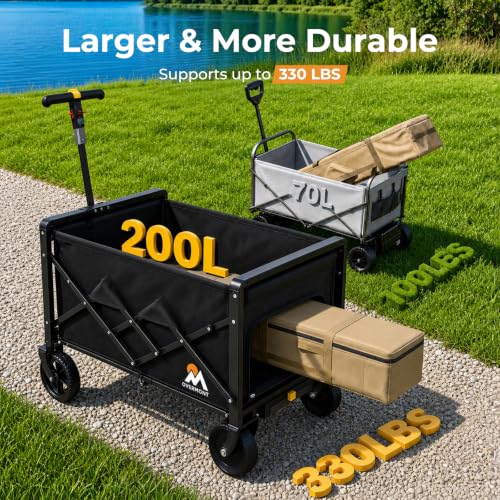
Overmont made a smart play by prioritizing quiet operation and fast charging, two things most brands overlook. The 300W motor runs noticeably quieter than competitors, which sounds minor until you’re rolling through a peaceful campsite or early-morning farmer’s market. The real advantage? A 2-hour charge time thanks to USB-PD compatibility, so you’re rarely grounded long. For frequent users, that’s a standout.
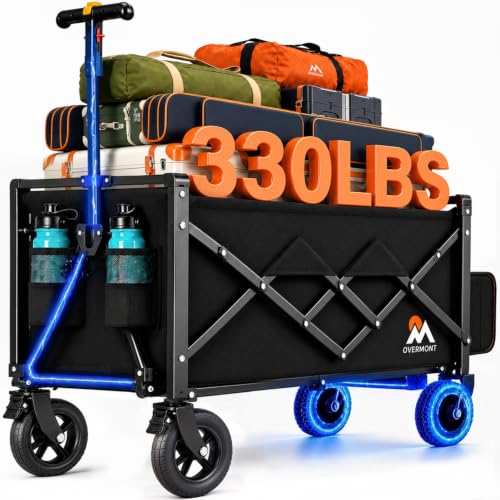
It shares DNA with the Gonex model, same 200L expandable bed, 330 lb limit, and similar three-speed controls, but the hand brake feels more responsive, and the build quality edges slightly ahead in owner feedback. It’s not the most powerful, but if you value quick turnaround and low noise, especially in residential or shared outdoor spaces, this one operates with a level of refinement others miss.
Product photos
How We Evaluated electric carts
My approach to evaluating electric carts for TheAutoZenith involved a detailed comparison of published specifications and features across numerous models. Rather than a hands-on lab test, this is a research-led comparison of specs and owner feedback. I weighed those technical details alongside owner reviews from major retailers and insights from respected automotive and outdoor publications. Finally, I ranked each cart based on its ability to meet the needs of various users, considering factors like load capacity, terrain handling, and ease of use.
For this category, the most important factors were load capacity and battery life. A cart’s usefulness is severely limited if it can’t handle the weight you intend to move, and frequent charging defeats the purpose of electric assistance. I also heavily considered maneuverability and build quality – a robust frame and reliable motor are essential for longevity, especially when tackling uneven ground. If you’re looking for other electric-powered fun, you may also want to check out our guide to the best electric go karts.
Specifications reliably tell you about motor power, battery voltage, and load capacity. However, owner feedback proved invaluable for understanding real-world performance. Reviews highlighted issues like wheel durability, the effectiveness of braking systems, and the accuracy of advertised battery life. I prioritized carts with consistently positive feedback regarding reliability and ease of operation, and also considered expert opinions on the quality of components and overall value. For a different approach to motorized assistance, we’ve also reviewed top-rated motorized push carts.
How To Choose The electric carts
Choosing the right electric cart isn’t just about finding one with a motor; it’s about matching its capabilities to your specific needs. A poorly chosen cart can quickly become a frustrating investment.
A good electric cart balances load capacity with maneuverability, run-time with charge time, and features with overall durability. Key considerations include motor power (wattage), battery voltage and amp-hours (Ah), tire type for intended terrain, and the quality of the frame construction. Prioritize models with robust braking systems and user-friendly controls.
Power & Load Capacity
Don’t assume more power is always better. While a 500W motor (like in the Landworks model) seems impressive, it’s only valuable if you genuinely need to haul heavy loads consistently. For lighter tasks around a campsite or garden, a 300W motor might suffice, and will likely offer better battery life. Consider the stated load capacity realistically. If you’re regularly moving over 300 lbs, you’ll want something like the BougeRV or VEVOR models, built for heavier duty. Conversely, if you’re primarily transporting picnic supplies, the SEESII or Gonex carts will likely be more than adequate.
Battery & Runtime Considerations
Runtime is frequently overstated by manufacturers, so dig into the specs. Look beyond just “hours of runtime” and focus on battery voltage and amp-hours (Ah). Higher Ah ratings mean longer runtimes, but also longer charge times. The Litheli cart’s fast 2-hour charge time is a significant advantage if you don’t want to wait all day. Furthermore, consider battery type. While lead-acid batteries are more affordable (as seen in some of the models), lithium-ion (LiFePO4, as in the WISELD GT3) offers better weight-to-power ratios, longer lifespans, and more consistent performance. If you already invest in DeWalt tools, the Electric Wheelbarrow’s compatibility with their 20V MAX batteries is a huge convenience.
- A larger battery capacity (Ah) generally translates to longer runtime, but adds weight.
- Lithium-ion batteries are more expensive upfront but offer superior performance and longevity.
- Removable batteries, like the Litheli and Overmont models offer, are ideal for swapping in a fresh charge while on the go, extending your use time.
Terrain and Maneuverability
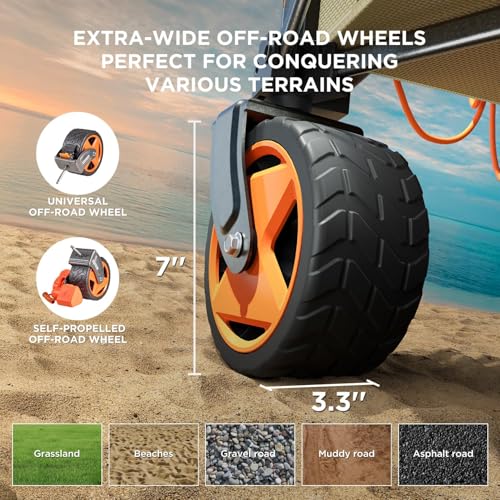
The wheels and overall design dictate how well a cart performs on different surfaces. Pneumatic (air-filled) tires, such as those on the BougeRV and Landworks carts, provide better shock absorption and traction on rough terrain. Solid wheels are lower maintenance but offer a harsher ride. If you’re primarily sticking to paved surfaces or well-groomed paths, solid wheels are fine. However, for beaches, grass, or uneven ground, pneumatic tires are essential. Beyond that, think about steering and braking. The WISELD GT3, with its Ackermann steering is a standout for maneuverability, and don’t underestimate the value of a good braking system, especially on inclines. If you’re looking for all-terrain versatility, you might also consider exploring options beyond carts, like the best electric dirt bikes for more rugged adventures.
Don’t get caught short: Always factor in the terrain you’ll be tackling. A cart built for smooth pavement won’t fare well on a sandy beach.
For larger properties or those who also enjoy leisure activities, exploring options like recommended electric golf carts might also be worthwhile.
Electric Carts Compared
Here’s a comparison of key specifications for various electric carts to help you make an informed decision.
| Product Title | Max Load Capacity (lbs) | Battery Voltage (V) | Run Time (approx.) | Capacity (Cu Ft / L) | Motor Power (W) | Key Features |
|---|---|---|---|---|---|---|
| BougeRV Electric Utility Cart 660LBS | 660 | 48 | 5 km | N/A | N/A | 15% incline, Foldable, Battery Indicator |
| Electric Wheelbarrow with DeWalt 20V | 661 | 20 | 2-4 hrs | 2.5 | 300 | DeWalt Battery Compatible, Hydraulic Dump |
| SEESII Electric Wagon 330Lbs | 330 | 20 | 30+ mins | 150L | N/A | Dual Batteries, Stepless Speed Control |
| Gonex 36″ Electric Foldable Wagon | 360 | N/A | 6 miles | 200L | 300 | 3-Speed Control, Fast Folding |
| Landworks Electric Utility Cart 500lb | 500 | 48 | N/A | 6 | 500 | 1000lbs Towing, All-Terrain Wheels |
| VEVOR Electric Wagon 660Lbs | 660 | 36 | N/A | N/A | N/A | High Capacity, Electronic Braking |
| WISELD GT3-4WD Rideable Electric Cart | 551/771 (Dyn/Stat 2WD) / 771/1300 (Dyn/Stat 4WD) | 36 | 18.6 mi (2WD)/12.3mi(FWD)/9.4mi(4WD) | N/A | 1500/3000 | Rideable, Folding, All-Terrain |
| Litheli Electric Wagon 450Lbs | 450 | 20 | 30-50 mins | N/A | 450 | Variable Speed, Fast Charging |
| Overmont 200L Electric Wagon | 330 | 25.2 | 4 miles | 200L | 300 | Quiet Motor, 2H Fast Charging |
Frequently Asked Questions
What’s the difference between lead-acid and lithium-ion batteries in electric carts?
Lithium-ion batteries, while more expensive initially, offer a significantly better weight-to-power ratio and a longer lifespan compared to lead-acid options. They also maintain consistent performance throughout their discharge cycle, unlike lead-acid which can experience a drop in power as it depletes.
Are electric carts suitable for use on steep hills?
Whether a cart can handle hills depends on its motor power and incline rating. Models like the BougeRV boast a 15% incline capability, making them well-suited for moderate slopes, but truly steep hills may require a more powerful motor and robust braking system.
How easy are electric carts to assemble?
Most electric carts are designed for relatively simple assembly, typically requiring attaching the wheels, handlebar, and any accessories. However, some models, particularly those with more complex features, may benefit from a second person to assist.
Do electric carts require a lot of maintenance?
Compared to gas-powered vehicles, electric carts require minimal maintenance. Regular checks of tire pressure, brakes, and electrical connections are essential, but you’ll avoid oil changes, spark plug replacements, and other common engine maintenance tasks. If you’re seeking a similarly low-maintenance personal vehicle, you might also consider exploring best electric bikes.
What should I consider when storing an electric cart for extended periods?
When storing an electric cart for the winter or other long durations, fully charge the battery before storage and disconnect it to prevent self-discharge. Store the cart in a dry, covered location to protect it from the elements and consider using a battery maintainer to keep the charge level optimal, especially for lead-acid batteries.
The Bottom Line
Choosing an electric cart ultimately comes down to balancing convenience with capability. While the sheer power and capacity of the BougeRV Electric Utility Cart 660LBS are impressive, for most users, the WISELD GT3-4WD Rideable Electric Cart offers the best overall blend of features, usability, and durability – particularly if you need to tackle varied terrain or appreciate its rideable design. It’s a substantial investment, but one that delivers on versatility.
If specific needs dictate your choice, we have clear recommendations. For those on a budget, the SEESII Electric Wagon 330Lbs provides excellent value. Those prioritizing portability and quick charging will appreciate the Litheli Electric Wagon 450Lbs. And for DeWalt tool owners, the Electric Wheelbarrow with DeWalt 20V compatibility is a no-brainer. If you’re looking for an alternative form of personal electric transport, you might also want to consider some of the best electric scooters available.
Ultimately, focus on matching the cart’s load capacity to your actual hauling needs, and don’t overspend on battery size if you won’t fully use it. A robust frame, reliable brakes, and tires appropriate for the terrain are far more critical than any single headline specification. Don’t forget, a well-chosen cart is an investment in making tasks easier, not just in acquiring the latest gadget – and for commuters, exploring top electric scooters for commuters can be a worthwhile consideration.
