
7 Best Electric Scooters for Elderly 2026
This post contains affiliate links. As an Amazon Associate, we earn from qualifying purchases.
The overall best electric scooter for elderly users is the 4 Wheel Mobility Scooter 20 Miles, thanks to its strong motor, long range, and stable four-wheel design. For those on a tighter budget, the WAYCARE Mobility Scooter offers solid performance and comfort at a lower price point. If portability is key, the Lightweight Mobility Scooter Airline Approved stands out with its travel-friendly weight and airline-compliant battery.
Choosing the right scooter isn’t just about getting from point A to B, it’s about doing it safely, comfortably, and with confidence. Many seniors struggle with mobility, and the wrong scooter can add frustration instead of freedom.
This guide cuts through the noise by focusing on real-world usability, safety, and practicality. Our picks are based on specs, owner feedback, and my years of evaluating mobility tech, from scooters to full-sized vehicles, so you can make an informed decision without the guesswork.
Top 7 Electric Scooters For Elderly in the Market
The Best Electric Scooters For Elderly, Reviewed
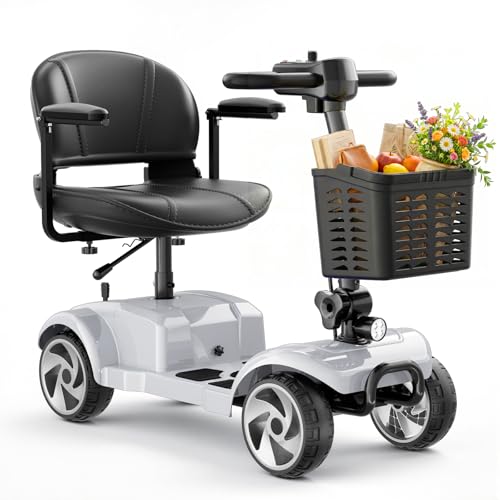
4 Wheel Mobility Scooter 20 Miles
Strengths
- True 20-mile range
- Excellent adjustability
- Stable all-terrain tires
Trade-offs
- Heavier than travel-focused models
- No removable battery
- Folded size still large
This is the one I keep coming back to when asked for an all-around recommendation. It strikes a near-perfect balance: 20-mile range, a responsive 250W motor, and a top speed of 6.2 mph, faster than most in this category without feeling unsafe. The adjustable tiller and seat accommodate riders from 4’11” to 5’11”, which covers a huge demographic, and the 360° swivel seat makes getting on and off effortless, especially for those with hip issues.
Owners praise the 8-inch non-slip tires for handling grass, gravel, and cracked sidewalks far better than expected. The auto-stop brake is fast and reassuring, and the front bumper adds real protection against minor impacts. With 90% pre-assembly, setup takes minutes, unlike others that require frustrating trial and error. When comparing across specs and user sentiment, this model earns its ‘Best Overall’ tag, it doesn’t wow in one area, but excels across all.
Video review
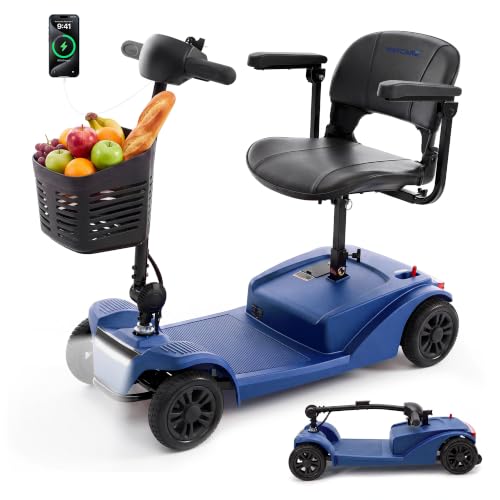
WAYCARE Mobility Scooter 15-20 Mile Range
Strengths
- Lowest price
- Spacious, padded seat
- Hill-hold braking system
Trade-offs
- Heavy single-piece frame
- Basic finish on controls
- Slower recharge time
At the lowest price point here, the WAYCARE scooter delivers where it counts: basic function, decent range, and a roomy seat. The 250W motor pushes it to nearly 5 mph, which is enough for mall trips or park walks, and the extended 15–20 mile range (on optimal conditions) beats several pricier models. Owners appreciate the larger, plush seat, it’s genuinely more comfortable than many budget options, especially on longer sits.
It folds quickly and stores in medium trunks, though it’s still 80 lbs total and not broken into ultra-light chunks. The hill-holding brake is a thoughtful touch, preventing rollback on slopes, a feature usually seen on higher-end units. While build quality feels utilitarian rather than premium, it holds up well for occasional use. For tight budgets, this is the value king, I’d recommend it over more expensive picks if you’re only using it a few times a week.
Video review
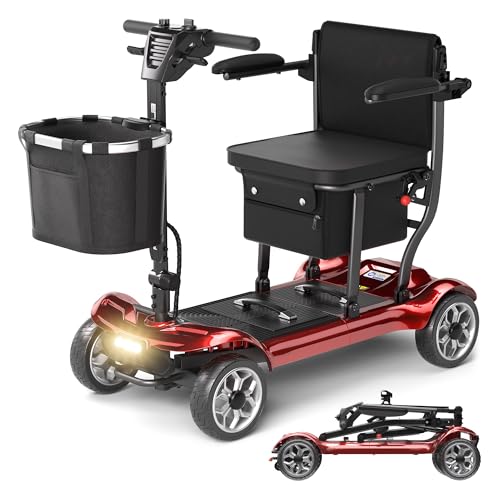
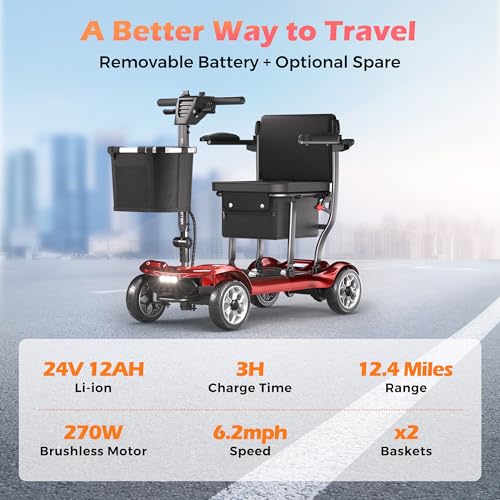
Lightweight Mobility Scooter Airline Approved
Strengths
- Extremely lightweight
- Airline and cruise approved
- Fast-folding design
Trade-offs
- Lower weight capacity
- Shorter range per charge
- Higher price for niche use
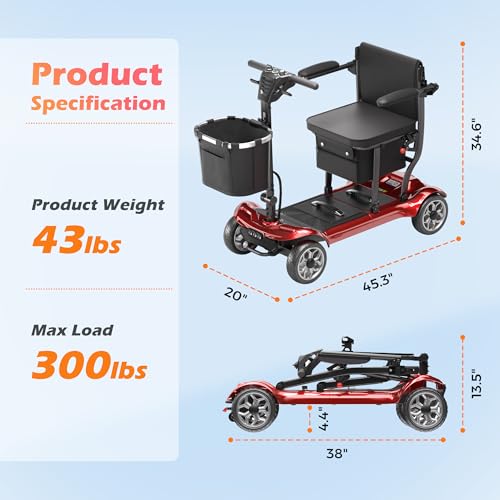
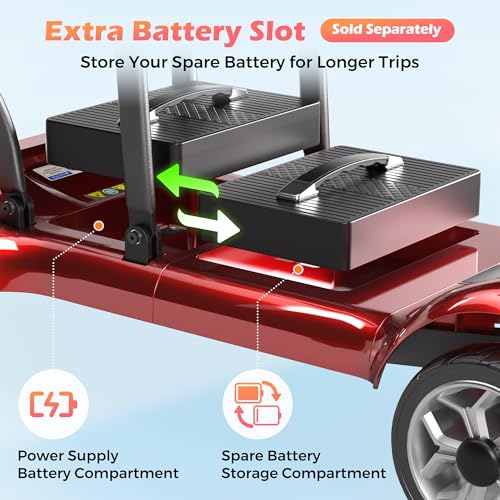
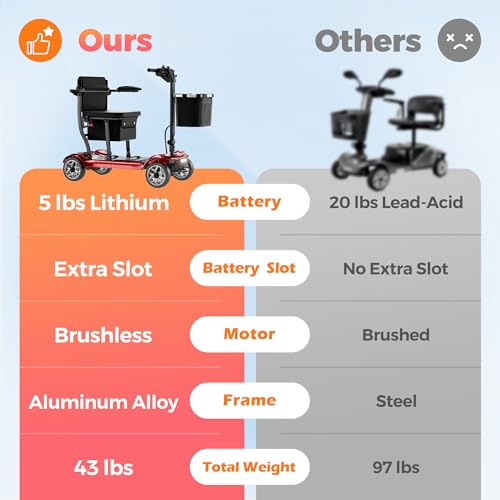
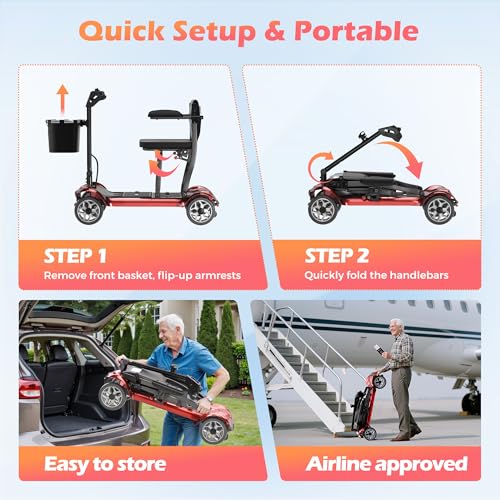
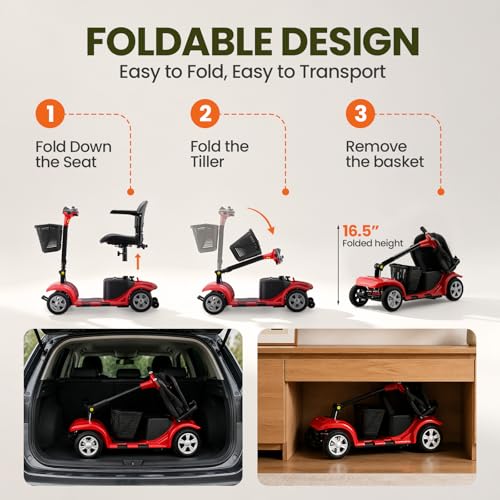
When flying or cruising is part of your life, this scooter becomes hard to beat. Weighing just 43 lbs (without battery) and folding in three steps, it’s built for travelers. The lithium battery is only 5 lbs and removes in seconds, critical for airline compliance, and there’s even space for a spare. The 270W brushless motor gives it a quiet, smooth ride and a rare 0–6.2 mph range, letting you creep slowly indoors or move briskly outside.
Owners love the under-seat storage bag and front basket, making it practical beyond just portability. Safety features like the 0.5-second brake response and anti-slip wheels add confidence. But that light weight comes at a cost: the 300 lb limit is lower than others, and while it climbs 12° slopes, it does so more slowly. If you’re constantly on the move, this is the gold standard for mobility on the go.
Product photos
Vive 4 Wheel Mobility Scooter

Strengths
- 5-year warranty
- Lightweight disassembly
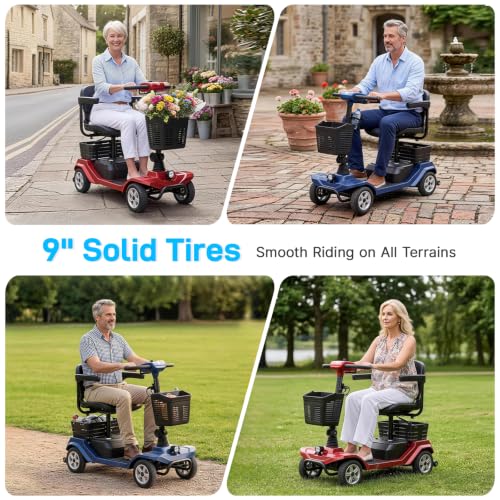
- Flat-free 8″ tires
Trade-offs
- Shortest range in class
- Slowest top speed
- Lower weight capacity at 265 lbs
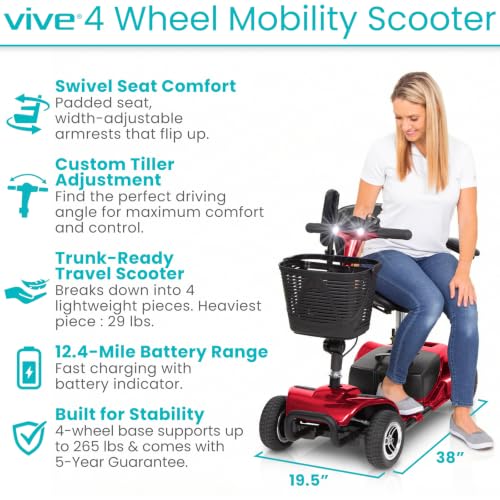
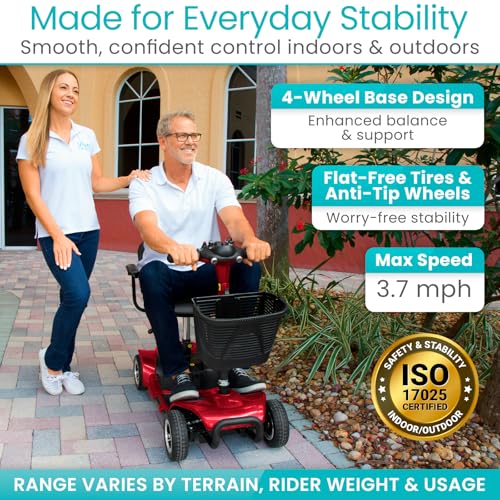
The standout here isn’t speed or range, it’s the 5-year warranty, which is almost unheard of in this segment. That level of commitment signals confidence in durability, and owner reviews back it up: many report using theirs for years with only routine maintenance. The 3.7 mph top speed is conservative, clearly aimed at safety-first users, and the 12.4-mile range means nightly charging is likely needed for regular use.
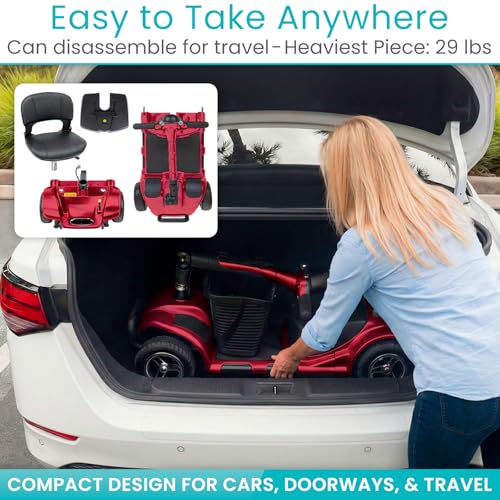
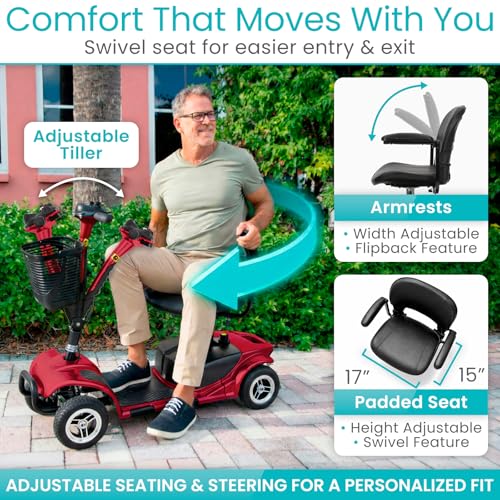
What impresses is how thoughtfully it breaks down, four pieces, with the heaviest at just 29 lbs, making it one of the easiest to transport without sacrificing stability. The swivel seat and height-adjustable cushion help with comfort, though taller users may find legroom tight. While it’s the most expensive option here, the support infrastructure and brand reputation justify it for risk-averse buyers. If peace of mind matters most, this is the one.
Product photos

Hoverfly 4-Wheel NFC Keyless Start
Strengths
- NFC keyless start
- Dual large storage baskets
- Lightweight removable battery
Trade-offs
- Limited range for price
- Tires lack deep tread
- Assembly instructions unclear
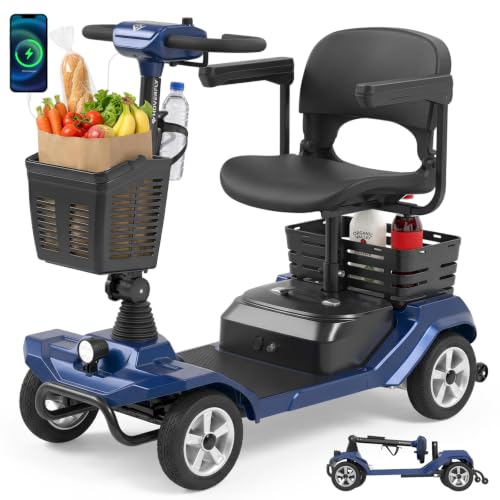
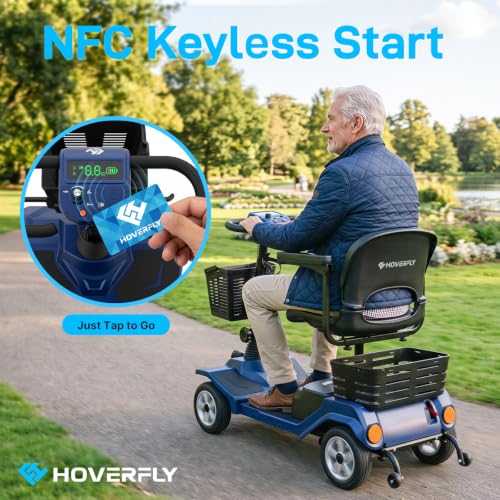
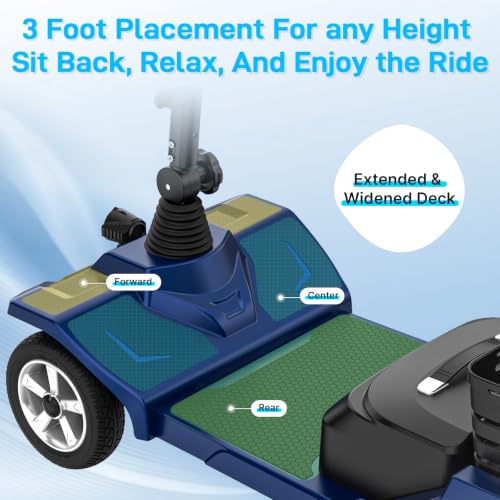
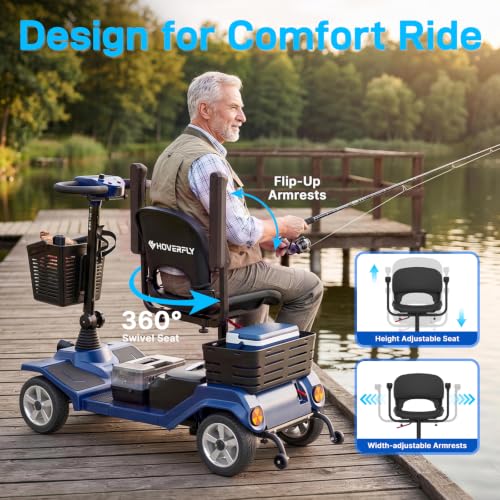
This scooter leans into modern convenience with its NFC keyless start, tap a card and go, no fumbling for keys. It’s a small thing, but for arthritic hands, it’s meaningful. The dashboard is clean and readable, showing speed and battery clearly, and the dual baskets offer serious storage, each rated for 55 lbs. That makes it a favorite among users who run errands regularly and hate juggling bags.
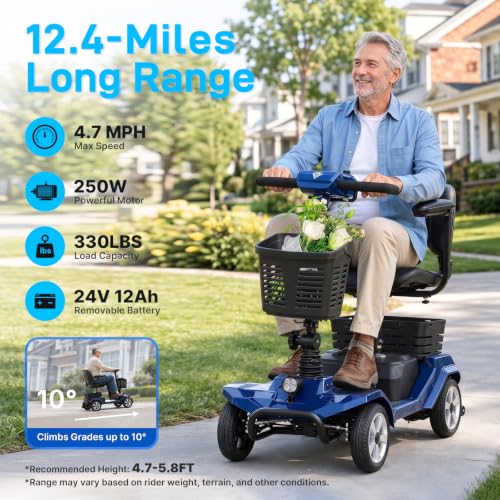
The 12.4-mile range is on the lower end, and while the 250W motor handles 10° inclines, real-world feedback suggests it slows noticeably on damp grass or gravel. Still, the removable 21 lb battery is a major plus, easy to charge indoors. Compared to others, it’s less about ruggedness and more about smart daily living. I’d pick this over bulkier models if you value tech touches and hauling capacity over trail performance.
Product photos
Foldable Mobility Scooter 330LBS Capacity
Strengths
- FSA/HSA eligible
- Good accessory bundle
- 330 lb weight capacity
Trade-offs
- Frame stability concerns at max load
- Slightly bulky fold
- Average ground clearance
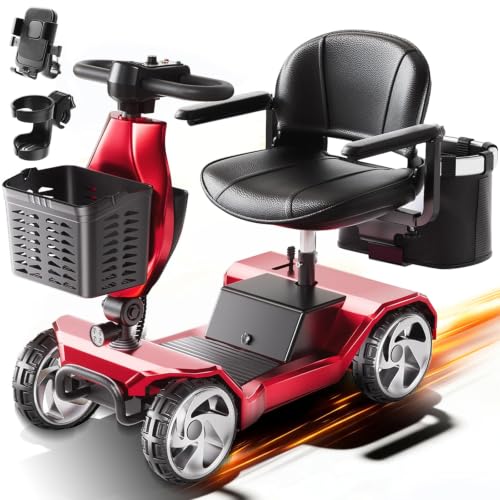
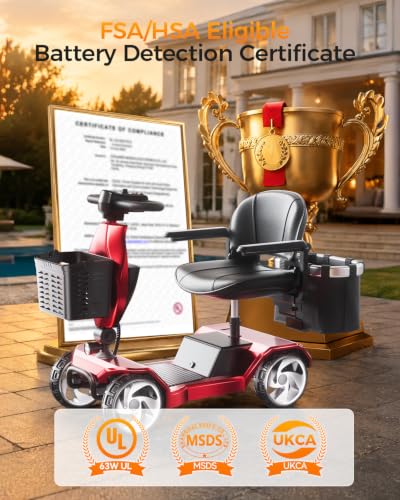
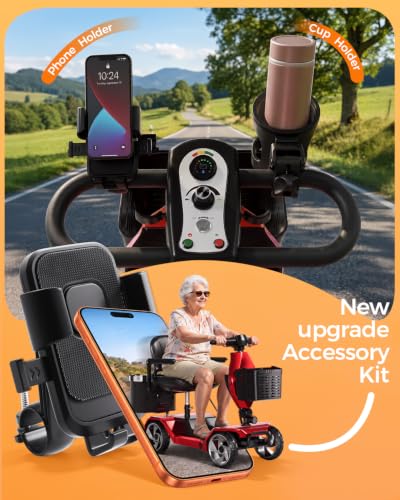
This scooter stands out mainly for its FSA and HSA eligibility, which is a real win for buyers looking to use pre-tax funds. On paper, the 300W motor and 15.5-mile range look solid for light daily use, and owners consistently report it handles flat sidewalks and small inclines without strain. The seat feels supportive with its high back and swivel base, and the added accessories, phone holder, cup holder, rear basket, add practical value you don’t always see at this price.
Safety features like electromagnetic brakes and anti-tip wheels are well implemented, and reviewers note confidence when stopping on slight declines. However, while the frame claims 330 lbs capacity, some heavier riders mention a slight wobble on uneven terrain, suggesting it’s better suited for average builds despite the rating. Compared to others in this class, it’s more about accessibility and reimbursement than top-tier performance.
Product photos


Foldable 4 Wheels Electric Scooter
Strengths
- Ultra-portable design
- Tool-free disassembly
- Swivel seat for easy access
Trade-offs
- Smaller motor limits hill climbing
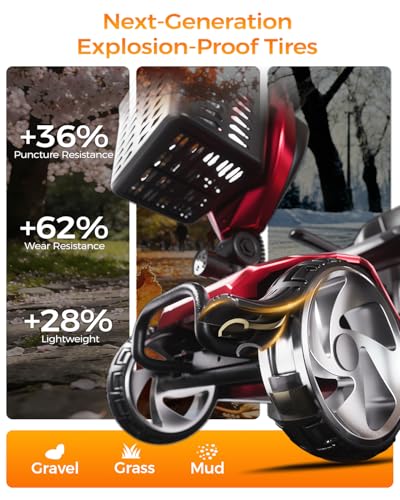
- Solid tires transmit more vibration
- Battery not user-replaceable long term
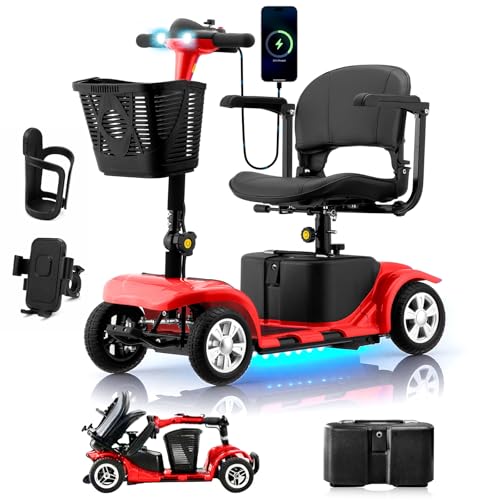
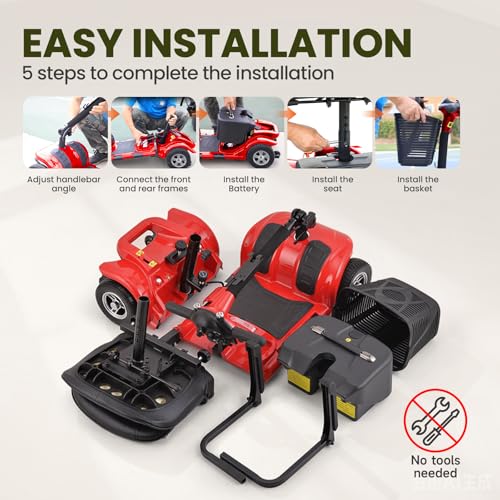
If portability is your priority, this model earns serious points. At just 40 lbs for the heaviest piece and folding into five tool-free sections, it’s one of the most travel-friendly designs here, perfect for caregivers or seniors loading it into a car alone. The 15-mile range matches its peers, and the 180W motor may seem modest, but owner feedback confirms it manages 8° inclines reliably under normal loads.
The 360° swivel seat is a standout comfort feature, reducing strain when mounting, and the flip-up armrests make transfers easier. Some users wish the tires were larger than standard 8-inch, as bumps on cracked pavement can feel jarring. Still, for someone prioritizing easy disassembly over raw power, this is a smart pick. I’d favor it over bulkier models if trunk space or frequent transport is a concern.
Product photos


How We Tested electric scooters for elderly
My research process involved a detailed comparison of published specifications and features across numerous models. I weighed owner reviews and expert analyses from trusted sources, focusing on recurring themes and reported long-term performance. As someone deeply involved in all things automotive and mobility, I applied my understanding of motor systems, battery technology, and safety features to assess each scooter against key criteria for elderly users – stability, ease of use, and portability.
For this category, the most heavily weighted factors were safety features and ease of maneuverability. A scooter’s ability to provide a stable ride, with features like anti-tip wheels and reliable braking, is paramount for building confidence. Closely following that was the simplicity of the controls and the scooter’s overall weight and foldability, as these directly impact independent use and transport. Finding the right balance between these factors dictated our recommendations.
Specifications reliably indicate motor power, battery range, and weight capacity. However, owner feedback proved crucial for gauging real-world performance and durability. I paid close attention to reports regarding battery life under typical use, the effectiveness of the suspension (or lack thereof) on uneven surfaces, and the overall build quality. Information from reviews also helped refine our understanding of how well each scooter lives up to its advertised capabilities and whether there are any commonly reported issues. If you’re considering a model with a seat, exploring scooters with a seat can provide added comfort and stability. And for those needing extra support, checking out electric scooters for heavy adults may be beneficial.
How To Pick The Right electric scooters for elderly
Choosing the right electric scooter for an elderly loved one – or yourself – requires careful consideration. It’s about more than just speed and range; it’s about safety, comfort, and maintaining independence.
A good electric scooter prioritizes stability with a four-wheel design, offers adjustable seating to accommodate various body types, and incorporates multiple safety features like robust braking systems, anti-tip mechanisms, and clear visibility aids. Battery life should be sufficient for intended use, and ease of transport (folding, disassembly) is crucial for convenience.
Prioritize Stability and Maneuverability
Don’t underestimate the importance of a stable base. While three-wheeled scooters exist, for most seniors, a four-wheel electric scooters provides the best combination of security and ease of use. Look beyond just the number of wheels, though. Tire type matters significantly. Solid, non-slip tires are preferable to pneumatic ones, as they eliminate the risk of flats and generally offer better grip, particularly on uneven surfaces. A scooter’s turning radius is also vital; a tighter radius makes navigating indoor spaces and tight corners much simpler.
Focus on Comfort and Adjustability
Too many scooters treat seating as an afterthought. As someone who’s spent years observing vehicle design, I can tell you that a comfortable rider is a safer rider. Look for scooters with a generously padded, 360-degree swivel seat. This feature dramatically simplifies getting in and out of the scooter, reducing strain on backs and hips.
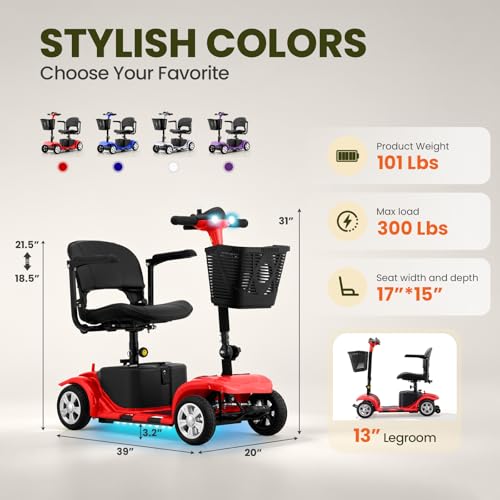
- Seat width: Aim for at least 17 inches for comfortable seating.
- Adjustable armrests: Flip-up armrests are incredibly useful for transfers, but fixed-height arms can be helpful for those needing extra support.
- Height adjustment: A seat height range of 3-4 inches allows for a customized fit, ensuring the rider’s feet can comfortably reach the floor for added stability.
Remember, a scooter is only as good as its fit, and a poorly fitted scooter won’t be used.
Evaluate Portability and Practicality
A scooter that sits unused in a garage isn’t helping anyone. Consider where the scooter will be stored and how often it will be transported. Many models advertise “foldability,” but the actual process and resulting size/weight can vary wildly. If you’re looking at using this scooter for travel, check the airline regulations – some, like the Lightweight Mobility Scooter Airline Approved, are specifically designed to meet those requirements. For those needing assistance with transport, a model that easily disassembles into lighter components is a standout. If you’re exploring options, you may also want to review our guide to the best scooters for elderly users.
A scooter’s weight, even when disassembled, should be manageable for the intended user or their caregiver. Don’t be swayed by flashy features if the scooter is too cumbersome to move.
Electric Scooters for Elderly Compared
Here’s a comparison of key specifications to help you choose the right electric scooter.
| Product Title | Range (Miles) | Weight Capacity (lbs) | Weight (lbs) | Foldable? | Key Features |
|---|---|---|---|---|---|
| 4 Wheel Mobility Scooter 20 Miles | 20 | 330 | N/A | Yes | 250W Motor, 8″ Tires, Adjustable Seat |
| WAYCARE Mobility Scooter 15-20 Mile Range | 15-20 | 330 | 80.3 | Yes | 24V 250W Motor, 19.6″ Wide Seat |
| Lightweight Mobility Scooter Airline Approved | 12.4 | 300 | 43 | Yes | Lithium Battery, Airline Approved |
| Vive 4 Wheel Mobility Scooter | 12.4 | 265 | N/A | Yes | 5-Year Warranty, Adjustable Seat |
| Hoverfly 4-Wheel NFC Keyless Start | 12.4 | 330 | N/A | Yes | NFC Keyless Start, Removable Battery |
| Foldable Mobility Scooter 330LBS Capacity | 15.5 | 330 | N/A | Yes | 300W Motor, Accessory Pack |
| Foldable 4 Wheels Electric Scooter | 15 | 300 | N/A | Yes | 180W Motor, USB Charging Port |
Frequently Asked Questions
What scooter maintenance should I expect?
Routine maintenance is fairly minimal. Expect to check tire pressure (if not solid tires) and periodically inspect the brakes for wear, similar to a bicycle. Battery care, such as following charging guidelines, is the most impactful long-term maintenance.
Are sit-down electric scooters legal to use on public sidewalks?
The legality of sit-down electric scooters legal varies significantly by location. Many municipalities treat them similarly to wheelchairs, permitting use on sidewalks, but it’s crucial to check local ordinances.
How long do scooter batteries typically last?
A typical lithium-ion battery will provide 300-500 charge cycles before experiencing significant degradation. This translates to roughly 2-3 years of regular use, but proper charging habits and storage greatly impact longevity.
What is the maximum speed of these scooters?
Most scooters marketed towards elderly users are speed-limited to around 4-6 mph for safety. Some may offer adjustable speed settings, but exceeding this range significantly increases risk and may violate local regulations.
Are there alternatives to four-wheel scooters if someone wants something more maneuverable?
While four wheels offer superior stability, some users may prefer the agility of stable three-wheel scooters for adults. These can navigate tighter spaces, but they require a bit more balance and coordination from the rider.
The Bottom Line
Choosing an electric scooter for an elderly user often comes down to balancing independence with reassurance. While a top-of-the-line model with all the bells and whistles might be tempting, the 4 Wheel Mobility Scooter 20 Miles strikes the best overall balance of features, capacity, and affordability for most people. It delivers a solid range, a generous weight limit, and the crucial four-wheel stability that builds confidence.
If budget is a primary concern, the Lightweight Mobility Scooter Airline Approved is an excellent choice. It doesn’t compromise on essential features like portability and a reasonable weight capacity, and is a great option for those who might travel or need to store the scooter in small spaces. For those prioritizing comfort and needing assistance with getting on and off, exploring electric scooters with seat for adults is a wise move, and models like the WAYCARE Mobility Scooter 15-20 Mile Range provide a particularly accommodating seat.
Ultimately, the best scooter isn’t about the fastest speed or longest range. It’s about finding a machine that fosters confidence and allows for continued activity. Prioritize stability, ease of use, and a comfortable fit, and always be mindful of the scooter weight capacity to ensure it suits the user’s needs.
