
8 Best Energy Gels for Cycling 2026
This post contains affiliate links. As an Amazon Associate, we earn from qualifying purchases.
The best energy gels for cycling keep your legs turning without wrecking your stomach, and after comparing the field, GU Roctane stands out as the top all-around performer, especially for long or hot rides where sodium loss is a real issue. For riders who want clean ingredients and can handle less sodium, Huma Chia gels are a strong natural alternative. And if you’re chasing maximum carbs with minimal flavor fatigue, Precision Fuel PF30 delivers in spades.
Every cyclist knows the crash that comes from poor fueling, the bloating, the bonk, the mid-ride nausea that turns a strong effort into a slog. It’s not just about calories. It’s about what kind of carbs you’re taking in, how much sodium you’re replacing, and whether your gut can actually handle it mile after mile.
This guide cuts through the marketing noise. I looked at specs, dug into owner feedback, and focused on what matters most: performance, digestibility, and formulation integrity. These picks reflect what serious riders rely on when fueling counts.
Top 6 Energy Gels For Cycling in the Market
The Best Energy Gels For Cycling, Reviewed
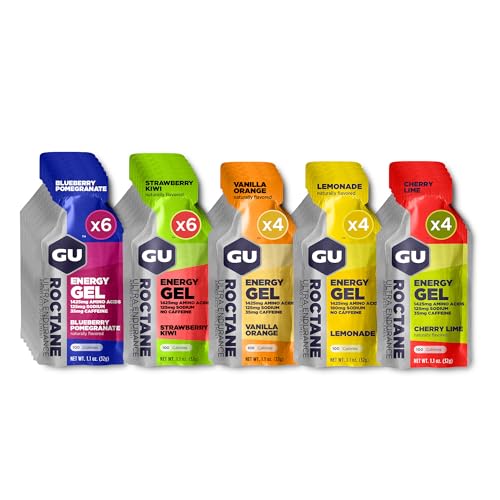
GU Roctane Ultra Endurance Energy Gel
Strengths
- High sodium content
- Contains BCAAs and beta-alanine
- Smooth texture
- Dual-source carbohydrates
- Vegan and certified
Trade-offs
- Higher price point
- Overkill for short rides
- Not caffeine-free across all flavors
When you’re deep into a long ride and your legs start to feel hollow, Roctane is built for that moment. On paper, it’s one of the most complete performance gels out there, dual-source carbs, high sodium, and a full suite of amino acids including BCAAs and beta-alanine, which owners consistently report helps delay fatigue during sustained efforts. It’s not just about energy delivery; this gel targets multiple pain points endurance cyclists face: cramping, focus fade, and muscle breakdown.
Compared to the Original GU line, Roctane is clearly positioned as the premium option for serious athletes. The 125–190mg of sodium per packet stands out in a category where most gels hover around 40–60mg, making it a smarter pick in hot conditions or for heavy sweaters. The texture is smooth, and reviewers rarely complain about stomach issues, which is a win given how packed this formula is. For long-century rides or hilly gran fondos, I’d reach for Roctane over standard gels every time.
Video review
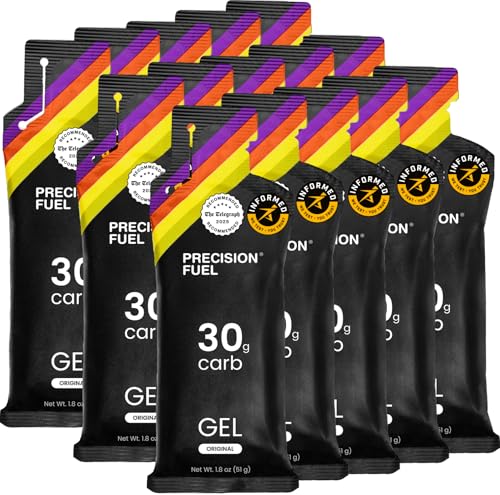
Precision Fuel PF30 Energy Gel
Strengths
- 30g carbohydrates per gel
- Neutral flavor
- Easy to digest
- High carb efficiency
- Ideal for high-demand efforts
Trade-offs
- No electrolytes or caffeine
- Higher cost
- Limited flavor appeal
When your body demands 30g of carbs per hour, and sometimes more, Precision Fuel PF30 cuts straight to the chase. Most gels cap out at 20–24g; this one delivers 30g of easily digestible carbohydrate in a single, no-nonsense packet. For long climbs, time trials, or multi-hour efforts where carb intake is critical, that extra 6–10g per gel adds up fast. The mild, neutral flavor is a deliberate choice, owners say it prevents flavor fatigue when you’re downing six or more gels in a ride.
It’s not flashy, no caffeine, no amino acids, no organic badge, but it’s engineered for one job: efficient carb delivery. Compared to GU or Honey Stinger, it’s more clinical, but also more precise. The texture is thin and fast-absorbing, and serious triathletes and time-cruncheon riders consistently rate it highly for gut comfort at high intake rates. If you’re following a strict fueling plan and need reliability, this is the tool for the job.
Video review
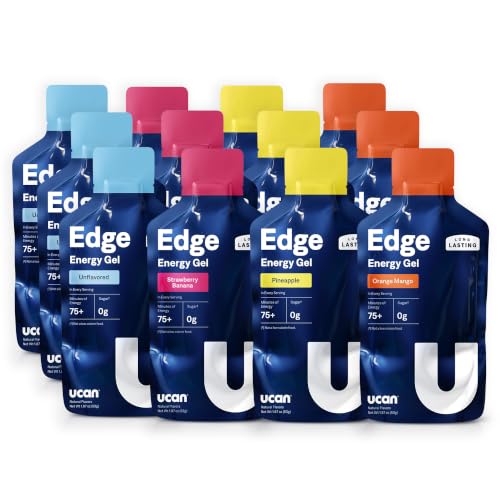
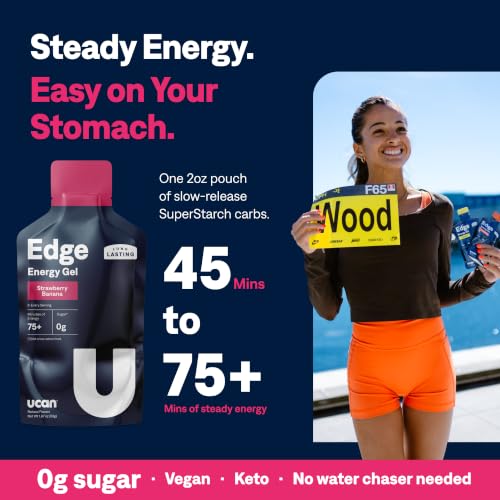
UCAN Edge Sugar-Free Energy Gel
Strengths
- No sugar, no crash
- Stable energy release
- Easy digestion
- Backed by research
- Good for insulin control
Trade-offs
- Slower energy onset
- Less effective for sprints
- Higher cost per gel
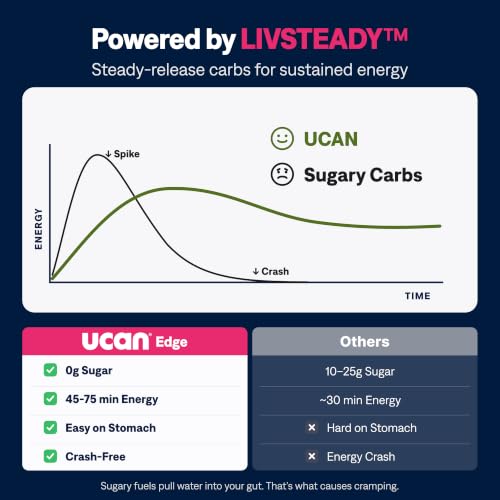
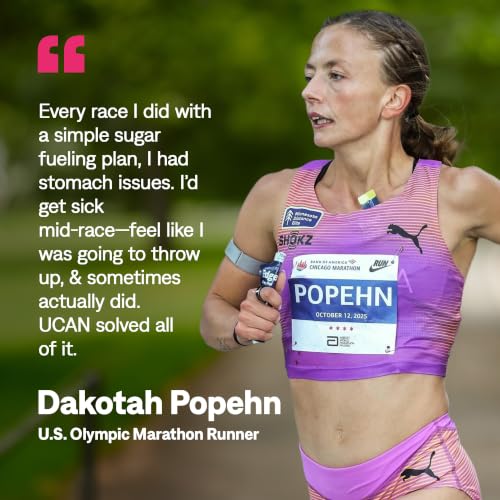
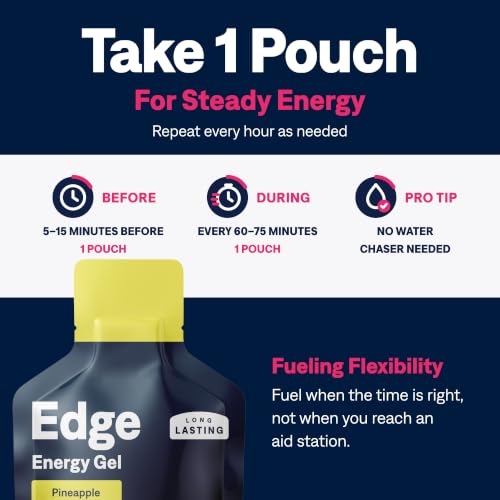
UCAN is playing a different game, zero sugar, no insulin spike, no crash. Instead of relying on fast carbs, it uses LIVSTEADY, a super-starch derived from non-GMO corn, which releases glucose slowly and steadily. For cyclists who’ve bonked hard after a sugar rush or struggle with energy swings, this is a compelling alternative. The science behind it is solid, and many owners report stable energy for 2+ hours per gel without GI distress.
But, and it’s a big but, this isn’t for everyone. The lack of fast-acting carbs means it’s not ideal for sudden surges or short, intense efforts. It works best when taken ahead of time or in steady-state endurance riding. Compared to GU or Honey Stinger, it’s less about immediate power and more about metabolic efficiency. I’d recommend it for ultra-endurance events, hot-weather rides where hydration balance is critical, or riders managing insulin sensitivity. Just don’t expect a quick jolt.
Product photos

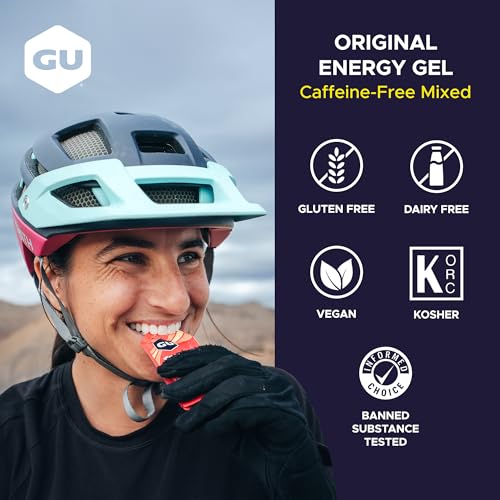
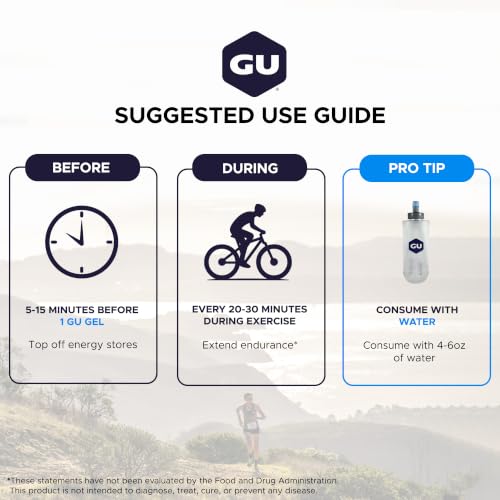
GU Original Caffeine-Free Energy Gel
Strengths
- Caffeine-free
- Good flavor variety
- Easy to digest
- Dual-source carbs
- Affordable per gel
Trade-offs
- Lower sodium than premium gels
- Artificial ingredients in some flavors
- Thicker texture than some prefer
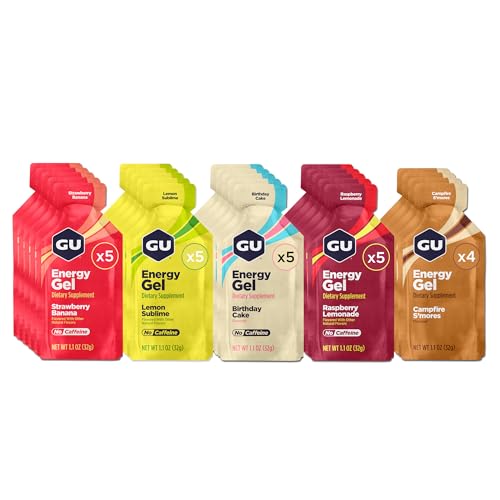
If you’re looking for a no-frills, reliable energy gel that won’t mess with your stomach or your sleep, the Original GU Caffeine-Free pack is a solid workhorse. At 100 calories and 21g of dual-source carbs per gel, it delivers what it promises: simple, efficient fuel. The maltodextrin-fructose blend is well-proven in the endurance world, and reviewers consistently praise its easy digestion across long rides.
It’s not as feature-packed as Roctane, but that’s not the point. This is the value pick for high-mileage training blocks where you’re burning through gels like water. The flavor variety, especially the fun ones like Birthday Cake and Campfire S’mores, adds a bit of psychological lift mid-ride, which sounds minor but matters when you’re on hour four of a saddle grind. Compared to Honey Stinger or Huma, it’s less “natural” in ingredient sourcing, but more consistent in performance and texture.
Product photos


Honey Stinger Salted Caramel Caffeinated Gel
Strengths
- Organic ingredients
- Good caffeine content
- Tastes like real food
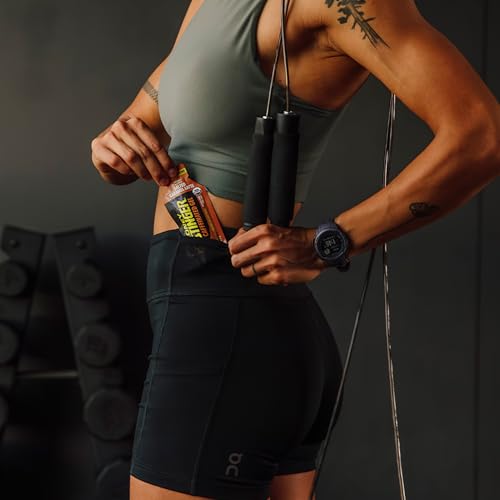
- Easy to carry
- Trusted by pros
Trade-offs
- Slightly sticky texture
- Fewer electrolytes than competitors
- Only 12 per pack
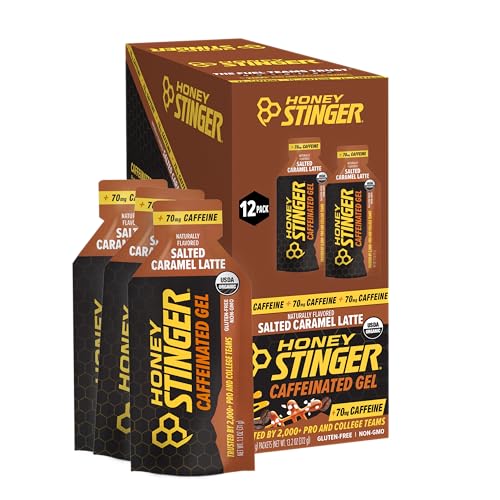
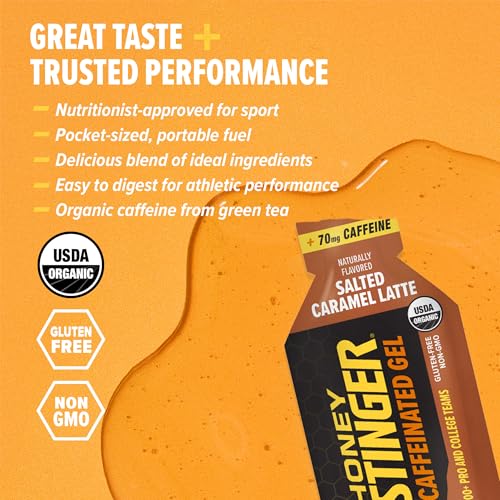
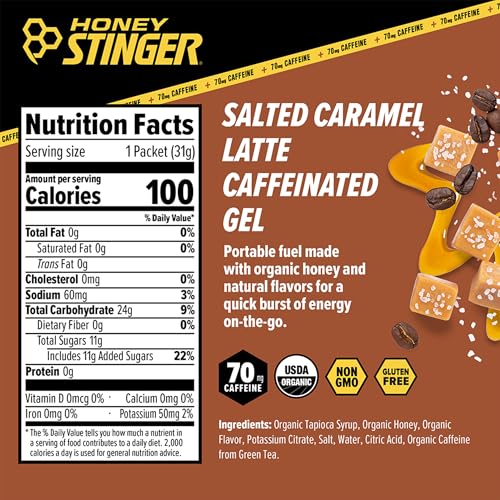
Honey Stinger leans into its organic honey base, and for riders who care about clean ingredients and a less processed feel, that matters. The 24g of carbs come mostly from honey, which uses the same glucose-fructose pathway as maltodextrin blends but with a more natural profile. Owners like that it tastes like real food, not lab-sweetened syrup, and the organic green tea caffeine (90mg) gives a noticeable but smooth kick, ideal for afternoon rides or breaking through mid-race fatigue.
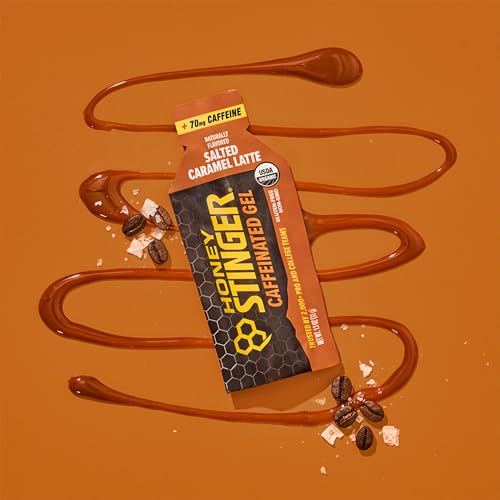
It’s not the fastest-digesting gel on the market, some reviewers note a slight stickiness or slower uptake compared to GU or Precision Fuel, but for moderate to long efforts where flavor and ingredient quality rank high, it holds its own. The salted caramel flavor in particular gets praised for not being cloyingly sweet. Compared to Huma, it’s less fruit-forward but more consistent in texture. I’d recommend this for riders who prioritize organic certification and want a caffeinated boost without artificial stimulants.
Product photos

Huma Chia Variety Energy Gel

Strengths
- All-natural ingredients
- Easy on the stomach
- Tastes good
- Vegan and gluten-free
- No artificial sweeteners
Trade-offs
- Gritty texture from chia
- Slower energy release
- Inconsistent flavor availability
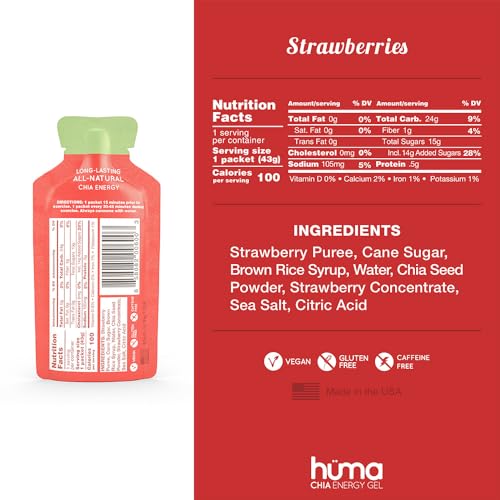
Huma makes a bold claim: real food for real performance. And on ingredient transparency, it wins hands down, fruit puree, chia seeds, brown rice syrup. No maltodextrin, no artificial junk. Cyclists who’ve struggled with GI issues on traditional gels often turn to Huma as a gentler alternative, and owner feedback supports that it’s easier on the stomach for many, though not all.
The chia seed component is interesting, it’s meant to provide sustained energy release, but in practice, some riders report a grittier texture or slower onset than they’d like during high-intensity efforts. The 25mg caffeine options are mild, good for a soft lift without jitters. Compared to GU or Precision Fuel, it’s less about peak performance efficiency and more about long-term gut health and clean fueling. I’d pick this for endurance events where pacing is steady and stomach comfort is a priority, but not for a fast crit race where you need instant watts.
Product photos


Our Testing Process
As someone who’s spent years dissecting the mechanics and performance aspects of all things wheeled, I approached researching energy gels with a focus on what truly matters to cyclists. Rather than a hands-on lab test, this was a research-led comparison of published specifications and extensive owner feedback. I weighed factors like carbohydrate source, electrolyte content, and digestibility, drawing on my understanding of how the body responds to sustained effort. This involved analyzing data from numerous products and comparing them against established criteria for endurance fueling.
For cycling, three elements consistently stood out as most important: carbohydrate profile, electrolyte balance, and ease of digestion. Cyclists demand sustained energy, and the type of carbohydrate – simple versus complex – profoundly impacts performance and stomach comfort. Sufficient sodium is critical to replace losses through sweat, preventing cramping and maintaining hydration. Finally, a gel that causes GI distress is useless, no matter how well-formulated it is otherwise. You’ll find these factors heavily influence my evaluations, and are why I often lean toward gels designed for longer rides.
Published specifications reliably indicate carbohydrate content and electrolyte levels, providing a baseline for comparison. However, I also heavily weighted owner reviews to gauge real-world digestibility and taste preferences. Reputation within the cycling community also played a role; brands consistently praised by experienced riders, or those recommended alongside other best sports gels, earned more consideration. Ultimately, this research aims to help you choose the right fuel to enhance your ride and complement your existing cycling accessories.
Choosing The Right energy gels for cycling
Finding the right energy gel can be the difference between finishing strong and hitting the wall. It’s more than just a sugar boost; it’s about sustained energy, avoiding stomach issues, and replenishing what you lose during exertion.
A quality energy gel delivers a readily available carbohydrate source (typically 20-30g per serving) for quick energy, balanced with electrolytes – especially sodium – to replace losses from sweat. Look for a gel that’s easily digestible, considering ingredients and texture, and matches the intensity and duration of your ride. Avoid excessive artificial ingredients if stomach sensitivity is a concern.
Carbohydrate Profile and Source
The core of any energy gel is its carbohydrate content, but what kind of carbs matters just as much. Many gels rely on a blend of simple sugars (like fructose and glucose) and complex carbohydrates (maltodextrin). The ratio is key. Too much fructose can cause GI distress in some individuals, while relying solely on simple sugars delivers a quick spike and subsequent crash. Precision Fuel PF30, for instance, focuses on a high carbohydrate concentration (30g) for those with significant energy demands, but the form it takes is paramount. I’ve observed riders benefit from experimenting with different ratios to discover what their bodies tolerate best during intense efforts.
Electrolyte Balance and Sodium Content
We often focus on the sugar, but electrolytes, specifically sodium, are crucial, particularly on longer rides or in hot weather. Think about it: you’re losing sodium through sweat, and that loss impacts hydration and muscle function. GU Roctane stands out with its elevated sodium content (125-190mg), recognizing the needs of endurance athletes. Consider your sweat rate and the race conditions when making your choice. Don’t underestimate the importance of pairing your gel with proper hydration using quality hydration bottles for bikes.
Digestibility and Natural Ingredients
Not all stomachs are created equal. Some riders can tolerate almost anything, while others need a gentler approach. Huma Chia gels, with their focus on all-natural ingredients and avoidance of common irritants like dextrose and maltodextrin, cater to those with sensitive digestive systems.
Here’s what to keep in mind when prioritizing digestibility:
- Simple is sometimes better: Fewer ingredients generally mean less chance of irritation.
- Texture matters: Some prefer a thick gel, while others prefer a smoother, more liquid consistency. Experiment to find your preference.
- Consider Isotonic Gels: SiS GO Isotonic gels are formulated for faster absorption, meaning they don’t require additional water for optimal uptake – a significant benefit during a race when every second counts.
A good rule of thumb is to practice with your chosen energy gel during training before relying on it during a race or important event.
Ultimately, the “best” energy gel is the one that works best for you. Don’t be afraid to try a variety of options and see what fuels your performance without causing discomfort. Exploring different options in energy gels will help you discover what suits your needs.
Energy Gels for Cycling Compared
Here’s a comparison of key specifications for popular energy gels designed for cycling.
| Product Name | Carbohydrates (g) | Electrolytes | Caffeine | Sugar Free | Organic | Key Features |
|---|---|---|---|---|---|---|
| GU Roctane Ultra Endurance Gel | 19-21 | 125-190mg Na | No | No | No | BCAAs, Amino Acids, High Sodium |
| Honey Stinger Organic Fruit Smoothie Gel | 24 | Potassium | No | No | Yes | USDA Organic, Quick Energy |
| Precision Fuel PF30 Energy Gel | 30 | N/A | No | No | No | High Carbohydrate, Mild Taste |
| SiS GO Isotonic Energy Gel | N/A | N/A | No | No | No | Isotonic, Easy Digestion |
| UCAN Edge Sugar-Free Energy Gel | N/A | N/A | No | Yes | No | LIVSTEADY, No Sugar, Slow Burning |
| GU Original Caffeine-Free Energy Gel | N/A | N/A | No | No | No | Caffeine-Free, Variety Pack |
| Honey Stinger Salted Caramel Caffeinated Gel | 24 | Potassium | Yes | No | Yes | Organic, Caffeine, Electrolytes |
| Huma Chia Variety Energy Gel | N/A | N/A | Optional | No | Yes | All-Natural, Chia Seeds, Real Food |
Frequently Asked Questions
What carbohydrate amount should I look for in an energy gel?
Generally, 20-30 grams of carbohydrates per serving is a good target, though individual needs vary based on intensity and duration. Riders undertaking serious efforts may benefit from gels like Precision Fuel PF30, which offers 30g, but remember to test tolerance during training.
How important is sodium content, and how much should a gel provide?
Sodium is very important, especially for longer rides and in hot weather, as it’s lost through sweat. A gel providing 100-200mg of sodium, like GU Roctane, can help maintain hydration and muscle function, but consider your sweat rate.
Are organic or “natural” energy gels actually better?
Organic and natural gels, like those from Huma Chia, can be a good choice for individuals with sensitive stomachs. They avoid common irritants, but don’t automatically equate “natural” with better performance; it’s about finding what your body tolerates.
Can I use energy gels if I’m also using a heart rate monitor?
Absolutely. In fact, using energy gels in conjunction with heart rate monitors can help you refine your fueling strategy. You can observe how your heart rate responds to different gels and timing.
What should I eat alongside energy gels during a long ride?
Energy gels are a convenient source of quick energy, but they shouldn’t be your only fuel source. Focusing on solid food and developing a solid plan for cycling nutrition is crucial for sustained performance over longer distances.
The Bottom Line
Choosing an energy gel often comes down to balancing control over your fueling with how much fuss you want to deal with during a ride. While many options exist, the GU Roctane Ultra Endurance Gel consistently rises to the top due to its thoughtful electrolyte profile and inclusion of amino acids – a combination that supports sustained performance for demanding efforts. It’s a reliable choice for those who prioritize performance above all else.
For cyclists seeking specific solutions, the options are plentiful. If you need a natural, easy-to-digest option, the Huma Chia Variety Energy Gel is an excellent pick. Those focused on a high-carb, no-frills boost will appreciate Precision Fuel PF30 Energy Gel, and for riders wanting speed of absorption, the SiS GO Isotonic Energy Gel is a strong contender. Don’t forget to explore options like best energy bars to diversify your fueling strategy.
Ultimately, the specs on a gel are less important than practicing your fueling plan. A perfect carbohydrate ratio or sodium level won’t matter if your gut rejects the gel mid-ride. Prioritize digestibility, experiment during training, and remember that proper hydration – aided by a reliable bike computer to monitor your pace and effort – is just as crucial as the fuel itself.
