
What to Eat When Cycling Long Distances: The Fueling Rules
This post contains affiliate links. As an Amazon Associate, we earn from qualifying purchases.
What to eat when cycling long distances is not about stuffing in calories. It’s a matching game: your carbohydrate and fluid intake must track the actual work you’re doing, from a one-hour spin to a five-hour epic, with specific hourly targets (30g, 60g, 90g, or 120g of carbs) set by your power output and goals. Fluid needs are just as precise: 300-600 mL per hour with 10-25 mmol of sodium to avoid diluting your blood.
That shift from a one-size-fits-all rule to a workload-driven model is the entire story of modern endurance fueling. The old advice was static. The new advice moves with you.
What follows breaks down the exact numbers from the UCI’s own sports nutrition project, translates them into what goes in your bottles and pockets, and walks through the logistics of actually consuming it all without gut rot. We’ll cover the pro tricks, the real science on sodium, and what to skip entirely.
Key Takeaways
- Carb intake is now periodized: aim for 30g/hour on easy spins, 60g/hour for steady endurance, 90g/hour for race-pace efforts, and up to 120g/hour for sustained, high-intensity work like Grand Tour mountain stages.
- Your drink mix needs sodium, 10–25 mmol per liter, to help absorption and stave off exercise-associated hyponatremia, a dangerous drop in blood sodium from over-drinking plain water.
- “Multiple transportable carbohydrates” like glucose-fructose mixes are non-negotiable for intakes above 60g/hour; single-source carbs hit a hard absorption ceiling at that point.
- Gastrointestinal distress often comes from the rider, not the fuel: a cramped aero tuck increases abdominal pressure, and dehydration itself slows gastric emptying, creating a vicious cycle.
- Professional “making weight” strategies before key climbs involve short-term, very low-fiber diets (<10g/day) to shed gut water weight, a tactic amateurs should view as a high-stakes, last-resort option only.
The Numbers That Changed Everything (30g/hr to 120g/hr)
For decades, the gospel was simple. The American College of Sports Medicine’s 2009 position stand and most coaches told you to take in 30 to 60 grams of carbohydrate per hour. That was the commodity answer, repeated everywhere. It was also incomplete.
The change came from the professional peloton and was later validated by sports scientists. The current UCI sports nutrition project shows a clear trajectory: reported “on-bike” intakes have climbed from that 30-60g/hr range pre-2010 to 90g/hr, then 120g/hr, and higher today. This isn’t athletes being reckless; it’s a direct response to the energy demands of modern, aggressive stage racing where power outputs are higher and more variable.
The underlying principle is “fuel for the work required.” Your intake should scale with your output.
| Ride Type / Duration | Intensity | Carb Target (g/hr) | Why This Number |
|---|---|---|---|
| Recovery / Easy Spin (<2hr) | Low (Zone 1-2) | 0-30 | Mainly for taste and gut practice; energy needs are minimal. |
| Endurance Training (2-4hr) | Moderate (Zone 2) | 60 | Maintains blood glucose, supports steady effort without gut overload. |
| Race Pace or Hard Training (>2.5hr) | High (Zone 3+) | 90 | Replenishes liver glycogen, delays central fatigue, supports high carbohydrate oxidation rates. |
| Sustained High Intensity (e.g., Grand Tour stage) | Very High | 90-120+ | Meets extreme energy expenditure (5,500-9,000 kcal/day), aids in daily recovery balance. |
The shift from 60g/hr to 90g/hr as the hard-effort standard happened when researchers proved that single carbohydrate sources (like glucose alone) hit an absorption wall at about 60g/hr. Adding fructose, which uses a different intestinal transporter, allows the body to process up to 90g/hr without gastrointestinal revolt.
Where this goes sideways: Thinking these numbers are weight-based. Exogenous carbohydrate oxidation studies show a negligible link between body size and how much you can absorb per hour. A 53kg pro and a 75kg amateur can both target 90g/hr if their guts are trained for it. The limit is intestinal transporter saturation, not your weight.
What Actually Goes In Your Bottles and Pockets
Knowing you need 90 grams of carbohydrate per hour is one thing. Getting it into your body is another. This is where form and formula matter.
First, the carbohydrate source. For any intake above 60g/hr, you must use a multiple transportable carbohydrate mix. This is almost always a blend of glucose (or maltodextrin) and fructose in a ratio between 1:0.8 and 2:1. Nearly all modern energy gels and sports drinks from brands like Maurten, SiS Beta Fuel, and GU Roctane are built on this science. A glucose-only drink or energy bars heavy in complex carbs will fail to deliver at high rates.
Second, the vehicle. You have four main options, and most riders use a combination.
| Fuel Form | Best For | Carb Density (Typical) | The Catch |
|---|---|---|---|
| Sports Drink | Hydration + steady fueling. | 40-60g per 500mL bottle. | Can become sickly sweet; requires careful concentration math. |
| Gels | Quick, high-density hits. | 20-30g per gel. | Requires water to digest; back-to-back gels can cause gut stress. |
| Chews / Blocks | Psychological break from liquids. | 24-30g per pack. | Chewing while breathing hard is a skill; they can melt in pockets. |
| Real Food (e.g., rice cakes, bars) | Long, steady rides; satiety. | Varies (25-40g per item). | Slower gastric emptying; can be messy to handle on the bike. |
Your fluid needs run parallel. The old “drink before you’re thirsty” mantra caused its own problems, namely, hyponatremia. Current guidance from sports medicine journals is to aim for 300-600 mL per hour, with your hydration containing that crucial 10-25 mmol of sodium per liter. This isn’t just for cramping; sodium maintains plasma osmolality, drives thirst mechanism correctly, and helps glucose absorption in the gut.
Easy to miss: Your sweat rate isn’t the boss. Drinking to fully replace sweat losses during exercise is often impossible and unnecessary. A fluid deficit of up to 2% body weight is tolerable for performance; pushing beyond that to chase “full hydration” with plain water is how you dilute your blood sodium.
A practical setup for a four-hour race-pace ride targeting 90g/hr might look like: two 500mL bottles with 60g carb each in your cycling bottles, two sports gels (45g total) in your jersey pocket, and a single energy bar (40g) for the final hour. That’s 205g over ~4 hours, close enough.
The Logistics of Eating at 25 MPH
Consuming 90 grams of carbohydrate in a 60-minute window is a mechanical challenge. It’s not just about what you eat, but when and how you get it down.
Professional teams have this down to a science involving soigneurs, pre-packed musettes, and team cars. Your reality involves planning your pockets and feed zones. The number one rule: front-load your intake. Don’t wait until the two-hour mark to start eating. Begin sipping and snacking within the first 30 minutes. Your gut’s ability to process nutrients diminishes as dehydration and fatigue set in.
New UCI rules have made this harder for pros, and the lesson applies to amateurs. Feeding zones are limited, and taking hands off the bars is forbidden in the final 20km and on technical descents. This means you must carry what you need for critical race segments. Relying on a planned stop at a convenience store is a great way to bonk.
This is where your storage gear becomes part of your nutrition plan. A hydration backpack or cycling backpack can carry more fluid, but adds weight and affects aerodynamics. Most road riders prefer bottles on the frame and use jersey pockets supplemented by a saddle bag or seat bag for extra gels or bars.
I won’t recommend a bottomless bag of snacks. The human stomach can only hold so much, and gastric emptying slows to a crawl when you’re dehydrated or stressed. Practice your race nutrition at your race intensity in training. A gel that goes down fine on a Zone 2 ride may come right back up during a threshold interval.
Common mistake: Storing gels in a plastic bag that becomes a sweaty, sticky mess. Use a small, dedicated zip pouch inside your jersey pocket, or opt for gels with tear-top tabs that don’t require scissors.
Why Your Gut Might Revolt (And How to Train It)
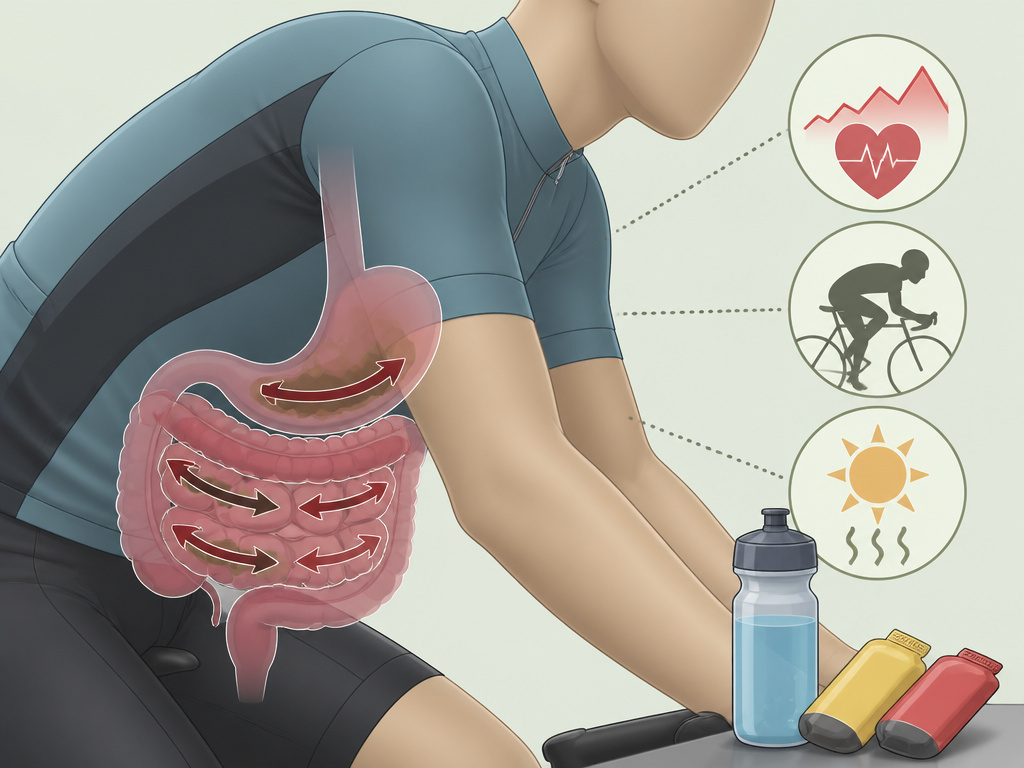
Gastrointestinal issues are the single biggest reason riders fail to hit their fueling targets. The discomfort isn’t random. It’s physiology.
Three primary triggers exist. First, high intensity. When your power output crosses into Zones 4 and 5, blood is shunted away from your digestive tract to your working muscles. Gastric emptying slows, and anything sitting in your stomach starts to slosh and ferment. Second, the aerodynamic position. Riding in the drops or in an aggressive tuck increases intra-abdominal pressure. This physically compresses your stomach and intestines, making them less efficient at moving contents along. Third, and most ironically, dehydration. A lack of fluid in your system directly reduces gastric emptying rate, creating a vicious cycle where you can’t drink because you didn’t drink.
The solution is “gut training.” It’s exactly what it sounds like: deliberately consuming your target fuel amounts during hard training sessions to provoke physiological adaptation. Over weeks, your stomach learns to empty faster, and your intestines upregulate the transporters needed to absorb those 90 grams of carbohydrate per hour. This is a non-negotiable step for anyone targeting century rides or competition.
The part nobody mentions: GI distress tends to spike in the final week of a multi-day tour. Research suggests this may be the cumulative effect of sustaining energy intakes at the absolute limit of what the alimentary canal can process day after day. For you, that means your gut’s capacity in a one-off event is higher than its capacity on the fourth consecutive day of a long tour.
If you’re struggling, look at your drink’s osmolality. Hypertoric drinks (very high sugar concentration) pull water into the gut, causing bloating and cramps. Most modern hydration packs and drink mixes are designed to be isotonic or slightly hypotonic for faster emptying.
Pre-Ride Loading and Post-Ride Recovery
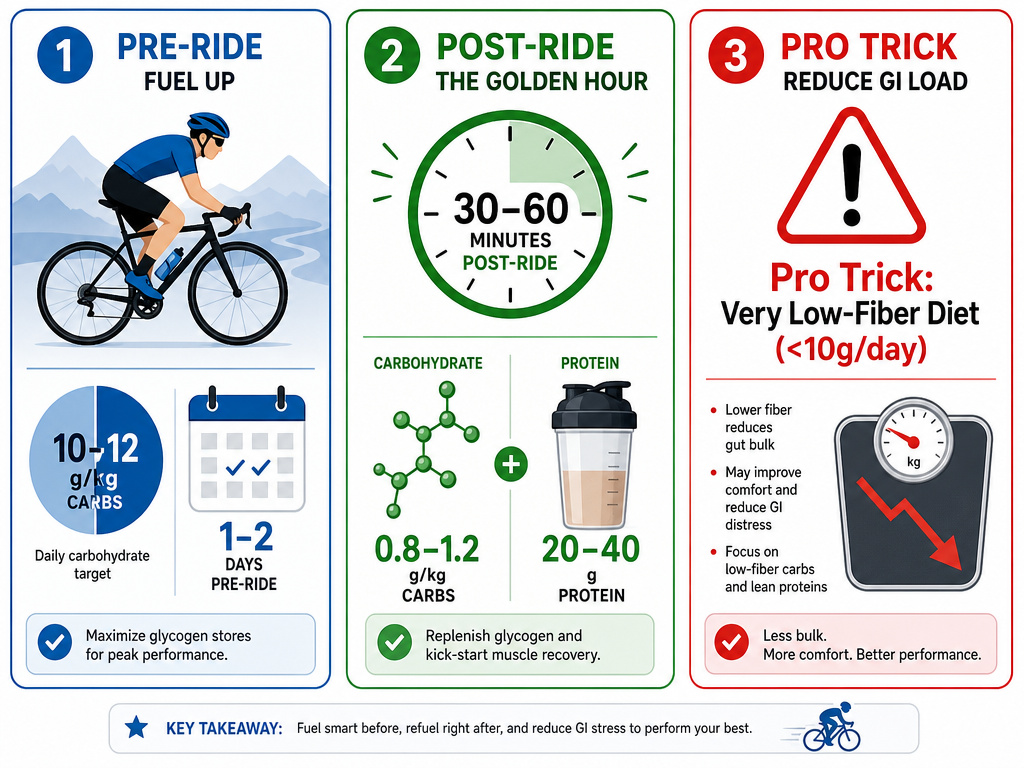
Your nutrition window extends far beyond the time you’re on the bike. What you eat beforehand sets your glycogen tank, and what you eat afterward determines whether you can do it again tomorrow.
For a big event (>2.5 hours), carbohydrate loading is effective. The outdated 3-day depletion-and-load protocol is dead. Modern protocol: 10-12 grams of carbohydrate per kilogram of body mass per day for 1-2 days prior to the event, while keeping training light. This maximizes muscle and liver glycogen stores without the fatigue of a depletion phase. Your pre-race meal, 1-4 hours before start, should provide 1-4 g/kg of carbohydrate based on your personal tolerance.
Post-ride, the goal is rapid glycogen resynthesis. The first 30-60 minutes after stopping is the “golden hour” when your muscles are most receptive. Aim for 0.8-1.2 g/kg of carbohydrate paired with 20-40g of protein. This isn’t just for repair; the insulin spike from the carbs helps drive the protein into the muscle. A commercial recovery drink, chocolate milk, or a simple meal of rice and chicken works.
The professionals take this further with acute “making weight” strategies before crucial mountain stages. By adopting a very low-fiber diet (<10g per day) for 2-4 days, they reduce the mass of gut contents and associated water weight, sometimes shedding 0.5-1 kg. This is a high-stakes tactic that cuts micronutrient intake and can cause constipation, it’s a pro trick, not a lifestyle.
TL;DR: Load with 10-12g/kg carbs for a day or two before the big one. Refuel immediately after with a carb+protein shake. Leave the extreme low-fiber weight tricks to the WorldTour.
Frequently Asked Questions
What’s the best ratio of glucose to fructose?
1:0.8 to 2:1 glucose-to-fructose ratio is optimal for most multiple transportable carbohydrate products. This means for every 10g of glucose/maltodextrin, you want 5-8g of fructose. Most commercial products hitting 90g/hr formulas use a 2:1 ratio (like 60g glucose:30g fructose).
Can I just eat bananas and granola bars?
For easy spins under two hours, sure. For sustained efforts targeting 60g/hr or more, no. The fiber, fat, and protein in whole foods slow gastric emptying dramatically. You’ll fail to hit the hourly carbohydrate absorption rates needed to sustain high power. Use real food for psychological breaks and taste, but know it’s a less efficient fuel delivery vehicle.
How much water should I drink per hour?
Aim for 300-600 mL per hour, adjusted for heat and sweat rate. The key is to include sodium (10-25 mmol/L). Weigh yourself before and after a training ride (accounting for fuel consumed) to estimate your sweat rate. If you lose 1kg over a 2-hour ride and drank 1L, your sweat rate was 1L/hr, so you should target ~500mL/hr to keep a manageable deficit.
What are the symptoms of hyponatremia?
Early signs include a sloshy stomach, nausea, headache, and puffiness in the hands and feet (from fluid pooling). As it progresses, confusion, seizures, and in extreme cases, coma or death can occur. It’s caused by drinking too much plain water, diluting blood sodium. The fix is to drink fluids with sodium and never exceed 600-800 mL per hour unless sweat losses are extreme.
Do I need different nutrition for a century ride vs. A 3-hour race?
Yes, in pacing and total quantity, not necessarily in hourly rate. For a century, you might pace easier, allowing a lower hourly carb intake (60g/hr) but needing more total fuel over 6+ hours. For a 3-hour race, you’ll push harder, requiring the full 90g/hr, but managing total gut volume is easier. The principle remains: match hourly intake to hourly intensity.
The Bottom Line
Modern long-distance cycling nutrition is a dynamic system. The static 30-60g/hr rule is obsolete. Your new framework is workload-driven: 30g for recovery, 60g for endurance, 90g for intensity, and 120g for the pros and their five-hour stages. This is grounded in the peer-reviewed cycling nutrition research of the last decade.
Your tools are multiple transportable carbohydrate mixes in bottles, gels, and bars. Your logistics demand planning pockets and practicing intake at race intensity. Your hydration includes sodium and respects a 300-600 mL hourly ceiling.
Ignore the old commodity advice that treats every rider and every ride the same. Your engine is unique. Feed it accordingly. The science has given you the numbers; the rest is a matter of training your gut and packing your cycling bibs with the right fuel for the work required.
