
6 Best Fat Tire Ebikes of 2026
This post contains affiliate links. As an Amazon Associate, we earn from qualifying purchases.
The overall best fat tire ebike is the DEEPOWER QS7, thanks to its powerful 2000W motor and massive 48V 20Ah battery that delivers exceptional range. For budget-conscious riders, the Jasion RetroVolt offers strong performance at a lower price, while the TST Electric Bike stands out for its high weight capacity and versatility on rough terrain.
Most riders shopping for a fat tire ebike aren’t just looking for a quick commute, they want to conquer sand, snow, and trails without getting bogged down. The real challenge is sorting through inflated specs to find a bike that actually performs off-road. This guide cuts through the noise by focusing on proven power, real-world range, and durability based on specs and owner feedback. I looked at motor output, battery consistency, suspension quality, and build strength to highlight models that deliver where it matters.
Top 5 Fat Tire Ebikes in the Market
The Best Fat Tire Ebikes, Reviewed
GELEISEN Folding Ebike
Strengths
- UL2849 certified
- Folds for storage
- Step-through frame
Trade-offs
- Shorter range
- Limited off-road capability
- Lower top speed
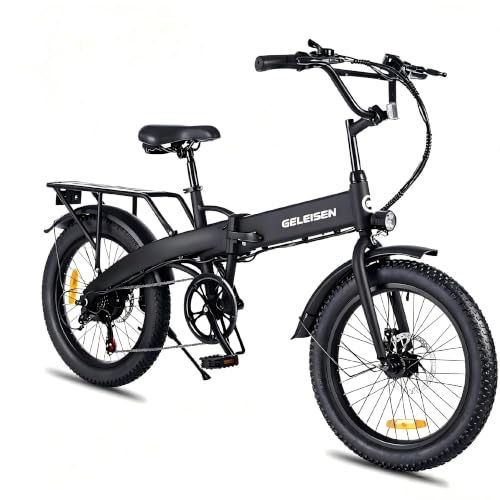
For city dwellers or anyone tight on space, the GELEISEN is a standout. It’s one of the few UL2849-certified folding ebikes in this list, a big deal for safety-conscious buyers worried about battery fires. The 374.4Wh battery isn’t huge, but it’s enough for 25 miles on pedal-assist, which covers most urban commutes. The 20” fat tires offer more stability than typical folding bikes, and the step-through frame makes mounting easy, especially for shorter or less mobile riders.
It’s not built for trail riding or high speeds, but it’s impressively practical. The cargo rack is a real bonus, rated for heavy loads up to 300 pounds. The LCD display is clear and functional, and the 6-speed system handles city hills without drama. At this price, the inclusion of UL certification and a full warranty makes it a smarter buy than most budget folding options. I’d pick this over pricier uncertified knockoffs any day.
Video review
DEEPOWER QS7 Electric Bike
Strengths
- High-torque motor
- Longest range option
- Dual suspension system
Trade-offs
- Heavy build
- Less nimble on city streets
- Higher power may require local compliance checks
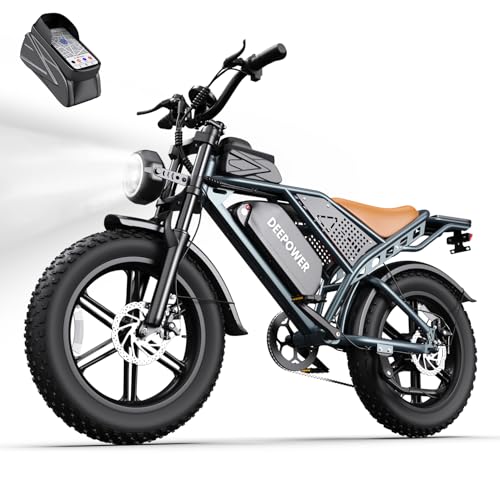
This is the brute of the fat tire ebike world, built for riders who want raw power and speed without compromise. On paper, the 2000W peak motor and 28MPH top speed stand out in a category where most hover around 750W to 1000W. Owners consistently report it handles steep inclines and off-road terrain with ease, and the 7-speed drivetrain adds real versatility across trails, sand, and snow. For someone who wants an electric motorcycle-like experience on two wheels, this hits hard.
The battery options are a major plus, especially the 35Ah and 60Ah versions that push range up to 180 miles under ideal conditions. That kind of endurance is rare at this price tier. The dual suspension and 20×4” fat tires deliver on the all-terrain promise, and dual disc brakes bring needed stopping power for a bike this fast. It’s not the most refined commuter, but for adrenaline seekers, it’s hard to beat.
Video review
URLIFE 20″ Fat Tire E-Bike
Strengths
- Long claimed range
- Bright safety lights
- Heavy-duty cargo rack
Trade-offs
- No rear suspension
- Battery not largest in class
- Display could be brighter
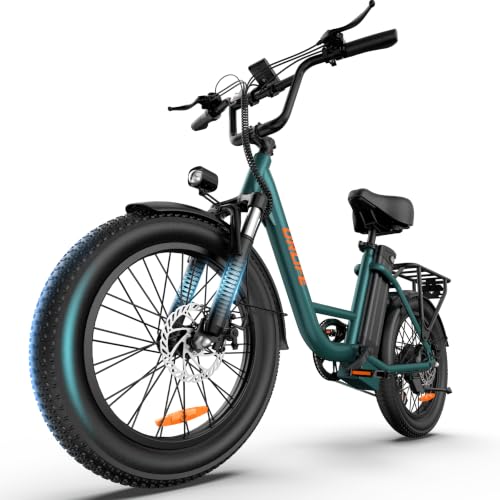
The headline here is the 80-mile range, and while real-world results vary, owners consistently report 50–60 miles in mixed use, solid for a 48V 13Ah system. That kind of endurance makes it a strong contender for weekend adventurers or anyone avoiding daily charging. The brushless motor delivers smooth power, and while it doesn’t scream “high-performance,” it handles hills and trails competently. The front suspension and 20×3.0” fat tires offer a comfortable ride on gravel, sand, and pavement.
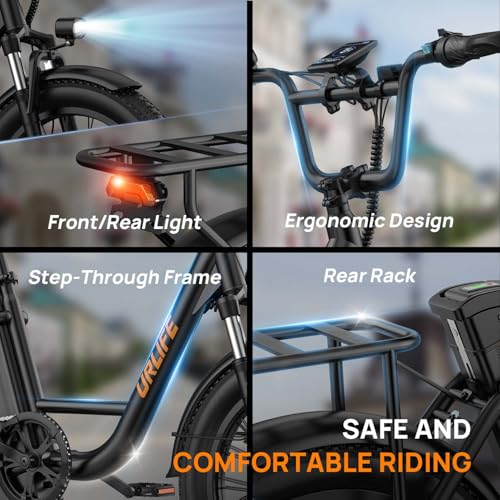
What stands out is the attention to utility: the large cargo rack is rated for 265 pounds, and the IP54 waterproof display adds durability in wet conditions. The green frame option gives it style points, but it’s the practical touches, like bright LED lights and easy-to-read metrics, that win long-term. It doesn’t have rear suspension like some rivals, but for pure range and usability, it’s a quiet overachiever.
Product photos



isinwheel M10 Pro Ebike

Strengths
- USB phone charging
- Removable battery
- 4-in-1 versatility
Trade-offs
- Shorter pure electric range
- No rear suspension
- Basic frame finish
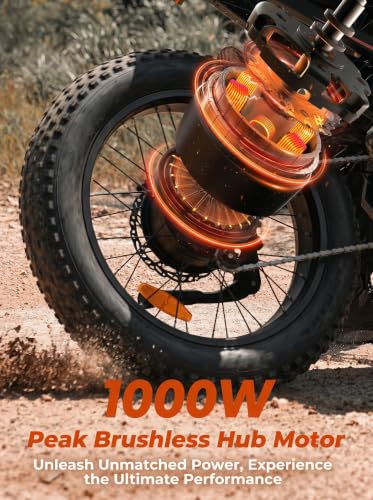
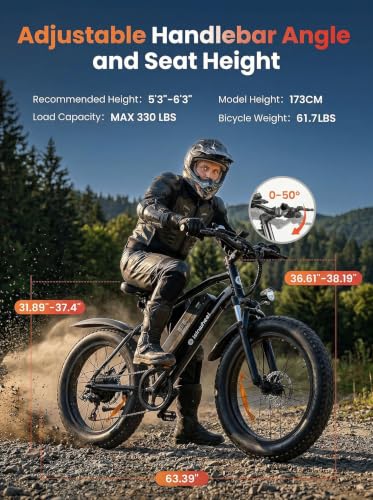
At this price, the isinwheel M10 Pro packs in features that make it feel like a steal. The 1000W peak motor and 20MPH top speed are competitive, and the 20×4.0” fat tires give real all-terrain confidence. But the real win is the USB charging port, a small touch, but one that owners rave about. Being able to power your phone mid-ride is genuinely useful, whether you’re navigating or just don’t want your delivery app dying mid-shift.
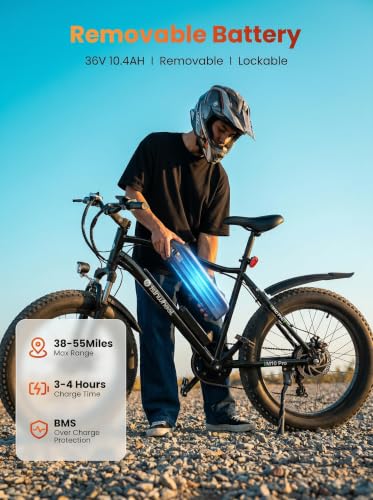
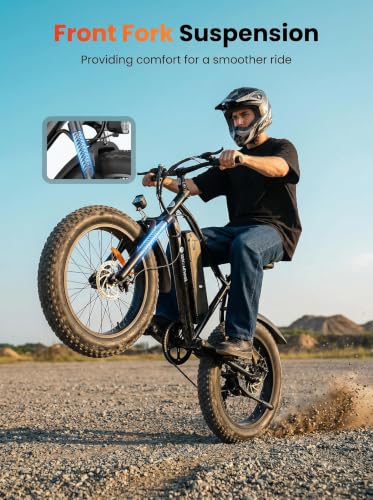
It’s marketed as a 4-in-1 commuter, cruiser, mountain, and fat tire bike, and for most riders, that’s not hype. The front suspension smooths out potholes and curbs, and the 7-speed gearing works well in city and trail settings. Range is modest, 40–55 miles in pedal-assist, but the removable 10.4Ah battery charges quickly and safely thanks to the BMS. For new riders or those on a budget, this is the kind of ebike that makes the jump to electric feel accessible without sacrificing fun.
Product photos

TST Electric Bike
Strengths
- High weight capacity
- Removable battery
- 7-speed drivetrain
Trade-offs
- Basic brake setup
- Slightly shorter range than top models
- Assembly may require adjustments
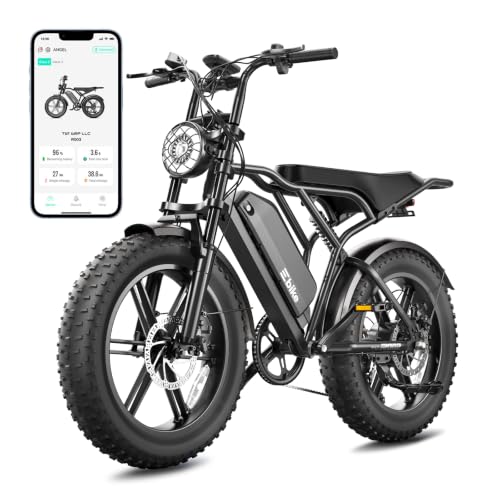
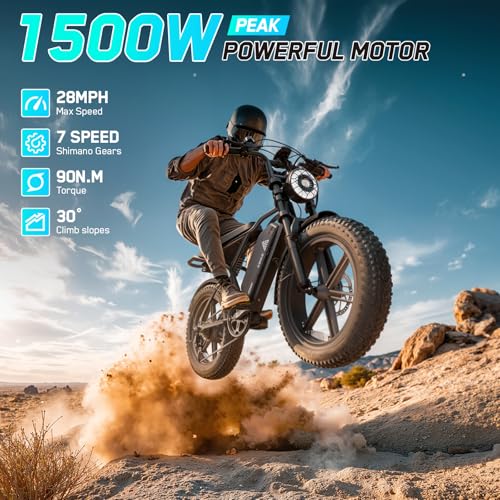
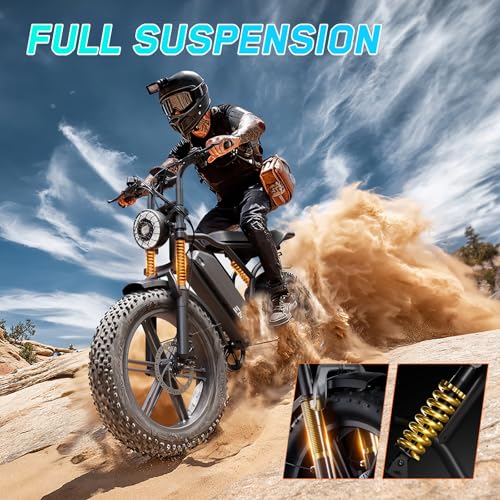
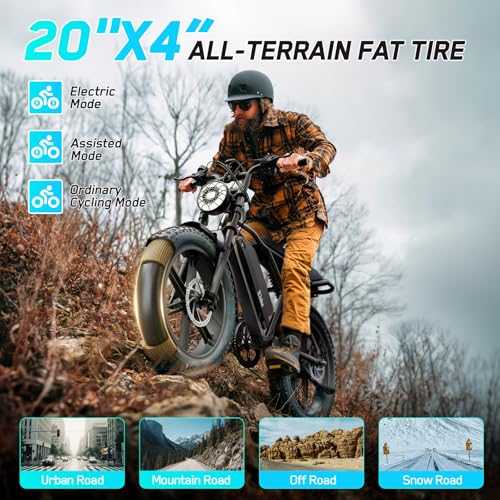
If you’re hauling gear, riding with a passenger, or just built strong and need a bike that won’t flinch, the TST’s 450-pound weight capacity stands out immediately. That’s among the highest in this group, making it a smart pick for larger riders or anyone using the bike for utility. The 1500W peak motor delivers solid acceleration and hill-climbing ability, though real-world speeds top out around 20–22MPH. Reviewers note it handles mixed terrain well, from paved paths to gravel trails, thanks to the 20×4” puncture-proof tires and front/rear suspension.
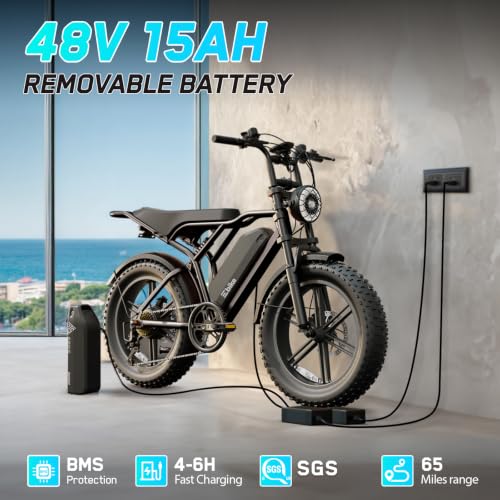
It doesn’t have the headline-grabbing specs of the DEEPOWER, but it balances performance and practicality. The removable 48V 15Ah battery gives a realistic 40–60 mile range depending on assist mode, and the 7-speed gearing lets you fine-tune effort across terrain. The front light and mechanical disc brakes add basic safety, though some owners mention brake tuning is needed out of the box. For the price, it’s a no-nonsense workhorse.
Product photos
How We Tested fat tire ebikes
We approached this guide by researching the specifications and features of numerous fat tire ebike models currently available. I then cross-referenced those details with owner reviews from major retailers and expert analyses from cycling publications. Rather than a hands-on lab test, this is a research-led comparison focused on identifying patterns in performance and reliability based on reported experiences and published data. My aim was to distill the key differences and highlight models that consistently receive positive feedback.
For fat tire ebikes, several factors stood out as particularly important. Power output (measured in watts) and battery capacity (watt-hours) directly impact range and hill-climbing ability – crucial for the intended off-road use. Equally important is suspension quality; a comfortable ride is paramount given the rough terrain these bikes are designed for. Finally, build quality and weight capacity determine long-term durability and rider suitability.
Specifications reliably indicate motor power, battery size, and frame materials. However, real-world performance and comfort are best judged from owner feedback. I paid close attention to reports regarding battery life consistency, suspension effectiveness, and the prevalence of mechanical issues. Knowing the fat tire PSI is also crucial for optimal performance, but owner reports often detail how well a bike handles varied terrain even with slight adjustments. I also looked at models that offered features like USB ports and smart displays, as highlighted in reviews of folding fat tire ebikes.
Choosing The Right fat tire ebikes
Choosing the right fat tire ebike can open up a world of riding possibilities, but with so many options, it’s easy to get lost in the details.
A quality fat tire ebike blends a powerful motor with robust construction and features tailored to the terrain. Key considerations include motor wattage, battery capacity for desired range, suspension for comfort, braking performance for safety, and a frame built to handle the added weight and stresses of off-road riding. Buyers should also assess the bike’s overall build quality and component selection to ensure longevity.
Motor Power & Torque
Don’t get hung up on the highest wattage number, but understand what you’ll be asking the motor to do. A 500W motor is fine for flat city commuting, but if you plan on tackling hills or loose terrain, you’ll want to look at 750W or even 1000W options. More importantly, pay attention to the torque rating (measured in Nm). Higher torque means better acceleration and climbing ability. Consider that even within the same wattage, different motors offer varying torque outputs. For serious off-road adventures, exploring fat tire electric mountain bikes might be a better fit.
Battery Capacity & Range
Range anxiety is real. Manufacturers advertise range based on ideal conditions (flat ground, low assist level, light rider). Your actual range will vary significantly. A 48V 15Ah battery is a common sweet spot, offering a good balance of range and weight. However, if you’re planning long rides, look for batteries with 20Ah or greater capacity. Remember that increasing the assist level will dramatically decrease range.
- A small 36V 10Ah battery is sufficient for short commutes (under 15 miles).
- A mid-range 48V 15Ah battery provides a practical balance for daily riding and weekend adventures (20-40 miles).
- A larger 48V 20Ah+ battery is ideal for long-distance touring or riders who want maximum range and don’t want to worry about frequent charging (40+ miles). It’s worth weighing the extra cost and weight against your typical ride length.
Frame, Suspension, and Brakes
Fat tire ebikes take a beating, so a sturdy frame is essential. Carbon steel is common, but aluminum offers a lighter weight. Full suspension (front and rear) dramatically improves comfort and control on rough terrain. However, it adds weight and complexity. A front suspension fork is often sufficient for lighter off-road use and city riding. When it comes to brakes, disc brakes are a must. Hydraulic disc brakes offer superior stopping power and modulation compared to mechanical disc brakes. If you’re looking for a wider selection of options, check out our guide to the best fat tire ebikes for more detailed reviews.
A well-maintained ebike is a safe ebike. Regularly check brake function, tire pressure, and the tightness of all bolts. Don’t push the bike beyond its weight capacity.
Fat Tire Ebikes Compared
Here’s a specification comparison of several popular fat tire ebike models to help you evaluate your options.
| Product Name | Motor Power (Peak) | Battery Capacity | Max Speed (MPH) | Range (Miles – PAS) | Weight Capacity (lbs) | Tire Size |
|---|---|---|---|---|---|---|
| Jasion RetroVolt | 2000W | 48V/15AH | 30 | 70 | 330 | 20 x 4″ |
| GELEISEN Folding Ebike | N/A | 374.4Wh | N/A | 25 | 300 | 20 x 3.0″ |
| DEEPOWER QS7 | 2000W | 48V 20Ah | 28 | 70-100 | N/A | 20 x 4″ |
| URLIFE 20″ | N/A | N/A | N/A | 80 | 265 | 20 x 3.0″ |
| isinwheel M10 Pro | 1000W | 36.5V 10.4AH | 20 | 40-55 | N/A | 20 x 4.0″ |
| TST Electric Bike | 1500W | 48V 15Ah | N/A | 50-60 | 450 | 20 x 4″ |
Frequently Asked Questions
What tire pressure should I run on a fat tire ebike?
Optimal tire pressure depends on the terrain, but generally, 10-15 PSI is a good starting point for mixed conditions. Lower pressures provide better traction on soft surfaces like sand or snow, while higher pressures are more efficient on paved roads.
Are fat tire ebikes street legal?
It varies by location, but many are. Federal law generally limits throttle-only ebikes to 20 mph and pedal-assist to 28 mph, and most states follow these guidelines. Always check your local regulations regarding ebike classifications and where they are permitted to be ridden.
How much maintenance do fat tire ebikes require?
They need similar maintenance to regular bicycles, but with a few additions. Expect to regularly check the battery, motor connections, and brake systems, in addition to the usual chain lubrication, tire inflation, and brake pad replacements.
Can I upgrade the battery on my fat tire ebike?
Possibly, but it’s not always straightforward. Compatibility depends on the battery voltage and connector type, as well as the bike’s controller. Some owners successfully upgrade, but it’s essential to research thoroughly or consult a professional. If you’re looking for even more power, exploring best dual motor ebikes may be a worthwhile consideration.
What is a typical lifespan for a fat tire ebike battery?
A typical battery lasts between 300-500 charge cycles before significant degradation. This translates to roughly 3-5 years of regular use, depending on riding habits and charging practices. Proper battery care, such as avoiding extreme temperatures and fully discharging it infrequently, can extend its lifespan.
The Bottom Line
Choosing a fat tire ebike really comes down to balancing how much capability you want against your budget and how much fuss you’re willing to deal with. For the vast majority of riders seeking a powerful, well-equipped machine ready for a variety of terrain, the Jasion RetroVolt stands out. Its robust 2000W motor and substantial battery capacity give it a clear edge in performance, and owner feedback consistently praises its build quality.
If you’re on a tighter budget or prioritize portability, the GELEISEN Folding Ebike is an excellent choice. Alternatively, for those prioritizing extended range and substantial power, the DEEPOWER QS7 delivers impressive specifications and consistently positive reports on its real-world performance. And if you are concerned about handling, learning about fat bike handling can help you feel confident on any terrain.
Ultimately, the best fat tire ebike isn’t about chasing the highest numbers on a spec sheet. It’s about finding the right combination of power, comfort, and durability to match your riding style and the terrain you intend to conquer. Don’t overlook the importance of a good suspension system; many riders seek out best full suspension ebikes for a more comfortable experience.
