
7 Best Compound Polish for Cars 2026
This post contains affiliate links. As an Amazon Associate, we earn from qualifying purchases.
The best overall compound polish for cars is the 3D One Hybrid Scratch & Swirl Remover, followed by Meguiar’s M105 Ultra Cut Compound for heavy correction and Turtle Wax T-417 as a solid budget option. These stand out based on performance, versatility, and real-world feedback.
Most people don’t realize how quickly the wrong compound can do more harm than good, either by leaving haze or failing to correct defects. I’ve seen too many enthusiasts undo hours of work with an ill-matched product. This guide cuts through the noise, focusing on what actually matters: cutting power, finish quality, and real user results. I compared specs and owner reviews across top contenders to find the best options for different needs, from light swirls to deep scratches.
Top 7 Compound Polish For Cars in the Market
The Best Compound Polish For Cars, Reviewed
3D One Hybrid Scratch & Swirl Remover

Strengths
- True one-step correction
- Zero dust residue
- High gloss finish
Trade-offs
- Not for deep scratches
- Premium price
- Limited cutting on severe defects
This is the rare hybrid that actually lives up to the ‘one-step correction’ claim. Reviewers note it removes light to moderate scratches and swirls while delivering a mirror-like gloss, all without requiring a follow-up polish. That’s huge for weekend detailers who want real results without stacking products. The zero-dust formula also means less mess on dark paints, a small win that owners appreciate.
At 16oz, it lasts longer than most competitors, and being made in the USA with pro-grade materials adds credibility. While it won’t replace a true cutting compound on deep damage, for daily drivers or show cars needing refresh, it’s the smarter buy over multi-step kits. I’d pick this over Chemical Guys’ C4/P4 if simplicity matters.
Video review
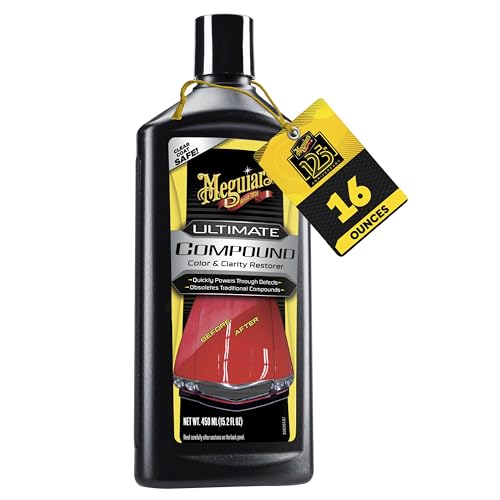
Meguiar’s Ultimate Compound 15.2 Oz
Strengths
- Large volume
- No hazing on clear coats
- Balanced cut and finish
Trade-offs
- Mid-level abrasion
- Not for severe damage
- May need polish afterward
The value here is hard to ignore. With 15.2 ounces of fast-cutting, clear coat-safe formula, this compound punches above its weight in scratch and swirl removal. Owners praise how quickly it restores faded finishes without hazing, something not every budget compound manages. It’s less aggressive than the M105, but that makes it more forgiving on thinner paints.
It works by hand or machine, which broadens its appeal, though DA users report the best balance of speed and control. Compared to Turtle Wax, it cuts harder and finishes finer. I’d recommend this as the go-to mid-tier option when you need real correction but don’t want to spend like a pro shop.
Video review
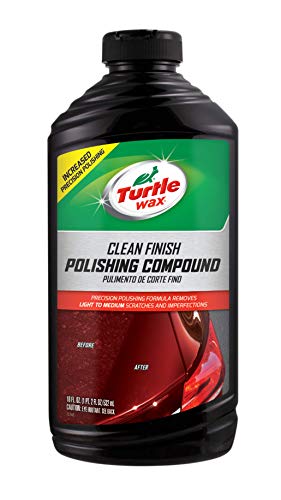
Turtle Wax T-417 Polishing Compound
Strengths
- Very affordable
- Large 18oz bottle
- Safe on all finishes
Trade-offs
- Minimal defect removal
- Not for serious correction
- Basic finish result
Let’s be honest, this isn’t a compound for real paint correction. It’s best viewed as a mild cleaner-polish hybrid for light swirls and surface oxidation. At this price, the 18-ounce size is a steal, and owners confirm it brings back some gloss on daily drivers without breaking the bank.
But compared to Meguiar’s or 3D One, it lacks bite. It won’t touch deeper scratches or sanding marks. Still, for someone maintaining a garage-kept sedan or doing seasonal upkeep, it gets the job done. I wouldn’t trust it on a project car, but as a maintenance player? It has its place.
Product photos
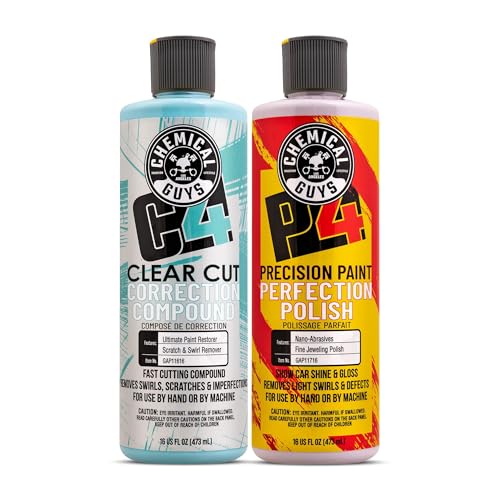
Chemical Guys C4 & P4 Kit
Strengths
- Complete two-step system
- High gloss refinement
- Safe on ceramic coatings
Trade-offs
- Higher cost
- Takes more time
- Overkill for light defects
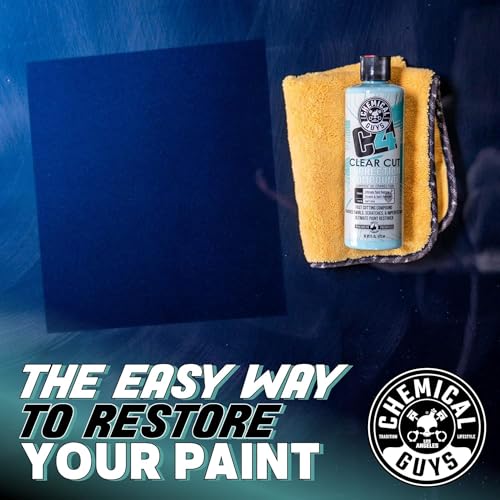
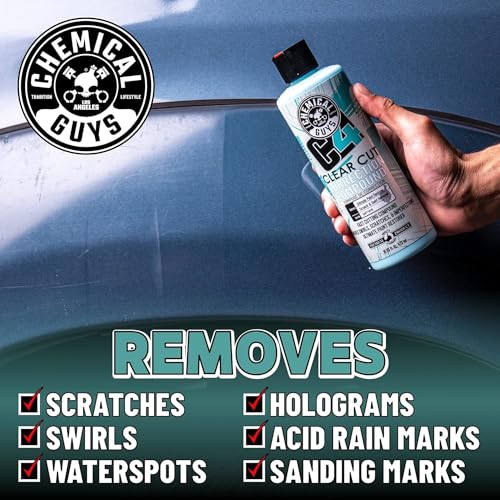
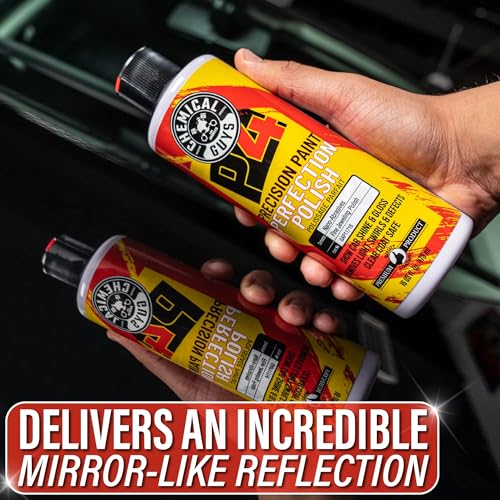
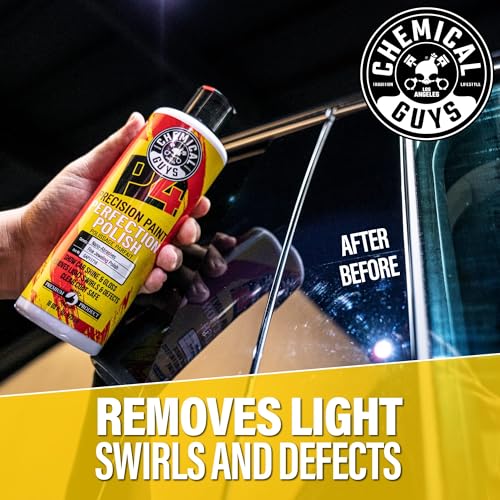
If you’re serious about paint correction at home, this kit gives you the full workflow: C4 attacks scratches, swirls, and etching with authority, then P4 steps in to refine and deliver that wet-looking, show-quality gloss. Reviewers highlight how well the two products work in sequence, especially on darker vehicles where marring shows easily.
It’s compatible with all paint types, including ceramic-coated surfaces, which sets it apart from older systems. While pricier than single bottles, having both stages in one package reduces guesswork. I’d choose this over the Meguiar’s standalone compounds if I were doing a full panel rehab. The pairing is just more complete.
Product photos
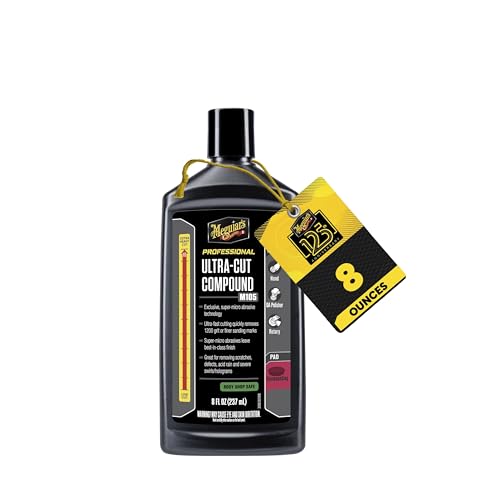
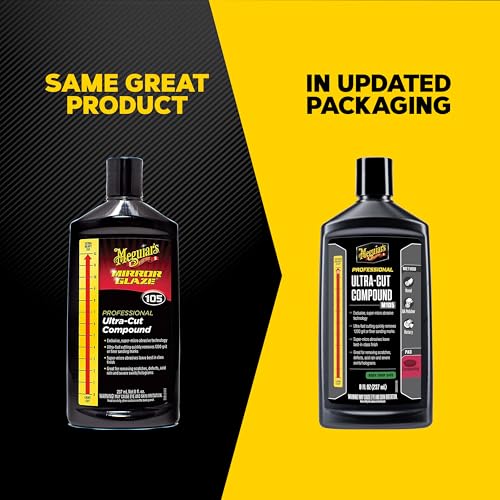
Meguiar’s M105 Ultra Cut Compound
Strengths
- Aggressive cut
- Clear coat safe
- Works with DA or rotary
Trade-offs
- Leaves light marring
- Small container
- Requires second step
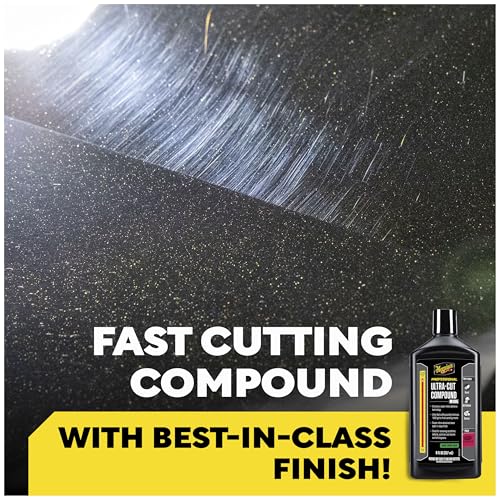
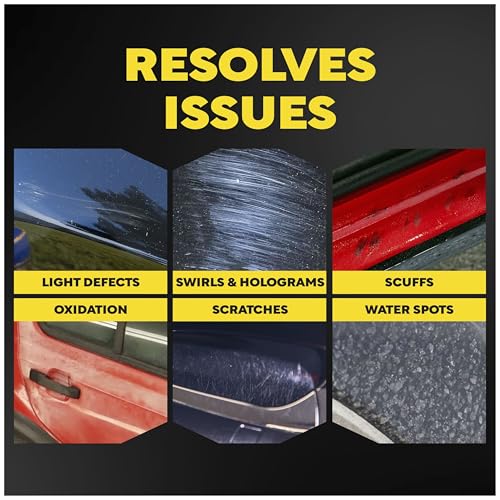
If you’re staring down heavy scratches, oxidation, or sanding marks up to 1200 grit, the M105 is a no-brainer. On paper, its micro-abrasive tech delivers ultra-fast cutting without trashing the finish, and owners consistently report it clears serious defects while setting up a clean base for polishing. It’s not subtle, it’s meant to do the heavy lifting.
For dual action or rotary users tackling neglected paint, this compound earns its ‘professional’ label. The trade-off? You’ll need a follow-up polish like Meguiar’s M205 to eliminate any marring. But in this class, that’s standard procedure. I’d run it before any finishing step on a car with real damage.
Product photos

Carfidant Scratch Repair & Swirl Remover

Strengths
- Includes applicator pad
- User-friendly formula
- Good gloss enhancement
Trade-offs
- Only for light defects
- Shorter working time
- Kit doesn’t scale to full jobs
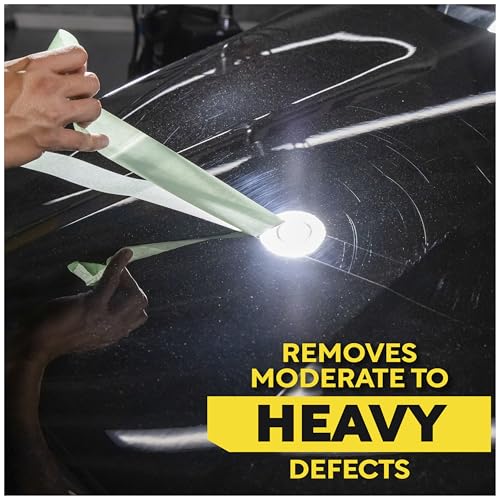
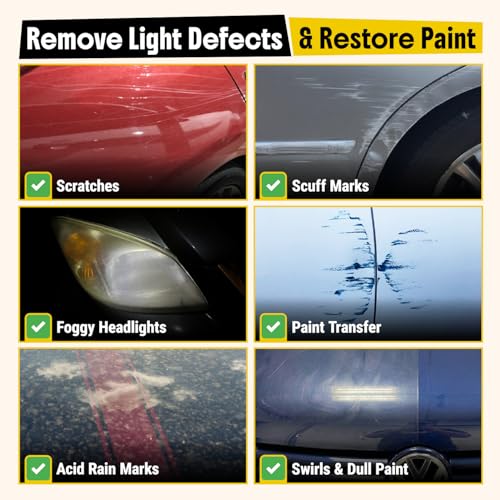
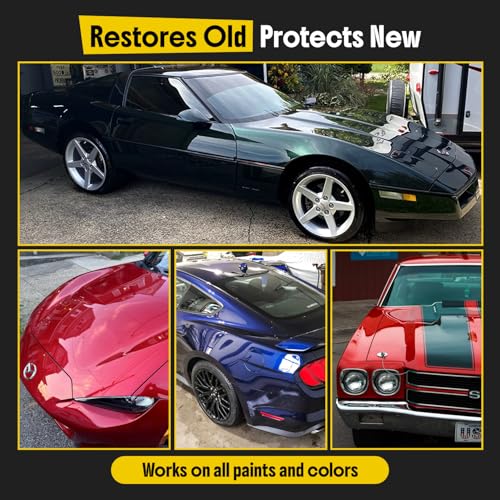
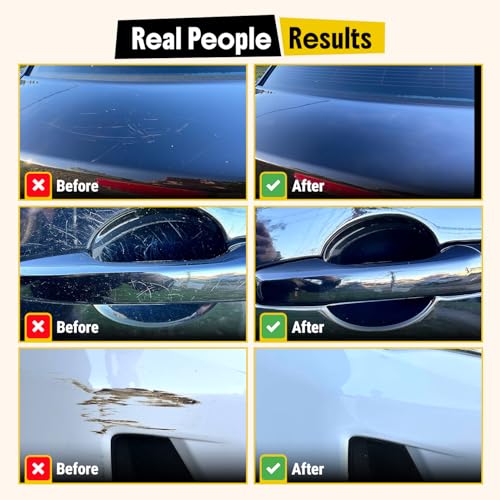
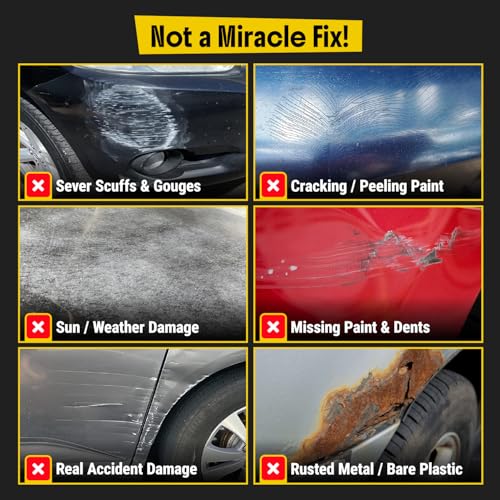
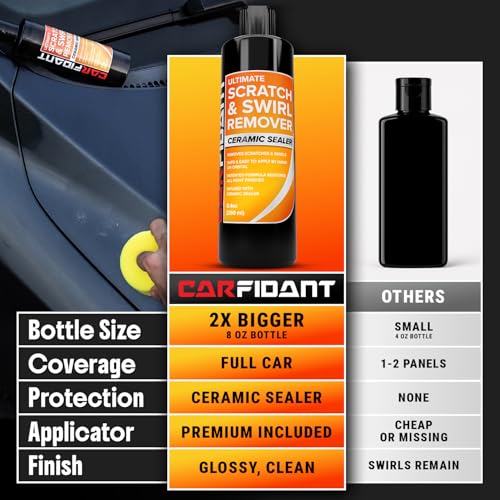
What sets Carfidant apart is the included foam buffer pad, making this one of the few true all-in-one starter kits. The compound itself performs like a medium-cut hybrid, removing light scratches and swirls while boosting gloss. Owners say it’s easy to use and delivers visible improvement even by hand.
It’s not as refined as 3D One, but the convenience factor is real. If you’re new to compounding and don’t own a polisher or pads, this gets you rolling without extra purchases. I’d recommend it over Turtle Wax for first-timers who want better results without complexity.
Product photos
SPTA Mix Polishing Compound 4.06oz

Strengths
- Multi-stage precision
- Body shop safe formula
- Diminishing abrasives
Trade-offs
- Very small volume
- Best with SPTA pads
- Pricey per ounce
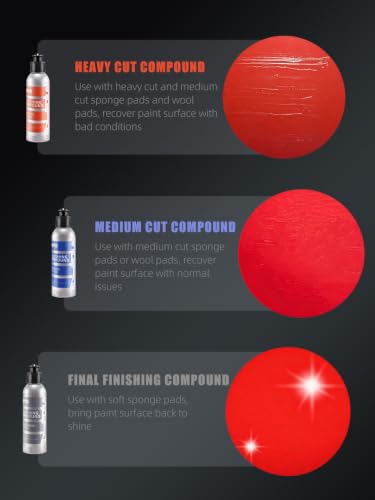
This three-stage German-formulated system is built for precision. The diminishing abrasives are engineered to progress from heavy to fine correction, with each step targeting specific sanding grades, down to 2500 grit. On paper, that level of refinement is impressive, and owners using SPTA pads report near-body-shop clarity.
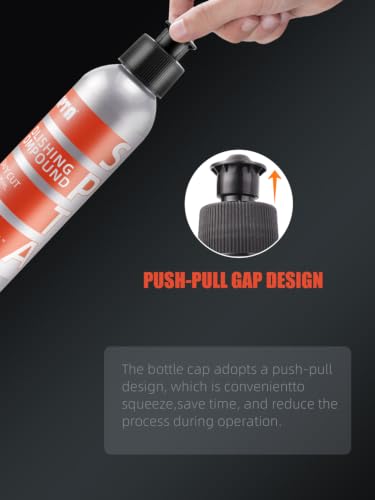
It’s clearly aimed at detailers who want layered control, not quick fixes. The inclusion of sealant protection (no waxes or silicones) appeals to purists. However, the tiny 4oz size means you’ll burn through it fast on full panels. I’d reserve this for spot work or high-end touch-ups, not full-car jobs.
Product photos
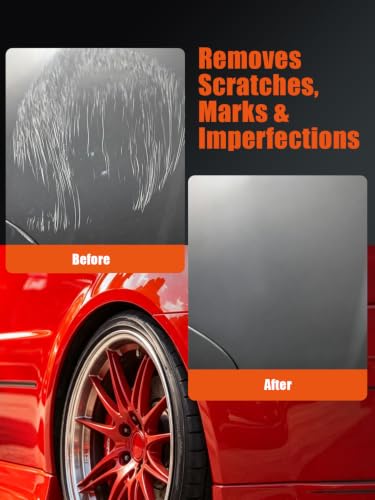
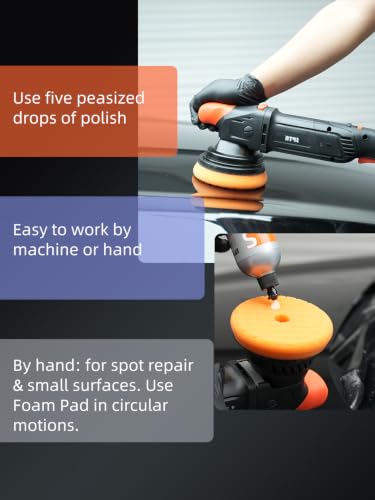
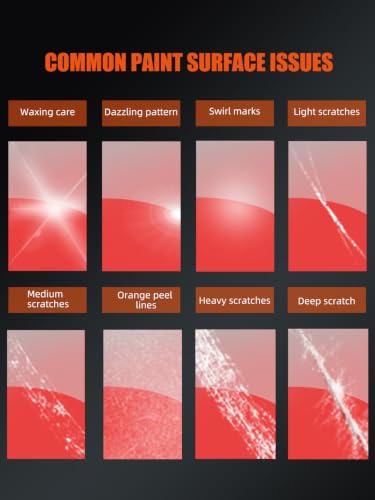
How We Evaluated compound polish for cars
As someone constantly immersed in the world of automotive detailing, I approached researching compound polishes with a focus on real-world applicability. Rather than a hands-on lab test, this was a research-led comparison of published specifications, features, and, crucially, owner and professional detailing reviews. I weighed each product against its stated capabilities, considering both the marketing claims and the experiences shared by those using them on a variety of vehicles and paint conditions. My aim was to identify which compounds deliver on their promises and offer the best value for different needs.
For compound polish, cutting ability and finish quality are paramount. A compound needs to effectively remove defects (swirls, scratches, oxidation) without causing further damage or leaving behind a hazy finish. Beyond that, versatility, whether a product works well by hand or with a machine, became a significant factor. I also prioritized formulas that are safe for a variety of paint types, as many enthusiasts work on older vehicles with single-stage paint, while others have modern clear coats. Finding a balance between these elements proved vital.
Specifications, like abrasive size and composition, provide a baseline understanding of a compound’s potential. However, owner feedback and reputation ultimately dictated my assessment. Reports on ease of use, dust levels, and the need for follow-up polishing steps were just as important as the technical details. For significant paint issues, knowing when to call in the experts and use deep scratch removers is also key, while for maintaining a flawless finish, exploring the best car polish options is a natural next step.
Choosing The Right compound polish for cars
Finding the right compound polish can dramatically improve your car’s appearance, but the sheer number of options can be overwhelming. A good product doesn’t just mask imperfections; it actively corrects them, restoring clarity and shine.
A truly effective compound polish balances cutting power with finishing finesse. Look for formulas that address your specific paint issues, light swirl marks versus deep scratches, and consider ease of use, whether you prefer hand application or machine polishing. Pay close attention to the abrasive size; smaller abrasives refine, while larger ones correct more severe defects.
Understanding Cutting Power
The first thing I tell anyone asking about compound polish is to honestly assess the condition of their paint. If you’ve got minor swirl marks from improper washing, a light polishing compound is all you’ll need. However, if you’re dealing with deeper scratches or severe oxidation, you’ll require something with more aggressive cutting ability. Meguiar’s M105 Ultra Cut Compound is often mentioned for tackling those heavier defects, and can even handle sanding marks up to 1200 grit. Keep in mind, more aggressive isn’t always better. Overly aggressive compounds can leave micro-marring, requiring a subsequent polishing step.
Evaluating Formula Versatility
One aspect often overlooked is how versatile a compound is in terms of application. Some are designed solely for machine use, while others can be applied by hand. The 3D One Hybrid Scratch & Swirl Remover is a prime example of a versatile option, working effectively with both DA polishers and hand application, simplifying the process for enthusiasts. Here’s what to consider when looking at versatility:
- Application Method: Hand vs. Machine (DA or Rotary)
- Paint Types: Is it safe for clear coat, single-stage, or ceramic coatings?
- Single-Step vs. Multi-Step: Does it correct and finish, or will you need additional products? A single-step formula can save significant time, but might compromise on ultimate gloss.
Don’t assume a more expensive compound is automatically superior. Match the product to the problem, a light cut polish on pristine paint will yield better results (and save you work) than a heavy cut compound.
Considering Value and Finish
Ultimately, the best compound polish strikes a balance between performance and price. Turtle Wax T-417 Polishing Compound is a popular choice for budget-conscious buyers, offering decent results for minor imperfections. However, if you’re seeking professional-level correction and a show-quality finish, investing in a kit like the Chemical Guys C4 & P4 Kit might be worthwhile. Don’t forget that a beautifully corrected paint job deserves protection. After compounding and polishing, applying a quality wax for black cars or sealant for dark paint will help maintain that shine and prevent future damage. To further explore the options available, you can find a detailed comparison of best paint correction compounds to help you make an informed decision, and ensure you’re getting the right product for your needs.
Compound Polish for Cars Compared
Here’s a comparison of key specifications for popular compound polishes.
| Product Title | Cut Level | Polish Level | Kit/Standalone | Safe for Clear Coat? | Volume (oz) | Application |
|---|---|---|---|---|---|---|
| 3D One Hybrid Scratch & Swirl Remover | Medium-Heavy | High | Standalone | Yes | N/A | Hand/DA |
| Meguiar’s Ultimate Compound 15.2 Oz | Heavy | Medium | Standalone | Yes | 15.2 | Hand/DA |
| Turtle Wax T-417 Polishing Compound | Light | Medium | Standalone | Yes | N/A | Hand/DA |
| Chemical Guys C4 & P4 Kit | Heavy/Fine | High | Kit | Yes | N/A | Hand/DA |
| Meguiar’s M105 Ultra Cut Compound | Very Heavy | Medium | Standalone | Yes | N/A | Hand/DA |
| Carfidant Scratch Repair & Swirl Remover | Light | High | Kit (with pad) | Yes | N/A | Hand |
| SPTA Mix Polishing Compound 4.06oz | Heavy/Medium/Fine | High | Standalone | Yes | 4.06 | Hand/DA |
Frequently Asked Questions
What’s the difference between compound and polish?
Compound is designed for correcting paint defects like scratches and swirl marks, using abrasives to level the clear coat. Polish refines the finish after compounding, removing any hazing and enhancing gloss; you’ll want to use polish application towels for the best results.
Can I use compound on a relatively new car?
Yes, but cautiously. Even newer cars can develop minor swirl marks from washing, and a light compound can address these. Avoid aggressive compounds unless there are noticeable defects, as unnecessary cutting can diminish the clear coat.
How do I know if I need a one-step or multi-step process?
If your paint has significant imperfections, deep scratches or heavy oxidation, a multi-step process (compound followed by polish) is best. For minor swirl marks and maintaining a good finish, a one-step compound/polish can save time and effort.
Will compounding remove my car’s wax or sealant?
Absolutely. Compounding is an abrasive process that removes a layer of the clear coat, and along with it, any existing wax or sealant. You’ll need to reapply a protective layer, like a best ceramic coating, after polishing to protect your newly corrected paint.
What’s the best way to avoid holograms or buffer trails?
Holograms, or buffer trails, occur from improper machine polishing technique or using a dirty pad. Work in small sections, keep the pad clean, and frequently change directions while polishing. Using high-quality detailing towels for final wipe-down is also crucial.
The Bottom Line
Choosing the right compound polish often comes down to balancing how much correction you need with how much effort you want to put in. For most owners dealing with everyday swirl marks and minor imperfections, the 3D One Hybrid Scratch & Swirl Remover strikes an excellent balance – it’s versatile enough for both hand application and machine use, and delivers impressive results without requiring extensive follow-up. Ultimately, a truly stunning finish isn’t just about removing defects; it’s about the overall care you give your vehicle.
If you’re on a tighter budget, the Turtle Wax T-417 Polishing Compound is a solid starting point for light imperfections. However, for those wanting professional-grade correction, particularly on more significant paint damage, the Meguiar’s M105 Ultra Cut Compound remains a top contender. And to protect that newly corrected finish, don’t forget to explore options for protective clear coat products.
More than any specific abrasive size or cutting power, remember that proper preparation and technique are key. Thoroughly washing and decontaminating your paint before compounding, and always following with a quality polish for cars to refine the finish, will yield far better results than simply relying on the most aggressive compound available. A little patience and the right approach will always shine through.
