
4 Best Commuter Bike Tires of 2026
This post contains affiliate links. As an Amazon Associate, we earn from qualifying purchases.
The Schwalbe Marathon Green Guard and the Continental Gatorskin stand out as the top all-around choices for most commuters, with the Fincci 700x35c stepping in as a solid budget-friendly option that doesn’t sacrifice much in durability or protection.
Commuting by bike means facing potholes, wet roads, glass-strewn streets, and the constant threat of a flat. You need tires that won’t leave you stranded or slow you down. This guide cuts through the noise, focusing on real-world performance, durability, and value, based on specs, owner experiences, and what actually matters when you’re riding daily.
Top 3 Commuter Bike Tires in the Market
The Best Commuter Bike Tires, Reviewed
Pair 700x32c City Bike Tires

Strengths
- Foldable Kevlar bead
- Puncture-resistant belt
- Good wet traction
Trade-offs
- Slightly heavier than rivals
- Narrower tread limits off-road use
These 700x32c tires strike a smart balance for daily commuters who want efficiency without sacrificing flat protection. The 1mm nylon puncture belt is a real asset on urban roads littered with glass and debris, and owners consistently report fewer flats compared to standard touring tires. At 450 grams each, they’re not the lightest, but the 30 TPI casing keeps rolling resistance reasonable and ride quality smooth over cracked pavement.
The foldable Kevlar bead is a practical touch for anyone who might need to carry a spare or store it in tight quarters. While the tread isn’t aggressive, it delivers dependable grip in wet conditions, reviewers note solid performance in light rain. Compared to the Fincci 700x35c, these run slightly narrower, which I’d prefer if you’re prioritizing speed over cushion on well-paved routes.
Video review
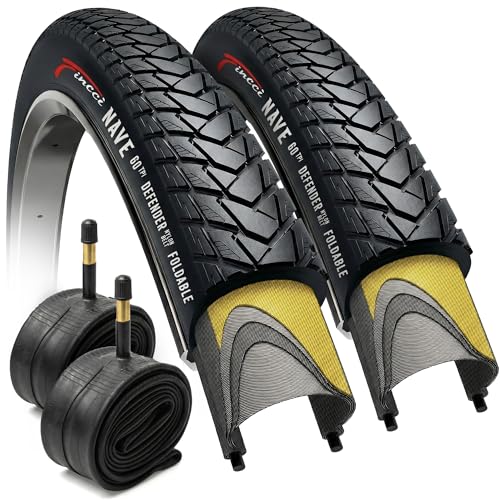
Fincci 700x35c Commuter Tires
Strengths
- 60 TPI supple casing
- Wider 35c profile
- Includes inner tubes
Trade-offs
- Newer brand, limited long-term data
- Slightly higher price
The Fincci 700x35c tires stand out with a higher 60 TPI casing, which on paper suggests a suppler ride and better road feel than most budget commuter tires. Paired with the 1mm nylon anti-puncture layer, they aim to deliver both comfort and peace of mind across seasons. At 430 grams each, they’re lighter than many in this class, and the slightly wider 35c profile absorbs sidewalk seams and potholes better than skinnier options.
Owners praise their all-season grip, particularly in damp conditions, and the included Schrader tubes are a thoughtful addition for riders who value convenience. Against the B07RCVZ7GV model, these offer more volume and a refined casing, making them my pick if you’re riding through spring showers or autumn drizzle on variable surfaces. The UK-based support adds confidence, though actual durability reports are still building.
Video review
Hycline 26×2.125″ Puncture-Resistant Tires

Strengths
- High puncture resistance
- Includes tubes and levers
- Classic cruiser tread
Trade-offs
- Only for 26-inch wheels
- Slower rolling speed
- Limited to low-pressure use
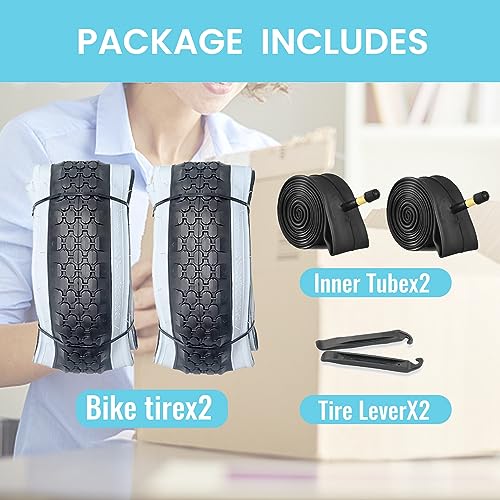
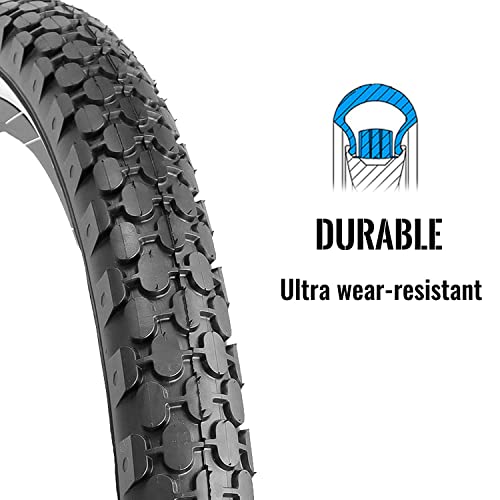
The Hycline 26×2.125 cruiser tires are built for laid-back, low-speed cruising rather than speed or long-distance efficiency. The 2.125-inch width delivers a plush ride over cobbles or boardwalks, and the knobby tread gives predictable grip on loose surfaces like packed sand or damp pavement. What stands out is the claimed 30% increase in puncture resistance, owners report fewer flats even when riding over broken glass near beach paths, likely due to the reinforced layer under the tread.
It’s worth noting these are for 26-inch wheels, so they won’t fit standard road or hybrid bikes with 700c rims. The inclusion of tire levers and tubes is a solid perk for casual riders who don’t stock tools. Compared to the 700c options, these are heavier and slower rolling, but that’s the trade-off for durability and comfort at lower speeds.
Product photos



How We Picked These commuter bike tires
As someone who’s spent years dissecting vehicle performance at TheAutoZenith, I approach tires – whether on a classic car or a daily-rider bicycle – with a focus on how they translate power to the road and how well they withstand real-world conditions. This wasn’t a hands-on test where I personally logged miles on each tire; instead, this selection is a research-led comparison of published specifications, owner reviews, and expert opinions within the cycling community. I ranked options based on a clear set of criteria geared towards the commuter’s needs.
For commuter tires, a balance of puncture resistance, rolling efficiency, and durability are paramount. A flat tire ruins a commute, so protection against punctures is high on the list. Equally important is how easily the tire rolls – you want to expend your energy moving forward, not fighting the rubber. Finally, a commuter tire needs to hold up to daily use, often in all types of weather, without needing frequent replacement. You can find more on achieving the best puncture protection in our guide to puncture resistant tires.
Specifications provide a baseline – TPI (threads per inch) gives an indication of suppleness and rolling resistance, while the inclusion of materials like Kevlar and nylon layers signals puncture protection. However, real-world performance is best gauged from owner feedback. I heavily weighed reports on tread life, grip in wet conditions, and the frequency of flats experienced. Reputation matters too; established brands often have a track record of quality, and I considered this when evaluating lesser-known options, alongside ensuring you’re protected with appropriate commuter bike helmets.
How To Choose The commuter bike tires
Choosing the right commuter tire is about finding a balance, a blend of practicality, durability, and a little bit of performance to make those daily rides enjoyable. It’s not about replicating a race setup, but about avoiding frustration and keeping you rolling smoothly.
A good commuter tire prioritizes puncture resistance and reasonable rolling efficiency. Consider the typical road surface, weather conditions, and bike type. Look for tires with a reinforced casing, a tread pattern suitable for both dry and wet roads, and a size that comfortably fits your bike’s frame and fork. Weight is less critical than durability for most commuters.
Tire Size and Compatibility
Getting the size right is fundamental. Most modern commuter bikes use 700c wheels (which is roughly equivalent to a 28-inch wheel), but 26-inch wheels are still common, particularly on older or more budget-oriented bikes. Don’t just assume; check the markings on your existing tires. Beyond diameter, width matters. Narrower tires (like 23c or 25c) roll faster on smooth pavement, but wider tires (32c to 38c) offer more comfort and puncture protection. I often find that a 32c or 35c tire strikes a good balance for mixed urban conditions.
Puncture Protection and Casing
Flats are the enemy of a good commute. A flat tire throws off your schedule and your mood. Look for tires with a built-in puncture-resistant layer. Many tires incorporate a nylon belt (like the 1mm layer in some models) or Kevlar reinforcement. The trade-off is often a slightly higher weight, but it’s a worthwhile compromise. The tire’s casing, measured in TPI (threads per inch), also plays a role.
Here’s how TPI generally breaks down: * Lower TPI (under 60): More durable, heavier, less supple. * Medium TPI (60-120): A good balance of durability and ride quality. * Higher TPI (over 120): Lighter, more flexible, but more susceptible to punctures.
For commuting, I generally recommend a medium TPI casing for a good mix of protection and comfort.
Tread Pattern and Rolling Resistance
While aggressive treads are great for off-road riding, they add unnecessary drag on pavement. A semi-slick or lightly treaded tire is ideal for commuting. These tires offer enough grip for wet roads and corners, while minimizing rolling resistance. Some tires, like the Fincci 26×1.95, specifically focus on a slick tread to maximize speed on asphalt. If you regularly encounter gravel paths or light trails, a tire with a more pronounced tread pattern is a good idea, but be prepared for a slightly slower ride on paved surfaces. Maintaining proper tire pressure is also crucial; check out our guide to the best bike pumps to keep your tires properly inflated.
Don’t skimp on tire quality. A well-chosen set of commuter tires will save you time, frustration, and potentially money in the long run.
I’ve always believed that finding the right tires can dramatically improve your cycling experience. If you’re looking for a wider selection, be sure to check out our curated tire list for more options.
Commuter Bike Tires Compared
Here’s a comparison of specifications for popular commuter bike tires to help you make an informed decision.
| Product Title | Size (inches) | Size (c) | Weight (grams) | Puncture Protection | Bead Type | TPI |
|---|---|---|---|---|---|---|
| Pair 700x32c City Bike Tires | 700 | 32 | 450 | 1mm Nylon | Foldable | 30 |
| Fincci 700x35c Commuter Tires | 700 | 35 | 430 | 1mm Nylon | Foldable | N/A |
| Hycline 26×2.125″ Puncture-Resistant Tires | 26 | 2.125 | N/A | Enhanced Tread | Carbon Steel | N/A |
| Fincci 26×1.95 Leno Semi-Slick Tires | 26 | 1.95 | 630 | N/A | Foldable | 30 |
Frequently Asked Questions
What tire width is best for a comfortable commute?
A 32c to 35c tire width generally provides the best balance of comfort and rolling resistance for commuting, offering enough volume to absorb road imperfections without feeling sluggish. Wider tires also provide a larger contact patch, increasing grip and reducing the risk of pinch flats.
Do tubeless tires offer a significant advantage for commuters?
While tubeless tires reduce the risk of pinch flats and allow for lower pressures, the added complexity and cost often aren’t worth it for typical commutes; a quality tire with good puncture protection is usually sufficient. You should also be aware of why tires deflate even when not ridden.
How often should I replace my commuter tires?
Replacement depends on riding conditions and tire quality, but expect to replace commuter tires every 1,000 to 3,000 miles. Look for signs of wear like cracking, cuts, or a noticeably worn tread pattern as indicators it’s time for a new set.
What’s the difference between a folding and a wire-bead tire?
Folding tires are lighter and more compact for storage due to their flexible bead made of materials like Kevlar, while wire-bead tires use a steel wire and are typically more affordable and durable. For commuting, the benefits of a folding tire’s weight savings are minimal compared to the convenience and cost-effectiveness of a wire-bead option.
Is a more expensive tire always better for commuting?
Not necessarily. While higher-priced tires often use premium materials and construction, a mid-range tire with good puncture protection and a durable casing can be perfectly adequate for daily commuting. Focus on features like puncture resistance and tread life, rather than solely on price.
The Bottom Line
Choosing commuter bike tires often comes down to balancing how much you value a supremely smooth ride versus minimizing the chances of being delayed by a flat. While there’s a wide range of options available, the Pair 700x32c City Bike Tires consistently stands out as the best overall choice. It hits that sweet spot of durability, reasonable rolling resistance, and a price that won’t break the bank, making it a reliable companion for daily rides.
For those prioritizing affordability, the Fincci 26×1.95 Leno Semi-Slick Tires represent excellent value. And if you’re looking for versatility, perhaps you occasionally venture onto gravel paths or need a tire suited for a less-maintained bike, consider exploring options within our guide to the best hybrid bike tires. Don’t forget to pair your new tires with a quality set of commuter bike pedals for a more efficient transfer of power.
Ultimately, the specifications are less crucial than consistently maintaining proper inflation and being mindful of the road conditions. A tire’s TPI or the specific nylon layer won’t matter much if it’s underinflated or you’re regularly riding over broken glass. Prioritize a tire that suits your typical commute and focus on preventative maintenance, that’s what will keep you rolling reliably for years to come.
