
7 Best Car Speaker Cables of 2026
This post contains affiliate links. As an Amazon Associate, we earn from qualifying purchases.
The Install Link 10 AWG CCA speaker cable is the best overall choice for most builds, offering low resistance and solid durability. For budget-focused setups, the Amazon Basics 16-Gauge wire delivers decent performance at a low cost, while the Recoil 9-Conductor cable stands out for complex installations where space and routing matter.
Upgrading your car’s audio isn’t just about speakers and amps, cable quality plays a real role in how clean and powerful your sound stays. Too thin or poorly made, and you’re losing signal before it even reaches the drivers.
After comparing specs, reading owner feedback, and applying what I know about audio systems, these picks balance gauge, material, and practicality. We looked at resistance, ease of installation, and long-term reliability to find cables that won’t hold your system back.
Top 7 Car Speaker Cables in the Market
The Best Car Speaker Cables, Reviewed
Install Link 10 AWG Speaker Wire

Strengths
- Thick 10 AWG conductors
- Low resistance
- Durable jacket
Trade-offs
- Overkill for tweeters
- Stiffer to route
- Higher cost
This is the heaviest-duty wire on the list, and for good reason, 10 AWG is serious business when it comes to car audio. While still CCA, not pure copper, that thickness drastically cuts resistance, which matters when you’re sending hundreds of watts to subwoofers.
On paper, it’s overkill for door speakers, but owners consistently use this for amp-to-battery kits or subwoofer runs where voltage drop must be minimized. The purple/black frosted jacket looks sharp and resists cracking. If you’re building a system with a powerful mono block, this should be your go-to for power and ground.
Video review
Amazon Basics 16-Gauge 100ft Wire
Strengths
- Affordable
- Polarity marked
- Easy dispensing spool
Trade-offs
- Thin gauge for long runs
- Basic insulation
- CCA conductivity limits performance
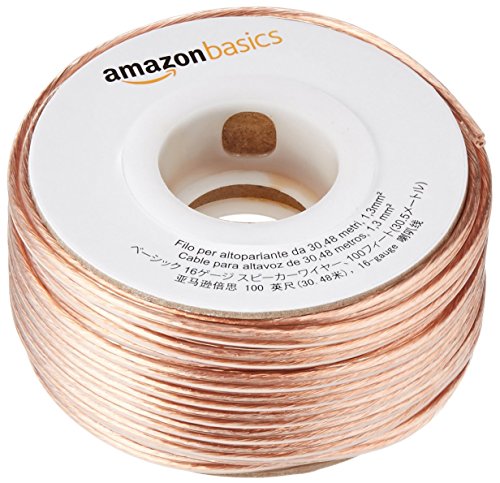
For basic speaker setups where budget is the top concern, this Amazon Basics wire gets the job done. On paper, it’s standard 16-gauge CCA (copper-clad aluminum) wire with a simple plastic jacket and polarity marking, nothing flashy, but functional.
Owners consistently report it works fine for short runs in factory-upgrade systems, especially when you’re just replacing old wiring without pushing high power. It won’t deliver audiophile-grade clarity, but for casual listeners pairing an aftermarket head unit with decent speakers, it’s a no-frills solution that keeps costs down.
Video review
Install Link 14 AWG 100ft Wire
Strengths
- Generous 100-foot length
- 14 AWG thickness
- Flexible jacket
Trade-offs
- Still CCA core
- Not for extreme fidelity
- No directional markings
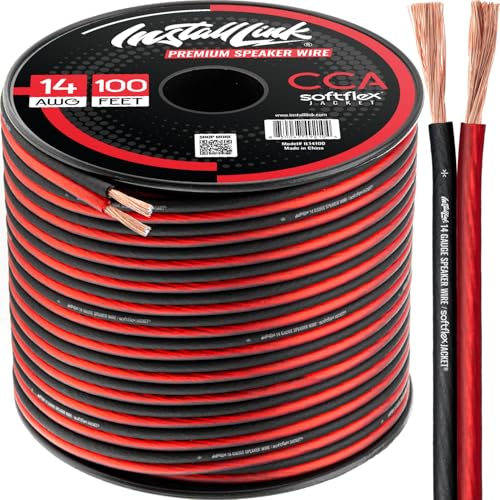
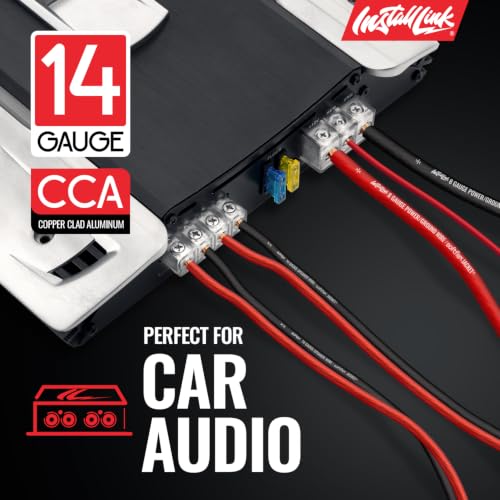
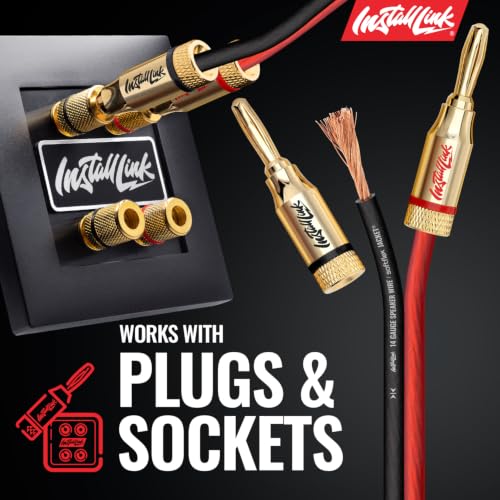
At 100 feet of 14 AWG CCA, this Install Link option fills the gap between cheap short runs and premium builds. It’s got the thickness to handle more power than 16 AWG without breaking the bank, and the softflex jacket makes routing through doors and pillars less frustrating.
The frosted red/black coloring helps with identification, and owners say it strips cleanly with standard tools. Compared to the Scosche 50-footer, this gives double the length at nearly the same price, making it smarter for full-vehicle rewiring. Is it perfect? No. But for most real-world installations, it’s more than capable.
Product photos


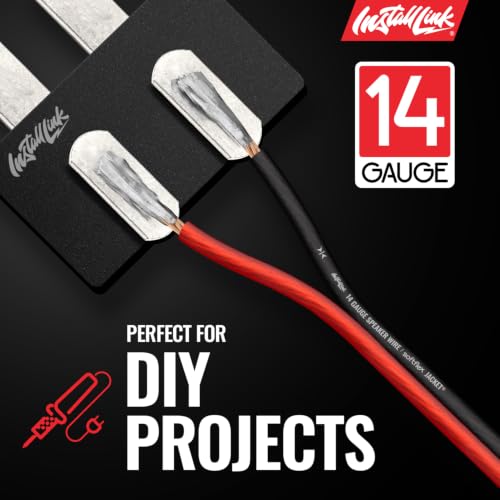
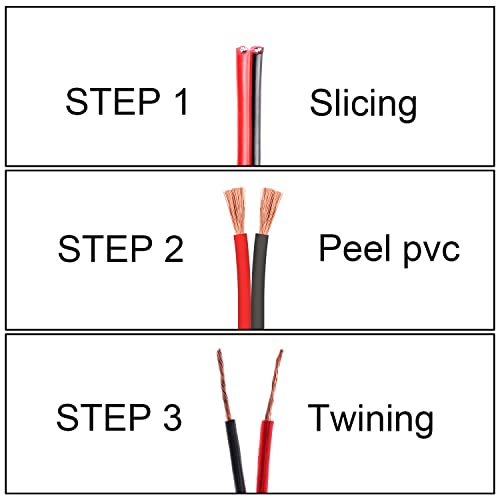
VIABRICO 16 Gauge Automotive Wire

Strengths
- Dual spool setup
- Good insulation
- Wide temperature range
Trade-offs
- CCA conductivity
- Not optimized for audio
- Overkill length for some uses
This VIABRICO wire stands out not because it’s built for high-fidelity audio, but because it’s clearly designed for low-voltage versatility. The red and black 16 AWG conductors are sold as a pair per spool, so you get 100 feet of each, which makes it useful beyond just speakers.
Reviewers note it’s frequently used for LED lighting, small DC motors, and auxiliary circuits in cars or boats. While it can handle basic speaker connections, its CCA core means it’s not ideal for long-term high-wattage audio use. I’d rather see pure copper here if sound quality mattered, but for mixed-use projects, the flexibility and corrosion resistance make sense.
Product photos


Recoil 9-Conductor 18AWG Cable

Strengths
- Multi-conductor design
- Color coded
- Saves installation time
Trade-offs
- Thin 18 AWG wires
- Shorter overall length
- CCA limits power handling
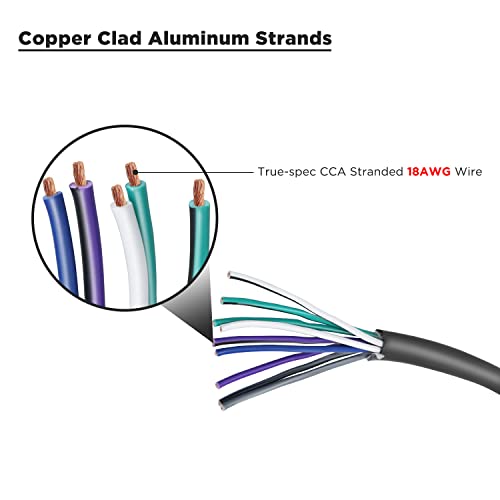
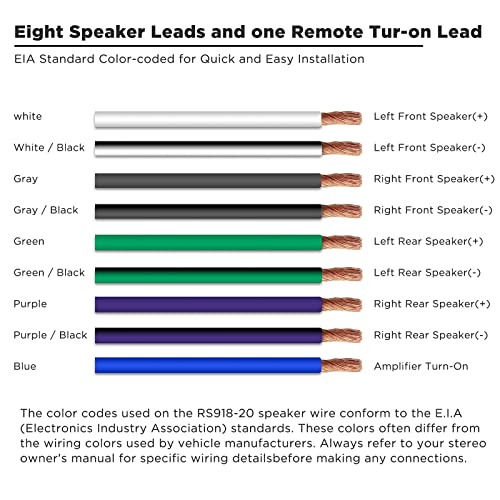
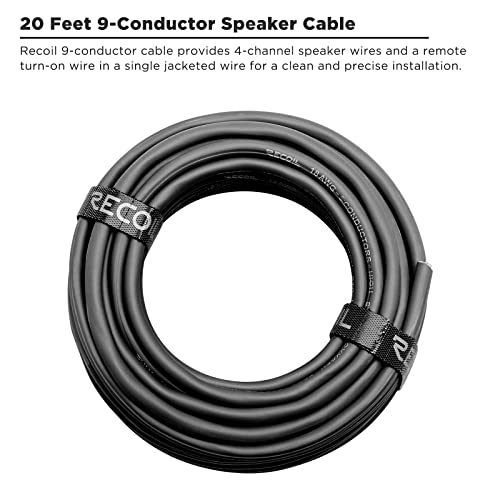
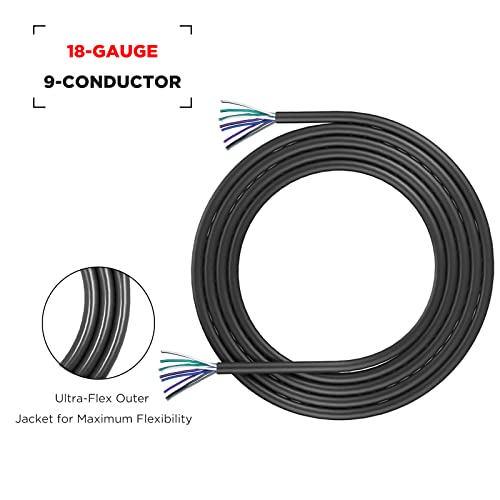
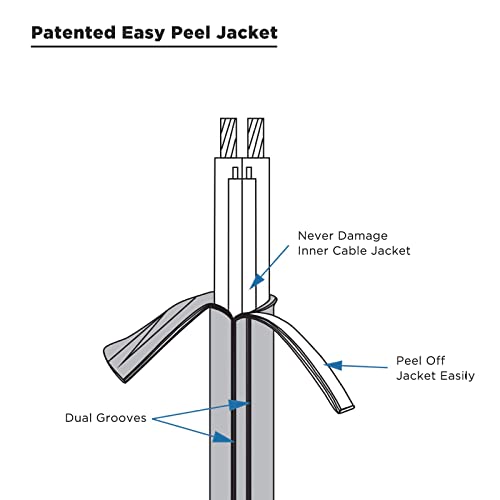
If you’re running multiple speakers and hate fishing individual wires through tight cabin spaces, this 9-conductor cable from Recoil could save hours. The ‘easy peel’ jacket lets you separate eight speaker leads plus a remote turn-on wire, all in one bundle, making it perfect for complex installs.
But there’s a trade-off: 18 AWG is thin, especially over distance. Owners report using this mainly in compact builds where amplifier-to-speaker runs are under 15 feet. For larger vehicles or higher power, the gauge becomes a bottleneck. Still, for a clean, clutter-free installation in a coupe or hatchback, the convenience wins.
Product photos
Scosche KS1450CS 14 Gauge Wire
Strengths
- Trusted brand
- Good gauge for mid-power
- Transparent insulation
Trade-offs
- CCA construction
- Limited length
- Not for high-end systems
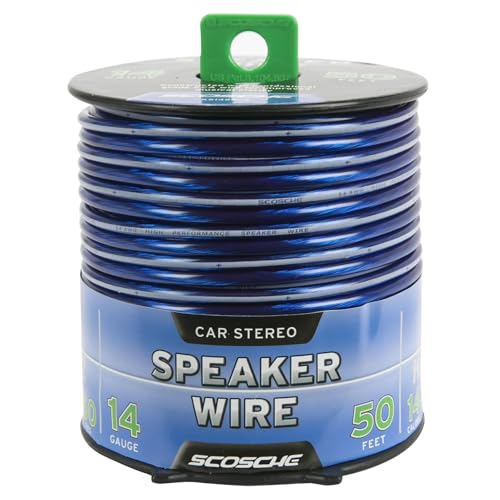
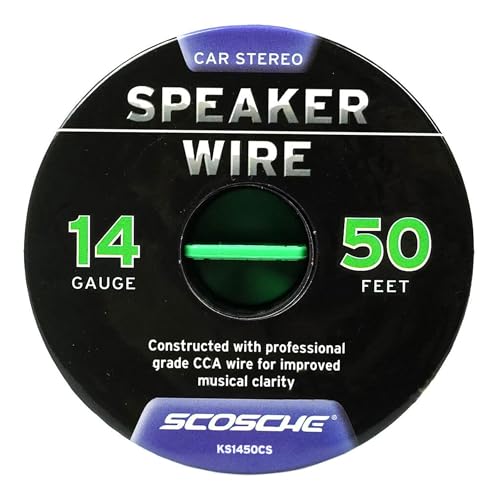
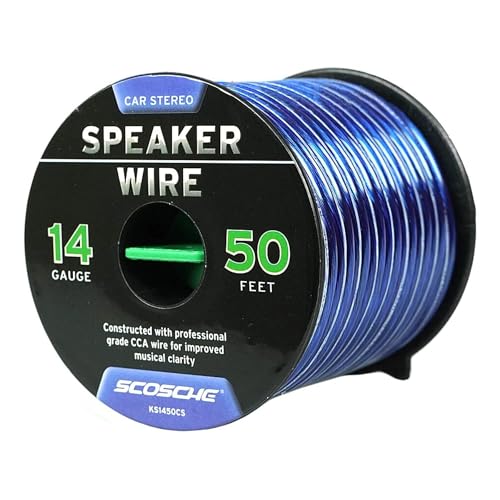
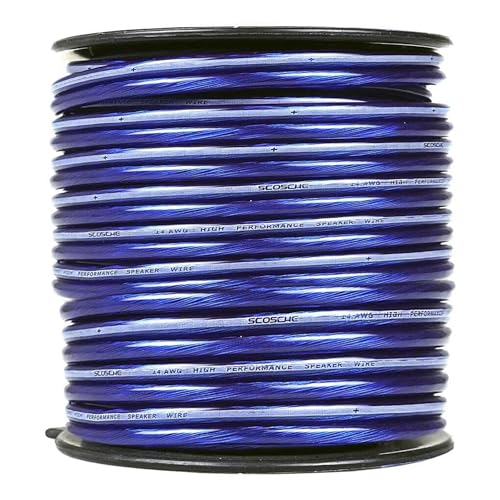
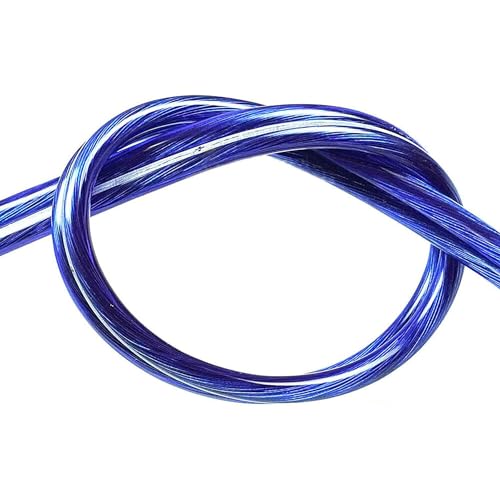
Scosche has been around long enough that their name carries weight in car audio circles. This 14 AWG spool isn’t revolutionary, it’s CCA wire like most in this range, but owners trust the brand for consistency. The transparent jacket makes polarity easy to confirm, and the 50-foot length gives enough slack for most sedans.
Compared to budget 16 AWG options, this provides better current delivery, especially if you’re feeding powered component sets. It won’t match pure copper OFC wire, but for the price, it hits a sweet spot between cost and capability. My recommendation? Pair it with basic crimp connectors and keep terminations clean.
Product photos
Install Link 14 AWG 30ft Wire

Strengths
- Right size for small jobs
- Good 14 AWG thickness
- Clean appearance
Trade-offs
- Too short for full installs
- Still CCA material
- Limited expansion room
Sometimes you don’t need 100 feet, you just need enough to connect front speakers during a quick swap. That’s exactly what this 30-foot 14 AWG wire delivers: compact, affordable, and thick enough to handle better-than-factory output.
It shares the same softflex jacket and frosted coloring as its longer siblings, so handling and stripping are consistent. Compared to the Amazon Basics 16 AWG, this offers noticeably better power capacity in a smaller footprint. I’d pick this over thinner wire even for minor upgrades, just for future-proofing.
Product photos
How We Chose These car speaker cables
Rather than a hands-on lab test, my research for these recommendations involved a detailed comparison of published specifications and features across numerous models. I weighed owner reviews from a variety of sources – looking for common praise and consistent complaints – alongside assessments from respected audio publications. As someone who’s spent years understanding how audio components interact, I applied that knowledge to evaluate each cable’s potential performance and value.
For car speaker cables, the gauge (thickness) of the wire and the conductor material were the most important factors. Lower gauge numbers mean thicker wire, which reduces resistance and preserves signal quality, especially over longer runs. The type of conductor – whether pure copper or copper-clad aluminum (CCA) – significantly impacts conductivity and, consequently, audio fidelity. Understanding these core elements is crucial when considering an upgrade to your car speaker systems.
Specifications clearly outline gauge and conductor material, providing a baseline for comparison. However, owner feedback proved invaluable in assessing real-world usability. I paid close attention to comments regarding ease of stripping, flexibility for routing, and long-term durability. Reputation also played a role; established brands known for quality audio accessories, like Scosche, generally offered more consistent performance as detailed in our broader guide to best speaker wires.
How To Choose The car speaker cables
Selecting the right speaker cables can genuinely elevate your audio experience. It’s a detail often overlooked, but one that separates a good system from a truly immersive one.
A quality speaker cable facilitates clean signal transfer from your amplifier to your speakers. Key considerations include wire gauge (thickness), conductor material (copper vs. copper-clad aluminum), jacket quality for durability, and overall length needed for your installation. Prioritize low resistance and proper polarity identification for optimal performance.
Gauge: Getting the Thickness Right
The wire gauge is arguably the most critical factor. Thicker wires (lower gauge numbers like 12 or 14 AWG) offer less resistance, allowing more power to reach your speakers. While 16 AWG is sufficient for shorter runs and lower power systems, I generally recommend 14 AWG as a solid all-around choice, especially if you anticipate upgrading your system with more powerful amplifiers later on. Don’t automatically assume you need the thickest cable available; it’s about matching the wire to the power demands and distance.
Conductor Material: Copper vs. CCA
You’ll encounter two main types of conductor material: pure copper and copper-clad aluminum (CCA). Pure copper is the gold standard for conductivity, but it’s also more expensive. CCA wire, like those offered by Install Link and Scosche, uses an aluminum core with a copper coating. While CCA has slightly higher resistance than pure copper, it’s a viable, cost-effective alternative – especially for shorter runs. Understand that a thicker CCA wire (e.g. 14 AWG CCA) will still outperform a thinner pure copper wire (e.g. 16 AWG copper).
Here’s how to think about it: * For a basic upgrade: CCA is perfectly acceptable. * For longer runs (over 20 feet): Consider a thicker gauge CCA or, ideally, pure copper. * For high-end systems demanding absolute maximum signal transfer: Invest in pure copper speaker cables.
Length and Installation Considerations
Don’t skimp on length! It’s far better to have a little extra cable than to stretch your wires too thin. This is where planning your run is key. Consider the layout of your vehicle and the placement of your speakers and amplifiers. If you’re planning a complex multi-speaker setup, the Recoil 9-Conductor cable is a great way to simplify things.
A practical rule of thumb: always add at least a foot of cable to your measured run to allow for slack and easier connections.
Running speaker cables alongside power cables can introduce noise into your audio signal. When installing, try to keep them separated as much as possible. For those looking to upgrade their entire audio setup, don’t forget to explore options for best car amplifiers to truly maximize your sound quality. Finding the right speaker cables is a critical step in building a system that sounds fantastic.
Car Speaker Cables Compared
Here’s a spec-by-spec comparison of the car speaker cables in this guide.
| Product Name | Gauge (AWG) | Length (ft) | Material | Conductors | Jacket |
|---|---|---|---|---|---|
| Install Link 10 AWG | 10 | 50 | CCA | 2 | SoftFlex |
| Amazon Basics 16-Gauge | 16 | 100 | N/A | N/A | Plastic |
| Install Link 14 AWG 100ft | 14 | 100 | CCA | 2 | SoftFlex |
| VIABRICO 16 Gauge | 16 | 100 | CCA | 2 | PVC |
| Recoil 9-Conductor | 18 | 20 | CCA | 9 | Ultra-Flex |
| Scosche KS1450CS 14 Gauge | 14 | N/A | CCA | 2 | Transparent |
| Install Link 14 AWG 30ft | 14 | 30 | CCA | 2 | SoftFlex |
Frequently Asked Questions
What gauge speaker wire is best for a 500-watt amp?
For a 500-watt amplifier, 14 AWG speaker wire is generally sufficient, but 12 AWG provides a safety margin and will minimize power loss, especially with longer cable runs. Using a thicker gauge prevents potential bottlenecks in signal delivery.
Is copper-clad aluminum (CCA) wire really that much worse than pure copper?
While pure copper offers the best conductivity, CCA wire is a viable option, particularly for shorter runs. The difference in performance is often imperceptible to the average listener, and a thicker gauge CCA wire can even outperform a thinner pure copper wire.
Can I use standard household speaker wire in my car?
No, car speaker wire is specifically designed to withstand the temperature extremes, vibration, and potential corrosion found in a vehicle. Household wire’s jacket isn’t durable enough and can crack, leading to shorts or signal loss.
How do I determine the correct length of speaker wire to purchase?
Measure the distance between your amplifier and your speakers, then add at least one foot of extra wire per speaker. This slack provides flexibility during installation and makes future adjustments easier. Don’t underestimate the importance of having enough wire for a clean, professional-looking installation.
Will upgrading my speaker cables improve the sound quality if I also need to upgrade my RCA cables?
Upgrading your speaker cables can improve sound quality, but you’ll see the most significant gains by addressing the weakest link in your system first. If your RCA cables are low quality, replacing them alongside your speaker wires will yield a more noticeable improvement in overall clarity and fidelity.
The Bottom Line
Upgrading car speaker cables often comes down to balancing budget with performance expectations. While the absolute best signal transfer demands pure copper, for most drivers, the benefits of premium copper wire diminish quickly past a certain point. For a solid balance of quality and value, I believe the Scosche KS1450CS 14 Gauge cables represent the sweet spot – a reliable upgrade that won’t break the bank.
If you’re on a tighter budget, the Amazon Basics 16-Gauge cables are a perfectly acceptable starting point, particularly for shorter runs and less powerful systems. However, for those undertaking a more complex installation or planning to expand their audio system, the Recoil 9-Conductor cable simplifies wiring considerably. And for those seeking a bulk option, the Install Link 14 AWG 100ft roll provides excellent value and flexibility when considering purchasing speaker wires.
Ultimately, remember that the cable is just one piece of the puzzle. Focusing on matching your cables to your amplifier’s power output, ensuring a clean installation, and selecting quality car speaker sets are the fundamentals that will truly unlock the potential of your car audio system. Don’t get lost in the details; prioritize a well-planned and executed setup.
