
7 Best Car Inverters of 2026
This post contains affiliate links. As an Amazon Associate, we earn from qualifying purchases.
The StrenrmGO 1000W stands out as the best overall car inverter for its robust power and multiple outlets, while the EPANEE 400W offers strong performance at a more budget-friendly price. For quiet, reliable operation with sensitive electronics, the DEWALT 140W fanless inverter is a smart versatility pick.
If you’ve ever been stuck on a long drive with a dead laptop or a phone that won’t charge, you know how critical reliable in-car power can be. It’s not just about convenience, it’s about keeping essential gear running when you’re off the grid or miles from an outlet.
This guide cuts through the marketing noise to focus on what actually matters: real power delivery, safety, and durability. After comparing specs and owner feedback across dozens of models, I’ve selected inverters that consistently meet the demands of real-world use, from weekend trips to daily commutes.
Top 7 Car Inverters in the Market
The Best Car Inverters, Reviewed
StrenrmGO 1000W Car Power Inverter
Strengths
- High power output
- LCD status display
- Multiple ports
Trade-offs
- Larger size
- Requires hardwire for full load
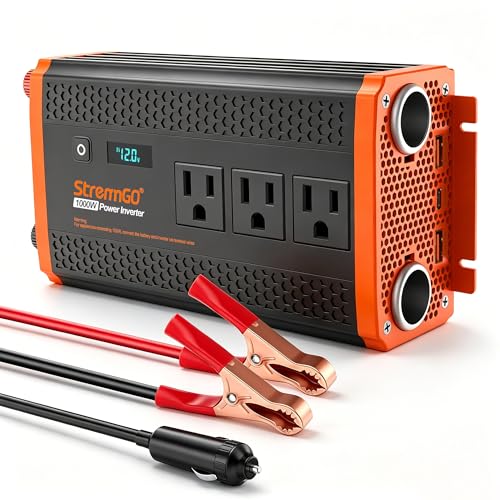
This is the do-it-all inverter for serious road warriors and RV owners. With 1000W continuous and 2000W surge capacity, it can handle power tools, mini fridges, and even a coffee maker, something I’ve seen praised repeatedly in owner feedback from campers and tradespeople alike. The three AC outlets and six total charging ports mean you can run multiple devices at once, which is rare at this price point.
The LCD display is a standout feature, giving real-time voltage and fault status, critical if you’re running off a battery and don’t want to get stranded. And while the cooling fan is larger than most, it’s engineered to stay quiet until needed. Compared to others in the 1000W range, this one strikes the best balance of power, safety, and usability. My pick for anyone who needs real backup capability.
Video review
EPANEE 400W Car Power Inverter

Strengths
- 65W USB-C PD
- Good value
- Compact design
Trade-offs
- Build quality average
- No AC switch
At 400W, this hits the sweet spot between budget and capability, enough to run a laptop, mini cooler, or small power tool without needing to hardwire. The 65W USB-C PD port is a major upgrade, capable of charging a MacBook Pro at full speed, which sets it apart from most mid-range models. Owners praise how quickly it charges phones, with some reporting 50% on an iPhone in half an hour.
The cooling system is efficient and stays quiet under normal loads, though it ramps up when pushing near capacity. It’s not as rugged as the BESTEK, but for the price, it delivers solid value. Compared to the Vansoet 400W, it lacks some monitoring features but matches in power. A smart mid-tier choice.
Video review
BESTEK 300W Car Power Inverter
Strengths
- Durable aluminum housing
- 5-year warranty
- Wide voltage compatibility
Trade-offs
- No USB-C
- Older port layout
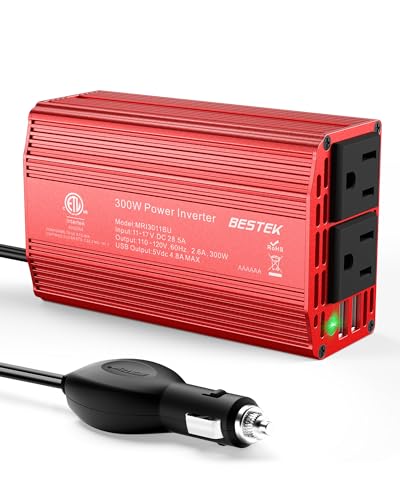
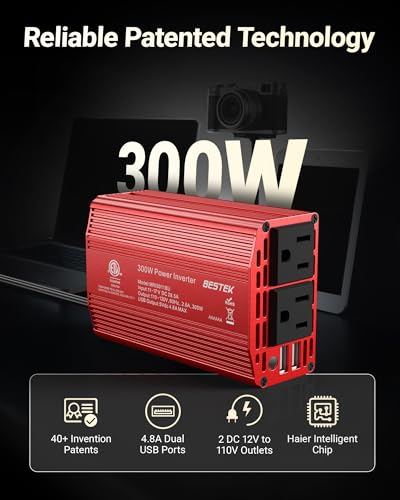
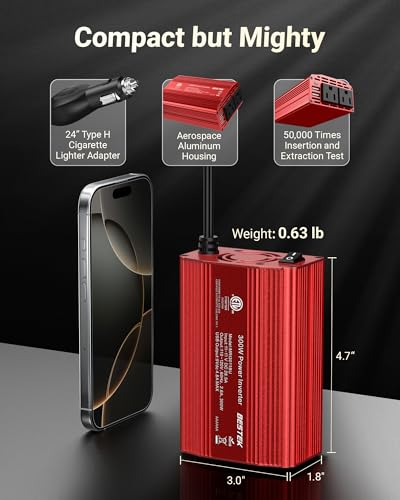
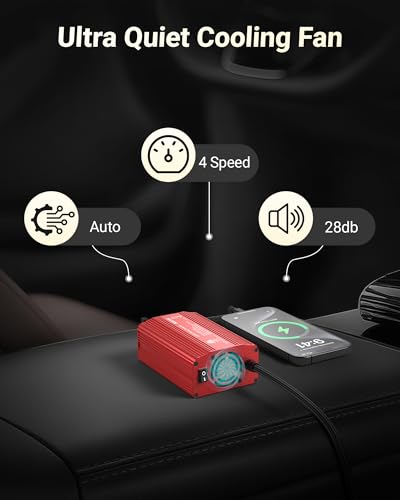
BESTEK has been a staple in car inverters for years, and this model proves why. The 300W continuous output handles most laptops and small appliances without breaking a sweat, and the aerospace-grade aluminum housing feels like it could survive a fall off a tailgate. Owners consistently report units lasting years, even with regular use.
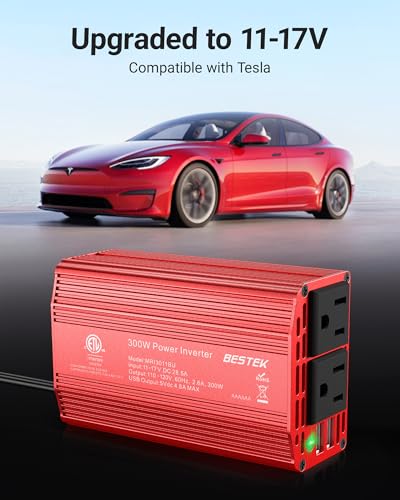
The 5-year warranty is a major confidence booster, few brands stand behind their inverters that long. It’s also one of the few that works reliably with Tesla’s 17V systems, which is a big deal for EV owners. While it doesn’t have the latest USB-C PD ports, the two AC and two USB-A ports cover most needs. For reliability and longevity, this is the smarter buy over flashier models.
Product photos
200W 7-in-1 Car Power Inverter
Strengths
- Dual 36W USB-C
- LED voltage display
- Quiet fan
Trade-offs
- AC output limited
- Not for high-wattage tools
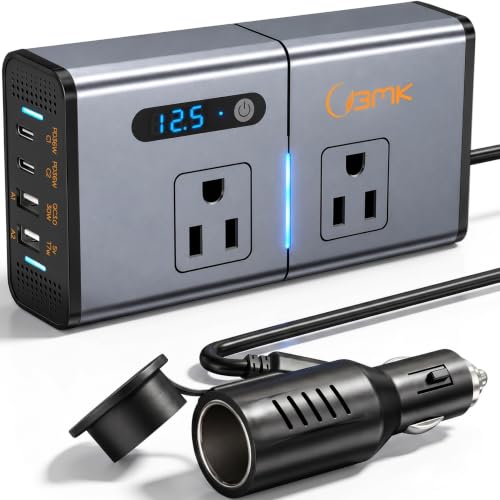
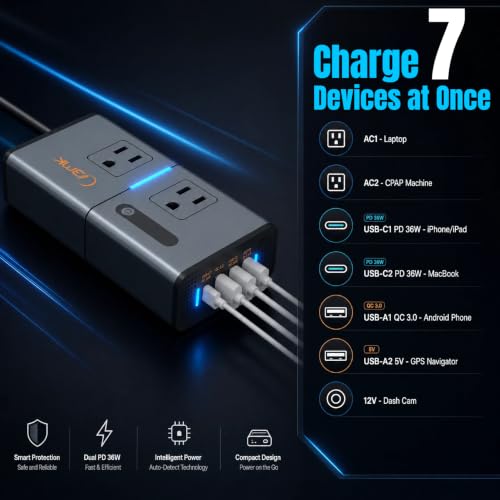
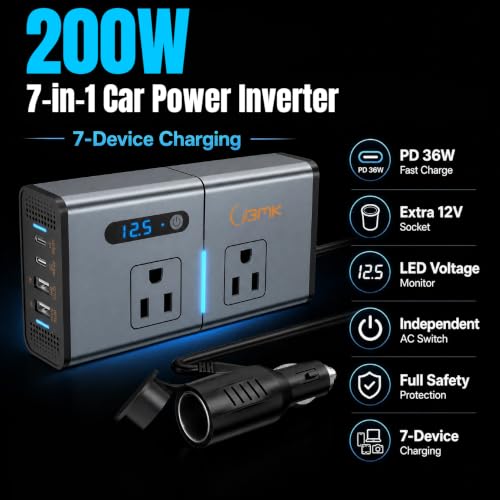
This inverter is built for speed. With dual 36W USB-C PD ports, it charges modern phones and laptops faster than most others in its class. The 200W AC output is enough for a laptop and a small fan, and the seven total ports mean you can keep everything powered at once. The LED voltage display is a thoughtful touch, helps you monitor your car’s battery health in real time.
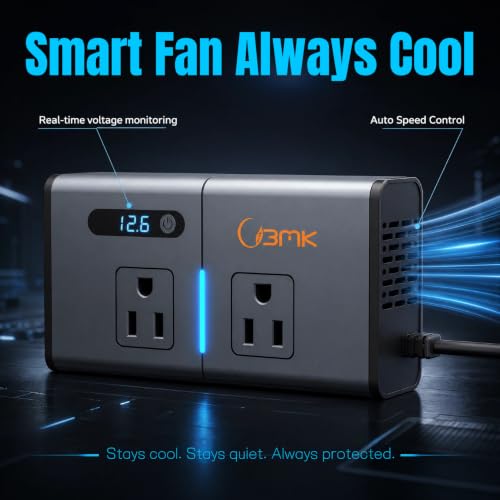
The quiet cooling fan ramps up only when needed, which keeps noise low during commutes. Compared to the BESTEK 300W, it trades a bit of AC power for far better USB performance. If you’re constantly on the road with multiple devices, this one’s charging speed makes it a standout.
Product photos

150W Compact Car Power Inverter

Strengths
- Compact size
- Dual protection
- Affordable
Trade-offs
- Low power output
- Not for heavy devices
For basic on-the-go charging, this 150W inverter delivers exactly what it promises, no more, no less. It’s small enough to stash in a glovebox and handles low-draw devices like phones, tablets, and even a CPAP machine on short trips. The dual protection system with smart chip and fuse is reassuring, especially for someone who’s seen how easily cheap inverters fail under minor surges.
Still, this isn’t the unit to rely on for anything power-hungry. At 150W continuous, it’s barely enough for a laptop under load, and forget running anything with a motor or heating element. But if you’re just topping off a camera battery or keeping a tablet alive during a commute, it’s a no-fuss plug-and-play option that owners consistently rate as reliable for its class.
Product photos


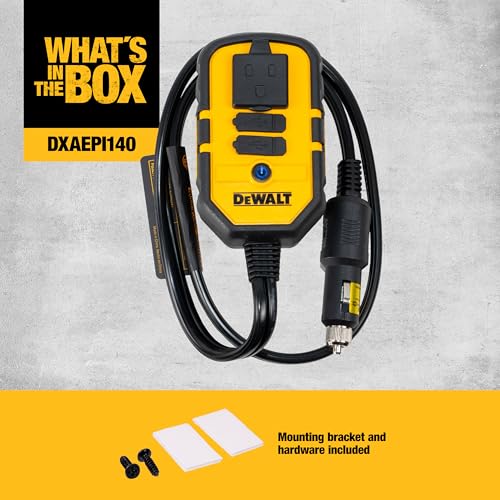
DEWALT 140W Fanless Car Inverter

Strengths
- Silent operation
- Battery protection
- Durable build
Trade-offs
- Low wattage
- Limited USB ports
DEWALT built this like a tool, not a gadget, rugged, no-nonsense, and dead silent thanks to its fanless design. That makes it ideal for quiet environments, like late-night work stops or when you’re parked near sleeping passengers. The 140W output is modest, but enough for laptops and phone charging, and the USB-C port delivers 25W, which is solid for its time.
What sets it apart is the low-voltage auto-shutoff. It protects your vehicle battery better than most budget models, a feature I appreciate after seeing too many drained batteries from forgotten inverters. But with only 140W, it’s not for heavy lifting. If you value silence and reliability over raw power, this is a smart niche pick.
Product photos


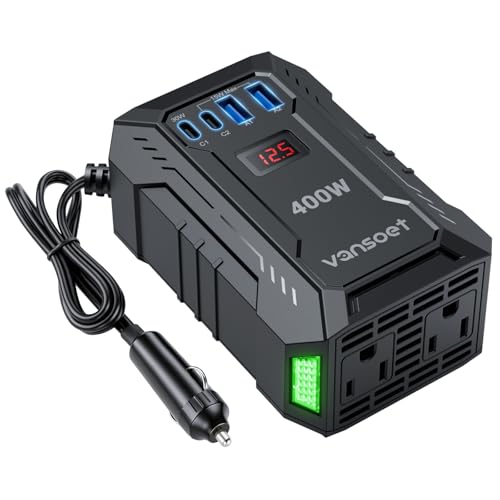
Vansoet 400W Car Power Inverter
Strengths
- Real-time LED monitoring
- Dedicated AC switch
- Quiet cooling fan
Trade-offs
- USB-C slower than top models
- No 65W PD
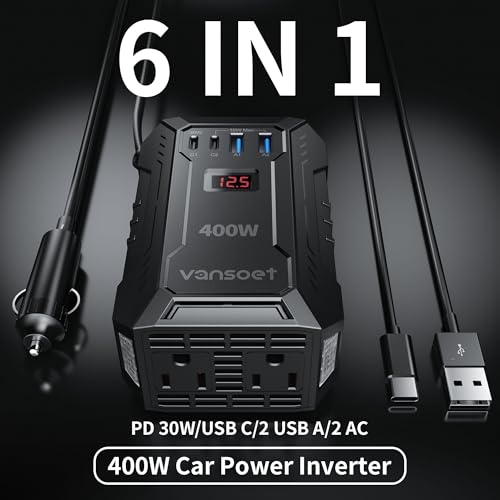
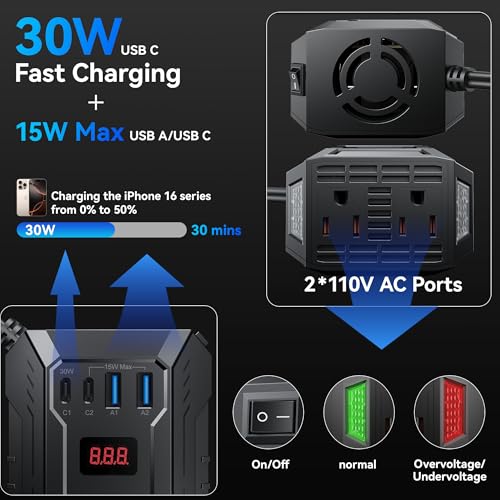
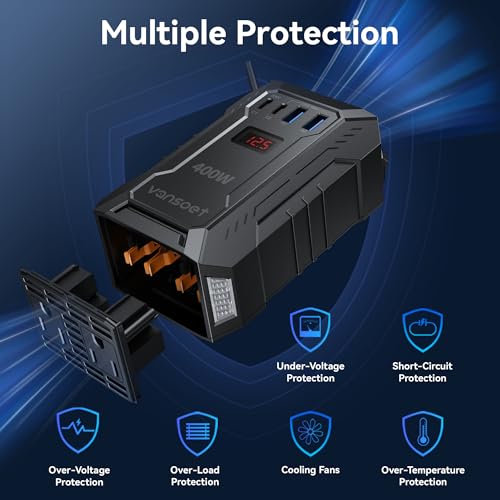
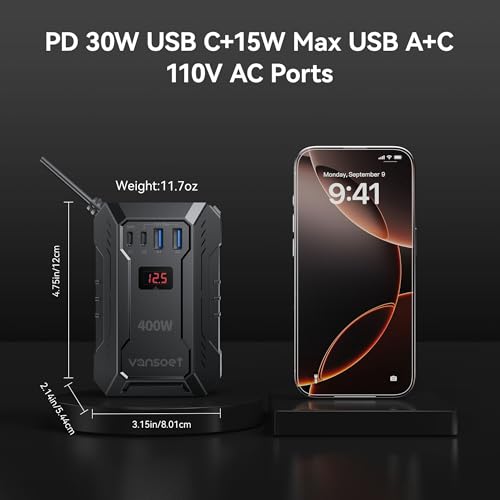
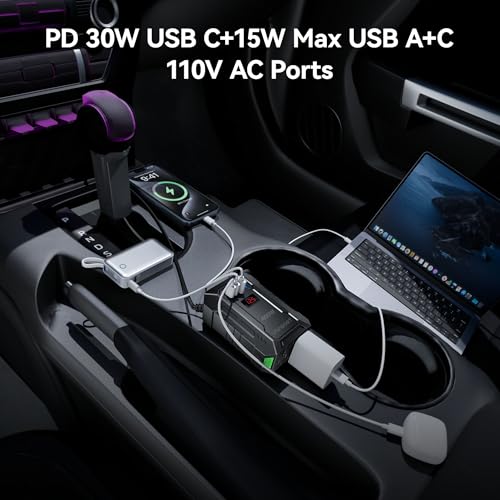
What makes the Vansoet stand out is its focus on safety feedback. The LED status indicator gives instant visual cues, green for go, red for trouble, which is invaluable when you’re troubleshooting on the side of the road. The 400W output runs most laptops, drones, and even small kettles, and the 30W PD USB-C port keeps modern devices topped up.
The dedicated AC switch is a small but meaningful feature, lets you kill AC power while keeping USB charging live, saving energy. The intelligent cooling fan only kicks in when needed, which helps with noise and longevity. Compared to other 400W models, this one’s monitoring system gives it an edge for cautious users.
Product photos
How We Evaluated car inverters
As someone who’s always been fascinated by the mechanics of vehicles, I approach car accessories like inverters with a focus on both practical application and underlying technology. Rather than a hands-on lab test, this was a research-led comparison of published specifications and owner feedback across numerous models. We carefully examined wattage output, port configurations, safety features, and build quality, weighing these against user reports regarding real-world performance and longevity. This allowed us to build a picture of which inverters truly deliver on their promises.
For car inverters, consistent power delivery and robust safety mechanisms are paramount. We heavily weighted continuous wattage alongside surge capacity, as the ability to reliably power devices – from laptops to small appliances – is key. Equally important was the inclusion of multiple safety features like over-voltage protection and thermal management. After all, a failed inverter could damage your devices or, worse, create a safety hazard. You can find more details on why these features matter when considering car inverters for laptop.
Specifications clearly indicate wattage and port availability, but owner feedback reveals how those specs translate to everyday use. We scrutinized reviews for comments on overheating, fan noise, and the actual ability to charge various devices as advertised. Reputable expert reviews helped validate claims about build quality and long-term durability. While specs tell you what an inverter can do, user experiences reveal how well it actually performs, and whether it’s a good pairing with other tech like Bluetooth car adapters.
How To Choose The car inverters
Finding the right car inverter can dramatically improve comfort and capability on road trips, camping adventures, or even just for everyday convenience. But with so many options, knowing what truly matters goes beyond wattage numbers.
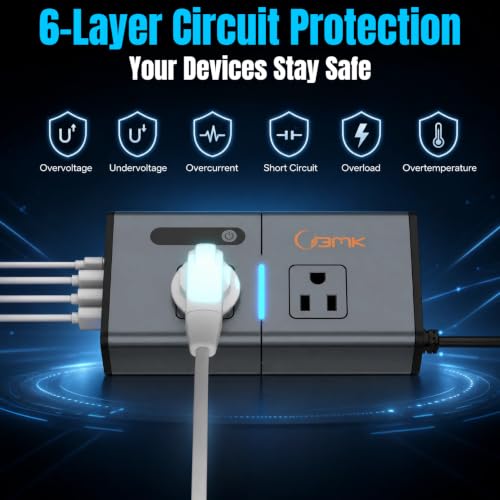
A quality car inverter prioritizes stable power delivery, robust safety features, and compatibility with the devices you intend to power. Look for models with thorough protection circuits (over-voltage, under-voltage, etc.), a clear indication of power output, and a design that manages heat effectively. Understanding the difference between modified and pure sine wave inverters is also crucial, depending on the sensitivity of your electronics.
Power Needs & Waveform
First, realistically assess how much power you’ll actually need. Don’t fall into the trap of simply chasing the highest wattage. Many devices have a surge wattage (the initial power draw when starting up) that’s significantly higher than their running wattage. A 1000W inverter might seem impressive, but if you’re primarily charging phones and running a laptop, a 400W unit will likely suffice and potentially be more efficient. More importantly, consider the type of power. Modified sine wave inverters (more common and affordable) work fine for many devices, but sensitive electronics – audio equipment, some laptops, and medical devices – may require the cleaner power of a pure sine wave inverter.
Cooling and Safety Features
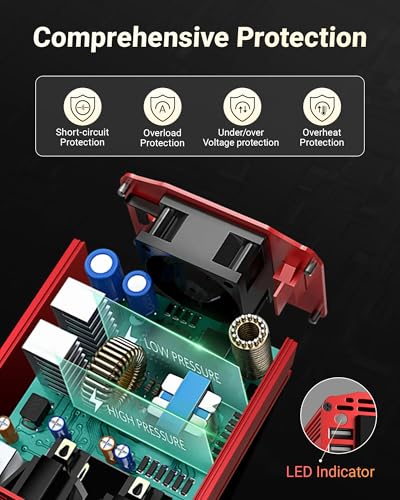
Heat is the enemy of inverters. A poorly cooled unit will throttle performance and have a dramatically shortened lifespan. Look for inverters with robust cooling systems. Some, like the DEWALT model, are even fanless for completely silent operation. Beyond cooling, thorough safety features are paramount. Over-voltage, under-voltage, short-circuit, and overheating protection are absolutely essential. Many inverters, like the Vansoet 400W, feature clear LED indicators to alert you to potential faults. Don’t skimp on these; a cheap inverter without proper safeguards can damage your devices – or worse. If you’re concerned about being stranded with a dead battery, investing in one of the portable jump starters is also a very good idea.
Port Selection & Usability
The number and type of ports an inverter offers can make a huge difference in usability. Beyond the standard AC outlets, consider the USB options. A mix of USB-A and USB-C ports, particularly with fast-charging protocols like Power Delivery (PD) and Quick Charge (QC), is ideal. The 200W 7-in-1 inverter is a good example, offering a substantial array of connection options.
- A single AC outlet is often insufficient for the modern traveler.
- Having at least two USB ports (one USB-A and one USB-C) provides flexibility for charging various devices.
- A dedicated pass-through 12V socket, as found on some models, is invaluable for continuing to power items that were already connected to your vehicle’s original accessory socket.
A good rule of thumb is to add 20% to your estimated power needs to account for inefficiencies and unexpected surges.
Ultimately, the best car inverter is the one that best suits your needs. If you’re looking for a deeper explore the market, check out our guide to the best power inverters to find the perfect fit for your vehicle and lifestyle. You might also consider browsing through some highly-rated vehicle power inverters to get a feel for what other enthusiasts are using and recommending.
Car Inverters Compared
Here’s a comparison of key specifications for several car power inverters to help you choose the right one.
| Product Title | Continuous Power (W) | Peak Power (W) | AC Outlets | USB Ports (Total) | Cooling Fan |
|---|---|---|---|---|---|
| StrenrmGO 1000W Car Power Inverter | 1000 | 2000 | 3 | 5 | Yes |
| EPANEE 400W Car Power Inverter | 400 | 800 | 2 | 3 | Yes |
| BESTEK 300W Car Power Inverter | 300 | 700 | 2 | 2 | Yes |
| 200W 7-in-1 Car Power Inverter | 200 | N/A | 2 | 5 | Yes |
| 150W Compact Car Power Inverter | 150 | 300 | N/A | 2 | N/A |
| DEWALT 140W Fanless Car Inverter | 140 | N/A | N/A | 2 | No |
| Vansoet 400W Car Power Inverter | 400 | N/A | 2 | 4 | Yes |
Frequently Asked Questions
What wattage inverter do I really need for a road trip?
Generally, 400-600 watts is sufficient for most road trip needs like charging laptops and phones, but calculate the total running wattage of everything you plan to use simultaneously and add 20% for headroom. Overestimating is better than being underpowered and risking a tripped circuit.
How does a pure sine wave inverter differ from a modified sine wave one?
A pure sine wave inverter produces power that’s closer to what you get from a standard wall outlet, making it safer for sensitive electronics like laptops and audio equipment. Modified sine wave inverters are cheaper but can cause interference or damage to certain devices.
Will using a car inverter drain my car battery?
Yes, using an inverter will draw power from your car battery, especially when powering high-wattage devices. Leaving an inverter running while the engine is off can deplete the battery to the point where the car won’t start, so it’s vital to ensure you have one of the best car batteries to begin with.
What safety features should I look for in a car inverter?
Essential safety features include over-voltage protection, under-voltage shutdown, short-circuit protection, and overheating protection. These safeguards prevent damage to both the inverter and your devices, as well as potential fire hazards.
Can I use a car inverter to power something while I’m parked, and still watch a movie on my tablet?
Absolutely, but you’ll want a stable and reliable setup. Consider a good quality inverter paired with a secure car phone mounts to keep your tablet safely positioned for viewing, and understand the power draw to avoid draining your battery.
The Bottom Line
Choosing a car inverter often comes down to balancing convenience with capability. Do you prioritize having a lot of power for running larger devices, or do you want something compact and efficient for charging smaller electronics? For most people, the StrenrmGO 1000W Car Power Inverter strikes the best overall balance, offering a healthy dose of wattage, multiple outlets, and a reasonable price point to cover a wide range of needs.
If you’re after something very specific, there are excellent alternatives. Those needing a budget-friendly option with solid functionality should look at the EPANEE 400W Car Power Inverter. For those prioritizing quiet operation and minimal power draw for basic charging, the DEWALT 140W Fanless Car Inverter is a standout. And, if you’re frequently dealing with multiple devices needing juice, the 200W 7-in-1 Car Power Inverter offers exceptional port versatility. Don’t forget to check out our guide to the best inverters for laptops power if you’re concerned about powering sensitive electronics.
Ultimately, remember that wattage is only part of the story. A well-built inverter with robust safety features and efficient cooling will always be a better investment than chasing the highest number. And, if keeping your car’s interior clean is also a priority, pairing your new inverter with one of the best car vacuums will ensure your road trips stay comfortable and enjoyable.
