
Directional Tires: Are They Better? Key Wear Rule Explained
This post contains affiliate links. As an Amazon Associate, we earn from qualifying purchases.
Directional tires are better for specific tasks where their tread design excels, water evacuation and forward traction in snow or mud, but only when mounted correctly and while relatively new. Once a directional tire wears past 50% of its original tread depth, the directional performance benefit disappears, and mounting direction no longer matters for wear or noise.
That 50% figure is the pivot. It comes from Michelin’s own technical bulletins for truck tires, and it reframes the whole conversation from “are they better” to “are they better for you, right now, on your specific axles.” A brand-new directional tire mounted backwards will ruin itself with irregular wear and noise. That same tire, half-worn and flipped because a shop made a mistake, runs fine. The answer hinges on the condition of the rubber you’re looking at, not an abstract category.
What follows is a breakdown of the physics behind the tread, the manufacturer data on the consequences of getting it wrong, and the specific scenarios, down to axle position and weather, where the directional design pays off. By the end, you’ll be able to read a tire’s sidewall, know whether the arrow matters, and decide if the design fits your driving.
Key Takeaways
- Directional treads are optimized for forward water and slush evacuation, offering superior wet and light-snow traction over non-directional designs in the first half of their tread life.
- Mount a directional tire backwards when new, and Michelin states you’ll get premature irregular wear, excessive noise, and significantly reduced tread life. The tire literally fights itself.
- The 50% wear threshold is real: Michelin’s Technical Bulletin notes that once a directional tire is worn past 50%, “there is no negative effect of running them in a direction opposite to the indicated direction of rotation.”
- They are not universally “better.” On rear trailer axles or in dedicated winter use, a non-directional, aggressive block tread might offer more versatile performance.
- The choice isn’t just about the tire. It’s about your axle (steer vs. Drive), your climate, and your willingness to manage tire rotations and spare tire logistics.
What Makes a Tire “Directional”?
Look at the sidewall. If you see an arrow or a triangle pointing in one direction, usually with the word “ROTATION,” you have a directional tire. The tread pattern isn’t symmetrical left-to-right. It looks like a repeating series of chevrons or V-shapes, all pointing the same way.
The arrow molded into the shoulder indicates the intended direction of rotation. For maximum tire performance, directional tires must be mounted correctly to ensure that directionality is respected on the vehicle. . Michelin Technical Bulletin on Proper Use of Directional Tires
That V-pattern is a pump. As the tire rolls forward, the tread scoops water, slush, or light snow from the center and channels it outward and backward, away from the contact patch. A non-directional tread might use independent blocks or a zigzag pattern that works equally well rolling forwards or backwards. The directional design is a specialist. It’s brilliant at its one job but inflexible.
Why-layer: The V-shaped grooves act as tiny, angled canals. When the tire rotates correctly, centrifugal force and the forward motion work with the groove angle to eject material. Reverse the rotation, and you’re trying to force material into the closed end of the V, packing the tread with debris and reducing grip. It’s the difference between a shovel moving forward to push snow and trying to use it backwards to pull snow.
How Does the 50% Wear Rule Work?
This is the non-commodity core of the discussion, pulled straight from OEM documentation. The directional property isn’t a permanent feature of the tire; it’s a function of tread depth and groove shape.
Michelin’s Technical Bulletin and Truck Tire Service Manual state the consequences clearly. Running a directional tire opposite its arrow from new to 50% worn causes “the premature onset of irregular wear, excessive noise levels and significantly reduced tread life.” The BFGoodrich Truck Tires Data Book repeats this verbatim. This isn’t scare talk. It’s the documented outcome of the tread fighting its own design.
But then comes the clause most people never read: “Once directional tires are worn greater than 50%, there is no negative effect of running them in a direction opposite to the indicated direction of rotation.”
Why-layer: The directional pumping action relies on the full depth and sharp, defined edges of the V-grooves. As the tread wears down past the halfway point, those grooves become shallower and their sidewalls less vertical. The pumping efficiency drops off. By 50% wear, the mechanical difference between forward and reverse rotation becomes negligible for wear and noise purposes. The tire has, in effect, become non-directional through use.
| Tire Condition | Mounted Correctly | Mounted Backwards | Recommended Action |
|---|---|---|---|
| New to 25% Worn | Optimal water evacuation, even wear, designed noise level. | Severe irregular shoulder wear, loud humming, rapid tread loss. | Remount immediately. Cost now beats replacing tires later. |
| 26% to 50% Worn | Good performance, some groove shallowing. | Accelerated wear, noticeable noise, reduced grip. | Assess cost to remount vs. Running to replacement. |
| Greater than 50% Worn | Full designed life achieved. | No significant extra wear or noise penalty. | Leave it. Flipping it now is a waste of labor. |
Where this goes sideways: Discovering a mismount at 40% wear. By then, the tire has already developed localized shoulder wear. Michelin notes that this uneven pattern will eventually spread around the shoulder, potentially causing a ride vibration. You can’t correct the past wear by remounting it correctly now.
When Are Directional Tires Actually “Better”?
They are better when you need what they are engineered to provide: predictable, efficient clearing of water and light snow from the tire’s footprint. This makes them a strong candidate for two main applications.
1. Wet & Winter Performance Driving
The directional tread is a staple of high-performance “all-season” and some dedicated winter tires. Models like the BFGoodrich Route Control D (a commercial truck tire) tout their directional design for “optimal cleaning, water evacuation, and better ability to dig for improved traction in all weather conditions.” For a sporty coupe or a family crossover in a rainy or slushy climate, a directional tire can provide a tangible safety margin during heavy rain or early-season snowfalls. They often carry the M+S (Mud and Snow) designation and the more stringent Three-Peak Mountain Snowflake (3PMSF) symbol for severe snow service.
2. Highway-Speed Wet Safety
The constant, high-speed evacuation of water reduces the risk of hydroplaning. If you do most of your driving on interstates and deal with seasonal thunderstorms, the directional design’s strength aligns with your needs. It’s a preventative technology.
They are not better for: * Rear trailer axles: These axles see minimal steering input and often scrub laterally. A non-directional, durable block tread is often a better fit. * Off-road / Severe Mud: While the V-shape can dig forward, deep, self-cleaning lugs on a non-directional mud-terrain tire are generally more effective. * Situations requiring tire rotation side-to-side: You can only rotate directional tires front-to-back on the same side of the vehicle. This can complicate wear-matching programs for fleets or individuals who don’t want to dismount tires.
Directional vs. Non-Directional: A Head-to-Head
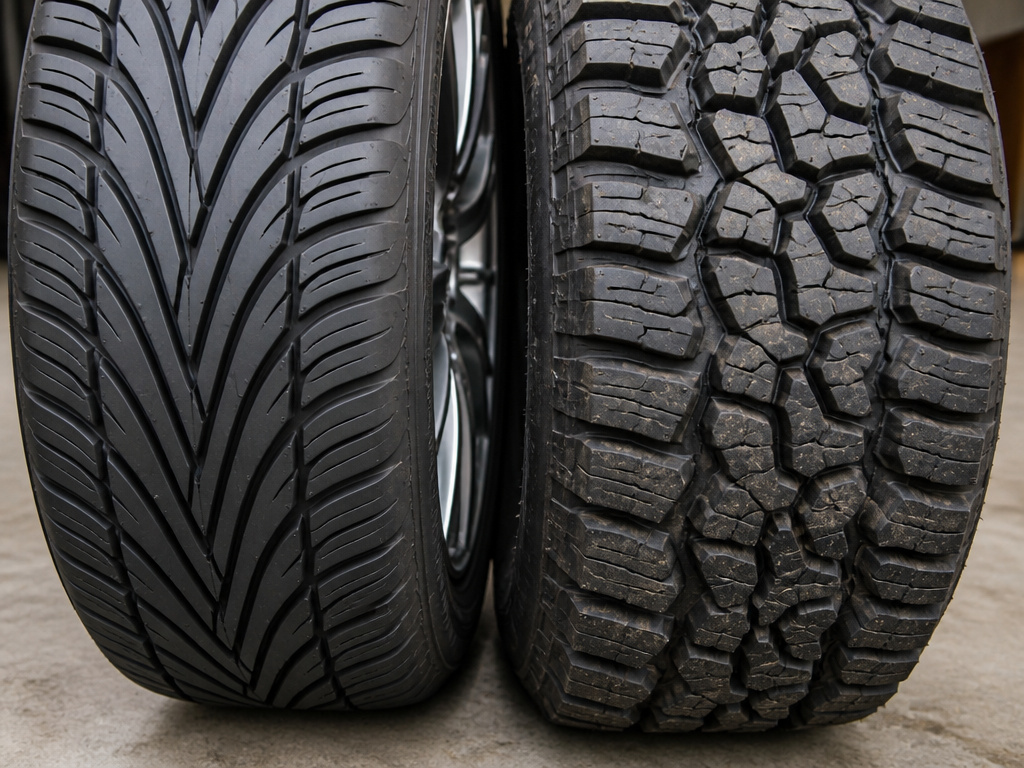 This is the “which one wins” section. The answer depends entirely on the vehicle’s role.
Consider a highway-driven pickup truck used for commuting and occasional towing. Let’s pit a directional highway tire against a non-directional all-terrain tire.
| Performance Aspect | Directional Highway Tire | Non-Directional All-Terrain Tire | Winner for the Use Case |
|---|---|---|---|
| High-Speed Wet Grip | Excellent. Channels water efficiently. | Good. Relies on multi-directional grooves. | Directional for pure wet safety. |
| Light Snow / Slush | Very Good. The V-pattern digs and clears. | Good. Siping provides edges. | Directional for plowed roads. |
| Deep Snow / Traction | Fair. Can pack with heavy snow. | Very Good. Large voids and biting edges. | All-Terrain for unplowed paths. |
| Tire Noise | Low hum when new, correct. | Louser, more aggressive roar. | Directional for cabin comfort. |
| Treadwear Evenness | Excellent if rotated front-to-back only. | Excellent with full 5-tire rotation. | Tie (different rotation patterns). |
| Flexibility (Spare, Axle Swaps) | Poor. Restricted by rotation direction. | Excellent. Can go anywhere. | All-Terrain for versatility. |
For that commuter/tow truck, if winter means plowed roads and wet highways, the directional tire is the better tool. If winter means navigating a snowy, unplowed driveway, the all-terrain’s versatility wins. This is why understanding all-terrain tire performance on pavement and its capabilities in winter is crucial for a complete picture.
The Practical Drawbacks & Logistical Headaches
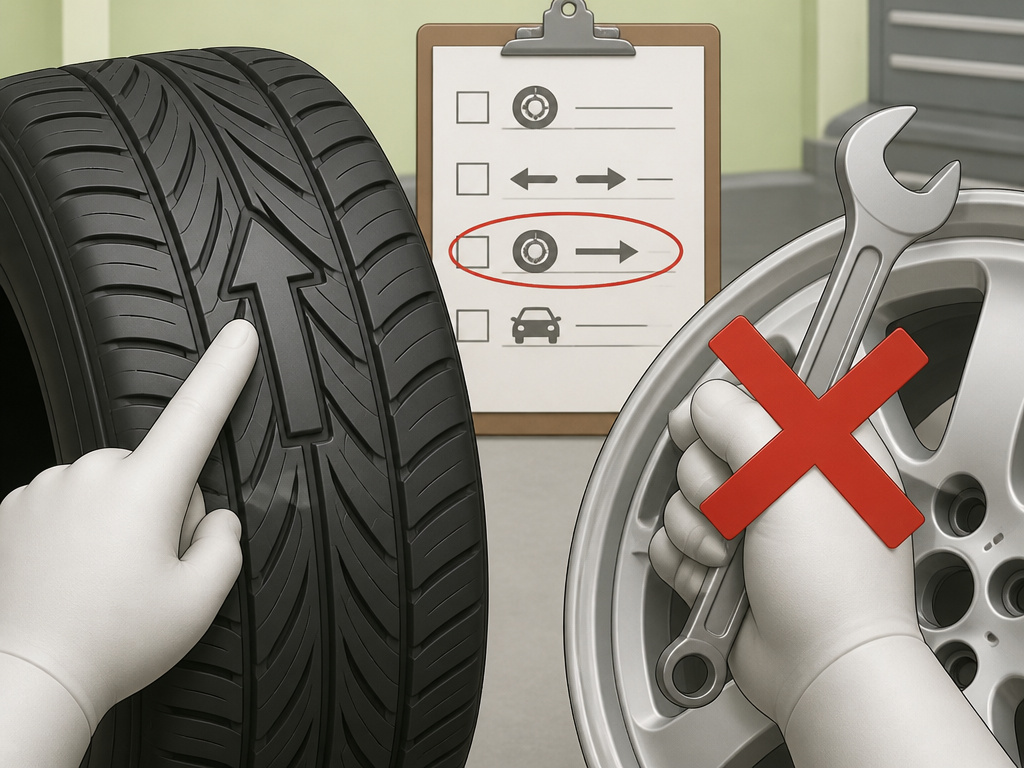 The performance benefit comes with real-world costs that aren’t on the spec sheet.
Rotation Restrictions: You cannot cross-rotate directional tires from left to right. Your rotation pattern is locked: front-left to rear-left, front-right to rear-right. This limits your ability to even out wear from camber or toe settings. It complicates life for fleet managers and DIY owners alike.
Spare Tire Nightmares: A full-size directional spare must be designated for either the left or right side of the vehicle. If you get a flat on the opposite side, you cannot legally mount it unless you plan to dismount and remount the tire on the rim, a roadside impossibility. Most people ignore this, creating a safety compromise. A non-directional spare has no such issue.
Increased Replacement Cost: Because you can’t simply swap tires side-to-side, you often end up replacing tires in pairs (both fronts or both rears) even if only one is worn, to maintain matching tread patterns and directional rotation. This can double your cost compared to replacing a single non-directional tire.
The Remounting Rule: If you need to remount a directional tire for any reason (like after a repair), the technician must note the wheel’s position and ensure it goes back on rotating the correct way. In a busy shop, this is a frequent source of error, leading to the accelerated wear we detailed earlier.
Frequently Asked Questions
Can you put directional tires on any axle?
You can, but you shouldn’t blindly do so. They are most effective on drive and steer axles where forward traction and water evacuation are critical. On free-rolling trailer axles, their benefits are minimal, and their rotation restrictions become a pure liability. Always check the tire manufacturer’s approved axle positions listed in the data book.
What happens if you mount a directional tire backwards?
For a new tire, you commit to the consequences outlined by Michelin: premature and irregular shoulder wear, a loud humming or howling noise that increases with speed, and a dramatically shortened tread life. You are forcing the tread to work against its fundamental design. If the tire is already more than 50% worn, the effects are far less severe, you may notice a slight noise change, but accelerated wear is unlikely.
Are directional tires better in snow?
They are better in certain kinds of snow. For packed snow, slush, and wet winter roads, their forward-scooping action is excellent. For deep, unconsolidated snow, an aggressive, non-directional winter tire with deep, flexible sipes and large voids will usually provide better bite and flotation. The directional design is a component of superior winter performance, not the sole factor.
How can I tell if my tires are directional?
Look at the sidewall for a rotation arrow. Look at the tread. If the pattern looks like a series of identical V-shapes or chevrons all pointing the same way (like a herringbone pattern), it’s directional. If the pattern looks symmetrical left-to-right or consists of independent blocks, it’s non-directional.
Do directional tires wear out faster?
Not inherently. When mounted correctly and rotated properly front-to-back, they can deliver excellent, even treadwear. However, if mounted incorrectly or subjected to alignment issues you cannot correct via cross-rotation, they can wear unevenly and faster than a non-directional tire in the same situation. The risk of mismanagement is higher.
The Bottom Line
So, are directional tires better? They are better tools for a specific job: moving water and light snow away from the tread at highway speeds. For a driver who faces rainy commutes or slushy winters on plowed roads, the directional design offers a measurable safety and performance edge, but only for the first half of the tire’s life, and only if mounted with fanatical attention to the arrow.
The 50% wear rule is your escape clause. It turns a mounting mistake from a crisis into a footnote. It also means that buying a used directional tire at 60% wear gives you a functionally non-directional tire. Your decision shouldn’t start with the tread pattern. It should start with your climate, your axle positions, and your tolerance for rotational logistics. Then look at the tread.
For most daily-driven cars and light trucks in variable weather, a quality directional tire is a smart, performance-oriented choice. Just watch the arrow on installation day like a hawk.
