
BF Goodrich Advantage Control Tires Review: Are They Good?
This post contains affiliate links. As an Amazon Associate, we earn from qualifying purchases.
The BFGoodrich Advantage Control tires are a competent grand-touring all-season option for drivers in mild climates who prioritize a quiet, comfortable ride and long treadwear warranties on paper. Their real-world performance is a story of two extremes: many owners report 65,000+ miles of satisfaction, while a significant minority document sidewall cracks and tread separation well before the warranty expires, particularly on passenger sedans.
That gap between the promised mileage and the documented failures is the whole story. These tires aren’t a universal recommendation. They work if your driving matches their design intent, highway miles in warm, dry regions, and if you stay on top of inflation and rotations religiously. Stray from that, and the gamble on longevity gets real.
What follows is a breakdown of the specs, the real owner gripes you won’t find in the marketing copy, and a direct comparison to see if the Advantage Control’s value proposition holds up against known alternatives. By the end, you’ll know exactly which driver profile these tires fit, and which should walk away.
Key Takeaways
- The Advantage Control offers two different treadwear warranties: 75,000 miles for H-speed-rated sizes, 65,000 miles for V/W-rated sizes. This is a critical spec to verify before purchase.
- A documented pattern of premature sidewall cracking and tread lifting exists, with failures reported between 29,000 and 55,000 miles on sedans like the Ford Fusion, despite regular maintenance.
- BFGoodrich provides a 60-day satisfaction guarantee, but it must be exercised through the original retailer and only allows a swap for another BFGoodrich tire, a major limitation if the retailer’s selection is poor.
- These are grand-touring all-season tires, not performance or severe snow tires. Expect confident dry and wet handling, but only light snow capability and elevated road noise on some surfaces.
- For the price, they compete directly with the Continental ProContact TX and Michelin CrossClimate2, which offer better wet grip and winter certification, respectively.
What Are the BFGoodrich Advantage Control Tires?
The Advantage Control is BFGoodrich’s entry in the grand-touring all-season category. Designed for sedans, coupes, crossovers, and SUVs, it uses a silica-infused tread compound and a computer-optimized footprint aimed at a quiet ride and long life. The marketing highlights a “Next Generation g-Wedge Sidewall Stabilizer” for responsive handling and comfort.
They hit the market in 2021, positioning themselves as a value-oriented option backed by BFGoodrich’s long brand history. The core selling point is the mileage warranty, up to 75,000 miles, which suggests a focus on durability for high-mileage commuters.
The BFGoodrich Advantage Control is a grand touring all-season tire made with Active Sipe Technology for wet traction and a Silica-infused tread compound. Its Computer Optimized Footprint is designed for a quiet, long-lasting life, and it carries a treadwear warranty of 75,000 miles for T and H speed-rated sizes or 65,000 miles for V and W speed-rated sizes.
Breaking Down the Performance and Specifications
You can’t judge a tire by its warranty alone. The real test is how the rubber meets the road across different conditions and how the construction holds up over time.
Dry, Wet, and Winter Grip
On dry pavement, the Advantage Control earns its keep. The steering response is crisp, and cornering stability inspires confidence for a touring tire. This is where the tire feels most at home.
Wet performance is adequate but not class-leading. The tread design evacuates water reasonably well, providing safe braking distances. BFGoodrich claims it stops eight feet shorter in the wet than leading competitors. However, some third-party analyses rate its wet grip below the category average.
Winter capability is strictly for light snow. The tire carries the standard M+S (Mud and Snow) designation but lacks the Three-Peak Mountain Snowflake (3PMSF) symbol required for certified severe snow service. On ice or packed snow, traction drops off significantly. For reliable winter safety, a dedicated set of winter tires is a far better investment.
Ride Comfort, Noise, and Tread Life Expectations
Here lies the central tension. The tire is engineered for comfort, and many owners praise a smooth, quiet ride, especially compared to older or more aggressive tires.
Where this goes sideways: Switching from a premium grand-touring tire to the Advantage Control. Some owners note a clear increase in highway hum and road noise, particularly on certain paved surfaces. If cabin quiet is a top priority, temper your expectations.
The treadwear warranty is the headline spec. A UTQG Treadwear rating of 700 suggests excellent longevity. But that number is a laboratory measurement, not a real-world promise. Your actual mileage depends entirely on alignment, inflation, driving style, and road conditions.
| Performance Area | Advantage Control Rating | Key Consideration |
|---|---|---|
| Dry Grip & Handling | Strong | Responsive steering, stable for a touring tire. |
| Wet Braking | Adequate | May lag behind class leaders like Continental. |
| Snow & Ice Traction | Light Snow Only | Lacks 3PMSF certification; not for severe winter. |
| Ride Comfort | Good | Smooth over imperfections, but firm sidewall. |
| Road Noise | Mixed | Quieter than some, noisier than premium touring rivals. |
| Treadwear Potential | High (on paper) | UTQG 700; warranty up to 75k miles. |
The Documented Problems and Owner Complaints
This is the non-commodity core of the review. Beyond the specs, a pattern of specific, repeated failures emerges from owner reports. These aren’t isolated incidents.
The most alarming issue is premature sidewall and tread failure. Consider these documented cases from the manufacturer’s own review page: * A Ford Fusion owner reported tires “trashed” at 55,000 miles (balanced/rotated every 7,500 miles) with inside/outside sidewall cracking and tread lifting. * Another Fusion owner saw sidewall splits and consistent air loss in three tires after roughly 12,000 miles. * A Toyota owner needed replacement after 29,000 miles due to cupping and a split sidewall.
The common thread? These are not overloaded trucks but passenger sedans under normal use. The failures happen well within the warranty period, but the warranty only covers defects in workmanship, not wear-and-tear or damage, a distinction that often leads to claim denials.
Other consistent gripes include: * Excessive Road Noise: A frequent complaint, especially from owners of quiet hybrids or those coming from premium OEM tires. * Flat-Spotting: Some report a thumping vibration for the first few miles each morning until the tires warm up. * 60-Day Guarantee Limitations: The guarantee is retailer-dependent. If your retailer (like some warehouse clubs) only carries this one BFGoodrich model, your “swap” option is essentially useless.
How the Advantage Control Stacks Up Against Alternatives
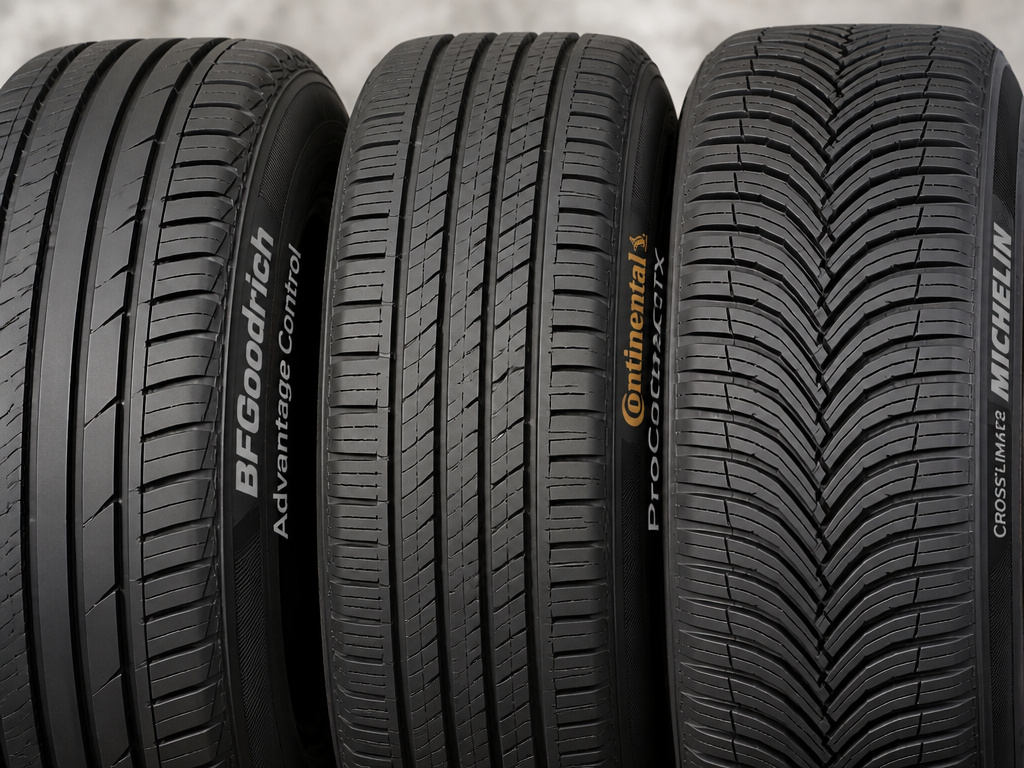 You don’t buy a tire in a vacuum. Its value is relative to what else you can get for similar money. Let’s put it head-to-head with two logical competitors.
| Tire Model | Best For | Key Advantage | Trade-Off |
|---|---|---|---|
| BFGoodrich Advantage Control | Warm-climate commuters seeking a long warranty. | Strong dry handling, high treadwear warranty number. | Spotty real-world longevity, mediocre wet grip. |
| Continental ProContact TX | Drivers who face frequent rain. | Superior wet weather braking and traction. | May not match the Advantage Control’s dry steering feel. |
| Michelin CrossClimate2 | Those who need genuine all-weather capability. | 3PMSF severe snow rating, excellent year-round grip. | Higher initial cost, potentially shorter tread life. |
The Continental ProContact TX is the direct rival. It often matches or beats the Advantage Control on comfort and noise while delivering objectively better wet grip. If you live in a region with regular rain, the Continental is the smarter default pick.
The Michelin CrossClimate2 exists in a higher tier. It costs more but delivers certified winter performance without sacrificing dry or wet competence. For a driver who wants one set of tires for everything except extreme ice, it renders the “light snow only” limitation of the Advantage Control obsolete. It’s a different philosophy in all-terrain vs snow tires thinking.
The Verdict: Who Should (and Shouldn’t) Buy Them
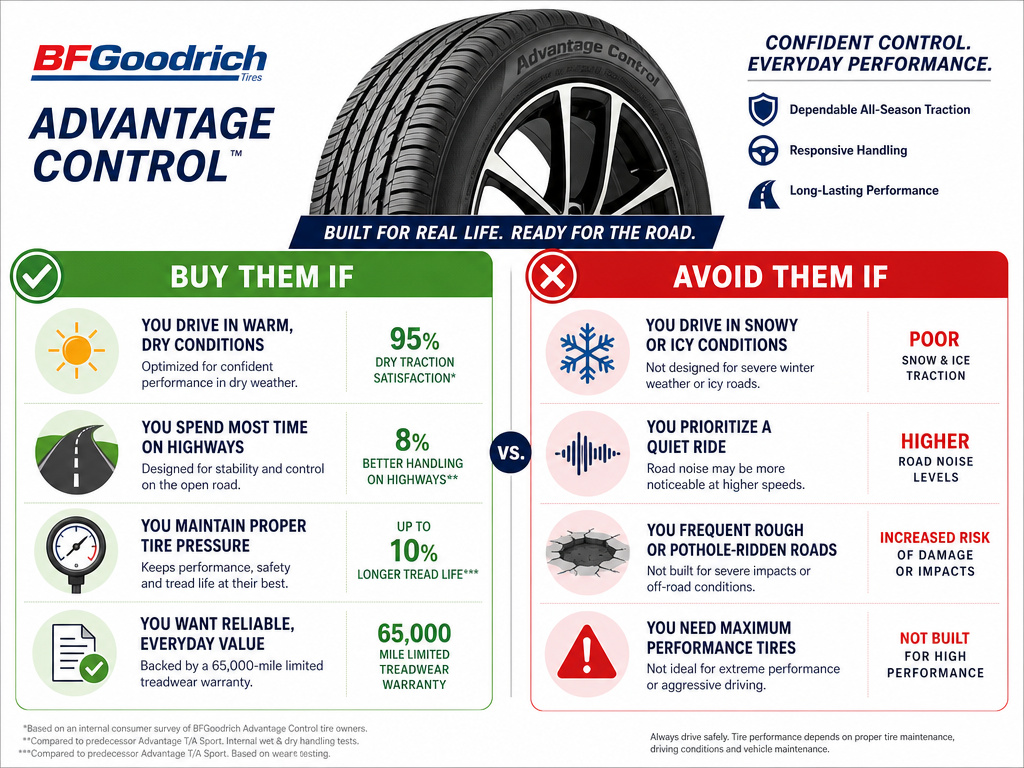 So, are BF Goodrich Advantage Control tires good? The answer is conditional.
Buy them if:
- You drive primarily in warm, dry climates.
- Your priority is a comfortable highway ride for a sedan or crossover.
- You are a meticulous owner who checks tire pressure monthly and rotates on schedule.
- You value the potential of a long warranty and are willing to navigate a claim process if needed.
Avoid them if:
- You live in a region with harsh winters or frequent heavy rain. Look at snow tires or the CrossClimate2 instead.
- Cabin quiet is non-negotiable. Test drives or owner reviews suggest noticeable noise.
- You own a heavy SUV, drive aggressively, or often encounter potholed roads. The sidewall failure reports are a real red flag.
- You want a truly worry-free ownership experience. The gap between warranty promise and documented failure requires more diligence than a tire should.
For most daily drivers facing a mix of conditions, the Continental ProContact TX is a safer, more balanced recommendation in this category. The Advantage Control isn’t bad, but its value proposition is narrow. It bets heavily on longevity that a vocal minority of owners says it doesn’t deliver. In a category filled with proven options, that’s a gamble you don’t have to take.
Frequently Asked Questions
Do BFGoodrich Advantage Control tires have a break-in period?
Yes, like most new tires, they have a release compound on the surface that can make them feel slightly slippery for the first 50-100 miles. This is normal. The more concerning “break-in” issue some owners report is morning flat-spotting, which can cause a temporary vibration.
How long should BFGoodrich Advantage Control tires last?
The warranty promises 65,000 to 75,000 miles. Real-world longevity varies wildly. Some owners achieve that, but many report being “trashed” by 55,000 miles or less due to sidewall cracking or uneven wear. Your alignment, inflation, and roads are the deciding factors.
Are BFGoodrich Advantage Control tires good in snow?
They are adequate for light, occasional snow on cleared roads. They are not true winter tires. For reliable safety in consistent snow and ice, you need a tire with the Three-Peak Mountain Snowflake symbol, which these lack. Understand the winter capabilities of all-terrain tires to see the difference.
Why are my new BFGoodrich Advantage Control tires so loud?
Some tire designs simply generate more noise on certain road surfaces. If you switched from a premium, quiet OEM tire, the difference can be pronounced. It could also indicate a need for rebalancing. Unfortunately, for some owners, it’s just a characteristic of the tire.
Can I use BFGoodrich Advantage Control tires on my SUV?
Yes, they are available in sizes for many crossovers and SUVs. However, the sidewall failure reports should give pause to owners of heavier vehicles. Ensure you choose the correct load rating and maintain proper inflation, as underinflation on a heavy vehicle accelerates sidewall stress and wear.
The Bottom Line
The BFGoodrich Advantage Control tire presents a classic value proposition: strong specs on paper for a competitive price. It delivers good dry handling and a comfortable ride for many. But the owner-reported pattern of premature sidewall failures cannot be ignored. It introduces a reliability question that overshadows its strengths.
For a driver whose conditions and diligence match its design, it’s a viable option. For everyone else, especially those in wet or winter climates, or who simply want less hassle, the smarter money is on a more consistently reviewed competitor like the Continental ProContact TX. When it comes to the only parts of your car that touch the road, proven real-world performance beats a promising warranty every time.
