
7 Best Car Body Fillers of 2026
This post contains affiliate links. As an Amazon Associate, we earn from qualifying purchases.
The best overall car body filler is Evercoat Pro-Grade Body Filler, it sands smoothly and bonds reliably across metals and fiberglass. For a budget-friendly go-to that still delivers solid results, Bondo Original Body Filler remains a staple in many garages. If you’re tackling small chips and need convenience, TouchUpDirect Scratch & Chip Putty offers quick, no-mix fixes with decent finish.
Fixing dents and rust shouldn’t mean repainting the whole panel or living with a lumpy patch. A lot of DIYers end up frustrated because their filler cracked, shrank, or wouldn’t sand flat, usually because they picked the wrong type for the job.
This guide cuts through the noise by focusing on what actually matters: adhesion, sandability, and long-term durability. I looked at specs, owner experiences, and real-world performance to find fillers that deliver reliable results based on your repair needs.
Top 7 Car Body Fillers in the Market
The Best Car Body Fillers, Reviewed
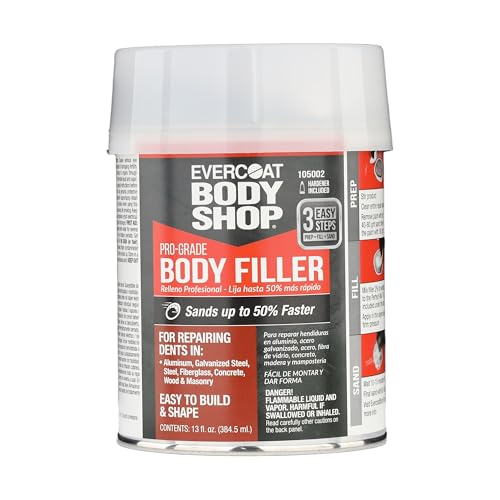
Evercoat Pro-Grade Body Filler 13 Fl Oz
Strengths
- Fast sanding
- Excellent vertical hold
- Includes mixing guide
Trade-offs
- Higher price point
- Hardener dries fast in heat
- Not for micro-repairs
This is the kind of filler I see in real body shops, not just garages. The lightweight formula sands up to 50% faster than older compounds, which is a real labor saver. The included Visual Mixing Guide is a smart touch, getting the hardener ratio right is half the battle, and this removes the guesswork. Owners praise its vertical hold, meaning it won’t sag on fenders or door edges, a common flaw in lesser fillers.
It bonds well to everything from aluminum to fiberglass, making it versatile for modern vehicles. Compared to Bondo, it’s less prone to shrinking and easier to shape. While it costs a bit more, the performance justifies it. If you’re doing more than just patching, this is the smarter buy.
Video review
Bondo Original Body Filler 1.57 lb

Strengths
- Low cost
- Easy spread
- Fast cure
Trade-offs
- Heavy formula
- Sensitive to mixing ratio
- Not for high-flex areas
Bondo’s Original is the baseline for a reason, it’s cheap, widely available, and works. The 20-minute cure time is fast, and it spreads like butter, making it a favorite for beginners. It’s non-shrinking, which is a big deal when you’re building up a dent and don’t want to reapply. Owners consistently report good results on steel and fiberglass, and it sands well with coarse paper.
But it’s not the strongest or lightest option. In cold weather, it can be slow to cure, and if you mix too little hardener, it stays soft. Still, for the price, it’s hard to beat. If you’re doing occasional repairs and don’t want to over-invest, this is the go-to.
Video review
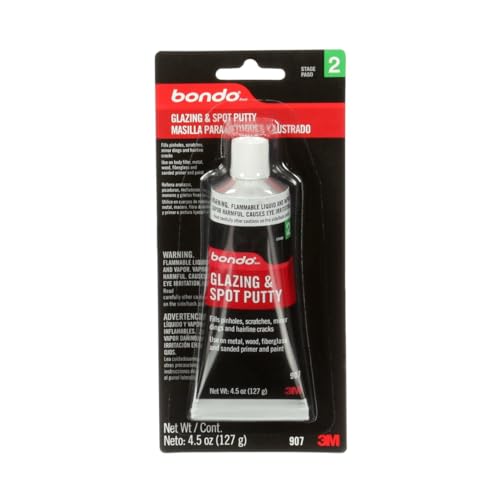
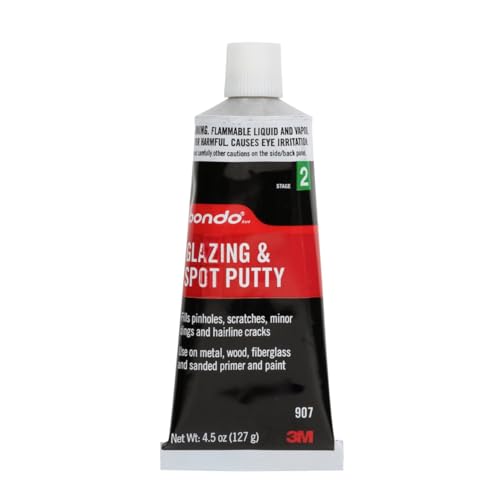
Bondo Glazing and Spot Putty 4.5 oz
Strengths
- Smooth finish
- Non-staining
- Fast drying
Trade-offs
- Not for deep fills
- Short work time
- Limited coverage
This isn’t a structural filler, it’s a finisher. Designed for pinholes, hairline cracks, and sanding scars, it’s the last step before priming. The 3-minute work time means you have to move fast, but it sands in 30 and doesn’t stain paint, which is crucial for a clean topcoat. Reviewers love it for smoothing feathered edges or filling tiny voids that regular body filler leaves behind.
It’s not meant for dents or deep damage. If you try to build with it, you’ll regret it. But as a spot putty? It’s unmatched in this lineup. I’d use this after a proper body filler job, not as a replacement.
Product photos
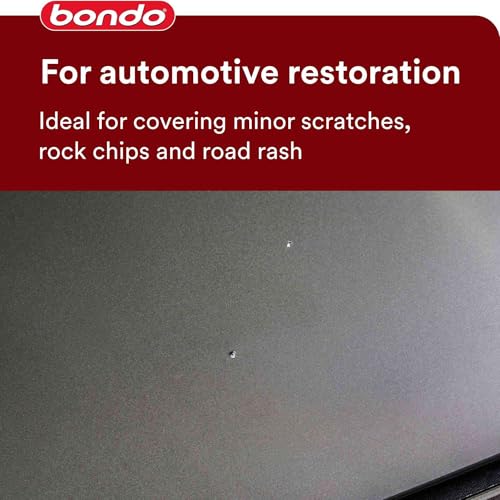
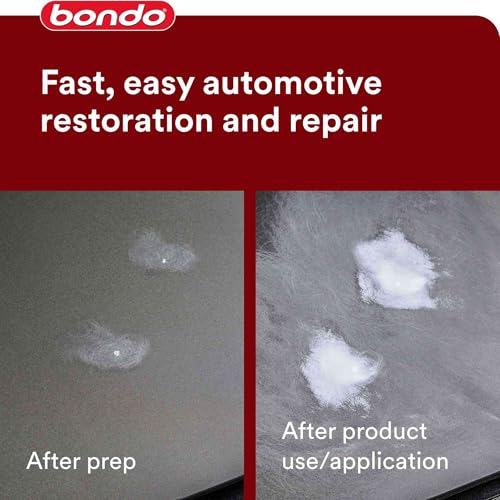
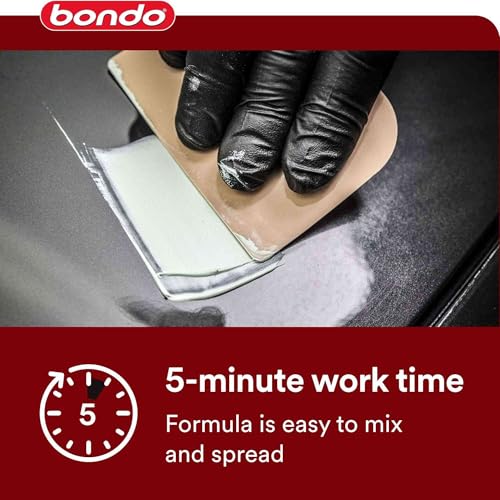
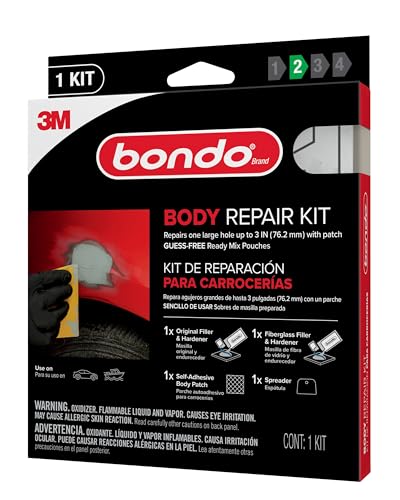
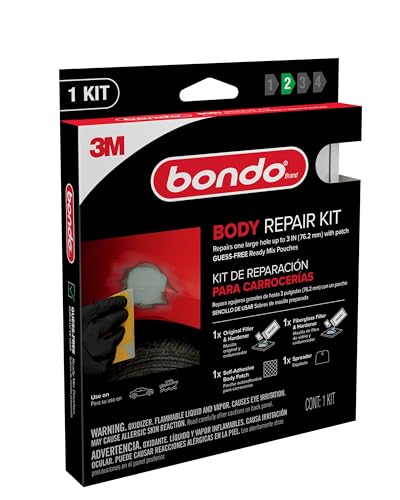
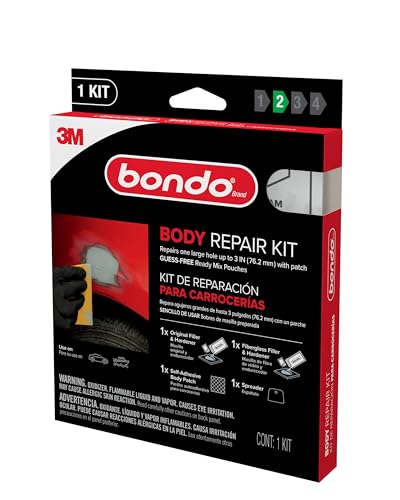
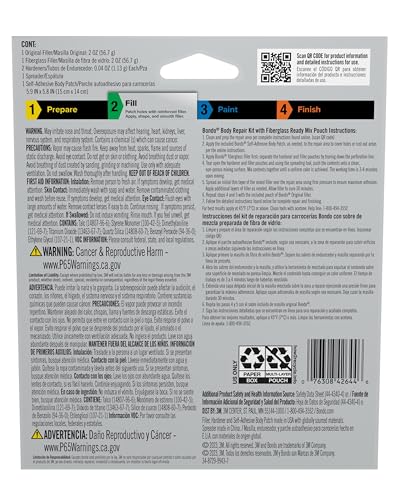
Bondo Body Repair Kit with Patch
Strengths
- Includes patch and tools
- No measuring needed
- Strong structural repair
Trade-offs
- Visible patch line
- Not for cosmetic panels
- Limited rework ability
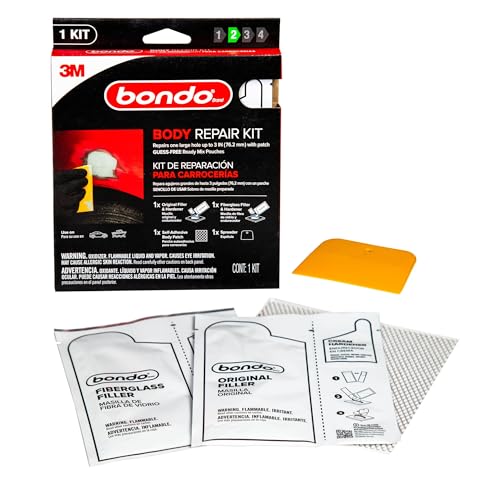
When you’ve got a hole, like from rust or impact, this kit takes the stress out of the fix. The self-adhesive patch sticks securely, and the ready-mix pouches mean no measuring. That’s a big win for beginners. The two-part system creates a permanent bond, and the fiberglass filler adds strength, especially on thin metal or fenders. Owners say it’s reliable for patches up to 3 inches, which covers most common rust spots.
It’s not subtle, it’s a patch-and-fill approach, not a seamless rebuild. But for a damaged quarter panel or fender, it’s effective. Compared to using mesh and filler from scratch, this is faster and less error-prone.
Product photos
TouchUpDirect Scratch & Chip Putty 5g
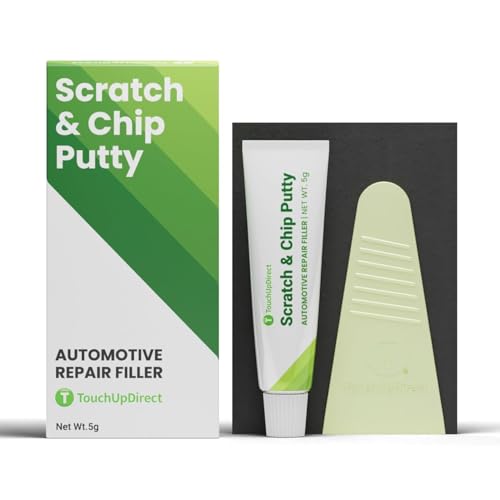
Strengths
- No mixing required
- Compact and waste-free
- Includes applicator and sandpaper
Trade-offs
- Limited to shallow damage
- Not for large dents
- Short working time
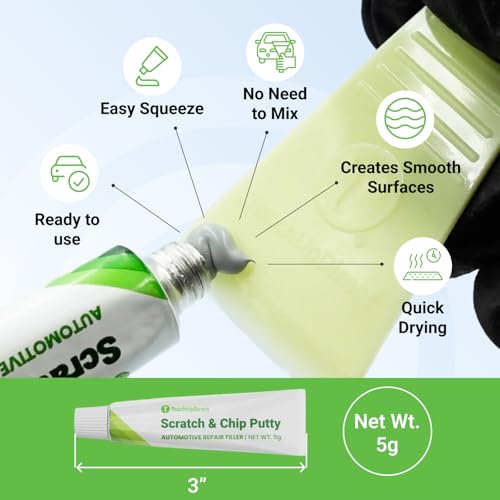
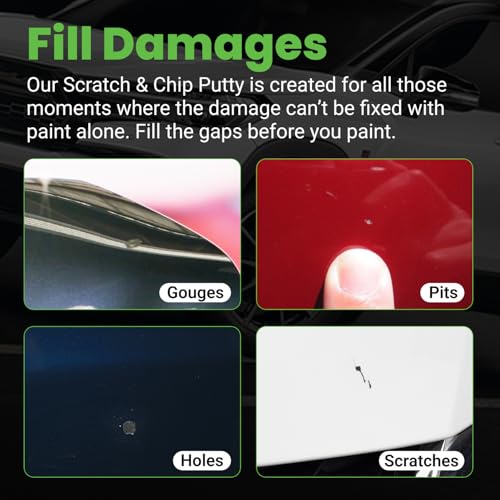
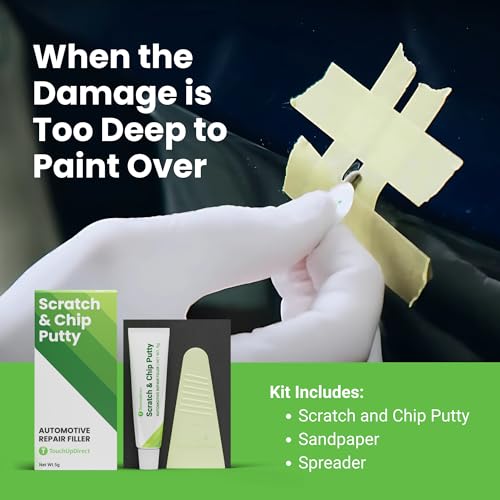
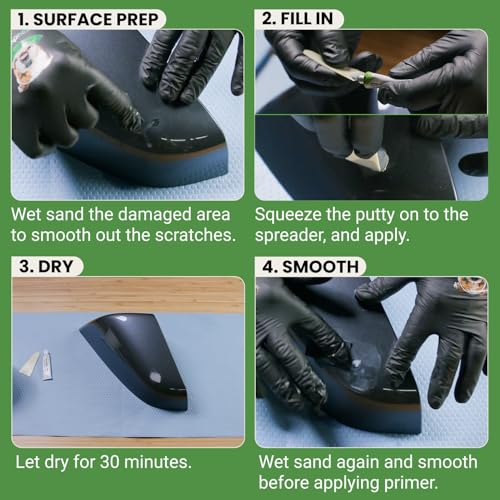
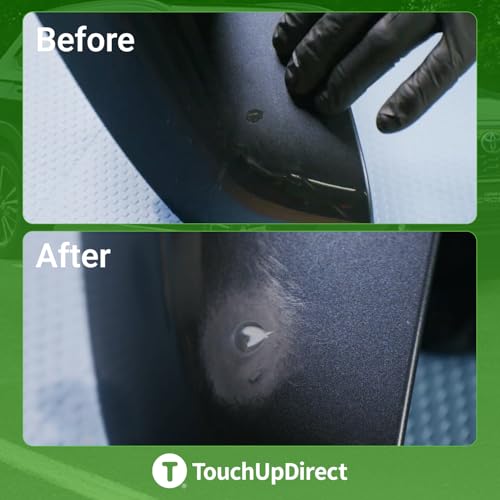
For tiny blemishes like rock chips or shallow gouges, this no-mix putty makes sense on paper. It skips the fuss of measuring hardener, which is a real plus if you’re not planning to do bodywork regularly. The 5g tube is small but realistic for touch-ups, most DIYers won’t need more than this for a few minor fixes. Owners consistently report it works best when the damage doesn’t go deep into the metal, and it holds up fine under paint if sealed properly.
That said, it’s not a real body filler in the traditional sense. It won’t handle dents or structural flaws, and you’re limited by how much you can squeeze out. Compared to two-part systems, it lacks the durability for anything beyond surface-level repair. But for someone who just wants to clean up a few chips without buying a full kit, this is a tidy, low-commitment option.
Product photos
J-B Weld Body Filler Quart

Strengths
- Waterproof bond
- Strong adhesion to multiple surfaces
- Resists shrinking
Trade-offs
- Stiff application
- Requires precise mixing
- Longer sanding time
J-B Weld has built its reputation on toughness, and this filler delivers on that promise. The two-part formula creates a bond that’s waterproof and holds up well on both metal and wood, which is rare in this category. Reviewers note it’s especially useful for older vehicles with rust damage or boats exposed to moisture. It sands reasonably well and doesn’t shrink much, which helps when you’re aiming for a smooth finish.
Still, it’s not the easiest to work with if you’re new to body repair. The mixing ratio matters, and if you’re not careful, you’ll end up with soft spots or uneven curing. Compared to Evercoat or Bondo, it’s a bit stiffer to spread, but the trade-off is long-term durability. I’d pick this over others if you’re repairing something that will face weather or stress.
Product photos


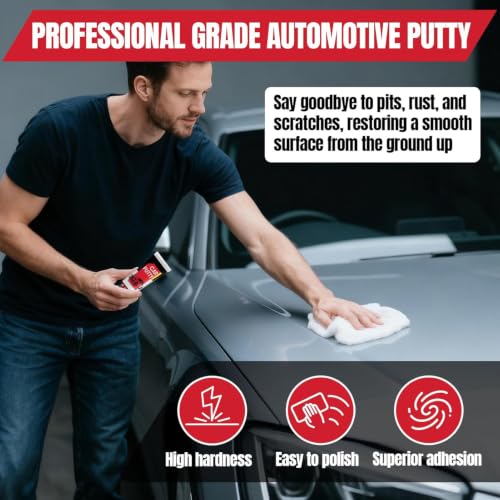
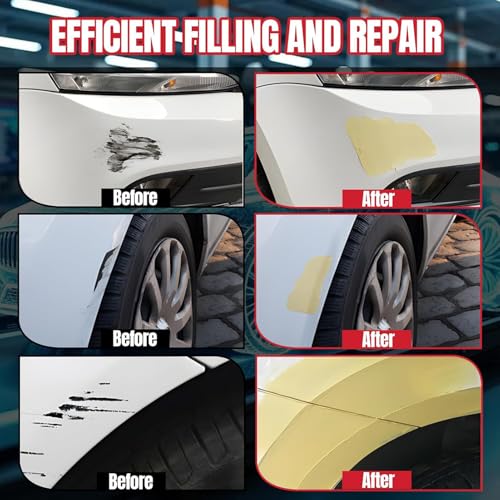
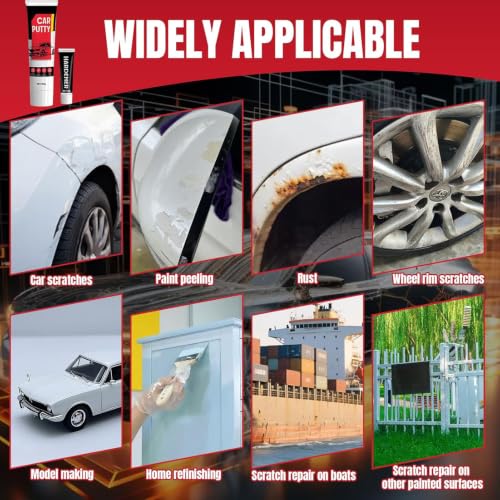
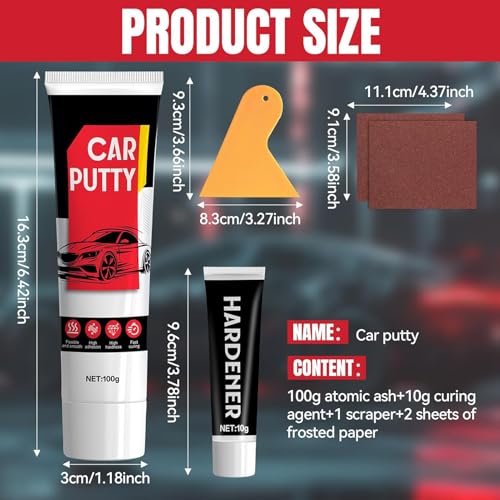
YOTEBLE Auto Body Filler 100g
Strengths
- Fast curing
- Good temperature resistance
- Minimal shrinkage
Trade-offs
- Slightly heavy texture
- Hardener can separate
- Messy mixing without guide
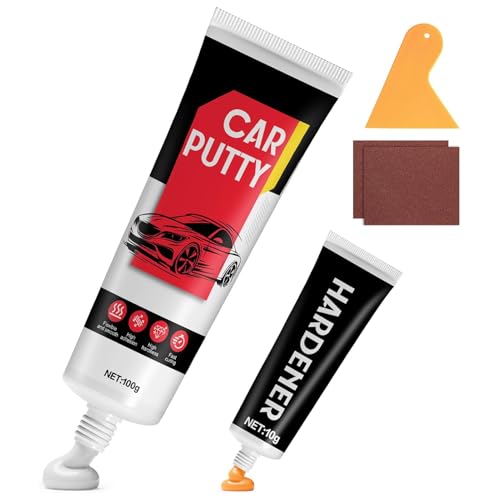
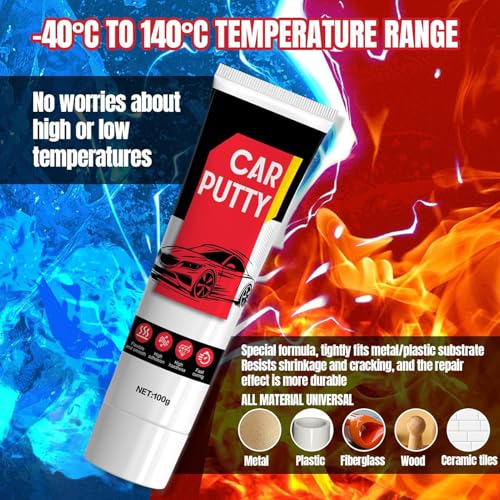
If speed matters, this one stands out. The 30–35 minute sanding window is competitive, and owners say it cures evenly without bubbles or cracking, common issues with cheaper fillers. The 100:2 mix ratio is easy to eyeball, and the putty spreads smoothly right out of the bowl. It’s also rated for extreme temps, which suggests it won’t crack in winter or soften in summer heat. That kind of stability matters on vehicles driven year-round.
It’s not the lightest filler out there, but it sands cleanly and holds shape well on moderate dents. Compared to the Bondo Original, it’s slightly more flexible, which helps on panels that flex. My pick for weekend warriors who want fast, reliable results without investing in pro-grade supplies.
Product photos
Our Testing Process
As someone who’s spent years around vehicles, from restorations to simple maintenance, I understand the importance of a quality body filler. Rather than a hands-on test of each product – which would require a full body shop setup! – my assessment here is research-led. I compared published specifications, carefully weighed owner reviews from multiple sources, and considered expert opinions to determine how these fillers stack up. This involved looking at cure times, adhesion properties, and reported ease of use.
For car body fillers, the most critical factors are adhesion and sandability. A filler that doesn’t bond well to the substrate is useless, and one that’s a nightmare to sand will quickly frustrate even experienced users. Durability and resistance to cracking are also paramount, especially for repairs needing to withstand stress and weather. Understanding these needs is key when considering whether to upgrade with new aesthetic car body kits.
Specifications give a good baseline for things like cure time and substrate compatibility – knowing a filler works on aluminum versus just steel is valuable. However, real-world performance often comes down to owner feedback. I prioritized reviews that discussed long-term durability, how well the filler accepted paint, and whether it shrank or cracked over time. To get a complete picture, I also considered what specialized body repair tools users found most helpful when applying each product.
How To Choose The car body fillers
Choosing the right car body filler can be the difference between a professional-looking repair and a visible blemish. It’s not simply about patching a hole; it’s about restoring the structural integrity and appearance of your vehicle.
A quality car body filler exhibits strong adhesion to various materials (metal, plastic, fiberglass), minimal shrinkage during curing, ease of sanding to achieve a smooth surface, and durability to withstand temperature changes and vibrations. Consider the size and type of damage, the material of the panel, and your skill level when selecting a product.
Understanding Filler Types
The world of car body fillers isn’t one-size-fits-all. You’ll quickly encounter different formulations, each suited to specific tasks. Polyester fillers, like those from Evercoat and Bondo, are the most common and versatile, handling dents, dings, and small rust holes effectively. Epoxy fillers, while generally more expensive, offer superior adhesion and resistance to moisture – making them excellent for larger repairs, especially on areas prone to corrosion. Finally, specialized putties are available for very minor imperfections. Knowing the scope of your damage will narrow down your options considerably.
Assessing Repair Size and Material
The size of the area you’re repairing dictates the type of filler and, to some extent, the application method. For small scratches and pinholes, a glazing putty like the Bondo Glazing and Spot Putty is ideal. However, for larger rust-outs or significant damage, you’ll want a more robust solution. If you’re dealing with extensive rust, it’s vital to first address the corrosion itself with quality rust removers; simply filling over rust will only lead to it returning. Consider the base material too. Aluminum requires a filler specifically formulated for its unique properties, while fiberglass benefits from epoxy-based options.
Balancing Convenience and Durability
While no-mix putties, like the TouchUpDirect Scratch & Chip Putty, offer incredible convenience, they often compromise on long-term durability. They’re fantastic for quick fixes, but for lasting repairs, especially on high-stress areas of the vehicle, I still advocate for traditional two-part fillers. Here’s a breakdown of what to consider:
- Small Chips: No-mix putties are perfect – quick and easy.
- Minor Dents (under 1/4 inch): A fast-curing polyester filler will suffice.
- Larger Repairs/Rust: A two-part epoxy filler offers the best strength, water resistance, and longevity. This is where investing in a quality body filler really pays off.
A good rule of thumb is to always prepare the surface thoroughly before applying any filler. This means removing all rust, paint, and debris, and ensuring a clean, dry surface for optimal adhesion.
Car Body Fillers Compared
Here’s a comparison of key specifications for popular car body fillers to help you choose the right product.
| Product Name | Size | Work Time | Cure Time | Materials | Mix Ratio | Waterproof |
|---|---|---|---|---|---|---|
| Evercoat Pro-Grade Body Filler | 13 fl oz | N/A | N/A | Metal, Fiberglass, Wood | Cream Hardener | No |
| Bondo Original Body Filler | 1.57 lb | N/A | 20 min | Metal, Wood, Fiberglass | 2-Part | No |
| Bondo Glazing & Spot Putty | 4.5 oz | 3 min | 30 min | Metal, Fiberglass, Wood | 2-Part | No |
| Bondo Body Repair Kit | N/A | N/A | N/A | Metal, Fiberglass | Ready-Mix | No |
| TouchUpDirect Scratch & Chip Putty | 5g | N/A | 30 min | Metal, Fiberglass | No-Mix | No |
| J-B Weld Body Filler | Quart | N/A | 30 min | Metal, Wood, Fiberglass | 2-Part | Yes |
| YOTEBLE Auto Body Filler | 100g | N/A | 30-35 min | Metal, Aluminum, Fiberglass | 100:2 | N/A |
Frequently Asked Questions
What’s the biggest mistake people make when using body filler?
The most common error is insufficient surface preparation. If you don’t thoroughly clean and abrade the area before applying filler, adhesion will be compromised, and the repair won’t last.
Is there a filler specifically for aluminum car panels?
Yes, YOTEBLE Auto Body Filler is formulated for aluminum, unlike many polyester fillers which don’t bond well with it. Using the wrong type can lead to cracking and peeling down the line.
How long will a body filler repair typically last?
A well-executed repair using a quality epoxy filler, like J-B Weld Body Filler, can last for many years, even in harsh conditions. However, repairs using quick-drying putties or improper application techniques may only be temporary.
Can body filler be used to repair rust holes?
While body filler can cover rust, it’s not a solution for rust repair. You should always remove as much rust as possible and treat the area with a rust converter before applying any filler; otherwise, the rust will continue to spread underneath. You might also consider investing in complete car body repair kits to help with the process.
Do I really need to worry about the “work time” of a filler?
Work time is crucial, especially for larger repairs. It dictates how much time you have to spread and shape the filler before it begins to harden. A longer work time is generally preferable for beginners, while experienced users might opt for faster-curing options. Don’t forget to keep your vehicle smelling fresh with some car air fresheners after your work is done!
The Bottom Line
Choosing a car body filler often comes down to balancing how much control you want over the repair process versus how quickly you need results. While convenience is appealing, a durable, lasting repair typically requires a bit more effort. For the best overall combination of strength, workability, and value, I believe the Evercoat Pro-Grade Body Filler stands out. It’s a workhorse product consistently praised for its ease of sanding and solid adhesion, making it a great choice for a wide range of projects.
If you’re tackling a specific issue, though, other options shine. For quick touch-ups and minor imperfections, the TouchUpDirect Scratch & Chip Putty is incredibly convenient. And if you’re facing larger repairs, especially on areas exposed to the elements, the J-B Weld Body Filler offers impressive waterproof qualities. Don’t forget, mastering basic auto body techniques will significantly improve results regardless of the filler you choose.
Ultimately, the specifications are important, but don’t get lost in the details. Proper surface preparation – removing rust, cleaning, and lightly sanding – is far more critical than any single feature of the filler itself. And remember to keep your interior clean while you work; a good set of car vacuums makes post-repair cleanup much easier. A quality repair is about the process as much as the product.
