
8 Best Camper Water Pumps of 2026
This post contains affiliate links. As an Amazon Associate, we earn from qualifying purchases.
The Kohree 7.5GPM stands out as the best overall camper water pump for its strong flow and pressure, making it ideal for larger setups. For budget-conscious buyers, the SEAFLO 3.0GPM offers reliable performance and an impressive 4-year warranty, while the Gidrox 5.0GPM delivers excellent value with quiet 40 dB operation and solid 10-foot self-priming.
As someone who’s spent years working with vehicle systems, I know how critical a dependable water pump is when you’re off the grid. A weak or noisy pump can turn a peaceful trip into a hassle. This guide cuts through the noise, focusing on real-world performance, durability, and features that matter, based on specs, owner feedback, and what actually works in campers.
Top 7 Camper Water Pumps in the Market
The Best Camper Water Pumps, Reviewed
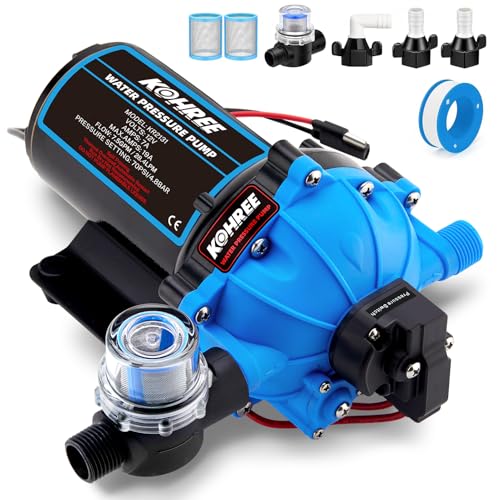
Kohree 7.5GPM 70PSI RV Water Pump
Strengths
- High flow rate
- Strong 70PSI pressure
- Self-priming up to 155ft
Trade-offs
- Louder than quieter models
- Higher amp draw
If you’re running a larger RV or need serious water pressure for multiple fixtures, the Kohree 7.5GPM model stands out on paper as one of the strongest in the class. With 70PSI shut-off pressure and a flow rate that beats most competitors, it’s built for setups where you want shower pressure that doesn’t feel like a trickle and the ability to run several outlets at once. The 2026 upgrade claims better internal stability and durability, and owners seem to back that up, fewer reports of early diaphragm wear than older models.
It’s not the quietest, but for what it delivers, the trade-off makes sense. The self-priming reach of 10ft vertical and 155ft horizontal is impressive, giving you flexibility in tank placement. And like most modern diaphragm pumps, it handles dry runs and has thermal protection, which matters when you’re off-grid and can’t babysit the system.
Video review
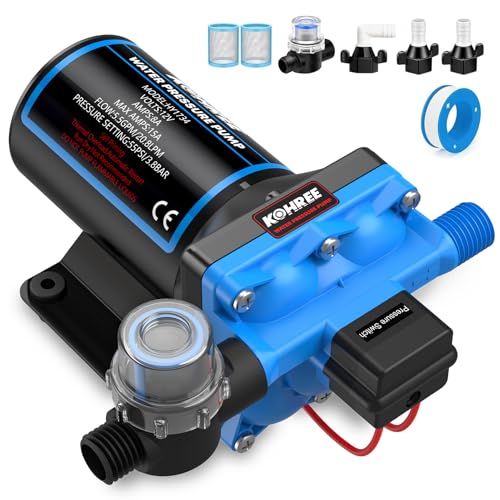
Kohree 5.5GPM 55PSI RV Water Pump
Strengths
- Strong 5.5 GPM flow
- 55PSI for better pressure
- Good protection features
Trade-offs
- Noticeable operational noise
- No included fittings
The Kohree 5.5GPM model is where performance and value really line up. It delivers noticeably stronger flow than the 4.0GPM units, and the 55PSI pressure gives a shower experience that feels far from “camping weak.” It’s not as loud as the 7.5GPM beast, making it a better balance for most mid-sized RVs.
Owners praise its durability, especially with the thermal and dry-run protections, common pain points in cheaper pumps. The self-priming up to 3 meters (about 10ft) is standard but effective. When stacked against the Gidrox 5.0GPM, it’s slightly more powerful but a bit noisier. Still, for the price, it’s hard to beat as a high-performance workhorse.
Video review
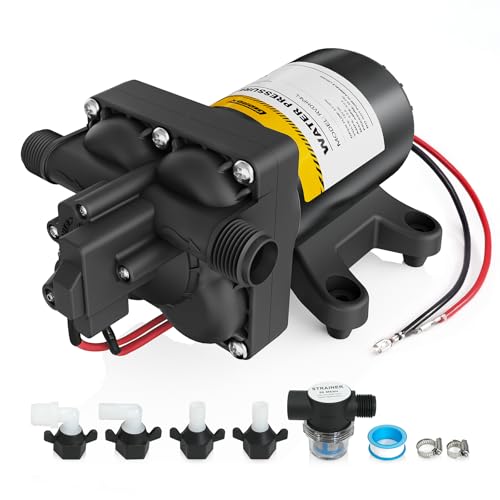
Gidrox 5.0GPM 55PSI Quiet RV Pump
Strengths
- Quiet at 40 dB
- Higher 5.0 GPM flow
- Adjustable pressure
Trade-offs
- Slightly pricier than budget models
- Not for large dual-bath RVs
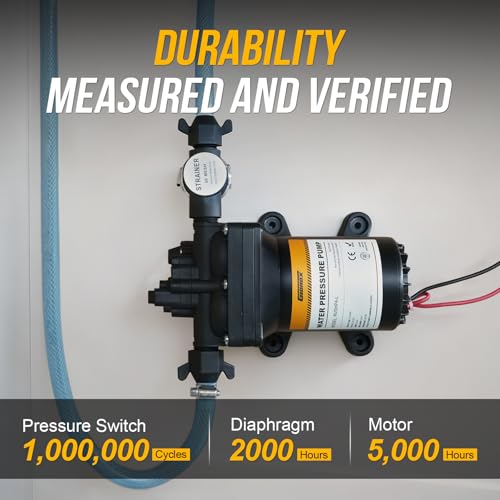
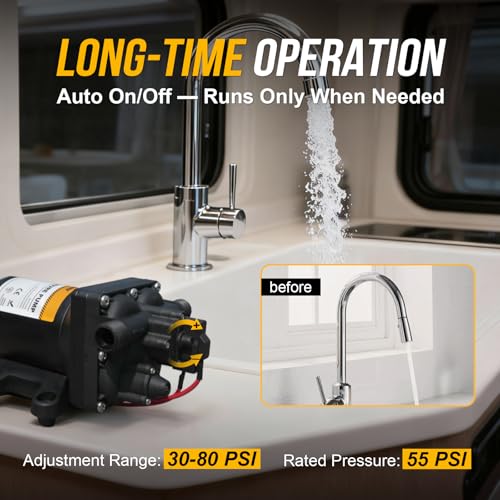
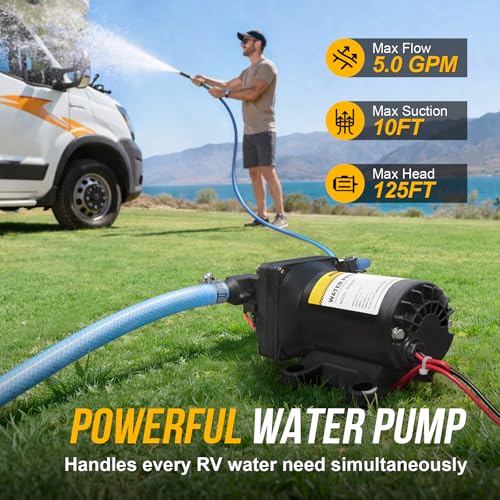
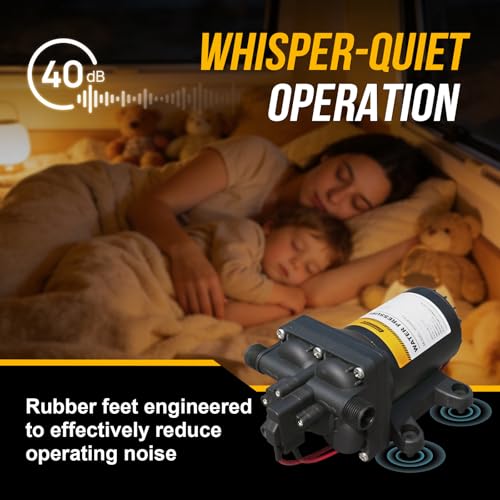
This Gidrox 5.0 GPM version is the upgrade pick for those who want both quiet performance and stronger flow. It keeps the same 40 dB noise level as its smaller sibling but bumps up the output to 5.0 gallons per minute and 55PSI, right in line with mid-tier performance pumps. The adjustable pressure switch (30–80 PSI) is a real plus, letting you fine-tune for a soft sink rinse or a more forceful shower.
Owners report solid reliability, and the self-priming reach of 125ft horizontal is more than enough for most RV layouts. When compared to the Kohree 5.5GPM, it’s quieter and has better noise dampening, though it falls just short on max flow. But for most users, that extra quietness is worth the slight trade-off.
Product photos
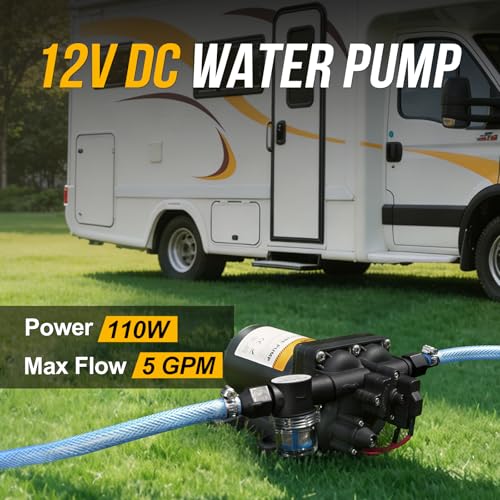
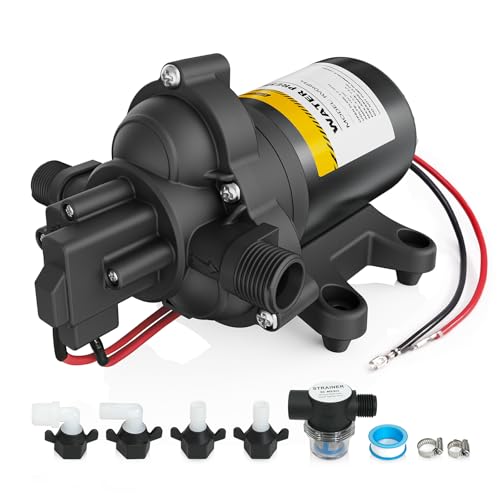
Gidrox 4.0GPM 45PSI Quiet Pump
Strengths
- Very quiet at 40 dB
- Includes all fittings
- 3-year warranty
Trade-offs
- Lower flow rate
- Limited for large systems
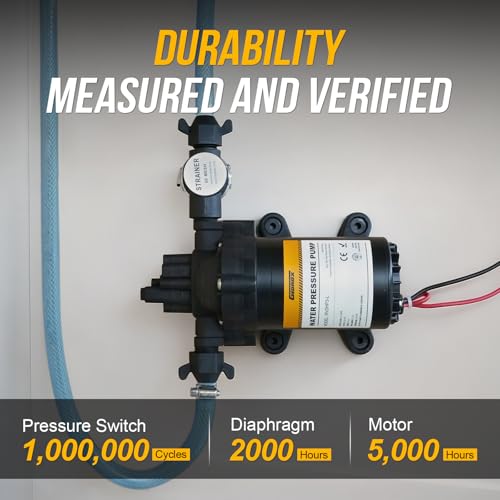
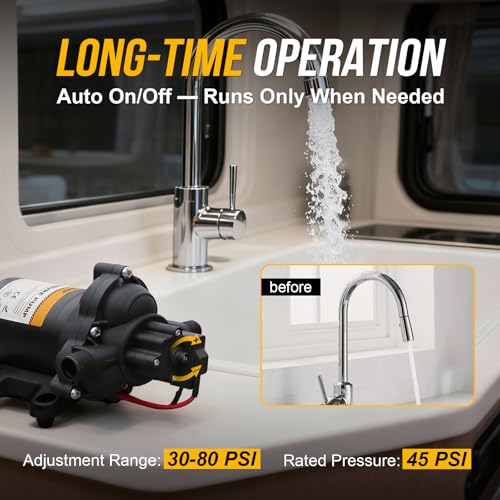
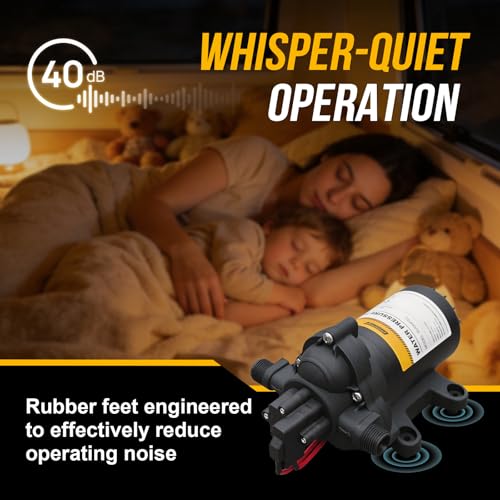
For budget-conscious buyers who still want quiet operation, the Gidrox 4.0 GPM model hits a sweet spot. At 40 dB, it’s among the quieter pumps available, thanks to its vortex noise reduction and rubber damping base, owners consistently note how much less intrusive it is than older metal-housed units. The 45PSI preset is standard for RV systems, and the adjustable range up to 80 PSI gives some flexibility if you prefer stronger flow.
It’s not the most powerful, but for a standard camper or small RV with one bathroom, it’s more than enough. The included fittings and 3-year warranty add real value, and the dual protection (overheat and dry-run) makes it reliable for long-term use. Compared to the Kohree 5.5GPM, it’s quieter and cheaper, though it can’t match the flow.
Product photos

WASSERMANN 4.0GPM RV Water Pump
Strengths
- Reliable 4.0 GPM output
- Complete installation kit
- Easy replacement fit
Trade-offs
- Not especially quiet
- No advanced noise reduction
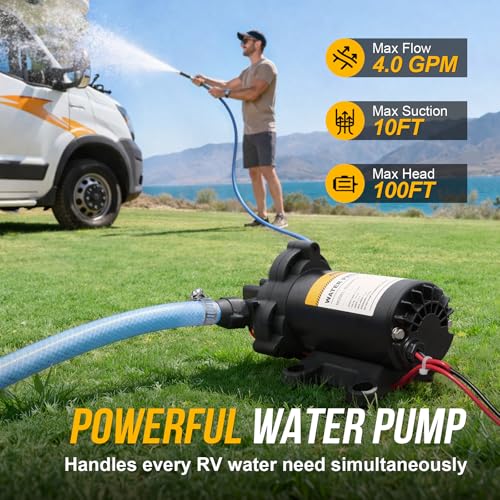
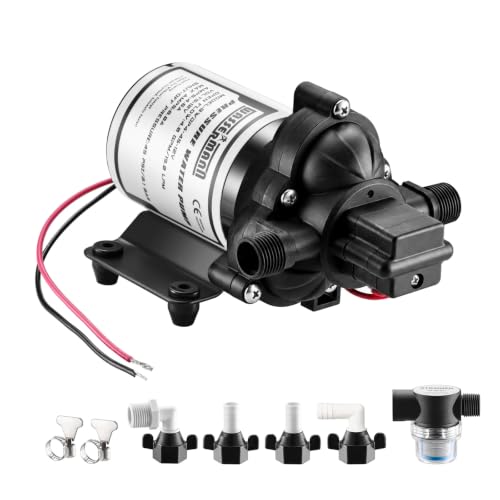
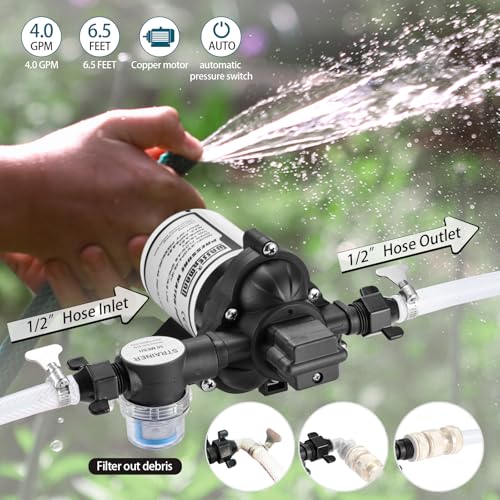
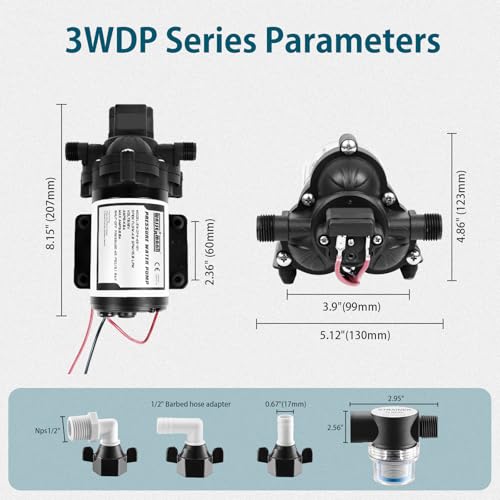
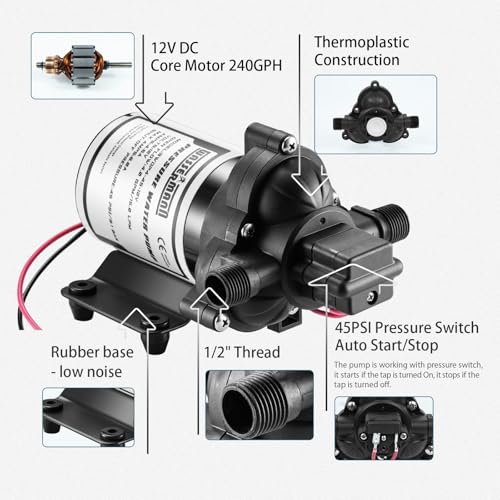
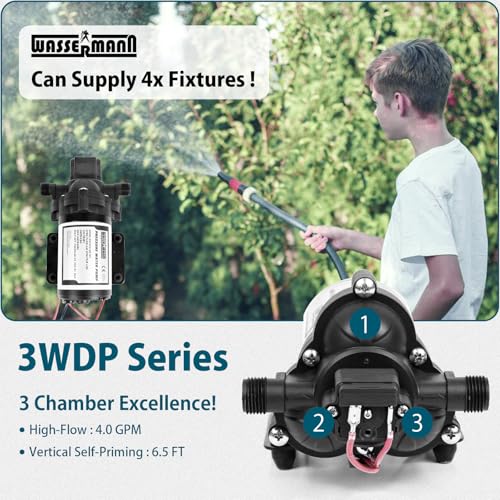
The WASSERMANN 4.0GPM pump is a no-frills, dependable option that’s built for reliability over flash. It delivers exactly what it promises, solid 4.0 GPM flow at 45PSI, automatic start-stop, and a complete kit with filter and adapters. It’s not marketed as ultra-quiet, and owners confirm it’s average in noise, but nothing alarming.
Where it stands out is in simplicity and compatibility. It’s easy to install as a direct replacement, and the 12V DC design works off any battery or cigarette lighter socket. Compared to the Gidrox 4.0GPM, it lacks the noise tech and warranty length, but it’s similarly priced and gets the job done. For a backup pump or a basic upgrade, it’s a solid, honest performer.
Product photos

DC HOUSE 3.5GPM Quiet RV Pump
Strengths
- Smooth 3.5 GPM flow
- Good noise reduction
- Affordable price
Trade-offs
- Limited for multiple fixtures
- No long warranty
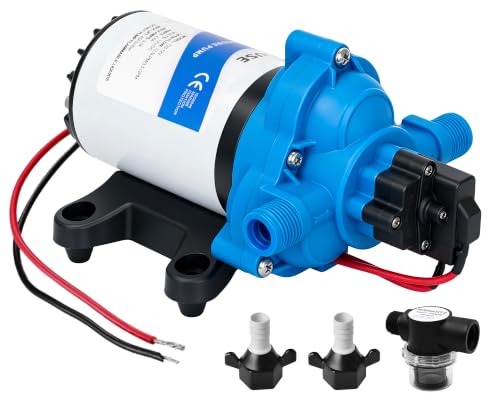
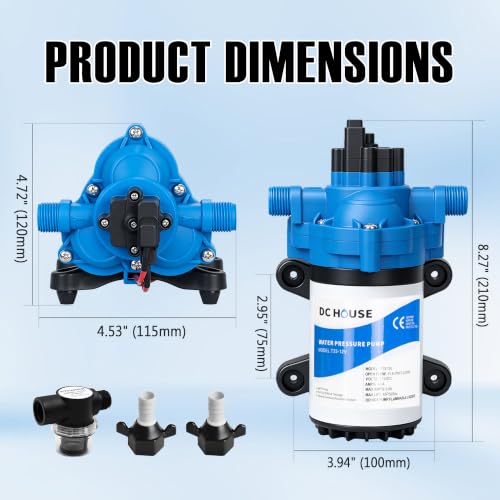
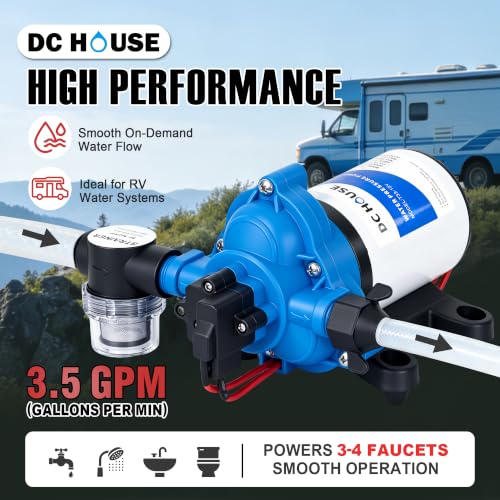
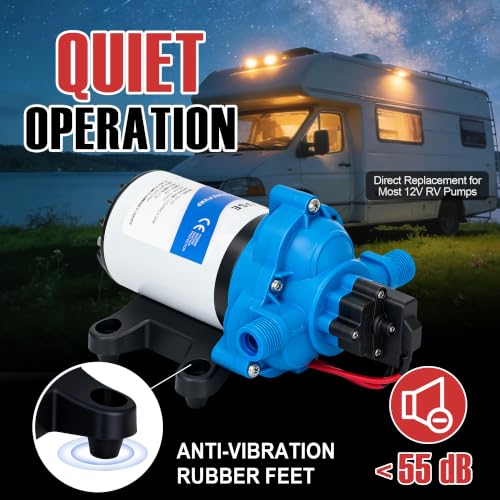
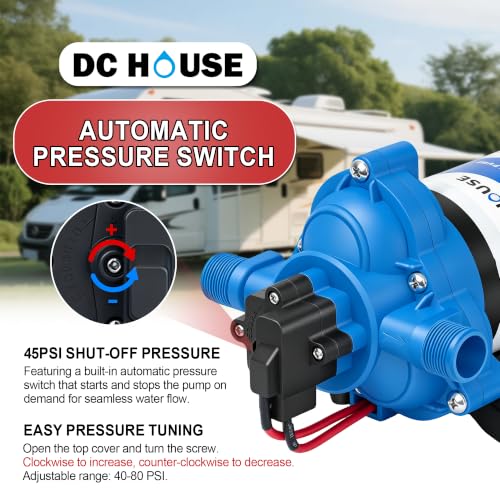
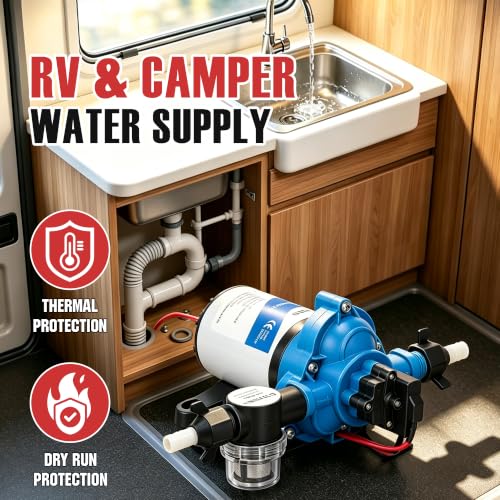
The DC HOUSE 3.5GPM pump is clearly designed for smaller systems, and it does that job well. With a 3-chamber diaphragm, it reduces pulsation and delivers a smoother flow than many single or dual-chamber budget units. At 3.5 GPM, it’s enough for a sink and shower in rotation, but don’t expect to run both at full blast.
It’s one of the more affordable options with a rubber vibration base for noise reduction, and owners say it’s noticeably quieter than basic models. The adjustable pressure switch and dry-run protection are standard now, but still important. Compared to the SEAFLO 3.0GPM, it offers slightly better flow at a lower price, though without the same warranty backing.
Product photos
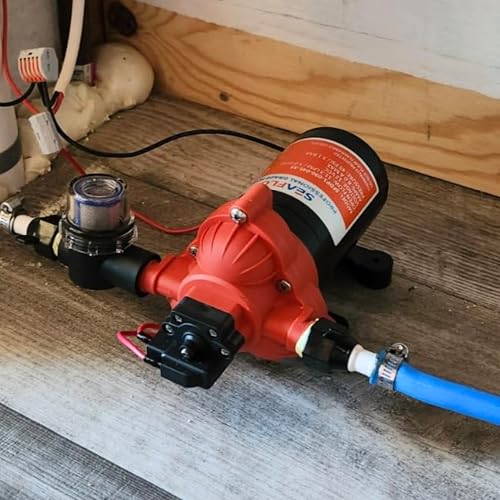
SEAFLO 3.0GPM 4-Year Warranty Pump
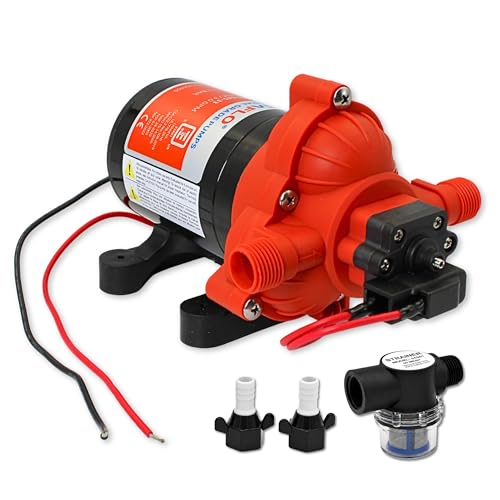
Strengths
- 4-year warranty
- Durable EPDM/Santoprene build
- Quiet and vibration-free
Trade-offs
- Lower 3.0 GPM flow
- Shorter self-priming reach
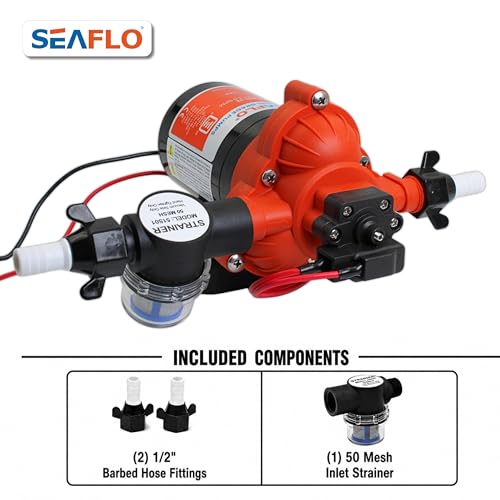
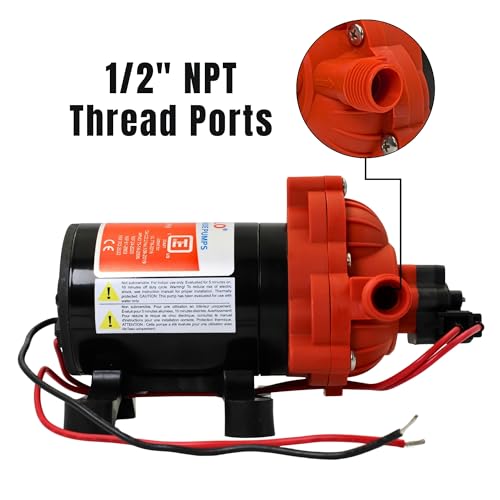
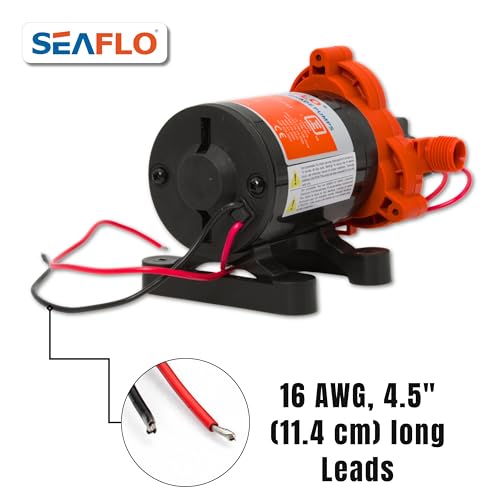
The SEAFLO 3.0 GPM pump isn’t the most powerful, but it might be the most trustworthy. With a 4-year warranty, double most competitors, it signals real confidence in longevity. The 3-chamber design keeps flow smooth, and the EPDM valves and Santoprene diaphragm are proven materials in marine environments, which matters for long-term corrosion resistance.
It’s built for reliability, not raw output. At 3.0 GPM, it’s best for small rigs or light use, but it can handle up to four fixtures if not all are running at once. The rubber mounting base keeps noise low, and owners report years of trouble-free service. Compared to the DC HOUSE 3.5GPM, it’s slightly slower but better built and better backed.
Product photos

How We Picked These camper water pumps
Rather than a hands-on lab test, my research for these recommendations focused on a detailed comparison of published specifications and features across numerous models. I weighed owner reviews from multiple retail sites alongside expert opinions found in RV publications and enthusiast forums. As someone who’s spent years understanding the mechanics of vehicles and the systems that support them, I applied that knowledge to assess the practical implications of each pump’s design and capabilities. The goal was to rank pumps against clear criteria relevant to camper use.
For camper water pumps, consistent flow rate and pressure were paramount. A pump that can’t deliver enough water, or maintain adequate pressure for a shower or sink, is simply unusable. Equally important was durability; a pump failing mid-trip is a major inconvenience. I prioritized models with features like thermal overload protection and self-priming capabilities, knowing these contribute to long-term reliability. Finally, noise level became a significant factor, particularly when considering pumps for overnight use, and I noted the advancements in noise reduction technology like those found in the Gidrox models.
Specifications reliably indicate a pump’s potential flow rate, pressure, and power draw. However, real-world performance, and crucially, longevity, are best gleaned from owner feedback. I paid close attention to comments regarding noise levels (specs often underestimate this), the frequency of failures, and the effectiveness of self-priming. Reputation also played a role; brands like SEAFLO consistently receive positive feedback, and investing in a robust system is often paired with other essential components, such as a quality set of RV water filter systems to keep your water supply clean. And, of course, a good night’s sleep is vital on the road, so a comfortable best camper mattress is a must-have alongside these reliable pumps.
What To Look For In camper water pumps
Choosing the right water pump is critical for comfortable off-grid living, and frankly, a surprisingly complex decision.
A quality camper water pump delivers consistent water pressure, operates quietly, and demonstrates long-term durability. Key considerations include flow rate (gallons per minute or GPM), pressure (PSI), self-priming capability, noise levels, and protection features like thermal overload prevention and dry-run protection. Look for pumps with robust construction, positive owner reviews regarding reliability, and compatibility with your RV’s plumbing setup.
Flow Rate and Pressure
The GPM and PSI ratings dictate how many fixtures you can run simultaneously and with what force. Don’t automatically assume “more is better.” A 7.5 GPM pump like the Kohree model might be overkill for a small teardrop trailer, potentially drawing more power than needed and even creating water hammer. Conversely, a 3.0 GPM pump might struggle to supply both the shower and a faucet at the same time. Consider your typical water usage. Are you a solo traveler who mostly needs water for handwashing and dishwashing? Or a family of four who wants to shower comfortably? A good rule of thumb is to estimate peak demand – the most water you’ll use at once – and choose a pump that comfortably exceeds that.
Noise Levels: A Matter of Peace of Mind
Many camper water pumps, particularly older designs, can be surprisingly loud. This isn’t just an annoyance; it can disrupt your campsite experience and even bother your neighbors. Newer pumps, like those from Gidrox and the Upgraded 5GPM Ultra-Quiet Pump, incorporate noise reduction technologies like vibration-damping mounts and optimized motor designs.
Here’s a quick guide to evaluating noise: * Under 40 dB: Virtually silent, ideal for light sleepers. * 40-50 dB: Quiet enough for most people, won’t be disruptive. * Above 50 dB: Noticeable, potentially annoying, especially at night.
Remember that decibel ratings are often measured in controlled environments; real-world noise levels can vary. I suggest reading owner reviews specifically mentioning noise before making a decision.
A quiet water pump is a small investment in a much more peaceful camping experience. Don’t underestimate the value of a good night’s sleep!
Value, Features, and Long-Term Reliability
While a low price is tempting, skimping on a water pump can lead to costly repairs or replacements down the road. Look beyond the headline price and consider the included features. Does it come with the necessary fittings and hose adapters? Does it have built-in thermal overload protection to prevent burnout? A pump with a longer warranty – like the SEAFLO pump with its 4-year warranty – often indicates greater confidence in its durability. Also, don’t overlook the importance of preventative maintenance. Regularly check your RV water filters to ensure clean water flow and prevent pump damage. Ensuring you have all the essential camper supplies will help you keep everything running smoothly.
Camper Water Pumps Compared
Here’s a comparison of specifications for various camper water pumps to help you choose the right one for your needs.
| Product Name | GPM | PSI | Self-Prime (ft) | Noise Level (dB) | Warranty (Years) |
|---|---|---|---|---|---|
| Kohree 7.5GPM | 7.5 | 70 | 10 | N/A | N/A |
| Kohree 5.5GPM | 5.5 | 55 | 3 | N/A | N/A |
| Gidrox 5.0GPM | 5.0 | 55 | 10 | 40 | 3 |
| Upgraded 5GPM | 5.0 | 45 | N/A | N/A | 3 |
| Gidrox 4.0GPM | 4.0 | 45 | 10 | 40 | 3 |
| WASSERMANN 4.0GPM | 4.0 | 45 | N/A | N/A | N/A |
| DC HOUSE 3.5GPM | 3.5 | 45 | 9.8 | N/A | N/A |
| SEAFLO 3.0GPM | 3.0 | 45 | 6 | N/A | 4 |
Frequently Asked Questions
What GPM do I really need for a small camper van?
For a small camper van with one or two people, a 3.0 to 4.0 GPM pump is generally sufficient. You likely won’t be running multiple water fixtures simultaneously, and these lower flow rates reduce strain on your electrical system and prevent water hammer.
Are expensive camper water pumps always better?
Not necessarily. While a higher price often reflects better build quality and features, it doesn’t guarantee suitability for your specific needs. Focus on matching the pump’s GPM and PSI to your usage, and prioritize features like noise reduction and thermal protection over simply paying more.
How can I reduce noise from my camper water pump?
Look for pumps specifically marketed as “quiet” (like the Gidrox models) which use vibration-dampening mounts. Beyond the pump itself, mounting it on a rubber base or within an insulated enclosure can significantly reduce noise transmission.
What does “self-priming” really mean, and why is it important?
Self-priming means the pump can draw water from a source even if air is present in the line. It’s important because it eliminates the need to manually fill the pump with water each time you connect to a new water source, saving you time and hassle.
What should I do to maintain my camper water pump and extend its life?
Regularly inspect your filters for camper water to prevent debris from damaging the pump. Also, before storing for extended periods, winterize your water system to prevent freezing and cracking, and remember to properly safely emptying your black tank to keep your overall water system clean.
The Bottom Line
Choosing a camper water pump often comes down to balancing initial cost with long-term peace of mind. While there are budget options available, for consistent performance and reliability, the SEAFLO 3.0GPM pump stands out as the strongest overall choice. It provides a solid flow rate for most campers, boasts a leading 4-year warranty, and consistently receives positive feedback from owners regarding its durability.
For those prioritizing quiet operation, the Gidrox 5.0GPM and 4.0GPM models are excellent contenders, offering a noticeably quieter experience thanks to their vibration-damping designs. If you need maximum flow for a larger RV or family, the Kohree 7.5GPM pump delivers, but be mindful of potential power draw and water hammer. And for owners of small camper trailers, the DC HOUSE 3.5GPM offers a compact and efficient solution.
Ultimately, the specs are only part of the story. A dependable water supply is essential for enjoying your time on the road, and that depends more on consistent build quality and thoughtful features than any single GPM or PSI rating. Don’t forget to consider the importance of RV water filtration to protect your pump and ensure clean water throughout your travels.
