
7 Best Camper AC Units of 2026
This post contains affiliate links. As an Amazon Associate, we earn from qualifying purchases.
The Furrion Chill Cube 18K stands out as the best overall camper AC unit for its powerful 18,000 BTU cooling and reliable 115V AC performance, while the Xenjum 11000BTU is a top budget-friendly 12V DC pick for off-grid use, and the Arsenda 18000 BTU offers strong versatility with both heating and cooling in a dual-voltage design.
Choosing the right AC for your camper isn’t just about staying cool, it’s about matching the unit to your power setup, travel style, and comfort needs. Too many campers end up with underpowered units or noisy systems that drain batteries fast.
This guide cuts through the noise by focusing on real-world specs and owner feedback to highlight models that deliver on cooling, efficiency, and quiet operation. I looked at BTU ratings, power draw, noise levels, and long-term reliability to find the ones worth your trust on the road.
Top 7 Camper Ac Units in the Market
The Best Camper Ac Units, Reviewed
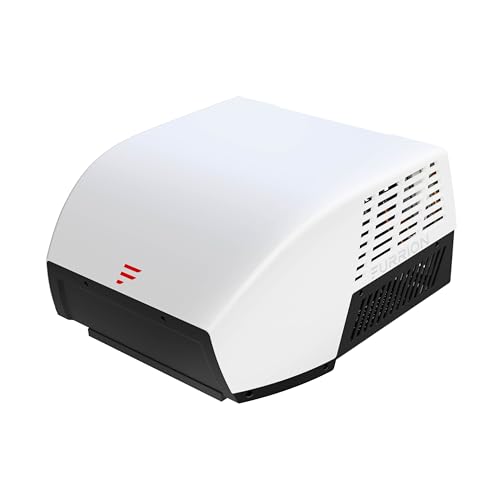
Furrion Chill Cube 18K Rooftop AC
Strengths
- Variable speed compressor
- Higher energy efficiency
- Aerodynamic design
- Lighter than most 18K units
- Superior cooling capacity
Trade-offs
- No built-in heating
- ADB kit sold separately
The Furrion Chill Cube 18K stands out in the rooftop RV AC space not just for its bold cooling claims, but for how it delivers on them through engineering that matters. The variable speed compressor is the real differentiator here, on paper and in owner reports, it smooths out the power draw and noise spikes that plague traditional single-speed units. That translates to longer battery runtime and a far more comfortable interior environment, especially during extended off-grid stays.
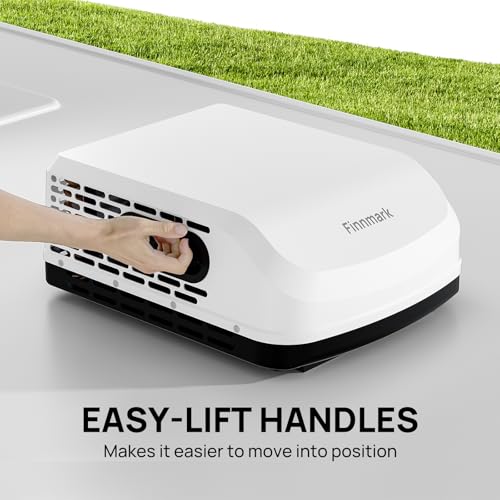
It’s also impressively light at 72.4 lbs, which makes installation less of a solo wrestling match. While it still needs an ADB kit (sold separately), the modular design and clean integration with modern RV roofs give it a premium feel. Compared to the TURBRO or hiberry units, it trades heating capability for superior cooling efficiency and quieter operation, this is a unit built for hot climates and minimalist setups.
Video review
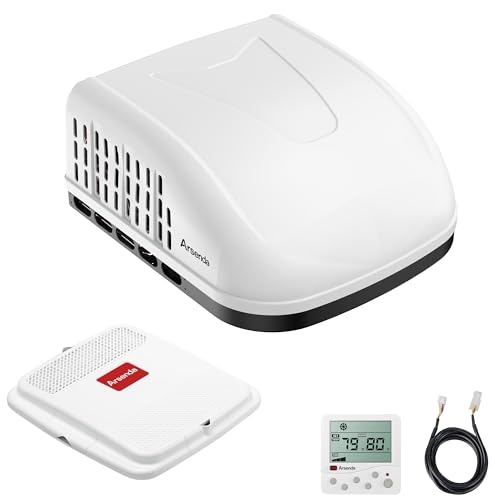
Arsenda 18000 BTU RV AC with Heat Pump
Strengths
- Highest heating output
- 18,000 BTU cooling
- Quiet 50 dB operation
- Covers large spaces
- Eco-friendly R32 refrigerant
Trade-offs
- Requires dual power inputs
- Heavy and bulky
- No 12V-only option
The Arsenda 18,000 BTU unit is the strongest heater in this lineup, delivering 10,236 BTU via heat pump, significantly more than the hiberry or TURBRO. That makes it a rare find for RVers in colder climates who still want efficient heating without relying on propane. The cooling output is also top-tier, covering up to 680 sq ft, which suits larger fifth wheels or motorhomes.
It runs quietly at 50 dB and uses R32 refrigerant, which is more eco-friendly than older blends. But it demands both 115V AC and 12V DC power, which complicates setup. Owners note it’s best paired with a soft starter, especially on generator power. Compared to the Furrion, it’s heavier and less efficient off-grid, but it wins in raw heating performance.
Video review
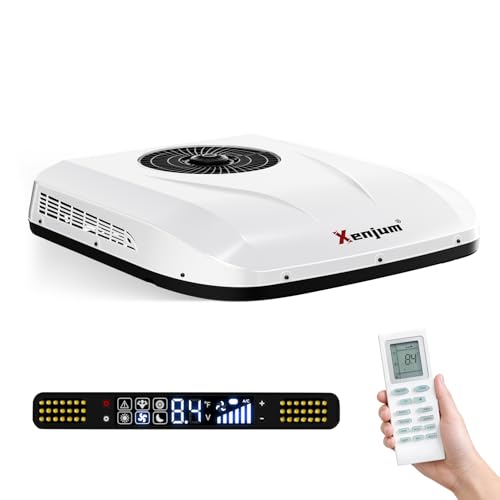
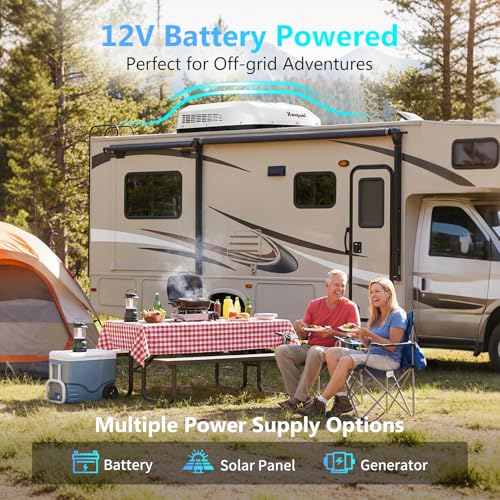
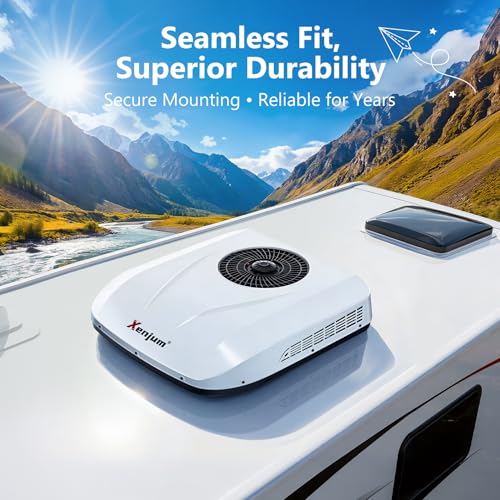
Xenjum 11000BTU 12V DC Camper AC
Strengths
- True 12V DC operation
- Soft start built-in
- Ultra-quiet at 35 dB
- Energy efficient
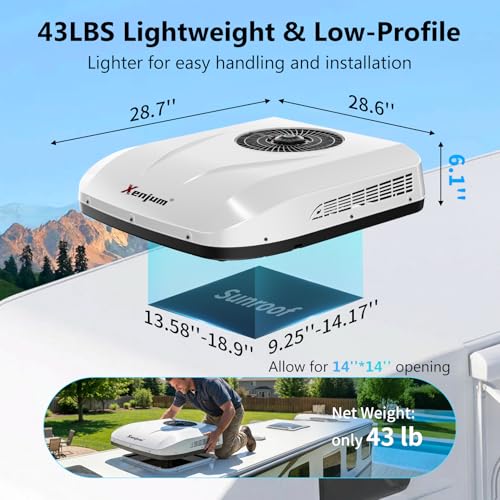
- Lightweight at 43 lbs
Trade-offs
- Lower BTU than rooftop ACs
- No heating function
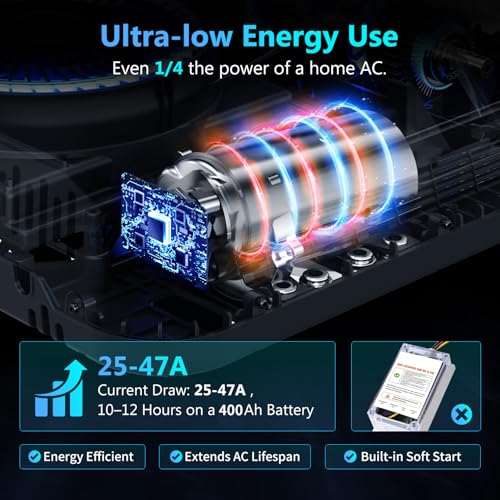
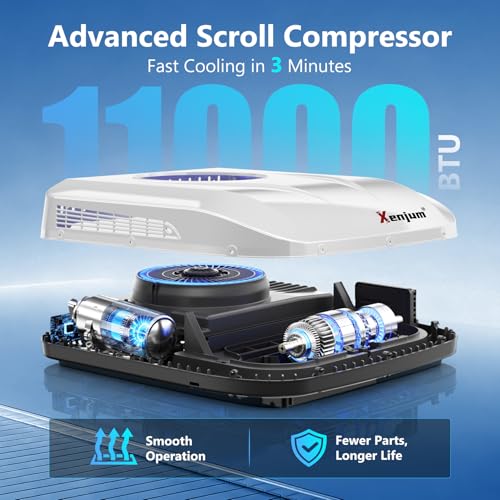
If you’re serious about off-grid cooling without a generator, the Xenjum 12V unit is one of the few that actually backs up its claims with solid specs and consistent owner validation. The 11,000 BTU output on 12V DC alone is impressive, but the soft-start inverter compressor is what makes it viable for real-world use, it slashes startup surge, which is the main reason most 12V ACs trip breakers or drain batteries fast.
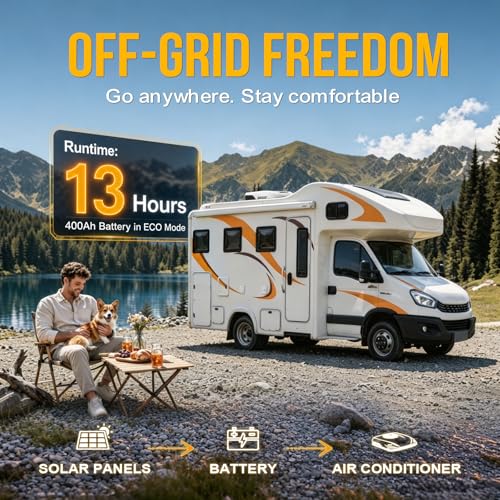
Owners report it running smoothly on 600Ah lithium banks for up to 10 hours, which is no small feat. The 35 dB noise rating holds up in feedback, making it one of the quietest units available, even at night. It’s not as powerful as the 18K Furrion, but for vanlifers and boondockers who live on battery and solar, this is the smarter buy.
Product photos
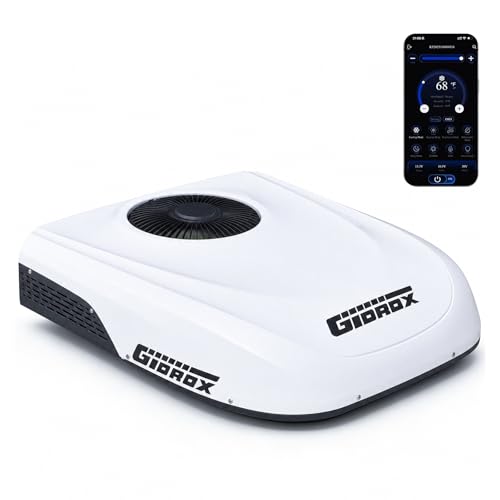
Gidrox 10000 BTU 12V DC Rooftop AC
Strengths
- Inverter-driven efficiency
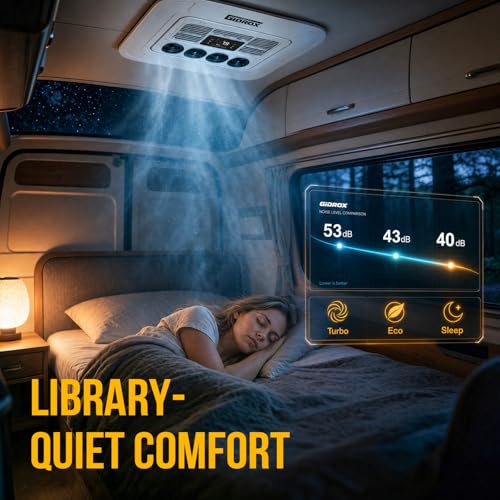
- Ultra-quiet at 40 dB
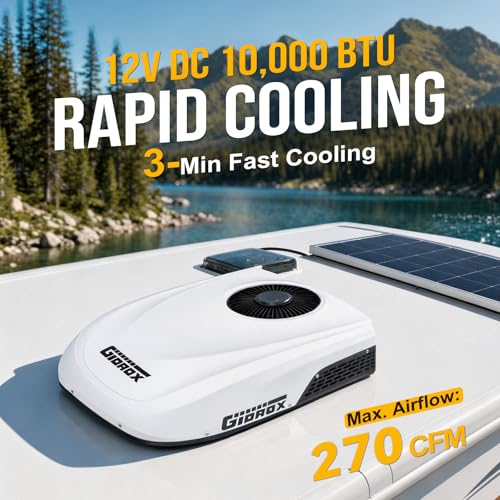
- Fast cooling in 3 minutes
- Lightweight at 54 lbs
- APP, remote, and panel control
Trade-offs
- Bluetooth-only app
- No heating option
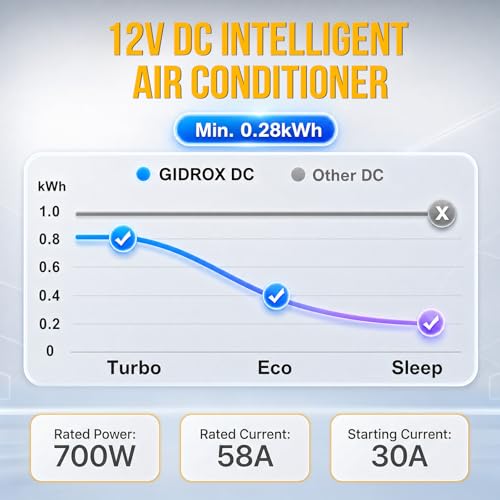
The Gidrox 10,000 BTU unit hits a sweet spot between power and efficiency in the 12V DC market. It doesn’t match the Xenjum’s 11,000 BTU or ultra-low noise, but at 40 dB in sleep mode, it’s still library-quiet, and owners consistently praise its rapid cooldown, some report dropping interior temps by 20°F in under three minutes. The inverter tech keeps power draw low, and the 350W average consumption at night makes it compatible with smaller battery banks.
I’d pick this over the Xenjum if you’re in a hotter climate and need faster cooling, but don’t want to max out your electrical system. The app control works reliably over Bluetooth, though it lacks WiFi. It’s also lighter than most competitors at 54 lbs, which helps during installation.
Product photos

COSTWAY 6500 BTU WiFi Window AC
Strengths
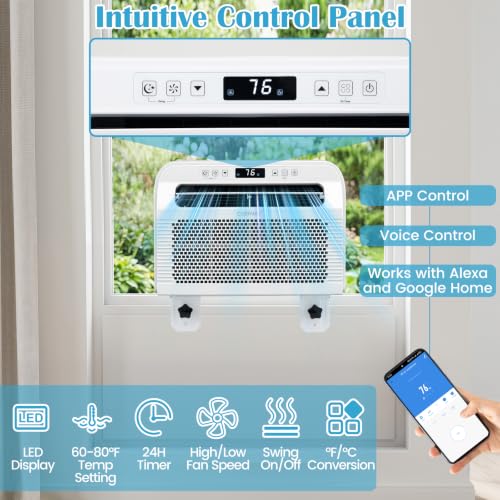
- WiFi and voice control
- Affordable price
- Compact and portable
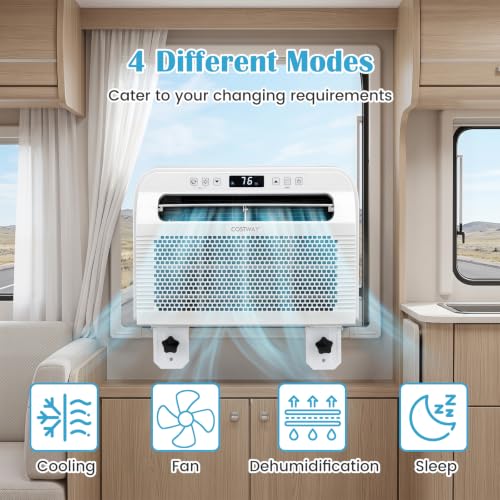
- Includes multiple modes
- Easy window installation
Trade-offs
- Limited to small spaces
- Noisy for sleeping
- Only 6,500 BTU
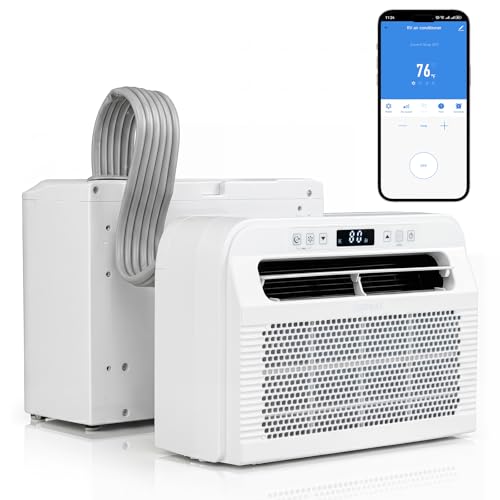
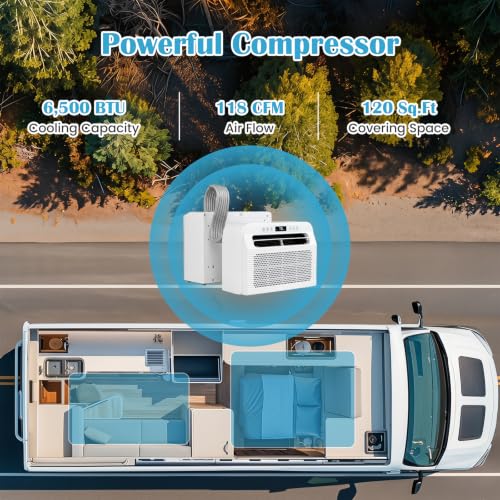
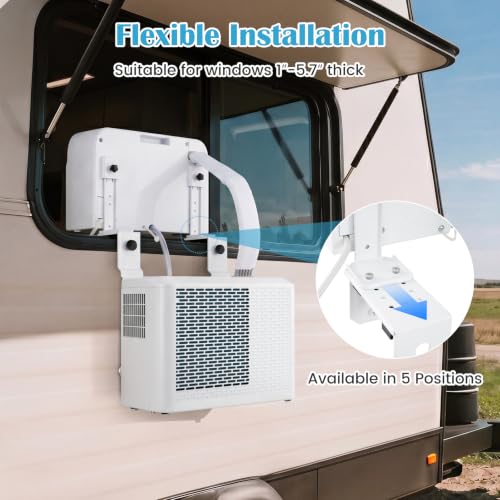
The COSTWAY 6,500 BTU window unit is a budget-friendly option that brings smart features to a segment usually stuck in the past. WiFi and voice control via Alexa and Google Home are rare at this price, and they work well enough to justify the inclusion. For a small RV or truck cab, the cooling output is adequate, though it won’t shock anyone used to rooftop units.
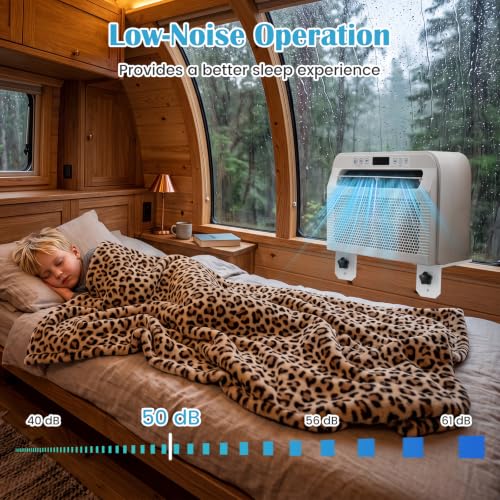
Where it stumbles is in noise and scalability. At 50 dB, it’s not exactly quiet, and the 6,500 BTU limit means it’s only practical for spaces under 120 sq ft. Still, for occasional users or those retrofitting a van with a window mount, it’s a solid value. Compared to the Gidrox or Xenjum, it’s less efficient and less powerful, but the app control gives it a niche.
Product photos
hiberry 15000 BTU Rooftop RV AC
Strengths
- Affordable mid-range price
- Cooling and heating included
- Easy installation
- Quiet 52 dB operation
- Durable UV-resistant housing
Trade-offs
- Heating less powerful than TURBRO
- No 12V DC option
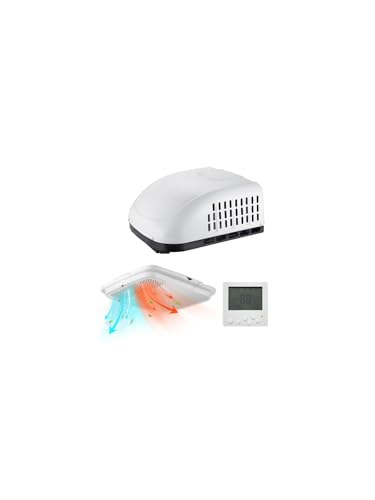
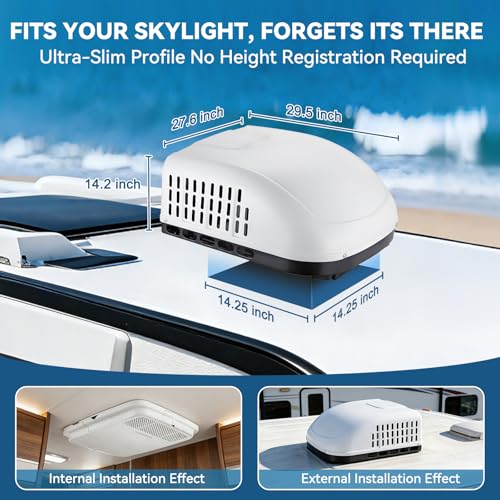
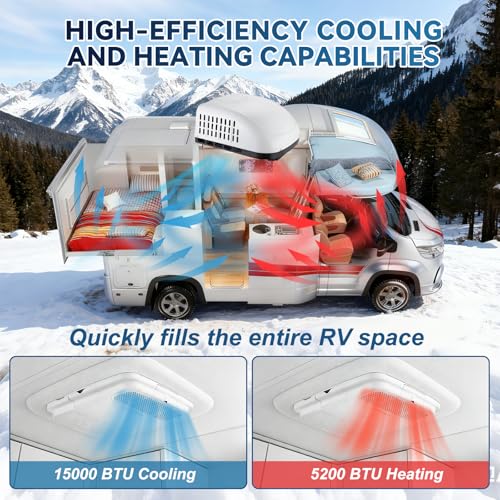
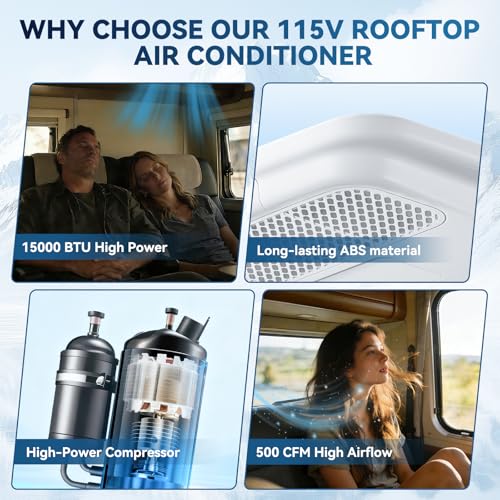
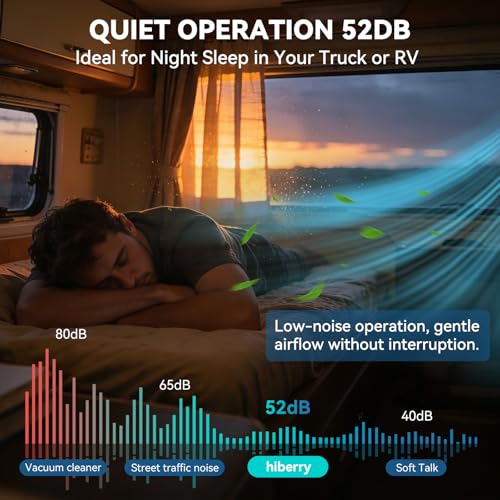
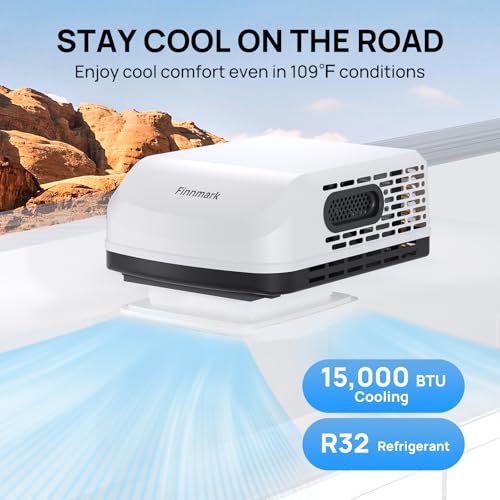
The hiberry 15,000 BTU unit is a standout for value, it packs heating, quiet operation, and solid build quality into a sub-$650 package. The PTC heating isn’t as strong as the TURBRO’s 1,500W element, but at 5,200 BTU, it’s enough for spring and fall use. The 52 dB noise level is consistent with owner feedback, and the brushless DC motor helps longevity.
What really impresses is the ease of installation. The pre-assembled design and standard 14.25” cutout fit mean most users report having it up in under two hours. It runs on 115V, so it’s not for off-grid use, but for RVers with regular shore power, this is a no-nonsense, durable unit that outperforms its price tag.
Product photos
TURBRO 15,000 BTU RV Air Conditioner

Strengths
- Strong 15,000 BTU cooling
- Full 1,500W heating
- Quiet at 52 dB
- App and remote control
- Ambient ceiling lighting
Trade-offs
- Requires 120V AC power
- No 12V DC option
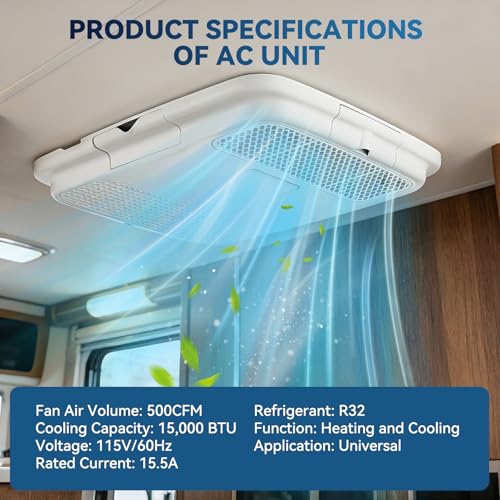
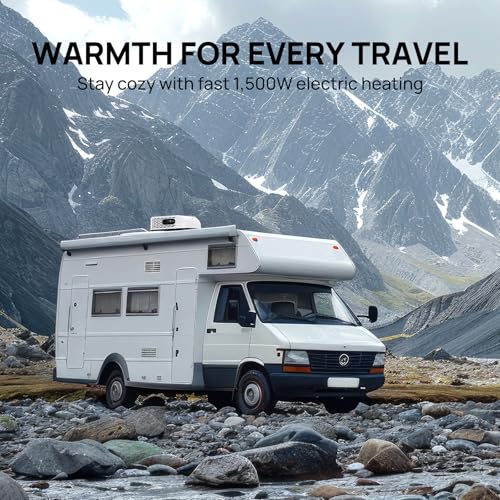
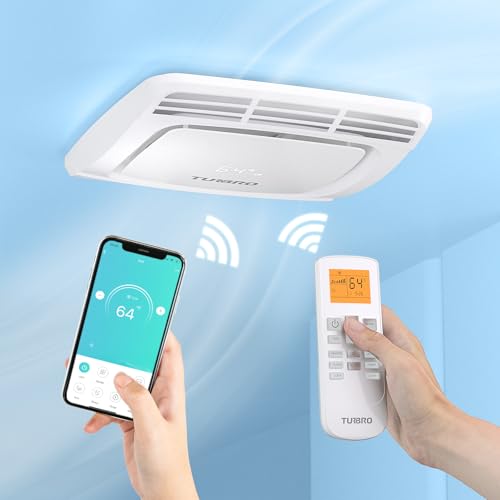
The TURBRO 15K unit is a well-rounded performer that balances cooling and heating in a way few others do. With 15,000 BTU cooling and a full 1,500W electric heater, it’s built for four-season use, something the 12V DC units can’t touch. The 9.6 EER rating is solid, and owners report it cools mid-sized RVs quickly, even in 90°F+ heat.
It runs at 52 dB, which is acceptable but not class-leading. The app and remote work well, and the ceiling-mounted design with ambient lighting adds a touch of modern flair. Compared to the hiberry, it’s slightly pricier but offers similar performance. If you’re plugged in often or run a generator, this is a dependable, all-weather solution.
Product photos

How We Evaluated camper ac units
Rather than a hands-on lab test, my research for TheAutoZenith focused on a detailed comparison of published specifications and features across numerous models. I weighed owner reviews from sources like Amazon and RV forums alongside expert opinions from publications specializing in vehicle and camping technology. This process allowed me to build a ranking based on real-world feedback and objective data, helping identify units offering the best balance of performance and value.
For camper AC units, cooling capacity (BTUs) and power efficiency are paramount. A unit needs to reliably handle the heat, but extended off-grid use often depends on minimizing amp draw, making efficient designs crucial. Beyond that, noise levels significantly impact the camping experience – nobody wants a loud unit disrupting a peaceful night. These three factors heavily influenced my final rankings, prioritizing units that excelled in these areas.
Specifications reliably indicate cooling capacity and physical dimensions, while owner reviews provided insights into real-world performance and durability. I paid close attention to comments regarding ease of installation, noise levels (often differing from manufacturer claims), and long-term reliability. Understanding how well a unit holds up over time, and how easily it integrates into existing RV systems, is something specs simply can’t fully convey. If you’re looking for alternatives, you may also want to research portable AC units for flexibility. And don’t forget to consider your camper batteries to ensure you have enough power for extended use.
How To Choose The camper ac units
Finding the right cooling solution for your RV or camper can significantly elevate your travel experience. It’s about more than just beating the heat; it’s about comfort, efficiency, and ensuring your adventures aren’t sidelined by sweltering temperatures.
A good camper AC unit balances cooling power (measured in BTUs) with energy consumption, weight, and noise levels. Prioritize models designed for the specific voltage of your setup (12V DC for off-grid, 115V AC for shore power), and consider features like soft-start technology to minimize strain on your batteries. Look for units with robust construction and UV resistance for longevity.
Cooling Capacity & BTU Rating
The BTU (British Thermal Unit) rating is the first number most people look at, and for good reason. It dictates how much heat the unit can remove per hour. However, don’t simply jump for the highest BTU available. Over-sizing can lead to short-cycling (the unit turning on and off frequently), reducing efficiency and lifespan. A general rule of thumb is 1 BTU per square foot of living space, but factor in insulation quality, climate, and sun exposure. If you’re in a particularly hot and sunny region, or have minimal insulation, you might want to slightly increase that ratio.
Power Source & Efficiency
Deciding between a 12V DC and 115V AC unit is crucial. 12V DC units, like the Xenjum and Gidrox, are fantastic for boondocking (camping without hookups) as they run directly off your RV’s battery bank. However, they typically offer less cooling power for a given size. 115V AC units require shore power or a generator. When considering efficiency, pay attention to the EER (Energy Efficiency Ratio) rating. Higher EER means more cooling for less energy. And if you’re running off battery, look for units with soft-start technology to reduce the initial power draw. For supplemental cooling, exploring options like efficient RV cooling fans can provide a valuable boost without draining your power.
Noise Level & Features
Nobody wants an AC unit that sounds like a jet engine. Noise levels are measured in decibels (dB). Anything above 60dB can be disruptive, especially at night. Many newer units, like the Gidrox, are designed with brushless motors and sound-dampening materials to operate at around 40-50dB.
Here’s what I see as a smart approach to features:
- Remote Control: Convenient, but almost standard now.
- Smart Control (WiFi/App): Useful for pre-cooling your camper before arrival, but adds complexity.
- Multiple Fan Speeds & Modes: This is actually valuable. Having options like “Sleep” mode (quieter operation) or “Auto” mode (adjusts cooling based on temperature) can significantly improve comfort and conserve energy.
Don’t underestimate the value of a quiet AC unit. A good night’s sleep is priceless on the road.
Ultimately, choosing the right camper AC unit depends on your specific needs and travel style. Before making a purchase, consider how you plan to use your RV, your power setup, and your tolerance for noise. You can find more options and detailed comparisons in our guide to the best AC for campers.
Camper AC Units Compared
This table provides a side-by-side comparison of key specifications for several camper AC units.
| Product Title | BTU Cooling | BTU Heating | Voltage (AC) | Voltage (DC) | Noise Level (dB) | Weight (lbs) |
|---|---|---|---|---|---|---|
| Furrion Chill Cube 18K | 18,000 | N/A | 115V | N/A | N/A | 72.4 |
| Arsenda 18000 BTU | 18,000 | 10,236 | 115V | 12V | 50 | N/A |
| Xenjum 11000BTU | 11,000 | N/A | N/A | 12V | 35 | 43 |
| Gidrox 10000 BTU | 10,000 | N/A | N/A | 12V | 40 | 54 |
| COSTWAY 6500 BTU | 6,500 | N/A | 115V | N/A | 50 | N/A |
| hiberry 15000 BTU | 15,000 | 5,200 | 115V | N/A | 52 | N/A |
| TURBRO 15,000 BTU | 15,000 | 1,500 | 120V | 12V | 52 | N/A |
Frequently Asked Questions
What size AC unit do I need for my camper?
Generally, you’ll want 1 BTU of cooling per square foot of living space, but this is a starting point. Consider your camper’s insulation, the climate you’ll be in, and how much sun exposure it gets; hotter climates and poor insulation mean you’ll benefit from a higher BTU rating.
Can I run a camper AC unit off a generator?
Yes, most 115V AC camper units can be run with a generator, but the generator must have sufficient wattage to handle the unit’s startup surge. Look for units with soft-start technology to reduce that initial power draw and avoid overloading your generator.
What’s the difference between a hard-top and a soft-top camper AC unit?
Hard-top units are designed for permanent installation in a typical RV roof, offering more robust cooling and often higher BTU ratings. Soft-top units, like those from Xenjum or Gidrox, are portable and easier to install in vans or campers without a dedicated roof AC opening.
Are 12V DC camper AC units powerful enough for hot climates?
While 12V DC units have improved, they generally offer less cooling power than 115V AC models. For very hot climates, a 115V unit with shore power or a powerful generator is usually more effective, though supplemental cooling with fans, as well as considering camper heaters for colder weather, can help manage temperature swings.
How can I keep my camper cool without relying solely on AC?
Beyond air conditioning, strategies include parking in the shade, using reflective window coverings, and maximizing ventilation. Also, efficient temperature regulation benefits from a quality camper fridge that doesn’t generate excess heat.
The Bottom Line
Choosing a camper AC unit often comes down to balancing initial cost with long-term comfort and convenience. While higher BTU models like the Furrion Chill Cube 18K deliver powerful cooling, the Gidrox 10000 BTU strikes a fantastic balance between performance, reasonable power draw for off-grid setups, and a quieter operation that won’t disrupt your peace. Ultimately, the best unit isn’t the most powerful, but the one that best suits your needs.
For those prioritizing budget-friendliness and occasional use with shore power, the COSTWAY 6500 BTU offers a solid entry point. If you’re dedicated to boondocking and need a 12V solution, the Xenjum 11000BTU is a strong contender. And for those looking to maximize their independence, investing in camper solar panel kits will allow you to replenish your batteries and enjoy extended off-grid cooling.
Don’t get too caught up in chasing the highest BTU rating or the lowest decibel level. More important than any single specification is a realistic assessment of your camping style, your power source, and the climate you’ll be facing. A well-maintained, appropriately-sized unit paired with a strategy for managing humidity – perhaps with one of the best dehumidifier for campers – will provide far more lasting comfort than any top-end feature alone.
