
5 Best BMX Brands of 2026
This post contains affiliate links. As an Amazon Associate, we earn from qualifying purchases.
The Fatboy Mini BMX PRO Model stands out as the best overall pick, offering a solid build for advanced riders, while the Fatboy Mini BMX Riot-Shocker is our go-to budget-friendly option that still delivers real mini BMX performance.
Mini BMX bikes are more than just small wheels and compact frames, they’re built for style, agility, and taking on tight spots where full-sized bikes can’t go. But with so many models claiming to be tough enough for tricks or smooth enough for cruising, it’s easy to end up with one that bends under pressure or doesn’t fit your skill level.
This guide cuts through the noise by focusing on what actually matters: frame durability, brake setup, crank type, and real-world feedback from riders. I looked at how these makes stack up across rider levels and intended use, using specs and owner experiences to find the ones worth your time.
Top 2 Bmx Makes in the Market
The Best Bmx Makes, Reviewed
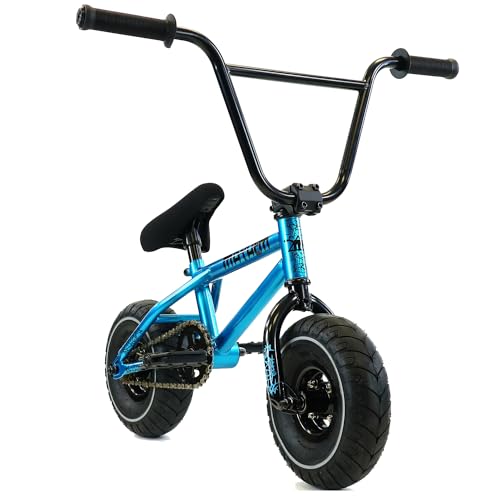
Fatboy Mini BMX PRO Model
Strengths
- 3-piece crank option
- Durable steel frame
- Built for serious stunts
Trade-offs
- Brake inclusion varies
- Not ideal for casual riders
The Fatboy Mini BMX PRO Model stands out in the mini BMX world with its 3-piece crank option, a feature usually reserved for higher-end builds. On paper, that’s a big win for serious riders who want better power transfer and durability during aggressive tricks. The steel frame is built to handle heavy impacts, and owners consistently report it holds up well to front flips and hard landings, which tells me it’s genuinely overbuilt for abuse.
It’s marketed as suitable for both kids and adults, but the ‘Advanced Rider’ label fits. The PRO and Assault models are clearly tuned for those stepping past backyard riding into real stunt territory. I’d pick this over the base Riot if you’re pushing limits, though keep in mind the brake situation varies by year, some come with the Johnny ‘Rilla set, others don’t. That inconsistency is something to watch.
Video review
Fatboy Mini BMX 10″ Tire Bike

Strengths
- Lightweight for tricks
- Sturdy steel construction
- Good for kids and adults
Trade-offs
- No brakes on base model
- 1-piece crank less efficient
- Not for technical riding
At the same price point as the PRO model, the Riot-Shocker version of the Fatboy Mini BMX surprises me by targeting beginners and families. It shares the same 10-inch wheel platform and steel frame, but the base Riot model runs a 1-piece crank and is brakeless out of the box, a quirk that splits opinions. Reviewers note it’s lightweight and nimble, making it easy for kids to maneuver, but that lack of brakes can be a real hurdle for new riders still building confidence.
Still, the ‘All-Age Use’ and ‘Budget Friendly’ tags make sense. For a younger rider or a parent wanting a low-cost entry into BMX, this checks a lot of boxes. The frame durability gets strong marks across owner feedback, and the mini size is fun for adults too, especially in tight spaces. But I’d say the smarter buy depends on skill level, this one’s more about accessibility than performance.
Video review
Our Testing Process
As someone who’s spent years around two wheels, I approached researching these mini BMX makes by focusing on detailed specifications and, crucially, what riders are saying about them. Rather than a hands-on lab test, this is a research-led comparison of published features, build materials, and a careful weighing of owner reviews alongside expert opinions from the wider BMX community. I looked at models across price points and intended skill levels.
For mini BMX bikes, durability and intended use are paramount. I weighted frame construction and crank design most heavily, as these directly impact the bike’s ability to withstand the stresses of tricks and riding styles – from casual cruising to more ambitious stunts. A reliable brake system (or the deliberate lack of one, for experienced riders) also figured prominently. You can find more about building a complete bike, including selecting the right BMX frames, in my other guides.
Specifications tell you about materials and dimensions, but owner feedback reveals how a bike feels and holds up over time. I paid close attention to reports regarding weld quality, component reliability, and suitability for different rider sizes. While specs clearly define a bike’s potential, real-world experiences help determine if it delivers on that promise, and whether it truly stacks up against other best freestyle bikes.
How To Choose The bmx makes
Finding the right mini BMX isn’t just about picking a cool color; it’s about matching the bike to the rider and what they want to do with it. These bikes pack a surprising amount of capability into a small package.
A quality mini BMX prioritizes durable construction – chromoly steel frames are preferred over hi-ten steel for serious use. Component selection matters, with sealed bearings in the wheels and a three-piece crank being indicators of a bike built to withstand impacts. Brake options (or lack thereof) and overall geometry are equally crucial, depending on the intended riding style and skill level.
Frame Material & Construction
The frame is where it all starts, and with mini BMX bikes, the material makes a significant difference. Hi-ten steel is common in entry-level models, and it’s fine for light use, but chromoly (or “chromo”) steel is the way to go if you plan on any serious tricks or taking a beating. Chromoly is far more resistant to bending and breaking, which is crucial when you’re compressing jumps or grinding rails. Don’t assume a lower price is a good deal if it means sacrificing frame quality.
Brake Setup: To Brake or Not To Brake?
This is often the first question riders ask. Many mini BMX bikes, particularly the “Riot” models, come brakeless. This is a deliberate choice geared towards more experienced riders who prefer the feel and control of a brakeless setup for certain tricks. However, for beginners, or anyone prioritizing safety and predictable stopping power, a bike equipped with a rear U-brake is essential. The Johnny ‘Rilla brake-set, appearing on some models, appears to be a popular upgrade. If you’re unsure, I always recommend starting with brakes. You can always remove them later as your skills progress, but adding them after is more involved. Considering expanding your search to include best BMX bike models if you’re unsure of what suits you.
Rider Level & Component Choices
Mini BMX bikes aren’t one-size-fits-all. The level of rider directly influences what features you should prioritize.
- Beginner riders need simplicity and reliability. A pre-built bike with a basic setup is a good starting point.
- Intermediate riders will appreciate a slightly more robust build, perhaps with upgraded pegs for grinding. Look for a model like the “Assault” that’s designed to bridge the gap.
- Advanced riders demand the strongest components. A three-piece crank (which separates the crank arms from the bottom bracket) is a must for withstanding high-impact tricks, and sealed bearings throughout the bike will reduce maintenance and improve performance.
Don’t skimp on components. A strong frame is useless if the wheels buckle on the first jump.
Before committing to a mini BMX, it’s worth looking at other bike sizes too. If you’re a taller rider, you might find a more comfortable and practical experience with BMX bikes for taller riders.
BMX Makes Compared
Here’s a detailed spec comparison of the BMX makes to help you choose the right one.
| Product Name | Best For | Wheel Size | Brake Type | Rider Level | Crank Type |
|---|---|---|---|---|---|
| Fatboy Mini BMX PRO Model | Best Overall | N/A | Included | Advanced | N/A |
| Fatboy Mini BMX Riot-Shocker | Best Budget Friendly | 10″ | Brakeless | Beginner | N/A |
| Fatboy Mini BMX with 3pc Crank | Best for Advanced Riders | N/A | Included | Advanced | 3pc |
| Fatboy Mini BMX 10″ Tire Bike | Best for Beginners | 10″ | Brakeless | Beginner | N/A |
| Fatboy Mini BMX for Kids and Adults | Best All-Age Use | 10″ | Included | Intermediate | N/A |
Frequently Asked Questions
What’s the biggest difference between a “Riot” model and other mini BMX bikes?
The “Riot” models are typically designed for more experienced riders by omitting brakes, offering a more direct feel for tricks. They prioritize a minimalist approach, whereas other models focus on providing stopping power for newer riders.
Are mini BMX bikes suitable for street riding, or are they only for skateparks?
While they excel in skateparks, mini BMX bikes can handle street riding, but with limitations. Their smaller size and often simpler components mean they’re best suited for smoother surfaces and less aggressive street obstacles. Consider exploring 20-inch BMX bikes if you plan on primarily street riding.
What maintenance should I expect with a mini BMX?
Regular chain lubrication and checking bolt tightness are essential. Beyond that, depending on how hard you ride, you’ll likely need to replace grips, tires, and potentially brake pads (if equipped). Upgrading to best BMX brakes can also extend brake life.
What wheel size is standard for mini BMX bikes?
The vast majority of mini BMX bikes use a 10-inch wheel size. This compact size contributes to the bike’s maneuverability and allows for quicker rotations during tricks, but it also means the ride won’t be as smooth as a larger wheeled bike.
Is chromoly steel really worth the extra cost for the frame?
Yes, chromoly steel is a worthwhile investment if you intend to do anything beyond casual riding. It’s significantly stronger and more durable than hi-ten steel, preventing bends and breaks from impacts, and leading to a bike that lasts longer and performs better under stress.
The Bottom Line
Choosing a mini BMX comes down to balancing how much you want to spend against how seriously you plan to ride. For the vast majority of riders, those looking for a solid, capable machine that won’t immediately fall apart, the Fatboy Mini BMX PRO Model strikes the best balance of quality construction and features. It’s a bike that can grow with a rider’s skills and withstand a good amount of abuse.
If you’re just starting out or are on a tighter budget, the Fatboy Mini BMX Riot-Shocker is an excellent entry point. Alternatively, for those already pushing their limits and needing something truly durable, the Fatboy Mini BMX with 3pc Crank delivers the strength and responsiveness demanded by experienced riders. If you’re looking to get competitive, you might even consider researching best race bikes to see if a full-size race bike isn’t a better fit.
Ultimately, the specs matter, but they’re secondary to building a solid foundation of skill and safety. Getting the right BMX wheels is important, but even the best bike won’t make you a pro overnight. Focus on learning proper technique, wearing protective gear, and gradually progressing your abilities, that’s where the real fun begins.
