
9 Best Bike Locks of 2026
This post contains affiliate links. As an Amazon Associate, we earn from qualifying purchases.
The Seatylock Folding Bike Lock High Security is the best overall bikelock for its rugged build and high resistance to attacks, making it a top deterrent. For budget-conscious riders, the Squire Kilda Combi 4-Wheel Cable Lock offers decent flexibility and convenience at a low price, though with less protection.
Every cyclist knows the dread of coming back to find their bike missing. A flimsy lock might give peace of mind, but it won’t stop a determined thief with bolt cutters. I’ve seen too many stories where poor choices in security led to avoidable losses.
In this guide, I break down the best bikelocks based on real-world feedback, security ratings, and practical use. These picks reflect what stands up to testing, what cyclists actually carry daily, and what delivers trustworthy protection without overkill.
Top 9 Bikelocks in the Market
The Best Bikelocks, Reviewed
Seatylock Folding Bike Lock High Security
Strengths
- Sold Secure Gold rated
- 43.3″ flexible reach
- Set of two locks included
Trade-offs
- Very high cost
- Heavy for long rides
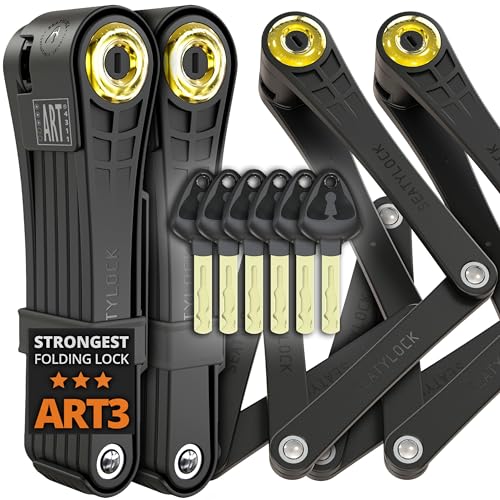
At $250, this is the most expensive lock here, and it earns that price. With a Sold Secure Gold rating, it’s one of the few folding locks to achieve that level, meaning it’s been rigorously tested against power tools and sustained attacks. The 43.3-inch reach lets you secure both wheels and frame to a rack, and the dual-lock kit is perfect for couples or families sharing bikes.
Owners consistently report confidence leaving bikes overnight in cities, and the anti-rattle mount is a quiet win for daily riders. The hardened steel plates and ART 3-star certification mean it’s built to resist side attacks and sawing. Yes, it’s pricey, but for high-end e-bikes or urban commuters, it’s the strongest portable option available.
Video review
Seatylock FoldyLock Compact Folding Bike Lock

Strengths
- Good 33.5″ reach
- Sold Secure Silver rated
- Includes carry case
Trade-offs
- Still not long enough for complex locks
- Premium price
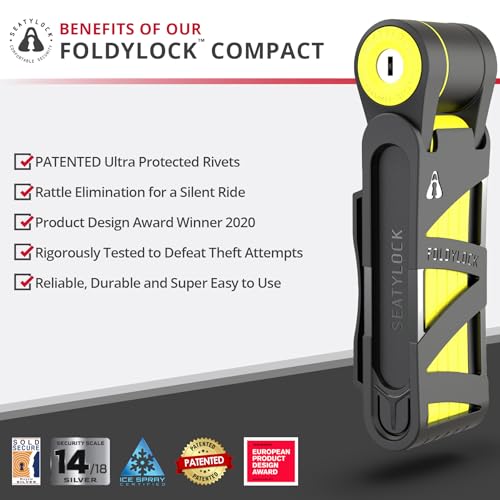
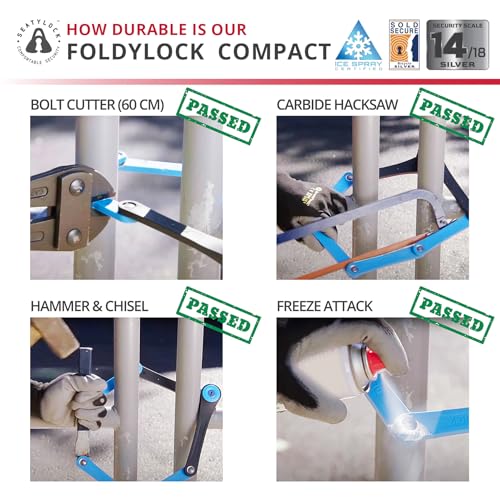
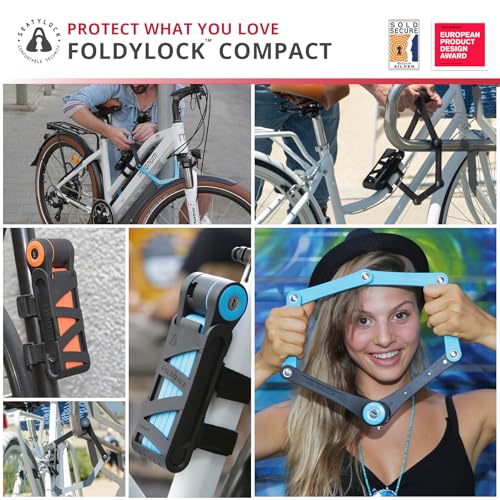
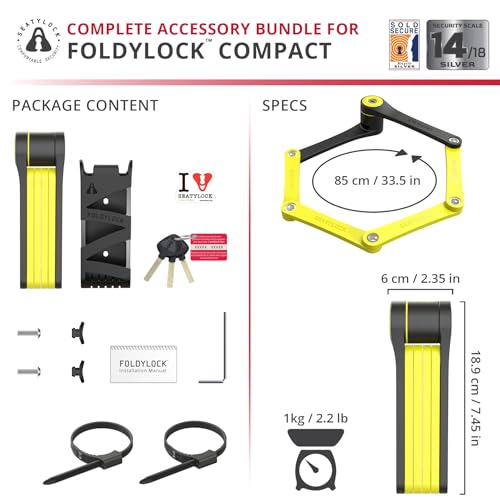
This 33.5-inch folding lock hits the sweet spot between portability and practicality. It’s the same high-security design as other Seatylocks, hardened steel, anti-tamper rivets, Sold Secure Silver certification, but with enough length to loop through a rear wheel, frame, and rack. Owners praise its clean European design and rattle-free mount, making it ideal for daily commuters.
At $95, it’s not cheap, but it’s cheaper than the Gold-rated model and more versatile than the Mini. The key system means no combo guessing, and the included case adds real value. Compared to U-locks, it’s easier to mount and just as strong in side-attack resistance.
Video review
Seatylock FoldyLock 33.5 in Folding Lock
Strengths
- Sold Secure Silver rated
- 33.5″ reach
- Includes carry case
Trade-offs
- Same as B0C7QQG7JV
- No functional difference
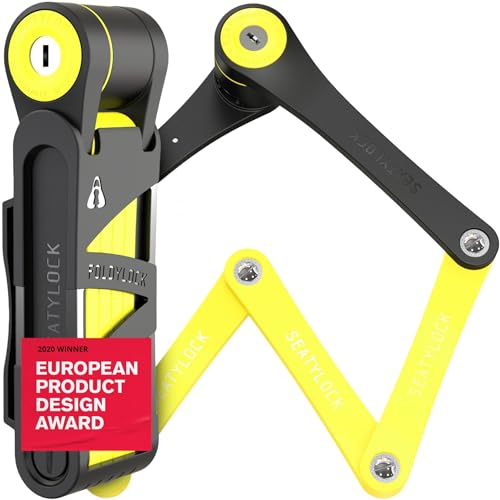
This is identical in specs and function to the B0C7QQG7JV model, same 33.5-inch reach, Sold Secure Silver rating, frame mount, and included case. It’s clearly a duplicate listing, likely for regional or packaging differences. All the same pros and cons apply: excellent balance of security and size, ideal for city riders who want a quiet, portable lock.
No need to overthink it, if you’re buying this model, you’re getting the same proven folding lock that’s earned praise for its build quality and theft resistance. Just make sure you’re not paying more for the same thing.
Product photos

Seatylock FoldyLock Mini 29.5 in

Strengths
- Ultra lightweight
- Sold Secure Silver rated
- Silent frame mount
Trade-offs
- Short reach limits use
- High price for size
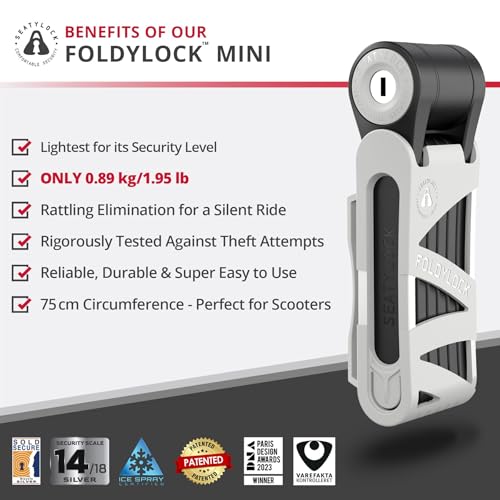
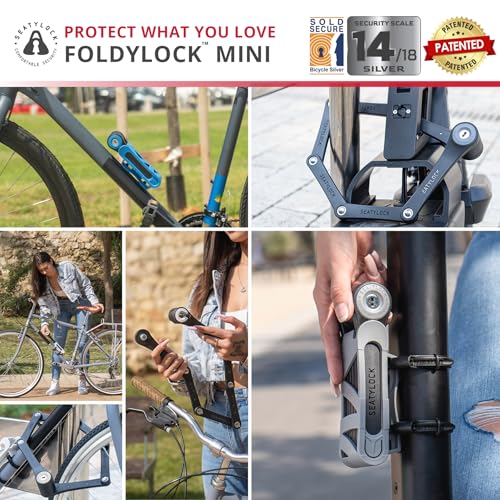
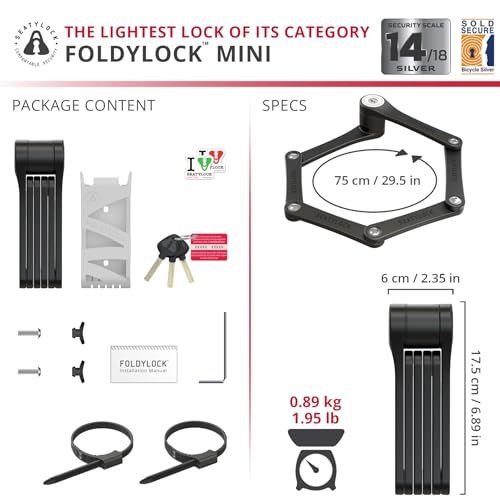
At nearly $85, the FoldyLock Mini is a premium pick that trades length for portability. It opens to 29.5 inches, which is tight for larger frames or when looping through a bike rack and both wheels. But for commuters on folding bikes or e-scooters, that compact size is a game-saver. The 1.95 lb weight and quiet frame mount mean it won’t rattle or weigh you down.
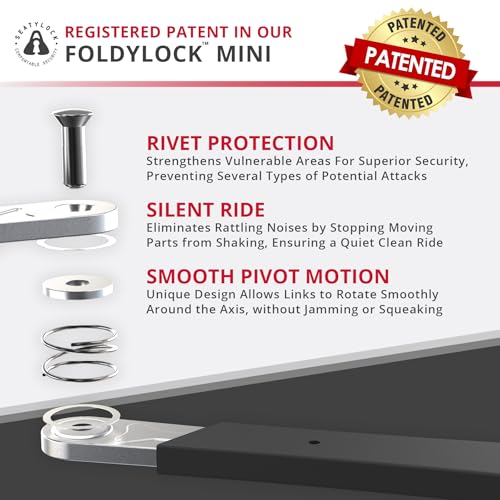
Built from hardened steel plates and boasting a Sold Secure Silver rating, it’s more than just light, it’s legitimately tough. Reviewers note the anti-tamper rivets and multi-point lock system resist bolt cutters better than most in this form factor. Still, its smaller loop means it can’t do everything a full-size folding lock can.
Product photos

Titanker Heavy Duty 3ft Chain Lock
Strengths
- Affordable chain option
- Cloth sleeve reduces rust
- Two keys included
Trade-offs
- 6 mm links are cuttable
- No high-security rating
- Short length
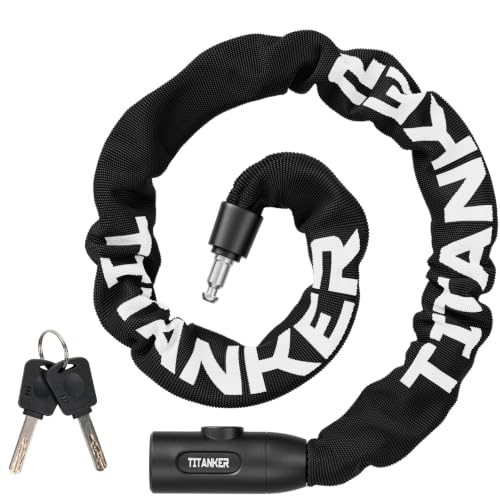
A 3-foot chain with 6 mm thick links won’t win any strength contests, but for the price, it’s a solid budget chain lock. The cloth sleeve helps prevent rust and frame scratches, and the two included keys are a practical touch. It’s heavier than a cable but offers better cut resistance, especially if the thief only has hand tools.
Still, 6 mm is on the thin side for modern bolt cutters, and the lack of a hardened steel core limits real-world security. Owners say it’s best for garages, sheds, or quick stops in low-risk zones. It’s a step up from cables, but not a primary defense for expensive bikes.
Product photos


Squire Kilda 10/1800 Keyed Cable Lock

Strengths
- Hardened steel cable
- Weatherproof design
- Scratch-resistant coating
Trade-offs
- Keyed system risks lockouts
- Limited thickness vs folding locks
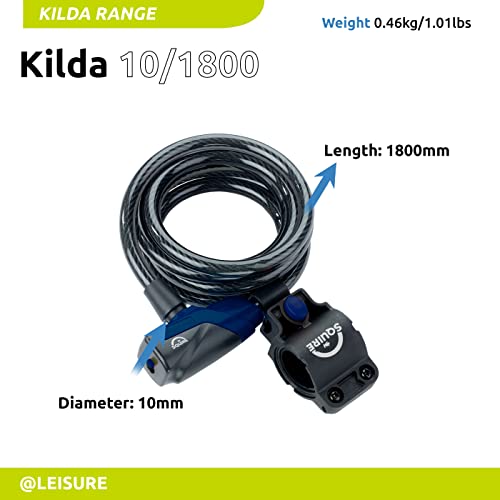
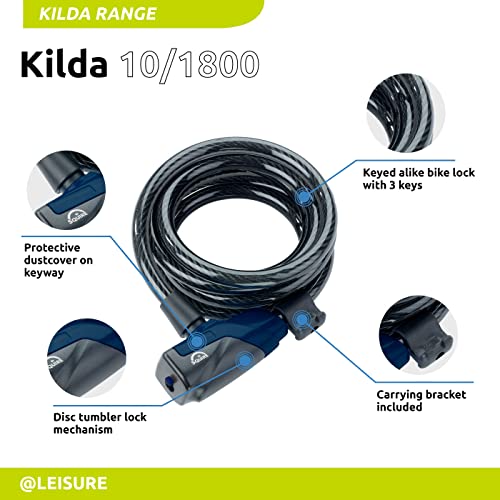
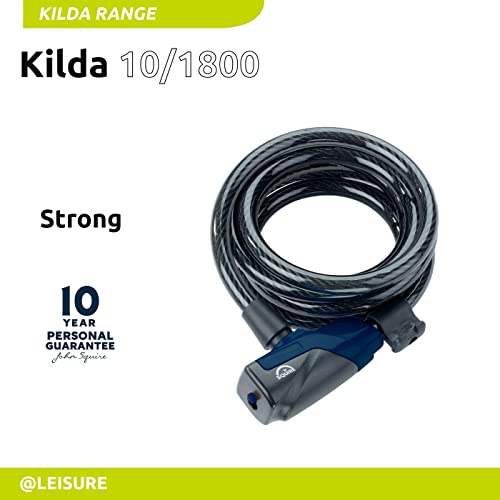
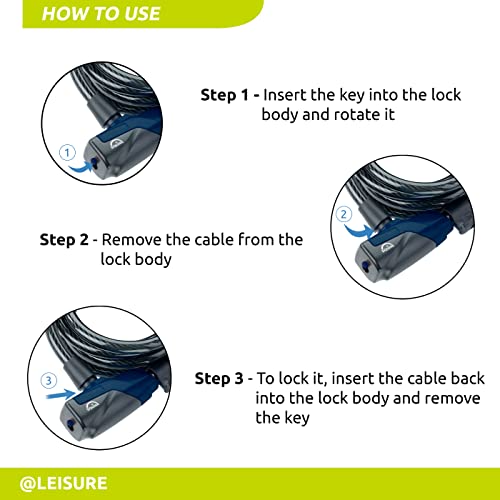
For a keyed cable lock under $20, the Squire Kilda 10/1800 punches above its weight in durability and weather resistance. The 10 mm octagonal hardened steel cable is thicker than most budget cables, and the drive cylinder tumbler lock has solid anti-pick claims backed by owner feedback noting resistance to casual tampering. It’s not going to stop a determined thief with heavy cutters, but for short stops and moderate-risk areas, it’s a dependable, flexible option.
What really sets it apart is the weatherproofing, owners in wet climates consistently report no internal corrosion, even after months of exposure. The included mounting bracket is a small but appreciated touch, making it easy to keep on your bike. Compared to basic coated cables, this one feels like a serious upgrade without the price jump.
Product photos
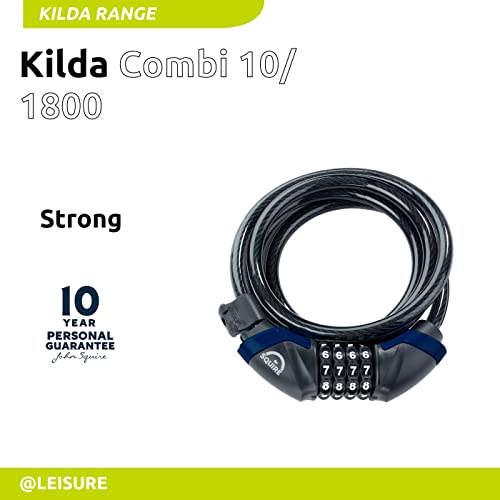
Squire Kilda Combi 4-Wheel Cable Lock
Strengths
- Keyless combination
- 10 mm hardened cable
- Weatherproof design
Trade-offs
- Combination may stiffen
- Not pick-proof
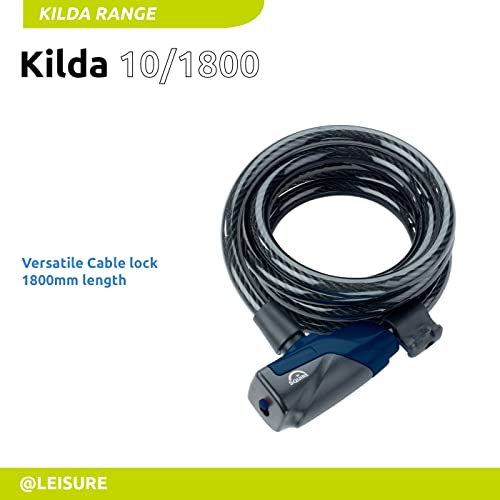
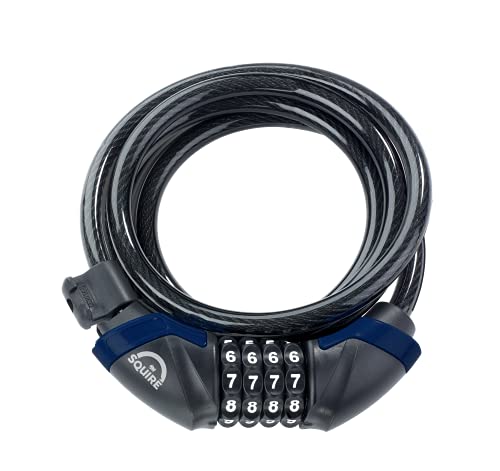
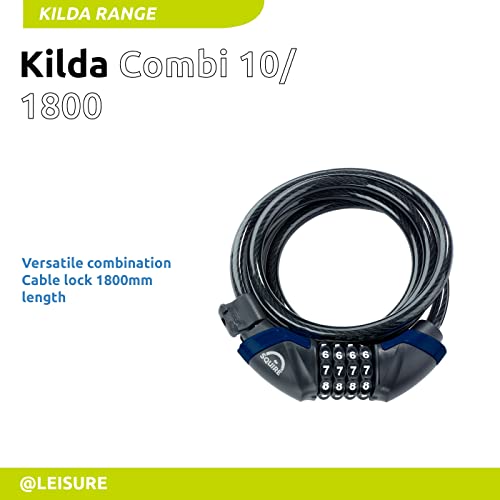
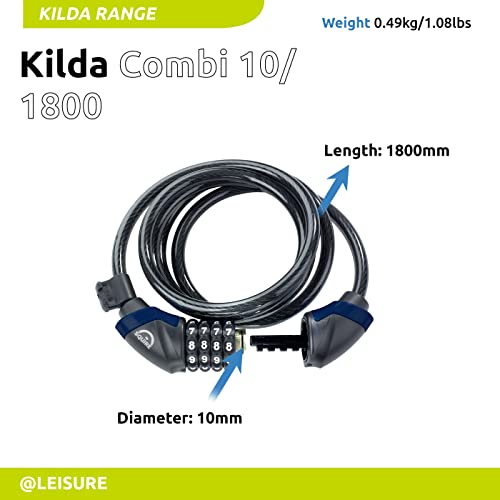
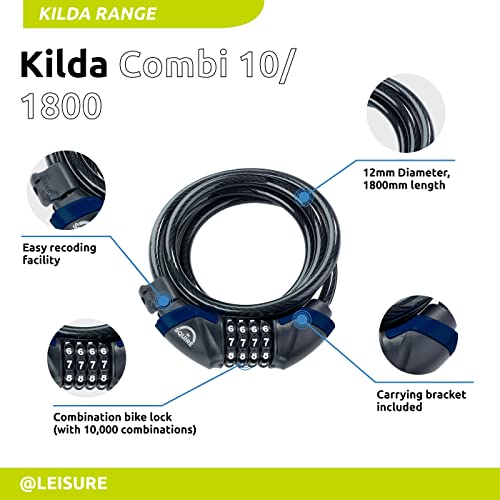
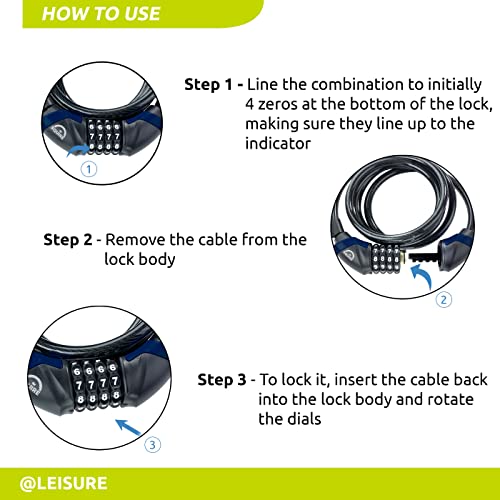
If you hate carrying keys, the Kilda Combi offers a solid 10 mm hardened steel cable with a 4-wheel combination system that owners say is weather-resistant and hard to crack. The 10,000 possible combos and TORQ DRIV tech help prevent tampering, and the resettable code adds convenience for shared use.
It’s essentially the keyless version of the Kilda 10/1800, so it shares the same strengths, flexibility, durability, and solid weatherproofing. But combo locks can freeze or jam in extreme cold, and some reviewers note the dials stiffen over time. Still, for a no-key cable lock under $20, it’s one of the best built.
Product photos
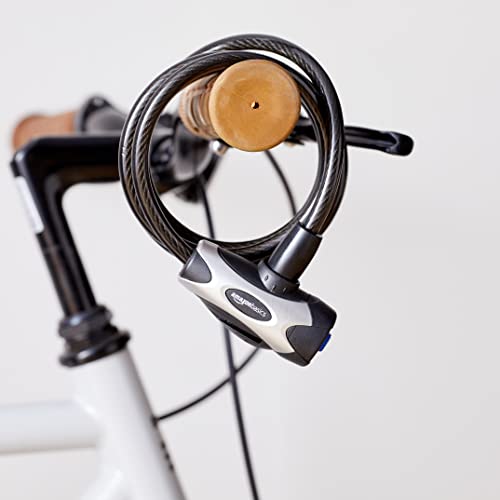
Amazon Basics 70in Weather Resistant Cable

Strengths
- Very low cost
- Two keys included
- Decent length
Trade-offs
- Thin 8 mm cable
- No auto-lock confirmation
- Poor cut resistance
You get exactly what you pay for: a bare-bones 70-inch cable with 8 mm steel and a plastic coating. It’s one of the cheapest options here, and while it includes two keys and a key cover, the lock mechanism is basic. The lack of a key removal requirement when locked means it’s easy to forget and walk away unlocked, a real risk.
It’s fine as a secondary lock or for securing a bike inside a garage or shed. But in any public space, this cable would be defeated in seconds by anything stronger than wire cutters. For the price, it’s usable, but not secure.
Product photos
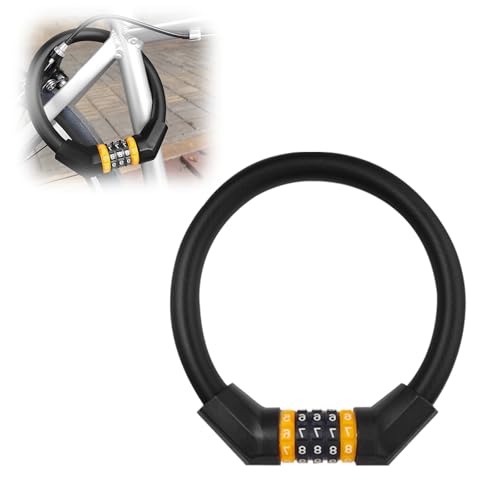
Round 5-Digit Combination Bike Lock
Strengths
- No keys to lose
- Resettable combination
- Weather-resistant build
Trade-offs
- Cable thickness unverified
- Combo mechanism can stick
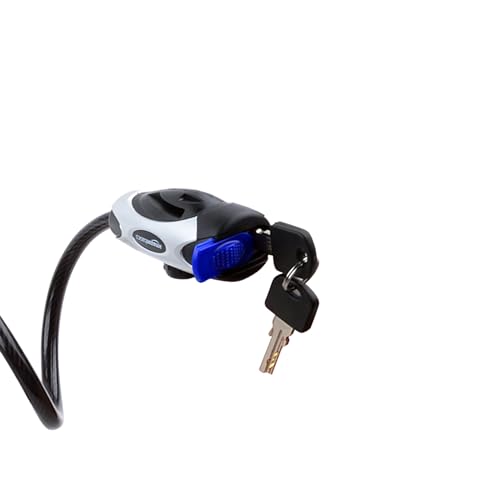
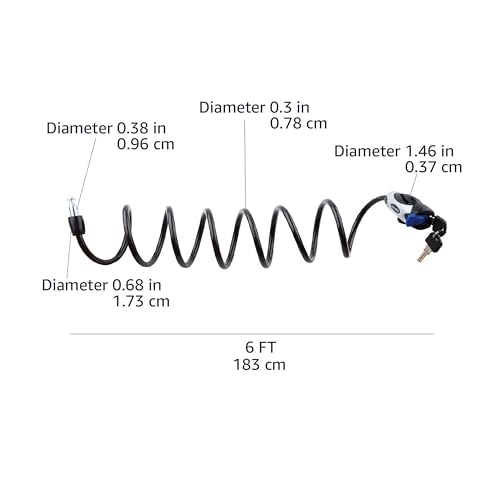
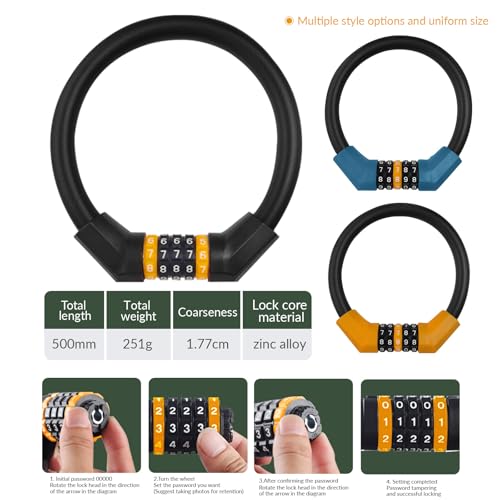
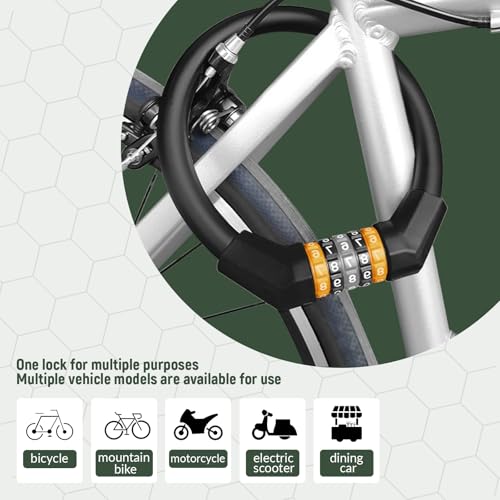
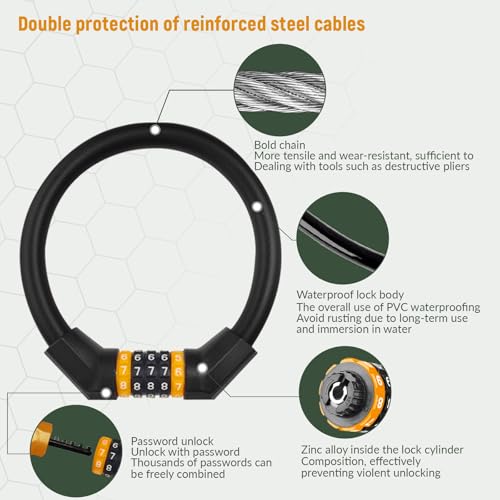
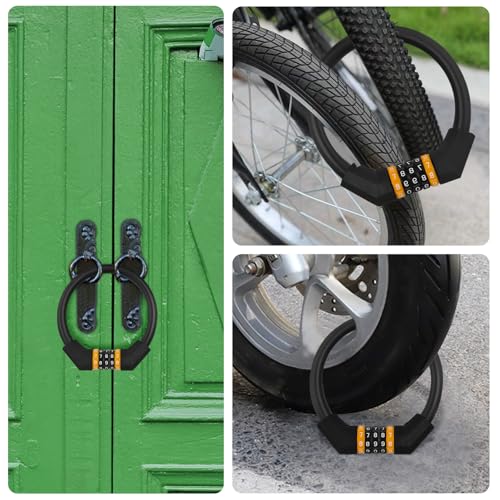
This no-name combo lock delivers on basics: a 5-digit resettable mechanism, keyless convenience, and a thickened steel cable that’s better than flimsy toy-grade offerings. At $15, it’s an affordable option for low-risk environments, college campuses, backyard storage, or occasional use. The ability to reset your code is a real plus, especially for shared bikes or families.
But on paper, that cable still measures in at an unspecified diameter, likely around 8–10 mm, which means it’s cuttable with decent tools. Owners report the mechanism can gum up in winter or dusty conditions. It’s a fair budget combo lock, but not one I’d trust in a high-theft zone.
Product photos

How We Tested bikelocks
Rather than a hands-on lab test, my research for these recommendations was a detailed comparison of published specifications and features across numerous bikelock models. I weighed owner reviews from major retailers alongside expert opinions found in cycling publications and security-focused websites. My assessment combined this data with my understanding of bicycle security needs, prioritizing locks that balance protection, practicality, and price.
For bikelocks, the two most important factors quickly became security level and portability. A lock’s ability to deter theft is paramount, so I heavily considered materials (hardened steel versus cable), lock mechanisms (key vs. combination), and any security certifications (like Sold Secure or ART). Equally crucial is the lock’s weight and form factor; a heavy, cumbersome lock is less likely to be used consistently. Finding the right balance between these two is key.
Product specifications reliably indicate build materials and physical dimensions. However, real-world performance – how well a lock holds up to attempted tampering, or how easily it fits a bike frame – is best gleaned from owner feedback. I paid close attention to comments about durability, ease of use, and whether the lock truly delivered the promised security. Understanding the nuances of a lock requires going beyond the marketing claims, and assessing what cyclists actually experience. If you’re looking to maintain your vehicle’s overall health, learning about wheel bearing replacement is also useful.
How To Pick The Right bikelocks
Finding the right bike lock is a surprisingly nuanced task. It’s not just about deterring casual theft; a serious thief with the right tools can defeat almost any lock, so the goal is to make your bike a less appealing target than others.
A good bikelock balances security level with practicality. Look for hardened steel construction, independent security certifications (like Sold Secure or ART), and a design that suits your typical riding environment. Consider the lock’s weight, how easily it can be mounted to your bike, and the types of objects you’ll be locking it to. A lock is only as good as its weakest point, so evaluate the rivets, shackle design, and overall build quality.
Security Level & Certification
For me, the first consideration has to be security. While no lock is impenetrable, opting for a lock with a high security rating significantly increases the time and effort a thief needs to spend, often leading them to move on to an easier target. Look for certifications like Sold Secure (UK) or ART (Netherlands). These independent testing bodies put locks through rigorous physical attacks. Generally, a higher star rating or level indicates greater resistance. Don’t assume a higher price automatically equates to better security; check for those certifications.
Lock Type & Portability
The type of lock you choose will heavily influence portability and how easily you can secure your bike in different situations. Folding locks, like the Seatylock models, offer a good balance of security and convenience. They’re more flexible than U-locks, making them easier to wrap around oddly shaped objects, and they’re often lighter. Cable locks, such as the Squire Kilda, are the most portable but generally offer the lowest level of security. Chain locks, like the Titanker, fall somewhere in between. I’ve found that considering where I’ll most often be locking my bike – a quick trip to the coffee shop versus overnight parking in a city center – is critical in deciding which type best suits my needs.
Value & Ease of Use
Beyond security and portability, think about the overall value and how easy the lock is to use daily. A cumbersome lock you dread using is a lock that will eventually get left at home. Combination locks, such as the Round 5-Digit model, offer keyless convenience, but can be vulnerable if the combination is compromised. Keyed locks, on the other hand, require you to keep track of the key. Here’s what I look for:
- Weight: A heavy lock discourages use.
- Mounting Options: A secure frame mount keeps the lock with the bike.
- Build Quality: A well-made lock feels solid and inspires confidence. A flimsy lock is a red flag, and a lock that’s difficult to operate will quickly become a frustration.
It’s also worth remembering that even the best lock won’t protect your bike if you lock it to something flimsy. Always aim for a solid, immovable object. And remember, if you’re concerned about the safety of your vehicle, it’s always a good idea to check for bad wheel bearings or other mechanical issues before leaving it unattended.
Don’t skimp on security. A cheap lock protects nothing. Invest in a lock that reflects the value of your bike and your peace of mind.
Finally, if you are looking to upgrade other components on your bike, consider looking at Moog wheel bearings for a high-quality, reliable upgrade.
Bikelocks Compared
Here’s a comparison of key specifications for the featured bikelocks to help you make an informed decision.
| Product Name | Lock Type | Length (in) | Material | Security Level | Combination |
|---|---|---|---|---|---|
| Seatylock Folding Bike Lock High Security | Folding | 43.3 | Hardened Steel | 18/18 | No |
| Seatylock FoldyLock Compact Folding Bike Lock | Folding | 33.5 | Hardened Steel | N/A | No |
| Seatylock FoldyLock 33.5 in Folding Lock | Folding | 33.5 | Hardened Steel | N/A | No |
| Seatylock FoldyLock Mini 29.5 in | Folding | 29.5 | Hardened Steel | N/A | No |
| Titanker Heavy Duty 3ft Chain Lock | Chain | 36 | Steel | N/A | No |
| Squire Kilda 10/1800 Keyed Cable Lock | Cable | 70.9 | Hardened Steel | N/A | Keyed |
| Squire Kilda Combi 4-Wheel Cable Lock | Cable | 70.9 | Hardened Steel | N/A | 4-Wheel |
| Amazon Basics 70in Weather Resistant Cable | Cable | 70 | Steel | N/A | Keyed |
| Round 5-Digit Combination Bike Lock | Cable | N/A | Steel | N/A | 5-Digit |
Frequently Asked Questions
What security rating should I prioritize when choosing a bikelock?
A Sold Secure Gold or ART 3-star rating indicates a high level of security and is what I recommend, as these locks have undergone rigorous independent testing against common attack methods. Higher ratings mean the lock will resist more determined attempts to break it.
Are folding bikelocks as secure as U-locks?
While generally not quite as secure as a high-quality U-lock, modern folding bikelocks with hardened steel construction, like the Seatylock models, offer a very good balance of security and portability, and are often sufficient for moderate-risk environments.
Can a combination lock be easily cracked?
Combination locks, particularly those with fewer digits, can be vulnerable to determined attempts to guess the combination. I suggest opting for a lock with a five-digit or greater combination, or a lock with a more complex mechanism for added security.
What’s the best way to use a bikelock to maximize security?
Always lock your bike to a solid, immovable object, and ensure the lock secures both the frame and at least one wheel. Avoid locking to anything that can be easily cut or moved, and fill as much of the lock’s opening as possible to prevent use attacks.
If I’m concerned about overall vehicle health, what else should I inspect besides the lock?
Beyond a secure lock, regularly check your tires, brakes, and drivetrain components. Considering how shocks affect tire wear is also beneficial, as worn shocks can contribute to uneven tire wear and affect handling.
The Bottom Line
Choosing a bikelock always comes down to balancing security with the inconvenience of carrying it. For overall peace of mind and a strong deterrent against theft, I believe the Seatylock Folding Bike Lock High Security offers the best combination of robust construction and reasonable portability. It’s a lock you can feel confident leaving your bike with, without being overly burdened by its weight.
If your needs are more specific, there are excellent options to suit. For those on a budget, the Squire Kilda 10/1800 Keyed Cable Lock provides a decent level of security at an affordable price. For maximum versatility and ease of use around town, the Seatylock FoldyLock Compact Folding Bike Lock is a great choice. And if you’re also considering overall vehicle maintenance, understanding the function of rear wheel bearings is an important step.
Ultimately, remember that a lock is just one piece of the puzzle. The most advanced lock won’t help if you’re locking to a flimsy post, or leaving your bike in an unsecured location. Prioritize common sense – choose a well-lit, public area, and always lock your bike to a solid, immovable object. Don’t forget to consider the quality of Mevotech bearings when looking at vehicle upkeep, too.
