
9 Best Armored Motorcycle Jackets 2026
This post contains affiliate links. As an Amazon Associate, we earn from qualifying purchases.
The REV’IT Airwave 3 stands out as the best armored motorcycle jacket for its superb balance of airflow, CE Level 2 protection, and durable construction, while the BORLEN Men’s CE Armor Motorcycle Jacket is a solid budget-friendly pick that doesn’t skimp on core safety features. For riders needing adaptability across seasons, the IRON JIA’S 3-in-1 Riding Hoodie offers strong versatility with removable layers and integrated armor.
Choosing the right armored motorcycle jacket can be overwhelming when you’re sorting through flashy claims and incomplete specs. As someone who’s spent years dissecting gear from both a mechanical and rider’s perspective, I know protection shouldn’t come at the cost of comfort or practicality. This guide cuts through the noise by focusing on real-world performance, what actually keeps you safe, cool, and confident on the road.
I researched each jacket based on armor quality, material durability, ventilation, and owner-reported fit, pulling from verified specs and long-term rider feedback. These picks reflect what matters most: trustworthy impact protection, resistance to abrasion, and features that support your riding style, whether you’re commuting, touring, or carving backroads.
Top 9 Armored Motorcycle Jackets in the Market
The Best Armored Motorcycle Jackets, Reviewed
COMMUTER Men’s Buffalo Leather Jacket

Strengths
- Genuine buffalo leather
- Full CE armor pre-installed
- Excellent ventilation and storage
Trade-offs
- Heavier than textile
- Higher price point
- Long break-in period
If you’re after a do-it-all leather jacket that ages well and protects reliably, this one checks nearly every box. Real 1.2–1.3 mm buffalo leather means it’ll break in nicely and last for years, thicker and more abrasion-resistant than many textile options. The pre-installed 5-piece CE armor is a big plus, and the action back adds freedom of movement that many stiff leather jackets lack.
Ventilation zippers on chest and back make it surprisingly breathable for summer, and the removable thermal liner works well when temps drop. The eight pockets, including a phone sleeve, are a commuter’s dream. Compared to the Milwaukee hoodie or budget textiles, this is the upgrade I’d make if you ride year-round and want heirloom-quality gear. It’s heavier, yes, but you’re paying for longevity and protection.
Video review
Milwaukee Leather Streetguard Riding Hoodie
Strengths
- Casual, low-profile look
- Aramid fiber reinforcement
- Comfortable mesh liner
Trade-offs
- Back protector sold separately
- Limited ventilation
- Not for high-speed rides
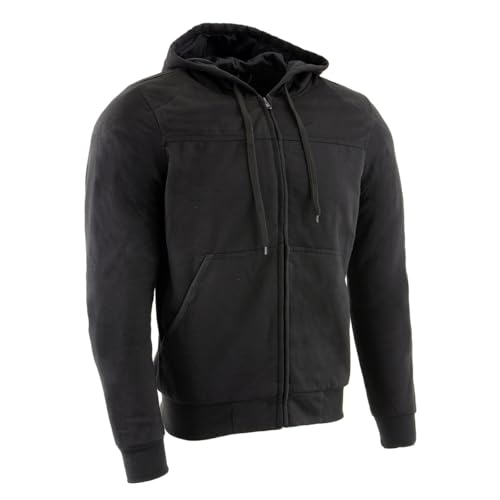
This armored hoodie is the best bet if you want to look like you’re not wearing motorcycle gear, but still be protected. The cotton-aramid blend gives it the look of a sturdy denim jacket while delivering real slide resistance in key zones. The CE armor at shoulders and elbows is removable, and the soft mesh liner keeps it comfortable even when worn off the bike.
What makes it stand out is how naturally it moves. Unlike boxy armored shells, this one drapes like casual wear, making it perfect for city commuting or weekend errands. The lack of a CE back protector (it’s sold separately) is a real limitation, but the internal pocket means you can upgrade later. Compared to full mesh or leather, this is the jacket I’d pick for low-key, everyday urban riding where style and function need to coexist.
Video review
ILM Mesh Motorcycle Jacket with Armor

Strengths
- High airflow mesh
- Good impact protection
- Removable thermal liner
Trade-offs
- Basic zipper feel
- Liner not very warm
- Fit runs slightly loose
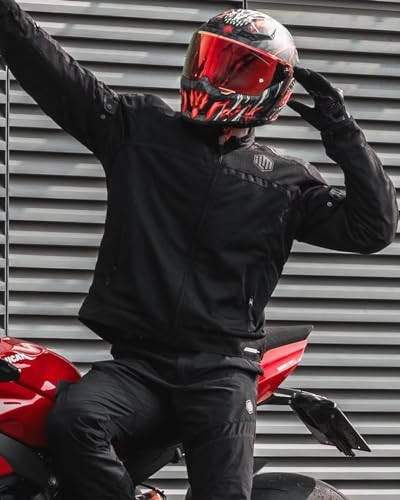
When the mercury climbs, this mesh-heavy jacket becomes a top contender. The extensive mesh panels, especially across the chest and back, move serious air, making it one of the most breathable textile options under $120. The 600D Oxford reinforcements at shoulders and elbows add abrasion resistance without killing airflow.
The removable thermal liner works for cool mornings, but it’s thin, don’t expect winter warmth. Still, for spring, summer, and early fall, it’s a solid single-jacket solution. Owners appreciate the reflective striping and pocket layout, though some note the zipper quality isn’t as smooth as YKK-equipped rivals. Compared to the Alpinestars, it’s less premium but more affordable and nearly as ventilated. For hot-weather commuters, it’s a smart balance.
Product photos



Milwaukee Leather Women’s Armored Jacket
Strengths
- True women’s cut
- All-season adaptability
- Good reflective coverage
Trade-offs
- Foam back pad (non-CE)
- Zippers can catch fabric
- Liner not as warm as premium options
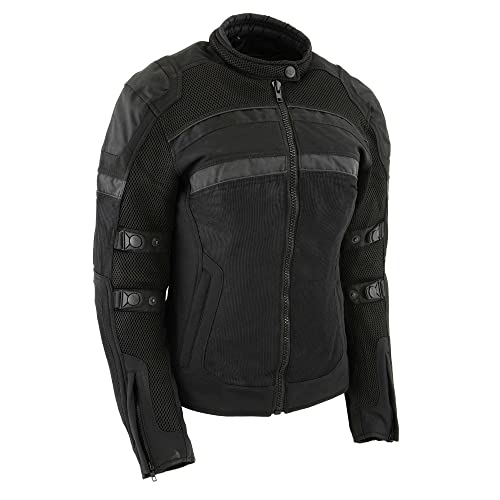
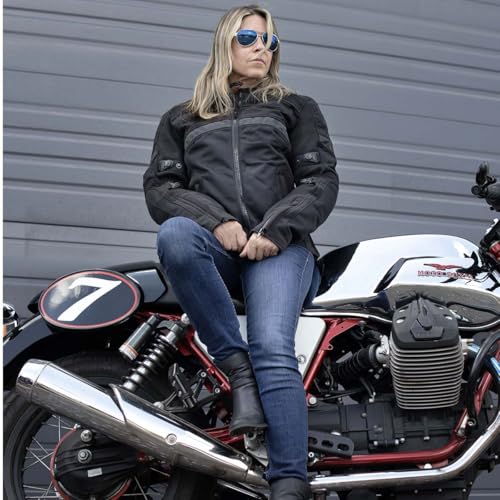
This is one of the most fully-featured women’s armored jackets under $100. It includes CE-approved armor at shoulders and elbows, passing the EN1621-1 standard, and has a removable thermal liner, making it genuinely all-season. The fit is tailored but not restrictive, and the hip-side zippers allow for expansion, which riders appreciate when layering.
The reflective piping is well-placed and boosts visibility significantly. While the back pad is foam and not CE-rated, it’s at least removable. Owners report it handles rain well thanks to the nylon textile shell, though heavy downpours may eventually seep through. Compared to the RSYSO mesh, this is better for cooler or wet weather, but not as breathable in summer. For versatility, it’s hard to beat.
Product photos


RSYSO Mesh Motorcycle Jacket Women
Strengths
- True women’s slim fit
- Ultra-lightweight mesh
- CE Level 2 armor
Trade-offs
- No thermal liner
- Not windproof
- Back protector not Level 2
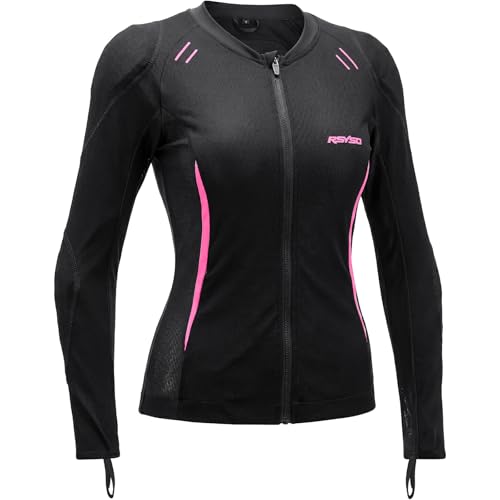
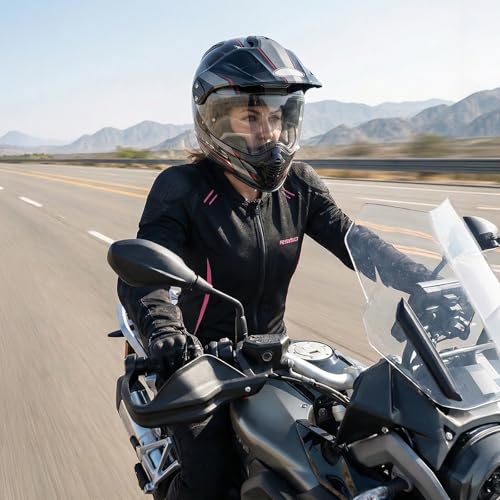
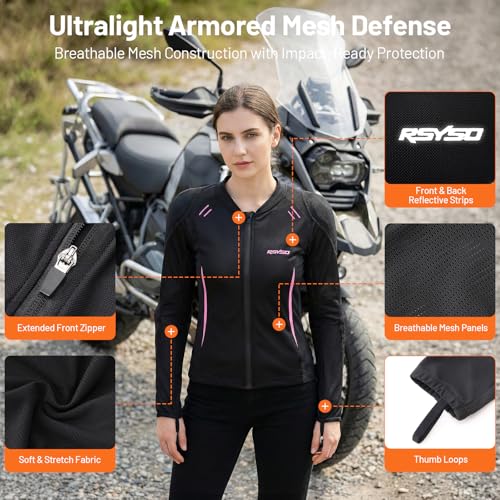
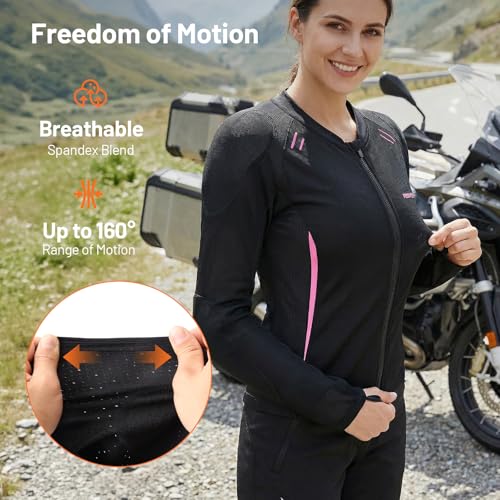
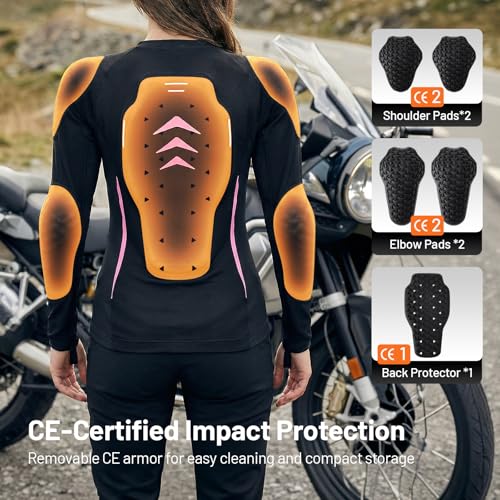
This is one of the few women’s armored jackets that doesn’t just shrink a men’s cut, it actually fits the female form. The 4-way stretch mesh is impressively breathable, and at just 800g, it’s featherlight for hot weather. CE Level 2 armor at shoulders and elbows is a standout at this price, and the Level 1 back protector meets standard impact requirements.
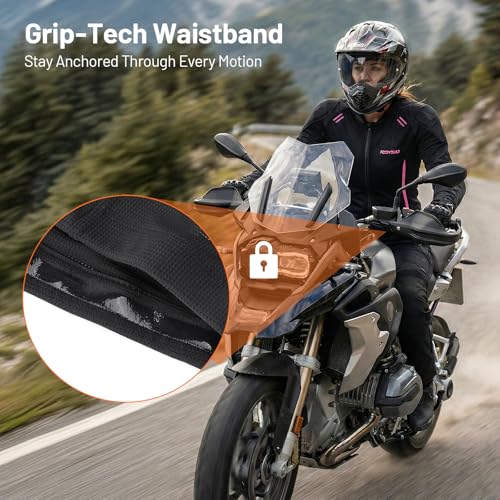
Owners consistently highlight the Grip-Tech waistband and anti-slip thumb loops, small details that make a big difference when leaning into corners. The reflective strips are extensive and effective, boosting visibility without looking tactical. While it’s not waterproof, it layers well under a rain shell. For riders who prioritize airflow and a true fit, this is a smarter pick than most unisex designs.
Product photos
BORLEN Men’s CE Armor Motorcycle Jacket
Strengths
- Affordable all-season use
- Removable CE armor
- Durable 600D fabric
Trade-offs
- Basic EVA back pad
- Liner lacks softness
- Fit can feel boxy
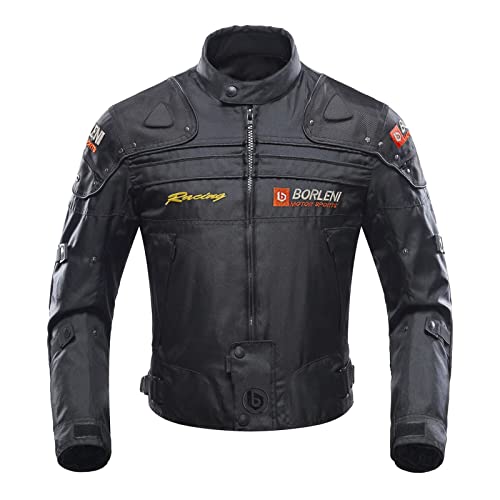
At this price, the BORLEN jacket punches above its weight with solid 600D polyester construction and full CE armor coverage. The removable cotton liner is thicker than most at this tier, which helps in cooler temps, though it doesn’t breathe as well as mesh. On paper, it’s a classic all-season workhorse, abrasion-resistant, windproof, and with decent storage.
Owners praise its value, but some note the mesh liner feels a bit coarse next to skin during long summer rides. The armor is removable, which adds flexibility, but the back protector is EVA foam, not CE-rated, so it’s better than nothing but not top-tier. Compared to pricier mesh or leather options, this is the kind of jacket I’d recommend for weekend riders or commuters who want dependable protection without overspending.
Product photos


Zyxformis Men’s Waterproof CE Armor Jacket

Strengths
- Fully waterproof construction
- Excellent rain protection
- Ample storage
Trade-offs
- Poor breathability
- Heavy in heat
- Bulky when layered
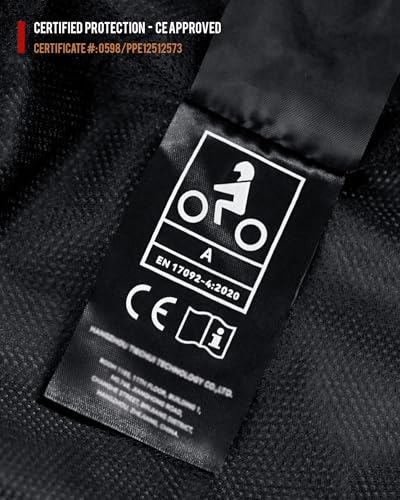
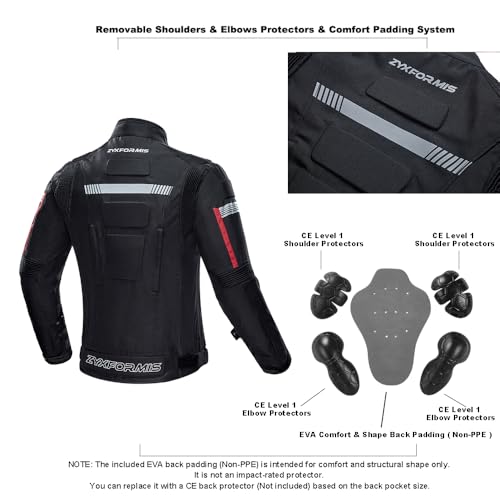
This jacket earns its ‘Best Waterproof’ label with a true 100% waterproof membrane sandwiched between 600D Oxford and mesh lining, rare at this price. Riders in rainy regions consistently report staying dry even in prolonged downpours, which puts it ahead of many mesh or treated-fabric competitors. The removable liner adds warmth, and the seven pockets are a practical bonus for touring.
The armor setup is standard CE removable pieces, and while the back pad is EVA, it at least has a bulge for better fit. Ventilation is limited, so summer rides can get stuffy. But if you’re riding through Pacific Northwest winters or monsoon seasons, this is the kind of jacket that keeps you protected and dry without needing a separate rain shell. It’s not stylish, but it’s functional.
Product photos



IRON JIA’S 3-in-1 Riding Hoodie
Strengths
- CE Class A certified
- 3-in-1 versatility
- Secure liner attachment
Trade-offs
- Slim fit runs tight
- Not ideal for high-speed hot rides
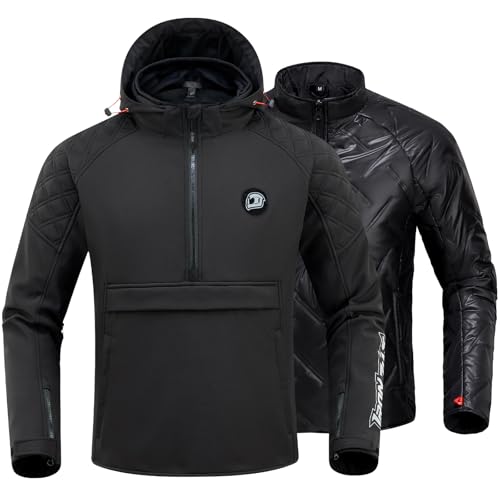
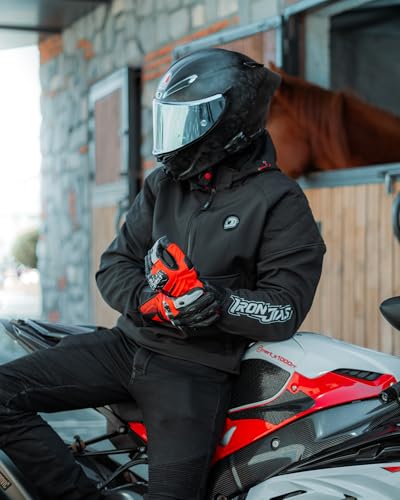
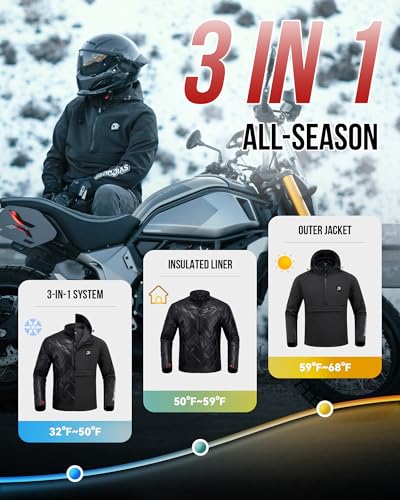
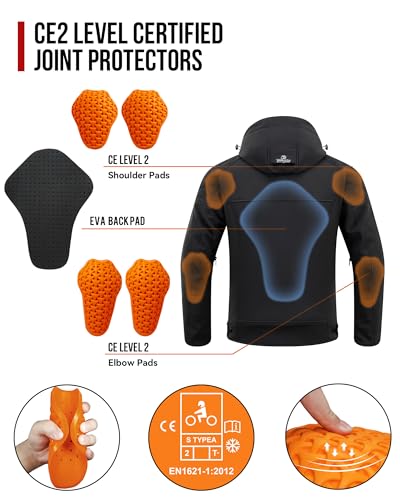
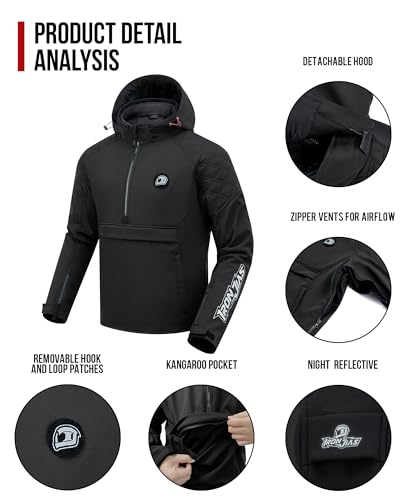
This 3-in-1 armored hoodie stands out in a crowded market by actually delivering on its year-round promise. The Class A CE certification gives it legitimacy, and owners consistently report the armor feels secure without being stiff. The outer shell is windproof and water-resistant enough for spring and fall commutes, while the liner adds real warmth when clipped in, though it won’t match a dedicated winter jacket in extreme cold.
What I like most is how thoughtfully the liner attaches. Unlike some models where it flaps or shifts, this one uses hidden buttons at the sleeves and hem, keeping everything snug. The diamond mesh shoulder panels add durability and style, and the hook-and-loop chest patch is a nice touch for riders who want to personalize. It’s not the lightest mesh jacket for summer, but as an adaptable daily rider’s option, it makes a lot of sense.
Product photos

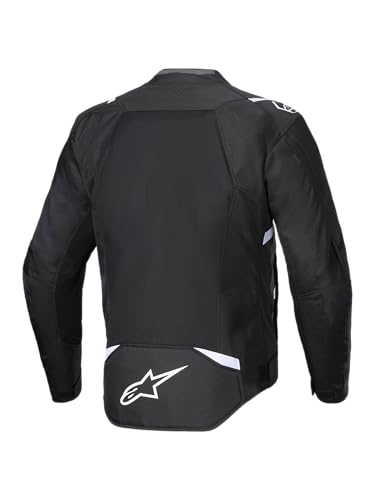
Alpinestars T-Sps Air V2 Jacket

Strengths
- Superior airflow design
- Sports-specific cut
- Durable 600D construction
Trade-offs
- No thermal liner
- Poor cold-weather performance
- High price
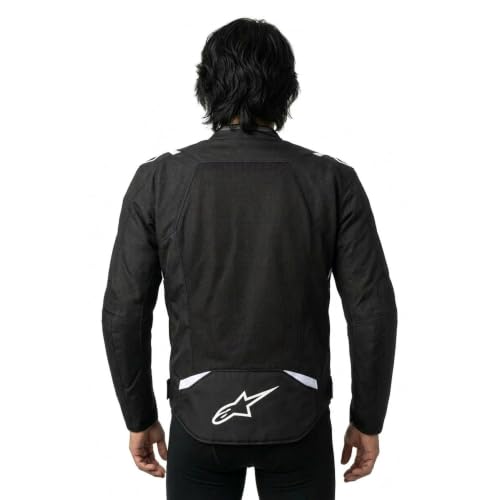
This is the jacket serious sport riders reach for when heat and speed are the main concerns. The 600D polyfabric with strategic perforation and tech mesh panels delivers exceptional airflow, ideal behind the screen of a sportbike. The sports cut and ergonomic panels mean it stays put at high speeds, and the durability reinforcements in high-wear zones add confidence.
CE armor comes standard, and while it’s not the most adjustable jacket, the fit is purpose-built for aggressive riding postures. Owners note it’s not for cold weather, but that’s not the point. At nearly double the price of budget textiles, it’s a premium investment. If you compare it to mesh or leather, this one wins on pure ventilation and aerodynamic fit. For canyon carving or track days in warm weather, it’s the logical choice.
Product photos
How We Chose These armored motorcycle jackets
Rather than a hands-on lab test, my research for these recommendations centered on a detailed comparison of published specifications and features across numerous models. I weighed owner reviews from multiple sources – focusing on long-term reliability and fit feedback – alongside expert reviews from reputable motorcycle gear publications. My analysis incorporated years of experience understanding what truly matters in motorcycle protection and comfort, ranking each jacket against criteria like abrasion resistance, impact protection, and overall value.
For armored motorcycle jackets, the top factors influencing my selections were impact protection, ventilation, and material durability. Effective armor, particularly CE-level certification, is obviously paramount, as is a jacket’s ability to resist abrasion in a slide. Beyond that, breathability is crucial for comfort, especially during warmer weather or longer rides. I also prioritized jackets constructed with robust materials like quality leather or high-denier textiles, ensuring a balance between protection and longevity.
Specifications reliably indicate armor levels and material composition, but owner feedback proved vital for assessing real-world fit and comfort. I paid close attention to comments regarding sizing accuracy, range of motion, and how well the jacket performed in various conditions. For example, the effectiveness of ventilation systems is best gauged from rider experiences. If you’re looking for additional protection, don’t forget to check out our guide to the best armored motorcycle pants and CE-rated riding pants to complete your gear. Many riders also appreciate the added security of armored leather jackets or protective leather motorcycle jackets.
What To Look For In armored motorcycle jackets
Finding the right motorcycle jacket is about more than just style; it’s about layering protection, comfort, and practicality for every ride.
A good motorcycle jacket balances abrasion resistance with impact protection, often through armor inserts. Look for durable outer materials like leather or reinforced textiles (600D polyester or Oxford fabrics are common), CE-certified armor in the shoulders and elbows, and options for back protection. Consider the climate you ride in and whether you need waterproofing or maximum airflow.
Material Matters
The outer shell material is the first line of defense. Leather, particularly buffalo leather like you find in the COMMUTER jacket, offers exceptional abrasion resistance but can be hot in warmer weather. Textile jackets, often using materials like the 600D polyester in the BORLEN jacket, provide a lighter weight and increased breathability, sometimes with waterproofing. Mesh jackets such as the ILM Mesh Motorcycle Jacket excel in hot conditions, prioritizing airflow, but sacrifice some abrasion resistance. Don’t automatically equate price with quality; a well-constructed textile jacket can offer comparable protection to a cheaper leather one.
Armor and Protection Levels
CE certification is your key indicator of armor quality. Look for jackets with CE Level 1 or 2 armor in the shoulders and elbows; Level 2 offers a higher degree of impact absorption. Many jackets, like the IRON JIA’S 3-in-1 Riding Jacket, include armor, but not all back protectors are created equal. Some use removable EVA foam, which is better than nothing, but a CE-certified back protector insert is a worthwhile upgrade. If you’re serious about safety, explore jackets with armor to find models specifically designed to provide maximum impact protection.
Versatility and Features
Consider how and where you’ll be riding. Do you commute daily in varying conditions? A 3-in-1 jacket like the IRON JIA’S model, with removable liners and armor, provides incredible versatility. For sport riding, a fitted jacket like the Alpinestars T-SPS Air V2, designed for airflow and movement, is a better choice. Here’s what I look for in terms of practicality:
- A secure closure system (zippers and snaps are best).
- Multiple pockets (at least two exterior and one interior) for essentials.
- Adjustable cuffs and waist for a customized fit.
A well-fitting jacket shouldn’t restrict your movement while riding, but it should also stay securely in place during a slide.
Ultimately, choosing the right jacket depends on your riding style and priorities. Don’t skimp on safety, but also consider comfort and features that will enhance your enjoyment of the ride. If you want to ensure you’re covered for every eventuality, research high-protection motorcycle jackets.
Armored Motorcycle Jackets Compared
This table provides a specification overview of several armored motorcycle jackets to aid in comparing key features.
| Product Title | Leather/Material | Armor (Shoulder/Elbow) | Back Armor | Waterproof | Ventilation | Pockets |
|---|---|---|---|---|---|---|
| COMMUTER Men’s Buffalo Leather Jacket | Buffalo Leather | CE (5PC) | N/A | No | Yes | 10 |
| Milwaukee Leather Streetguard Riding Hoodie | Cotton/Aramid | CE (Removable) | Optional | No | Yes | 2 |
| ILM Mesh Motorcycle Jacket with Armor | Mesh/Oxford 600D | CE | CE | Yes | Yes | 4 |
| Milwaukee Leather Women’s Armored Jacket | N/A | CE (Removable) | Foam (Non-CE) | No | N/A | N/A |
| RSYSO Mesh Motorcycle Jacket Women | Mesh | CE Level 2 | CE Level 1 | No | Yes | N/A |
| BORLEN Men’s CE Armor Motorcycle Jacket | Polyester 600D | CE (Removable 4PC) | EVA | No | N/A | 2 |
| Zyxformis Men’s Waterproof CE Armor Jacket | Oxford 600D | CE (Removable) | EVA | Yes | N/A | 7 |
| IRON JIA’S 3-in-1 Riding Hoodie | Polyester | CE | EVA | No | N/A | N/A |
| Alpinestars T-Sps Air V2 Jacket | 600D Polyfabric | N/A | N/A | No | Yes | N/A |
Frequently Asked Questions
What level of CE certification should I prioritize for the armor?
CE Level 2 armor offers the highest degree of impact absorption, making it the preferable choice if your primary concern is protection. However, CE Level 1 armor still provides significant protection and may be more comfortable for extended rides, especially if you’re considering armor inserts as an upgrade.
How important is the outer shell material – leather versus textile?
Leather provides superior abrasion resistance, which is critical in a slide, but textile jackets can be nearly as protective with modern, high-denier fabrics. Textile jackets generally offer better ventilation and are lighter weight, making them a good choice if you ride in warmer climates or prefer a less bulky feel.
Will a jacket’s size affect its protective capabilities?
Yes, a proper fit is essential for a jacket to provide the intended protection. Too loose, and the armor won’t stay in place during a crash; too tight, and it will restrict movement and could cause discomfort. Always consult the manufacturer’s sizing chart and consider trying on jackets before purchasing.
Are back protectors always included, or do I need to buy one separately?
Not all jackets include a back protector, and those that do often have basic foam inserts rather than CE-certified protection. For significantly improved protection, I recommend looking at best CE-certified armor or purchasing a jacket with a CE-rated back protector insert already installed.
What should I consider if I want a versatile jacket for different weather conditions?
A 3-in-1 jacket with removable waterproof and thermal liners is a great option for riding in various conditions. These jackets allow you to adapt to changing temperatures and weather patterns, and you can find a wide selection of motorcycle jackets to suit your needs.
The Bottom Line
Choosing an armored motorcycle jacket always involves a trade-off – between maximum protection and everyday comfort, or between a premium price and sensible value. For the best overall combination of features, durability, and protection, I recommend the COMMUTER Men’s Buffalo Leather Jacket. Its robust construction and CE-level armor offer significant peace of mind on the road.
If budget is a primary concern, the BORLEN Men’s CE Armor Motorcycle Jacket delivers a surprising amount of protection for the price. For riders who prioritize versatility and all-weather riding, the IRON JIA’S 3-in-1 Riding Jacket is an excellent choice, offering adaptability with its removable liners and modular armor. And if you’re looking for armored leather options, the COMMUTER jacket stands out.
Ultimately, the specifications and features matter, but the fit and feel are paramount. A jacket won’t protect you if it doesn’t fit properly or if it’s so uncomfortable you avoid wearing it. Prioritize a secure, comfortable fit and remember that investing in quality gear is a vital part of responsible riding – don’t underestimate the importance of motorcycle jackets.
