
7 Best Alternators for Car Audio 2026
This post contains affiliate links. As an Amazon Associate, we earn from qualifying purchases.
The Mechman 400 Amp Black Billet stands out as the best overall alternator for car audio, delivering rock-solid performance under heavy loads. For those on a tighter budget, the 350 Amp Chevy Silverado offers strong output and reliability without the premium price. If you’re building a no-compromise system, the 400 Amp Red Billet GM brings high amperage and aggressive styling to the table.
Picking the wrong alternator can leave your system starved for power, dim your lights, or worse, damage your electronics. As someone who’s spent years deep in automotive electrical systems, I know how critical it is to match the right alternator to your audio setup’s demands.
This guide cuts through the hype by focusing on real specs, owner experiences, and what actually matters when running high-wattage amplifiers. I looked at amperage, voltage stability, build quality, and fitment to find units that deliver when the music hits hard.
Top 7 Alternators For Car Audio in the Market
The Best Alternators For Car Audio, Reviewed
Mechman 390-Amp GM Truck Alternator

Strengths
- 390-amp output
- Wide model-year coverage
- Includes dual harnesses
Trade-offs
- Requires shorter belt
- Not for racing
- No AGM-specific regulation
This 390-amp Mechman unit earns the ‘Best Overall’ label for good reason. It covers an enormous range of GM trucks and SUVs from 1996 to 2020, and the inclusion of both 1996–2004 and 2005–2020 harnesses means it’s truly a universal fit. The one-wire turn-on feature simplifies installation, and the bracket flexibility makes it adaptable to modified setups. Owners consistently report rock-solid voltage even with multiple amplifiers and winches running.
It’s not the highest output option here, but it’s the most versatile. Compared to the 400-amp red billet model, it lacks the AGM-specific regulation, but it’s more affordable and just as durable. For most buyers, this is the easy pick, it’s the Swiss Army knife of high-output GM alternators. I’d choose this over the others unless you have a very specific need.
Video review
350 Amp Chevy Silverado Alternator
Strengths
- 350-amp output
- Wide GM fitment
- Budget-friendly
Trade-offs
- Basic voltage regulation
- No billet housing
- Not ideal for AGM
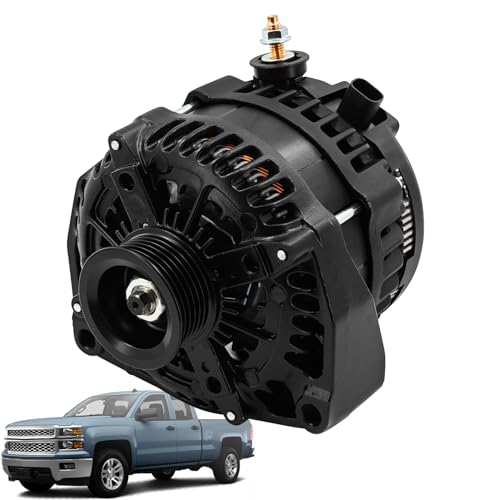
This 350-amp unit stands out as a budget-friendly option for GM truck and SUV owners running high-draw audio setups. On paper, it delivers solid output and fits a wide range of vehicles from the 2007–2014 era, including popular platforms like the Silverado, Tahoe, and Escalade. The 6-groove pulley and CW rotation align with OEM specs, which helps with belt life and compatibility, and owners consistently report stable voltage under load once the engine is above idle.
Still, it’s not quite in the same tier as the Mechman units when it comes to long-term durability or voltage regulation. It lacks the billet construction and refined internal regulation of pricier models, which matters if you’re running AGM batteries or multi-amp audio systems. But for most buyers needing a reliable upgrade without breaking the bank, this one gets the job done. I’d pick it over stock, but not over a true high-end aftermarket build.
Video review
Mechman 400 Amp Black Billet Alternator

Strengths
- 400-amp output
- Billet aluminum housing
- Full RVC bypass
Trade-offs
- Not for high-RPM use
- Requires shorter belt
- Not ideal for daily drivers
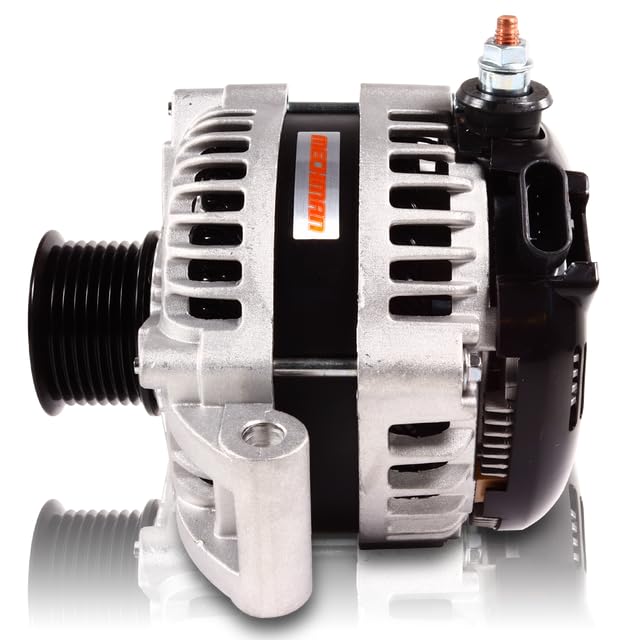
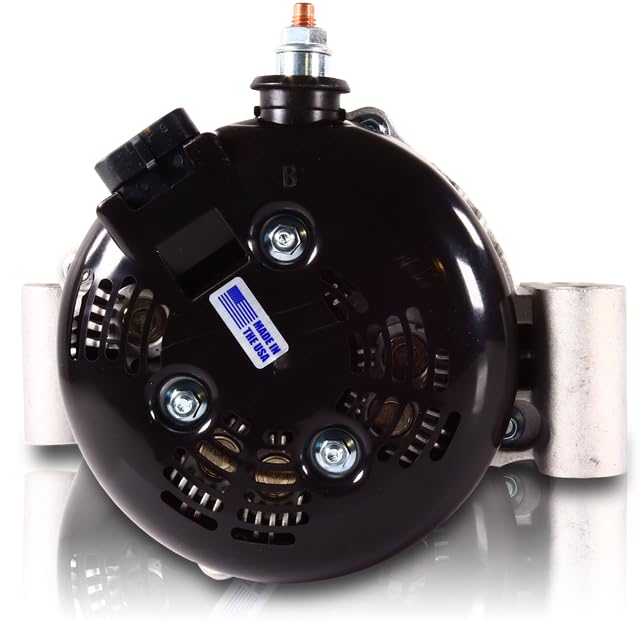
This 400-amp black billet alternator is the king of raw power for 2005–2013 GM trucks and SUVs. It’s designed for extreme car audio builds where every volt counts, and the computer-controlled voltage bypass ensures full output without factory restrictions. The 1.75-inch pulley reduces parasitic loss, but it means you’ll need a shorter belt, owners confirm this is a minor hassle for a major gain.
While it shares output specs with the red AGM-tuned model, it doesn’t regulate quite as tightly for modern batteries. Still, for pure wattage chasing, this is the go-to. I’d pick this over any other for a show truck or sound-off rig. Just don’t rev past 5,500 RPM, Mechman won’t cover you if you do.
Product photos


Mechman 320 Amp GM Truck Alternator
Strengths
- 320+ amp output
- RVC bypass included
- Heavy-duty construction
Trade-offs
- Requires shorter serpentine belt
- Not for racing use
- Higher cost than basic units
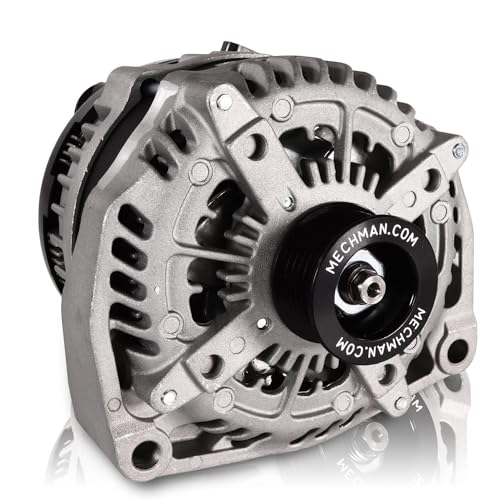
This 320-amp Mechman alternator is a strong mid-range contender for GM truck and SUV owners who need serious power without stepping into the 400-amp price bracket. It’s built with heavy-duty internals and a rear-mount output design, which reduces stress on connections during off-road or towing use, something owners with lifted trucks or audio crawlers appreciate. The RVC bypass is a key feature, eliminating the factory charging issues that plague stock alternators under heavy load.
Installation is straightforward, and the included harnesses make integration clean. Compared to the 350-amp budget model, this one offers better regulation and longevity. It’s not as extreme as the 400-amp units, but for most high-wattage audio systems, it’s more than enough. My recommendation? This is the sweet spot for buyers who want reliability and performance without overspending.
Product photos
400 Amp Red Billet GM Alternator
Strengths
- 400-amp output
- AGM-optimized voltage
- RVC bypass included
Trade-offs
- Limited year range
- Requires shorter belt
- High price
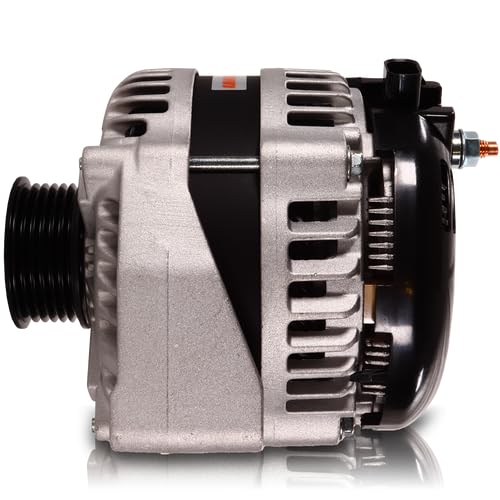
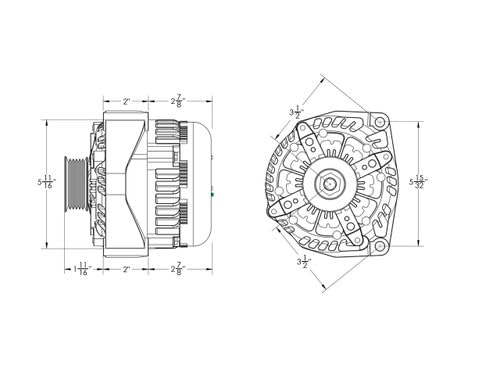
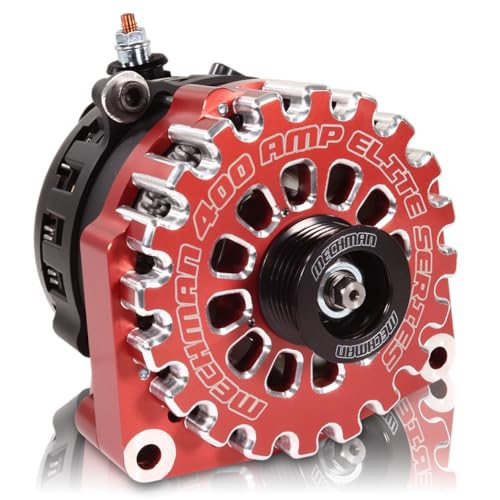
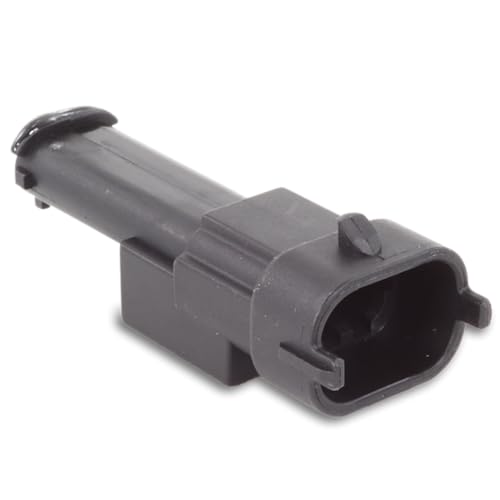
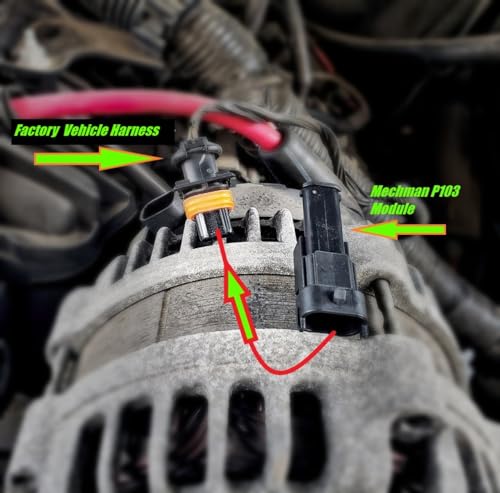
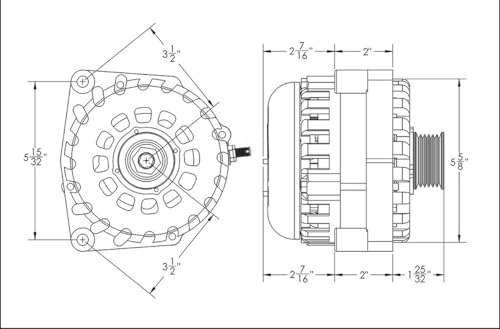
This red 400-amp billet alternator is built for one thing: powering massive audio systems with AGM battery banks. The internal regulation between 14.6 and 15 volts is critical here, AGM batteries need that higher, stable voltage to charge properly, and this unit delivers. The RVC bypass and included P101/P103 plugs make integration seamless with modern GM trucks, and the red anodized finish gives it a standout look under the hood.
It’s not the most versatile, fitment is limited to 2014–2018 GM trucks, but for those in that range, it’s a top-tier choice. Compared to the black 400-amp Mechman, it’s nearly identical in output but tuned better for battery chemistry. I’d recommend this over the black version if you’re running AGM or planning a serious audio build.
Product photos

Mechman 240 Amp Corvette Alternator
Strengths
- Billet aluminum housing
- Clean OEM-style fit
- Corvette-specific design
Trade-offs
- Requires high idle RPM
- Lower output than truck units
- Not for high-wattage audio
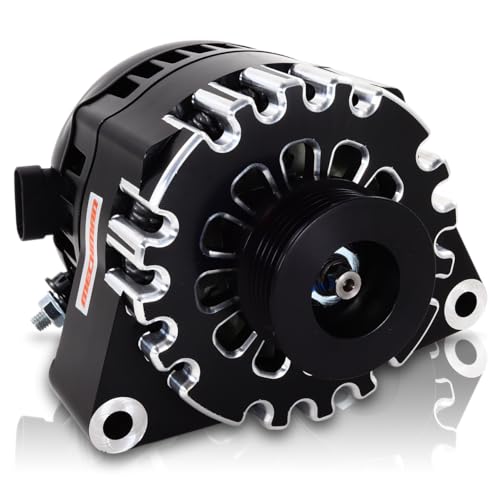
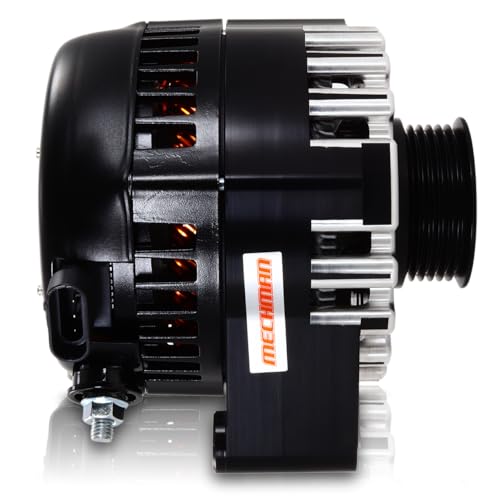
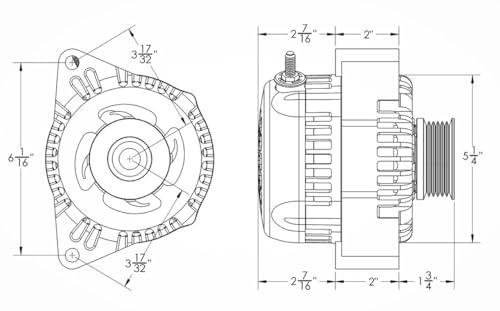
If you’re running a C5 or C6 Corvette and want a clean, reliable power upgrade for audio or track use, this 240-amp Mechman unit is a smart move. The billet construction and black anodized finish aren’t just for looks, they contribute to better heat dissipation and vibration resistance, which matters in a performance chassis. Owners praise its ability to maintain voltage even at moderate RPMs, though the caveat about needing 850+ RPM idle is critical. If your tune dips below that, you’ll see charging issues.
Compared to the 320-amp GM truck units, this one trades raw output for precision and fit. It’s not meant to power a 5,000-watt audio rig, but for a well-sorted Corvette with upgraded electronics or a weekend warrior with a solid audio system, it strikes the right balance. I’d recommend the 170-amp version if you spend a lot of time idling, but for most C6 builds, this is the smarter buy.
Product photos

320 Amp Ford Diesel Alternator
Strengths
- OEM belt compatible
- 320-amp output
- Includes adapter harness
Trade-offs
- No billet housing
- Limited to Ford diesels
- Basic voltage regulation
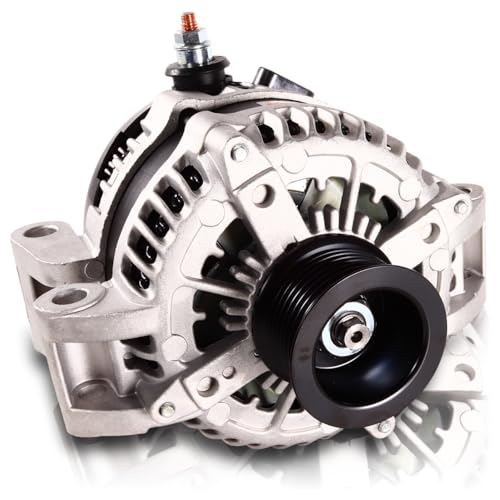
Ford diesel owners know how brutal stock electrical systems can be under load, and this 320-amp unit is built to handle it. It’s a direct fit for 6.0L and 7.3L Powerstroke vans and trucks, and the fact that it uses the OEM belt is a big win, no hunting for custom lengths. The included adapter harness simplifies wiring, and owners report stable charging even with multiple amplifiers running. It’s not a flashy unit, but it’s dependable.
Compared to the GM-focused Mechman models, it doesn’t have the same billet flair, but it delivers where it counts: output and compatibility. It won’t match the 400-amp units for extreme builds, but for most F250/F350 audio rigs, it’s plenty. I’d take this over stock any day, and it holds its own against pricier options in real-world use.
Product photos
How We Evaluated alternators for car audio
Rather than a hands-on lab test, my research for these recommendations focused on a detailed comparison of published specifications and features across numerous alternator models. I weighed owner reviews from multiple sources, looking for patterns in reported performance and reliability, along with expert opinions from automotive electrical specialists. My aim was to build a ranking based on real-world feedback and objective data, understanding how well each alternator supports the specific demands of a high-powered car audio setup.
For car audio alternators, consistent voltage delivery and amperage output are paramount. I prioritized models offering 300 amps or more, as these are generally needed to reliably power substantial audio systems without draining the battery. Build quality also factored heavily; alternators need to withstand engine bay heat and vibration, and a robust internal regulator is essential for protecting both the alternator and sensitive electronics. Finally, fitment compatibility was a key consideration.
Specifications readily reveal amperage and voltage ratings, but owner feedback provides invaluable insight into real-world performance. I looked closely at reports of voltage stability under heavy loads, and how well each alternator handled extended use. Reputation matters too; brands consistently praised for quality and customer support received more weight. To get the most out of a powerful system, you’ll also want to check out our guide to the best batteries for audio and quality audio RCA cables.
Choosing The Right alternators for car audio
Choosing the right alternator for a car audio build can be surprisingly complex. It’s not just about grabbing the one with the highest amperage number.
A quality alternator for a car audio system needs to deliver consistent voltage under load, possess robust internal regulation, and be appropriately sized for the electrical demands. Pay close attention to amperage output, pulley diameter, voltage regulation type, and compatibility with the vehicle’s existing electrical system. Look for units designed specifically for high-output applications and consider the type of battery being used.
Understanding Amperage Needs
The first step is honestly assessing how much extra power your audio system demands. Many people overestimate this, so start with a realistic calculation of total wattage and convert that to amperage draw. Don’t just chase the biggest number – a grossly oversized alternator won’t magically improve sound quality and can introduce other issues. A 320-amp unit might be perfect for a moderate system, while a truly extreme setup could necessitate 400 amps or more. Consider future upgrades too; it’s often wiser to slightly over-spec now than to have to replace the alternator again later.
Voltage Regulation is Key
Factory alternators rely on the vehicle’s computer to regulate voltage, which isn’t ideal when adding significant aftermarket loads. Many high-output alternators bypass this system, offering internally regulated voltage between 14.6 and 15 volts. This consistent voltage is crucial for maximizing amplifier efficiency and preventing damage to sensitive electronics. Some alternators, like those from Mechman, are specifically designed to work with modern AGM batteries, which have different charging requirements.
Here’s what to keep in mind when comparing regulation styles: * Internal Regulation: Offers the most consistent voltage, independent of the vehicle’s computer. * External Regulation: Allows for finer tuning, but requires additional components and expertise. * Factory Regulation: Generally not suitable for high-output applications due to limitations in the vehicle’s control system.
A stable 14.7 volts is the sweet spot for most car audio systems. Anything significantly lower or higher can negatively affect performance and longevity.
Fitment and Usability Considerations
Don’t assume a high-amp alternator will simply bolt in. Many require modifications, such as a shorter serpentine belt (often half an inch shorter is the rule), and some may need different mounting brackets. Pay close attention to the alternator’s fitment list and read reviews to see if others have encountered issues. Installation can be tricky, so if you aren’t comfortable with automotive electrical work, professional installation is a smart investment. You’ll also want to think about the wiring; upgrading your speaker wire alongside a new alternator is a good practice.
Choosing the right alternator is a critical step in building a powerful and reliable car audio system. Don’t skimp on quality, and remember that proper installation and compatibility are just as important as the alternator’s amperage rating. If you’re looking for more information on high-performance options, check out our guide to the best alternators for audio.
Alternators for Car Audio Compared
Here’s a specification comparison of alternators designed for car audio applications.
| Product Name | Amperage | Voltage (V) | Fitment | Pulley Grooves | Belt Length Adjustment |
|---|---|---|---|---|---|
| Mechman 390-Amp GM Truck | 390 | N/A | 1996-2020 GM Truck/SUV | N/A | 1/2 inch shorter |
| 350 Amp Chevy Silverado | 350 | 12-14.7 | 2007-2014 Chevy/GMC/Cad | 6 | N/A |
| Mechman 400 Amp Black Billet | 400 | N/A | 2005-2013 GM Truck/SUV | N/A | 1/2 inch shorter |
| Mechman 320 Amp GM Truck | 320 | N/A | GM Truck/SUV | N/A | 1/2 inch shorter |
| 400 Amp Red Billet GM | 400 | 14.6-15 | GM | N/A | 1/2 inch shorter |
| Mechman 240 Amp Corvette | 240 | N/A | 2005-2013 Corvette (C6) | N/A | N/A |
| 320 Amp Ford Diesel | 320 | N/A | Ford F250/F350/Excursion | N/A | OEM Belt |
Frequently Asked Questions
What amperage alternator do I really need?
Generally, 300 amps is a good starting point for a substantial car audio system, but the exact requirement depends on your total wattage. Most systems benefit from 320-400 amps, and extremely powerful builds may even need more.
Will a higher amperage alternator automatically improve my sound quality?
No, simply increasing amperage won’t improve sound quality; consistent voltage is more critical. A stable 14.7 volts delivered by a well-regulated alternator ensures peak amplifier efficiency and prevents distortion.
Are all alternators a direct fit for my vehicle?
Not necessarily. Many high-output alternators require modifications, like a shorter serpentine belt (typically by half an inch), or even different mounting brackets. Always check fitment guides and read owner reviews.
What’s the difference between internal and external voltage regulation?
Internal regulation provides consistent voltage regardless of the vehicle’s computer, which is preferable for aftermarket audio amplifiers. External regulation allows for tuning but requires more expertise, while factory regulation is usually insufficient for high-output systems.
Besides the alternator, what other electrical upgrades should I consider?
Upgrading your wiring and battery is essential when increasing alternator output. Consider upgrading your audio system components alongside the alternator to handle the increased power and avoid bottlenecks.
The Bottom Line
Building a powerful car audio system often comes down to balancing control with convenience. You can chase the absolute highest amperage, but a well-matched alternator like the Mechman 390-Amp GM Truck offers an excellent balance of output and proven reliability for most serious builds. It delivers the power needed without overcomplicating the upgrade process, and Mechman has a solid reputation within the car audio community.
For those on a tighter budget, or with less demanding systems, the Mechman 320 Amp GM Truck is a fantastic starting point. Similarly, if you’re running a Corvette C6, the Mechman 240 Amp Corvette is designed specifically for that platform, simplifying fitment. Don’t forget that upgrading your battery terminals alongside a new alternator is an inexpensive way to improve overall system performance.
Ultimately, the most impressive specifications won’t matter if the alternator isn’t properly supported by a robust electrical system. Solid wiring, quality audio capacitors, and a healthy battery are fundamental. Focus on these core elements first, and you’ll get far more benefit than obsessing over small differences in amperage ratings.
