
3 Best Battery Terminals for Car Audio 2026
This post contains affiliate links. As an Amazon Associate, we earn from qualifying purchases.
The Recoil BTO Solid Brass terminals stand out as the best overall pick for car audio, thanks to their superior conductivity and rugged build. For those on a budget, the SUNMORN Zinc Alloy terminals offer solid performance and corrosion resistance at a lower price point, while the Skar Audio x2 delivers strong versatility with multiple input options for complex setups.
Every car audio enthusiast knows that powerful sound starts with clean, stable power. Weak or corroded battery terminals can choke your system, leading to poor performance, voltage drops, or even damage. I’ve seen too many high-end setups undermined by overlooked connections.
This guide cuts through the noise, focusing on terminals that deliver real-world reliability. My picks are based on specs, owner feedback, and the kind of build quality that holds up under demand, so you can wire with confidence.
Top 3 Battery Terminals For Car Audio in the Market
The Best Battery Terminals For Car Audio, Reviewed
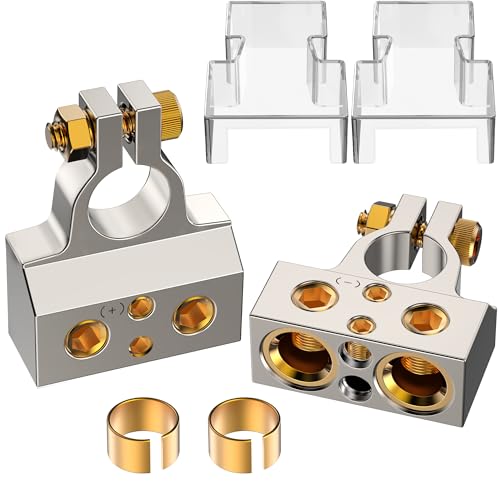
SUNMORN Zinc Alloy Battery Terminals
Strengths
- Multi-port hub design
- Fits 0–10 AWG wires
- Nickel-plated zinc alloy
- Includes brass shims
- Clear protective covers
Trade-offs
- No built-in fuse holder
- Zinc less conductive than brass
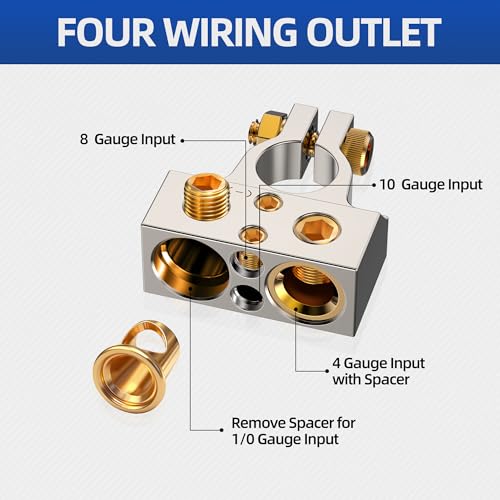
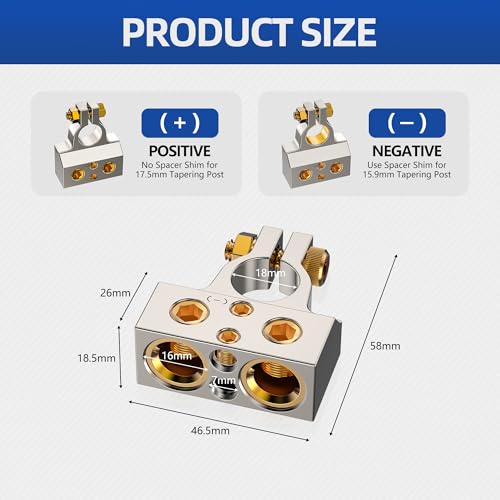
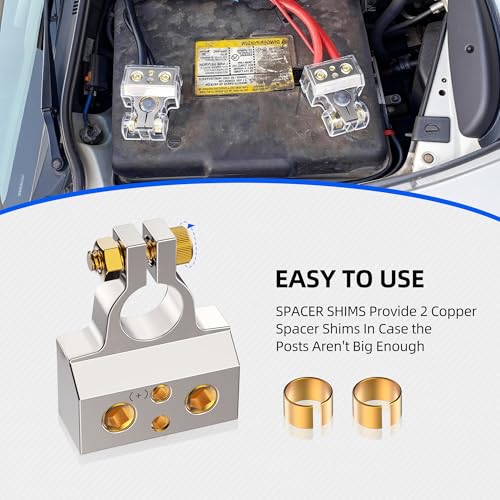
The SUNMORN terminals are the most versatile all-around option here, especially for mixed accessory setups. With multiple ports supporting 0 to 10 AWG wires, they let you connect amplifiers, lighting, winches, or dash cams directly at the battery without splicing or daisy-chaining. That’s a practical win for off-roaders, overlanders, or anyone with a heavily customized electrical system. The nickel-plated zinc alloy holds up well to corrosion, and the included brass shims help secure connections on worn posts, a real-world issue many overlook.
Reviewers note the multi-directional clamping design grips wires firmly without crushing them, and the 50 in-lb torque spec makes installation repeatable. While zinc isn’t quite as conductive as brass, the performance is more than adequate for most car audio systems under 2,000 watts. Compared to the Skar and Recoil models, this one trades some raw conductivity for unmatched utility. If you’re adding accessories over time, this hub-style setup saves hassle down the road.
Product photos

Recoil BTO Solid Brass Terminals

Strengths
- Forged brass construction
- Superior corrosion resistance
- OEM integration possible
- Power ring provision
- Includes silicone covers
Trade-offs
- Fewer large gauge ports
- Slightly bulkier profile
If conductivity and long-term durability are your top priorities, these forged brass terminals from Recoil stand out. Brass delivers better electron flow than zinc, and in car audio systems where every millivolt counts, that matters, especially over time as connections degrade. Owners praise the marine-grade satin chrome finish for resisting corrosion, even in humid or salty environments, which makes these a strong pick for convertibles, boats, or coastal drivers.
The design splits each terminal into one 0/2/4 gauge and one 4/8 gauge output, plus a power ring provision, giving solid flexibility without going overboard. The oversized convex screws make for a rock-solid clamp, and the adapter collar system allows OEM-style integration without hacking factory cables. Compared to the Skar Audio option, this one feels more refined in materials and fit, though it lacks the dual large-gauge ports for multiple high-draw amps.
Video review
Skar Audio x2 0/4 Gauge Terminals

Strengths
- Dual 0/4 gauge inputs
- Includes reducer shims
- Solid zinc alloy construction
- Anti-slide grooves
- Hex screw design
Trade-offs
- Zinc not as conductive as brass
- No fuse or circuit protection
Skar Audio built these terminals with car audio in mind, and it shows. The dual 1/0 or 4 gauge inputs per terminal mean you can run multiple high-current amplifiers without stacking lugs or modifying cables. That’s a big deal for clean builds, especially when space around the battery is tight. The inclusion of reducer shims for 8/10 gauge wires adds flexibility, letting you tap in smaller power leads for processors or lighting without extra adapters.
On paper, zinc alloy doesn’t match brass for conductivity, but owners consistently report solid performance with no voltage drop issues in typical high-wattage setups. The anti-slide grooves help maintain contact under vibration, which matters in daily drivers and off-road rigs. Compared to basic single-port terminals, this is a major upgrade, though if you’re running ultra-high current loads over 300 amps, pure copper or forged brass might still edge it out.
Video review
How We Evaluated battery terminals for car audio
Rather than a hands-on lab test, my research focused on comparing published specifications and features across numerous terminals. I weighed owner reviews from various retailers alongside expert opinions found in car audio forums and publications. My goal was to identify terminals offering a balance of conductivity, durability, and ease of installation, all critical for a stable and efficient power supply to your system.
For car audio applications, current capacity and corrosion resistance were the biggest deciding factors. A terminal’s ability to handle the amperage demands of amplifiers and other accessories is paramount, so I prioritized those with high current ratings and robust construction. Equally important is long-term reliability, and corrosion can quickly degrade performance and safety – making materials and plating a key consideration. You can find more information on choosing the right batteries for car audio on my site.
Published specs reliably indicate a terminal’s maximum amperage and cable gauge compatibility. However, I placed significant weight on owner feedback regarding real-world fitment, particularly with older or corroded battery posts. Reputation and brand consistency also played a role; terminals from established car audio accessory manufacturers generally inspire more confidence, and often pair well with other car audio wiring components.
What To Look For In battery terminals for car audio
Finding the right battery terminals is surprisingly crucial for a reliable car audio system.
A quality battery terminal isn’t just a connector; it’s the foundation for stable power delivery. Look for materials resistant to corrosion (brass or nickel-plated zinc alloy are excellent), a secure clamping mechanism that accommodates your wire gauge, and a design that minimizes resistance to ensure full power transfer to your amplifiers and accessories. Proper fitment to your battery post type is also essential.
Material and Corrosion Resistance
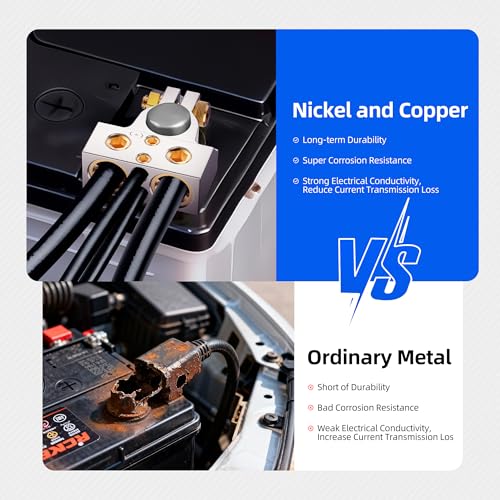
I’ve always said that a weak link in the chain can ruin the whole system, and that holds especially true for electrical connections. Cheap terminals made of low-grade metals will corrode quickly, increasing resistance and potentially causing voltage drops that degrade your audio quality. Zinc alloy with nickel plating, like you find in the SUNMORN terminals, offers good corrosion resistance, but solid brass (as seen in the Recoil BTO terminals) is generally considered superior. Marine-grade finishes are a bonus if you live in a harsh climate or frequently encounter wet conditions. Remember, maintaining clean connections with dielectric grease is vital no matter the material.
Wire Gauge and Connectivity
Don’t underestimate the importance of matching the terminal to your wiring. Most high-power car audio setups use 0 or 4 gauge wiring, so a terminal that readily accepts these sizes (like the Skar Audio x2 terminals) is essential. Beyond that, consider the number of connections you’ll need. If you’re running multiple amplifiers, LED light bars, or a winch, a multi-port terminal simplifies installation and avoids messy wiring. Speaking of wiring, here’s what I recommend:
- Ensure a snug fit – loose connections create resistance.
- Use the correct crimping tools – a poor crimp is almost as bad as a loose screw.
- Consider reducer shims – these allow you to connect smaller gauge wires to a larger terminal, offering flexibility.
Fitment and Overall Build Quality
A terminal that doesn’t fit properly is worse than no terminal at all. SAE/JIS Type A posts are the standard, but battery post sizes can vary, especially on older vehicles. Some terminals, like the Recoil BTO, include adapter collars for OEM integration, which is a fantastic feature. Beyond fitment, pay attention to the clamping mechanism. A secure, multi-directional clamp (like the SUNMORN design) holds wires firmly without crushing them.
A good rule of thumb: always fuse your battery terminals, especially when dealing with high-current accessories. This protects your wiring and equipment from damage in case of a short circuit.
If you’re planning a significant audio upgrade, I also suggest taking a look at optimal car audio batteries to ensure your power source can handle the increased demand. And don’t forget about power capacitors – they can help smooth out power delivery and improve audio performance.
Battery Terminals for Car Audio Compared
Here’s a specification comparison of the featured battery terminals to help you make an informed decision.
| Product Name | Max. Current (A) | Wire Gauge Input | Material | Post Type | Includes |
|---|---|---|---|---|---|
| SUNMORN Zinc Alloy | 150 | 10-0 AWG | Zinc Alloy | SAE/JIS Type A | Covers, Shims |
| Recoil BTO Solid Brass | N/A | 0/2/4, 4/8 | Brass | N/A | Adapters, Covers |
| Skar Audio x2 | N/A | 1/0, 4, 8, 10 | Zinc Alloy | Universal | Shims |
Frequently Asked Questions
What amperage rating do I really need for car audio terminals?
A minimum of 150 amps is generally sufficient for most car audio systems, but if you’re running multiple high-powered amplifiers or other accessories, I recommend looking for terminals rated at 200 amps or higher. Higher amperage capacity provides headroom and helps prevent voltage drops.
Will these terminals work with my existing 8-gauge wiring?
Most quality terminals, like the Skar Audio x2, readily accept 8-gauge wiring and larger. However, always double-check the product specifications to confirm compatibility before purchasing. Using reducer shims can help if you need to connect smaller wires to a larger terminal.
Are zinc alloy terminals as good as brass ones?
While solid brass offers the best conductivity and corrosion resistance, high-quality zinc alloy terminals with nickel plating (like those from SUNMORN) are a very good alternative. They offer a solid balance of performance and affordability, and will still perform admirably in most applications.
What’s the best way to prevent corrosion on my battery terminals?
Applying a generous coating of dielectric grease to the terminals before connecting your wires is the best preventative measure. This creates a barrier against moisture and corrosive elements, extending the life of your connections. Regularly inspecting and cleaning your terminals is also crucial.
If I upgrade my battery terminals, should I also consider upgrading other audio components ?
Upgrading your terminals is a great start, but supporting your system with a high-output car audio alternators is highly recommended, especially with increased power demands. A robust alternator ensures your battery stays charged and your audio system receives consistent power.
The Bottom Line
Choosing battery terminals often comes down to balancing upfront cost with long-term reliability. While you can find perfectly functional options at lower price points, the Recoil BTO Solid Brass terminals represent the best overall investment for most car audio enthusiasts. Their superior build quality, universal fitment with included adapters, and robust brass construction promise years of dependable performance – a critical factor when supporting a powerful audio system.
For those on a tighter budget, the SUNMORN Zinc Alloy terminals offer a solid compromise. They provide a good current capacity and corrosion resistance for the price, and the included shims add some versatility. If you’re building a system with multiple amplifiers and accessories, the Skar Audio x2 terminals are a great choice; their multi-port design simplifies wiring and keeps everything organized, especially when paired with one of the best car amplifiers on the market.
Ultimately, remember that the most expensive terminals won’t fix a poor wiring job or a failing battery. Focus on using the correct wire gauge, making secure connections, and considering a move to lithium car audio batteries for sustained power delivery. Those fundamentals matter far more than any specific feature list.
