
7 Best 26 Inch Mountain Bikes of 2026
This post contains affiliate links. As an Amazon Associate, we earn from qualifying purchases.
The Mongoose Grafton stands out as the best overall 26 inch mountain bike, delivering solid components and a durable aluminum frame. For riders on a tighter budget, the Brightpeak All-Terrain offers surprising capability at a low price, while the CYBIC Full Suspension brings real trail comfort with its full-suspension design.
If you’re hunting for a 26-inch mountain bike today, you’re likely navigating a market shaped more by legacy models and budget builds than cutting-edge design. These bikes still hold value for casual riders, younger adults, or those who prefer a more compact ride.
After researching the current field, analyzing specs, owner experiences, and brand reputation, I focused on durability, ride quality, and real-world usability to identify the ones worth your attention. This guide breaks down what actually matters when choosing among them.
Top 7 26 Inch Mountain Bikes in the Market
The Best 26 Inch Mountain Bikes, Reviewed
Mongoose Grafton 26″ Mountain Bike

Strengths
- Mechanical disc brakes
- 21-speed trigger shifters
- Aluminum frame
- Knobby tires
Trade-offs
- No rear suspension
- Heavier than race-oriented bikes
- Trigger shifters need maintenance
If you’re building a shortlist of 26-inch mountain bikes that balance features and price, the Grafton deserves top billing. It brings mechanical disc brakes, a 21-speed trigger shifter setup, and an aluminum frame, all in a package that feels more mature than its price suggests. Reviewers note the disc brakes are a major upgrade over V-brakes, especially in wet or dusty conditions, and the 2.3-inch knobby tires deliver real grip on loose trails.
The real win here is versatility. Compared to the Flatrock, it has more gear range for climbing, and the modern geometry makes it more stable at speed. It’s not full suspension, but the front fork soaks up chatter well. For most adult riders stepping up from a basic starter bike, this is the smarter buy. I’d recommend it as the best all-around 26-inch option for serious beginners and casual trail riders.
Video review
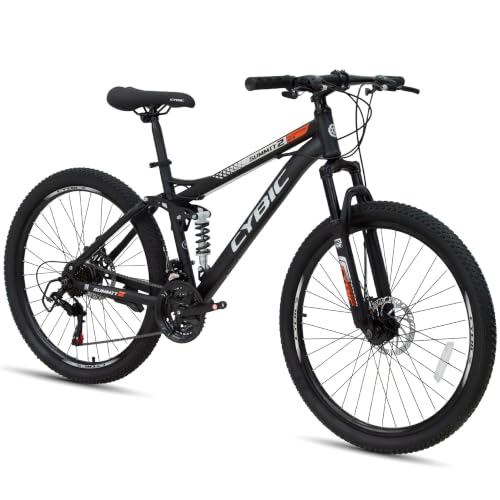
CYBIC 26″ Full Suspension Bike
Strengths
- Full suspension
- Shimano 21-speed
- Dual disc brakes
- CPSC certified
Trade-offs
- Weight limit 265 lbs
- Steel frame not lightweight
- Rear shock maintenance
For the price, the CYBIC delivers something rare: full suspension with disc brakes and a Shimano 21-speed drivetrain. That combination makes it a standout for riders who bounce between city streets and weekend trails. The steel full-suspension frame soaks up vibrations better than hardtails in its class, and owners consistently praise how composed it feels on rough terrain.
The real advantage over bikes like the Huffy or WEIZE is the dual disc brakes, offering better modulation and all-weather performance. Shimano components also tend to last longer and shift more cleanly. It’s not the lightest, and the 265 lb limit is lower than some, but for the value, it’s hard to beat. I’d recommend this as the best full-suspension pick for riders who want real trail comfort without breaking the bank.
Video review
Mongoose Flatrock 26″ Aluminum Bike

Strengths
- Aluminum frame
- Lightweight
- Smooth shifting
Trade-offs
- Linear pull brakes
- Only 7 speeds
- Limited for technical trails
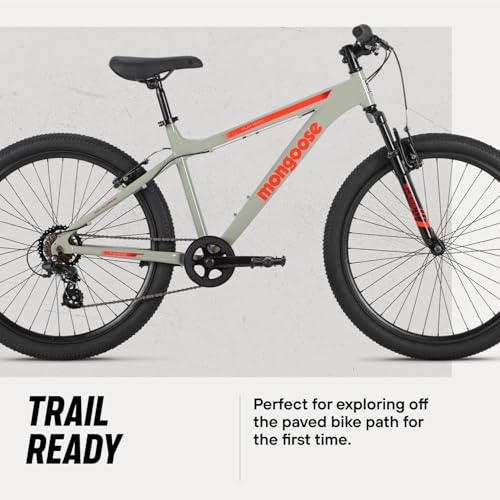
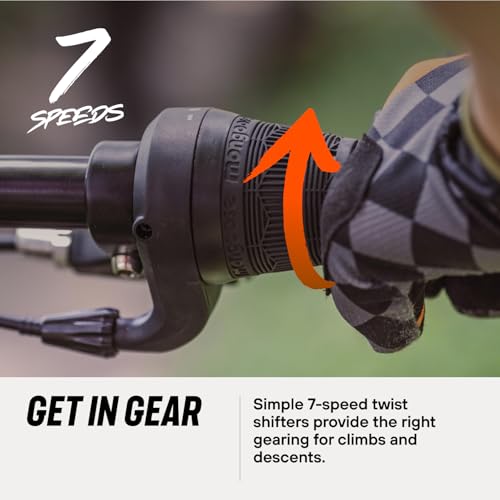
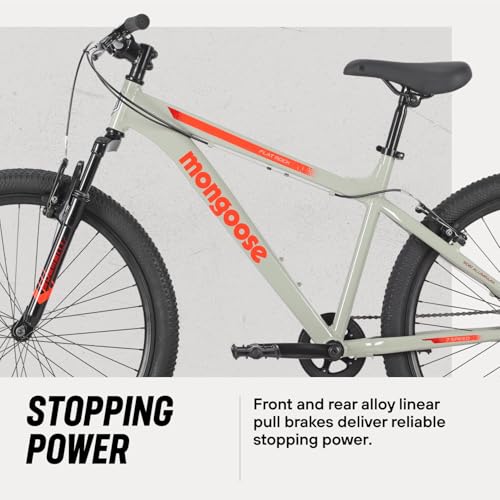
The Flatrock stands out in the entry-mid tier by swapping steel for an aluminum frame, and that makes a real difference in ride feel. At this price, aluminum construction is a win, it cuts weight and improves responsiveness, especially on climbs or rolling terrain. Owners appreciate how much lighter it feels compared to similarly priced steel bikes, and the 7-speed twist shifters, while not high-end, deliver consistent performance for casual trail use.
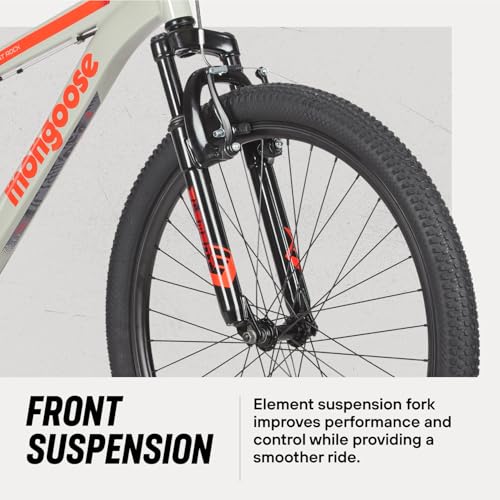
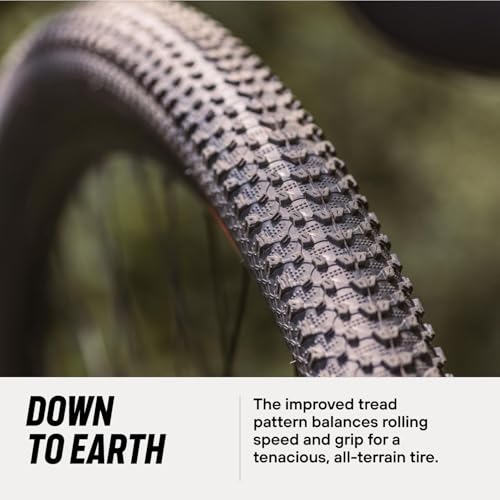
Compared to the Grafton, it’s less capable on technical terrain due to having fewer gears and linear pull brakes instead of discs. But for riders who want a durable, lightweight hardtail for fire roads and beginner trails, this hits a sweet spot. The knobby tires offer decent bite, and the suspension fork takes the sting out of small bumps. I’d pick this over heavier steel models if you value agility over ultimate durability.
Product photos
Huffy Stone Mountain Dual Suspension

Strengths
- Dual suspension
- Shimano 21-speed
- Comfort saddle
- Stylish finish
Trade-offs
- Linear pull brakes
- Heavy steel frame
- Twist shifters less precise
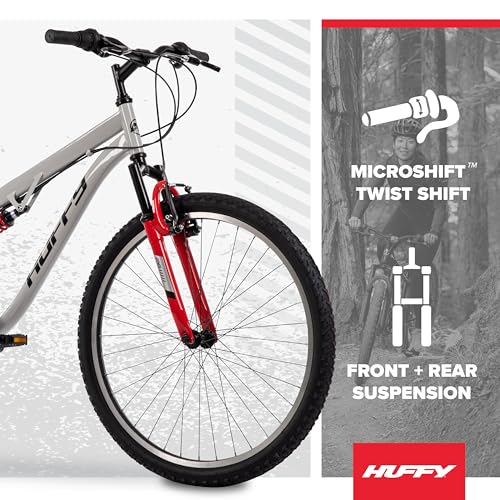
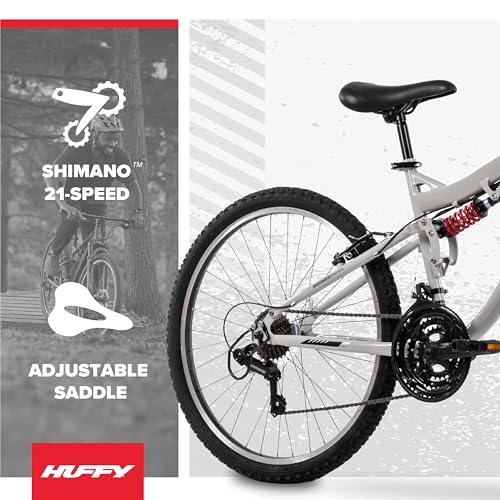
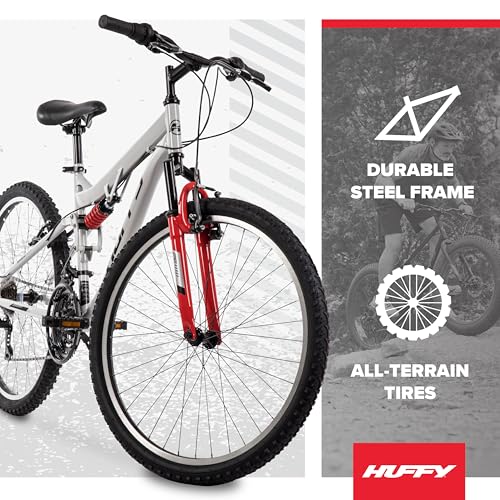
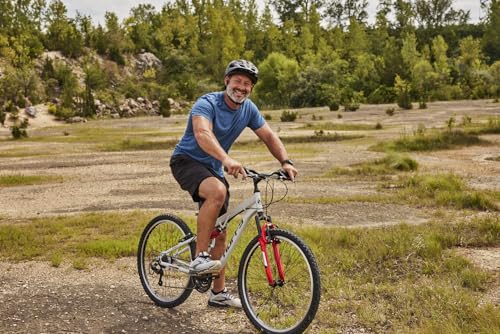
Huffy has long been a go-to for comfort-oriented bikes, and the Stone Mountain continues that with its dual suspension setup and plush saddle. The rear spring shock and front fork work together to dampen bumps, making it a solid choice for riders who prioritize a smooth ride over speed. Owners report it’s especially good for gravel paths, park loops, and paved trails where comfort is key.
It runs on a 21-speed Shimano system with twist shifters, which is a nice touch, but the steel frame keeps it on the heavy side. Compared to the Grafton, it lacks disc brakes, relying instead on linear pulls that fade faster in wet conditions. Still, for casual riders who want a cushioned, stable platform, this is a strong option. I’d pick it over harder-riding models if you’re using it for relaxed weekend outings.
Product photos

Brightpeak 26″ All-Terrain Bike
Strengths
- Durable steel frame
- High weight capacity
- V-brakes reliable
Trade-offs
- Heavy
- Only 7 speeds
- Basic shifting
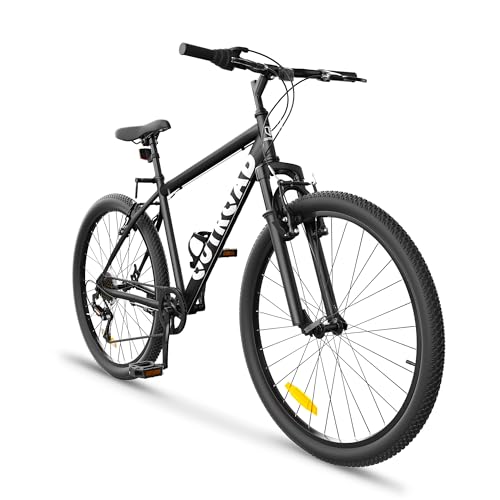
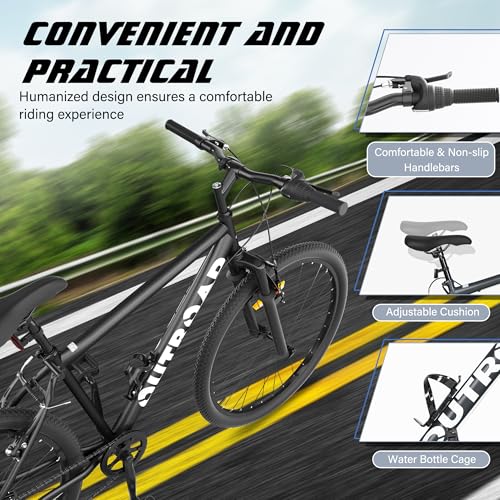
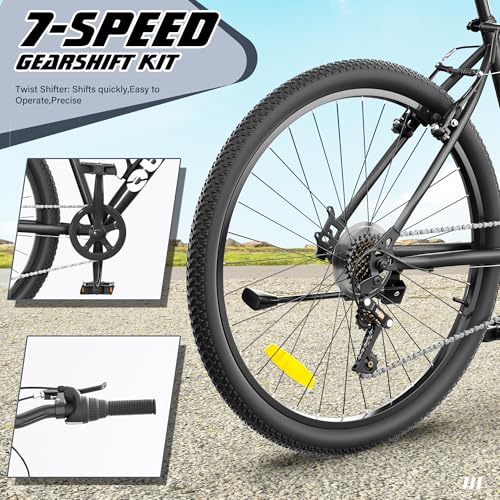
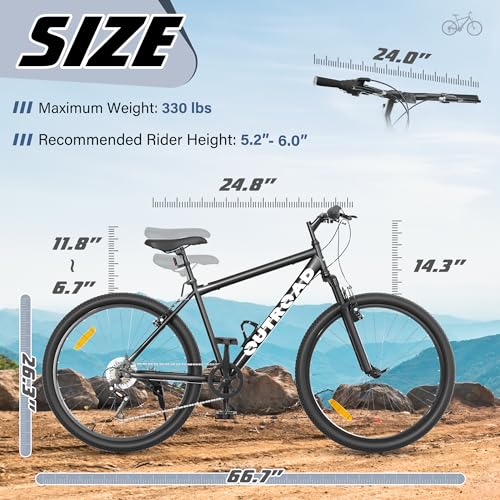
Brightpeak leans hard into durability here, and it shows. The high-carbon steel frame is overbuilt in the best way, owners report it handles heavy use and larger riders without creaks or flex, and the 330 lb capacity beats most competitors. The 7-speed drivetrain is basic, but paired with V-brakes, it’s proven reliable for commuters and casual trail users who don’t need fine-tuned shifting.
Where it shines is longevity. Compared to the Dynacraft or WEIZE, the welding and paint quality are noticeably better, and the suspension fork is tuned to handle repeated impacts. It’s not fast or flashy, but for someone who wants a “set it and forget it” bike that survives rain, potholes, and daily abuse, this is a strong contender. I’d pick it over lighter bikes if you value toughness over speed.
Product photos

WEIZE 26″ 18-Speed Mountain Bike

Strengths
- Dual suspension
- 18-speed gearing
- All-terrain tires
Trade-offs
- Heavy steel frame
- Soft rear suspension
- Twist shifters less precise
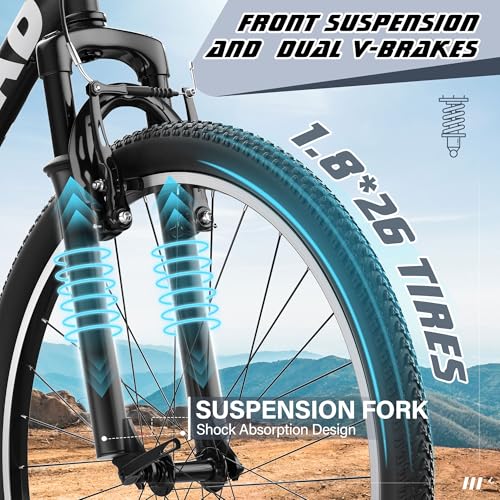
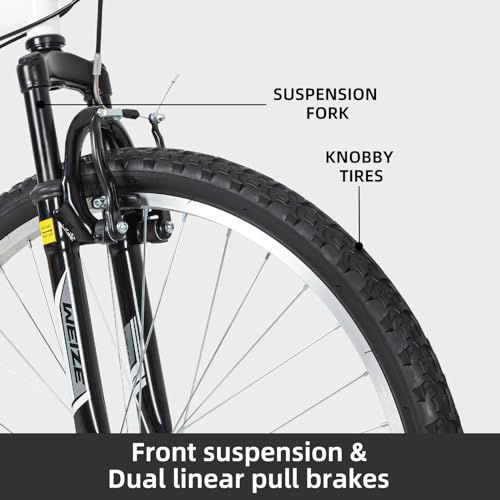
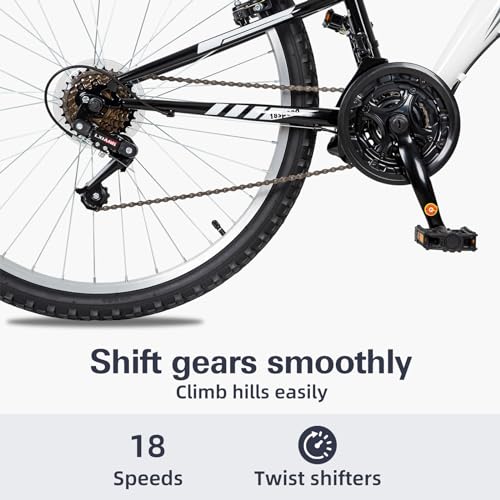
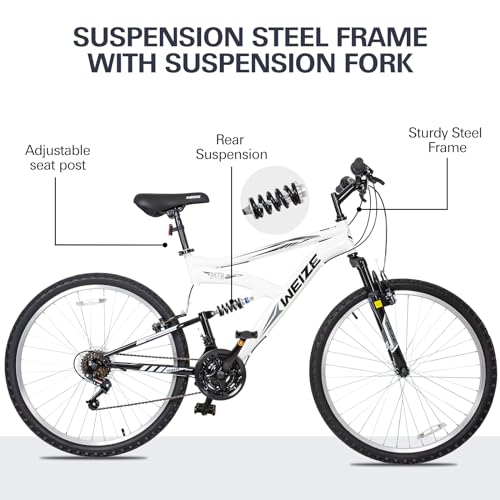
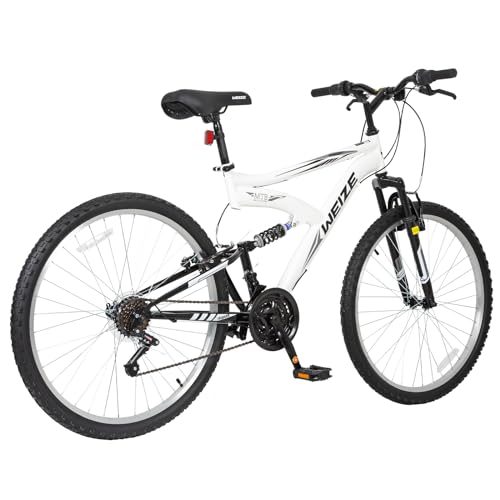
WEIZE positions this as an entry-level dual suspension bike, and that’s its main selling point, having both front and rear shocks at this price is rare. On paper, the 18-speed twist shifters and steel frame suggest a focus on comfort over speed, and owner feedback confirms it: this bike smooths out rough sidewalks and gravel paths better than rigid or hardtail models in the same range.
But that dual suspension comes with trade-offs. The rear coil shock adds weight and can feel bouncy on hardpack trails, sapping efficiency. The steel frame isn’t as responsive as aluminum, and while the tires handle all-terrain use, they’re not aggressive enough for real mountain trails. I’d see this as a neighborhood cruiser with off-road pretensions, fine for light use, but outclassed by the Grafton or CYBIC for real trail work.
Product photos
Dynacraft Magna Echo Ridge Bike

Strengths
- Steel frame
- Front shock
- Easy assembly
Trade-offs
- Basic components
- Limited gearing
- Heavier build
This is the kind of bike that makes sense when you’re introducing someone to mountain biking without wanting to spend heavily. On paper, it’s basic, steel frame, linear pull brakes, a front shock fork, but owners consistently report it holds up well for light trail use and paved bike paths. It’s not built for aggressive riding, but for teens or adults just getting into casual off-road cycling, it offers a stable, no-fuss entry point.
Where it stumbles is in component refinement. The gear system is rudimentary, and while the quick-release seat post is convenient, the overall drivetrain feels sluggish compared to even mid-range models. Still, for the price, it’s a reasonable first bike. I’d recommend it strictly as a learner’s rig, not something you’ll grow with.
Product photos


How We Picked These 26 inch mountain bikes
My approach to evaluating 26 inch mountain bikes started with a detailed comparison of published specifications and features across numerous models. Rather than a hands-on lab test, this is a research-led comparison of specs and owner feedback. I weighed these against reviews from cycling publications and websites I trust, focusing on identifying patterns in performance and reliability. Ultimately, I ranked the bikes based on how well they met key criteria for the average rider seeking a capable and enjoyable experience.
For this category, value for money, suspension quality, and component reliability were the most heavily weighted factors. A good 26-inch mountain bike needs to handle varied terrain, and the suspension system is critical for comfort and control. Reliable components, especially the drivetrain and brakes, directly impact the riding experience and long-term ownership costs. If you’re looking for something more specialized, you might also want to check out our guide to cross-country mountain bikes.
Published specifications reliably indicate frame materials, component groupsets (Shimano, etc.), and braking systems. However, I turned to owner reviews to gauge real-world durability, comfort, and ease of assembly. Reputation matters, too; established brands often have better quality control and customer support. I also considered whether a bike filled a particular niche, like a budget-friendly option or a model geared toward taller riders, and compared it to similarly positioned alternatives, including potentially looking at 24-inch mountain bikes for smaller riders.
How To Pick The Right 26 inch mountain bikes
Finding the right 26-inch mountain bike means balancing affordability with capability. It’s a sweet spot for many riders, offering a good blend of maneuverability and rollover ability.
A quality 26-inch mountain bike prioritizes a durable frame (aluminum or steel are common), reliable shifting components from Shimano or SRAM, and effective braking, mechanical disc brakes are a good baseline. Suspension, whether front only (hardtail) or front and rear (full suspension), significantly impacts ride comfort and control on rough terrain. Tire tread should match intended use, from smoother trails to aggressive singletrack.
Frame Material & Durability
The frame is the foundation. Steel frames, like you’ll find on the CYBIC, offer a comfortable ride and excellent durability, but add weight. Aluminum (seen in the Mongoose Flatrock) strikes a better balance between weight and strength, making it a popular choice for more performance-oriented riders. Don’t automatically dismiss steel, though; a well-built steel frame can last a lifetime. Consider your riding style and terrain. More aggressive riding warrants a stronger, lighter frame, even if it comes at a higher price.
Suspension: Hardtail vs. Full Suspension
Deciding between a hardtail (front suspension only) and a full-suspension bike is crucial. Hardtails are simpler, more affordable, and require less maintenance. They’re great for smoother trails and riders prioritizing efficiency. Full-suspension bikes, like the CYBIC, excel on rough terrain, absorbing bumps and providing more control. However, they’re generally more expensive and require more upkeep. If you’re primarily riding well-maintained trails, a hardtail is likely sufficient. If you are looking for more advanced options, be sure to check out our guide to the best full-suspension mountain bikes.
- Budget is a major factor. Full suspension adds a significant cost.
- Trail complexity dictates the need. Smooth trails = hardtail. Rough trails = full suspension.
- Maintenance is easier with a hardtail. Fewer moving parts mean less to go wrong, and fewer adjustments to make.
Value & Component Quality
Don’t get hung up on having the highest-end components, especially at the 26-inch wheel size. A bike with a solid Shimano drivetrain (even a lower-tier one) and reliable mechanical disc brakes will provide a far better experience than a poorly-made bike with fancy parts. Look for a reputable brand, Mongoose has a long history in the cycling world, and Brightpeak is gaining traction as a budget-friendly option.
A well-maintained mid-range component set will always outperform a high-end set that’s neglected. Prioritize regular cleaning and lubrication.
If you’re considering stepping up in wheel size, our guide to 29-inch mountain bikes can help you decide.
26 Inch Mountain Bikes Compared
Here’s a comparison of key specifications for these 26-inch mountain bikes.
| Product Name | Frame Material | Suspension | Speeds | Brakes | Tire Size | Rider Height |
|---|---|---|---|---|---|---|
| Mongoose Grafton | Aluminum | Front | 21 | Disc (Mech) | 26 x 2.3″ | 5’4″ – 6’2″ |
| CYBIC Full Suspension | Steel | Full | 21 | Disc | 26 x 2.125″ | 5’3″ – 5’11” |
| Mongoose Flatrock | Aluminum | Front | 7 | Linear Pull | N/A | 5’4″ – 6’2″ |
| Huffy Stone Mountain | Steel | Full | 21 | N/A | 26″ | 5’0″ + |
| Brightpeak All-Terrain | High-Carbon Steel | Front | 7 | V-Brake | N/A | 5’2″ – 6’2″ |
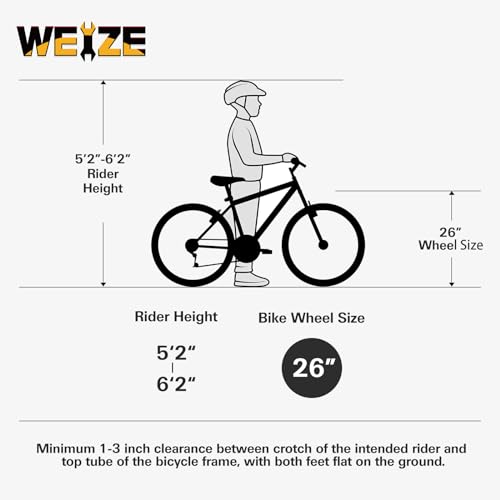
| WEIZE 18-Speed | Steel | Full | 18 | Linear Pull | 26″ | 5’2″ – 6’2″ |
| Dynacraft Magna Echo Ridge | Steel | Front | N/A | Linear Pull | N/A | N/A |
Frequently Asked Questions
What tire pressure should I run on a 26 inch mountain bike?
Typically, 25-35 PSI is a good starting point for most 26-inch mountain bike tires, but it depends heavily on your weight and the terrain. Lower pressure (around 20-25 PSI) offers better grip on loose surfaces, while higher pressure (30-35 PSI) rolls faster on smoother trails.
Are 26 inch mountain bikes still relevant today?
Yes, 26-inch wheels remain a solid choice, particularly for smaller riders or those who prioritize maneuverability. While 29ers are currently more popular, a well-built 26-inch bike can still handle a wide variety of trails, and you can find excellent mountain bike reviews covering this wheel size.
What’s the difference between mechanical and hydraulic disc brakes?
Mechanical disc brakes use a cable to actuate the brakes, making them simpler to maintain. Hydraulic disc brakes use fluid, providing more powerful and consistent stopping power, but require more specialized maintenance and are often found on more expensive bikes.
What size frame is right for a 26 inch mountain bike?
Frame size depends on your height, but most manufacturers provide a size chart. Generally, riders between 5’2” and 5’10” can comfortably fit a 26-inch mountain bike, but checking the specific geometry of each model is essential for a proper fit.
Can I upgrade components on a budget 26 inch mountain bike?
Absolutely. Upgrading components like the drivetrain or brakes can dramatically improve performance. Start with the most impactful upgrades – a better shifter or brake set – and consider used components to keep costs down, especially if you are looking for all-around mountain bikes.
The Bottom Line
Choosing a 26-inch mountain bike often comes down to how much you value simplicity versus capability. If you’re after a reliable, no-fuss ride that won’t break the bank, the Mongoose Flatrock delivers a solid, basic experience. But for the best overall blend of features, comfort, and value, I believe the Mongoose Grafton stands out as the strongest pick – it’s a well-rounded machine capable of handling a variety of trails.
For those on a tighter budget, the Brightpeak All-Terrain offers a surprisingly capable entry point into the sport. If you’re looking for a full-suspension experience without a huge investment, the CYBIC is a good choice, though you’ll be making some compromises in component quality. And if you’re looking at smaller sizes for younger riders, be sure to check out our guide to the best 20-inch mountain bikes.
Ultimately, the best 26-inch mountain bike isn’t about the flashiest specs or the highest price tag. A comfortable fit, reliable brakes, and a functional drivetrain are far more important than having the latest components. Prioritize those fundamentals, and you’ll find yourself enjoying the trails far more than worrying about whether you have the “best” bike.
