
8 Best 29 Inch Mountain Bikes of 2026
This post contains affiliate links. As an Amazon Associate, we earn from qualifying purchases.
The Mongoose Impasse 3.0 Full Suspension MTB stands out as the best overall 29 inch mountain bike for its reliable performance and solid componentry, while the Yventix 29″ Hardtail 21-Speed MTB is a strong budget pick that keeps costs down without sacrificing essential features. For riders wanting more capability on rugged trails, the Schwinn Traxion offers a versatile full-suspension build with a wide gear range.
Most riders struggle to cut through the noise of specs and marketing claims when choosing a 29 inch mountain bike. With so many options, from hardtails to full-suspension builds, it’s easy to end up with a bike that doesn’t match your terrain or skill level.
This guide cuts through that confusion by focusing on real-world performance, based on specs, owner feedback, and brand reputation. I looked closely at suspension quality, drivetrain reliability, frame material, and braking systems to identify the bikes that deliver the best balance of ride quality and value.
Top 8 29 Inch Mountain Bikes in the Market
The Best 29 Inch Mountain Bikes, Reviewed
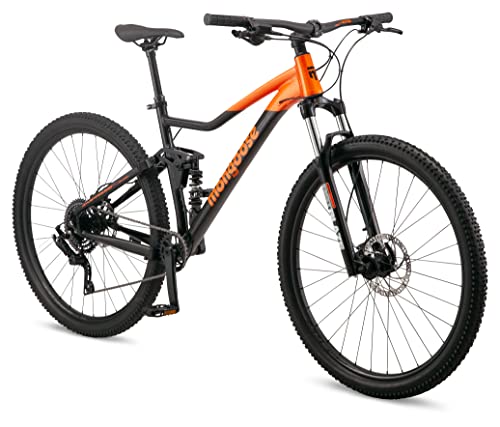
Mongoose Impasse 3.0 Full Suspension MTB
Strengths
- Hydraulic disc brakes
- 1×9 wide-range drivetrain
- Lockout front suspension
- Full suspension aluminum frame
- Smooth gear changes
Trade-offs
- Microshift not as durable as Shimano
- Heavier than high-end models
- Limited standover clearance
If I had to pick one bike from this list as the best all-rounder for real trail use, it’s the Mongoose Impasse 3.0. The 1×9 Microshift drivetrain with 11-46 cassette gives a wide gear range that owners love for steep climbs and fast descents, and the hydraulic disc brakes offer superior modulation and power, a clear step up from mechanical systems. The RST Blaze fork with 100mm travel and lockout adds serious trail credibility, letting riders firm up the front end on flats or unlock it for technical descents.
Compared to the Schwinn and VEVOR, this one feels more tuned for actual mountain biking, not just paved paths with a bump or two. The aluminum full-suspension frame strikes a good balance between stiffness and weight, and while the 80% assembly might deter some, most report it’s manageable with basic tools. This isn’t a race bike, but it’s the closest thing here to a true trail performer.
Video review
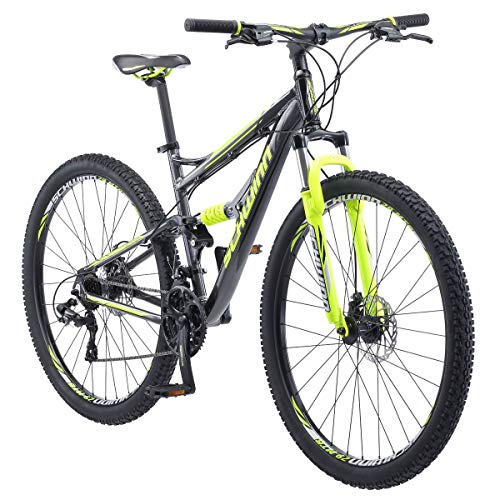
Schwinn Traxion Full Suspension 24-Speed MTB
Strengths
- Full suspension setup
- Shimano 24-speed drivetrain
- Mechanical disc brakes
- Lightweight aluminum frame
- Durable double-wall rims
Trade-offs
- Suspension lacks adjustability
- Heavier than competition
- Trigger shifters require occasional tuning
Schwinn has leaned into the full-suspension market with the Traxion, and it shows in the spec sheet, a rare find in this range with actual rear suspension and Shimano 24-speed drivetrain. The aluminum frame keeps weight manageable, and the 24-speed trigger shifters deliver crisp, reliable shifts that owners consistently praise for hill climbing and trail responsiveness. Mechanical disc brakes aren’t the most advanced, but they offer dependable stopping power in mud or rain, which matters when you’re pushing through rough patches.
Compared to hardtails in the same price zone, the Traxion gives more comfort on chunky terrain, though some riders note the suspension can feel a bit soft under aggressive riding. It’s not a race-ready rig, but it’s a solid step up for riders transitioning from city paths to real trails. For a brand known for entry-level bikes, this one shows Schwinn isn’t playing it entirely safe.
Video review
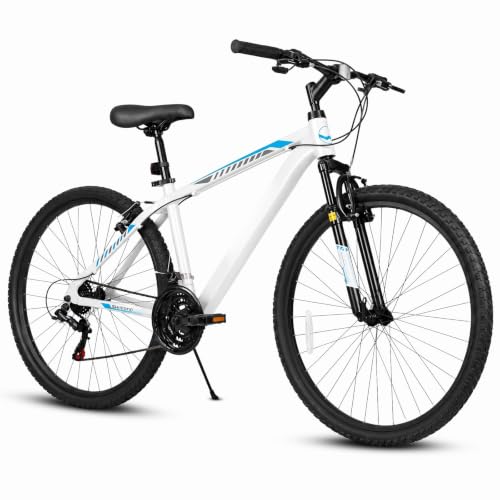
Yventix 29″ Hardtail 21-Speed MTB
Strengths
- Low price point
- Shimano 21-speed drivetrain
- Lightweight aluminum frame
- Front suspension
- Easy assembly
Trade-offs
- V-brakes lack power
- Fork not tunable
- Limited durability over time
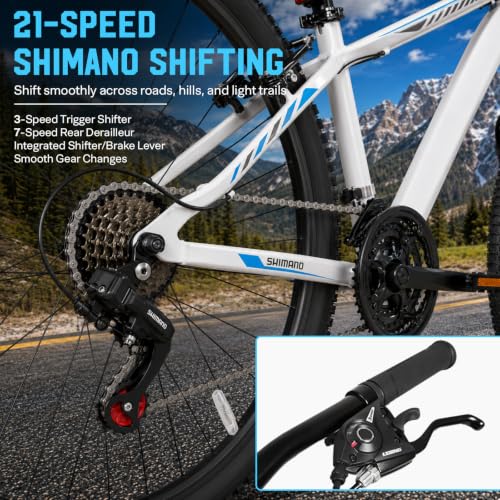
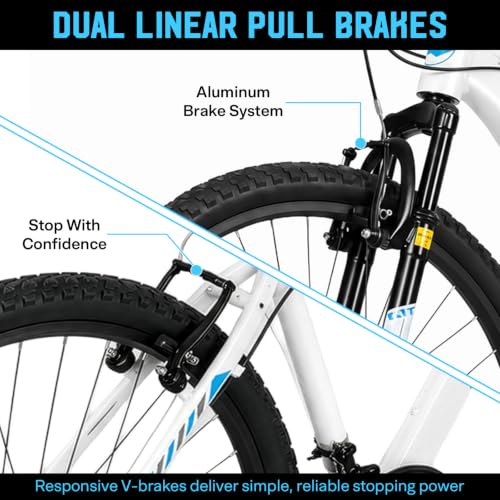
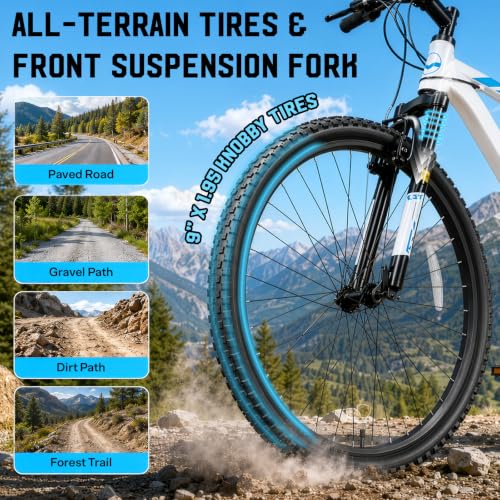
The Yventix 29-inch hardtail is the definition of budget entry-level, a lightweight aluminum frame, 21-speed Shimano twist shifter, and front suspension for under $200. That alone makes it a contender for first-time buyers or casual riders who just want to hit park paths or gravel roads. The 29-inch wheels help maintain momentum, and the V-brakes, while not as strong as discs, offer decent stopping power in dry conditions. For the price, it’s a functional, no-surprises ride.
But make no mistake, this isn’t a trail bike. The V-brakes fade in wet weather, and the suspension fork is basic, offering more compliance than actual trail performance. Compared to disc-brake models like the EUROBIKE or VEVOR, it’s a step down in safety and control. Still, if you’re on a tight budget and just want a reliable commuter or light trail bike, it gets the job done.
Product photos
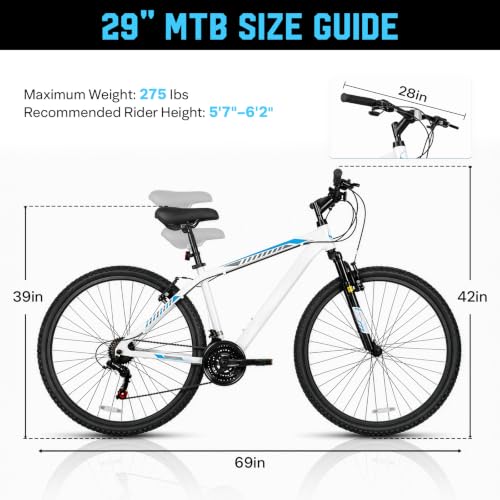

VEVOR 29″ Dual Suspension 24-Speed MTB
Strengths
- Full dual suspension
- 24-speed twist shifting
- Dual disc brakes
- Affordable price
- 85% pre-assembled
Trade-offs
- Vague suspension performance
- Twist shifters lack precision
- Frame finish prone to scratches
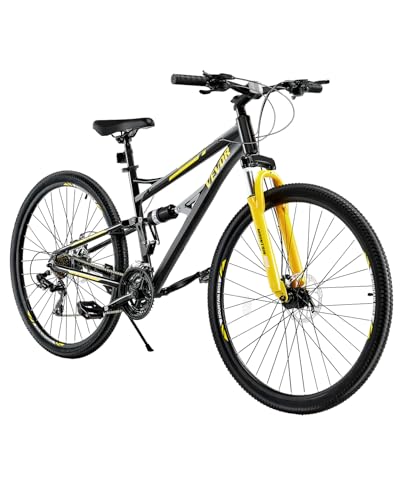
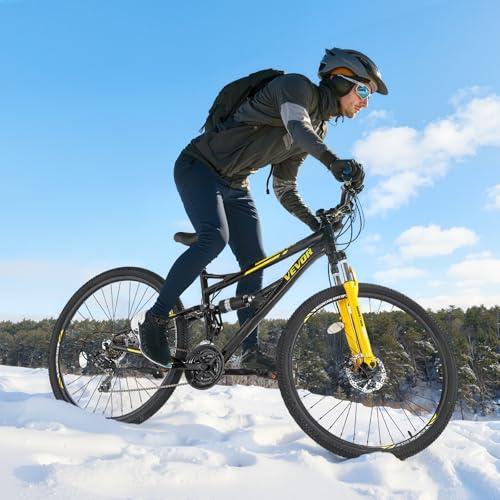
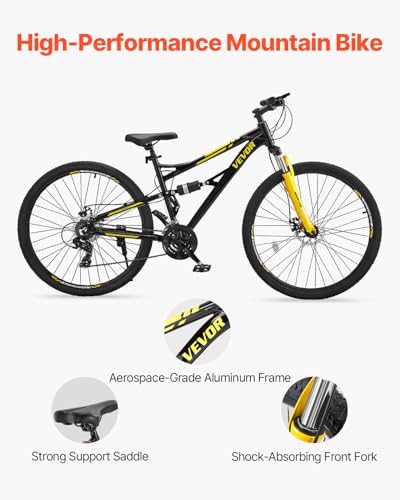
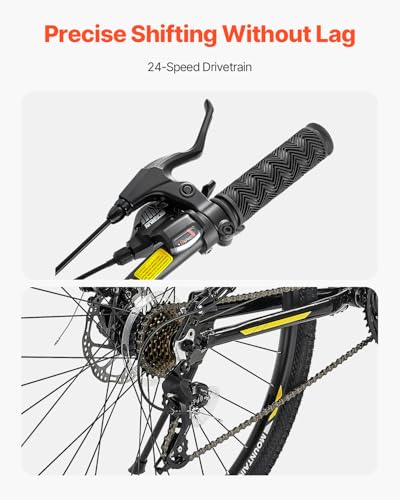
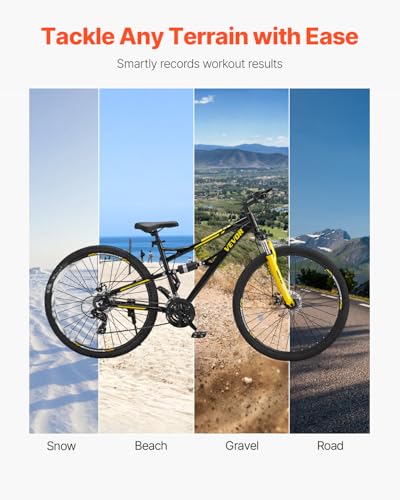
At this price, the VEVOR 29-inch dual suspension MTB feels like a steal, 24 speeds, full suspension, disc brakes, and a claimed lightweight aluminum frame. On paper, it’s packed with features that should appeal to budget-conscious riders wanting full trail capability. Owners confirm the ride is surprisingly capable on gravel, fire roads, and light trails, with the dual suspension soaking up bumps better than expected. The 24-speed twist shifters work well enough for casual use, and the disc brakes offer solid control in dry and wet conditions.
But there’s a trade-off: refinement. Reviewers note the shifting isn’t as crisp as Shimano-equipped rivals, and the suspension can feel vague without fine-tuning options. Still, for someone building trail confidence or needing a durable bike for occasional off-road use, this delivers real value. It’s not going to win any weight or performance awards, but it gets you out there.
Product photos

EUROBIKE 29″ Disc Brake 21-Speed MTB

Strengths
- Mechanical disc brakes
- Shimano drivetrain
- Durable aluminum frame
- Rack and kickstand mounts
- Stable welding and finish
Trade-offs
- Heavy for trail use
- Outdated 3×7 gearing
- Basic suspension fork
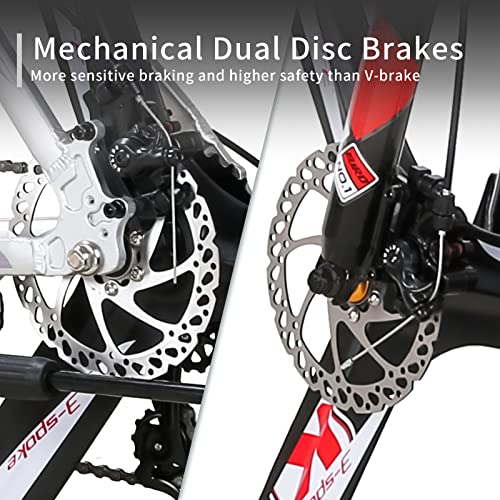
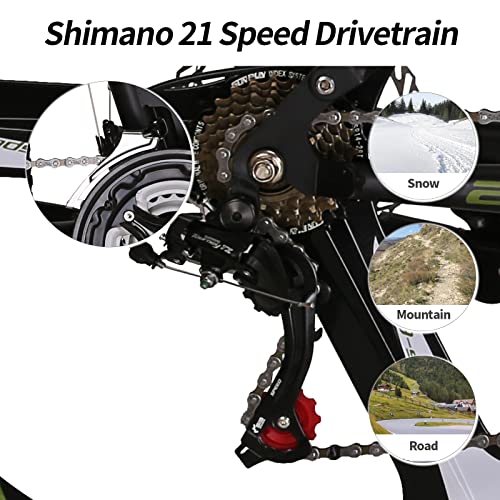
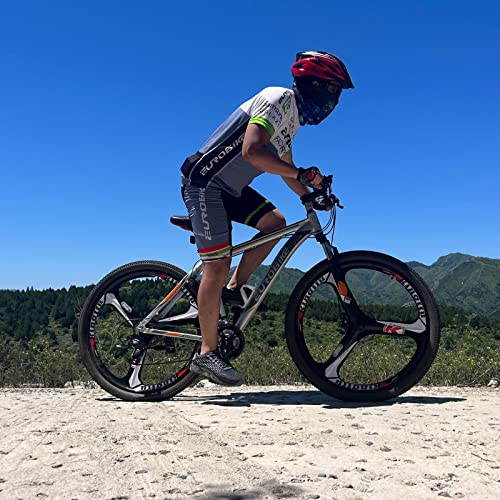
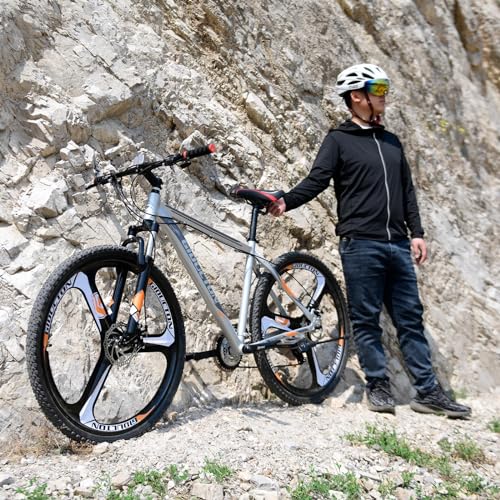
What the EUROBIKE 29-inch MTB lacks in brand prestige, it makes up for in smart component choices, especially those mechanical disc brakes. At this price, disc brakes aren’t guaranteed, but here they’re standard, giving riders consistent stopping power in all conditions. The Shimano 3×7 drivetrain isn’t modern, but owners report it shifts smoothly and holds up well with basic maintenance. The aluminum frame is stiff and durable, and the magnesium alloy wheels add a touch of style without sacrificing strength.
Compared to the Yventix, this is a clear upgrade in braking and build quality. It’s not as plush as full-suspension models, but as a hardtail built for durability and daily use, it holds its own. The rack and kickstand mounts are a nice touch for commuters, making it more than just a weekend trail toy.
Product photos

Eastern Bikes Alpaka 29″ Hardtail

Strengths
- 5-year frame warranty
- Hydroformed aluminum frame
- 130mm suspension travel
- Sealed hub bearings
- Good tire clearance
Trade-offs
- Outdated 9-speed drivetrain
- Basic component spec
- Limited geometry options
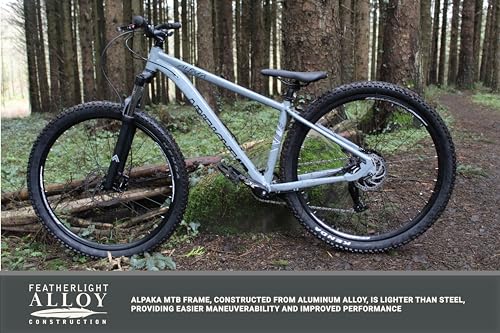
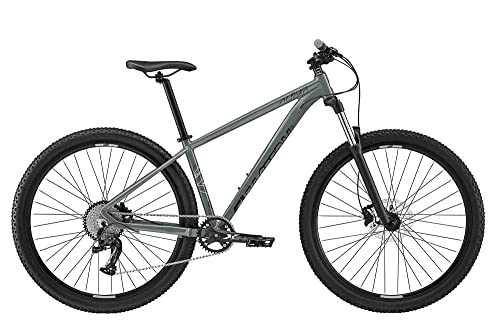
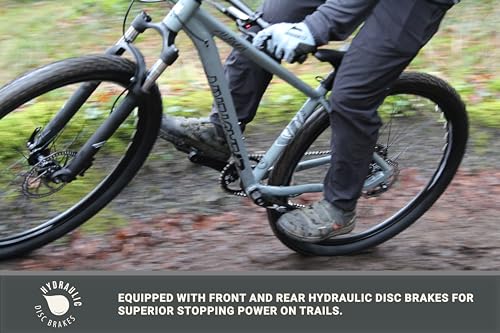
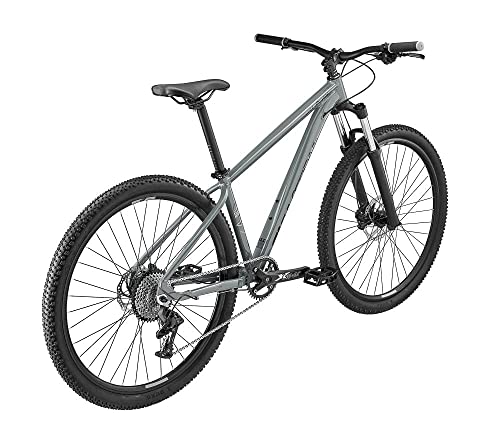
The Alpaka’s standout feature isn’t its 9-speed drivetrain or 130mm suspension fork, it’s that 5-year frame warranty. In a market where most budget-to-midrange bikes offer 1–2 years, Eastern’s commitment speaks volumes about their confidence in the hydroformed 6061 aluminum frame. Owners report it’s stiff where it needs to be, with clean welds and a ride that feels more premium than the price suggests. The 29-inch wheels roll over trail obstacles smoothly, and the 2.2-inch tires strike a good balance between grip and rolling resistance.
Still, the 9-speed setup feels dated next to 1×11 or 1×12 systems on similarly priced bikes, and the Eastern-branded components don’t inspire upgrade dreams. But if you’re the type who values long-term durability over spec-sheet flash, this one earns trust through build quality and that unmatched warranty.
Product photos

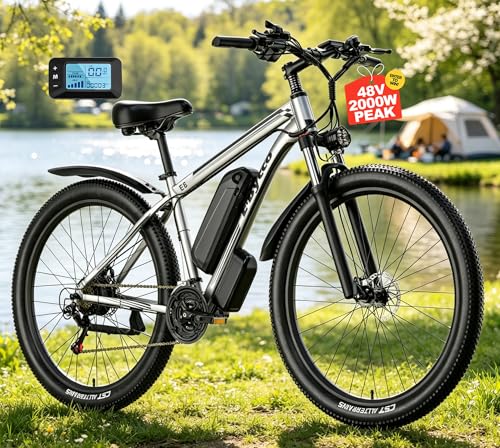
E·Bycco 29″ 2000W Electric Mountain Bike
Strengths
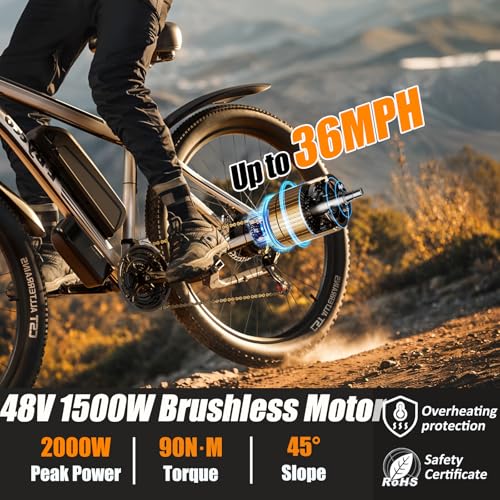
- 2000W peak motor
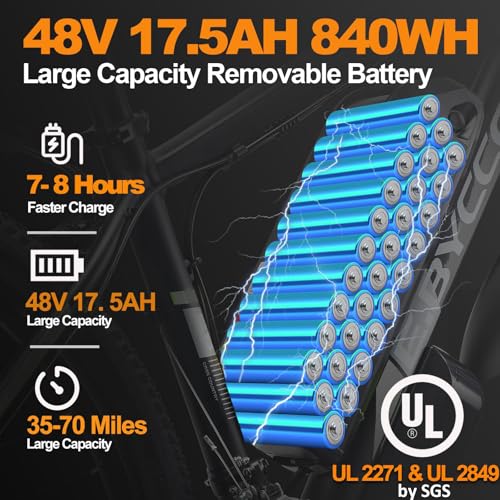
- 48V 17.5Ah long-range battery
- 36MPH top speed
- Removable battery
- UL listed
Trade-offs
- Basic suspension tuning
- Heavy frame for trail work
- Mixed owner reports on throttle smoothness
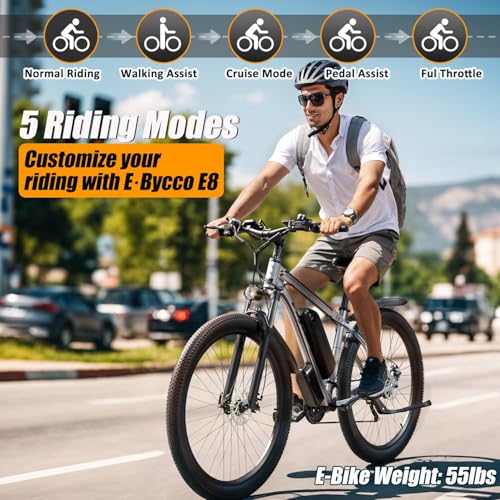
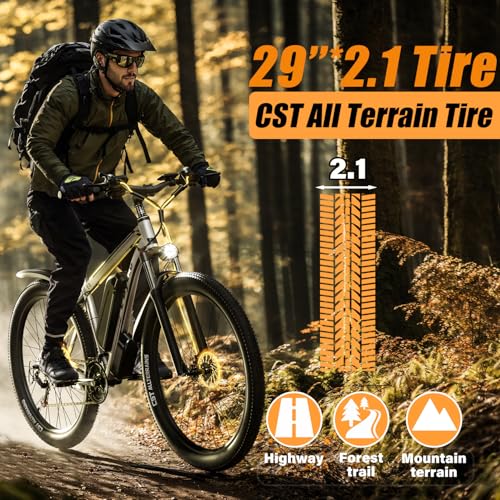
On paper, the E·Bycco E8 looks like a trail-dominating electric beast, and owners agree it delivers serious power for the price. That 2000W peak motor and 90N·m torque let riders tackle steep climbs and loose terrain without breaking a sweat, and the 36MPH top speed is no joke, though most stick to Class 3 limits in practice. The 48V 17.5Ah battery stands out in this segment, offering real-world range that matches or exceeds the 70-mile pedal-assist claim under moderate conditions.
Still, this is an e-bike built for performance over refinement. Reviewers note the ride can feel a bit stiff on technical trails, and while the 29-inch tires help, the suspension isn’t as tuned as pricier models. That said, for riders wanting raw speed, long range, and UL-listed safety on a budget, this one punches above its weight, especially with the five riding modes and walk assist adding real-world usability.
Product photos
Gravity FSX 29 LTD Full Suspension

Strengths
- Adjustable rear suspension
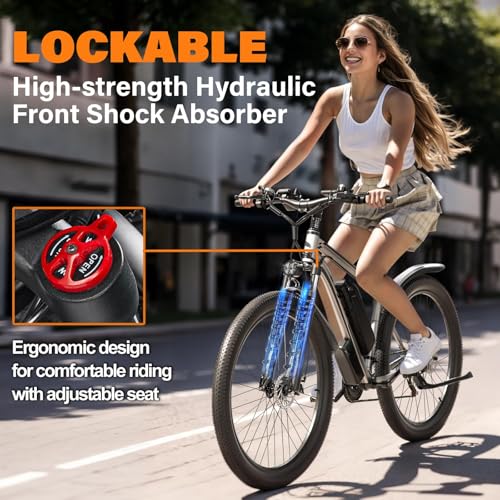
- Lockout front fork
- 29-inch wheels
- Dual suspension at mid price
- Powerful disc brakes
Trade-offs
- Outdated 3×7 drivetrain
- Basic component quality
- Frame finish not long-term durable
The Gravity FSX 29 LTD sits in that sweet mid-range gap where you get dual suspension and 21 speeds without paying top dollar. Its 29-inch wheels and lockout fork make it a stable performer on rough terrain, and the adjustable rear suspension lets riders tweak the ride for their weight or trail style, a rare feature at this price. Owners consistently report it handles better than expected, especially on rocky climbs and descents, thanks to the long wheelbase and decent geometry.
But the 21-speed drivetrain, while functional, uses older tech that feels clunky compared to modern 1x systems. Shifting isn’t as smooth, and maintenance is more frequent. Still, if you’re after a no-frills, durable dual-suspension bike that won’t bankrupt your weekend trail habit, this one delivers. It’s not flashy, but it’s honest.
Product photos
How We Chose These 29 inch mountain bikes
Rather than a hands-on lab test, my research for these 29 inch mountain bikes focused on a detailed comparison of published specifications and features. I weighed owner reviews from multiple sources – looking for consistent praise and complaints – alongside assessments from reputable cycling publications. My goal was to build a ranking based on how well each bike met the needs of a wide range of riders, considering both trail performance and overall value.
For this category, I prioritized suspension quality and drivetrain components. A good suspension system is crucial for comfort and control on rough terrain, while a reliable drivetrain directly impacts the bike’s ability to handle climbs and varied conditions. Frame material and brake type also factored heavily, as these influence durability and stopping power. These elements ultimately decide which bikes offer the best riding experience.
Specifications reliably indicate frame geometry, component levels (like Shimano derailleurs), and brake types. However, owner feedback proved essential for understanding real-world performance – how well the suspension actually absorbs bumps, the durability of components, and the ease of assembly. I also considered the reputation of the brand, and cross-referenced that with owner experiences. If you’re looking for smaller options, exploring 24 inch mountain bikes could also be beneficial.
How To Pick The Right 29 inch mountain bikes
Picking the right 29 inch mountain bike can dramatically improve your trail experience.
A good mountain bike balances frame material, suspension quality, component reliability (especially the drivetrain and brakes), and overall fit for the rider. Pay attention to fork travel, cassette range, brake type, and frame geometry to ensure a bike that suits your riding style and terrain. Don’t overlook the importance of a well-fitted frame; a comfortable ride is a safe ride.
Frame Material & Geometry
The frame is the backbone of any mountain bike, and aluminum alloy is currently the sweet spot for most riders. It offers a good balance of weight, strength, and cost. Steel frames are still around, offering a comfortable ride quality but adding weight. Carbon fiber is lighter and can be incredibly strong, but it significantly increases the price. Beyond the material, geometry is crucial. A longer wheelbase offers stability at speed, while a shorter wheelbase makes the bike more nimble. Consider how and where you intend to ride; more aggressive trails generally benefit from more relaxed geometry.
Suspension: Travel and Type
When it comes to suspension, you’ve got hardtail and full suspension options. Hardtails, like the Yventix 29″ Hardtail 21-Speed MTB, are simpler, lighter, and more affordable, but they transfer more impact to the rider. Full suspension bikes, such as the Mongoose Impasse 3.0 Full Suspension MTB, offer a smoother ride and better control on rough terrain. If you’re serious about tackling challenging trails, investing in a quality full suspension system is worthwhile. Travel (measured in millimeters) determines how much the suspension compresses. More travel is better for absorbing big hits, but can also reduce pedaling efficiency on smoother surfaces.
- A shorter travel fork (80-100mm) is fine for cross-country riding and smoother trails.
- Mid-travel forks (120-140mm) are a good all-around choice for trail riding, offering a balance of comfort and efficiency.
- Long-travel forks (150mm+) are designed for aggressive downhill riding and tackling very rough terrain; these are generally paired with more robust frame designs.
For riders looking for even more options, exploring full suspension mountain bikes can open up new possibilities.
Brakes and Drivetrain
Reliable stopping power and smooth shifting are essential for a safe and enjoyable ride. Hydraulic disc brakes, like those found on the Schwinn Traxion and VEVOR 29″ Dual Suspension 24-Speed MTB, offer superior performance compared to mechanical disc brakes or V-brakes, especially in wet or muddy conditions.
A well-maintained drivetrain is the key to a happy ride. Regular cleaning and lubrication will extend the life of your chain, cassette, and derailleurs.
The drivetrain (shifters, derailleurs, cassette, and chain) determines how easily you can tackle different terrains. A wider gear range provides more versatility, allowing you to climb steep hills and maintain speed on flat sections. Shimano is the dominant player in the drivetrain market, and while SRAM is also a respected brand. If you’re considering something a little smaller, you might also want to check out our guide to 26 inch mountain bikes.
29 Inch Mountain Bikes Compared
This table provides a detailed specification comparison of various 29-inch mountain bikes to help inform your purchasing decision.
| Product Name | Frame Material | Suspension | Speeds | Brakes | Wheel Size | Motor (W) |
|---|---|---|---|---|---|---|
| Mongoose Impasse 3.0 | Aluminum | Full | 9 | Hydraulic Disc | 29″ | N/A |
| Schwinn Traxion | Aluminum | Full | 24 | Mechanical Disc | 29″ | N/A |
| Yventix 29″ | Aluminum | Front | 21 | V-Brake | 29″ | N/A |
| VEVOR 29″ | Aluminum | Full | 24 | Disc | 29″ | N/A |
| EUROBIKE 29″ | Aluminum | Front | 21 | Disc | 29″ | N/A |
| Eastern Bikes Alpaka | Aluminum | Front | 9 | N/A | 29″ | N/A |
| E·Bycco 29″ | N/A | N/A | N/A | N/A | 29″ | 2000 |
| Gravity FSX 29 LTD | N/A | Full | 21 | Disc | 29″ | N/A |
Frequently Asked Questions
What cassette range should I look for if I live in a hilly area?
A wider cassette range is best for hilly terrain; look for something with at least a 11-42T or 11-46T setup. This provides lower gears for easier climbing and still offers enough higher gears for flats and descents.
Are 29 inch wheels suitable for shorter riders?
Generally, riders 5’10” and under may find 27.5 inch wheels more manageable. However, modern 29ers with shorter chainstays and more compact geometry can often fit smaller riders, so a proper bike fit is crucial.
What’s the difference between mechanical and hydraulic disc brakes?
Hydraulic disc brakes offer significantly more stopping power and better modulation than mechanical disc brakes. While mechanical brakes are simpler to maintain, hydraulic systems provide a more confident and consistent braking experience, especially in challenging conditions.
Do I need a full suspension bike if I’m a beginner?
Not necessarily. A hardtail mountain bike is often a good starting point for beginners, as they’re more affordable and easier to maintain. You can always upgrade to a full suspension bike as your skills and the trails you ride become more demanding.
Where can I find more information on different types of best mountain bikes ?
My site has numerous guides covering everything from specific bike types to price points. You can also explore options for mountain bikes under $2000 to find a quality ride without breaking the bank.
The Bottom Line
Choosing a 29 inch mountain bike often comes down to balancing how much you want to spend against how much capability you require. If you’re looking for the best overall package – a bike that’s well-equipped and ready to tackle a variety of trails – the Mongoose Impasse 3.0 stands out as a strong contender. It delivers full suspension and hydraulic disc brakes at a price point that won’t break the bank, making it a great all-around choice for many riders.
For those prioritizing affordability, the Yventix 29″ Hardtail is an excellent starting point. And if you’re seeking a versatile option with a wide gear range, the Schwinn Traxion, with its 24 speeds, provides the adaptability many riders appreciate. Don’t forget to explore mountain bikes under $1000 if you’re looking for excellent value.
Ultimately, the specifications are less critical than how well a bike fits you and matches your riding style. Focus on a frame that feels comfortable, suspension that suits the terrain you’ll be riding, and brakes you trust. A well-maintained, properly fitted bike will always outperform one with fancy components that don’t suit your needs – or, for smaller riders, a look at 20 inch mountain bikes might be worthwhile.
