
The Data-Driven Truth: Are Sports Cars More Expensive to Insure
This post contains affiliate links. As an Amazon Associate, we earn from qualifying purchases.
Sports cars are more expensive to insure, often 40% to 60% higher than standard vehicles. This premium is driven by four concrete factors: higher theft rates documented by the Highway Loss Data Institute, significantly more expensive repair costs, greater crash severity linked to horsepower, and a driver-risk profile that leads to 47% more at-fault accidents. The vehicle’s VIN automatically locks in its sports-car classification with insurers, so you cannot negotiate the category.
The HLDI data isn’t a guess. It’s a count of actual theft claims. A 2022-2024 Camaro ZL1 shows a theft rate 39 times the average for all vehicles. That single stat rebuilds an insurer’s risk model from the ground up. Your location then layers on another multiplier—a quote in Florida can be double one in Iowa for the same car and driver.
What follows is the breakdown of those four cost pillars, the specific models that buck the trend, and the real trade-offs of using a specialty insurer like Hagerty. By the end, you’ll know exactly which line items on your quote are negotiable and which are physics.
Key Takeaways
- Theft data sets the floor. The Highway Loss Data Institute found 2020-2022 Dodge Charger SRT Hellcat models recorded 25 whole-vehicle theft claims per 1,000 insured vehicle years. Actuaries price to that reality.
- Your location is a multiplier, not an adder. Regional variation can double your premium. Urban ZIP codes, especially in Florida, New York, and California, compound the base sports-car surcharge.
- Specialty insurers come with strings. Hagerty requires garage storage, mileage limits, and a separate daily driver. That’s fine for a weekend toy but impossible for a genuine daily.
- The VIN decides everything. Insurers classify sports cars automatically via the vehicle identification number using criteria like two doors and horsepower above 300. You can’t talk your way out of it.
- Some models are outliers. The Nissan 350Z and Subaru BRZ carry far lower premiums due to lower theft rates and affordable parts, proving not all sports cars are equal.
Why Are Sports Cars More Expensive to Insure? The Four Pillars
Forget vague notions of “risk.” The surcharge rests on four documented, measurable pillars that insurers price directly into your premium. Miss one, and you’re misunderstanding the bill.
The Highway Loss Data Institute found that 2020 to 2022 Charger SRT Hellcat models recorded 25 whole-vehicle theft claims per 1,000 insured vehicle years. The same HLDI data found that 2022 to 2024 Camaro ZL1 models had a whole-vehicle theft rate 39 times the average for all vehicles.
Those numbers are not marginal. They represent a concentration of risk that makes standard-rate underwriting actuarially difficult. The first pillar is theft frequency. A car that is 39 times more likely to be stolen generates claims 39 times more often. The math is brutal and non-negotiable.
The second pillar is repair cost. Labor rates for certified sports car repair shops often exceed $150 per hour. Parts are specialized, sometimes imported, and rarely cheap. A minor fender-bender in a Porsche 911 can cost what a full front-end rebuild on a sedan would.
Third is crash severity. Higher horsepower and lower weight translate to faster impact speeds and more expensive total-loss payouts. The Insurance Institute for Highway Safety (IIHS) data shows all but four sports cars in their study had significantly greater-than-average losses under collision coverage. The car isn’t just more likely to crash; the crashes cost more.
The fourth pillar is the driver-risk profile. Insurers’ data indicates sports car drivers are involved in 47% more at-fault crashes and 23% more speed-related incidents. This profile is baked into the base rate for the vehicle classification, separate from your personal driving record.
These four factors interact. A stolen car is often wrecked. A high-speed crash totals an expensive vehicle. The result is a premium that isn’t just higher—it’s structurally built on a different risk foundation than a standard sedan.
How Insurers Classify Your Car (You Can’t Argue)
This isn’t a debate about aesthetics. The classification is automatic.
Insurers run your vehicle identification number (VIN). The VIN decodes to specifications that trigger the sports car flag: two-door configuration, horsepower above 300, a performance-focused design, and sports-tuned suspension. If the VIN says it’s a sports car, your quote reflects that. No amount of “but I drive it gently” changes the code.
This system creates clear lines. A Ford Mustang EcoBoost four-cylinder might sneak under the horsepower threshold at some carriers, getting rated closer to a standard vehicle. The V8 GT model never will. This is why shopping around isn’t just about price—it’s about finding a carrier whose classification model treats your specific trim more favorably.
The Cost Gap: Cheapest vs. Most Expensive Models
Not all sports cars are punished equally. The spread between the cheapest and most expensive models to insure is vast, driven directly by those four pillars. Where your model lands on this spectrum decides whether the premium is an annoyance or a deal-breaker.
| Model | Avg. Annual Premium | Why It Costs What It Does |
|---|---|---|
| Nissan 350Z | ~$1,004 | Low theft rates, affordable and available parts, older platform with settled repair costs. |
| Subaru BRZ / Toyota 86 | ~$1,304 – $1,400 | Excellent safety ratings offset performance classification. Lower horsepower (228) helps. |
| Ford Mustang GT | ~$2,500 | High theft target, powerful V8, but high volume means repair network is established. |
| Chevrolet Camaro ZL1 | ~$3,000 | Extreme theft risk (39x average), high horsepower, and expensive specialized parts. |
| Porsche 911 | ~$3,400 – $4,700 | Very high vehicle value, extremely costly repairs, and high-performance driver profile. |
The Nissan 350Z wins because it fails the theft test. It’s simply not a high-theft target like a modern Hellcat or ZL1. Its parts are plentiful and relatively cheap, holding down the second and third pillars. This is the blueprint for an affordable sports car: fly under the radar.
On the other end, the Porsche 911 and Chevrolet Corvette Z06 hit every pillar hard. Their values are high, their parts are exorbitant, and their performance capabilities maximize crash severity. The data leaves insurers no room for discounts.
Where this goes sideways: Assuming a used sports car is automatically cheaper to insure. A 10-year-old Corvette still has a Corvette’s repair costs and horsepower. The premium drops slightly with depreciation, but the classification and core risk factors remain.
Electric sports cars like the Porsche Taycan present a fascinating middle ground. Their advanced safety features and lower theft rates (so far) can suppress premiums, sometimes coming in below comparable gas-powered V8 models. However, a high-value EV like a Tesla Model S sees costs skyrocket again due to its own expensive, specialized repair ecosystem.
Location, Location, Location: The Geographic Multiplier
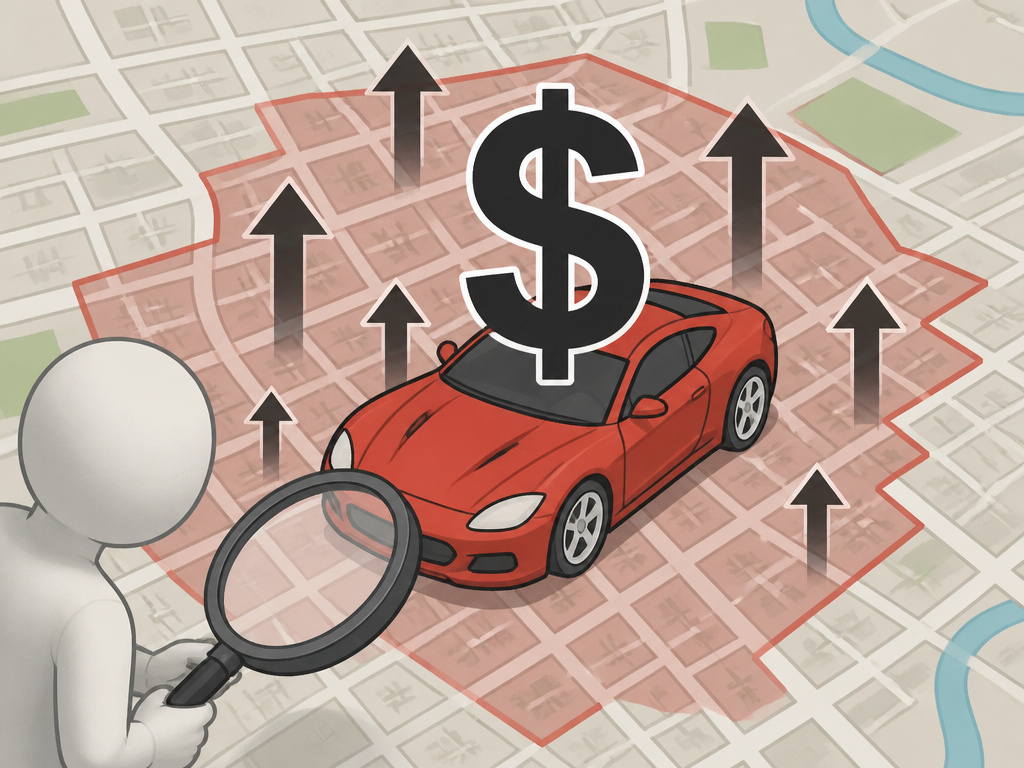
The national average for full-coverage insurance is $2,300 to $2,500 a year. That number is meaningless for a sports car owner in Miami or Brooklyn.
Regional variation doesn’t just add to your premium—it multiplies the underlying sports car surcharge. A risk model built on theft frequency amplifies that frequency if you live in a high-theft metropolitan area. A model built on crash severity gets worse if you commute in dense, high-speed traffic.
Urban versus suburban splits within the same state can create 10% to 25% differences. A driver in downtown Chicago will pay more than one in Naperville for the same Camaro. Insurers map this by ZIP code, and the tiers are rigid.
The hardest-hit states are Florida, New York, Michigan, and California. In these markets, a standard carrier’s quote for a performance trim can be so high it constitutes a de facto withdrawal of coverage. They aren’t refusing to insure you; they’re pricing the policy to a point that changes your purchase decision. This is the “pricing out” phenomenon documented in industry reports.
For buyers in these regions, the math shifts. The search isn’t just for the cheapest sports car to insure, but for any carrier willing to write the policy at a non-astronomical rate. This often pushes buyers toward the specialty market, which brings its own constraints.
Specialty Insurers: The Trade-Off for Lower Rates
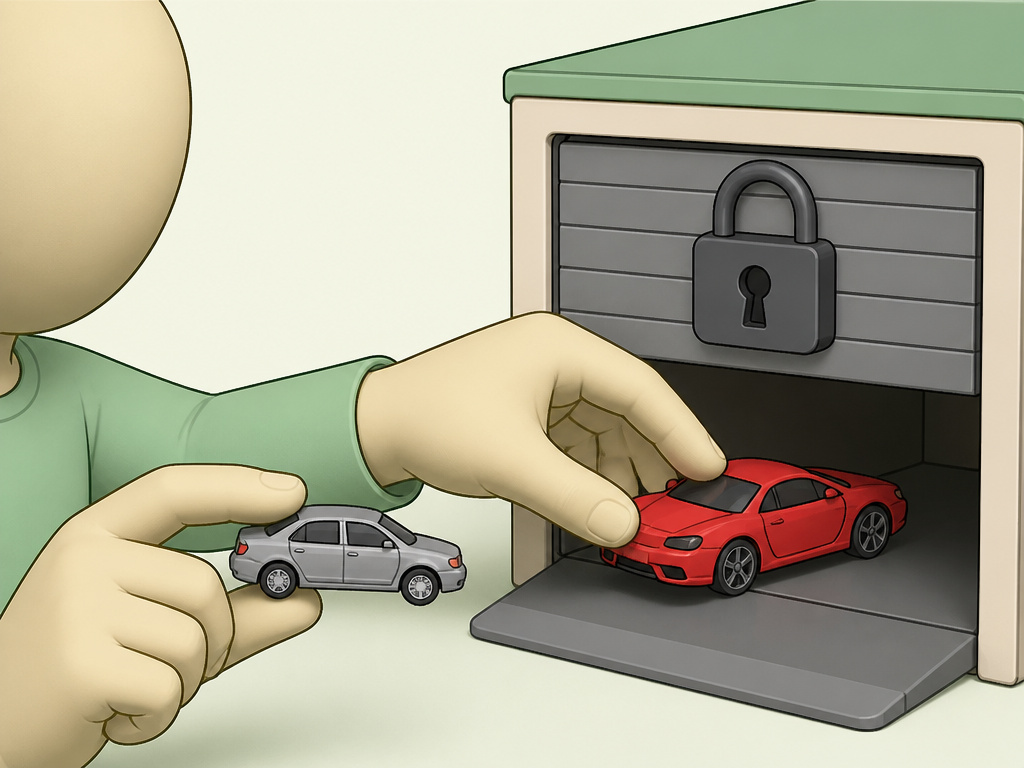
When standard carriers price you out, companies like Hagerty, Grundy, and Chubb step in. They wrote $1.19 billion in premium in 2025, largely by picking up enthusiasts stranded by the standard market. But their coverage comes with conditions that redefine ownership.
Hagerty’s model is designed for collectors, not daily drivers. Their typical requirements are a package deal: * The vehicle must be kept in a locked, secure garage. * Annual mileage is often capped (e.g., 6,000 miles or less). * You must maintain a separate, primary vehicle for daily use.
For a weekend toy, these are minor concessions. For someone who wants a Mustang GT as their only car, or for an apartment dweller who street-parks, these terms are non-starters. The lower premium is accessible only if you accept that your sports car is not a daily driver.
They also primarily offer agreed value coverage, not actual cash value. You and the insurer agree on the car’s worth when the policy is written. This is great for protecting a classic or appreciating asset but requires accurate valuation upfront.
The part nobody mentions: If you file a claim with a standard insurer for a modified car they didn’t know about, they might deny it. Specialty insurers often encourage declared modifications, building them into the agreed value. Honesty is built into their model.
How to Save on Sports Car Insurance (What Actually Works)
You can’t delete the VIN. But you can influence the levers insurers use within that classification. These tactics require genuine changes in behavior or strategy.
1. Choose the model strategically. This is the biggest single move. Before you buy, get insurance quotes for the specific trim. The difference between a Mustang EcoBoost and a GT, or between a Nissan 350Z and a Camaro ZL1, can be thousands per year. Start with cheap sports cars known for lower premiums.
2. Embrace telematics or pay-per-mile. If you drive fewer than 8,000 miles a year, a usage-based program can save 30-50%. These programs track your miles (and sometimes driving behavior) via a plug-in device or phone app. For a weekend car, it’s the most direct way to pay for only the risk you present.
3. Maximize discounts you control.
- Anti-theft systems: A verified alarm or GPS tracker can trigger a discount. It directly addresses the theft pillar.
- Bundling: Insuring your home and other vehicles with the same company still matters.
- Higher deductibles: Raising your comprehensive and collision deductible from $500 to $1,000 can cut the premium significantly. Just ensure you have that cash set aside.
4. Shop with the right carriers. State Farm and GEICO often compete aggressively on models like the Nissan 350Z and Subaru BRZ. For high-value exotics, you must go straight to the specialty market. Don’t waste time getting quotes from carriers who won’t touch your car.
5. Consider the long-term ownership cost. Insurance is one piece. Factor in maintenance, the best motor oil for performance engines, and all-season tires if you daily it. A car with cheaper routine upkeep often correlates with a more reasonable insurance profile.
Frequently Asked Questions
Is a Ford Mustang considered a sports car for insurance?
Yes, the V8 GT and higher trims are definitively classified as sports cars. The four-cylinder EcoBoost model sometimes skirts the classification at certain insurers due to its lower horsepower, resulting in moderately lower rates. The electric Mustang Mach-E is often rated as a standard SUV due to its body style and weight, despite its performance.
What’s the cheapest sports car to insure for a young driver?
For a 20-year-old, the Mazda MX-5 Miata is typically the cheapest, averaging around $315 per month for full coverage. Its strong safety ratings, low horsepower (181), and non-aggressive driver profile help offset the brutal age surcharge. The Subaru BRZ is the next best option at about $340 per month.
Are electric sports cars cheaper to insure than gas-powered ones?
Sometimes, but it’s model-specific. The Porsche Taycan can be cheaper to insure than a comparable gas V8 due to advanced safety features and lower current theft rates. However, a high-value EV like the Tesla Model S is extremely expensive to insure due to its high repair costs and specialized parts. Always get a direct quote.
Do I need a special policy for a modified sports car?
Yes. If you add performance modifications (turbo, supercharger, engine swap) or significant cosmetic changes, you must inform your insurer. Standard carriers may not cover the modifications or could void the policy. Specialty insurers like Hagerty are often better suited for modified vehicles, as they can include the mods in an agreed-value policy.
Can I get classic car insurance for a modern sports car?
Generally, no. Classic or collector car insurance is for vehicles typically 25+ years old, limited-production models, or those deemed historically significant. A modern daily-driven sports car like a 2023 Camaro does not qualify. It must be a secondary vehicle with limited mileage to even be considered.
The Bottom Line
Sports car insurance is more expensive because the data leaves no alternative. Theft rates for models like the Charger Hellcat and Camaro ZL1 have reshaped the market. Repair costs are anchored to $150-per-hour labor and scarce parts. This isn’t a perception tax; it’s an actuarial reality.
Your escape routes are narrow but real. Pick a model with a benign loss history like the Nissan 350Z. Use a pay-per-mile plan if you drive it sparingly. And understand that the specialty market’s lower premiums come with a lifestyle change—your performance car becomes a pleasure item, not transportation.
The final cost isn’t just the sticker price or the loan payment. It’s the annual premium that can easily match a second car payment. Run those numbers before you fall in love with the horsepower figure. The data already has.
