
What is the Best Way to Hang a Bike? Our Definitive Guide
This post contains affiliate links. As an Amazon Associate, we earn from qualifying purchases.
The best way to hang a bike matches three specific things: your wall’s structure (solid stud vs. Drywall), your bike’s weight (under 16kg/35lb for most commercial holders), and your tire’s profile (height under 8cm/3.15″, width under 2.6″). The wrong match drops the bike, strips the wall, or burns out the holder’s internal motor inside two weeks.
Those three specs are printed in the Topeak Swing-Up manual and the Halt vertical rack guide. The “best” way is whichever method nails all three for your specific bike and space. Compromise on any one, and the failure is predictable: a plasterboard wall gives way, a 50lb e-bike bends the hook, or a 3.0″ tire jams the channel.
What follows: the 16kg weight limit most holders hide in the fine print, the 8cm tire-height ceiling that rules out fat bikes, and the one garage-hook trick that lets the bottom wheel touch the floor so you don’t have to lift the whole frame.
Key Takeaways
- Commercial holders like the Topeak Swing-Up have a 16kg (35lb) weight limit and a 8cm (3.15″) tire-height maximum. Exceed either and the warranty voids on impact.
- Vinyl-coated hooks screwed into a stud can hold 70+ lbs, but only if the wall is solid wood or masonry—drywall alone collapses.
- Vertical floor racks need 96 inches of total floor space (48″ for the bike, 48″ for the aisle) per the Madrax spacing guide.
- Always perform a wall-contact interference check by rotating the bike’s crank in different positions before final mounting.
- The manufacturer’s liability disclaimer in the QBP Bicycle Owner’s Manual means they are not responsible for component failure if you overload the rack.
The Three Non-Negotiables: Weight, Tire, Wall
Your garage wall is not a uniform surface. Drill into drywall without hitting a stud, and the anchor pulls out under a 25-pound load. The force isn’t vertical; it’s a leveraged tug every time you swing the bike into place. This is why the first page of the Topeak Swing-Up Bike Holder manual opens with a warning in bold caps: “DO NOT INSTALL ON UNSUPPORTED WALL SURFACES, PLASTERBOARD OR PANELING.”
Weight Limit: The 16kg Ceiling
The Topeak Swing-Up Bike Holder (Model TW015) and the Swing-Up EX (Model TW018) both list a maximum weight capacity of 16kg (35lb). That number isn’t a suggestion. It’s the load the pivot bolt and wall plate are engineered to handle before the metal fatigues. An average aluminum road bike sits comfortably under that. A steel touring bike loaded with racks? You’re already at 32 pounds before you add panniers. A typical e-bike starts at 45 pounds.
Where this goes sideways: Loading a 50lb e-bike onto a Swing-Up holder. The pivot bolt stretches over three months of daily use, then shears clean the fourth time you swing the bike out. The bike drops straight down, and the derailleur hanger snaps against the concrete.
Exceed the 16kg limit, and the two-year warranty against manufacturer defects is void. The manual states it clearly: damage from “abuse, system alteration, modification, or used in any way not intended” is not covered.
Tire Profile: The 8cm x 2.6″ Box
Topeak’s compatibility spec is precise. The holder accepts wheel and tire combinations with an overall height of 8cm (3.15″) or less and a tire width up to 2.6″. This rules out most fat-tire bikes (3.8″ to 5″ wide) and many plus-sized mountain bike tires. The holder’s wheel channel is a molded plastic shape; a taller tire simply won’t seat fully, leaving the bike precariously balanced.
| Tire Type | Typical Width | Fits Topeak Swing-Up? |
|---|---|---|
| Road Bike Slick | 25–28mm (1″) | Yes |
| Hybrid/City Tire | 35–42mm (1.4–1.7″) | Yes |
| Mountain Bike (XC) | 2.1–2.4″ | Yes |
| Plus Tire (MTB) | 2.6–3.0″ | No (exceeds width) |
| Fat Bike Tire | 3.8″ and above | No (exceeds both) |
Wall Structure: Stud or Bust
The holder must be mounted to a solid stud, beam, or masonry wall. The included wood screws are designed to bite into solid wood, not drywall anchors. If your studs are 16 inches on-center and your bike’s wheelbase is longer, you might need a horizontal mounting board (a 2×6) screwed across multiple studs first, then mount the holder to that board.
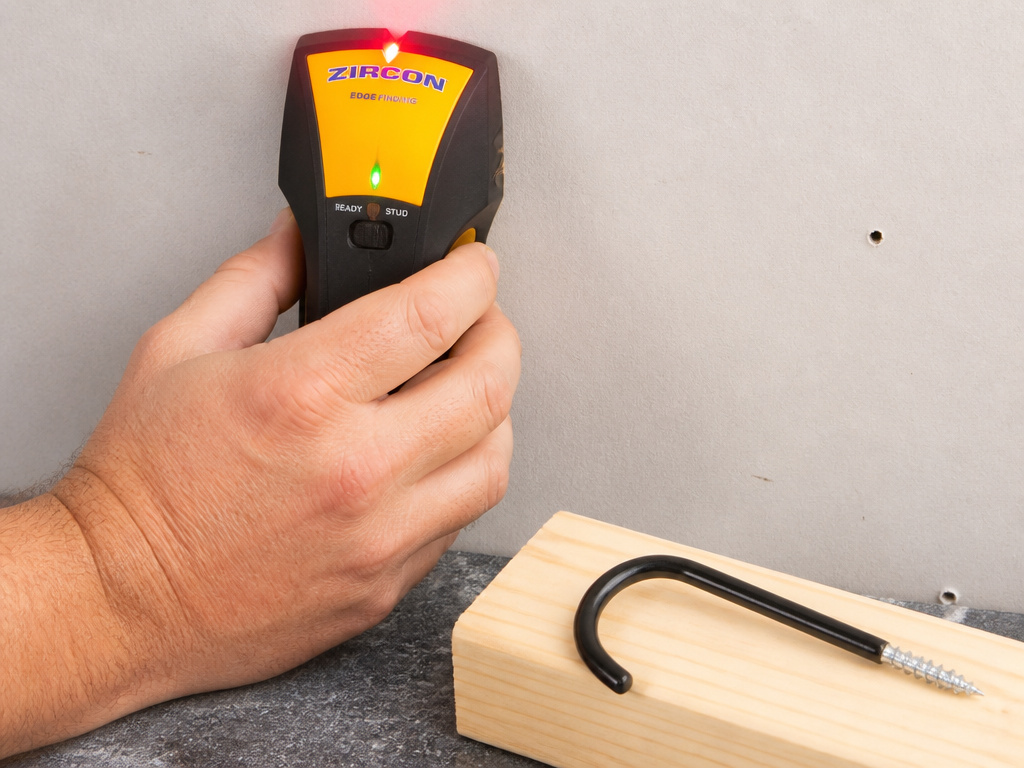
Use a stud finder. The alternative is drilling blindly and hitting an electrical wire, gas line, or water pipe. The manual’s second warning: “Be careful to avoid electrical, gas, or water pipes and conduits.”
The Swing-Up Holder’s Hidden Weakness (.095 vs .080)
The Swing-Up and Swing-Up EX are clever space-savers. They let you pivot the bike parallel to the wall. The installation seems trivial: screw the base plate, hang the bike, swing it aside. But the real test happens after the bike is up.
The manual directs you to “check for interference by carefully moving the bike from side to side to determine where contact with the wall is made. This should be checked with the crank rotated in different positions.” Most people skip this. They assume if the wheels are in the holders, the bike fits.
Here’s what happens if you don’t: the handlebar end, a pedal, or the crank arm taps the wall every time you store or retrieve the bike. After fifty cycles, the drywall shows a circular scrape. After two hundred, the gypsum board is dented. Topeak includes a clause that they are “not responsible for any damage that may occur when using Swing-Up Bike Holder.”
Easy to miss: Rotate both cranks to the 3 o’clock and 9 o’clock positions after hanging the bike. If either pedal touches, you need to add a wall protection panel or move the holder.
The other weakness is less obvious. The holders are designed for tire widths up to 2.6″. If you force a 2.8″ tire into the channel, it fits, but the rubber compresses. That constant pressure stresses the plastic’s clamp points. In cold garages, the plastic becomes brittle. A stressed clamp point in brittle plastic cracks within a season.
The $20 Stud-Mounted Hook Solution
For the mechanically straightforward, the cheapest and most robust method is a vinyl-coated steel hook screwed directly into a wall stud. A set of eight hooks costs less than a single Topeak holder. The steel J-hook itself can hold over 70 pounds when mounted correctly, per the DIY guide from Smallish Home.
The process is simple: 1. Use a stud finder to locate the center of a stud. 2. Hold the bike against the wall, with the lower wheel resting on the ground and the top wheel against the stud. 3. Mark the spot on the stud where the bike’s rim or tire will hook. 4. Pre-drill a pilot hole slightly smaller than the hook’s screw diameter. 5. Hand-screw the hook into the wood until the base is flush.
Step consequence: Skipping the pilot hole risks splitting the stud, especially in older, drier wood. The split weakens the hold, and the hook can pull out under a dynamic load.
This method lets you keep the bottom wheel on the ground. You don’t have to lift the full bike weight to hook it; you tilt it back, hook the wheel, and let it down. For heavy bikes or low ceilings, this is the only practical way.
The trade-off: The bike protrudes further into the room. You need about 36 inches of clearance from the wall to the handlebars. This method also offers zero security; anyone can lift the bike off the hook. For long-term storage in a secure garage, that’s fine. For a shared apartment hallway, it’s a theft invitation.
Vertical Floor Racks: The 96-Inch Space Rule

If you have floor space but lack a solid wall, a freestanding vertical rack like the Halt Vertical Rack (Model 8166V) or the Topeak TwoUp TuneUp stand is the answer. The Halt rack bolts to the floor; the Topeak stand is portable. Both get the bikes off the ground without relying on wall integrity.
Vertical storage has one major, non-negotiable requirement: aisle space. Per the Madrax spacing guide, you need 96 inches total—48 inches for the bike’s footprint and 48 inches for an aisle to maneuver it in and out. That’s eight linear feet per bike bay.
The Halt installation manual includes a configuration chart with precise measurements. For their 6-bike double-sided rack (8166V), with trays spaced 16 inches apart, you need a minimum side-wall clearance of 1 inch and a frame width of 44.5 inches. If you don’t have that space, the rack is unusable.
| Rack Type | Key Spec | Best For |
|---|---|---|
| Halt Vertical Rack | Bolted to floor, high-density. | Commercial settings, apartment bike rooms. |
| Topeak TwoUp TuneUp | Portable, 72kg max weight per stand. | Garages where layout changes often. |
| Madrax Guidelines | 8″ ground clearance, 15″ from wall. | Planning any vertical rack layout. |
Why the 8-inch ground clearance? It prevents the bike’s pedal or chainring from contacting the floor when you tilt it onto the rack. Less clearance, and you grind the crank arm every time.
The Topeak TwoUp TuneUp doubles as a repair stand. Its manual warns: “Never spin the rear wheel at high revolutions or apply your rear brake to a fast spinning wheel when your bike is installed.” The stand can become unstable. Its maximum weight per hook unit is 18kg (39.7 lbs), with a total stand capacity of 72kg (158.7 lbs).
The Final Check: Wall Protection and Liability
Before you consider any method done, perform the interference check. Then, decide if you need wall protection. A simple 2×4 mounted horizontally on the wall at handlebar height, or a sheet of plywood, can absorb years of impact.
This isn’t just about scuff marks. The QBP Bicycle Owner’s Manual includes a blanket warning: “If a component’s life cycle is exceeded, the component can suddenly and catastrophically fail, causing serious injury or death to the rider.” Hanging a bike is a static load, but swinging it creates dynamic stress on both the rack and the bike’s frame.
Manufacturers know this. Their installation guides are written to transfer liability to you, the installer. The Topeak manual’s final note: “Over-tightening bolts will prevent proper operation and cause damage to the Main Unit or your bicycle.”
So, the real best way to hang a bike is the method you install correctly, matching the hard specs, and then test thoroughly. For most home garages with standard bikes, that’s a set of vinyl-coated hooks on the studs. For tight apartments with nice bikes, it’s the Topeak Swing-Up, but only if your bike is under 35 pounds. For a fleet of family bikes, it’s a Halt vertical rack bolted to the concrete.
Frequently Asked Questions
How much weight can a bike hook hold?
Vinyl-coated steel hook screwed into a solid wood stud can hold over 70 pounds. The limitation is the wood’s strength, not the hook. Commercial holders like the Topeak Swing-Up are rated for 16kg (35lb)**. Always trust the lower of the two numbers printed in the manufacturer’s manual.
Can you hang a bike on drywall without a stud?
No. Drywall alone cannot support the leveraged weight of a bicycle. A drywall anchor might hold 20 pounds in pure tension, but the swinging motion of a bike creates a prying force that will pull the anchor straight out. You must locate and screw into a stud or use a freestanding floor rack.
How high should I mount my bike hook?
Mount the hook so the bottom wheel of the bike can rest on the ground. This eliminates the need to lift the entire bike’s weight when hanging it. If lifting isn’t an issue, mount the hook as high as you want to maximize floor clearance. Just ensure the bike’s handlebars won’t hit the ceiling.
What’s the best rack for an e-bike?
Most e-bikes exceed the 35-pound limit of swing-up wall holders. For e-bikes, use a freestanding vertical floor rack like the Topeak TwoUp TuneUp (18kg per hook) or a heavy-duty model bolted to the floor. Always verify the rack’s weight capacity exceeds your e-bike’s weight by at least 10%.
Do hanging bikes damage the wheels?
No, not if done correctly. Hanging a bike by its wheels places the rim under a uniform compressive load it’s designed to handle. The concern is sideways force—if the bike swings and the rim impacts a sharp object. Use hooks with a vinyl coating to protect the rim’s finish and ensure the bike is stable.
Before You Go
The best way isn’t a single product. It’s the system that fits your bike’s weight, your tire’s size, and your wall’s structure. Ignore any one of those three, and the result is a dropped bike, a stripped wall, or a broken rack. For a standard road or mountain bike in a typical garage, a set of vinyl-coated J-hooks into the studs is the most reliable and cheapest path. If you’re storing multiple bikes and have the floor space, a Halt vertical rack is the professional-grade choice. Whatever you pick, follow the manufacturer’s install guide to the letter—that’s the only way the liability stays with them, and your bike stays off the floor.
