
Toyota Tundra | The Recall & Specs That Change Ownership
This post contains affiliate links. As an Amazon Associate, we earn from qualifying purchases.
The 2024 Toyota Tundra is a full-size pickup powered by a 3.4L twin-turbo V6, with a standard maintenance schedule of every 5,000 miles or six months. Owners of trucks built between late April and mid-July 2024 must check for NHTSA Safety Recall 24TA12 for potential tire damage, a defect filed on October 15, 2024, affecting approximately 12,000 vehicles.
That recall notice is the first thing a 2024 Tundra owner should verify. It’s not a vague advisory. It’s a specific, dated action with a defined production window and a free dealer fix that takes about an hour. Missing it means driving on a tire that could lose pressure suddenly.
What follows: the engine and transmission specs that matter, the exact maintenance intervals you can’t ignore, the warranty fine print, and the accessories that make the truck work for you. By the end, you’ll know the three fluids you must get right and the one recall you cannot skip.
Key Takeaways
- Check your 2024 Tundra’s production date immediately against NHTSA Recall 24TA12. Trucks built from late April to mid-July 2024 may have passenger-side tire damage from assembly. The free inspection and replacement are mandatory.
- The 3.4L V6 engine requires SAE 0W-20 oil meeting ILSAC GF-5 or GF-6A standards. Using 5W-20 is a temporary fix only; you must revert to 0W-20 at the next change.
- The automatic transmission is sealed for Toyota Genuine ATF WS fluid. Substituting another type causes shift deterioration, vibration, and eventual transmission damage.
- The standard bumper-to-bumper warranty is 3 years/36,000 miles, but wheel alignment and A/C recharge coverage drops to 12 months/12,000 miles.
- If you drive under “Special Operating Conditions” like frequent towing or dusty roads, your oil change interval is 5,000 miles or six months, regardless of the oil certification.
The 2024 Tundra: By The Numbers
The 2024 Toyota Tundra drops the V8 for good. The sole gasoline engine is a 3.4-liter twin-turbo V6, paired with a 10-speed automatic transmission. The hybrid i-Force MAX variant uses the same block with an electric motor.
Fuel economy for the 4×2 model is rated at 18 mpg city and 24 mpg highway. Four-wheel-drive models see a slight dip. These numbers assume you’re not towing or hauling near the truck’s limits.
The 2024 Tundra’s 3.4L V-6 engine produces ample power for towing, but its efficiency is tied directly to the recommended SAE 0W-20 oil viscosity. This low-viscosity oil reduces internal friction, which is critical for both cold-weather starting and achieving the published EPA fuel economy estimates.
The interior is where the truck modernizes. A standard touchscreen, digital gauge cluster, and available 14-inch display bring it in line with competitors. The real story is under the skin, in the fluids and service schedules.
What Fluids Does the 2024 Tundra Need?
Using the wrong fluid is the fastest way to turn a modern truck into an expensive repair bill. The 2024 Tundra is specific.
You must use Toyota Genuine Motor Oil or an equivalent meeting ILSAC GF-5 (or newer GF-6A) specifications. The required viscosity is SAE 0W-20. The manual is clear: if 0W-20 is unavailable, SAE 5W-20 may be used as a one-time substitute but must be replaced with 0W-20 at the very next oil change.
The automatic transmission is even stricter. It requires Toyota Genuine ATF WS.
Where this goes sideways: Pouring any other automatic transmission fluid into a 2024 Tundra. The Toyota Tundra owner’s manual states that using fluid other than ATF WS “may cause deterioration in shift quality, locking up of the transmission accompanied by vibration and, ultimately, damage to the vehicle’s transmission.” This isn’t a suggestion. It’s a cause-and-effect warning.
For other vital fluids, refer to this spec table. Capacities are for the Crew Cab model with the 3.4L V6.
| Fluid | Specification | Capacity (Approx.) | Critical Note |
|---|---|---|---|
| Engine Oil | ILSAC GF-5/GF-6A SAE 0W-20 | 7.4 quarts (7.0 L) | 5W-20 is a temporary substitute only. |
| Automatic Transmission Fluid | Toyota Genuine ATF WS | 12.4 quarts (11.73 L) | Non-WS fluid damages the transmission. |
| Front/Rear Differential Oil | Toyota Genuine Gear Oil LT SAE 75W-85 GL-5 | Varies by model | Required for 4WD models. |
| Transfer Case Fluid (4WD) | Toyota Genuine ATF WS | 2.17 quarts (2.05 L) | Must match transmission fluid spec. |
| Brake Fluid | SAE J1703 or FMVSS No. 116 DOT 3 | As needed | Check reservoir level monthly. |
| Coolant | Toyota Super Long Life Coolant (Pink) | 2.2 quarts (2.08 L) | Never mix with generic green coolant. |
A full set of Tundra accessories often includes recovery gear and tools, but the first accessory you should buy is a funnel and a set of gloves for checking these fluids yourself.
Warranty and Required Maintenance Schedule
The 2024 Toyota Tundra comes with a 36-month/36,000-mile basic vehicle warranty. This covers defects in materials or workmanship. Read the fine print.
Wheel alignment, wheel balancing, and air conditioning refrigerant recharge are only covered for 12 months or 12,000 miles. If your steering pulls at 13,000 miles, that’s on you. The factory maintenance schedule is your real guide.
Toyota recommends service every 5,000 miles or six months, whichever comes first. This interval includes an oil and filter change, tire rotation, and a multi-point inspection. It’s not a casual recommendation.
The “Special Operating Conditions” Rule Everyone Misses
The standard 5,000-mile oil change applies to most drivers. But the manual defines “Special Operating Conditions.” If your driving fits any of these, the rule changes.
Driving in extreme conditions, towing a trailer, using a car-top carrier, repeated short trips under 5 miles in freezing weather, or operating on rough, dusty, or salt-spread roads, qualifies. For these drivers, the motor oil and filter must be replaced every 5,000 miles or six months, full stop.
This mandate applies regardless of the oil used or the vehicle’s certification. Even if you use a premium synthetic oil marketed for 10,000-mile intervals, the Tundra’s requirement under these conditions is 5,000 miles. Ignoring this accelerates wear on the twin-turbo system.
Common mistake: Assuming the 5,000-mile interval is just for conventional oil. Under Special Operating Conditions, it’s a mechanical necessity for the turbochargers’ longevity, cutting the oil’s effective life in half.
Scheduling this service is straightforward. Your first stop for planning should be a guide to the best Tundra seat covers and interior protection, because maintenance visits mean people in and out of your truck.
What is the 2024 Toyota Tundra Safety Recall 24TA12?
On October 15, 2024, Toyota filed a Defect Information Report with the National Highway Traffic Safety Administration (NHTSA). This launched Safety Recall 24TA12, officially numbered NHTSA 24V-767.
The condition is specific. The inner sidewall of the passenger-side front and rear tires may have been damaged during vehicle assembly on the production line. If structural damage is present, the tire could suddenly lose air pressure while driving, leading to a loss of vehicle control.
Never drive a 2024 Tundra from the affected period without having this recall performed. A sudden tire failure at highway speeds is not a roadside inconvenience. It’s a crash scenario.
The recall affects approximately 12,000 vehicles: 2024 Toyota Tundra and Sequoia models produced from late April 2024 to mid-July 2024. Toyota began notifying owners by mid-December 2024.
What Does the Recall Fix Involve?
The remedy is a free inspection and replacement at any Toyota dealership. A technician will inspect the passenger-side tires based on Toyota’s specific criteria.
If damage is found, the dealer will replace up to two tires free of charge. The entire process, inspection and replacement of two tires, takes about 1.1 hours of shop time, as outlined in the NHTSA recall technical bulletin.
If your vehicle has already had its factory tires replaced with aftermarket ones, the recall still applies, but only for an inspection. The campaign does not cover replacing non-original tires. You can find the full public details in the NHTSA safety recall notice.
| Recall Aspect | Detail | Owner Action Required |
|---|---|---|
| NHTSA Number | 24V-767 (Toyota 24TA12) | Check your VIN at nhtsa.gov/recalls. |
| Affected Production | Late April 2024 – Mid-July 2024 | Locate your build date on the driver’s door jamb sticker. |
| Potential Consequence | Sudden tire air pressure loss | Schedule an inspection immediately if your truck falls in the range. |
| Dealer Remedy | Inspect passenger-side tires; replace up to two if damaged. | Contact any Toyota dealer for a free appointment. |
| Aftermarket Tires | Recall is closed after inspection only; no replacement. | Keep your aftermarket tire receipts. |
This recall underscores the importance of checking official channels. Relying on a salesperson’s word or a generic blog post isn’t enough. The definitive information is in the government safety recall announcement. While you’re addressing safety, consider practical additions like Tundra running boards or aftermarket side steps for easier access when checking tire pressure.
Owner Considerations: Packages, Payload, and Practical Add-Ons
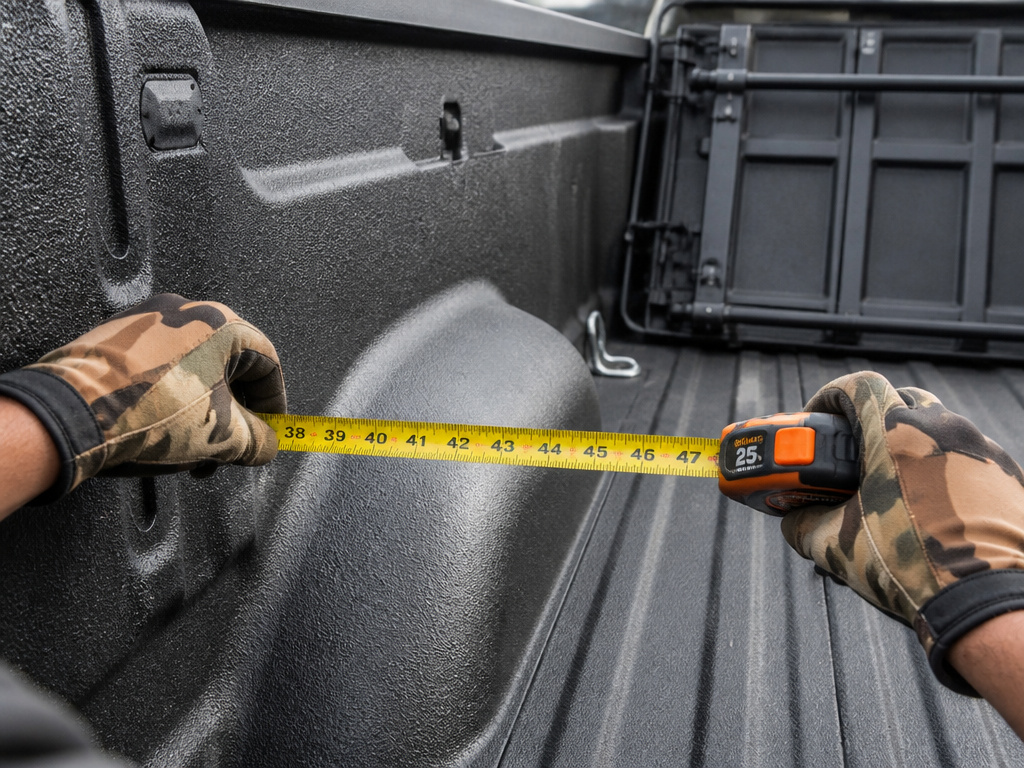
Choosing a 2024 Tundra means navigating trim levels (SR, SR5, Limited, Platinum, 1794 Edition, TRD Pro) and packages. The most important choice isn’t the badge, it’s matching the truck’s capacity to your actual loads.
The maximum payload and towing figures are achieved with specific configurations, usually the base SR trim with the fewest options. Adding luxury features, a larger infotainment screen, or the best tonneau covers for Toyota Tundra reduces the weight you can legally carry in the bed.
Before you buy a single accessory for Tundra, find the yellow and white tire information placard on your driver’s door jamb. It lists your truck’s specific Gross Vehicle Weight Rating (GVWR) and Gross Axle Weight Ratings (GAWR). Any cargo, passengers, and accessories must stay under these numbers.
Protecting Your Investment
The bed and interior take the most abuse. A Tundra bed cover isn’t just for looks. It secures cargo from weather and theft, and can improve highway fuel economy by reducing aerodynamic drag. Options range from soft roll-ups to hard folding panels.
Inside, seat covers are a must if you work in dirty environments or have pets. They preserve the resale value of your upholstery. The same logic applies to floor mats.
The factory-entertainment system supports wireless Apple CarPlay and Android Auto. The available JBL audio system is a significant upgrade if you spend hours in the cab. Weigh these options against the core purpose of the truck. A truck bed cover often offers more daily utility than a premium stereo.
Frequently Asked Questions
What engine is in the 2024 Toyota Tundra?
The 2024 Tundra uses a 3.4-liter twin-turbocharged V6 gasoline engine. A hybrid version, the i-Force MAX, pairs this engine with an electric motor for more power and slightly better city fuel economy. There is no V8 option.
How often does a 2024 Tundra need an oil change?
Follow the factory schedule: every 5,000 miles or six months, whichever comes first. This interval shortens to 5,000 miles regardless of oil type if you frequently tow, drive on dusty roads, or make repeated short trips in cold weather, so-called “Special Operating Conditions.”
What is the tire recall on the 2024 Tundra?
Safety Recall 24TA12 (NHTSA 24V-767) affects trucks built between late April and mid-July 2024. The inner sidewall of the passenger-side tires may have been damaged during assembly, risking sudden air loss. Owners should check their VIN and get a free inspection at a Toyota dealer.
Can I use 5W-30 oil in my 2024 Tundra?
No. The manufacturer specifies SAE 0W-20 oil meeting ILSAC GF-5 or GF-6A standards. Using 5W-20 is permitted only if 0W-20 is unavailable, and you must switch back to 0W-20 at the next change. Heavier viscosities like 5W-30 are not recommended and can harm fuel economy and engine performance.
What is the fuel economy of the 2024 Tundra 4×2?
EPA estimates for the 4×2, non-hybrid Tundra are 18 mpg in the city and 24 mpg on the highway. Real-world mileage will be lower with 4×4, larger tires, or when carrying payload.
Does the 2024 Tundra have a spare tire?
Yes, a full-size spare tire is standard equipment. It is mounted under the bed on most models. Ensure you check its pressure periodically, as it can lose air over time even if unused.
Before You Go
The 2024 Toyota Tundra is a capable, modern truck that demands attention to detail. Verify the tire recall first, it’s a time-sensitive safety issue with a clear fix. Adhere to the strict fluid specifications, especially the 0W-20 oil and WS transmission fluid. Your warranty has shorter terms for alignments and A/C service, so budget accordingly.
Finally, build the truck for your use. Payload capacity is king. Choose Tundra bed protection and interior protection before flashy upgrades. The truck that lasts is the one maintained by the book and equipped for the job.
