
Nissan GT-R Automobiles Warranty: Mandatory Service Requirements
This post contains affiliate links. As an Amazon Associate, we earn from qualifying purchases.
Owning a Nissan GT-R requires adhering to a specific, non-negotiable maintenance schedule at 1,000 miles, 12 months, 24 months, and 36 months to keep its performance warranty valid. These GT-R Performance Optimization Services, performed free of charge only at a GT-R certified Nissan dealer, cover wheel alignment and transmission settings. Missing these appointments can void warranty coverage for the drivetrain and suspension.
That warranty clause is the pivot point for everything that follows. Most high-performance car guides talk about oil changes. This one is about a contractual obligation tied to four calendar dates, fail them, and Nissan can deny a claim on the very systems that make the GT-R special.
What follows is the breakdown of those mandatory inspections, the two distinct maintenance schedules dictated by how you drive, and the half-dozen unique items, from tire seating to dry carbon care, that separate a GT-R from every other car in the garage.
Key Takeaways
- The GT-R Performance Optimization Services are required at 1,000 miles, 12, 24, and 36 months. Skipping them voids portions of the warranty. Repairs identified during these free inspections are at your expense.
- You must follow either Schedule 1 (severe use) or Schedule 2 (normal use) based on your driving conditions. Short trips, stop-and-go traffic, or dusty roads mandate Schedule 1’s more frequent checks.
- After new tires are mounted, you must avoid aggressive driving, high speeds, and hard cornering for 48 hours to let the tire seat on the wheel. Driving hard before this can cause an imbalance.
- The Tire Pressure Monitoring System (TPMS) sensor’s grommet seal, valve core, and cap are consumable items. Replace them every 3 years for performance driving or every 5 years for normal use.
- Special tools and procedures are required for major repairs. A February 2024 NHTSA technical service bulletin outlines the exact torque (108 ft-lb) and alignment procedure for the transmission input shaft seal on 2019-2023 models.
The GT-R’s Mandatory Warranty Inspections (And the Cost of Skipping Them)
This is a condition, not a recommendation.
The GT-R Performance Optimization Services consist of two inspections: a full wheel alignment check (with adjustment if needed, including tire pressure) and a transmission settings verification. According to the 2024 owner’s manual, these are required at 1,000 miles, 12 months, 24 months, and 36 months. They are performed free of charge for labor only at a GT-R certified Nissan dealer.
The Nissan GT-R requires special wheel alignment and transmission setting inspections at 1,000 miles, 12, 24, and 36 months as a condition of its warranty. These GT-R Performance Optimization Services use specific procedures and must be documented by an authorized dealer. Failure to complete them can result in warranty denial for related components.
The “free” part is a trap for the unwary. The inspection is free. Any repair, adjustment, or part replacement the inspection uncovers is billed directly to you. The warranty booklet states that skipping these services, or having them performed outside the specified intervals, gives Nissan grounds to void coverage on the affected systems. This is the contract you agreed to when you bought the car, not scare talk.
Where this goes sideways: Assuming any alignment shop can handle the service. The GT-R’s front toe specification, for example, is set at ≤ 0.059 in (1.5 mm). Hitting that target on a car with this much camber and caster requires specific knowledge and calibration. A non-certified shop getting it wrong might not be recognized by Nissan, putting your warranty at risk for suspension and drivetrain issues that manifest later.
Schedule 1 vs. Schedule 2: Picking Your Maintenance Path
Your GT-R has two maintenance schedules. Your actual driving dictates which one you follow. Get this wrong, and you’re either wasting money or accelerating wear.
Schedule 1 is for “severe” service. You must follow it if your driving primarily includes any of these conditions: * Repeated short trips (under 5 miles in normal temperatures or under 10 miles in freezing temperatures). * Extensive idling or stop-and-go traffic in hot weather. * Low-speed driving for long distances (like a patrol car or delivery vehicle). * Driving on dusty, rough, muddy, or salt-spread roads.
Schedule 2 is the “normal” schedule, applicable only if you do none of the above. This typically means sustained highway driving in moderate climates.
The difference is stark. At the 18,000-mile/18-month service, Schedule 1 requires an oil change plus inspections of the axle, suspension, brakes, driveshaft boots, exhaust, ball joints, propeller shaft, and steering linkage. Schedule 2 requires only an oil change. The service intervals themselves (every 6,000 miles or 6 months) are the same for both.
| Driving Condition | Mandatory Schedule | Example Service at 18k mi/18 mo |
|---|---|---|
| Short trips, stop-and-go, dusty roads | Schedule 1 (Severe) | Oil change + 8-point suspension/steering/brake inspection |
| Mostly highway, temperate climate | Schedule 2 (Normal) | Oil change only |
If you daily drive your GT-R in a city, you’re on Schedule 1. Denying that because the schedule seems “too heavy” is how you end up with premature bushing wear and mystery vibrations. The car’s service computer doesn’t track these conditions, you have to self-report and insist the dealer use the correct schedule.
Unique GT-R Maintenance Items You Won’t Find in a Maxima Manual
The GT-R’s manual includes an “Additional Maintenance Items” section that reads like a track-day prep sheet. These aren’t optional for long-term health.
Tire and Wheel Protocol: When new tires are installed, you must avoid aggressive driving, high speeds, hard cornering, and rough roads for 48 hours. This lets the tire properly seat on the wheel bead. Drive hard before the adhesive cures, and the tire can slip, throwing the assembly out of balance. You’ll feel a vibration that rebalancing won’t fix, the tire needs to be broken down and re-seated.
TPMS Sensor Service: The TPMS sensor is a wear item. The grommet seal, valve core, and valve cap must be replaced every 3 years if you engage in performance driving. Replace them every 5 years for street use only. A dirty or hardened grommet is a common source of slow air leaks owners mistake for a rim leak or puncture.
Dry Carbon Fiber Care: If your GT-R has dry carbon parts, the cleaning rules are absolute. For clear-coated parts (like on a NISMO model), never use compound agents. For matte-finished parts, never use any chemical agent, wax, coating, or compound. Clean them only with a dilute solution of mild detergent and water. These surfaces are lightly coated; they should feel slightly rough to the touch. Making them shiny ruins them.
Body Repair Mandate: The GT-R’s hybrid aluminum structure requires specific repair fixtures. Nissan only approves structural repairs at body shops using CELETTE® advanced collision repair equipment. Going to a standard shop for frame work likely violates your warranty and can compromise the car’s rigidity.
Known Issues and Technical Service Bulletins: The 2024 Transmission Seal Leak
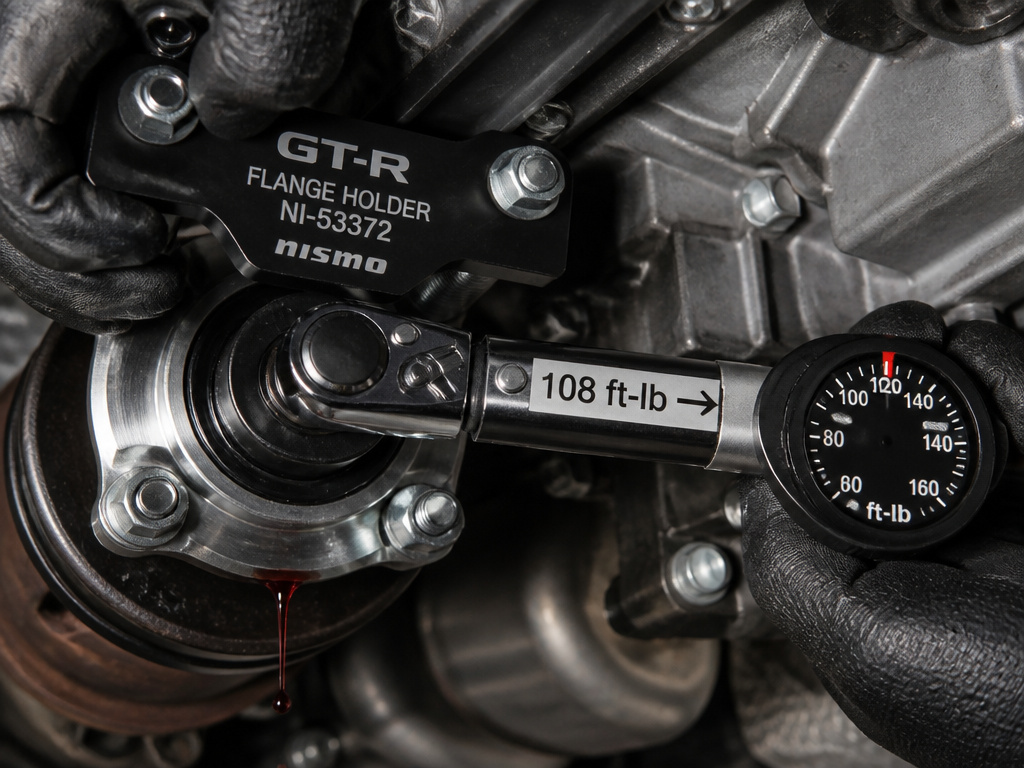
Even icons have flaws. A documented issue for 2019-2023 GT-R models is fluid leakage from the transmission input shaft seal.
In February 2024, Nissan issued NHTSA technical service bulletin AT23-007 NTB24-017 addressing this exact leak. The bulletin is a primary source document that provides the definitive repair procedure. It specifies a transmission companion flange nut torque of 147 N•m (108 ft-lb). After torquing, the alignment mark on the nut must be within 3 degrees of the mark on the flange. If not, you must continue tightening, never loosening, until they align.
The repair also requires two special tools: the GT-R Flange Holder (NI-53372) and the Front Output Shaft Seal Installer (NI-42738). Attempting this job without them risks damaging the new seal or the transmission input shaft. This bulletin is a perfect example of why complex work belongs with a specialist who has access to the latest government vehicle safety documentation.
Common mistake: Using generic seal drivers or guesswork torque on the transmission flange nut. The seal will leak again within a few thousand miles, or the improper preload can damage the transmission bearings.
For any owner, checking the Nissan GT-R owner’s manual and subscribed TSBs is the first step in diagnosing a problem. What looks like a catastrophic failure is often a known, fixable issue with a published procedure.
How the GT-R Stacks Up Against Other Performance Icons
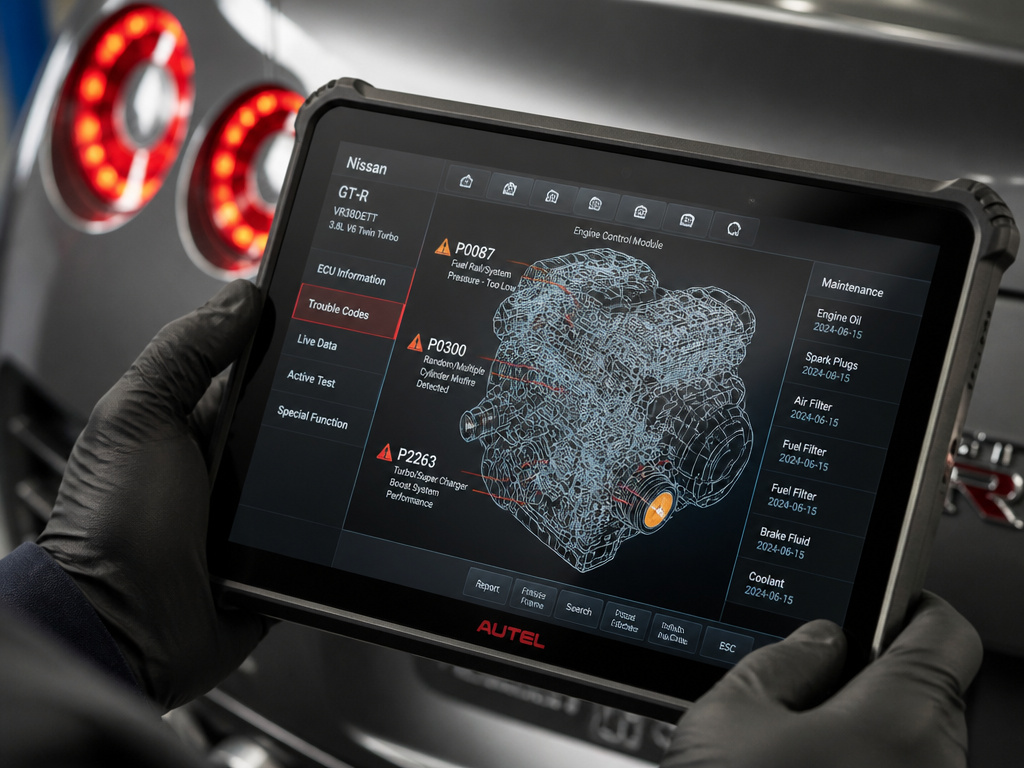
The GT-R’s maintenance philosophy is distinct. It’s not as hands-off as a modern BMW M3 but more structured than the analog approach of a Ferrari F40. Where a Dodge Charger or Ford Mustang might forgive a missed oil change, the GT-R’s warranty is tied to calendar-based specialist inspections.
This complexity places it in a league with other technology-heavy supercars. The new hybrid Lamborghini Temerario will have its own mandatory battery and e-motor checks. The BMW M8 Competition requires similar dealer-level coding for certain functions. The GT-R’s difference is the explicit warranty voidance for missing its four key appointments, a level of contractual obligation you don’t see with more mainstream affordable sports cars.
It’s a car that demands a relationship with a certified dealer. For some, that’s a deal-breaker. For the GT-R devotee, it’s part of the price of admission for a machine that blends brutal acceleration with pinpoint precision, a character shared with rare beasts from Apollo Automobil.
Extending Your Coverage: Security+Plus and Prepaid Plans
Nissan offers two factory-backed programs to manage long-term costs: Security+Plus Extended Protection Plans and Prepaid Maintenance Plans.
The Extended Protection Plan can be purchased anytime within the basic 3-year/36,000-mile warranty period. It extends component coverage for up to 8 years or 120,000 miles, covering nearly 2,000 items. It includes roadside assistance and rental car benefits, and work must be done at a GT-R certified dealer using Genuine Nissan Parts.
The Prepaid Maintenance Plan locks in today’s labor and parts rates for future scheduled services. It must be purchased within the first 6 months or 6,000 miles. You pay upfront for a set number of services, hedging against inflation.
Are they worth it? For an owner who plans to keep the car long-term and uses it heavily, the extended protection can be a financial lifesaver given the cost of GT-R-specific parts like the dual-clutch transmission assembly. For the low-mileage collector, prepaid maintenance might not pencil out. The key is that these plans exist. Nissan knows the upkeep is significant and provides a structured way to budget for it.
Frequently Asked Questions
What happens if I miss the 1,000-mile GT-R service?
Missing the first 1,000-mile Performance Optimization Service is a direct violation of the warranty’s required maintenance schedule. Nissan can, and likely will, deny future warranty claims related to the wheel alignment, suspension, and transmission systems. The inspection is free, but the warranty risk is enormous.
Can I use E85 fuel in my Nissan GT-R?
No. The owner’s manual explicitly states not to use E-15 or E-85. Nissan recommends fuels with no alcohol, but permits up to 10% ethanol (E10) if necessary. Using higher ethanol blends can cause serious engine damage from increased cylinder temperatures.
How often does the GT-R need an oil change?
Under both Schedule 1 and Schedule 2, the engine oil and filter must be replaced every 6,000 miles or 6 months, whichever comes first. This is a hard interval, not a suggestion. The high-performance VR38DETT engine is intolerant of degraded oil.
Why does my GT-R’s engine sometimes struggle to start after short trips?
The GT-R uses specific high-performance spark plugs. If you repeatedly start and stop the engine over a short period (like moving the car in and out of a garage), the plugs can foul, causing difficult starting. The manual advises avoiding repeated start/stop cycles in a short timeframe to prevent this.
Is the GT-R expensive to maintain compared to a Corvette ZR1?
Yes, typically. While both are high-performance machines, the GT-R’s mandatory dealer-specific inspections, more frequent service intervals (6 months vs. 1 year for some Corvette checks), and specialized parts (like the dual-clutch transmission fluid) generally result in higher routine maintenance costs. The Corvette offers more DIY-friendly access for basic services.
Can any tire shop mount new tires on my GT-R?
Technically, yes. But you should insist the shop follows the manual’s procedure: applying new reference marks on the tire and wheel, using a nitrogen purge if you run nitrogen, and replacing the TPMS grommet/seal if it’s over 3 years old. Most importantly, you must follow the 48-hour break-in driving restriction yourself.
The Bottom Line
The Nissan GT-R is a commitment to a calendar, not a car you simply drive and occasionally fill with gas. The four mandatory Performance Optimization Services are the cornerstone of that commitment, protecting both the car’s legendary capability and your financial investment.Pair that with the correct maintenance schedule for your driving, respect the unique items like tire seating and carbon fiber care, and you have a blueprint for long-term ownership. Ignore the schedule, and you own a very fast, very expensive problem. Follow it, and you own an icon.
