
Driving Manual Transmission Automobiles | Feel the Road
This post contains affiliate links. As an Amazon Associate, we earn from qualifying purchases.
A manual transmission automobile is one where the driver physically selects gears using a clutch pedal and a gear lever. This direct mechanical connection between engine and wheels, governed by a fixed set of gear ratios, defines the driving experience. It requires skill to operate smoothly, offers greater control, and for many, delivers a more engaging connection to the vehicle.
That direct connection is a mechanical conversation. Every shift you feel through the lever is a series of metal teeth, synchronizer rings, and forks moving inside a sealed case of oil. The experience isn’t just about control; it’s about feeling the machinery do its job. Modern automatics are faster, but manuals make you a participant.
What follows: a breakdown of the gearbox itself, the step-by-step dance of a gear change, the common failures that stop the music, and why this analog technology still has a place in a digital world.
Key Takeaways
- The clutch is the sole point of disconnect between a running engine and the transmission. Its sole job is to interrupt power so gears can be changed without grinding metal.
- Synchronizer rings use friction to match the speed of two gears before they mesh. Worn synchronizers cause grinding, most often felt in second and third gears.
- Factory service manuals specify critical tolerances measured in thousandths of an inch, like the 0.001 to 0.005 inch endplay for a Tremec TKX input shaft. Ignoring these specs leads to premature bearing failure.
- A broken shift fork, like the one cited in a Ford TSB for the 2018 Mustang, physically blocks a gear from engaging. The repair requires splitting the transmission case.
- For pure driving engagement, a manual has no equal. For daily commuting in heavy traffic, an automatic or dual-clutch transmission is the pragmatic choice.
The Core Components: What’s Inside a Manual Gearbox?
Look past the shift lever. The real action happens inside a cast aluminum or iron case filled with gear oil. Several key systems work in concert.
The input shaft connects directly to the engine’s crankshaft via the clutch. It spins at engine speed whenever the clutch is engaged. The output shaft sends power to the driveshaft and ultimately the wheels. Between them sits the countershaft, which holds clusters of gears that create the different ratios.
Gears themselves are always in constant mesh. They spin freely on their shafts until locked into place. That locking is the job of the synchronizer assembly. It uses a brass or carbon-lined ring to friction-match the speed of the gear to the shaft before a toothed sleeve slides over to lock them together. This is the part that wears out and causes that classic grind.
The Tremec TKX service manual specifies an input shaft/mainshaft shim endplay of 0.001 to 0.005 inch (0.0254 to 0.127 mm). This microscopic clearance is critical. Too tight and the bearings overheat; too loose and gears chatter under load.
Shift forks, moved by rods connected to your gear lever, are the physical hands that push the synchronizer sleeves into place. A fork is a hardened steel finger. If it bends or breaks, it cannot complete its motion. The clutch assembly, pressure plate, disc, and release bearing, lives outside the gearbox but is its essential partner. It is the only reason you can shift at all.
How a Manual Transmission Actually Works: The Step-by-Step Shift
The process is mechanical ballet. Each movement must be timed.
- Depress the clutch pedal. This pushes hydraulic fluid or a cable, moving the release bearing against the fingers of the pressure plate. The pressure plate releases its clamp force, freeing the clutch disc. Engine power to the input shaft stops. The input shaft begins to slow down.
- Move the gear lever. This action selects a shift fork and begins to move a synchronizer sleeve toward its target gear. The sleeve first presses the synchronizer ring against the gear’s cone.
- Synchronization happens. Friction between the ring and the cone matches the speed of the free-spinning gear to the speed of the shaft. You feel this as a slight resistance in the lever. Once speeds match, the sleeve can slide further.
- The sleeve engages. The internal teeth of the sleeve mesh with the dog teeth on the side of the gear, locking it solidly to the shaft. The shift fork holds it in place.
- Release the clutch pedal. The pressure plate re-clamps the disc, connecting the engine to the now-locked gearset. Power flows through the new ratio to the wheels.
Skip the synchronization step, “power shifting”, and you force the sleeve teeth to slam into the gear teeth while they’re spinning at different speeds. That metallic crunch is the sound of shearing metal. Do it often enough and you’ll need a new synchronizer, or worse, a gear.
Common mistake: “Resting” your hand on the gear lever. The constant pressure, even light, wears on the shift fork and its engagement points inside the transmission. Over tens of thousands of miles, it can cause premature wear and sloppy shifts.
Common Manual Transmission Problems and Their Fixes
Problems announce themselves through feel and sound. A vague lever, a stubborn gear, a new vibration, each is a symptom.
Grinding Gears
This is almost always a synchronizer issue. The friction material on the ring is worn and can’t match speeds fast enough. Second and third gear synchronizers die first because they see the most use. A manufacturing defect can also cause it, as seen in the 2023 Nissan Z (Z34), where 174 specific vehicles required a full transmission replacement for a second-gear grind.
Difficulty Shifting / Stuck in Gear
Start with the simplest fix: the clutch. If it’s not fully disengaging, you’re fighting drag inside the gearbox. Check hydraulic fluid level or cable adjustment. If the clutch is good, the problem is internal. A bent shift fork or rail will block movement. The 2018 Ford Mustang 5.0L TSB for inability to shift into third and fourth gear pinpointed a broken 3-4 shift fork.
Clutch Chatter or Slipping
Chatter is a juddering feel during engagement, often from a warped pressure plate or flywheel, or oil contamination on the clutch disc. Slipping is when engine RPMs rise without a corresponding increase in road speed, the clutch disc is worn out and can’t grip.
Leaking Fluid
Seals dry out. The most common are the input shaft seal (behind the clutch) and the output shaft seals. A leak at the input will contaminate the clutch disc with oil, causing immediate slip and a burning smell.
Complete Loss of Drive
This is catastrophic. A broken gear, a shattered input shaft, or a failed bearing that has seized will stop power transfer entirely. The gearbox must come out.
| Symptom | Most Likely Cause | Typical Fix | Severity |
|---|---|---|---|
| Grinding into one gear | Worn synchronizer for that gear | Replace synchronizer assembly | Moderate |
| Grinding into all gears | Worn clutch (not disengaging) | Replace clutch kit | Moderate |
| Stuck in one gear | Bent shift fork or rail | Split transmission, replace fork | High |
| Leak from bellhousing | Input shaft seal failure | Replace seal (requires removing transmission) | Low (but urgent) |
| Loud whining noise | Worn bearings | Complete transmission overhaul | High |
The Manual vs. Automatic Decision: It’s About More Than Gears
This isn’t a debate about which is objectively better. It’s about what you want from the car.
A modern 8-speed automatic or dual-clutch transmission will shift faster than any human. It’s better for fuel economy in most driving and is effortless in traffic. For a daily driver, especially a family sedan or a truck, the automatic is the rational, comfortable choice. Many performance electric cars and hybrid vehicles don’t even offer a manual because the electric motor’s power band doesn’t require multiple gears.
The manual transmission automobile demands attention. It rewards skill with a sense of mastery. There’s a tactile joy in a perfect heel-toe downshift entering a corner. It’s also mechanically simpler, often cheaper to repair than a complex automatic. For driving enthusiasts, for those who see the car as a partner, the manual is the only choice. Iconic models like the Ford Mustang and Nissan GT-R have offered manuals specifically to cater to this feeling.
Where this goes sideways: Buying a manual because it’s “cool” without ever driving one in daily conditions. Stalling in hill traffic on the first day is a quick way to regret the decision. If your commute is a constant crawl, get the automatic.
The market has spoken. Manuals are now a niche offering, often reserved for base models or high-performance trims. But that niche is passionate. Companies like Toyota still put them in cars like the Corolla for purists, and Chevrolet sells manuals in the Corvette and Camaro. They persist because the feeling cannot be automated.
Essential Maintenance for a Long-Lived Manual
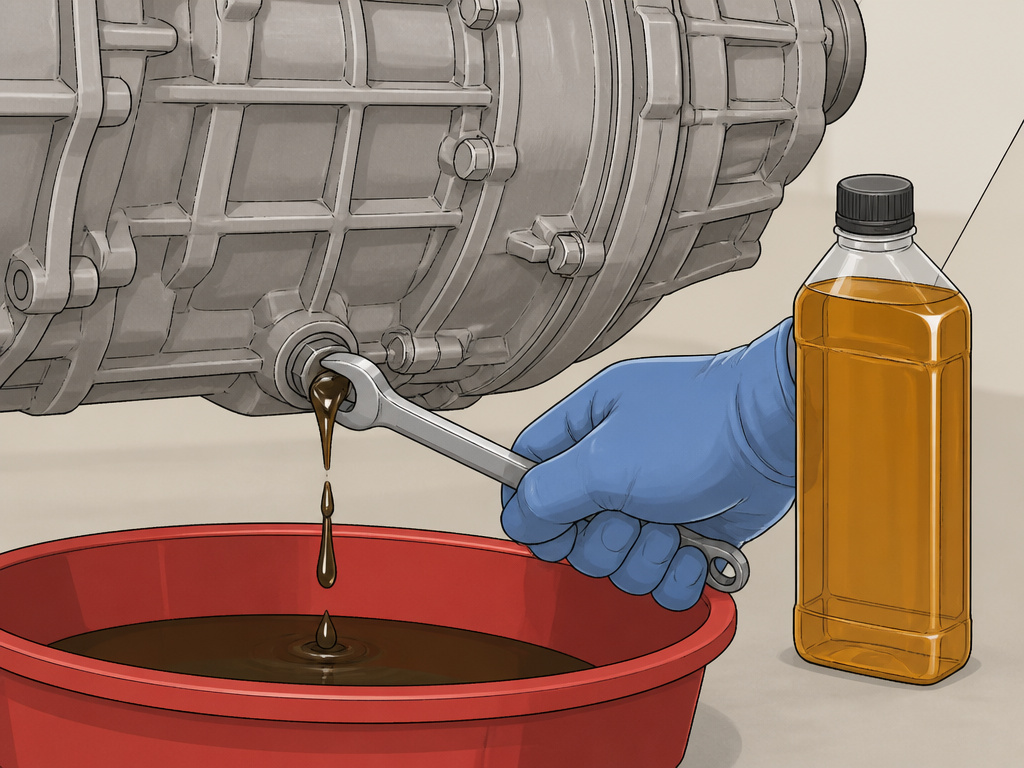
Treat the gearbox well and it will outlast the car. Neglect it and you’re facing a four-figure repair.
Fluid Changes Are Non-Negotiable
Gear oil breaks down over time and collects microscopic metal shavings from wear. This contaminated fluid loses its lubricating and cooling properties. Most manufacturers recommend a change every 60,000 to 100,000 miles, but enthusiasts do it every 30,000. Use the exact fluid specified in your manual. GL-4, GL-5, or a specific synthetic like GM Synchromesh.
Learn to Rev-Match
This is the technique of blipping the throttle to raise engine speed during a downshift, so the input shaft speed matches the road speed for the lower gear. It dramatically reduces wear on the synchronizers. It’s not just for race tracks.
Avoid Riding the Clutch
Never rest your foot on the clutch pedal while driving. Even light pressure can partially engage the release bearing, causing it to spin and overheat. The bearing will fail prematurely, often with a chirping or squealing sound.
Fix Leaks Immediately
A low fluid level is a death sentence. Gears and bearings run dry, overheat, and weld themselves together. If you see a spot on the ground under the middle of your car, investigate.
| Maintenance Task | Frequency / Trigger | Consequence of Skipping |
|---|---|---|
| Gear Oil Change | Every 60k miles (or 30k for severe use) | Increased wear, grinding shifts, eventual bearing failure |
| Clutch Hydraulic Fluid Flush | Every 2-3 years (if hydraulic) | Spongy pedal, poor disengagement, difficulty shifting |
| Clutch System Inspection | When replacing tires or during oil changes | Miss early signs of wear (bearing noise, fluid leaks) |
| Shift Linkage Lubrication | Annually or if shifts feel notchy | Stiff shifting, difficulty finding gears |
| Fix Fluid Leaks | IMMEDIATELY upon detection | Low fluid leads to catastrophic transmission failure |
A Brief History and the Manual’s Future
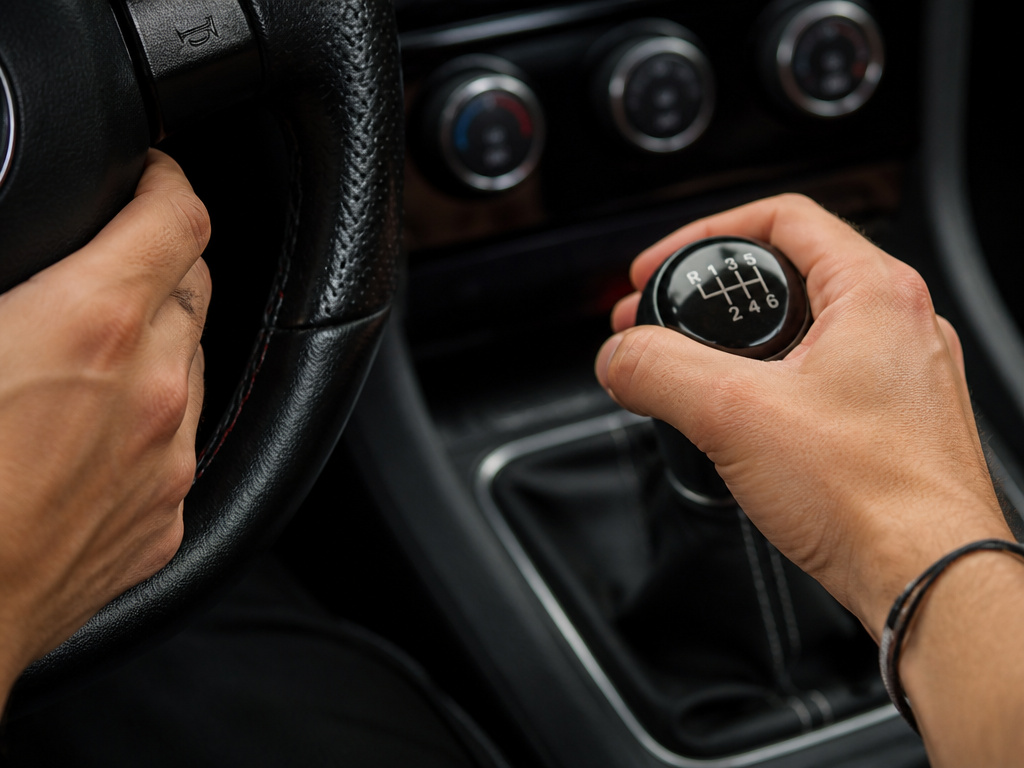
The manual transmission is as old as the automobile. Early cars used sliding-mesh gearboxes without synchronizers, requiring double-clutching to change gears, a skill still used in big-rig trucks. The synchronizer, invented in the early 20th century, made gear changes accessible to the masses and cemented the manual’s dominance for decades.
The rise of the automatic in the 1950s began the shift. By the 1980s, automatics were the default in America. In Europe and Asia, manuals held on longer due to cost and fuel efficiency. Today, the manual is a rarity. In the U.S., less than 2% of new cars sold have a manual gearbox.
Its future is as a specialist item. It will live on in dedicated sports cars, base-model economy cars for certain markets, and the used car market where enthusiasts seek out older “driver’s cars.” The connection it provides is its raison d’être. As long as there are people who want to feel every part of the machine working, there will be a manual transmission automobile.
For everyone else, the world has moved on to automatics, CVTs, and direct-drive electric vehicles. That’s progress. But it’s not the same.
Frequently Asked Questions
Are manual transmission cars more reliable?
They can be. The manual gearbox itself is a simpler mechanical device with fewer complex valves, pumps, and computers than an automatic. However, reliability heavily depends on the driver. A driver who grinds gears, rides the clutch, or misses maintenance will destroy a manual quickly. A skilled, conscientious driver can make one last 200,000 miles or more.
Why are manual cars cheaper?
They are often cheaper to buy new because the transmission itself is less expensive for the manufacturer to produce. This is less true today as manuals become niche options, sometimes offered only on higher trim levels. In the used car market, manuals can sometimes be cheaper due to lower demand from the general public.
Is it hard to learn to drive a manual?
The basics can be learned in an afternoon. Becoming smooth and competent takes a few weeks of daily driving. The hardest part is mastering the clutch’s friction point for smooth starts, especially on hills. After that, it becomes muscle memory. Stalling is part of the learning process, it doesn’t hurt the car.
Do manual transmission cars get better gas mileage?
Historically, yes, because they had more gears and fewer power losses than old automatics. This gap has virtually closed. Modern automatics often have more gears (8, 9, or 10 speeds) and are controlled by computers that shift for optimal efficiency. The EPA fuel economy ratings for the same car with manual vs. Automatic are now usually identical or very close.
What does “rev-matching” mean?
It’s the technique of manually raising the engine’s revolutions per minute (RPM) with the throttle during a downshift. This matches the speed of the engine (and transmission input shaft) to the speed required for the lower gear before you engage it. It allows for a smooth, jerk-free downshift without using the clutch to drag the engine speed up, which reduces wear on the clutch and synchronizers.
Can you shift a manual transmission without using the clutch?
Technically, yes, with precise rev-matching. It’s called “float shifting” and is common in commercial trucking. It is extremely hard on the synchronizers and gear teeth in a passenger car transmission and is not recommended. You will cause damage.
The Bottom Line
The manual transmission automobile is an anachronism that refuses to die. In an era of seamless automation, it demands your participation. It punishes clumsiness and rewards practice with a pure, mechanical satisfaction that no paddle-shifter can replicate.
Its survival hinges on that intangible feeling. For the daily commute, choose the automatic. For the drive that reminds you why you love cars, find the manual. Just be prepared to replace the clutch eventually, it’s the price of admission for the connection.
