
How to Choose the Right RV Generator: Essential Tips
This post contains affiliate links. As an Amazon Associate, we earn from qualifying purchases.
To choose the right RV generator, match three numbers: your total wattage load (add 20% for startup surges), the generator’s continuous output rating (not peak), and the cold cranking amps (CCA) of your RV battery. A 30-amp RV service needs at least a 3,500-watt generator; a 50-amp service needs 10,000 watts or more. The Cummins Onan HDKCA diesel unit, for example, delivers 10,000 watts continuous and requires a battery with at least 475 CCA at 0°F.
That 20% surge cushion is where new buyers get quiet, expensive feedback. An air conditioner compressor can draw double its running wattage for two seconds on startup. A generator sized exactly to the running load will trip its breaker every time the compressor cycles. You’re not buying for the steady hum. You’re buying for the jolt.
What follows is the wiring diagram for that decision: how to calculate your real load, why fuel type changes your maintenance calendar, and where in the manual the installation codes live that keep your warranty valid.
Key Takeaways
- Your generator’s continuous power rating must exceed your total appliance load by 20% to handle startup surges without tripping.
- Diesel generators like the Cummins Onan HDK series require specific break-in oil and a 50-hour first oil change, skip it and risk elevated oil consumption for life.
- The specification letter on the generator’s nameplate is critical for ordering the correct service parts; a “Spec F” air filter is different from a “Spec H” filter.
- Installation must comply with ANSI/RVIA EGS-1 and NFPA 70 Article 551; non-compliant setups void the factory warranty and create a fire risk.
- An undersized battery (below the manual’s stated CCA) will fail to crank a cold diesel generator, damaging the starter motor within a dozen attempts.
The 3 Numbers That Decide Your RV Generator Choice
Forget brand loyalty or noise levels for a minute. The choice comes down to arithmetic you can do on a notepad. Get these three figures wrong, and the best-built generator on the market will be a very expensive, very heavy paperweight.
First, calculate your total connected load. This calculation is the sum of every appliance you plan to run simultaneously, plus their startup surges. A typical RV air conditioner runs on 1,500 watts but can demand 3,000 watts for two seconds when the compressor kicks on.A residential fridge might draw 600 watts running, but its inverter can spike to 1,200 watts. Add the microwave (1,000 watts), a few lights (100 watts), and your water pump (200 watts). The total running load might be 2,400 watts. The surge load could hit 4,300 watts.
Your generator’s continuous output rating must cover that surge number. Manufacturers list both a “peak” and a “continuous” rating. The continuous rating is the one that matters. It’s the wattage the unit can deliver indefinitely without overheating. The Cummins Onan HDKCA diesel generator is rated for 10,000 watts continuous. Its “rated” power is at a 1.0 power factor, but the manual notes continuous power is actually 95% of that, 9,500 watts. That’s the number you budget against.
Where this goes sideways: Sizing a generator to your running load instead of your surge load. The breaker trips on the first hot afternoon when the air conditioner cycles, and you’ll be resetting it every 20 minutes until you shut something else down.
Third, verify your battery’s cold cranking amps (CCA). This is especially critical for diesel generators. The Cummins Onan HDKCA manual specifies a minimum battery capacity of 475 CCA at 0°F. If your RV battery tests at 350 CCA, the generator will crank slowly on a cold morning. A slow crank doesn’t build enough compression heat to ignite diesel fuel. After a few failed starts, the starter motor overheats and the windings fail. You’ll need a jump from your tow vehicle and a new starter within a season.
| Load Scenario | Running Watts | Estimated Surge Watts | Minimum Generator Size |
|---|---|---|---|
| Basic (Lights, Fridge, Water Pump) | 800 W | 1,200 W | 1,500 W |
| Plus A/C (13,500 BTU) | 2,300 W | 4,100 W | 4,500 W |
| Plus Microwave & Coffee Maker | 3,300 W | 5,500 W | 6,500 W |
| 50-Amp Service (Two A/Cs, Electric Fireplace) | 8,500 W | 12,000 W | 12,500 W |
The table above is a starting point. Your actual loads will vary. The only way to know for sure is to add the nameplate watts from each appliance in your rig. For critical components like air conditioners and refrigerators, use a clamp meter to measure the locked-rotor amperage (LRA) if you can, that’s the true surge number.
Fuel Type: Gasoline, Diesel, or Propane?
The fuel you pick dictates your maintenance schedule, your fuel storage strategy, and the sound the unit makes at 3 a.m. In a quiet campground. There is no universal best answer. There’s only the right answer for your usage pattern.
Gasoline generators are common, relatively inexpensive upfront, and easier to find fuel for. The downside is the fuel itself. Gasoline degrades and forms varnish in the carburetor if left sitting for more than a few months. The Cummins maintenance guide is explicit: you must exercise a gasoline generator regularly to avoid this. If you’re a seasonal user who stores the RV over winter, you either need to run the generator dry or use a fuel stabilizer. The Onan QG 4000i is a popular gasoline model known for its quiet operation.
Diesel generators cost more initially but last longer and are more fuel-efficient under load. They also produce less carbon monoxide, a critical safety factor. The trade-off is maintenance. Diesel units have stricter break-in procedures. The Cummins Onan HDKCA operator’s manual mandates a specific break-in: run at half load for 2 hours, then three-quarters load for 2 more hours. The first oil change is due at 50 hours, not 250. Use the wrong oil viscosity during break-in and you’ll see elevated oil consumption for the life of the engine.
Common mistake: Using conventional motor oil in a new diesel generator during break-in. The higher engine temperatures can break down conventional oil too quickly. Use a full-synthetic diesel-rated oil (like Shell Rotella T6) from the first hour.
Propane (LPG) generators offer clean burning and virtually unlimited shelf life for the fuel. They’re a great choice for boondockers who already carry large propane tanks. The drawback is reduced power output, propane has less energy density than gasoline or diesel, so a 4,000-watt propane generator will be physically larger and burn more fuel per hour than a gasoline model of the same wattage. You also need a certified technician to install the fuel lines and change-over switch.
| Fuel Type | Best For | Key Maintenance Interval | Biggest Headache |
|---|---|---|---|
| Gasoline | Weekend campers, seasonal users | Exercise monthly to prevent varnish | Degraded fuel during storage |
| Diesel | Full-timers, heavy users | First oil change at 50 hours, valve lash check at 500 hours | Cold-weather starting demands a strong battery |
| Propane (LPG) | Boondockers, dry campers | Spark plug inspection every 500 hours | Lower power density, more complex fuel plumbing |
Your choice here also affects your trailer tires. A heavier diesel generator adds more weight to your RV’s front axle, which changes your tire load rating needs. Always re-weigh your RV after a major addition like this.
Decoding the Nameplate and Installation Codes
The metal tag on the side of your generator provides essential information for service, warranty, and safety. Ignoring it is how you buy the wrong $90 air filter or void your coverage before you even have a problem.
The most important character is the specification letter. On a Cummins Onan unit, the model number might read “HDKCA-xxxxF“. That “F” at the end is the spec letter. It denotes the exact version of that model, down to the bolt sizes and gasket materials. When you order an air filter, you must order the one for “Spec F.” The filter for Spec H (part number A053W559) is different. Getting this wrong means the part doesn’t fit, or worse, it fits but restricts airflow and cooks your engine.
The nameplate also holds the serial number, which any authorized Cummins service rep will ask for. Keep a photo of it on your phone.
The generator sets meet the basic requirements of the Standard for Safety for Engine Generator Sets for Recreational Vehicles, ANSI/RVIA EGS-1 and are suitable for installation in accordance with: ANSI A1192 (NFPA No. 501C) and NFPA No. 70, Article 551.
Cummins Onan RV Generator Installation Manual (A079E226)
That blockquote is your warranty’s foundation. Your installation must follow these codes. Key rules from the manuals include: the generator must have 12.7 mm (1/2 inch) clearance on all sides from compartment walls, the cooling air outlet below must be unobstructed for 305 mm (12 inches), and it cannot share a compartment with batteries or fuel tanks due to explosion risk. An installer who bypasses these rules has built you a fire hazard and voided the factory warranty. This statement is the literal text of the installation manual.
Similarly, understanding your 5th wheel hitches requires knowing their weight ratings and compatibility, just like your generator has electrical ratings.
The Maintenance Schedule You Actually Have to Follow
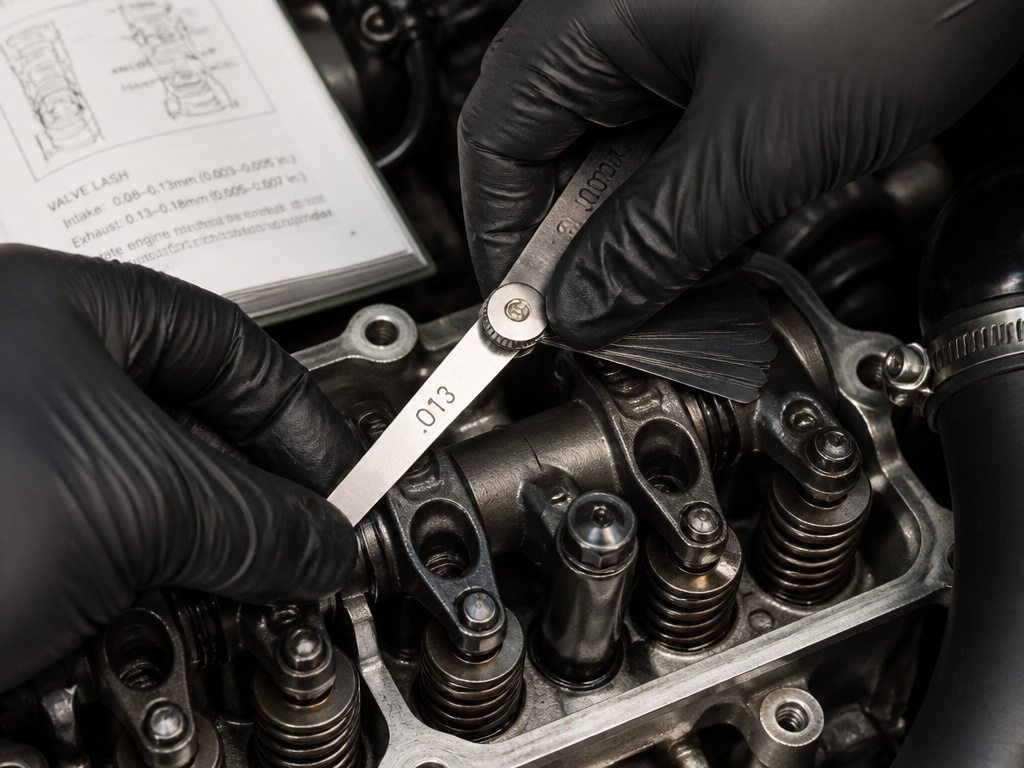
Maintenance intervals in the manual define the timeline of your generator’s lifespan. A diesel generator is a precision engine; treat it like a lawnmower and it will bill you like a turbine.
The sourced schedule from the Cummins Onan HDKCA manual is non-negotiable. Here’s what most owners miss:
- After First 50 Hours: Change engine oil and oil filter. This is the break-in oil change. Metal particulates from initial wear are in this oil. Leaving them in circulation acts as grinding compound.
- Every 250 Hours: Change engine oil and oil filter again. Replace the fuel filter. If you use B20 Bio-diesel, the fuel filter change interval drops to every 250 hours automatically, the bio component can loosen tank sediments.
- Every 500 Hours: Adjust engine valve lash. For the HDKCA, the spec is 0.18 to 0.22 mm (0.0071 to 0.0087 in) cold. This is not a DIY task for most. The manual states it “must be performed by a qualified mechanic.”
- Every 5 Years: Flush the coolant system, replace the pressure cap, and replace all V-belts and coolant hoses. Rubber degrades with heat and time, not just use.
Skipping the valve adjustment is the silent killer. As valves recess into the head, the clearance closes up. This leads to poor compression, hard starting, and eventually a burned valve. You won’t notice a problem until the generator refuses to start on a rainy night, and the repair bill involves pulling the cylinder head.
Your maintenance success hinges on your generator batteries. A weak battery that fails to spin the engine fast enough during a monthly exercise cycle means the engine doesn’t get up to temperature. This leads to fuel dilution in the oil and moisture buildup, a different path to an early death.
Inverter vs. Conventional Generators: What’s the Difference for an RV?

You’ll see this choice in portable generators, and increasingly in some smaller installed models. The technology matters for one type of RV appliance: anything with a sensitive microprocessor.
A conventional generator produces alternating current (AC) directly from the engine’s rotation. The engine speed dictates the output frequency (60 Hz in North America). To maintain 60 Hz, the engine must run at a constant 3600 RPM, whether you’re powering one light bulb or your air conditioner. This is noisy and inefficient at low loads.
An inverter generator produces AC, converts it to DC, then “inverts” it back to a clean, stable AC signal. This allows the engine to throttle up and down based on demand, saving fuel and cutting noise dramatically. More importantly, the power quality is exceptional, a pure sine wave with less than 3% total harmonic distortion (THD).
Why does that matter? Modern RVs are full of devices that hate dirty power: LED power supplies, laptop chargers, residential refrigerators with inverter compressors, and CPAP machines. Dirty power from a conventional generator can make these devices run hot, buzz loudly, or fail prematurely. If your RV has a residential fridge, an inverter generator is almost mandatory.
For a permanently installed system, your choice is usually a conventional generator. But the principle is the same: know your loads. If you’re powering sensitive electronics, consider adding a dedicated power conditioner or an inverter-charger between the generator and your RV’s distribution panel.
Before You Go
Choosing the right RV generator requires matching three documented numbers to your documented needs. Calculate your surge load, match it to a generator’s continuous output rating, and pair it with a battery that meets the manufacturer’s cold cranking spec.Your fuel choice locks in your maintenance calendar, diesel demands more disciplined upkeep, gasoline demands diligent fuel management.
Then, install it by the book. The ANSI/RVIA EGS-1 and NFPA codes are there for a reason. A compliant installation is a safe one that keeps your warranty intact. Finally, treat the maintenance schedule like a flight checklist. Log the hours, change the oil and filters on time, and get the valve lash checked by a pro at 500 hours.
For most families with a 30-amp RV and one air conditioner, a 5,500-watt gasoline generator like the Cummins Onan QG 5500 covers the bases. For a 50-amp coach with two air conditioners and a residential kitchen, step up to a diesel unit like the Cummins Onan HDKCA. That’s the arithmetic. The rest is just following the manual.
Frequently Asked Questions
What size generator do I need for a 50-amp RV?
50-amp RV service provides up to 12,000 watts of potential power (50A x 240V). In practice, you’ll rarely use that much. You need a generator with a continuous rating of at least 10,000 to 12,500 watts to comfortably start and run two air conditioners simultaneously, along with other household loads. The Cummins Onan HDKCB is rated for 12,500 watts intermittent, with a continuous output of 11,875 watts, making it a standard match for large 50-amp coaches.
Can I install an RV generator myself?
Legally, maybe. Wisely, no. The installation involves critical fuel, exhaust, and high-voltage electrical connections governed by NFPA and ANSI codes (like NFPA 70 Article 551). Improper installation creates fire, explosion, and carbon monoxide risks, and will absolutely void the manufacturer’s warranty. The installation manual explicitly places sole responsibility on the installer. Hire a certified RV technician.
How often should I run my RV generator if I’m not using it?
The universal rule is to exercise it under load for at least two hours every month. This does three things: it circulates oil to protect internal surfaces, it burns off moisture that condenses inside the engine, and for gasoline units, it runs fresh fuel through the carburetor to prevent varnish. Simply idling it for 10 minutes does almost nothing. Connect a space heater or two to put a 50% load on it.
Are diesel generators really worth the extra cost?
If you camp frequently or live in your RV full-time, yes. Diesel generators are more fuel-efficient under load, have longer service intervals between major overhauls, and are generally more reliable. The higher upfront cost is offset by longer life and lower fuel costs per kilowatt-hour. For a weekend camper who uses the generator 20 hours a year, a gasoline model is the more practical financial choice.
What does the “spec letter” on my generator mean?
The spec letter (like “Spec F” or “Spec H”) is a manufacturer’s internal code that identifies the exact build version of your generator. Even within the same model number (e.g., HDKCA), different spec letters can indicate changes to parts like the brush assembly, fuel pump, or control board. You must provide this letter when ordering any service part to ensure you get the correct component that fits your specific unit. It’s on the nameplate.
