
How to Break in a New Diesel Truck With Proven OEM Methods
This post contains affiliate links. As an Amazon Associate, we earn from qualifying purchases.
To break in a new diesel truck, follow your specific manufacturer’s guidelines found in the diesel supplement or owner’s manual. This typically involves avoiding constant speeds and heavy loads for the first 1,000 miles, not towing for at least the first 500 miles, and using only the specified Ultra Low Sulfur Diesel fuel without aftermarket additives. Ford explicitly warns against adding friction modifiers during the first few thousand miles as they can prevent piston ring seating, the core mechanical goal of the break-in.
The manufacturer’s guidelines exist to manage one specific mechanical event: the mating of piston rings to the cylinder walls. This is a controlled wear-in process that creates a perfect seal. Ignoring the rules doesn’t always cause immediate failure, but it sets the stage for increased oil consumption, reduced compression, and lost power down the road. The risk isn’t theoretical; it’s baked into the metallurgy.
What follows is a breakdown of the why behind each rule, a side-by-side look at how Ford, GM, and Ram differ, and a straightforward mileage-based checklist to get your truck from the dealer to the job site without compromising its future.
Key Takeaways
- The break-in period is not optional; its primary goal is piston ring seating, which establishes cylinder compression and prevents future oil burning.
- Never use “break-in oil” or friction modifier additives; Ford’s supplement states these additives may prevent the rings from seating properly.
- Towing is prohibited for the first 500 miles per most manuals, with full-capacity towing discouraged until after 1,000 miles to allow drivetrain components to settle.
- Vary your speed and avoid cruise control for the first several hundred miles to ensure even wear across bearing surfaces.
- Your first oil change is critical; it removes the initial wear metal particles generated during break-in, and you should use the exact oil specification listed in your manual.
What Does “Break-in” Actually Mean for a Modern Diesel?
Modern machining is precise, but it cannot create a perfect seal between a piston ring and a cylinder wall straight from the factory. The microscopic peaks on the ring and the cross-hatch pattern on the cylinder bore need to wear together. This controlled abrasion is “seating.” A well-seated ring block gases from escaping past the pistons (maintaining compression) and scrapes oil off the cylinder wall without letting it burn.
The part nobody mentions: The break-in period is a controlled wear event. You are deliberately creating a small amount of metal particulate to achieve a long-term seal. That’s why the first oil change interval is non-negotiable, it flushes out this initial debris.
If the rings don’t seat, blow-by increases. Combustion gases force their way past the rings into the crankcase, pressurizing it. This leads to increased oil consumption, diluted oil from fuel contamination, and ultimately, a loss of power and efficiency. The problem often doesn’t show up until 50,000 miles, long after the warranty conversation has changed.
The Manufacturer’s Rulebook: Ford, GM, and Ram Compared
While the core principles align, the specifics vary. You must consult your truck’s diesel supplement, the separate manual that overrides the standard owner’s guide. Here’s how three major players frame it.
| Manufacturer | Key Break-in Directive (From Manuals) | Critical Don’t | First Tow Allowance |
|---|---|---|---|
| Ford Power Stroke | Avoid constant speed, vary throttle. Drive 1,000 mi before towing. | “Do not add friction modifier compounds or special break-in oils…” | After 1,000 miles |
| GM Duramax | Avoid hard stops for first 200 mi. No elaborate break-in needed. | Do not tow a trailer during break-in. | Not specified; implied after initial period |
| Ram Cummins | Brief full-throttle acceleration while cruising is okay. Avoid wide-open throttle from a stop. | Do not tow at all for first 500 mi. New tires need 300 mi. | After 500 miles |
Ford’s warning against friction modifiers is the strongest and most specific. GM’s stance is more relaxed, stating no “elaborate” break-in is needed, but still prohibits towing. Ram stands out by suggesting brief, full-throttle application while moving, which can help seat rings under load, but it crucially warns against launch-style starts.
Where this goes sideways: Assuming “no elaborate break-in” means no rules. The GM Sierra manual still says to avoid hard stops for 200 miles and not to tow. Skipping those puts premature wear on new brake linings and strains an unseated drivetrain.
Your choice of synthetic oil at the first change should match the manufacturer’s viscosity rating, often 5W-40 or 15W-40 for diesel trucks. Pair it with a high-quality oil filter designed for the capacity and flow rate of a diesel. The filter’s job is especially critical during break-in to capture those initial wear metals.
The First 500 Miles: What You Should Actually Do
This is the most restrictive phase. Your goal is to seat the rings without generating excessive heat or shock loading other fresh components.
- Vary Speed and Load. Do not use cruise control. Intentionally vary your highway speed between 55 and 70 mph. This applies different pressures to the rod and main bearings, helping them conform evenly. The Ford supplement explicitly says to “vary your speed frequently.”
- No Towing. Period. This includes loaded trailers, heavy bed loads, or plowing. The drivetrain, including the transmission, transfer case, and differential gears, is also wearing in. A heavy load multiplies stress on components that haven’t yet established their wear patterns.
- Avoid Prolonged Idling. A diesel at idle runs cool and under-low load, which can promote glazing on the cylinder walls. If the rings don’t bite in, they polish the bores instead, preventing a proper seal. If you must idle, keep it to a minimum.
- Use the Right Fuel. Fill only with Ultra Low Sulfur Diesel (ULSD) that meets ASTM D975 specification. Avoid biodiesel blends above B20 unless specifically approved. Contaminated or off-spec fuel can harm the high-pressure fuel injection system from day one. The manual for the GM Duramax LZ0 engine warns against using “home-made biodiesel or home test kits.”
- Modulate Your Braking. New brake pads and rotors need time to mate. The GM manual advises avoiding hard stops for the first 200 miles. This prevents localized overheating that can warp rotors or deposit pad material unevenly.
In short: Drive normally, but thoughtfully. Mix highway with some back roads. Let the engine work through its RPM range, but don’t floor it from a stop. This phase is about gentle conditioning.
Miles 500 to 1,000: Introducing Load and Checking Fluids
After the first 500 miles, you can begin to introduce light loads. The rings should be partially seated, and bearings are beginning to find their home.
- You can now tow lightly. A small utility trailer or an ATV is acceptable. Avoid maxing out your truck’s Gross Combined Weight Rating (GCWR).
- Continue to vary speed and RPM. The break-in process isn’t complete. Continue avoiding long, constant-speed hauls.
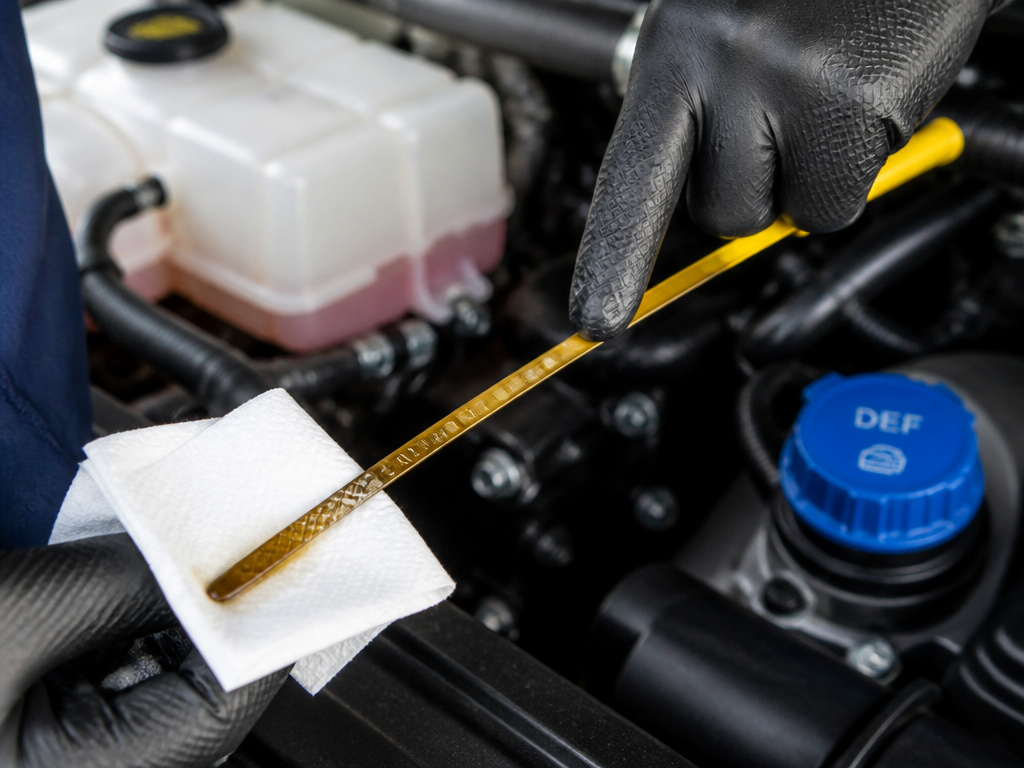
- Monitor all fluid levels. Check engine oil, coolant, and Diesel Exhaust Fluid (DEF) levels. Look for any signs of leaks. A new truck shouldn’t consume a measurable amount of oil in this period, if it does, note it for your dealer.
- Perform a visual inspection. Look under the truck for any fluid drips. Check tire pressure, as tires also have a break-in period (often cited as 300 miles by Ford and Ram).
This is also the time to start thinking about your first service. While the manufacturer’s first oil change interval might be much longer, many experts recommend an early change at 1,000 to 2,000 miles to remove the bulk of wear metals.
The First Oil Change: The Most Important Service
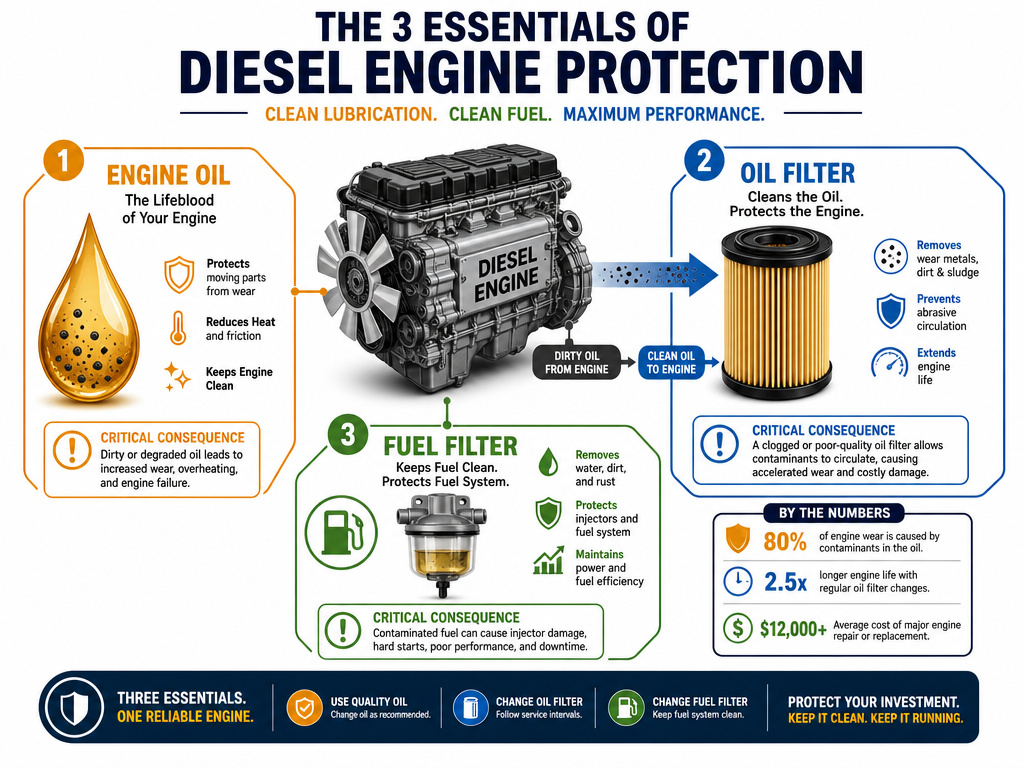
That first oil change is not just maintenance; it’s the conclusion of the break-in cycle. The oil in your crankcase is carrying the microscopic metal particles worn from the rings, bearings, and other components. Leaving it in for a full 10,000-mile interval lets that abrasive slurry circulate.
| Component | Why It’s Critical at First Change | Consequence of Skipping |
|---|---|---|
| Engine Oil | Removes initial wear metals (iron, aluminum, silicon). | Acts as lapping compound, accelerating wear on bearings and journals. |
| Oil Filter | Captures larger particulates. A full-flow filter can become restricted. | Bypass valve opens, sending unfiltered, abrasive oil through the engine. |
| Fuel Filter | Catches any contaminants from initial fuel system fill/bleed. | Protects the expensive high-pressure fuel pump and injectors. |
Use the exact oil grade and specification listed in your diesel supplement. For most modern diesels, this will be a full synthetic oil like a CK-4 or FA-4. Don’t just grab any 15W-40, ensure it meets the manufacturer’s spec (e.g., Ford WSS-M2C171-F1). This is not the place for experimentation.
The same goes for the oil filter. Use a premium filter like a Fleetguard, Baldwin, or OEM part. Its media capacity and bypass valve rating are designed for your engine’s flow. A cheap filter might bypass early, sending all that break-in debris right back into your freshly serviced engine.
After this change, you can gradually increase load. By 1,500 miles, most trucks are ready for normal duty, including heavy towing. Continue to monitor fluids and listen for any unusual noises. A well-broken-in diesel will sound smooth and will not smoke under acceleration once fully warm.
Common Break-in Myths Debunked
Common mistake: Adding a “break-in additive” to help the process. Ford’s 2015 diesel supplement is unambiguous: “Do not add friction modifier compounds or special break-in oils during the first few thousand miles (kilometers) of operation, since these additives may prevent piston ring seating.”
Let’s clear the air on a few persistent forum tales.
- Myth: You need to drive it hard to seat the rings. False. While some load is necessary, “hard” driving generates excessive heat before the rings are seated, risking scuffing. Ram’s allowance for brief full-throttle while cruising is the exception, not the rule.
- Myth: The dealer already broke it in. Unlikely. Some ultra-high-performance cars (like the Acura NSX) receive factory break-ins, but mass-market trucks do not. Press fleet vehicles are the exception.
- Myth: Modern engines don’t need break-in. This is a dangerous half-truth. While tolerances are tighter, the fundamental physics of ring seating haven’t changed. The manuals still have a break-in section for a reason.
- Myth: You must change the oil at 500 miles no matter what. Follow your manual. An early change is excellent preventative maintenance, but the manufacturer’s recommended interval is the safe minimum. For severe service, earlier is always better.
Your best tool post-break-in is a good diagnostic scanner. A capable diesel scanner can monitor live parameters like fuel pressure, regeneration status, and injection timing, giving you a digital window into your engine’s health as you start working it.
Before You Go
Breaking in a diesel truck is simple but not optional. Vary your speed, avoid towing for the first 500 miles, and never add magic potions to the crankcase. The goal is a decades-long relationship, not winning the first traffic light grand prix.
Stick to the OEM fuel and oil specs. Perform that first oil change early to flush out the factory glitter. After a thousand mindful miles, your truck will be ready for anything, and it’ll return the favor with better fuel economy, more power, and a longer life. Now go put those miles on.
Frequently Asked Questions
Do I really need to break in a new diesel truck?
Yes. Despite advanced manufacturing, the piston rings still require a controlled wear-in period against the cylinder walls to create an optimal seal. Skipping this process can lead to increased oil consumption and reduced engine efficiency over the long term.
Can I tow with my new diesel truck right away?
No. Every manufacturer prohibits towing during the initial break-in period, typically for the first 500 miles. Ford recommends driving at least 1,000 miles before towing a trailer. This protects the unseated engine and the rest of the fresh drivetrain components.
What happens if I don’t break in my diesel properly?
Improper break-in can prevent the piston rings from seating correctly. The primary consequences are increased “blow-by” (combustion gases leaking into the crankcase), higher oil consumption, reduced power, and potentially decreased fuel economy. These issues may not become apparent until tens of thousands of miles later.
Is it good to drive a new diesel truck on the highway?
Yes, but with a caveat. Highway driving is excellent for varying speed and load, but you must actively vary your speed and avoid using cruise control for the first several hundred miles. Long stretches at a constant RPM do not provide the varied pressure needed for proper bearing and ring seating.
