
Essential Recalls & Safety Bulletins for Ford Bronco Automobiles
This post contains affiliate links. As an Amazon Associate, we earn from qualifying purchases.
The Ford Bronco is a capable off-road vehicle, but specific model years have documented safety defects requiring manufacturer recalls. As of mid-2026, active recalls address rear shock corrosion, hardtop delamination, fender flare detachment, and drivetrain misalignment, affecting over 200,000 vehicles built between 2020 and 2026. Owners must check their Vehicle Identification Number (VIN) against the National Highway Traffic Safety Administration (NHTSA) database to confirm their vehicle’s status.
That list of defects isn’t abstract. The rear shock recall alone covers 148,415 trucks. A separated reservoir becomes a road hazard for everyone behind you. The hardtop issue stems from a supplier’s process that wasn’t optimized for two years. These are factory-origin problems, not wear-and-tear.
What follows is a breakdown of each major recall and technical service bulletin, the specific symptoms to listen for, and the exact steps to get a confirmed fix from Ford. This isn’t about bashing a brand. It’s about the paperwork trail that proves your truck is safe.
Key Takeaways
- Over 200,000 Broncos across the 2021-2026 model years are subject to active NHTSA safety recalls for components that can fail and create road hazards.
- The most widespread issue is rear shock absorber corrosion (Recall 25S01), which can cause the external reservoir to separate from 2021-2024 models.
- Hardtop delamination (Recall 26S32) is a known risk for early-build 2021-2022 models with Molded-In-Color (MIC) roofs; the outer skin can crack and detach.
- Always check for open recalls using your 17-digit VIN on the NHTSA website or through Ford’s OASIS system before purchase or if you hear unusual noises.
- A Technical Service Bulletin (TSB) is different from a recall; TSB 24-2406, for example, provides a software fix for incorrect engine diagnostic codes but is not a safety mandate.
Common Recalls and Technical Bulletins
The difference between a recall and a technical service bulletin matters. A recall is a legally mandated safety fix. Ford must notify you, and the repair is free. A TSB is a diagnostic guide for technicians to address a common problem, it only becomes free if your vehicle is under warranty. Confusing the two at the service desk costs you.
Rear Shock Absorber Corrosion (NHTSA Recall 25S01/25V025)
This is the big one. The official NHTSA Ford Bronco safety recall notice states the problem clearly: corrosion can form between the rear shock’s external reservoir, its mounting flange, and the damper body.
The part nobody mentions: The weld degrades from the inside out. You won’t see seepage until the fluid leak is substantial, and by then the reservoir is a few hard bumps from separating.
The corrosion weakens the welds. The potential outcomes are a fluid leak, a clunking noise, a bouncy ride, or, the critical failure, the reservoir detaching completely from the vehicle. A 5-pound metal canister bouncing down the highway is a direct road hazard. The recall affects 148,415 Broncos built at the Michigan plant from September 23, 2020, through July 23, 2024.
You might hear a faint sloshing sound from the rear wheel well on a 2022 model before any visual sign appears. That’s the shock fluid moving in a compromised chamber. The fix is a full shock replacement. Federal law prohibits dealers from delivering new vehicles with this recall open, under penalty of a $27,168 fine per vehicle.
Hardtop Delamination and Cracking (NHTSA Recall 26S32/26V299)
Early Bronco hardtops have a material flaw. The Molded-In-Color (MIC) roof’s outer skin, made of poly-methyl methacrylate (PMMA), can delaminate from the polyurethane substrate. It starts as a hairline crack, often near the corners or edges. In the worst case, a section of the outer skin detaches while driving.
Ford’s investigation pinned this on unoptimized supplier processes and equipment for tops built between September 2020 and December 2021. The recall population is specific: 15,045 from the 2021 model year and 1,155 from the 2022 model year. If you have a later 2022 or a 2023, your roof likely came from the corrected process.
| Symptom | Initial Cause | Progression Risk |
|---|---|---|
| Visible hairline crack | Material stress from thermal cycling | Crack widens, moisture intrusion |
| “Spiderweb” cracking pattern | Delamination of PMMA layer | Outer skin layer begins to separate |
| Flapping noise at highway speed | Section of skin fully detached | Complete panel separation, road hazard |
The repair is a full roof panel replacement. The dealer will inspect for any cracking or delamination and swap the entire panel if found.
Fender Flare Detachment (NHTSA Recall 26S47/26V403)
A seemingly minor part can cause major problems. Certain 2022-2026 Broncos have fender flares that may not be properly secured. The official NHTSA fender flare recall report notes that a detached flare becomes a road hazard, increasing crash risk for others.
This recall affects 36,046 vehicles. The fix is an inspection and resecuring or replacement of the flares. It’s a quick dealer visit, but ignoring it risks a plastic panel flying into another vehicle’s windshield.
Drivetrain Misalignment from Prior Repair (NHTSA Recall 26S26/26V236)
This is a secondary failure. It only affects Broncos, about 4,922 of them, that had a previous repair involving the removal of the transmission or transfer case. If that repair was done incorrectly, the transmission-to-transfer case joint can be misaligned.
Misalignment wears down the splines on the output shaft and input shaft like a file on soft metal. It doesn’t take long.
Premature wear can lead to a loss of motive power or a failure of the park pawl to engage, meaning the vehicle could roll away. Owners might hear a grinding or clunking noise as a warning. The NHTSA Part 573 recall report 26V236 details the inspection and replacement procedure. If you’ve had major drivetrain work done on a 2021-2025 Bronco, this check is critical.
Ignition System Diagnostic Code Error (TSB 24-2406)
This is not a recall. Technical Service Bulletin 24-2406 addresses a software glitch in the Powertrain Control Module (PCM). Some 2021-2024 Broncos with the 2.3L EcoBoost and 2022-2024 models (built on or before Feb 13, 2024) with the 3.0L EcoBoost may illuminate the Malfunction Indicator Lamp (MIL) with ignition system DTCs like P0352 or P2303.
The cause is incorrect cylinder-to-DTC mapping in the PCM’s software. The truck thinks a coil in cylinder 2 is bad, but the problem is actually in cylinder 4. Replacing parts based on the wrong code is a waste of money. The fix is a PCM reprogramming using Ford’s FDRS scan tool, which takes about 0.3 hours of labor.
How Do I Know If My Bronco Has an Open Recall?
You don’t wait for a letter. Proactive checks are free and take two minutes. The system is built for this.
First, find your 17-digit VIN. It’s on the driver’s side dashboard visible through the windshield, on the driver’s door jamb sticker, and on your registration and insurance documents.
Then, use one of these two primary methods:
- NHTSA VIN Lookup Tool: Go to the NHTSA recalls website and enter your VIN. This database is updated directly with manufacturer submissions and shows all unremedied safety recalls.
- Ford OASIS System: Any Ford dealer can run your VIN through the Online Automotive Service Information System (OASIS). This shows all field service actions, including recalls and customer satisfaction programs. You can also call Ford Customer Service at 1-866-436-7332.
If you’re shopping for a used Bronco, this check is non-negotiable. A clean CarFax doesn’t mean closed recalls. I’ve seen 2023 models with two open recalls still on the lot. The seller might not know. You have to check.
How Recalls Work: From Investigation to Repair
Understanding the process removes the mystery. It’s a regulated pipeline from problem to solution.
- Identification: Issues are flagged via warranty claims, customer complaints to NHTSA, or internal Ford testing.
- Investigation: Ford’s Critical Concern Review Group (CCRG) analyzes data, conducts tests, and determines root cause and population.
- Decision & Reporting: If a safety defect is confirmed, Ford files a Part 573 Safety Recall Report with NHTSA and gets a recall number (e.g., 26V403).
- Remedy Development: Engineering and parts supply work together to create a fix and distribute parts to dealers.
- Owner Notification: Ford mails first-class letters to registered owners describing the defect, risk, and instructions. This can take weeks after the recall is announced.
- Repair: The owner schedules a free repair at a Ford dealership. The work is documented in OASIS, closing the recall for that VIN.
The timeline from step 1 to step 5 can be months or even years. That’s why VIN checks are vital, you might learn about a critical fix long before a letter arrives.
What to Do If Your Bronco is Affected
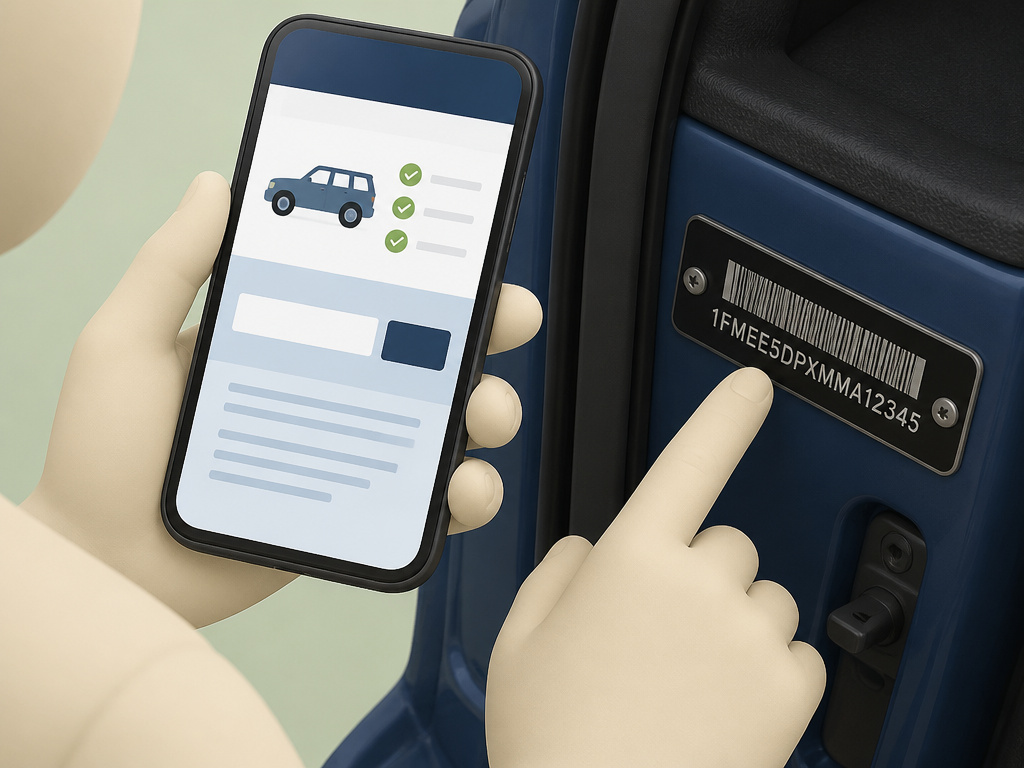
Don’t panic. Follow a sequence.
Before you start: Recalls are free, but the repair might require special parts on backorder. Contact your dealer to schedule an inspection and confirm part availability. Do not delay addressing recalls involving components that could separate from the vehicle.
- Confirm with your VIN. Use the NHTSA site to get the official recall numbers.
- Call your preferred Ford dealership’s service department. Provide your VIN and the recall numbers. They will schedule an appointment.
- Prepare for the visit. Note any symptoms (noises, leaks, visual cracks) to tell the technician. Clear personal items from the cargo area and cabin for access.
- Drop off the vehicle. The work is free. You should receive a repair order detailing the work performed.
- Verify closure. A few days later, re-check your VIN on the NHTSA site. It should show “0 Unremedied Recalls” for the closed items.
If a dealer ever tries to charge you for a recall repair, cite the recall number and ask to speak with the service manager. Federal law mandates no cost to the owner.
The Long-Term Ownership Perspective
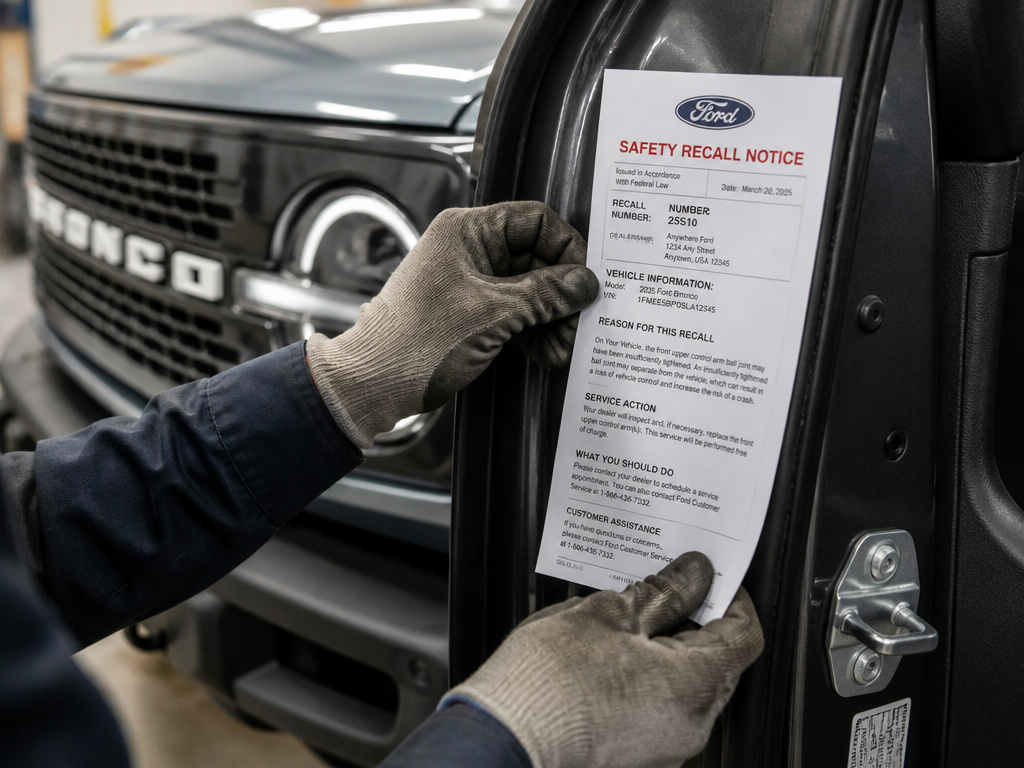
Recalls are a fact of modern vehicle ownership, especially for a complex, off-road-ready vehicle like the Bronco in its first new generations. They aren’t necessarily a red flag on the model’s overall reliability, but they are a mandatory maintenance item.
Staying on top of them is part of the stewardship. It protects your investment, your safety, and everyone else on the road. The system, while slow, works. Use it.
For those looking to personalize their truck, addressing recalls should come before adding any Bronco accessories or a Bronco bike rack. A solid foundation comes first. The same diligence applies to Ford’s other trucks; knowing about F-150 LED headlights or F-150 shocks is useful, but safety recalls are imperative.
Frequently Asked Questions
Are Ford Bronco recalls free?
Yes. By law, all safety recall repairs must be performed at no cost to the vehicle owner, regardless of the vehicle’s age or mileage. This includes parts and labor.
How long does a Ford recall repair take?
It depends on the recall. A software update like TSB 24-2406 might take an hour. Replacing both rear shock absorbers could take half a day. The bigger constraint is often parts availability; your dealer can give you a time estimate when you schedule.
What’s the difference between a recall and a service bulletin?
Safety recall addresses a defect that poses a risk to safety and is mandated by NHTSA. A Technical Service Bulletin (TSB) is a guide for technicians to diagnose and repair a common, non-safety-related problem. TSB repairs are only free if your vehicle is under the New Vehicle Limited Warranty.
I bought a used Bronco. How will I know about recalls?
Ford mails notices to the registered owner on file. If you just bought the vehicle, you may not receive a notice for an older recall. You are responsible for checking your VIN periodically. The NHTSA website is the most reliable method.
Can I still drive my Bronco if it has an open recall?
It depends on the recall’s specific “Do Not Drive” or “Park Outside” advisory. For recalls like the hardtop delamination (26S32) or shock corrosion (25S01), where a component could detach, Ford often issues a “Park Outside” warning to avoid garage damage if a part fails. Always read the recall notice for specific driving instructions. If in doubt, contact your dealer before driving.
Before You Go
The Bronco is built for adventure, but that requires a solid starting point. The known recalls for shock corrosion, roof delamination, and fender flare attachment are factory-origin issues with documented fixes. Your first task is a VIN check. Your second is scheduling the free repair. Everything else, trails, upgrades, F-150 tonneau covers for a sibling truck, comes after. Ownership is about enjoying the machine and maintaining its integrity in equal measure.
