
Do All Terrain Tires Last Longer? The 6-Year Replacement Rule.
This post contains affiliate links. As an Amazon Associate, we earn from qualifying purchases.
All-terrain tires typically last between 40,000 and 70,000 miles of tread life, but they have a mandatory replacement clock of 6 to 10 years based on government-backed manufacturer bulletins, regardless of remaining tread. Mileage longevity is secondary to structural degradation from time, UV exposure, and heat cycling.
That calendar deadline is a non-negotiable safety ceiling, even for tires that have barely seen pavement. The rubber compounds in an all-terrain tire oxidize and harden just sitting in the sun or a garage. A tire can hit 50,000 miles in four years and be spent, or it can show 8/32nds of tread after eight years and be a blowout risk.
What follows: a breakdown of the four factors that decide true tire life, miles, years, heat, and storage. We’ll walk through the official Goodyear and Toyo bulletins, explain why your aggressive tread wears faster on smooth highways than on dirt, and give you the tools to read your tires’ hidden age stamp.
Key Takeaways
- Mileage warranties (40k-70k) are a marketing target, not a safety guarantee. The Goodyear Wrangler Duratrac warranty is 50,000 miles, but a 2015 Toyo bulletin recommends replacement at 10 years.
- A 2022 Goodyear bulletin for the NHTSA mandates replacing any RV tire in service for 6 years, even with legal tread. This 6-year rule is the most critical lifespan metric for all-terrain users.
- All-terrain tires wear faster on asphalt due to “lug squirm,” where the independent tread blocks generate excessive heat. Highway use is their most destructive environment.
- The DOT code on the sidewall tells you the tire’s birth week. Never buy a used tire without checking it; a tire manufactured over six years ago is past its serviceable life per federal guidance.
- A 5-tire rotation every 5,000 miles is non-optional. It prevents the “sawtooth” wear that ruins traction and noise levels long before the tread is gone.
The Core Conflict: Tread Life vs. Calendar Life
You buy a set of Falken Wildpeak A/T3W tires with a 660 UTQG Treadwear rating, expecting 50,000 miles. You drive 10,000 miles a year. After five years, you’ve got 15,000 miles of tread left, but the tire is already five years past its prime according to some manufacturer advisories. Which number wins?
The answer is both, and the lower number is your hard limit. Mileage measures tread consumption. Calendar age measures the rubber’s structural integrity. They are separate countdowns running on the same object.
A 2022 Goodyear product service bulletin published by the NHTSA states, “Goodyear recommends that any tire in service… 6 years or more be replaced even if such tire appears serviceable and even if it has not reached the legal treadwear limit.” This applies specifically to RVs but reveals the industry’s conservative stance on aging.
Toyo’s guidance is even stricter for general passenger and light truck tires, recommending replacement at 10 years from the manufacture date. The bulletin is blunt: “The longer a tire is in service the more opportunity it has to accumulate service-related damage.” These aren’t suggestions for maximizing value. They are safety protocols based on failure data.
This creates a practical ceiling. If you drive less than 10,000 miles a year, your tires will age out before they wear out. The investment logic shifts. Spending more for a 70,000-mile tire over a 50,000-mile tire makes zero sense if you’ll hit the 6-year replacement mark at 60,000 miles.
Why Rubber Ages Faster Than It Wears
The enemy is oxidation. Oxygen and ozone attack the tire’s polymers, making the rubber brittle. UV radiation accelerates this process. The sidewalls and the base of the tread blocks develop fine cracks, dry rot. This isn’t cosmetic.
The rubber loses its flexibility. It can’t absorb impacts from potholes or curbs as effectively. The internal steel belts and fabric cords are still strong, but the brittle rubber casing around them can split. A tire with 8/32nds of tread can have the structural integrity of chalk.
Common mistake: Storing spare tires mounted under a truck or in a garage attic. Heat cycles and temperature extremes age a tire just as much as sunlight. That full-size matching spare you rotate in might already be compromised if it’s been baking for years.
What “Lasts Longer” Actually Means: A/T vs. Highway Tires
Put an all-terrain tire and a highway-terrain tire on the same truck. Drive 20,000 miles of mixed commuting. The all-terrain will show more wear. This seems counterintuitive, the tougher-looking tire loses first. The reason is a principle called the Heat-Traction Paradox.
An all-terrain tread is a collection of independent blocks with deep grooves. On asphalt, these blocks squirm, flex, and scrub as they enter and exit the contact patch. This motion generates internal heat. Highway tires have continuous ribs that roll smoothly, generating less friction and far less heat.
Heat accelerates wear. It also speeds up the oxidation process we just discussed. So your aggressive Nokian Rotiiva AT is working harder on the school run than it would be on a gravel forest road. The very feature that gives it grip off-road is a liability on pavement.
| Tire Type | Primary Wear Cause | Best Environment | Worst Environment |
|---|---|---|---|
| All-Terrain (A/T) | Lug squirm & heat on pavement | Dirt, gravel, loose surfaces | Hot, dry asphalt highways |
| Highway-Terrain (H/T) | Friction & abrasion | Smooth, paved roads | Deep mud, sharp rocks |
| Mud-Terrain (M/T) | Extreme lug flex & chunking | Deep mud, rock crawling | Any paved surface |
This is why asking if all-terrain tires last longer is the wrong question. The right question is: longer at what job? For a pavement-dominated life, a highway tire will outlast any all-terrain. For a real mixed-use life with off-road weekends, a robust all-terrain like the Goodyear Wrangler Duratrac is the durability king. It balances on-road longevity with off-road capability, earning the Three Peak Mountain Snowflake (3PMSF) rating for true winter use.
The part nobody mentions: Noise is a wear indicator. As those lugs develop sawtooth wear from lack of rotation, the howl on the highway increases. That noise is the sound of your tread blocks feathering away, traction you’re losing long before the depth gauge says it’s time.
The Four Pillars of All-Terrain Longevity
Forget the single mileage number. Your tire’s lifespan is a calculation with four variables: Pressure, Rotation, Alignment, and Storage. Miss one, and the other three can’t compensate.
1. Pressure: The Shape of the Footprint
Underinflate by 5 PSI, and the shoulder lugs carry the entire vehicle’s weight. They overheat and wear to the cords while the center tread looks new. Overinflate, and the center rib wears to a slick while the shoulders remain tall. Check pressure monthly, when the tires are cold. The number on the door jamb is a minimum for maximum load, for daily driving, many find adding 2-3 PSI creates a more even contact patch.
2. Rotation: The 5-Tire Mandate
A 5-tire rotation evens out wear patterns that are unique to each wheel position. The front tires scrub in turns. The rears take the drive torque. The spare does nothing. Bringing the spare into the rotation circuit extends the life of the set by 20%. The schedule is every 5,000 miles. Skip it twice, and the sawtooth wear is permanent. You can’t rotate it out.
3. Alignment: The Silent Killer
A slight toe-in or camber misalignment drags the tire sideways fractionally with every revolution. You won’t feel it. But after 10,000 miles, the inside or outside edge is bald. Get an alignment checked annually, or anytime you hit a serious curb or pothole. This is doubly important after lifting a truck or installing larger all-terrain tires, as the geometry changes.
4. Storage: Where New Tires Go to Die
Where this goes sideways: Storing tires flat on concrete or leaning against a wall. Moisture wicks into the rubber, and uneven pressure points create flat spots that become permanent. Stack them vertically, or hang them by the rim.
If you’re swapping to winter tires, clean your all-terrains with soap and water to remove brake dust and road salt. Dry them completely. Store them in black plastic bags to block UV light, in a cool, dry basement, not a garage that hits 40°C in summer. A new tire stored poorly for two years can be as brittle as a five-year-old tire that saw gentle use.
Reading the Tea Leaves: DOT Codes and Buying Used
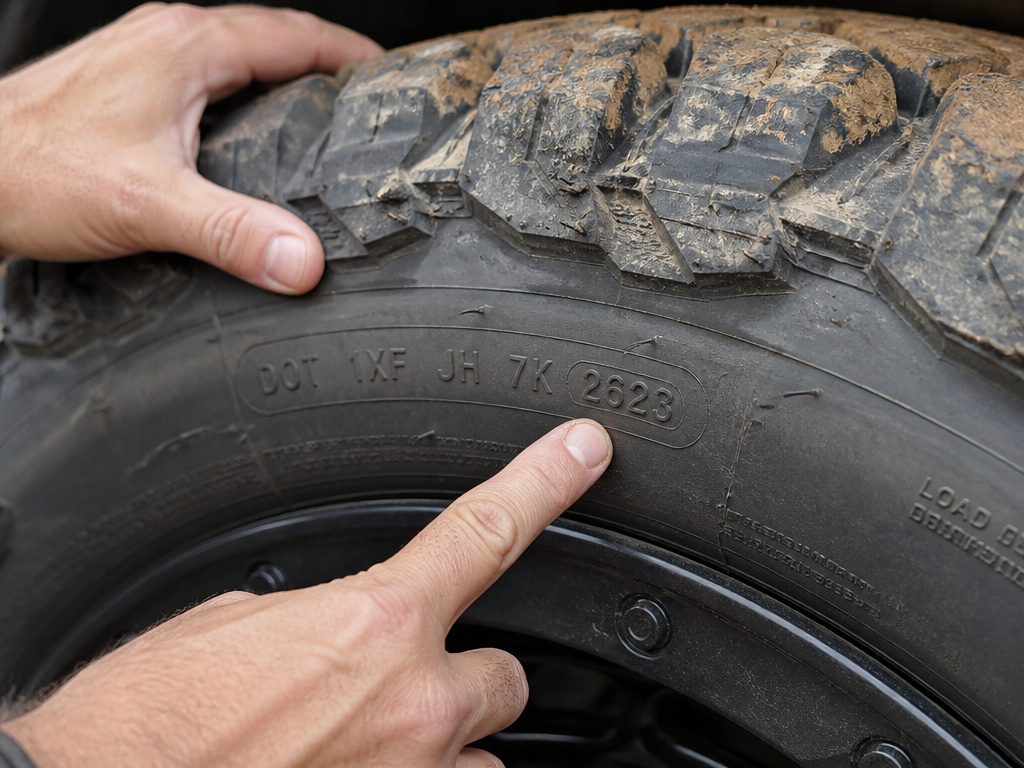
The Department of Transportation (DOT) code is the tire’s birth certificate. The last four digits are the week and year of manufacture. “2623” means the 26th week of 2023. This is the single most important piece of information when evaluating used tires or verifying the age of tires on a used vehicle.
Goodyear’s bulletin advises against purchasing used tires for RVs because the service history is unknown. That logic extends to any vehicle. A tire could have 9/32nds of tread but be 8 years old, making it a liability. The rubber will have hardened, losing its grip and impact resistance regardless of tread depth.
When you’re looking at all-terrain tire reviews for your next set, factor the calendar. If you drive 7,500 miles a year, a tire with a 60,000-mile warranty will take 8 years to reach that mileage. You will hit the 6-year manufacturer service recommendation first. In this case, a less expensive tire with a 40,000-mile warranty, like the GT Radial Adventuro AT3, might be the smarter financial play. Your true cost-per-year is lower.
This is especially critical for LT all-terrain tires destined for heavier trucks. The increased load and stress make them more susceptible to age-related sidewall fatigue. A 10-ply Load Range E tire might be incredibly strong, but its rubber compounds are not immune to time.
The Verdict: Mileage is a Marketing Tool, Time is the Judge
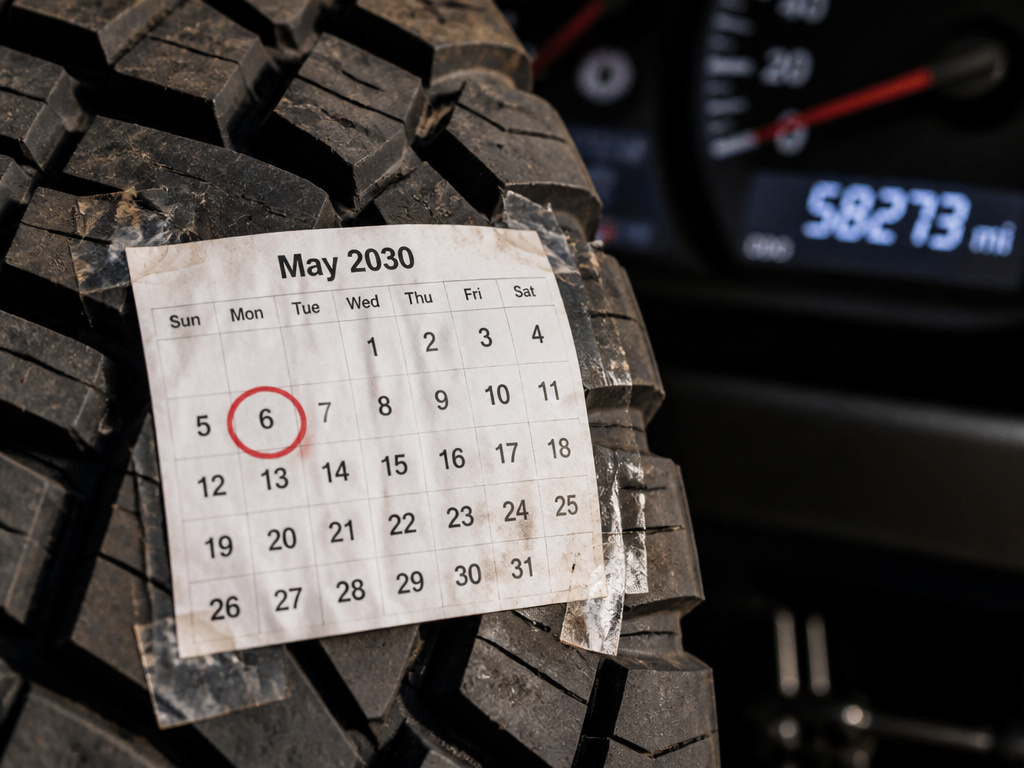
So, do all-terrain tires last longer? Compared to mud-terrains on pavement, absolutely. Compared to dedicated highway tires on that same pavement, almost never. The more relevant truth is that their usable lifespan is often cut short by the calendar, not the odometer.
The industry’s own bulletins to the NHTSA make that clear. The 6-year service recommendation is a line in the sand. It turns the question from “how many miles?” to “how many years?” That changes your buying math, your maintenance schedule, and your safety margins.
For a daily driver that sees mostly pavement, a highway-focused all-terrain designed for on-road comfort will deliver the best blend of longevity and capability. For a truck that works off-road, prioritize the 6-year structural limit over the mileage warranty. Rotate relentlessly, store them wisely, and mark your calendar. The tread might promise 50,000 miles, but time rarely negotiates.
Frequently Asked Questions
Do 10-ply all-terrain tires last longer than 2-ply?
Ply rating denotes load strength, not longevity. A 10-ply Load Range E tire is built to handle heavier loads without deforming, which can reduce heat buildup under load. This can contribute to longer life in a heavy truck, but the rubber compounds and tread design are the primary factors in wear. A robust 2-ply tire on a half-ton truck can outlast a 10-ply tire if it’s better suited to the vehicle’s actual weight.
Can I extend tire life with tire treatments or coatings?
No. Products that claim to rejuvenate rubber or prevent dry rot are largely ineffective and can mask problems. The best treatment is proper care: correct inflation, regular rotation, alignment checks, and UV-protected storage. Once the rubber shows widespread fine cracking on the sidewalls, the tire is done.
Why do some all-terrain tires have a 3PMSF snowflake rating?
The Three Peak Mountain Snowflake symbol indicates the tire meets specific snow traction performance standards. It doesn’t speak to longevity directly, but tires that earn it often use specialized, flexible rubber compounds that perform well in cold. These softer compounds can sometimes wear faster in hot summer conditions, a trade-off for winter capability.
Is it worth repairing a puncture in an all-terrain tire?
It depends on location and age. A small puncture in the central tread area can often be properly patched and plugged. A puncture in the shoulder or sidewall compromises the tire’s structure and is not safe to repair. More importantly, if the tire is already 4 or 5 years old, investing in a repair on a tire nearing its end-of-service life is a false economy. Replace it in pairs.
How does tire width affect lifespan?
Wider tires often have a larger contact patch, which can distribute load and potentially reduce wear per square inch. However, wider tires are also more susceptible to hydroplaning and can generate more heat if not properly inflated. The effect on lifespan is minimal compared to the factors of pressure, rotation, and alignment. Choose width based on your vehicle’s specifications and performance needs, not a hope of longer life.
The Bottom Line
Chasing a higher mileage warranty is a fool’s errand if you ignore the calendar. Your all-terrain tires have two expiration dates: one for tread depth, one for structural age. The second one is non-negotiable and often comes first. Buy based on your annual mileage and a 6-year horizon. Maintain with religious 5,000-mile rotations and seasonal pressure checks. And when that DOT code hits year six, start shopping, no matter how much tread is left. The grip you save is your own.
