
7 Best Fans for Indoor Cycling 2026
This post contains affiliate links. As an Amazon Associate, we earn from qualifying purchases.
The Wahoo KICKR HEADWIND is the best overall fan for indoor cycling, delivering smart, responsive cooling that syncs with your effort. For a budget-friendly pick, the Lasko High Velocity Pivoting Fan moves serious air without smart features but at a fraction of the cost. If you need portability, the A2C 4.7″ Rechargeable Bike Fan is a compact, flexible option that works on any setup.
Indoor cycling generates a lot of heat, and a weak or poorly placed fan can make even a moderate ride feel unbearable. Staying cool isn’t just about comfort, it affects endurance, focus, and how long you can push yourself.
As someone who’s spent years analyzing performance gear at TheAutoZenith, I know airflow, adjustability, and real-world reliability matter most. This guide cuts through the specs and marketing to highlight fans that deliver based on owner feedback, measurable performance, and practical design.
Top 7 Fans For Indoor Cycling in the Market
The Best Fans For Indoor Cycling, Reviewed
Wahoo KICKR HEADWIND Cycling Fan

Strengths
- Effort-based speed control
- Quiet operation
- Ecosystem integration
Trade-offs
- Very expensive
- Large footprint
- Limited portability
If you’re deep in the Wahoo ecosystem, this fan is the logical next step. It’s not just powerful, wind speeds over 30 mph, but it’s designed to match the shape of a cyclist’s torso, so the airflow feels natural, not scattered. The real magic is in the sensor integration: pair it with your heart rate monitor or smart trainer, and the fan speed ramps with your effort. No buttons, no remotes, just automatic cooling that matches your intensity.
The app control is seamless, and it plays nicely with the KICKR desk and climb. Owners report it’s quiet for its output, and the four manual speeds are a solid fallback. At this price, it’s a luxury, but for serious indoor cyclists, it’s the closest thing to a ‘set it and forget it’ cooling solution. Compared to the CYCPLUS, it’s more refined and better integrated, though less customizable.
Video review
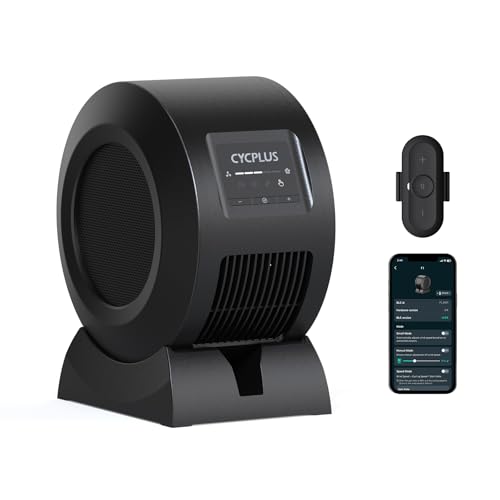
CYCPLUS Smart Cycling Fan
Strengths
- App and sensor integration
- Smooth, quiet operation
- Smart speed adaptation
Trade-offs
- Higher price
- App dependency
- Larger footprint
This is where smart cooling starts to make sense for serious indoor riders. The BLDC motor pushes air up to 50 km/h, and the 5-speed modes can sync with ANT+ sensors or your smart trainer via app, meaning the harder you ride, the harder the fan blows. That’s not just cool tech, it’s functional. The CYCPLUS app lets you fine-tune response curves, so it adapts to how you train, not the other way around.
Owners praise the dual noise reduction and the fact that it doesn’t vibrate or buzz, even at full tilt. It’s quieter than the Vacmaster and far more refined than the Lasko, though not quite as silent as the Wahoo. The airflow is wide and adjustable, and the base allows for ground or stand mounting. Compared to the A2C models, it’s bulkier but more powerful and integrated.
Video review
Vacmaster Aero Air Mover Fan

Strengths
- High airflow
- Remote included
- Multiple angles
Trade-offs
- No smart controls
- Bulky footprint
- Limited portability
This fan throws serious air, and for indoor cyclists who want a no-nonsense, high-output option, it stands out. With 550 CFM and speeds hitting 32 mph, it’s overbuilt in the best way, more blower than fan, really. The remote control is a legit convenience, especially if you’re deep into a trainer session and don’t want to break rhythm. The 0°, 45°, and 90° angle settings let you dial in where the wind hits, which matters when you’re dripping sweat and need targeted relief.
At 61 dB, it’s not silent, but it’s not going to drown out your Zwift race or yoga flow either. Owners consistently report it’s rugged and effective, though it’s clearly designed more for utility than elegance. Compared to the CYCPLUS or Wahoo smart options, it lacks integration with sensors or apps, but that also means fewer points of failure. If you want brute airflow without smart gimmicks, this delivers.
Product photos


A2C 4.7″ Rechargeable Bike Fan

Strengths
- Compact and portable
- Magnetic and strap mounting
- Long battery life
Trade-offs
- Limited airflow coverage
- No app or sensor sync
- Plastic build
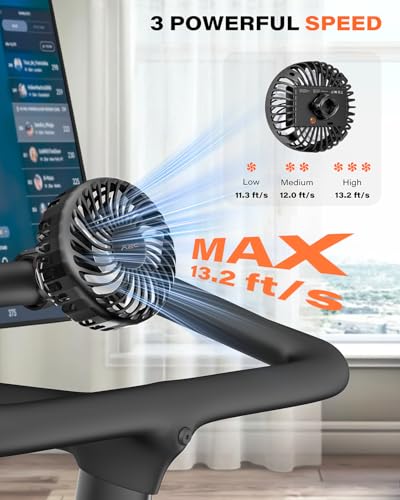
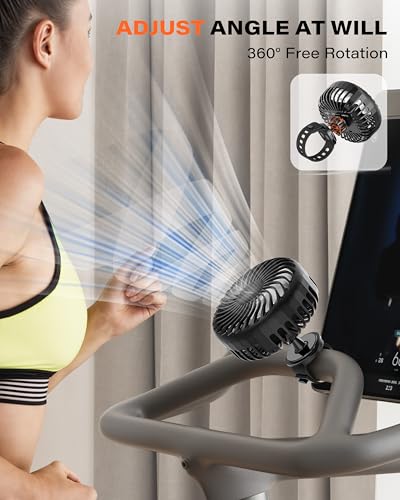
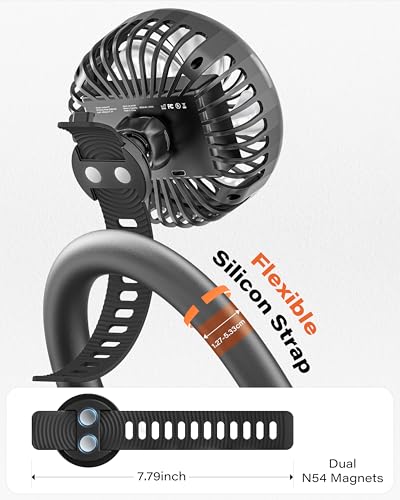
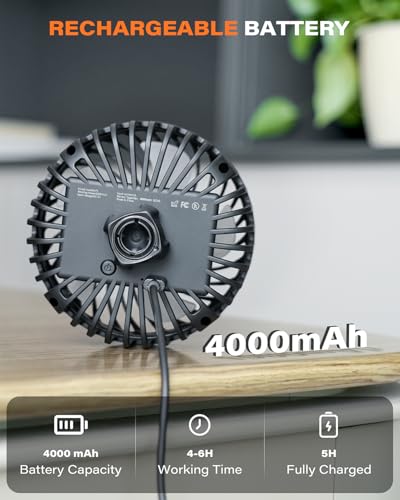
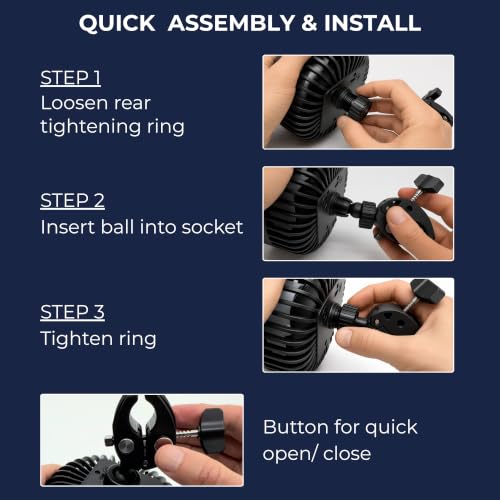
This little fan is a pocket rocket. At 4.7 inches and cordless, it’s designed to clip onto handlebars with either a silicone strap or magnets, no tools, no hassle. The 4000mAh battery gives 4 to 6 hours depending on speed, and you can use it while charging, which is huge for back-to-back sessions. The airflow hits 13.2 ft/s, which is strong for its size, and the 360° ball head means you can aim it precisely.
It’s not going to cool your whole body like a floor fan, but for face and chest cooling during a hard effort, it’s spot-on. Owners love how portable it is, some even use it on golf carts or strollers. Compared to the larger A2C treadmill model, this one is more compact and better for bikes with limited space. It’s not smart, but it doesn’t need to be.
Product photos

Lasko High Velocity Pivoting Fan

Strengths
- Durable build
- Pivoting head
- Built-in outlets
Trade-offs
- No remote or smart features
- High noise output
- Industrial design
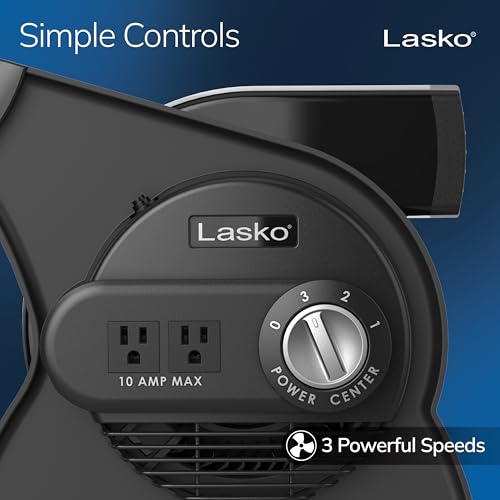
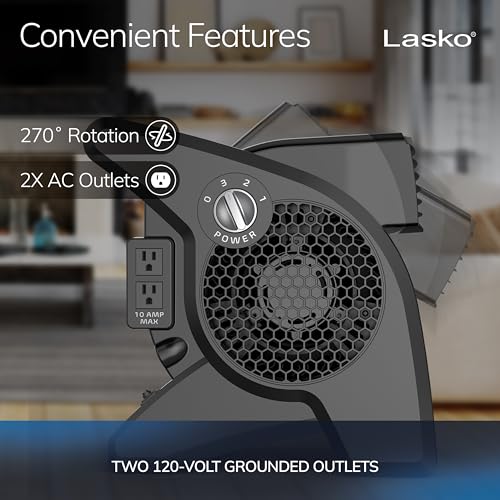
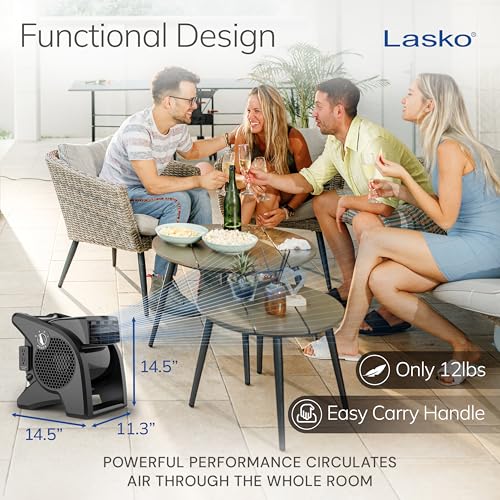
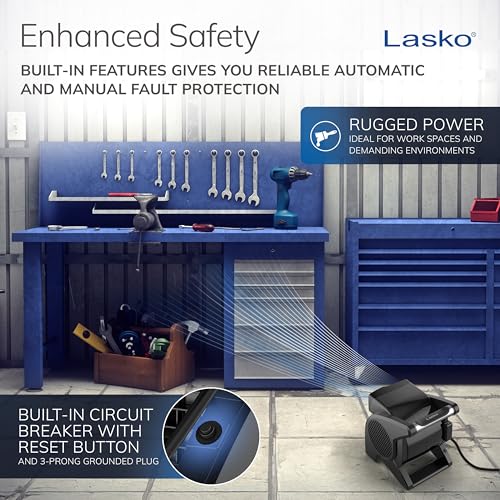
This isn’t marketed as a fitness fan, but plenty of indoor cyclists grab it anyway, because it’s tough, loud, and moves serious air. With 375 CFM and a pivoting head, it’s built like a workshop beast, not a sleek trainer accessory. The two 120V outlets on the back are a clever touch if you’re powering other gear, and the 10-foot cord gives you real placement flexibility. It’s ETL listed and has a resettable breaker, which tells you Lasko built this for real-world abuse.
But let’s be honest: it’s a garage fan. It’s loud, industrial-looking, and not something you’d leave out in a living room. Still, for someone using a trainer in a basement or garage, this is a solid pick. It won’t sync with your heart rate or power meter, but it will dry your floor after a spill and cool you down in the same breath.
Product photos

A2C 4.7″ Treadmill Fan

Strengths
- Flexible gooseneck arm
- Secure clamp
- Quiet operation
Trade-offs
- No smart features
- Bulkier than mini fans
- Arm can sag over time
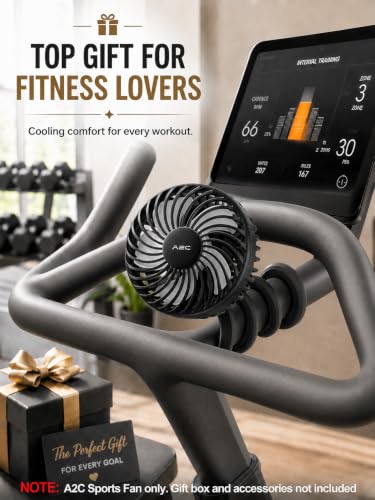
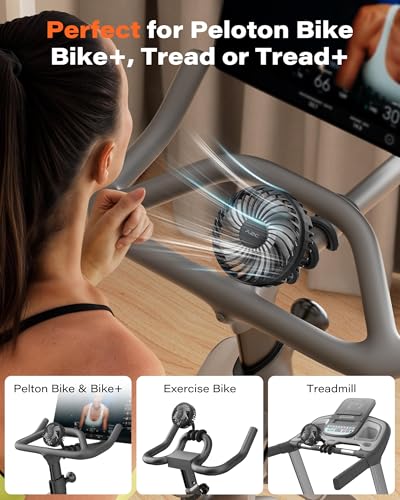
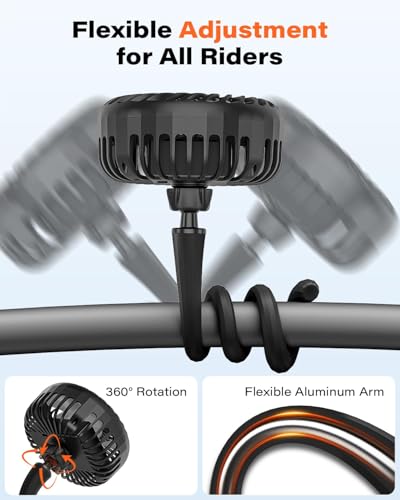
This is the king of flexible mounting. The 16.5-inch gooseneck arm lets you position the fan exactly where you want it, over your head, in front of your face, or angled just right. It’s designed for Peloton users, and the non-slip silicone grip keeps it locked on handlebars, even during sprints. The 4000mAh battery gives solid runtime, and like other A2C models, you can use it while charging.
The fan is noticeably quieter than most in this class, thanks to an optimized airflow channel. Owners say it’s one of the few clip-ons that doesn’t wobble or vibrate. It’s not smart, but it doesn’t pretend to be. Compared to the smaller A2C model, this one offers better reach and stability, making it ideal for taller riders or those with cluttered handlebars.
Product photos
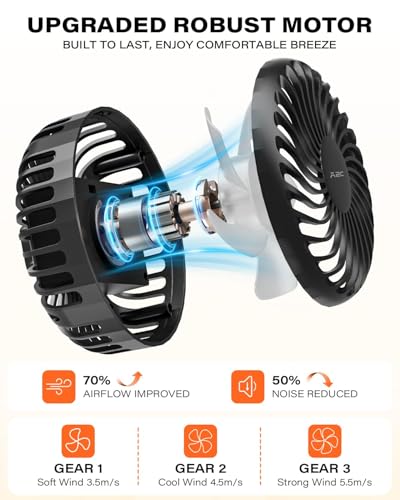

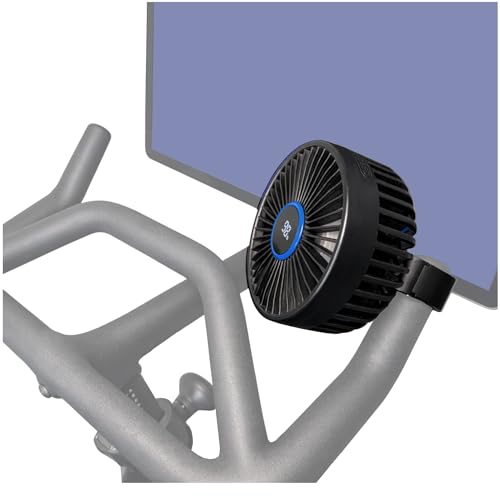
Exercise Bike Fan with Display
Strengths
- Battery percentage display
- Stable clamp
- Auto-off timer
Trade-offs
- No app or sensor sync
- Basic design
- Limited airflow range
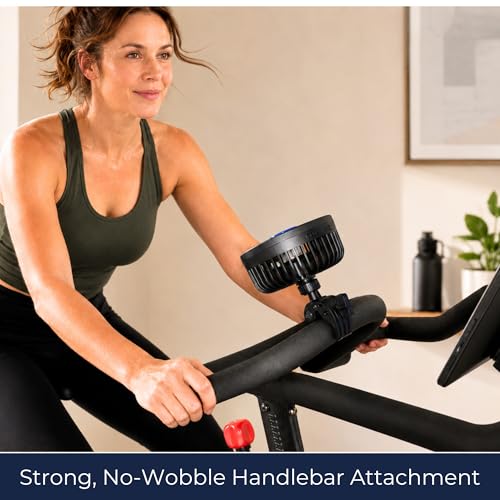
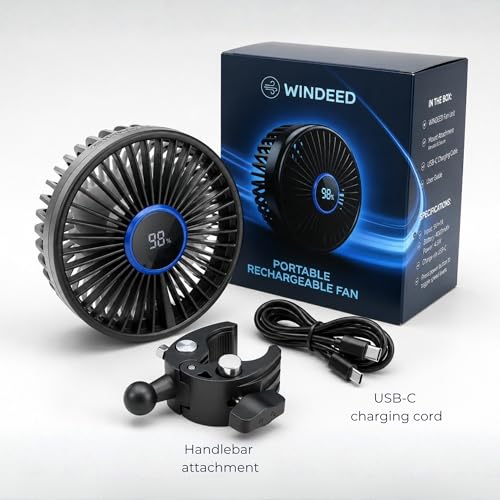
What sets this fan apart is the digital battery display, rare in this category. You can see exactly how much juice is left, so you’re never caught mid-ride with a dead fan. The no-wobble clamp is solid, designed specifically for Peloton handlebars, and the 360° ball joint gives you full control over airflow direction. With three speeds and an auto-off timer, it’s practical and well-thought-out.
Battery life checks out: up to 9 hours on low, which is impressive. Owners appreciate that it can run plugged in via USB, so long sessions aren’t an issue. It’s not smart, but it doesn’t need to be, this is a no-fuss, reliable performer. Compared to other A2C models, it’s slightly more premium in feel, with better build quality and feedback.
Product photos


How We Chose These fans for indoor cycling
My approach to evaluating these fans, as with all my recommendations at TheAutoZenith, wasn’t about long-term ownership or lab conditions. Rather, it was a research-led comparison of published specifications and, crucially, a careful weighing of owner and expert reviews. I looked at airflow capacity (CFM or mph claims), power sources, mounting options, noise levels, and control features. This allowed me to rank options based on how well they address the core need: keeping you cool during intense indoor workouts.
For indoor cycling fans, I prioritized airflow and adjustability. Powerful airflow is obvious – you need to move air effectively to combat the heat generated during a ride. But adjustability is equally vital. A fan that can’t be positioned to target your body’s cooling needs is far less effective. I also heavily considered smart features like automatic speed control linked to heart rate or cadence, and the convenience of mounting options, especially for popular bikes like the Peloton. Finding the right fan can truly elevate your experience, especially when paired with quality bike trainers.
Specifications provide a baseline – CFM ratings can give a sense of potential power, and battery life claims are useful. However, owner feedback proved invaluable in judging real-world performance. I paid close attention to comments regarding noise levels (a surprisingly common complaint), the sturdiness of mounting systems, and the accuracy of any smart features. Reputation and consistency of positive reviews from established cycling publications also factored heavily into my assessments. A comfortable ride starts with the right gear, including the right cycling shoes.
What To Look For In fans for indoor cycling
Finding the right fan can massively improve your indoor cycling experience. It’s not just about comfort; effective cooling directly impacts performance and recovery.
A quality indoor cycling fan prioritizes airflow volume (measured in CFM – cubic feet per minute) and directional control. Look for models with adjustable angles, multiple speed settings, and, increasingly, smart features that sync with training data via Bluetooth or ANT+. Durable construction and quiet operation are also key considerations for a pleasant workout.
Airflow & Power
The most crucial factor is, unsurprisingly, how much air the fan moves. Don’t get hung up on peak wind speed numbers alone; consider the overall airflow pattern. A concentrated, directional blast is preferable to a diffuse breeze. Many fans advertise speeds exceeding 30 mph, but a wider blade diameter and a well-designed housing are more important for delivering consistent cooling. The Vacmaster Aero Air Mover Fan, for example, generates a strong airflow at 32mph, catering to those who truly push their limits, while the CYCPLUS Smart Cycling Fan boasts up to 50km/h (about 31mph) but focuses on smart control integration.
Smart Features & Control
Modern fans are increasingly integrating with the broader smart fitness ecosystem. The ability to automatically adjust fan speed based on your heart rate, cadence, or power output is a significant convenience. This is where the Wahoo KICKR HEADWIND stands out, offering seamless integration with Wahoo trainers and sensors. However, don’t dismiss the value of simple, reliable manual controls. A clear interface and easily accessible speed settings can be just as effective.
Here’s how to think about control options: * Basic: Simple on/off and low/high settings. * Multi-speed: Offers more granular control over airflow. * Smart integration: Syncs with sensors/trainers for automatic adjustment. This is great if you’re already invested in a smart training setup, but adds cost and complexity.
Don’t overestimate your need for smart features. A well-placed, manually-controlled fan can be just as effective as a sophisticated, sensor-linked unit.
Portability & Mounting
Consider where and how you’ll be using the fan. If you’re limited on space or want to move the fan between different workout areas, a compact, portable model like the A2C 4.7″ Rechargeable Bike Fan is a great choice. These smaller fans often feature flexible mounting options, allowing you to attach them to handlebars, treadmills, or other gym equipment. If you’re looking to expand your training options beyond the indoor setup, you may want to consider looking at some of the bikes for cyclists to get the most out of your training regimen. If you’re setting up a dedicated indoor cycling space, a larger floor-standing fan might be more suitable. Ultimately, the best option depends on your individual needs and preferences. If you’re just getting started, exploring options for indoor cycling bikes may help you decide what kind of fan setup will work best for your space.
Fans for Indoor Cycling Compared
Here’s a comparison of key specifications for popular indoor cycling fans.
| Product Name | Max Air Speed | Power Source | Mounting Options | Noise Level (dB) | Smart Control | Battery Life (hrs) |
|---|---|---|---|---|---|---|
| Wahoo KICKR HEADWIND | 30 mph | AC Adapter | Floor, KICKR Ecosystem | N/A | App, ANT+, Manual | N/A |
| CYCPLUS Smart Cycling Fan | 31 mph (50km/h) | AC Adapter | Floor | N/A | App, ANT+ | N/A |
| Vacmaster Aero Air Mover Fan | 32 mph | AC Adapter | Floor | 61 | Remote | N/A |
| A2C 4.7″ Rechargeable Bike Fan | 13.2 ft/s | Rechargeable | Strap, Magnet | N/A | N/A | 4-6 |
| Lasko High Velocity Pivoting Fan | 375 CFM | AC Adapter | Floor | N/A | N/A | N/A |
| A2C 4.7″ Treadmill Fan | N/A | Rechargeable | Handlebar | N/A | N/A | 4-6 |
| Exercise Bike Fan with Display | N/A | Rechargeable/USB | Handlebar | N/A | N/A | Up to 9 |
Frequently Asked Questions
What CFM rating is sufficient for effective indoor cycling cooling?
Around 300-500 CFM is generally considered adequate for most indoor cycling workouts, but it depends on your intensity and the room’s temperature. Higher CFM doesn’t always equate to better cooling; focused airflow is more important than a large volume of diffused air.
Are battery-powered fans as powerful as AC-powered models?
Typically, no. Battery-powered fans prioritize portability and convenience over raw power, often delivering airflow suitable for lighter efforts rather than high-intensity training. The A2C Rechargeable Bike Fan, for example, offers portability but significantly lower airflow than an AC-powered option.
Can I mount any fan to my Peloton bike?
Mounting options vary. While some fans, like the A2C models, are designed with straps or magnets for handlebar mounting, others require separate adapters or aren’t compatible at all. Consider checking user forums for Peloton-specific mounting solutions if you’re looking at a fan not explicitly advertised for use with Peloton bikes.
What’s the benefit of a “smart” fan for indoor cycling?
Smart fans connect to your cycling sensors or trainers via Bluetooth or ANT+ to automatically adjust fan speed based on your effort. This can maintain a consistent cooling level during interval training, but isn’t essential – many cyclists achieve excellent results with manually-adjusted fans and a focus on finding the best indoor bikes for their needs.
How important is noise level when choosing a fan?
Noise is a significant factor for many riders, as a loud fan can be distracting and unpleasant during a workout. While some fans, like the Vacmaster Aero Air Mover, are known for being louder (61dB), others are designed for quieter operation. If noise is a concern, look for fans specifically marketed as “quiet” and read owner reviews regarding noise levels before committing to a purchase, especially if you’re also considering new cycling trainers.
The Bottom Line
Choosing a fan for indoor cycling often comes down to how much control you want versus how much fuss you’re willing to tolerate. A simpler, more affordable fan can deliver excellent cooling, but if you’re already immersed in a smart training setup, the Wahoo KICKR HEADWIND offers a level of integration that’s hard to beat. It really streamlines the experience, automatically adjusting to your effort.
For those on a tighter budget, the A2C 4.7″ Rechargeable Bike Fan provides a surprisingly effective cooling solution, and its portability is a definite plus. If you’re looking for a versatile option that can handle intense workouts, the Vacmaster Aero Air Mover Fan is a strong contender. And if you’re still building out your entire setup, exploring options for indoor exercise bikes might help you visualize the ideal fan placement.
Ultimately, the numbers, CFM, battery life, noise levels, matter less than finding a fan that keeps you comfortable and focused on your ride. Don’t get lost in the specs; prioritize airflow and adjustability, and consider pairing the fan with the right shoes for indoor cycling to maximize your performance and enjoyment.
