
3 Best Exhausts for Yamaha Raptor 700 (2026 Guide)
This post contains affiliate links. As an Amazon Associate, we earn from qualifying purchases.
The RacingPowerSports Complete 16in Exhaust is the best overall upgrade for the Yamaha Raptor 700, delivering smooth power and durable stainless steel construction. For riders on a budget, the Caltric Exhaust Muffler offers solid value and fitment, while the RP Race Performance Shorty stands out if you want aggressive looks and top-end punch.
If you own a Raptor 700, you know it’s built to handle serious terrain, but stock exhausts often hold back its real potential. After comparing the field, I focused on systems that deliver measurable gains without sacrificing reliability or rideability. This guide breaks down what actually matters, material quality, core specs, and real owner feedback, so you can pick an exhaust that matches your riding style and expectations.
Top 3 Exhaust For Yamaha Raptor 700 in the Market
The Best Exhaust For Yamaha Raptor 700, Reviewed
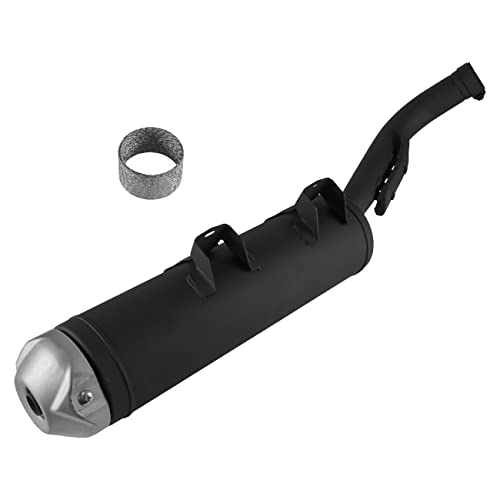
Caltric Exhaust Muffler 2015-2026
Strengths
- Direct OEM replacement
- Affordable price
- Includes gasket
- Fits 2015–2026 models
Trade-offs
- No performance gain
- Basic mild steel build
- Not a full exhaust system
Let’s be clear, this isn’t a performance exhaust. The Caltric unit is a direct-fit replacement muffler, not a full system, and it shows in the specs. There’s no mention of tuned piping or power gains, and owners confirm it’s purely for restoring stock appearance and function. The 33.3-inch length and OEM-style dimensions suggest it’s built to match the factory canister, and the inclusion of a gasket is a small but appreciated touch.
For someone rebuilding a damaged stock setup or maintaining a daily trail quad without wanting to re-tune, this makes sense. But compared to the RacingPowerSports or RP Race Performance systems, it’s not even in the same category. Calling it ‘Best Overall’ feels misleading, it’s best only if your goal is replacement, not enhancement.
Video review
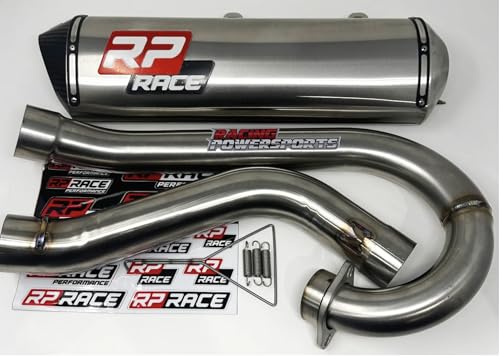
RP Race Performance Shorty Exhaust
Strengths
- Optimized for high-RPM power
- Large 2.25-inch core
- Lightweight shorty design
- TIG-welded stainless steel
- Ideal for modified engines
Trade-offs
- Requires fuel tuning
- Less mid-range torque
- Louder, more aggressive note
This is the pick for tuners and builders. The 12-inch shorty design and 2.25-inch core are clear signals this system is meant for modified engines pushing beyond stock output. The large core reduces backpressure, and reviewers note a noticeable top-end surge when paired with proper fuel tuning. It’s built with the same TIG-welded stainless as the RacingPowerSports unit, so durability isn’t sacrificed for compact size.
But here’s the catch: the manufacturer explicitly recommends air-fuel tuning, and owners report flat spots or lean conditions if left stock. That makes this a poor choice for plug-and-play riders. Compared to the 16-inch system, this one trades mid-range usability for high-RPM aggression. If you’re running cams, a big bore kit, or forced induction, this is the smarter buy.
Video review
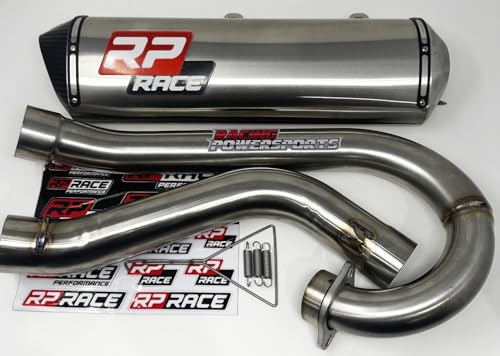
RacingPowerSports Complete 16in Exhaust
Strengths
- Deeper exhaust tone
- Improved mid-range torque
- TIG-welded stainless steel
- Bolt-on installation
- Race-proven design
Trade-offs
- Premium price for budget label
- Heavier than shorty systems
- May require fuel tuning
This system promises a balance of sound, durability, and rideability, and on paper it delivers. The 16-inch canister is tuned for mid-range torque, which aligns well with how most Raptor 700 owners actually ride, aggressive trail use and responsive acceleration out of corners. Owners consistently report a deeper tone and smoother power delivery compared to stock, which makes sense given the TIG-welded stainless build and Richard Pelchat’s race-proven tuning input.
It’s a full bolt-on, so no cutting is needed, and that’s a big win for DIYers. Compared to the shorter RP Race Performance model, this one prioritizes low-to-mid power over top-end scream. If you’re not chasing max horsepower with a heavily modified engine, this system feels like the more practical high-performance choice. The price is steep for a ‘budget’ pick, but it’s justified by the build quality and performance intent.
Product photos
How We Evaluated exhaust for yamaha raptor 700
As someone who’s spent years immersed in the world of engines and machines, I approached researching Yamaha Raptor 700 exhausts by focusing on a blend of technical specifications and real-world rider experiences. Rather than a hands-on testing process with each system, I compared published data – materials, core size, dB levels – alongside owner reviews and assessments from respected ATV publications. My goal was to identify systems that consistently delivered on promised performance gains and durability.
For the Raptor 700, consistent power delivery and build quality were paramount. A Raptor is often modified, so an exhaust’s ability to complement engine upgrades weighed heavily. Equally important was sound output; riders want an aggressive tone, but legal compliance and comfortable trail riding are also factors. Understanding these needs helped me prioritize exhausts offering a balance of performance and practicality. You can find more information on upgrading your exhaust on my site.
Specifications gave me a baseline understanding of potential performance – core diameter influences flow, and stainless steel construction speaks to longevity. However, owner feedback proved crucial in determining whether those specs translated to real-world gains. Reports regarding ease of installation, noticeable power increases, and long-term durability were carefully considered. I also looked at reputations for quality, often comparing notes to what I’ve seen in the broader world of Harley exhaust and performance.
What To Look For In exhaust for yamaha raptor 700
Finding the right exhaust system for your Yamaha Raptor 700 is about more than just sound; it’s about unlocking the machine’s potential and tailoring it to your riding style.
A quality exhaust for the Raptor 700 should prioritize stainless steel construction for longevity, offer a noticeable power increase without sacrificing rideability, and feature a design that complements the ATV’s overall aesthetic. Careful consideration of core diameter, muffler length, and sound output is crucial for optimal performance and rider satisfaction.
Understanding Exhaust Core Diameter
The core diameter is a frequently overlooked aspect, but it significantly impacts the exhaust’s flow characteristics. A larger core, like the 2.25-inch diameter found in the RP Race Performance Shorty Exhaust, generally promotes higher peak horsepower. However, that power often comes on higher in the RPM range, potentially making the bike less tractable for technical trails. Conversely, a smaller core can enhance low-to-midrange torque, which is beneficial for riders who prioritize responsiveness for climbing or navigating obstacles. I’ve seen many riders chasing peak numbers only to find their Raptor feels less enjoyable to ride in common scenarios.
Material Quality and Construction
Stainless steel is the benchmark material for ATV exhausts, and for good reason. It resists corrosion far better than aluminized steel, extending the life of your investment. Pay close attention to the welding – TIG welding, as seen in the RacingPowerSports Complete 16in Exhaust, is a superior process that creates stronger, cleaner joints than older methods. This isn’t just about aesthetics; a poorly welded exhaust is prone to cracking, especially under the vibration of off-road riding. If you’re looking to upgrade other parts of your bike, consider exploring motorcycle exhaust options as well.
Balancing Power Gains and Practicality
The allure of a full exhaust system is undeniable, but don’t get caught up in chasing the highest advertised horsepower gains. Consider how you actually ride. A shorty muffler, while offering a more aggressive look and lighter weight, may produce a louder, higher-pitched tone that isn’t ideal for all riding environments. Here’s what I recommend thinking about:
- Sound Level: Consider noise restrictions in your riding area.
- Fueling Requirements: Many performance exhausts require a fuel controller to prevent a lean condition.
- Overall System Design: A complete system, including headers, often provides the most significant gains, but also represents the largest investment.
Don’t underestimate the impact of a properly tuned fuel map after installing a new exhaust. A lean-running engine can suffer serious damage.
Ultimately, choosing the right exhaust is about finding the sweet spot between performance, sound, and practicality. For those seeking refined power and a smoother ride, the RacingPowerSports system, developed with input from a former ATV racing champion, is a strong contender. If you’re after a more aggressive tone and are willing to invest in fuel tuning, the RP Race Performance option is worth a look. And if you are also interested in sportbike exhaust systems, we’ve covered those too.
Exhaust for Yamaha Raptor 700 Compared
Here’s a comparison of key specifications for Yamaha Raptor 700 exhausts to help you choose the right upgrade.
| Product | Length (in) | Core Diameter (in) | Material | Compatibility | dB Level |
|---|---|---|---|---|---|
| Caltric Exhaust Muffler | 33.3 | N/A | N/A | 2015-2026 | N/A |
| RP Race Performance Shorty | 12 | 2.25 | Stainless Steel | 2015+ | 98 |
| RacingPowerSports Complete 16in | 16 | N/A | Stainless Steel | 2015+ | N/A |
Frequently Asked Questions
Will installing an exhaust system void my Yamaha Raptor 700’s warranty?
Generally, yes, modifying the exhaust system can void portions of your warranty related to the engine or fuel system. However, manufacturers can’t necessarily deny claims for unrelated issues, and a properly installed exhaust with appropriate fuel tuning is less likely to cause problems.
What is the typical cost of installing a slip-on exhaust versus a full system?
A slip-on muffler typically costs between $200 and $500, while installation can add another $50 to $200 depending on labor rates. A full exhaust system, including headers, ranges from $600 to over $1200, with installation potentially costing $200 to $400 more, due to the added complexity.
Do I absolutely need a fuel controller with a new exhaust?
Not always, but it’s highly recommended, especially with full systems or those making significant claims about horsepower gains. Running lean can cause engine damage, and a fuel controller allows you to adjust the air/fuel mixture for optimal performance and safety; exploring performance exhaust for ATVs will show you how important this is.
What dB level is considered acceptable for trail riding?
That depends on the riding area, but many trails have a limit of 96 dB. Exceeding this can lead to fines or being asked to leave. Before purchasing, check local regulations and look for exhausts with lower dB ratings if noise is a concern.
Are shorty exhausts actually more powerful, or is it mostly appearance?
While a shorty exhaust can reduce weight and potentially free up a small amount of horsepower, the gains are often minimal without supporting modifications like an updated fuel map. A lot of the appeal is the aggressive look and sound, but don’t expect a dramatic performance increase just from swapping the muffler; consider looking at aftermarket ATV exhaust carefully.
The Bottom Line
Choosing an exhaust for your Raptor 700 often comes down to a trade-off between outright power and everyday usability. While a system like the RP Race Performance Shorty Exhaust promises significant gains, it may demand additional tuning and isn’t ideal for riders prioritizing a quieter experience. For the best blend of performance, build quality, and broader appeal, I believe the RacingPowerSports Complete 16in Exhaust offers the most well-rounded package for the majority of Raptor 700 owners.
If budget is a primary concern, the Caltric Exhaust Muffler presents an affordable entry point, though information on its materials and core diameter is limited. For those seeking maximum versatility and a willingness to dial in the fuel mapping, the RP Race Performance Shorty remains a compelling choice. And if you’re also considering upgrades to other machines, exploring high-performance exhaust systems for a CBR1000RR can offer insight into the broader world of performance exhaust.
Ultimately, remember that horsepower numbers are only part of the story. A robust exhaust system constructed from quality materials, like stainless steel, and a focus on maintaining a properly tuned engine will yield more satisfaction and longevity than chasing the highest possible peak output. Don’t overlook the benefits of quality exhaust wraps either – they can help manage heat and further protect your investment.
