
5 Best Exercise Bikes with Screen 2026
This post contains affiliate links. As an Amazon Associate, we earn from qualifying purchases.
The Peloton Exercise Bike stands out as the overall best pick for its immersive 21.5-inch screen and seamless app integration, while the MERACH 21.5″ HD Display Bike offers strong versatility with multi-app support and a high weight capacity. For those on a tighter budget, the Yesoul G1M delivers a similar large screen experience at a lower price point.
Choosing an exercise bike with a screen means balancing tech and mechanics. A clunky interface or wobbly frame can ruin even the most engaging workout. As someone who’s spent years analyzing how machines perform, I know it’s the details, like resistance quality and build stability, that make the difference.
This guide cuts through the hype. I compared specs, read owner feedback, and evaluated how each bike delivers on both digital experience and physical performance. These picks reflect what actually matters when you’re pedaling hard and relying on the machine to keep up.
Top 4 Exercise Bikes With Screen in the Market
The Best Exercise Bikes With Screen, Reviewed
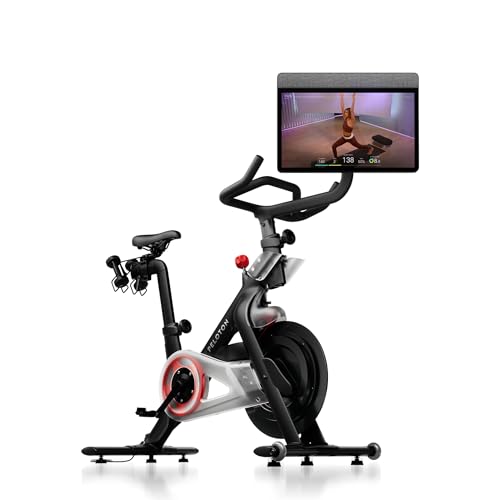
Peloton Exercise Bike with 21.5″ Screen
Strengths
- Large swivel touchscreen
- Extensive class library
- Strong community engagement
Trade-offs
- Expensive upfront cost
- Limited app flexibility
- Heavy and hard to move
The Peloton Bike remains the gold standard in smart exercise bikes, and for good reason. On paper, it’s built like a studio-class machine: a 21.5″ HD swivel touchscreen, Bluetooth connectivity, front-facing speakers, and access to a massive library of live and on-demand classes across multiple disciplines. The ecosystem is where it truly pulls ahead, owners consistently report that the All-Access Membership turns workouts into a habit, not a chore. The mix of instructor energy, community feel, and structured programming makes it hard to match.
That said, you’re paying for the brand and the experience, not just the hardware. The bike itself is solidly built, supports riders up to 297 lbs, and fits within a modest footprint, but moving it is a pain due to its weight. And while the screen is excellent, it’s locked into Peloton’s ecosystem, you can’t sideload apps or stream freely like on some competitors. If you want motivation baked into the machine, this is it. But if you’re looking for open flexibility, you might feel boxed in.
Video review
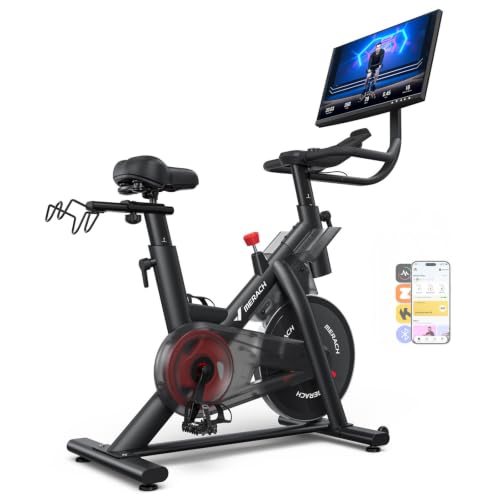
MERACH 21.5″ HD Display Exercise Bike
Strengths
- Large rotatable HD screen
- High weight capacity
- Automatic resistance sync
Trade-offs
- No Google phone support
- App content less polished
- Slightly bulkier frame
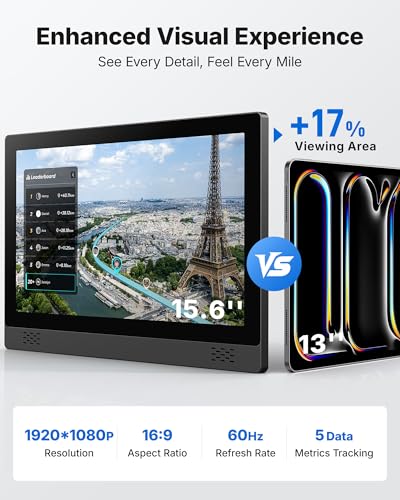
If you want Peloton-level screen real estate without the Peloton price tag, the MERACH 21.5” model is worth serious consideration. The rotatable 21.5” HD display is the standout feature, owners consistently highlight how the 180° swivel and tilt make it easy to find the perfect viewing angle, whether you’re doing high-intensity intervals or stretching post-ride. It mirrors smoothly from iOS and most Android devices (again, not Google phones), and pairs well with the Merach app, which offers structured training plans and scenic rides.
The dual-triangle frame boosts stability and supports up to 330 lbs, making it one of the sturdiest in its class. The magnetic resistance adjusts automatically in sync with app workouts, which is a premium touch most bikes at this price don’t offer. It’s also whisper-quiet, under 25 dB, so it won’t interrupt family life. While the app ecosystem isn’t as deep as Peloton’s, it’s more open and doesn’t force a single subscription. For a balance of size, silence, and smart features, this is my pick over the smaller MERACH model.
Video review
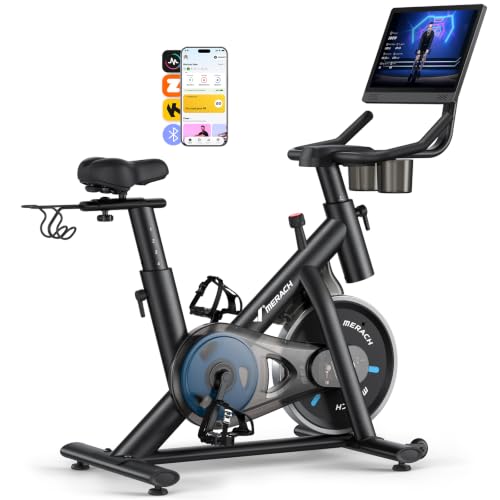
MERACH S26 15.6″ HD Exercise Bike
Strengths
- Affordable smart features
- Quiet magnetic resistance
- Good app compatibility
Trade-offs
- No Google phone support
- Smaller screen than top models
- Basic seat padding
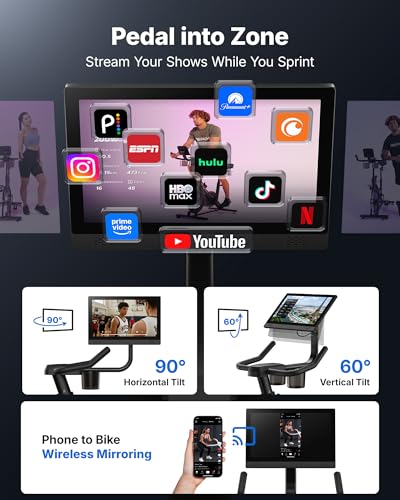
The Merach S26 is a standout in the mid-tier smart bike market, offering a surprising amount of tech for under $400. The 15.6” HD mirroring screen is a real win, letting you cast workouts or entertainment from your phone, owners love the flexibility, though it’s worth noting it doesn’t work with Google phones. The bike integrates well with Kinomap, Zwift, and Merach’s own app, making it a solid choice for riders who want variety without a monthly subscription locking them in.
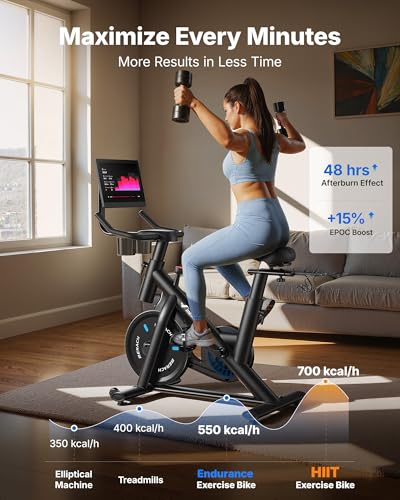
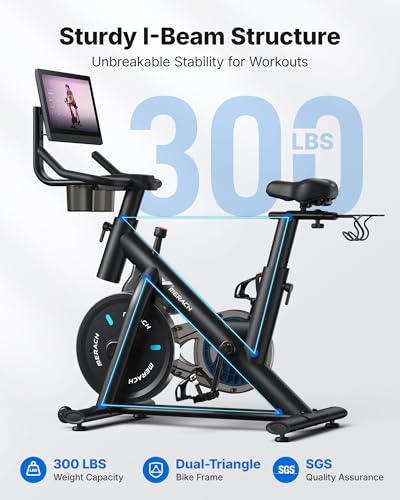
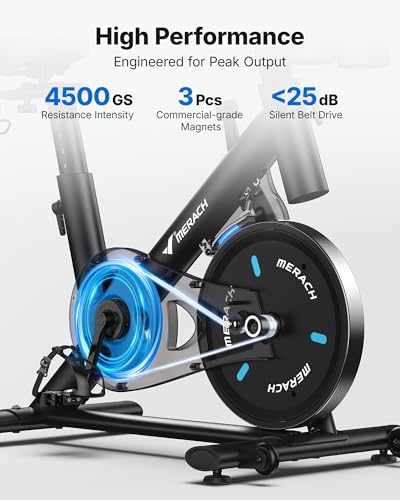
Build quality gets strong marks too. The inverted triangle frame with 2.00 mm steel delivers 40% more stability than typical home bikes, and the magnetic resistance is genuinely quiet, below 25 dB, so it won’t disturb others. At 300 lbs capacity and with 4-way seat adjustability, it fits a wide range of users comfortably. It’s not as polished as Peloton, but it’s far more accessible. I’d pick this over pricier models if you want smart features without the premium tax.
Product photos
SLUNSE Fitness App-Compatible Exercise Bike

Strengths
- High weight capacity
- Smooth belt drive
- Precise resistance control
Trade-offs
- No built-in screen
- Basic monitor display
- Assembly can be fiddly
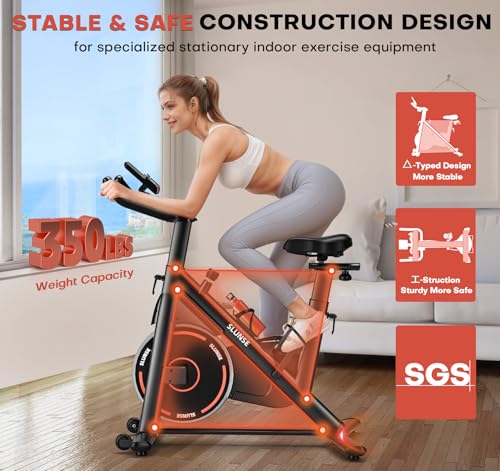
This SLUNSE FITNESS bike is a no-frills workhorse that punches above its price point. At under $200, it’s one of the most durable budget options available, with a 350 lb weight capacity and a thickened steel frame that resists wobble even during aggressive rides. The 35 lb flywheel is inertia-enhanced, which helps smooth out the pedal stroke in a way cheaper models simply can’t match.
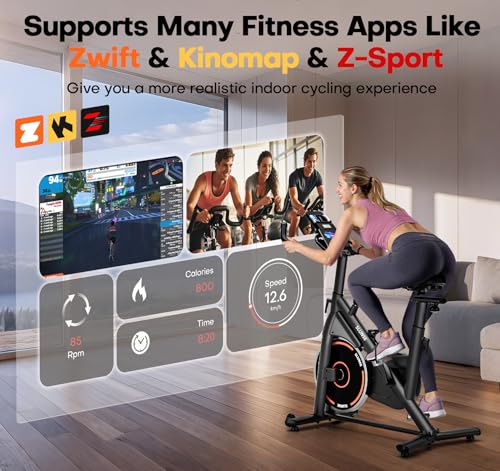
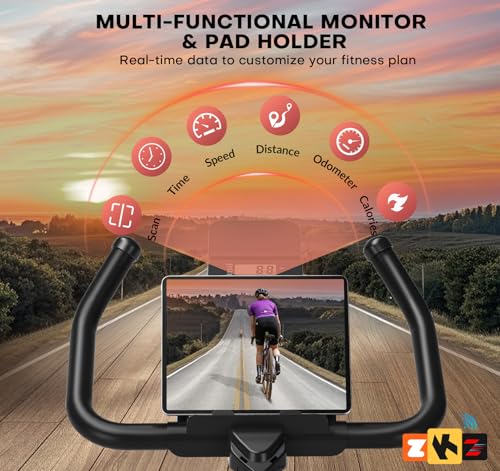
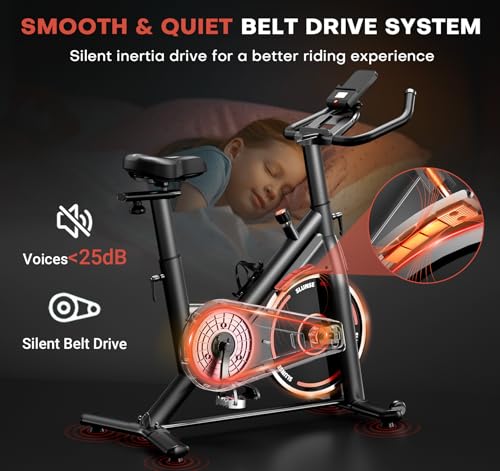
It lacks a built-in screen, but it does include a sturdy tablet mount and full app compatibility with Zwift and Kinomap, so you can still get an interactive experience using your own device. The 100-level micro-adjustment resistance knob is a rare feature at this price, giving fine-tuned control that benefits both beginners and serious riders. Owners praise how quiet it is, thanks to the belt drive and industrial bearings. It won’t wow you with flash, but it delivers where it counts: stability, silence, and adjustability. For pure function, this is hard to beat.
Product photos

Our Testing Process
Rather than a hands-on lab test, my research for these exercise bikes with a screen focused on a detailed comparison of published specifications and features. I weighed owner reviews from major retailers alongside expert opinions found in fitness publications and tech review sites. As someone who’s spent years understanding mechanical engineering and vehicle dynamics – principles that absolutely apply to cycling – I applied that knowledge to assess the quality of components and overall design. My goal was to rank these bikes against clear criteria for a well-rounded selection.
For this category, screen quality and app integration were paramount, followed closely by build stability. A larger, clearer screen enhances the immersive experience and makes following along with classes easier. Seamless app connectivity expands workout options and provides valuable data tracking. A shaky bike is a distraction and a safety hazard, so a strong frame was crucial. You’ll find many explore alternative options like stationary bikes if a screen isn’t a priority.
Specifications reliably indicate things like flywheel weight, resistance levels, and maximum user capacity. However, owner feedback proved invaluable for assessing real-world comfort, noise levels, and the long-term durability of components. Reputation matters; brands consistently praised for customer service and build quality received higher consideration. I also looked to see how these models stacked up against other options, including comfortable recumbent bikes which offer a different riding experience.
How To Choose The exercise bikes with screen
Finding the right exercise bike with a screen isn’t just about picking a pretty face; it’s about matching the machine to your fitness goals and lifestyle.
A good exercise bike with a screen balances connectivity features with a robust mechanical build. Key considerations include resistance type (magnetic is generally preferred for quiet operation and precise control), screen size and adjustability, data tracking capabilities, and the overall stability of the frame. Look for bikes supporting app integration and offering a comfortable, adjustable riding position to maximize your workout experience.
Screen Quality and Functionality
The screen is the centerpiece of these bikes, so don’t skimp. Resolution matters, but so does adjustability. A fixed screen quickly becomes frustrating if you have an unusual body type or prefer different workout positions. Beyond basic streaming, consider if the bike’s software integrates with the apps you use. Many bikes offer their own subscription services, but compatibility with platforms like Peloton (even without a Peloton bike) or other fitness apps can significantly expand your options. If you are also considering other types of bikes, you might want to check out our guide to the best stationary bikes for home.
Resistance and Ride Feel
Magnetic resistance is the gold standard for a reason. It’s quiet, durable, and allows for very precise adjustments. Flywheel weight is often touted, but it’s less crucial than the quality of the magnetic system. A heavier flywheel doesn’t automatically mean a better workout. What does matter is how the resistance changes throughout the range, and whether it simulates a realistic road cycling feel. You’ll also want to make sure the bike can accommodate your fitness level.
- Beginners will appreciate a wide range of resistance levels, allowing for gradual progression.
- Intermediate riders need enough resistance to simulate hills and challenging intervals.
- Serious cyclists will prioritize a bike capable of very high resistance and a realistic, responsive ride feel, potentially looking at commercial-grade models even for home use.
Build Quality and Ergonomics
Don’t underestimate the importance of a solid frame. A wobbly bike is a distracting and potentially unsafe bike. Look for bikes with a reinforced steel frame and a low center of gravity. Ergonomics are equally important. You’ll be spending a lot of time on this machine, so ensure the seat and handlebars are adjustable enough to fit your body comfortably. The SLUNSE and Merach models, for example, highlight their adjustability, which is a good sign. As a general rule:
A bike that feels stable and comfortable during a quick test ride (even in the store) is likely to be a good investment.
If you’re primarily interested in a more traditional cycling experience, you might also want to explore upright exercise bikes alongside these screen-equipped models.
Exercise Bikes with Screen Compared
Here’s a comparison of key specifications for exercise bikes that include a built-in screen to enhance your workout experience.
| Product Name | Screen Size | Resistance Levels | App Compatibility | Max User Weight (lbs) | Connectivity |
|---|---|---|---|---|---|
| Peloton Exercise Bike | 21.5″ | N/A | Peloton | 297 | Bluetooth 5.2 |
| Yesoul G1M Screen Bike | 21.5″ | 100 | YESOUL | N/A | N/A |
| MERACH 21.5″ HD Display Bike | 21.5″ | N/A | Merach, Google Fit, Apple Health | 330 | N/A |
| MERACH S26 15.6″ HD Bike | 15.6″ | N/A | Merach, Google Fit, Apple Health, Kinomap, Zwift | 300 | N/A |
| SLUNSE Fitness Bike | N/A | 100 | Zwift, Kinomap | 350 | N/A |
Frequently Asked Questions
What screen size is ideal for an exercise bike?
A 21.5-inch screen is a popular choice, offering a good balance between immersion and space requirements, but 15.6-inch screens are perfectly adequate and can be more affordable. Ultimately, the best size depends on your viewing preferences and workout space.
Are these bikes compatible with apps beyond the brand’s own platform?
Many models now offer broader compatibility; the Merach bikes, for example, work with Google Fit and Apple Health. However, check carefully for specific app support (like Zwift or Peloton) before purchasing, as compatibility varies significantly.
How important is flywheel weight, really?
While often emphasized, flywheel weight isn’t the defining factor in ride quality. A well-engineered magnetic resistance system provides a more realistic and adjustable experience than a heavy flywheel paired with a subpar resistance mechanism.
What should I look for in terms of build quality?
A steel frame is crucial for stability, and a higher maximum user weight capacity generally indicates a more robust build. Look for models with positive owner feedback regarding stability and lack of wobbling during intense workouts.
Are there good options if I want to avoid monthly subscription fees?
Yes, there are excellent exercise bikes without subscription available. These often rely on Bluetooth connectivity to pair with apps you already use, giving you flexibility and control over your costs.
The Bottom Line
Choosing an exercise bike with a screen often comes down to balancing how much you want to spend with how much control you want over your workout experience. If you’re serious about immersive fitness and don’t mind the subscription costs, the Peloton Exercise Bike remains a top pick, offering a refined ecosystem and proven performance.
For those seeking a blend of features and value, the MERACH 21.5″ HD Display Bike stands out. It provides excellent app compatibility with Google Fit and Apple Health, and a generous weight capacity. If space is a concern, exploring compact folding exercise bikes might be a viable alternative. But if you’re building a dedicated home gym exercise bikes setup, the MERACH offers a solid foundation.
Ultimately, the best exercise bike with a screen isn’t about chasing the highest specs; it’s about finding a machine that encourages consistent use. Prioritize a stable frame, comfortable ergonomics, and a screen you’ll actually enjoy looking at. Those fundamentals will matter far more than flywheel weight or fancy software features in the long run.
