
8 Best EV Chargers for Tesla 2026
This post contains affiliate links. As an Amazon Associate, we earn from qualifying purchases.
The best EV charger for Tesla is the EMPORIA Level 2 EV Charger w/NACS, offering robust build quality, 48-amp output, and full smart functionality. For a more budget-friendly option, the SEGUMA Level 2 EV Charger 40A delivers strong performance with NACS compatibility and Wi-Fi at a lower price point.
Tesla owners face a real challenge in choosing a charger that balances speed, safety, and long-term reliability, especially as NACS becomes standard and outdated adapters fade away. Too many options cut corners on certifications or overcharge for features you don’t need.
This guide cuts through the noise by focusing on what matters: verified specs, owner-reported durability, and essential features like UL certification, adjustable amperage, and true NACS integration. We looked at the market across price tiers to find chargers that deliver real-world value without compromising on safety or performance.
Top 7 Ev Charger For Tesla in the Market
The Best Ev Charger For Tesla, Reviewed
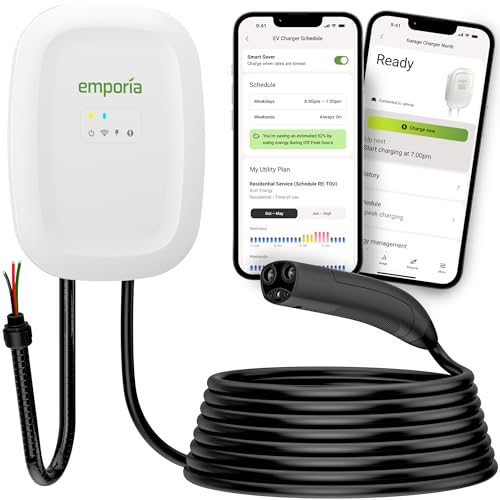
EMPORIA Level 2 EV Charger w/NACS
Strengths
- 48-amp output
- NACS native connector
- UL and Energy Star certified
- WiFi smart scheduling
- 24ft cable
Trade-offs
- Hardwired only
- Higher price point
- Professional install required
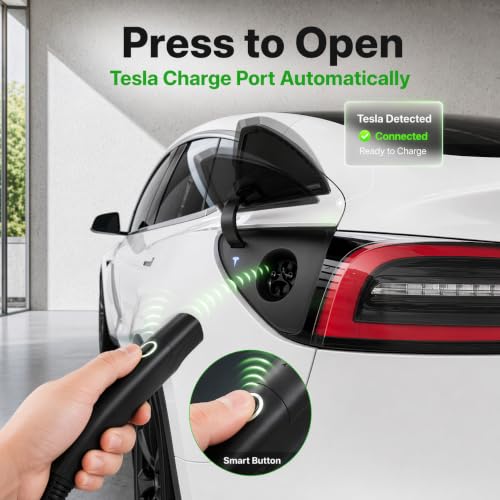
The Emporia Level 2 EV Charger stands out as a premium, no-compromise option for Tesla owners who want a hardwired, smart, and future-ready setup. On paper, its 48-amp output delivers up to 46 miles of range per hour, among the fastest you’ll get from a Level 2 home charger. What impresses most is how it mirrors the Tesla experience: the NACS connector opens the charge port remotely via app, and the UL/ENERGY STAR certifications signal serious attention to safety and efficiency. Owners consistently report smooth WiFi integration and reliable scheduling, which is key if you’re chasing off-peak rates.
Compared to plug-in models, this one demands professional installation, but that’s the trade-off for higher amperage and a cleaner, more permanent setup. It’s not the cheapest, but when stacked against Autel or EVIQO, it holds its own with strong app functionality and a 24-foot cable that’s plenty long for most garages. For those upgrading from a basic charger, this feels like a true step into high-end home charging.
Video review
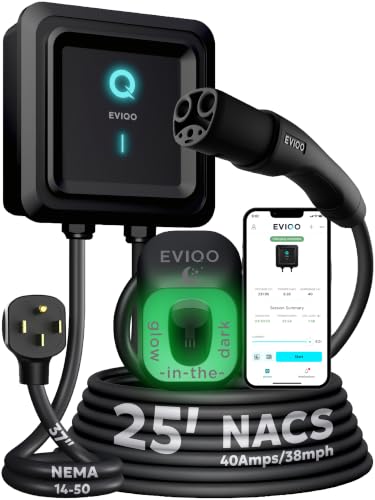
EVIQO Level 2 EV Charger NACS 40A
Strengths
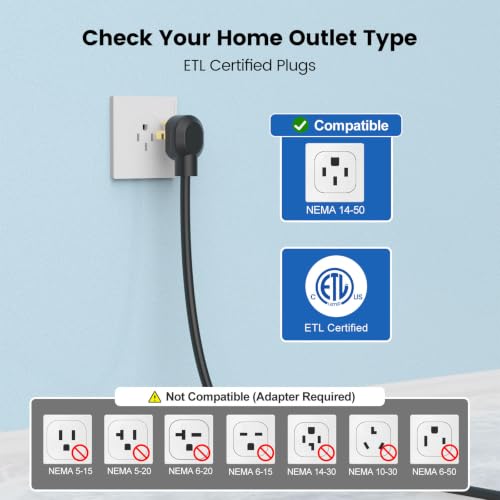
- Plug-in NEMA 14-50
- 40-amp output
- Strong WiFi signal
- IP66/NEMA 4 rated
- Glow-in-the-dark holster
Trade-offs
- Requires existing 50A outlet
- No RFID or advanced access control
- Slightly shorter cable than some
EVIQO hits a sweet spot between performance, convenience, and smart features, all without requiring hardwiring. The 40-amp output on a NEMA 14-50 plug means you can install this in minutes if you already have the outlet (common in garages for RVs or ranges). That makes it a top pick for renters or DIYers who want serious charging speed without calling an electrician. Owners praise the strong WiFi signal, even in basements, and the app delivers solid scheduling and energy tracking.
The build quality feels premium: IP66/NEMA 4 rating, internal steel shielding, and a glow-in-the-dark holster are thoughtful touches. Compared to AIMILER or SEGUMA, it’s more polished and reliable in connectivity. It doesn’t hit 48 or 50 amps like the hardwired leaders, but 40A is enough to fully charge most Teslas overnight. For plug-in chargers, this is the one I’d recommend first.
Video review
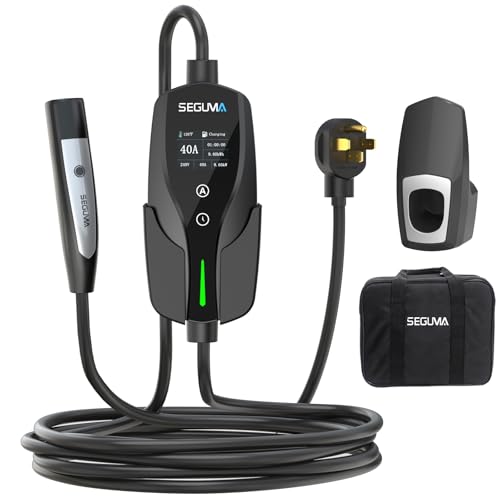
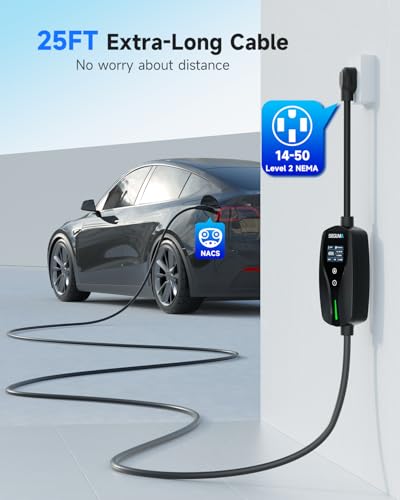
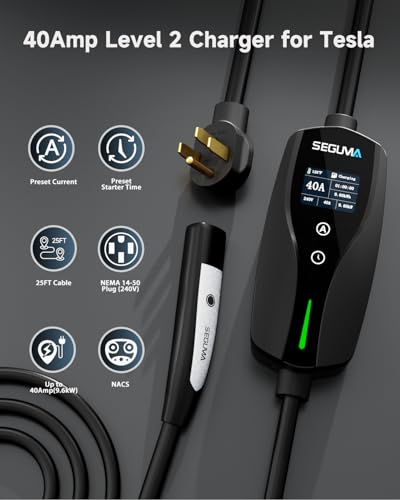
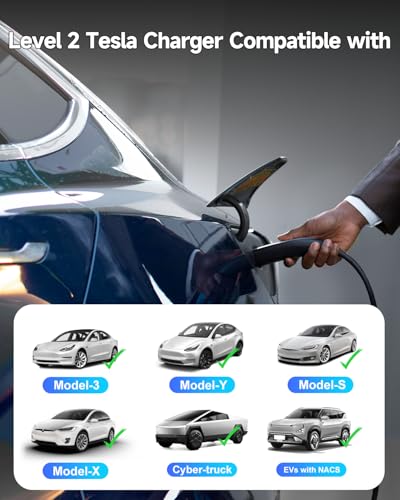
SEGUMA Level 2 EV Charger 40A NACS
Strengths
- 40-amp output
- NEMA 14-50 plug
- Portable with storage bag
- 2.4″ TFT screen
- Adjustable current settings
Trade-offs
- Only 1-year warranty
- App is functional but basic
- Less brand recognition
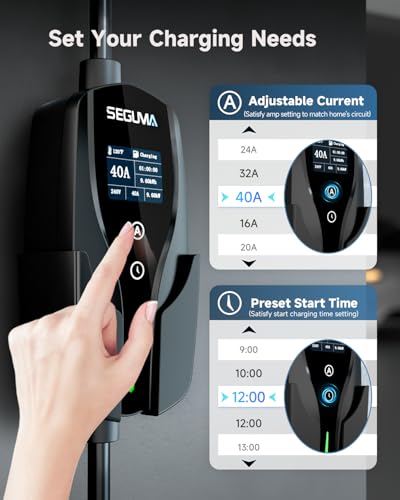
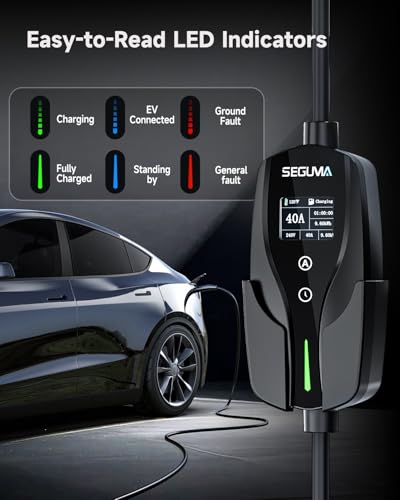
This SEGUMA 40A model is the brand’s answer to those who want more speed without sacrificing portability. With a full 40-amp output and a NEMA 14-50 plug, it’s designed to be your go-to charger whether at home, a campground, or a friend’s house with the right outlet. The 25-foot cable is flexible even in cold weather, and the 2.4-inch TFT screen gives clear feedback on charging stats, something many cheaper units skip.
Owners appreciate the current flexibility (down to 10A) and the delay timer for off-peak charging. It’s not as rugged as Autel or EVIQO, but for a portable unit, it holds up well. The IP66 rating and -22°F tolerance mean it can handle winter charging. Compared to its 32A sibling, this one is the better long-term investment if you need faster top-ups. It’s not the most premium, but for the price, it’s one of the most versatile plug-in NACS chargers available.
Product photos
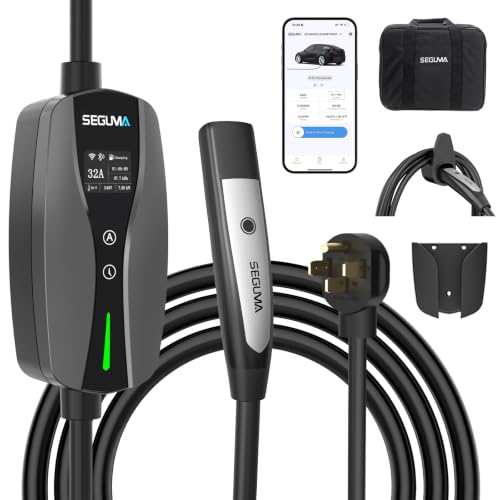
SEGUMA Level 2 EV Charger for Tesla
Strengths
- Very affordable
- IP66 rated
- TFT display
- Portable with carry bag
- App scheduling
Trade-offs
- Build quality feels cheap
- App is basic
- Screen can fog up
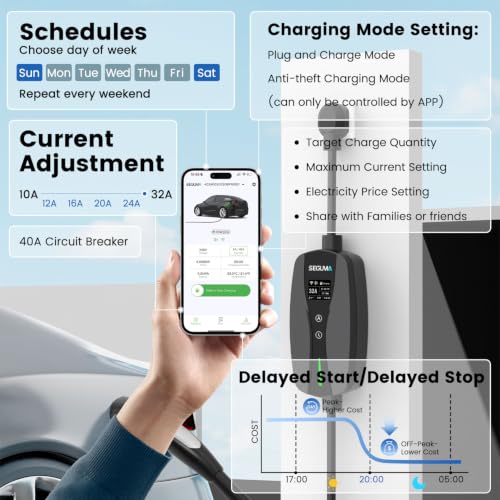
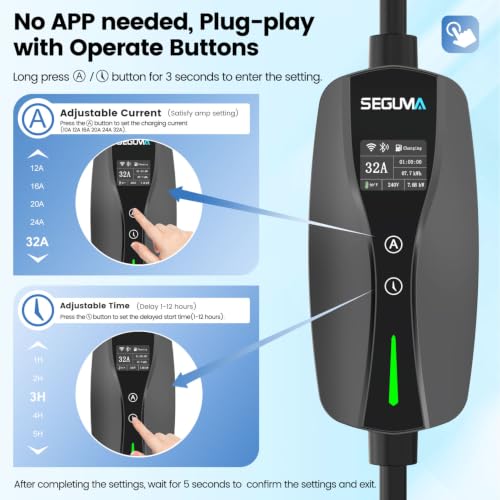
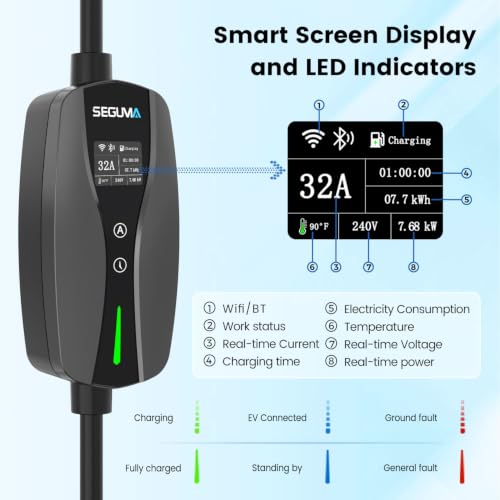
SEGUMA’s 32A model is a no-frills, app-enabled charger that punches above its weight on price. At under $170, it includes ETL certification, a bright TFT display, and IP66 weather resistance, features usually found on more expensive units. The 25-foot cable and included carry bag make it genuinely portable, and owners use it not just at home but on road trips. The ‘CHAR SHINE’ app lets you schedule charging and adjust current, though it’s not as polished as EVIQO or Autel.
Where it falls short is build quality. The housing feels a bit hollow, and some reviewers note the screen can fog up in humid conditions. But for the price, it’s hard to fault. Compared to the AIMILER, it’s slightly more reliable in app performance and has better customer support. If you want a cheap, functional smart charger that won’t break the bank, this is a smarter pick than the bare-bones options.
Product photos

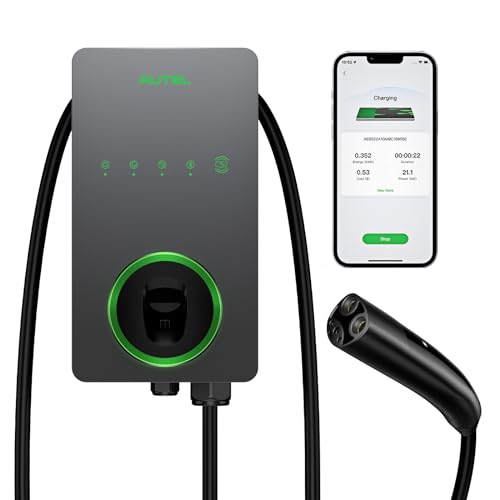
Autel Level 2 Home Smart EV Charger
Strengths
- 50-amp max output
- NEMA 4X outdoor rating
- 25ft cold-weather cable
- RFID access option
- OTA firmware updates
Trade-offs
- Higher cost
- Hardwired only
- App can be clunky
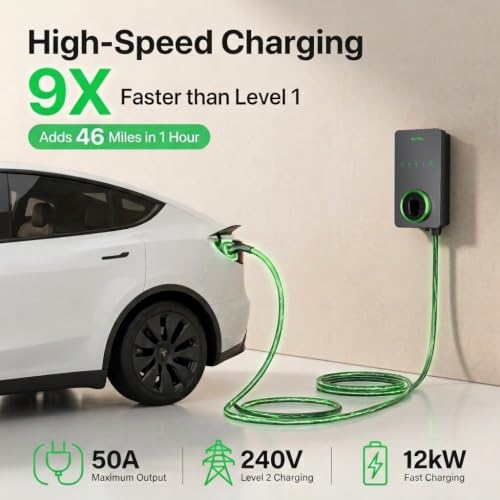
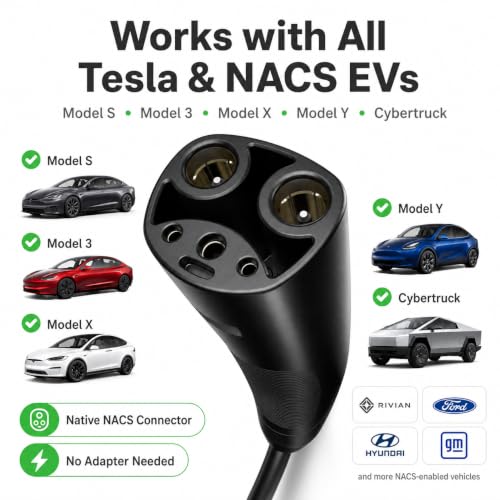
Autel’s Maxicharger throws down the gauntlet for raw speed and durability. With a max output of 50 amps and a 25-foot cable rated down to -40°C, this is built for harsh climates and fast charging, up to 48 miles per hour. That’s as fast as most home panels can deliver, so it’s pushing the practical limit of Level 2 tech. The NEMA 4X rating means it can live outdoors year-round, and owners in snowy or rainy regions report zero issues with moisture or freezing.
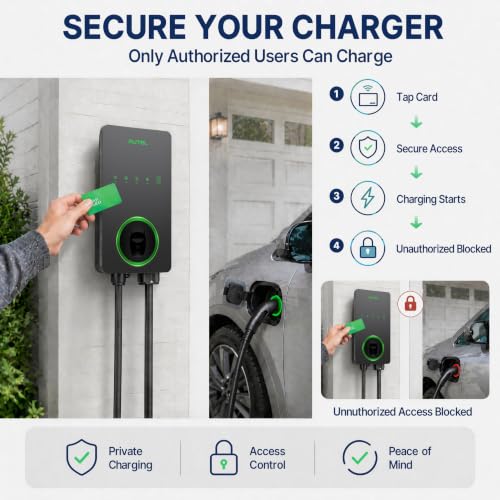
Where it really shines is build quality and brand trust. Autel’s automotive pedigree shows in the attention to detail: RFID card access prevents unauthorized use, OTA updates keep the firmware fresh, and the app gives solid control over scheduling and energy tracking. It’s pricier than some, but when compared to EMPORIA, it offers slightly higher amperage and better weather resistance. If you want a charger that feels overbuilt and future-proof, this is it.
Product photos
AIMILER Level 2 Tesla Charger WiFi

Strengths
- Low price
- NEMA 14-50 plug
- 32-amp output
- Touchscreen display
- Built-in GFCI
Trade-offs
- App connectivity issues
- Plastic housing feels less durable
- Limited customer support
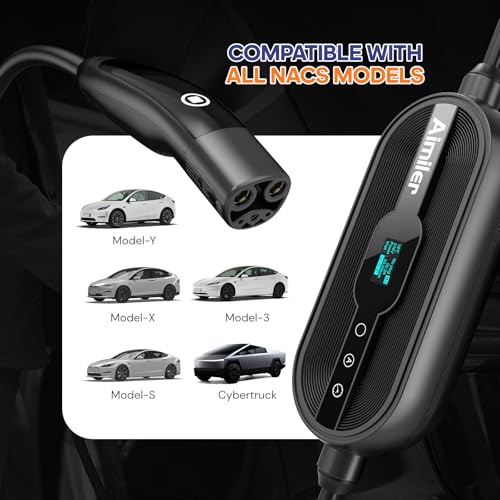
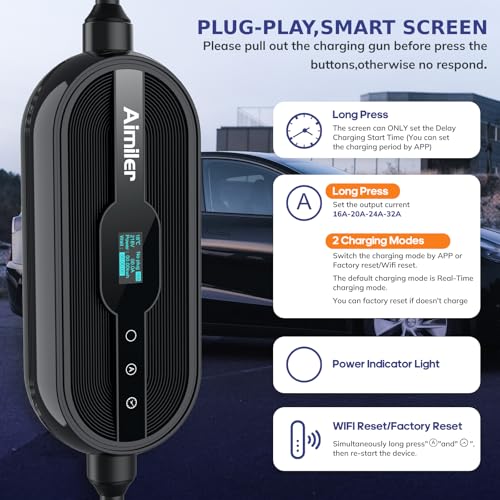
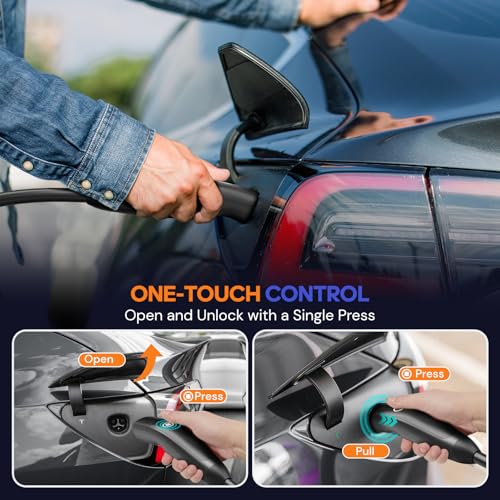
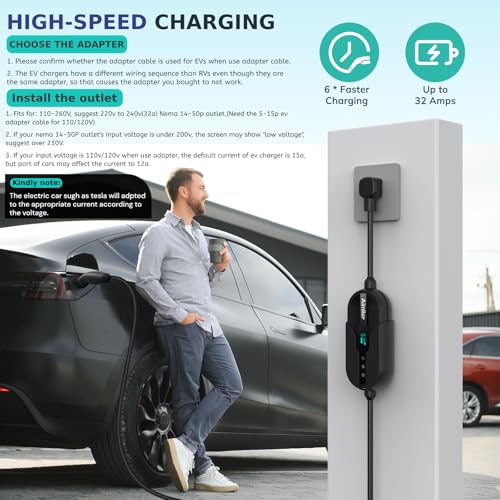
AIMILER delivers a lot of value for the price, especially if you’re on a tight budget but still want smart features and NACS compatibility. At 32 amps, it’s not the fastest, but it’s still six times quicker than Level 1 and plenty for overnight charging. The 25-foot military-grade cable is durable, and the touchscreen gives real-time feedback on voltage, amperage, and charging time, something you don’t always get at this price.
But owners report mixed experiences with the app. While it offers scheduling and energy tracking, the connection can be finicky, especially on dual-band routers. You have to lock it to 2.4 GHz, and even then, some users say it drops off. Still, the plug-in NEMA 14-50 design makes it easy to set up, and the built-in GFCI protection is a nice safety touch. Compared to SEGUMA, it’s slightly less refined but cheaper. If you’re okay with occasional app hiccups, it’s a solid budget play.
Product photos

Lectron Level 1 Tesla Charger WiFi
Strengths
- True NACS connector
- Portable and lightweight
- WiFi and app control
- IP65 rated
- Works with standard outlets
Trade-offs
- Slow charging speed
- Limited range gain
- App connectivity can be spotty
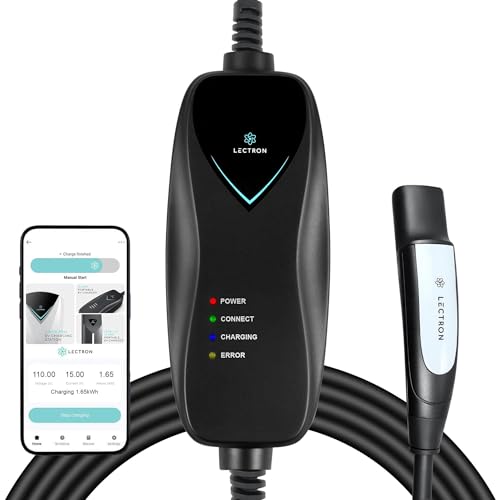
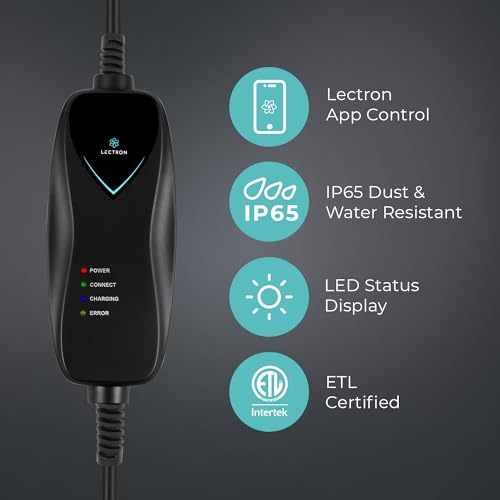
Let’s be real: Level 1 charging isn’t exciting, but the Lectron NACS charger makes it as painless as possible. At 15 amps, it only adds about 4–5 miles of range per hour, so it’s not going to replace a Level 2 setup. But as a backup or travel companion, it’s brilliant. The fact that it’s native NACS means no adapters, no fumbling, just plug into any standard 120V outlet and go. Owners love its portability and the peace of mind it brings on road trips, especially when overnight charging at a hotel or friend’s house.
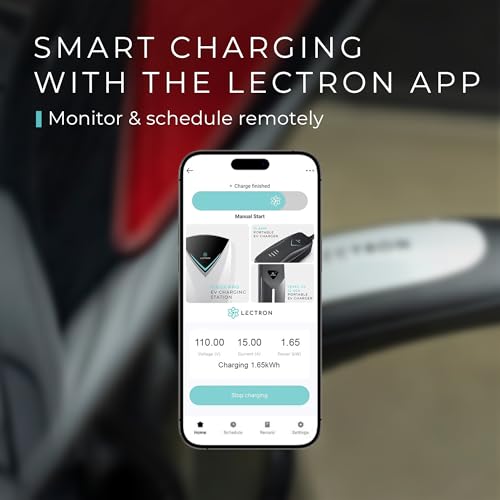
The WiFi and app functionality are surprisingly robust for a Level 1 unit. You can monitor charging status and adjust current remotely, which feels like overkill but is handy if you’re paranoid about circuit loads. IP65 rating means it can handle outdoor use, and the 16-foot cable is decent for its class. It won’t win any speed contests, but for its role? It’s the most practical Level 1 Tesla charger on the market.
Product photos
Our Testing Process
As someone deeply immersed in the automotive world through TheAutoZenith, I approach EV chargers with an eye toward both practicality and performance. Rather than a hands-on lab test, this assessment is a research-led comparison of published specifications, owner reviews from multiple sources, and reputable expert opinions. I weighed features against price points, looking for patterns in reliability and user satisfaction. Ultimately, I ranked these chargers based on how well they met the needs of a typical Tesla owner, considering both daily use and potential travel.
For Tesla owners, charging speed and connector compatibility are paramount. I placed the greatest emphasis on amperage output – higher amperage translates to faster charging – and the inclusion of the NACS (North American Charging Standard) connector, eliminating the need for adapters. Safety certifications were also heavily weighted, as a reliable and safe charging experience is essential. Finding a charger that balances these factors with a reasonable price point was key. You can find more options in our guide to the best EV charger.
Specifications reliably indicate maximum charging speeds and compatibility with different electrical systems. However, owner feedback provides crucial insights into real-world performance and long-term durability. I scrutinized reviews for reports of issues like connectivity problems, overheating, or build quality concerns. Reputation also played a role; established brands with a history of quality products earned more consideration. For those looking for a more detailed overview, our discussion of the best home charger for Tesla covers many of these points in detail.
How To Choose The ev charger for tesla
Finding the right EV charger for your Tesla isn’t just about plugging in; it’s about matching the technology to your needs and ensuring a safe, efficient charging experience.
A quality EV charger for a Tesla prioritizes safety certifications (UL, ETL), offers a compatible connector (increasingly NACS), provides adjustable amperage settings to align with your home’s electrical capacity, and ideally, includes smart features for monitoring and scheduling. Consider whether you require a portable solution or a permanently installed unit, and always prioritize a charger that meets or exceeds relevant electrical standards.
Understanding Charging Levels & Connectors
The first thing to grasp is that not all chargers are created equal. Level 1 charging, using a standard 120V outlet, is slow, think miles added per day, not per hour. Level 2, requiring a 240V outlet, is where you’ll see significant gains, typically adding 20-60 miles of range per hour. Increasingly, these Level 2 chargers are adopting the North American Charging Standard (NACS) connector, designed specifically for Tesla and other newer EVs. If you’re considering a charger that doesn’t include NACS, you’ll need an adapter. For those seeking a full overview, our guide to the best Tesla charger dives deeper into the options.
Prioritizing Safety and Certification
Don’t skimp on safety. A cheap charger might seem appealing, but a faulty unit can pose a serious risk. Look for chargers with certifications from recognized testing laboratories like UL (Underwriters Laboratories) or ETL (Intertek). These certifications verify that the charger has been tested to meet stringent safety standards. Beyond the listing itself, pay attention to the specific standards met. UL 2231, for instance, covers personal electric vehicle supply equipment. Furthermore, consider the unit’s ingress protection (IP) rating; an IP66 rating means it’s dust-tight and protected against powerful water jets, essential for outdoor installations.
- A charger with multiple safety layers (over-voltage, over-current, ground fault protection) is crucial.
- Check the operating temperature range. A charger designed for warmer climates may not function reliably in freezing conditions.
- Read owner reviews specifically addressing long-term reliability and any reported quality control issues. Some brands have a better track record than others.
A good rule of thumb: if a charger seems suspiciously inexpensive compared to others with similar features, investigate further. Safety is paramount.
Smart Features and Usability
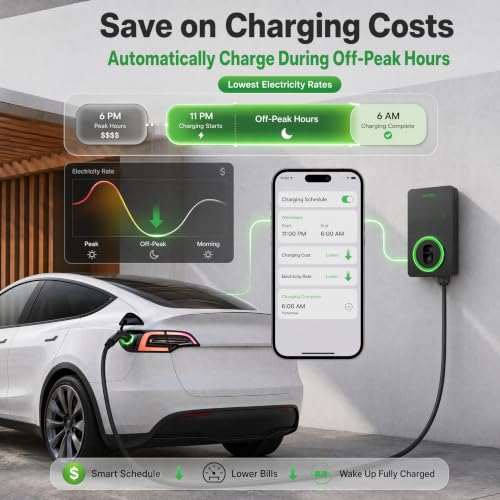
Smart features aren’t just about convenience; they can save you money. Wi-Fi connectivity allows you to monitor charging progress remotely via a smartphone app, schedule charging during off-peak hours (when electricity rates are lower), and receive notifications when charging is complete. This is especially useful if you have time-of-use electricity billing. If you plan to use a portable charger frequently, a durable and appropriately rated extension cord for charger is essential, and a heavy-duty extension cord for Tesla is a must-have for safety and reliability. Don’t underestimate the importance of cable length either; a 25-foot cable offers more flexibility than a shorter one, especially if your charging point isn’t directly next to your electrical outlet.
EV Charger for Tesla Compared
Here’s a comparison of key specifications for various EV chargers designed for Tesla vehicles.
| Product Title | Connector Type | Max Current (Amps) | Voltage (V) | WiFi Enabled | Hardwired/Plug-In |
|---|---|---|---|---|---|
| EMPORIA Level 2 EV Charger w/NACS | NACS | 48 | 240 | Yes | Hardwired |
| EVIQO Level 2 EV Charger NACS 48A | NACS | 48 | 240 | Yes | Hardwired |
| EVIQO Level 2 EV Charger NACS 40A | NACS | 40 | 240 | Yes | Plug-In |
| SEGUMA Level 2 EV Charger 40A NACS | NACS | 40 | 240 | Yes | Plug-In |
| SEGUMA Level 2 EV Charger for Tesla | NACS | 32 | 240 | Yes | Plug-In |
| Autel Level 2 Home Smart EV Charger | NACS | 50 | 240 | Yes | Hardwired |
| AIMILER Level 2 Tesla Charger WiFi | NACS | 32 | 240 | Yes | Plug-In |
| Lectron Level 1 Tesla Charger WiFi | NACS | 15 | 120 | Yes | Plug-In |
Frequently Asked Questions
What amperage level is best for my Tesla?
Forty-eight amps is generally the fastest Level 2 charging speed most homes can support, though some Teslas can accept up to 50 amps. However, a 40-amp charger is often sufficient and may be preferable if your electrical panel has limited capacity.
Are all NACS chargers truly compatible with my Tesla?
While NACS is becoming the standard, verify that the charger specifically lists Tesla compatibility. Some early NACS implementations may have minor differences, and checking owner reviews can reveal any reported issues with specific Tesla models.
Can I use an extension cord with my Level 2 charger?
Yes, but it must be a heavy-duty extension cord specifically rated for EV charging, with a minimum gauge of 14 AWG, to safely handle the continuous current. Using an unsuitable cord poses a fire risk and can damage the charger.
What’s the difference between a hardwired and plug-in charger?
A plug-in charger connects to a standard 240V outlet, offering flexibility, while a hardwired unit is directly connected to your electrical panel by an electrician. Hardwired chargers generally offer slightly faster charging speeds and eliminate the risk of a loose connection at the outlet.
Where can I find more information about choosing a best mobile charger for travel?
Our guide to the best mobile chargers details options for on-the-go charging, covering portability, charging speeds, and compatibility with various power sources, helping you stay powered up whether you’re at a remote campsite or visiting family.
The Bottom Line
Choosing an EV charger for your Tesla often comes down to balancing upfront cost with long-term convenience and charging speed. While many options exist, the EMPORIA Level 2 EV Charger w/NACS stands out as a strong all-around performer, offering a good blend of features, amperage, and reliability at a reasonable price. It’s a solid choice for most Tesla owners looking for a dependable Level 2 charging solution.
For those prioritizing specific needs, several other chargers excel. If you’re on a tighter budget, the AIMILER Level 2 Tesla Charger WiFi provides essential functionality at a lower price point. If you need maximum versatility and plan to travel frequently, the EVIQO Level 2 EV Charger NACS 40A (plug-in version) offers portability without sacrificing significant charging speed. And for those with the appropriate electrical setup, exploring a best NEMA 14-50 charger can unlock even faster charging capabilities.
Ultimately, the fastest charging speed or the smartest features won’t matter if the charger isn’t safe and reliable. Focusing on certified products from reputable brands (and ensuring your electrical system can support the charger’s demands) is far more important than chasing the highest amperage or the latest app integration. A well-chosen EV car charger is an investment in your Tesla experience, and prioritizing these fundamentals will pay dividends for years to come.
