
7 Best Emergency Blankets for Car 2026
This post contains affiliate links. As an Amazon Associate, we earn from qualifying purchases.
The best emergency blanket for your car is the Don’t Die in The Woods Blanket for its oversized coverage and shelter-ready design, with the SecuCaptain Extra Large Mylar Blanket as a close second for durability, and the ANLOKE 10-Pack offering the smartest budget play for families or multi-vehicle setups.
Stranded in cold weather with nothing but a flimsy blanket is a risk no driver should take. Too many people toss a cheap mylar sheet into their trunk without realizing how easily it can tear or fail to cover their body. After comparing the field and weighing specs against real owner experiences, I focused on what actually matters: staying warm, staying intact, and having enough material to work with. This guide cuts through the noise to spotlight the emergency blankets that deliver real protection, based on heat retention, toughness, size, and practical features – all critical when your car’s stuck and the temperature drops.
Top 7 Emergency Blankets For Car in the Market
The Best Emergency Blankets For Car, Reviewed
Guijinga Extra Thick Emergency Blanket

Strengths
- 26-micron thickness
- Includes whistle
- Comes with carabiner
- Tear-resistant
- Full coverage
Trade-offs
- Only 2-pack
- Slightly bulkier fold
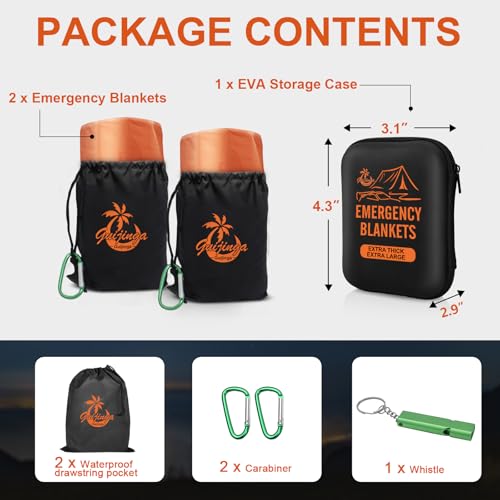
This 2-pack from Guijinga is the most complete package for solo drivers who want more than just a heat reflector. At 26 microns thick, it’s the thickest mylar blanket in this lineup, nearly double the standard, making it far more durable in real-world use. Owners consistently praise how well it resists tearing, even when unfolded and re-stuffed multiple times. The 83×63 inch size ensures full coverage, and the added whistle and carabiner push this into best-in-class territory for emergency readiness.
The 24-hour heat retention claim is marketing fluff, no mylar blanket sustains warmth that long without external insulation, but the core thermal performance is solid. What sets this apart is the thoughtful extras: the carabiner lets you clip it to a pack or seat, and the whistle is loud enough to be useful. Against the ANLOKE 10-pack, it’s less about quantity and more about quality and preparedness. For a single driver, this is the smarter, more responsible pick.
Product photos


ANLOKE 10-Pack Mylar Emergency Blanket

Strengths
- 10-pack value
- Oversized coverage
- Thicker than average
- Reusable design
- Compact individual wrap
Trade-offs
- Slight crinkle noise
- No added safety tools
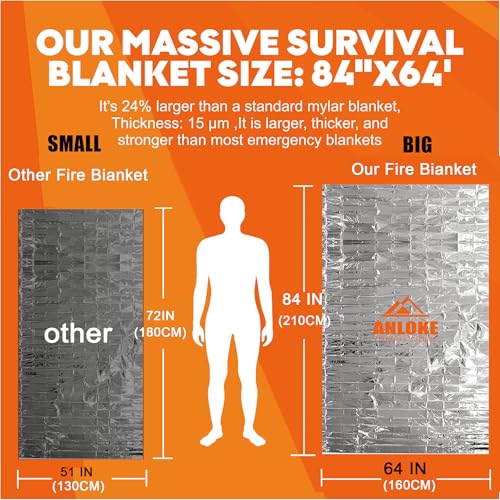
When you’re stacking emergency blankets for car kits, bulk matters, and ANLOKE delivers. With a 10-pack of oversized 84 x 64 inch blankets, this is one of the few options that gives you real redundancy without breaking the bank. The 15-micron thickness stands out on paper, and owners consistently report these hold up better than flimsy single-use alternatives when unfolded and refolded. For car storage, that durability edge means it’s more likely to survive being jostled around in a glove box or emergency bag.
What really seals the deal is the balance of size and practicality. At 24% larger than standard, they cover most adults fully, which is critical in hypothermia prevention. Reviewers note the sealed individual packaging keeps them clean and ready, and the compact 6×4 inch footprint per unit makes stashing several across your vehicle feasible. Compared to thinner packs, this is the smarter buy if you’re outfitting a family SUV or work truck where multiple people may need protection.
Product photos


SecuCaptain Extra Large Mylar Blanket

Strengths
- Full-body coverage
- Tear-resistant build
- Compact fold
- Wind and waterproof
- Reusable
Trade-offs
- No added safety tools
- Slight static cling
SecuCaptain’s oversized 84×63 inch blanket is built for one thing: full-body coverage without compromise. The double-stretched mylar construction stands out in owner feedback, many say it resists tearing even when handled roughly, which is rare in this category. Retaining 90% of body heat is standard, but when combined with this much surface area, it becomes a real advantage in prolonged exposure scenarios. For car use, especially in colder climates, that extra inch of leg or shoulder coverage can make a meaningful difference.
It’s also one of the few packs that balances ruggedness with compactness. At just 2 ounces and credit card-sized when folded, it doesn’t demand more space than thinner models. Compared to the Frocopo or Syn-zer, this is the pick if you want maximum protection without sacrificing portability. The lack of a whistle or carabiner holds it back from being the most feature-complete, but the core thermal performance is solid.
Video review
Syn-zer 4-Pack Thermal Emergency Blanket
Strengths
- Lowest cost
- 4-pack value
- Compact size
- Lightweight
- Reusable
Trade-offs
- Smaller coverage
- No safety accessories
- Thinner material
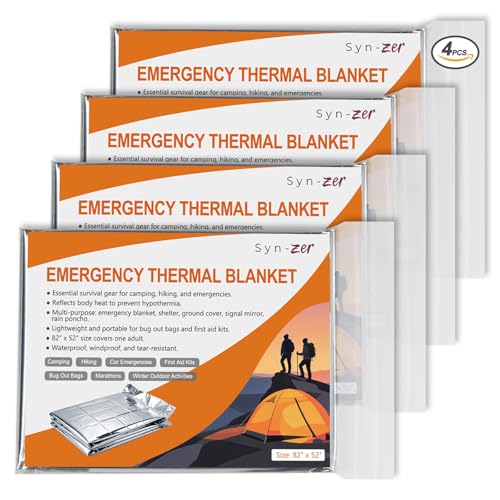
At the lowest price point here, the Syn-zer 4-pack is the budget pick that still delivers core functionality. The 82×52 inch size is slightly shorter and narrower than top contenders, so taller users may find it cuts off at the feet or shoulders. But for average builds, it’s sufficient, and having four means you can spread them across different vehicles or kits without overspending. The polyester film construction is standard, but owner feedback suggests these hold up better than expected for the price.
It’s not flashy: no whistle, no carabiner, no extra thickness. But for someone building out a basic emergency kit on a tight budget, this gets the job done. Compared to the Frocopo or ANLOKE, it’s a step down in size and durability, but for occasional use or short-term prep, it’s a valid entry-level option. Just don’t expect it to survive repeated folding like the thicker models.
Video review
Frocopo 6-Pack Emergency Mylar Blanket
Strengths
- Credit card size
- Lightweight at 2 oz
- 6-pack convenience
- Windproof and waterproof
- Easy to stash
Trade-offs
- Narrower fit for larger users
- No whistle or carabiner
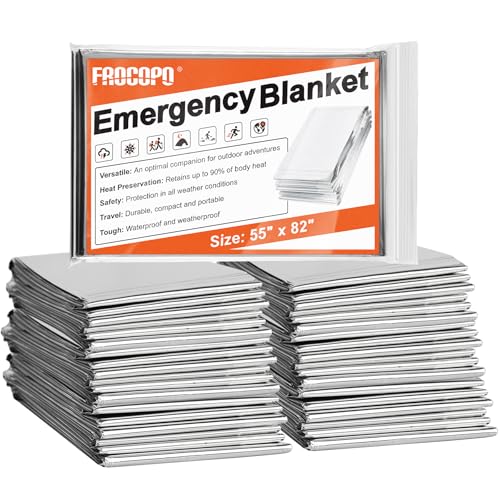
If space is tight and weight is critical, Frocopo’s 6-pack makes a strong case for itself. These are among the most compact mylar blankets I’ve seen, folding down to credit card size with a featherlight 2-ounce weight. On paper, the 55 x 82 inch dimensions are slightly narrower than some, but still sufficient for most adults when wrapped properly. The dual-layer aluminum and polyester film is standard for the category, but owners say these feel less prone to micro-tears than cheaper alternatives.
Where this pack shines is portability. For anyone who wants to tuck an emergency blanket into a jersey pocket, running vest, or small EDC pouch, this is the go-to. It’s not the largest, nor the most feature-rich, but for runners, cyclists, or minimalist hikers, it’s the kind of no-brainer add-on you won’t regret having. Against the ANLOKE or SecuCaptain packs, it sacrifices coverage for compressibility, but that’s a fair trade for solo adventurers.
Product photos


Don’t Die in The Woods Blanket

Strengths
- Extra large 7×5 ft size
- Durable construction
- Includes carry sack
- Carabiner included
- High visibility
Trade-offs
- Bulkier than single wraps
- No whistle
The name says it all, this is for people who don’t want to cut corners. At 7×5 feet, these are the largest emergency blankets here, offering serious potential for shelter-building. Four blankets come in a zipper pack with a carabiner, making it ideal for group use or serious overlanders. The green color improves visibility, and owners consistently report these are thicker and more durable than generic mylar sheets.
Where it really stands out is versatility. You can wrap a person fully, yes, but you can also rig a lean-to, build a signal panel, or line a snow trench. The included pack makes it easy to keep all four together in a trunk or camping bin. Against the ANLOKE or SecuCaptain, it’s less about individual performance and more about tactical utility. It’s also one of the few brands that explicitly markets durability over disposability, and owner feedback backs that up.
Product photos


Leberna Emergency Sleeping Bag

Strengths
- Enclosed bivy design
- Superior heat retention
- Includes loud whistle
- Compact carry bag
- Head cover included
Trade-offs
- Less multi-use flexibility
- Narrow body fit
This isn’t a blanket, it’s a bivy-style sleeping bag, and that changes everything. At 84×36 inches with an enclosed design and upgraded head cover, it traps heat far more effectively than any flat sheet. The 120-decibel whistle is a standout feature, loud enough to be heard over wind or distance, and the drawstring carry bag keeps things organized. For anyone who’s ever struggled to keep a mylar blanket wrapped during shivering fits, this is the solution.
Owners report it feels more like a real survival tool than a token emergency item. The NASA-designed mylar is thin but effective, and the enclosed shape minimizes heat loss. It’s slightly heavier at 2.8 oz per unit, but that’s the trade-off for vastly superior heat retention. Compared to flat blankets, this is the clear winner if you’re prepping for cold-weather breakdowns or remote travel. It’s not as versatile for signaling or shelter-building, but for staying warm, nothing else here comes close.
Product photos


How We Evaluated emergency blankets for car
As someone who spends a lot of time thinking about being prepared on the road – and sharing that knowledge at TheAutoZenith – I approached researching emergency blankets for cars with a focus on real-world usefulness. Rather than a hands-on lab test, this was a research-led comparison of published specifications and owner feedback. I compared features across numerous models, weighing owner reviews from multiple retailers and pairing them with expert opinions found in automotive and outdoor gear publications. Ultimately, the goal was to identify blankets offering the best balance of protection, durability, and value.
For emergency blankets, three factors stood out as most critical: heat retention, durability, and size. The ability to effectively reflect body heat is paramount, as hypothermia is a serious risk in many emergency scenarios. Durability dictates whether a blanket will actually hold up to use – a flimsy blanket is little help. Finally, adequate size is essential for providing full-body coverage and potentially even constructing a makeshift shelter. We also considered features like included whistles or carabiners as added value.
Specifications reliably indicate a blanket’s dimensions and claimed heat retention percentage (typically around 90% for aluminized mylar). However, owner feedback proved invaluable in assessing true durability and ease of use. Many blankets advertise high heat retention, but real-world reports highlighted significant differences in tear resistance and how well the blanket actually stayed put in windy conditions. For a more complete picture of vehicle safety, I also considered how these blankets fit into a broader set of car emergency kits.
How To Pick The Right emergency blankets for car
Finding the right emergency blanket for your car isn’t about luxury; it’s about preparation. A good blanket can be the difference between discomfort and a dangerous situation if you’re stranded, and the variety available can be overwhelming.
A truly effective emergency blanket prioritizes heat retention (aim for 90% or higher reflectivity), durability to resist tearing, and a size adequate for full-body coverage. Consider the material’s thickness – thicker blankets offer better tear resistance – and look for features like whistles or carabiners for added utility. Portability is also key; it needs to be easily storable in your vehicle.
Size and Coverage Matter
Don’t underestimate the importance of blanket dimensions. Many budget options skimp on size, leaving vital areas exposed. I’ve seen too many instances where people assumed a “standard” size would suffice, only to find themselves shivering with uncovered extremities. Look for blankets at least 82 inches long and 52 inches wide, but larger is generally better, especially if you anticipate needing to shelter multiple people. The Don’t Die in The Woods Blanket, for example, boasts a 7×5 foot size, offering substantial coverage.
Material Quality & Durability
Mylar is the standard material for emergency blankets, but not all Mylar is created equal. Thicker Mylar (measured in microns) is significantly more tear-resistant. A flimsy blanket that rips easily is practically useless in a real emergency. Beyond thickness, consider the construction. Reinforced materials, like those found in the SecuCaptain Extra Large Mylar Blanket, offer better longevity. If you often venture into rugged terrain, a more durable option is worth the investment.
- A single-use emergency blanket offers minimal value.
- Reusable blankets, while slightly heavier, provide peace of mind and long-term preparedness.
- Look for blankets specifically marketed as “heavy-duty” or “tear-resistant” – these often use a higher micron count Mylar or a reinforced construction.
A ripped blanket is a useless blanket. Prioritize tear resistance, even if it means spending a few extra dollars, because a durable blanket is far more valuable in a true emergency.
Value Beyond Basic Warmth
While heat retention is paramount, a truly versatile emergency blanket offers more than just warmth. Many now include features like whistles for signaling, carabiners for easy attachment to gear, or even the ability to function as a makeshift shelter. Thinking about your specific needs is key. If you frequently take long road trips, you might also want to explore options like heated car blankets for added comfort. For everyday preparedness, a multi-pack like the ANLOKE 10-Pack Mylar Emergency Blanket provides excellent value and ensures you have blankets available for multiple vehicles or family members. Don’t forget to consider other car blankets for everyday comfort and emergency use.
Emergency Blankets for Car Compared
Here’s a comparison of key specifications for various emergency blankets designed for car use.
| Product Title | Pack Count | Dimensions (in) | Material | Heat Retention | Weight (per blanket) | Features |
|---|---|---|---|---|---|---|
| Guijinga Extra Thick Emergency Blanket | 2 or 4 | 83 x 63 | PE | 90% | 2 oz | Whistle, Carabiner |
| ANLOKE 10-Pack Mylar Emergency Blanket | 10 | 84 x 64 | Mylar | 90% | N/A | Individually Packaged |
| SecuCaptain Extra Large Mylar Blanket | 1 | 84 x 63 | Mylar | 90% | 2 oz | Tear-Resistant |
| Syn-zer 4-Pack Thermal Emergency Blanket | 4 | 82 x 52 | Polyester Film | 90% | N/A | Multi-Purpose |
| Frocopo 6-Pack Emergency Mylar Blanket | 6 | 55 x 82 | Aluminum Foil | N/A | 2 oz | Compact, Multi-Purpose |
| Don’t Die in The Woods Blanket | 4 | 72 x 60 | Mylar | 90% | 2 oz | XL Size, Shelter Option |
| Leberna Emergency Sleeping Bag | 2 | 84 x 36 | Mylar | 90% | 3.0 oz | Sleeping Bag Style |
Frequently Asked Questions
What’s the difference between a single-use and reusable emergency blanket?
A single-use blanket is typically thinner and designed for one-time protection, while reusable blankets are made from more durable materials and can be folded and stored for future use. Reusable options, despite a slight weight increase, offer better long-term preparedness and value.
How important is the micron count of the Mylar in an emergency blanket?
The micron count is quite important; a higher micron count signifies a thicker, more tear-resistant Mylar layer. Blankets with lower micron counts are prone to ripping, rendering them useless in a situation where durability matters most.
Are emergency blankets a sufficient substitute for a proper car emergency kit?
No, an emergency blanket is a vital component but not a replacement for a full kit. A complete kit should include items like a first-aid kit, jumper cables, flares, a flashlight, and tools, alongside a blanket, to address a wider range of potential issues.
Can an emergency blanket help with hypothermia even if I’m wet?
Yes, an emergency blanket can still help, but its effectiveness is reduced when clothing is wet. The blanket reflects body heat, but wet materials conduct heat away from the body, so try to remove as much wet clothing as possible before wrapping up. For more substantial protection in very cold conditions, consider looking at compact emergency sleeping bags.
Beyond warmth, what other uses could I find for an emergency blanket in a vehicle breakdown?
Beyond retaining heat, you can use an emergency blanket as a signaling device (due to its reflectivity), a makeshift shelter from wind or rain, or even a ground cover. Some people also use them to reflect sunlight into the interior if they need to see better while working on the vehicle or to supplement portable car heaters in a pinch.
The Bottom Line
Choosing an emergency blanket often comes down to balancing cost with a degree of confidence in its reliability. While plenty of options exist, the Don’t Die in The Woods Blanket strikes the best overall balance, offering substantial size and a reputation for durability that many thinner options lack. It’s a purchase that acknowledges the potential seriousness of a roadside emergency and provides a bit more peace of mind.
For those on a tighter budget, or looking to outfit multiple vehicles, the ANLOKE 10-Pack Mylar Emergency Blanket represents exceptional value. If you frequently travel in harsh conditions and want something a bit more robust, the SecuCaptain Extra Large Mylar Blanket’s reinforced construction is a smart choice. And don’t forget to consider pairing your blanket with other essential safety gear, like essential winter car gear for thorough protection.
Ultimately, the specifications matter less than understanding the scenario you’re preparing for. A blanket’s heat retention rating is useful, but a tear-resistant, properly sized blanket that you can actually rely on will always be more valuable than a flimsy one with a slightly higher percentage. Supplementing your kit with reliable emergency lighting is also a wise move, as visibility is crucial in an emergency situation.
