
7 Best Electric Tricycles of 2026
This post contains affiliate links. As an Amazon Associate, we earn from qualifying purchases.
The T300 Electric Tricycle stands out as the best overall, offering a strong balance of power, range, and stability. For those on a tighter budget, the NARRAK N6 delivers solid performance without breaking the bank, while the ESKUTE T300 MAX is our top pick for versatility with its high-capacity battery and folding design.
Buying an electric tricycle isn’t just about getting from point A to B, it’s about doing it with confidence, comfort, and less effort. Many riders struggle with balance on two wheels, and that’s where trikes shine, but not all are built equally.
This guide cuts through the noise by focusing on what actually matters: real-world stability, usable range, cargo potential, and long-term reliability, all based on specs, owner experiences, and the kind of practical insight I’ve developed through years of digging into vehicle dynamics at TheAutoZenith.
Top 7 Electric Tricycles in the Market
The Best Electric Tricycles, Reviewed
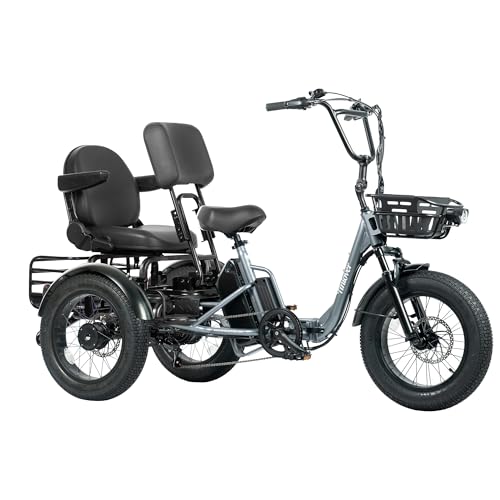
TINIOVER Creek Folding Electric Tricycle
Strengths
- Modular passenger/cargo design
- Long 100-mile range
- Hydraulic suspension and brakes
Trade-offs
- High price point
- Complex setup
- Large footprint
If you’re serious about versatility and long-term usability, the TINIOVER Creek stands apart, not just for its power and range, but for its modular DNA. With a 1000W motor, 90 N·m torque, and a 48V 15Ah LG battery rated for 100 miles, this trike is engineered for endurance and adaptability. Reviewers note the differential system and hydraulic suspension make turns feel stable and ride quality noticeably smoother over rough surfaces. The standout feature? Its ability to convert between passenger and cargo configurations. That kind of future-proofing is rare at any price.
The tech package is equally mature: color LCD display, five riding modes, reverse function, and triple hydraulic brakes offer a level of control most competitors can’t match. Yes, it costs more than double some other models, but owners who’ve used it for family outings, pet transport, or hauling gear say it justifies the cost. My recommendation: if you plan to use your trike heavily and want one vehicle that does multiple jobs well, this is the smarter buy.
Video review
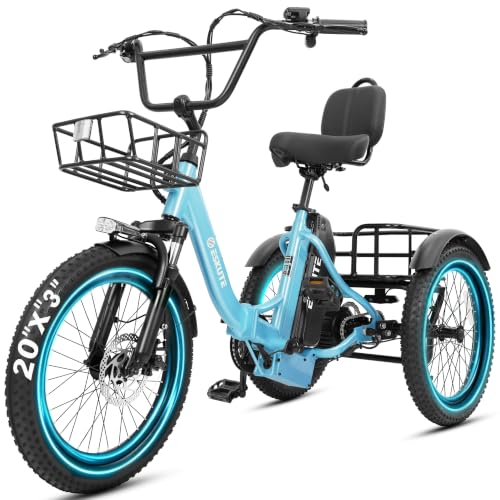
ESKUTE T300 MAX 20″ E-Trike
Strengths
- 80-mile max range
- One-touch reverse function
- Triple disc brakes
Trade-offs
- Throttle can be jerky
- Heavy when folded
- Expensive for entry-level
For sheer range, the ESKUTE T300 MAX leads the pack. Its 48V 20.8Ah UL 2849-certified battery promises up to 80 miles in pedal-assist mode, an outlier in this category, and owners confirm it significantly reduces charging stops on long outings. Paired with a 1200W peak motor and 5-layer suspension system, it handles bumpy roads and moderate inclines with less vibration than most. But the real standout is the one-touch intelligent reverse, a feature almost unheard of at this level. Getting out of tight garages or campsites becomes effortless.
It also folds, carries massive cargo, and supports 400 lbs, making it versatile for RV travelers or rural users. The triple disc brakes and LED lighting enhance safety, though some note the throttle response can feel abrupt at low speeds. Still, when comparing long-range performers, this one stands out. If you hate hunting for outlets and need a rugged, multi-role trike, this is my top pick over shorter-range rivals.
Video review
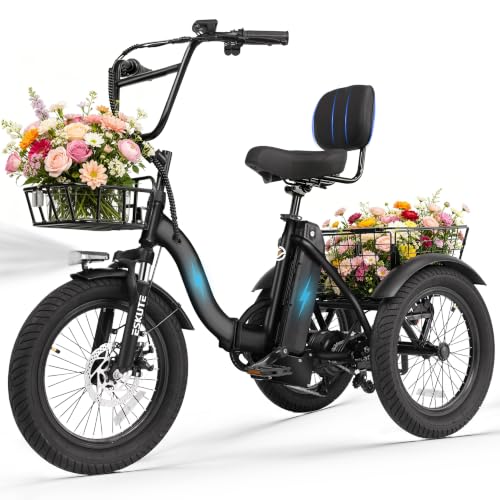
T300 Electric Tricycle for Adults
Strengths
- Solid range for price
- Foldable for storage
- Comfortable padded seat
Trade-offs
- Mechanical brakes
- Basic suspension
- Heavy steel frame
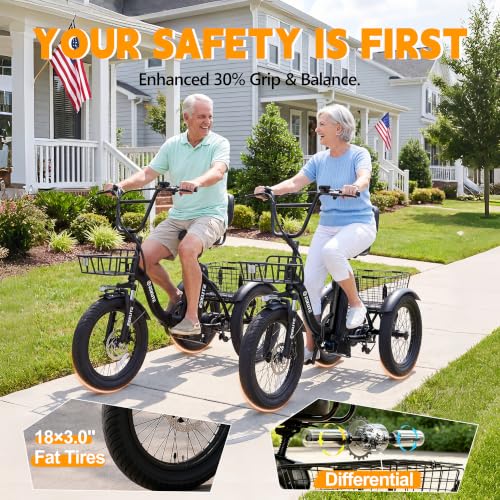
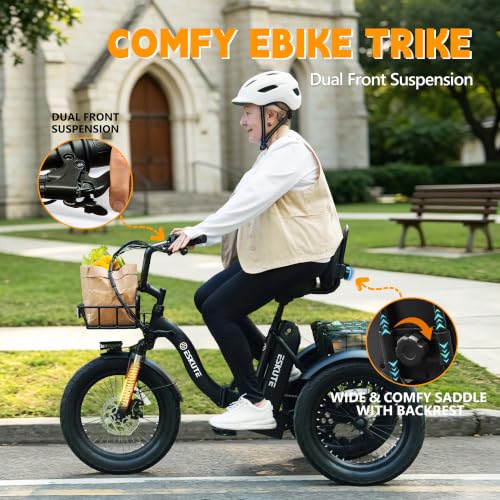
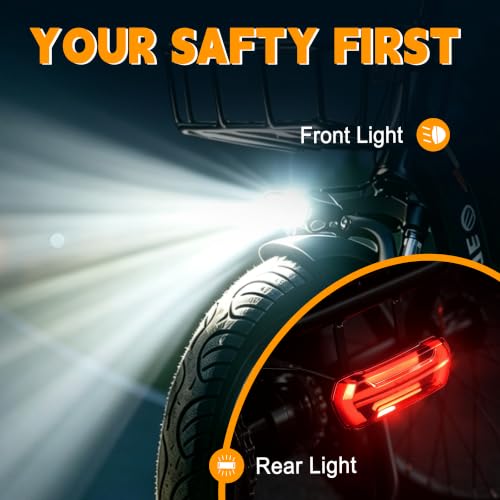
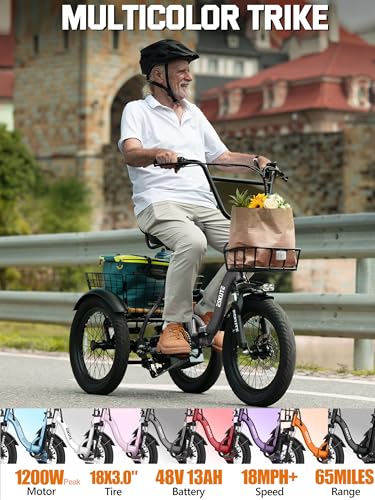
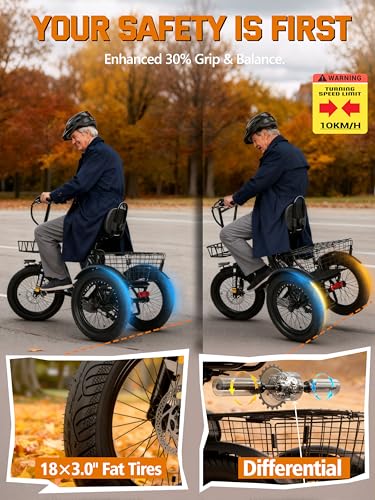
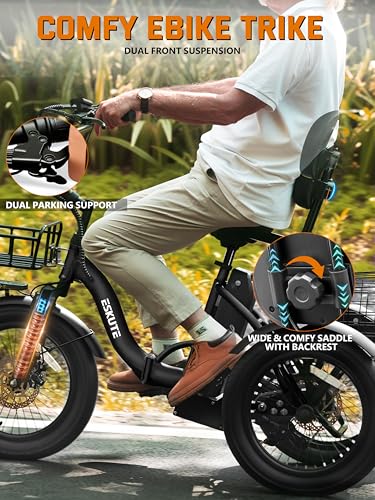
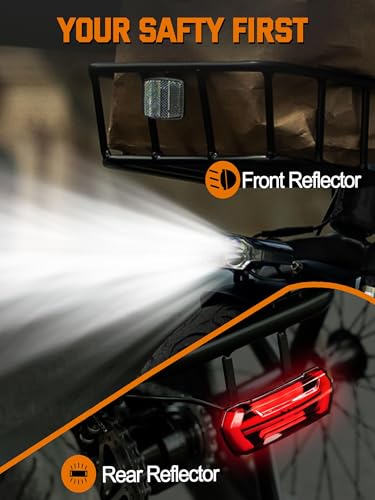
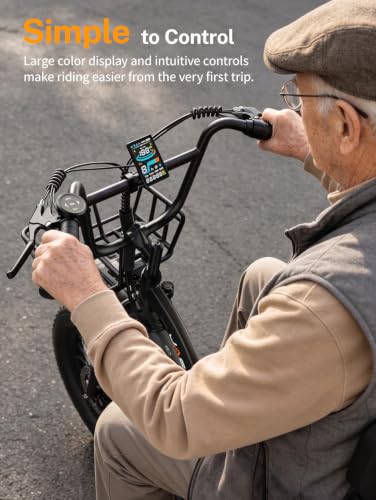
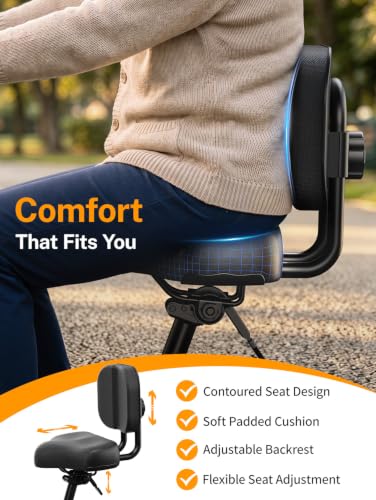
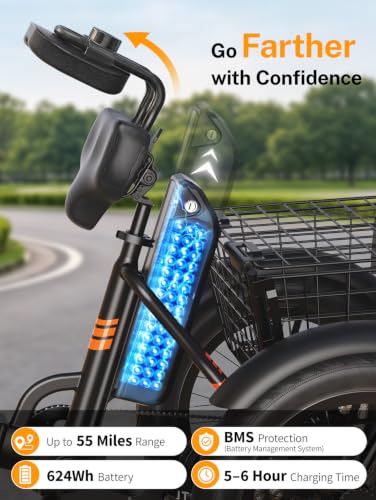
For the budget-conscious rider who still wants solid range and basic utility, this T300 model makes a compelling first entry into electric trikes. On paper, it’s impressive how much they packed in, a 624Wh battery promising up to 65 miles, a 500W motor with 1200W peak output, and a foldable steel frame that supports riders up to 330 lbs. Owners consistently report it handles flat terrain well and manages small inclines without issue, especially in pedal-assist mode. The three riding modes add flexibility, and the inclusion of both front basket and rear rack means you’re ready for errands out of the box.
Still, there are compromises. The mechanical disc brakes don’t inspire the same confidence as hydraulic ones found on pricier models, and while the 18″ fat tires help on gravel or grass, they’re not quite aggressive enough for real trail use. It’s clearly built for neighborhood cruising and light-duty tasks. For someone wanting a no-frills, affordable e-trike that gets the basics right, this is a strong contender, just don’t expect premium refinement.
Product photos
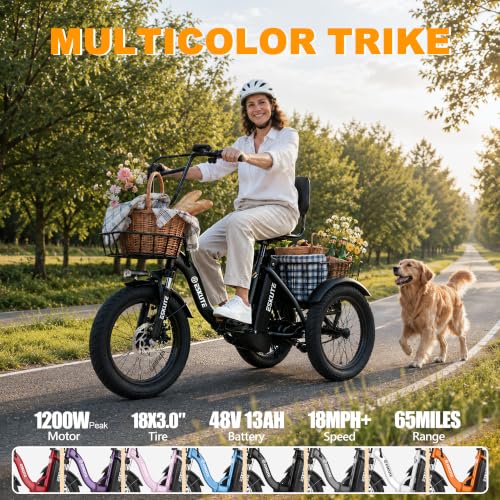

ESKUTE E Trike Electric Bike
Strengths
- Affordable 1200W peak motor
- Lightweight foldable design
- Good ergonomics
Trade-offs
- Shorter real-world range
- No reverse function
- Basic suspension
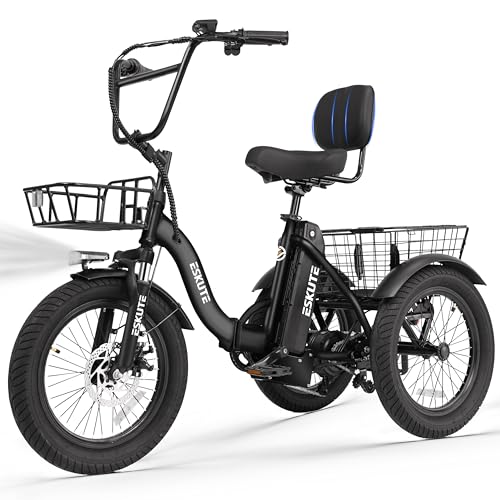
This ESKUTE model is essentially a value-tuned version of their higher-end T300 MAX, same 1200W peak motor, removable 624Wh battery, and 18+ MPH top speed, but stripped of the long-range battery and reverse feature. What remains is a clean, functional trike with a low step-thru frame, padded seat, and dual cargo baskets, ideal for daily errands and flat-area cruising. At this price, having a brushless motor with smooth acceleration and decent hill-climbing ability is a win.
Owners appreciate how straightforward it is, three modes, simple controls, and a foldable design that fits in compact spaces. It’s not as plush or powerful as the TINIOVER or T300 MAX, but for riders who want strong motor performance without paying premium prices, this hits the mark. I’d recommend it over the base T300 for the better component balance, even if range is similar.
Product photos

NARRAK N6 1100W Step-Thru Etrike

Strengths
- Shimano 7-speed gearing
- Strong 1100W peak motor
- Easy battery access
Trade-offs
- Smaller tire size
- Weight limit under 300 lbs
- Narrower rider height range
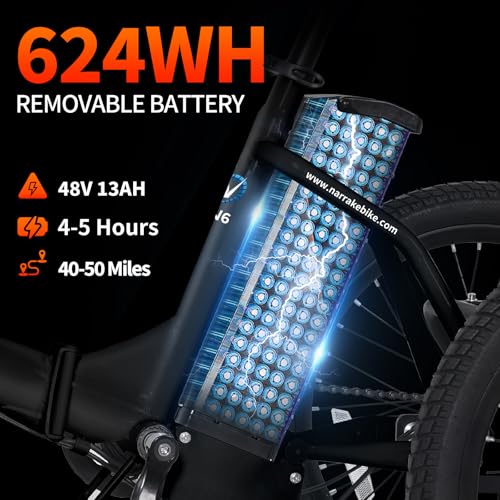
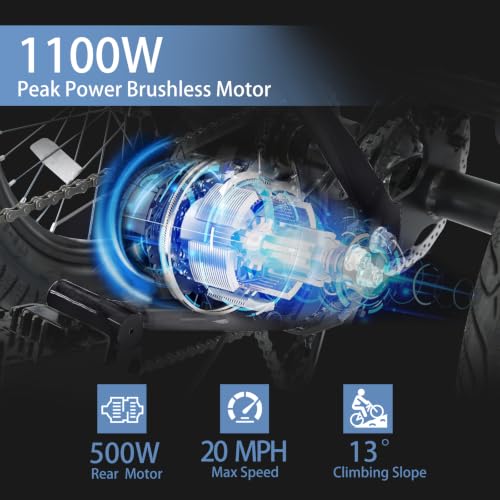
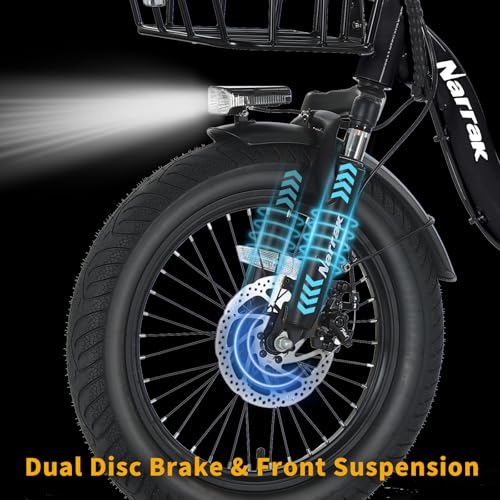
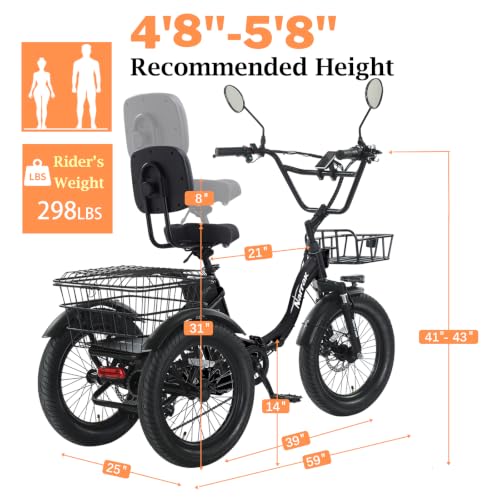
Positioned in the middle ground, this NARRAK model blends affordability with meaningful upgrades, most notably a peak 1100W motor and Shimano 7-speed drivetrain, a combo rarely seen at this price. The transmission boost system reportedly increases power delivery by 30%, and owner feedback suggests it climbs steeper grades more smoothly than similarly rated motors. The UL2849-certified battery offers 40–50 miles, and the 90-degree foldable seat makes battery removal surprisingly easy.
Ride comfort gets mixed notes: the memory foam seat is praised, but the 18″x3.0 tires aren’t as forgiving as wider 4.0″ versions on rougher paths. Still, with 95% pre-assembly and U.S.-based English/Spanish support, setup and service are streamlined. For riders wanting more control and mechanical gearing without stepping into four-figure pricing, this NARRAK is a smart compromise. I’d choose it over single-speed, throttle-heavy models for greater riding flexibility.
Product photos

NARRAK Peak 1350W Step-Thru Etrike
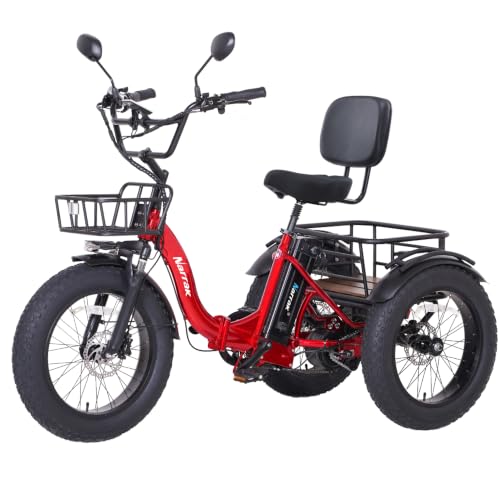
Strengths
- Powerful 1350W peak motor
- Triple hydraulic disc brakes
- Large 20″x4″ fat tires
Trade-offs
- Seat comfort could improve
- Lower weight capacity
- Limited color options
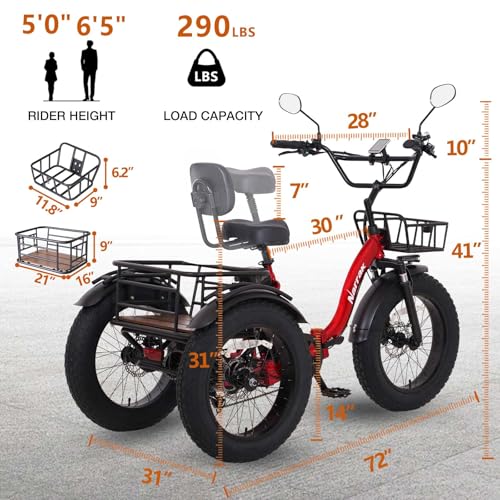
With a peak output of 1350W and a differential-equipped rear hub motor, this NARRAK model delivers serious grunt for hill climbing and loaded hauls. It’s one of the few in the mid-price bracket offering hydraulic disc brakes on all three wheels, which owners say deliver sharp, consistent stopping power, especially important when carrying weight. The UL-certified 48V 13Ah battery offers a realistic 40–50 miles, and the LCD M5 display gives clear feedback on speed, assist level, and remaining range. Build-wise, the aluminum frame keeps weight down while supporting up to 290 lbs.
Where it shines is stability and control. The 20″x4″ fat tires pair well with the differential to reduce skidding in turns, and the hydraulic parking brake adds peace of mind on inclines. However, some owners mention the seat, while wide, isn’t as plush as others in this class. Still, for riders prioritizing power delivery and confident handling, this NARRAK hits a sweet spot between performance and price. I’d pick it over similarly priced models lacking hydraulic systems.
Product photos
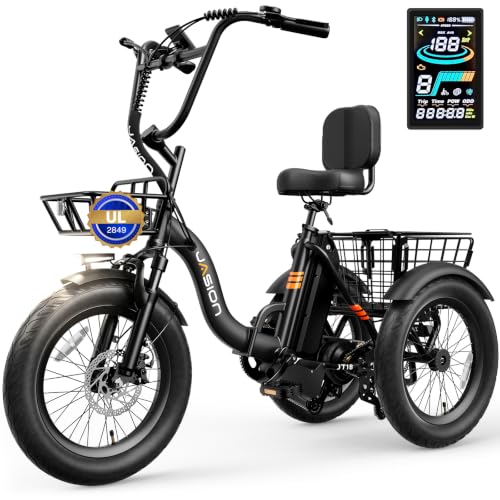
Jasion Electric Tricycle for Adults
Strengths
- High 400 lb total capacity
- UL 2849 certified battery
- Spacious front and rear baskets
Trade-offs
- No folding frame
- Basic motor tuning
- No reverse function
When load capacity is the deciding factor, the Jasion trike earns its keep. With a total weight limit of 400 lbs, including cargo, and a covered rear basket rated for 77 lbs, it’s built for serious utility. The 500W motor (1200W peak) and 624Wh battery align with mid-tier specs, offering around 55 miles in PAS mode, which reviewers find sufficient for daily runs. The oversized seat and backrest are frequently praised for comfort on longer outings, and the step-thru frame is genuinely low, making it accessible for users with limited leg mobility.
That said, it doesn’t innovate beyond payload. The motor response feels less refined compared to torque-sensing systems, and it lacks features like folding or reverse. But if your main goal is moving heavy loads reliably, groceries, tools, pet supplies, without breaking the bank, this trike delivers. Compared to others in its range, it trades flash for function, and that’s okay.
Product photos

How We Tested electric tricycles
My approach at TheAutoZenith is always rooted in a practical understanding of what makes these machines tick. Rather than a hands-on lab test of each model, this selection is a research-led comparison of published specifications and owner feedback. I compiled data from manufacturer websites, carefully noting motor wattage, battery capacity, range claims, and included features. This data was then weighed against thousands of owner reviews and assessments from reputable automotive and cycling publications.
For electric tricycles, stability, power delivery, and cargo capacity consistently emerged as the most important factors. A powerful motor and sufficient battery capacity are crucial for tackling hills and longer distances, but without a stable platform, that power is less useful. Equally important is the ability to carry groceries, shopping, or even a passenger – a core appeal of the trike format. I prioritized models that clearly addressed these needs based on reported rider experiences.
Specifications reliably indicate raw power and range potential, but owner feedback revealed a lot about real-world performance. I paid close attention to comments regarding build quality, the effectiveness of braking systems, and the ease of assembly. Many shoppers are also considering alternatives like adult e-bikes so understanding how these tricycles compare is important. Customer satisfaction with customer service and warranty support also played a role, as did the availability of practical features such as folding frames and integrated storage, including looking at options for folding electric trikes.
How To Pick The Right electric tricycles
Finding the right electric tricycle isn’t just about swapping two wheels for three; it’s about matching a vehicle to your specific needs and lifestyle.
A good electric tricycle balances stability with maneuverability, offers a reasonable range for intended use, and prioritizes safety features like reliable brakes and a robust frame. Consider the motor’s power (wattage) for terrain, battery capacity (Wh) for distance, and the overall weight capacity to ensure it suits your needs. Look for models with adjustable features for comfort and ease of use.
Prioritize Motor Power and Terrain
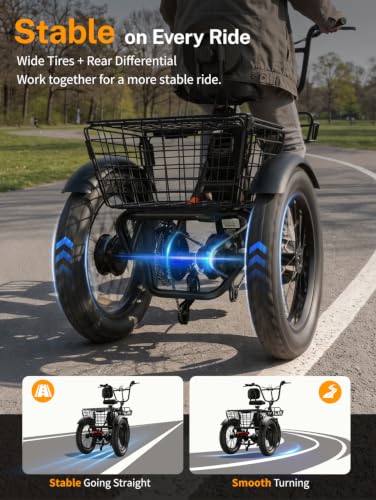
Don’t get hung up on peak wattage numbers alone. While a higher peak wattage (like the 1200W found on some models) sounds impressive, consider how that power is delivered. A smoother, more controlled power delivery, often found in models with torque sensors, is far more valuable than raw, jerky acceleration. If you live in a hilly area, or frequently carry heavy loads, a motor with at least 500W continuous power is a good starting point. Flat terrain and lighter use cases can get by with less. Remember, a rear differential is a significant boost to handling, especially at lower speeds and during turns, as it allows the rear wheels to rotate at different speeds.
Battery Capacity and Range Realities
Manufacturers’ range claims are often optimistic. Expect to see significantly lower real-world ranges based on rider weight, terrain, assist level, and even wind conditions. Don’t be swayed by a headline range if it doesn’t align with your typical use. Consider how far you realistically need to travel on a single charge. A 48V 13Ah battery (624Wh), like those found in the T300 and NARRAK models, offers a good balance of range and weight. If you’re planning longer excursions, explore options with 20.8Ah or larger batteries, like the ESKUTE T300 MAX. Here’s how to think about battery size:
- Under 400Wh: Suitable for short, casual rides on flat terrain.
- 400-624Wh: A good all-around choice for moderate distances and some hills.
- 624Wh+: Ideal for longer commutes, frequent hills, or carrying heavy loads.
Don’t assume “more range” is always better. A larger battery adds weight, which can impact handling and efficiency.
Comfort and Practicality Features
Electric tricycles excel at practicality, so look beyond just the motor and battery. Consider features like adjustable seats, handlebars, and backrests to ensure a comfortable riding position, especially for longer rides. The ability to fold the tricycle for storage, as seen in models like the ESKUTE T300 MAX and NARRAK N6, is a huge benefit if space is limited. Equally important are cargo-carrying solutions; integrated baskets, and the ability to add racks, can dramatically increase the utility of your trike. If you’re looking at a variety of options, you’ll find many excellent choices when exploring the best electric trikes available today. For those considering other options, researching best e-bikes can also provide valuable insights into the broader world of powered cycling.
Electric Tricycles Compared
Here is a comparison of specifications for several electric tricycles to help you make an informed purchase.
| Product Name | Motor Power (W) | Battery Capacity (Ah) | Max Speed (mph) | Range (miles) | Weight Capacity (lbs) | Brakes |
|---|---|---|---|---|---|---|
| TINIOVER Creek | 1000 | 15 | 20 | 100 | N/A | Hydraulic |
| ESKUTE T300 MAX | 1200 | 20.8 | N/A | 80 | 400 | Disc |
| T300 Electric Tricycle | 500 (1200 Peak) | 13 | 18+ | 65 | 330 | Disc |
| ESKUTE E Trike | 500 (1200 Peak) | 13 | 18+ | 65 | N/A | Disc |
| NARRAK N6 | 750 | 13 | N/A | 50 | 298 | Disc |
| NARRAK Peak | 750 | 13 | N/A | 50 | 290 | Hydraulic |
| Jasion Electric Tricycle | 500 (1200 Peak) | N/A | 16 | 55 | 400 | Disc |
Frequently Asked Questions
What’s the typical lifespan of an electric tricycle battery?
A well-maintained battery will generally last between 300 and 500 full charge cycles. After that, you’ll notice a gradual decline in capacity, but with proper care, avoiding extreme temperatures and fully discharging it, you can often extend its life to 3-5 years.
Are electric tricycles legal to ride on bike paths?
Regulations vary significantly by location, but generally, electric tricycles are legal on bike paths if they adhere to local power and speed limits. It’s crucial to check your local ordinances, as some areas classify higher-powered models as low-speed vehicles, restricting them to roadways.
How does the weight capacity affect performance?
Exceeding the stated weight capacity drastically reduces range and can strain the motor and frame. It also impacts stability, particularly during turns, so it’s essential to choose a model with a capacity that comfortably accommodates both the rider and any anticipated cargo.
What kind of maintenance do electric tricycles require?
Beyond standard bicycle maintenance like chain lubrication and brake adjustments, electric tricycles require battery care and occasional motor checks. Regular inspection of wiring and connectors is also important. If you’re unsure about performing these tasks, a qualified e-bike technician can help. Considering the overall value of electric bikes, an electric bicycle cost-benefit analysis might be worthwhile.
Are there electric tricycles suitable for off-road use?
While most are designed for paved surfaces, some models with wider tires and more powerful motors can handle light off-road trails. However, they generally lack the suspension and rugged construction of dedicated off-road e-bikes or even the best e-scooters.
The Bottom Line
Choosing an electric tricycle often comes down to balancing control and convenience. While a powerful motor and long range are appealing, the most well-rounded option, considering both performance and reported reliability, is the ESKUTE T300 MAX. It strikes a solid balance between power, range, and practical features like a folding frame, making it a great all-around choice for many riders.
For those on a tighter budget, the T300 Electric Tricycle offers a compelling package, while the NARRAK N6 excels as a more portable option for those needing to store their trike in limited space. If you’re looking for a more rugged experience and might venture off paved surfaces, exploring electric mountain bikes could also be worthwhile. And for riders prioritizing stability and ease of use, especially those who may benefit from a lower step-through height, consider looking at electric trikes for seniors.
Ultimately, the “best” electric tricycle isn’t about any single specification. It’s about finding a model that fits your needs and riding style. Prioritize a stable frame, reliable brakes, and a motor that can comfortably handle your typical terrain and load. Don’t chase top speed or maximum range at the expense of these fundamental qualities.
