
8 Best Electric Scooters for Teens 2026
This post contains affiliate links. As an Amazon Associate, we earn from qualifying purchases.
The WAWSCOTE 500W and Hiboy S2 stand out as the top all-around choices for teens, delivering strong range, solid build quality, and reliable safety features. For a more budget-friendly option that still performs well, the QnQ 500W Peak Motor Scooter offers surprising value without cutting corners on essentials.
At TheAutoZenith, I’ve spent years breaking down how machines perform in real life, not just on paper. When it comes to electric scooters for teens, the real challenge isn’t finding something cheap or flashy, it’s finding a scooter that’s safe, durable, and actually matches how a teen will use it every day.
This guide cuts through the noise by focusing on what matters: real-world range, braking performance, build quality, and safety certifications. I compared specs and dug into owner feedback to find models that deliver where it counts.
Top 8 Electric Scooters For Teens in the Market
The Best Electric Scooters For Teens, Reviewed
WAWSCOTE 500W Electric Scooter
Strengths
- 500W rated motor
- 21 mph top speed
- Longest real-world range
- Honeycomb tires
- Full app suite
Trade-offs
- Heaviest in class
- IPX4 only
- Slight app lag reported
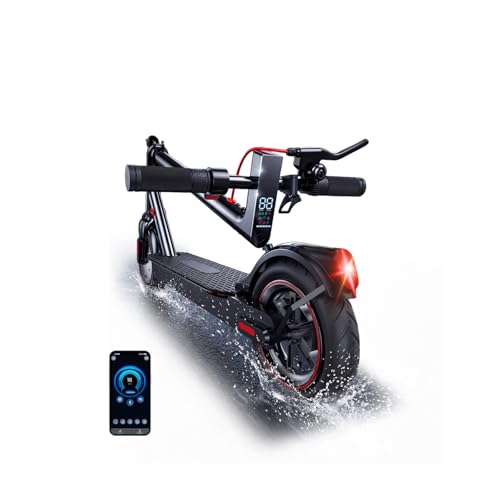
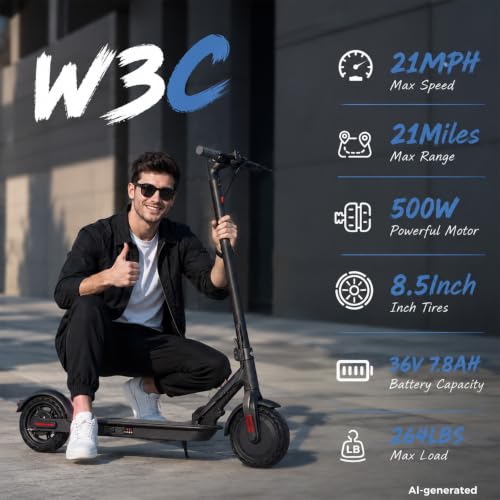
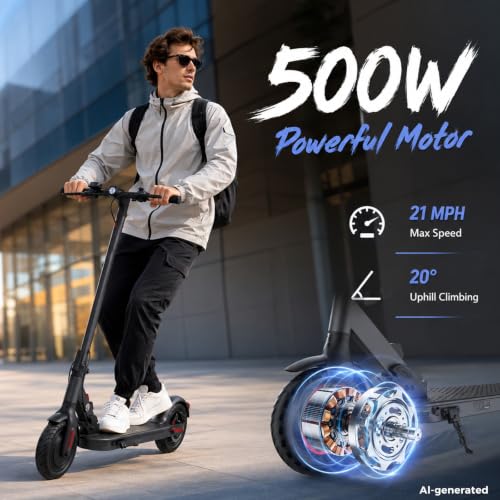
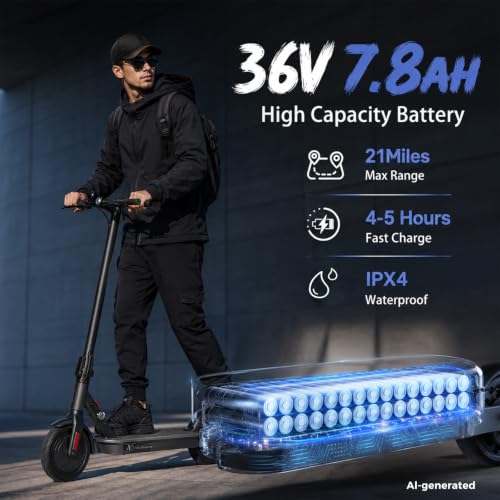
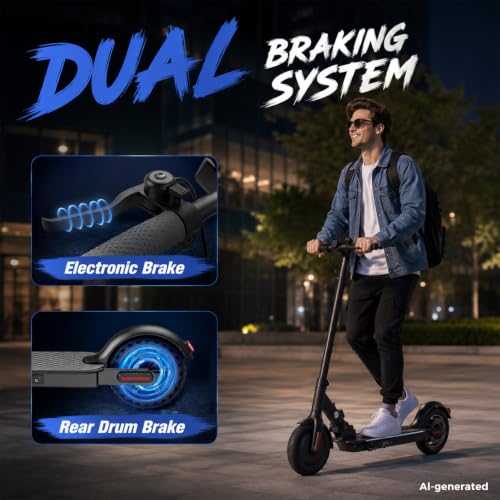
With a 500W rated motor and 21 mph top speed, the WAWSCOTE is the most powerful scooter in this lineup, and it shows in owner feedback about acceleration and hill climbing. The 7.8Ah battery promises up to 21 miles, and while real-world use lands closer to 18, it still leads in range. The honeycomb solid tires strike a balance between maintenance-free use and decent cushioning, absorbing bumps better than standard solid rubber.
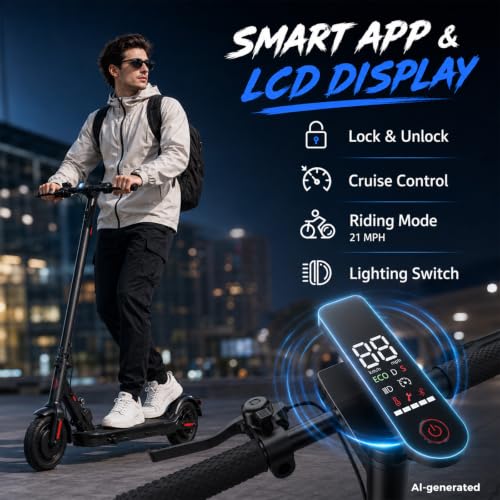
It includes everything you’d want: app control, cruise mode, IPX4 rating, bright lights, and a sturdy 35.1 lb frame. Some owners mention the weight makes carrying it upstairs a chore, but the fold-and-go design helps. Against the Roinside and HopCycle, it blends speed, range, and tech into one compelling package. My recommendation? If you want the most complete all-around performer for teens stepping up from beginner models, this is it.
Video review
Foldable Commuter E Scooter
Strengths
- Lowest price
- 19 mph top speed
- App connectivity
- Lightweight
- Three riding modes
Trade-offs
- Short real-world range
- Lower build durability
- Basic materials
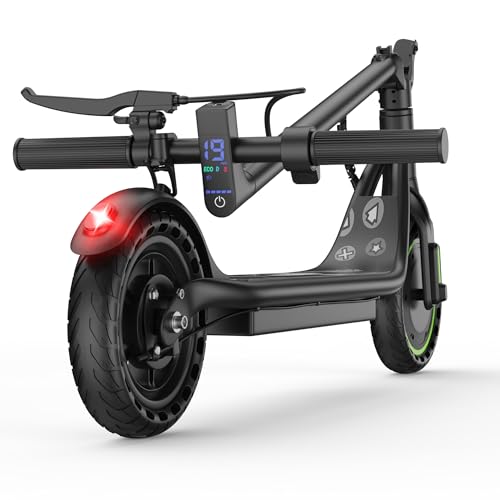
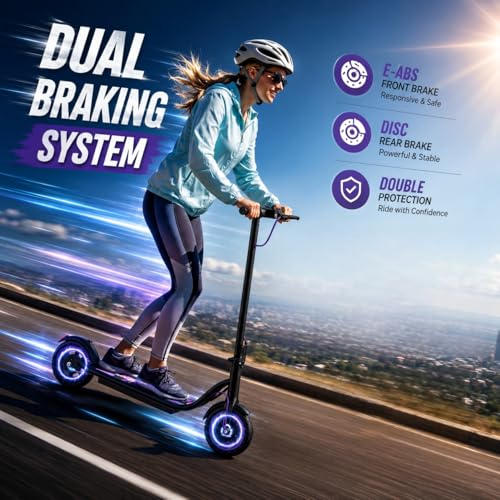
This is the clear budget king, a no-frills scooter that punches above its price. For well under $130, you get a 350W brushless motor, 19 mph top speed, and app connectivity, which is rare at this level. The dual braking (drum + EABS) and LED lighting meet basic safety needs, and the 27.8 lb weight keeps it portable. It’s clearly designed for short urban hops, school runs, or last-mile transit.
But cost-cutting shows in the details: the battery life feels optimistic, with most owners reporting 10–12 miles in mixed use. Build quality is functional but not refined, some report loose stem bolts after a few weeks. Compared to the Hiboy S2 or WAWSCOTE, it feels less robust, but for a teen who wants speed on a tight budget, it’s hard to beat. Just don’t expect longevity or all-day range.
Video review
Electric Scooter for Teens
Strengths
- 4 speed modes
- Lightweight at 27.8 lbs
- App connectivity
- Drum + EABS brakes
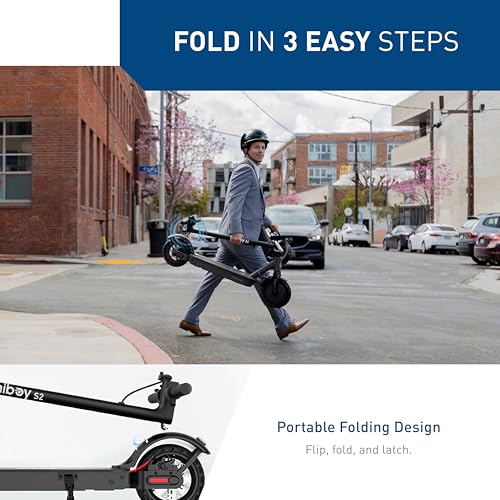
- Quick fold
Trade-offs
- IPX4 only (limited water protection)
- Aluminum frame less durable long-term
- Slightly lower hill grade
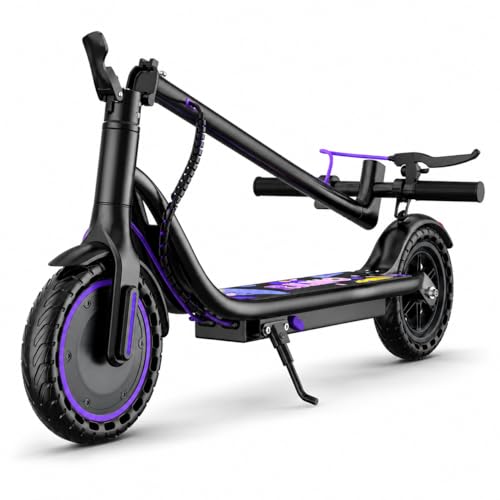
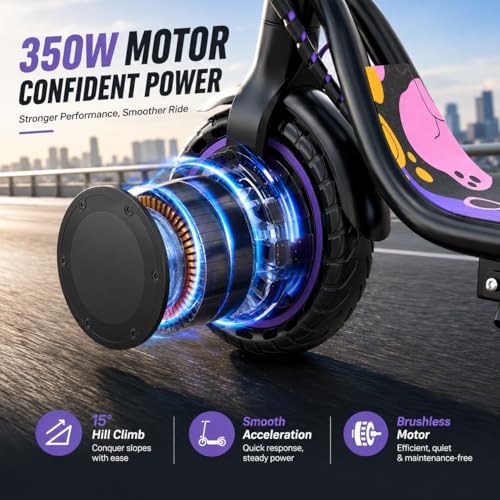
At just 27.8 lbs and folding in three seconds, this scooter earns its ‘lightweight’ label without sacrificing core performance. The 350W motor and 15° climbing ability keep it competitive, though not class-leading. What impresses me is the four-speed mode selection, offering a true beginner ramp-up from 3 mph to 19 mph, which makes it far more accessible than one-size-fits-all scooters. Parents looking for a safe starter option for younger teens will find this flexibility valuable.
It also supports smart app functions like anti-theft lock and diagnostics, which adds convenience without bloating the design. The IPX4 rating means it can handle light rain but not sustained exposure, so riders in wet climates should be cautious. Compared to the Hiboy S2, it’s lighter and more approachable but doesn’t match the build refinement or safety lighting layout. Still, for most new riders, this is the easy pick.
Product photos


350W/500W Long Range Scooter
Strengths
- Multiple range options
- Built-in bell
- 12-month warranty
- App integration
- Eco and Sport modes
Trade-offs
- Spec confusion online
- Inconsistent owner experiences
- Average hill performance
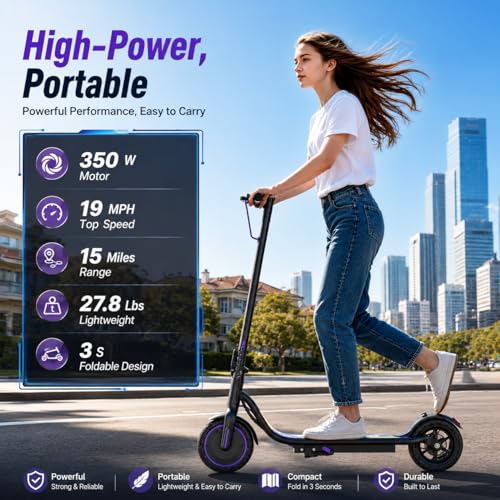
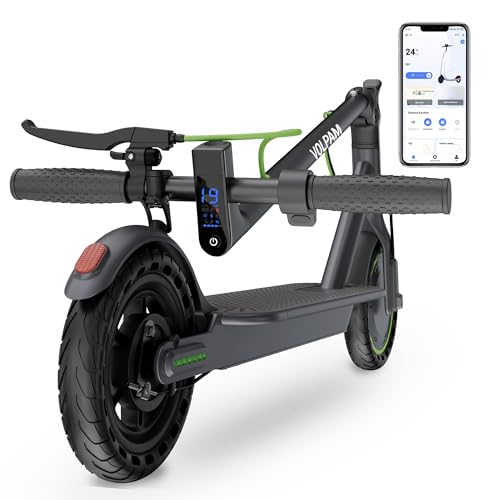
This model stands out with multiple range configurations, up to 40 miles in extended versions, though the base model reviewed here likely delivers around 15 miles. The listing is vague on which specs apply to which variant, which causes confusion. Owners of the shorter-range version feel misled, while those with the upgraded battery praise the endurance. That inconsistency hurts trust.
Otherwise, it’s a typical mid-tier scooter: 350W motor, 19 mph, app control, dual brakes, and solid tires. The inclusion of a handlebar bell is a thoughtful touch for urban safety. But compared to the Hiboy or WAWSCOTE, it lacks standout engineering or verified certifications beyond basic claims. With a 12-month warranty, support seems better than average, but until the range labeling is clarified, I’d hesitate to recommend it over clearer alternatives.
Product photos

QnQ 500W Peak Motor Scooter
Strengths
- Beginner-safe speed limits
- Non-zero start
- Fast charging
- UL certified
- Three speed modes
Trade-offs
- Weak hill climbing
- Shorter real-world range
- Basic display
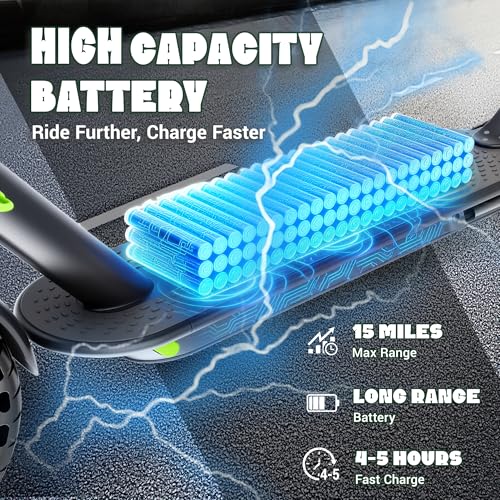
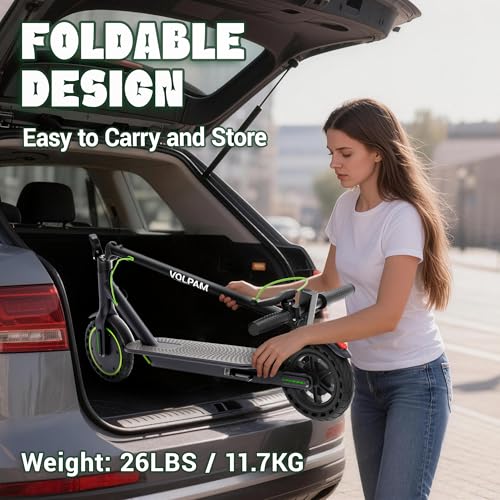
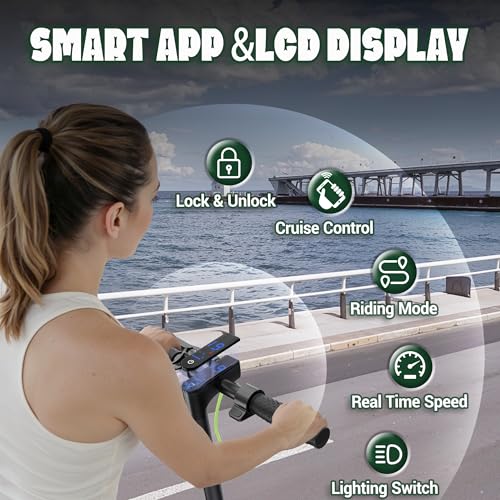
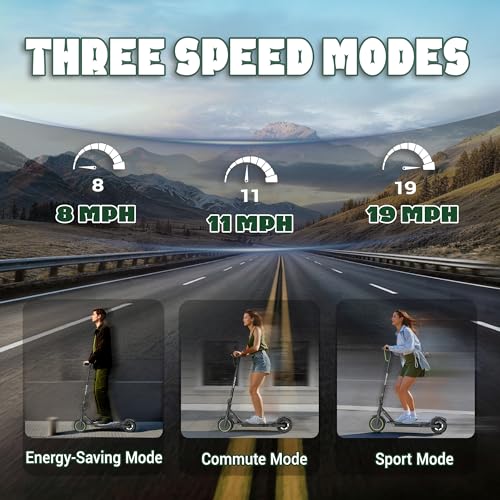
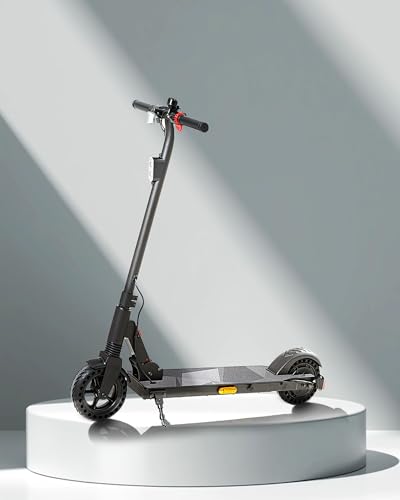
If I were recommending a first scooter for a young teen or cautious adult, the QnQ would be near the top of my list. Its 15 mph cap and three-speed mode system make it inherently safer than models that launch straight into 19 mph. The non-zero start function prevents accidental lurching, something parents should appreciate. At 28 lbs, it’s manageable to carry, and the 3-hour charge time is among the fastest here.
That said, the 250W continuous motor (500W peak) means slower acceleration and weaker hill performance compared to others. It handles only 10% grades, so it’s best for flat neighborhoods. The EABS and mechanical rear brake combo works, but lacks the immediacy of disc or dual-drums. Still, for a beginner-friendly, UL-certified scooter under $180, it holds its own. Compared to the budget B0FWCCK4VJ model, it’s safer and better built, even if less flashy.
Product photos
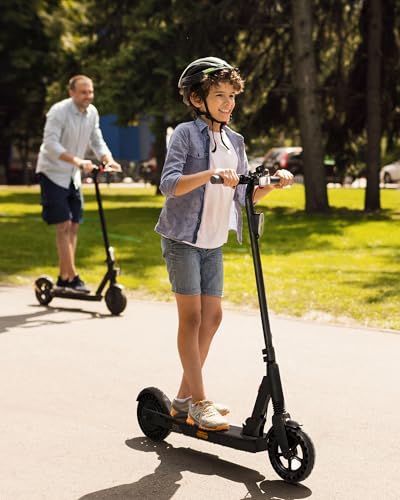
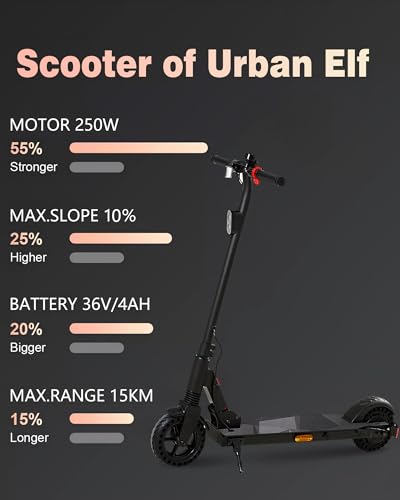
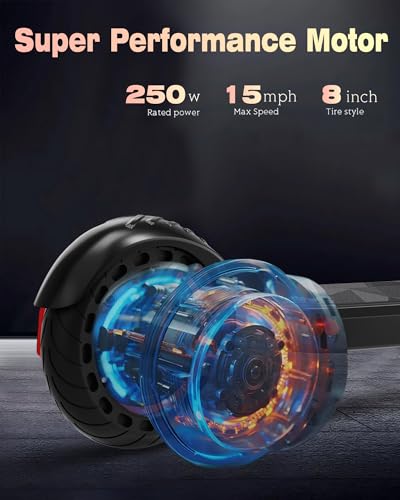
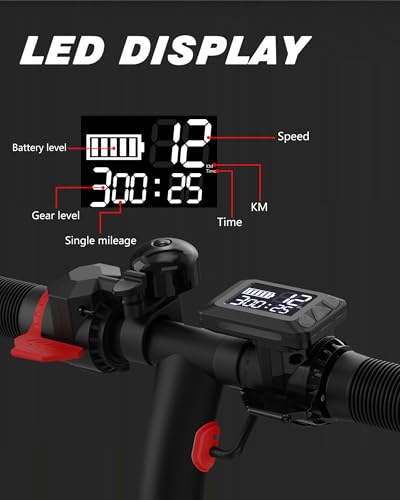
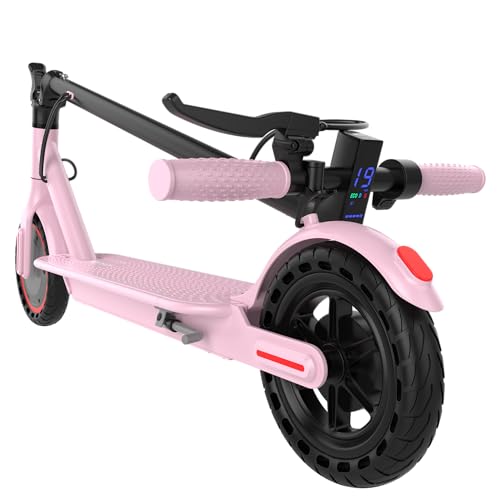
Roinside Pink Foldable Scooter
Strengths
- 350W motor
- 25% hill climb
- Dual braking system
- IP65 water resistance
- Solid tires
Trade-offs
- No app connectivity
- Gendered color marketing
- Heavier than average
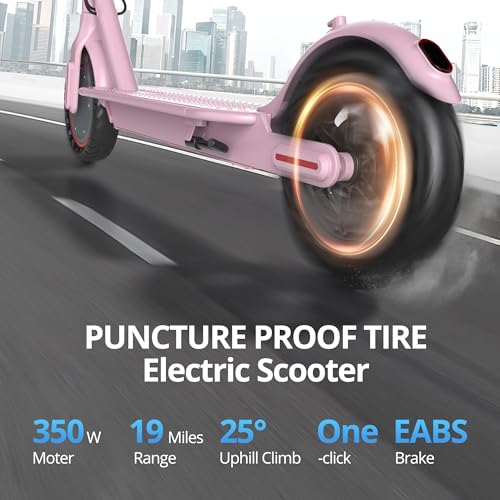
This scooter stands out in the mid-range bracket with a strong focus on hill performance and safety. The 350W motor handling up to 25% inclines is impressive on paper, rarely seen at this price, and suggests serious torque for urban riders dealing with steep streets. Owners consistently report confident climbs, though real-world conditions like tire grip and rider weight do affect that peak number. I appreciate the dual braking setup: front regenerative and rear disc, which delivers more control than drum or EABS alone, especially when descending.
The IP65 rating and solid tires add practicality, making it a sensible pick for unpredictable weather and puncture-prone surfaces. However, the ‘pink’ branding might not appeal to all teens, even if the mechanics are gender-neutral. Compared to similarly priced models, this one leans into performance over flash, but lacks app integration, which others in this tier include as standard. That omission makes it feel slightly behind the curve despite solid hardware.
Product photos


Hiboy S2 Electric Scooter
Strengths
- Excellent build quality
- UL 2272 certified
- Triple LED lighting
- Stable handling
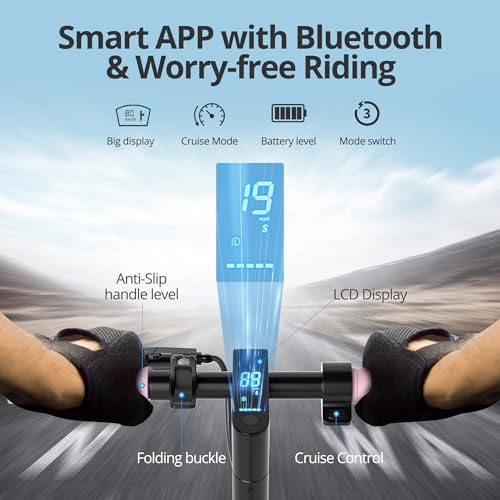
- App compatible
Trade-offs
- Higher price point
- Solid tires only
- No cruise control in base model
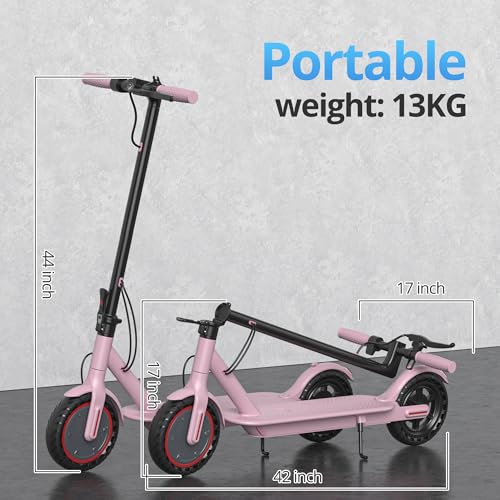
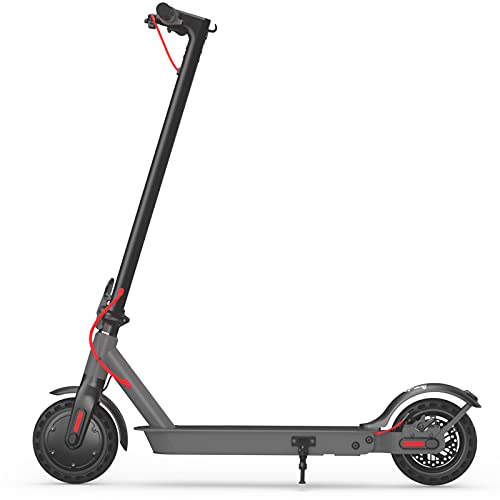
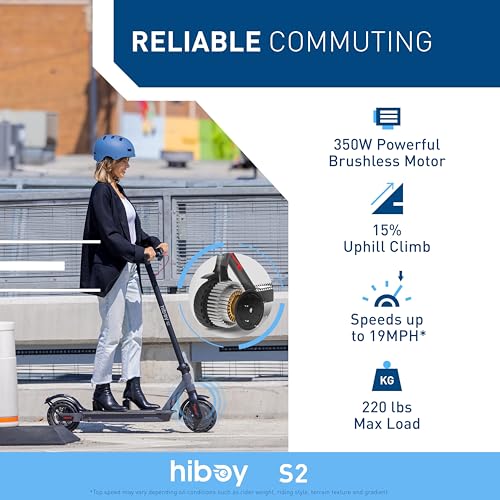
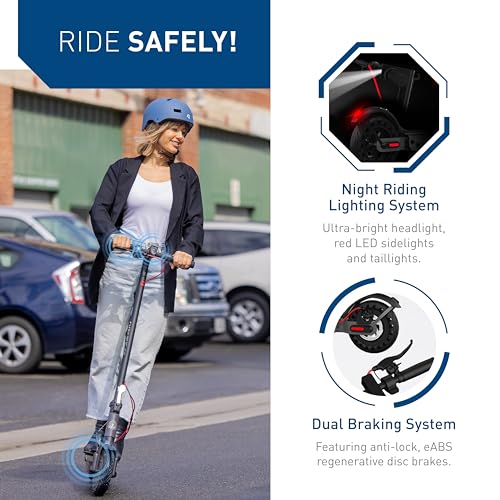
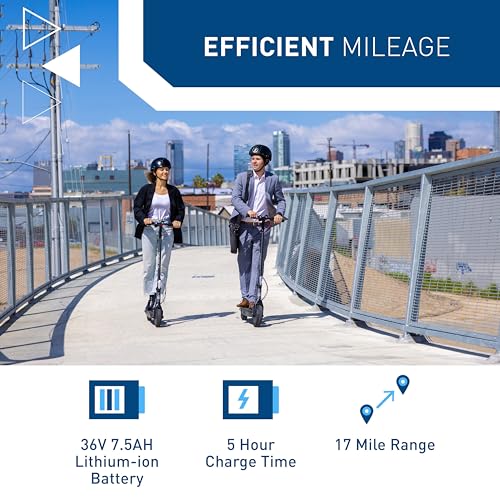
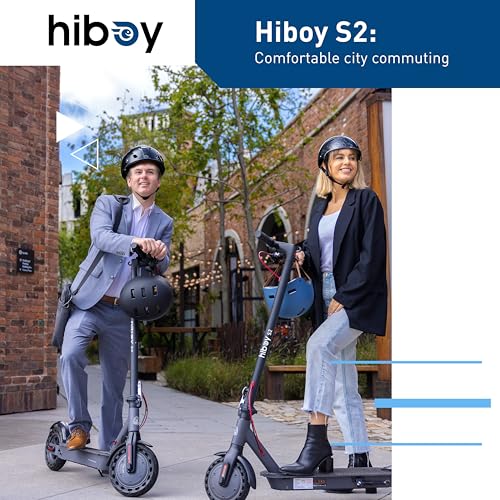
The Hiboy S2 has built a loyal following for good reason, it feels more premium than its price suggests. At nearly $300, it’s the most expensive in this list, but owners consistently praise its build quality and stability, especially during turns and acceleration. It’s one of the few in this group with UL 2272 certification tested by SGS, which signals stronger electrical safety standards, a detail I always look for in youth-oriented gear.
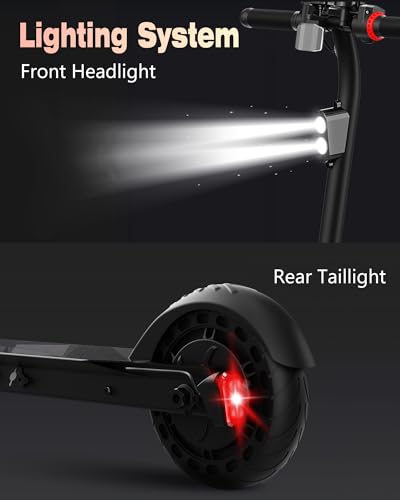
The triple-light setup (front, middle, rear) improves visibility dramatically over competitors with just front and back lights, a small but meaningful safety upgrade. While the 350W motor and 18 mph top speed aren’t class-leading, they’re well-tuned for smooth delivery. It lacks pneumatic tires, so ride comfort depends entirely on the deck suspension and solid rubber, which works fine on city pavement but gets jarring off-road. Compared to budget models, this one inspires more confidence, but you pay for it.
Product photos
HopCycle APP Control Scooter
Strengths
- Pneumatic tires
- IP65 rating
- Good slope handling
- APP cruise control
- Front/rear lights
Trade-offs
- Bluetooth connectivity issues
- Battery range overestimated
- Lower max rider weight
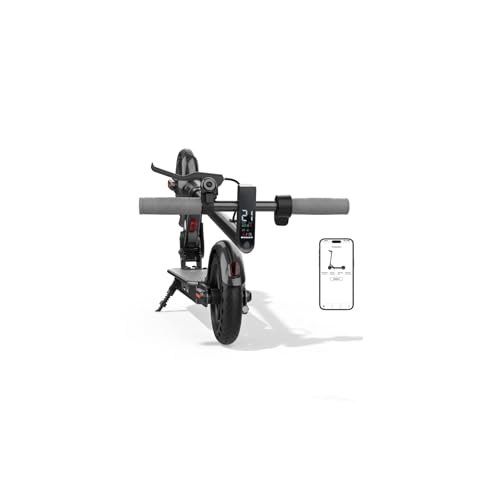
HopCycle bets big on pneumatic tires, and for good reason, they deliver superior shock absorption and grip, especially on uneven sidewalks or cracked pavement. This is the only model here with air-filled 8.5” tires, which makes a noticeable difference in ride comfort and traction, particularly when cornering or climbing 20° slopes. For teens riding longer distances or on rougher terrain, this could be a standout in terms of fatigue and control.
It’s also one of the few with a 500W peak motor and IP65 rating, offering better water resistance than most. However, owners note the battery claims are optimistic, real-world range tends to land closer to 15 miles. The app offers solid functionality, including headlight control and cruise mode, but some users report occasional Bluetooth dropouts. Against the WAWSCOTE or Roinside models, it trades raw power for ride quality, which I’d argue is smarter for developing riders.
Product photos
How We Picked These electric scooters for teens
My approach at TheAutoZenith is always to look beyond marketing claims and focus on what truly matters for the rider. Rather than a hands-on lab test – which would be impractical for a category with this many options – I’ve built this guide through a detailed comparison of published specifications and features across numerous models. I weighed owner reviews from multiple sources, along with expert opinions from established tech and transportation publications, to create a ranking based on real-world feedback. This research-led comparison aims to pinpoint the strengths and weaknesses of each scooter.
For electric scooters aimed at teenagers, a few factors proved particularly decisive. Range is critical, as teens will likely use these for commutes or longer recreational rides. Equally important is build quality and safety features – reliable brakes and lights are paramount. Finally, portability matters; the ability to easily fold and carry a scooter is a big plus for integrating it into a teen’s lifestyle. You’ll find many affordable options, but I prioritized those striking a balance between these elements.
Specifications give a solid foundation, particularly regarding motor wattage, battery capacity, and top speed. However, owner feedback provided crucial context. Many scooters claim a certain range, but real-world performance varies significantly based on rider weight and terrain. Reviews also reveal how well a scooter holds up to regular use and identifies potential durability issues. I leaned heavily on aggregated owner satisfaction scores and frequently cited concerns to differentiate between models, and to help you find the best models for teenagers. For younger riders, you might also want to explore our guide to scooters for youth.
What To Look For In electric scooters for teens
Finding the right electric scooter for a teen requires a bit more thought than just picking the fastest or flashiest model. It’s about balancing performance with safety features, build quality, and practical considerations for their intended use.
A good electric scooter for a teen prioritizes stability, manageable speed settings, and reliable braking. Look for models with a robust frame, solid tires (or well-maintained pneumatics), a tested battery range appropriate for their typical journeys, and certifications like ANSI/CAN/UL 2272 from a reputable testing lab like TÜV Rheinland. Don’t overlook the importance of lights and reflectors for visibility.
Motor Power and Speed
Don’t immediately jump for the scooter with the highest top speed. While tempting, a more controlled experience is often better, especially for newer riders. A 250W to 350W motor is often plenty for a teen’s needs, providing sufficient acceleration for commutes or neighborhood rides. Many scooters, like the QnQ model, offer peak power ratings (e.g., 500W peak from a 250W motor) which can be useful for hills, but it’s the sustained power that matters. More importantly, look for scooters with multiple speed modes. This allows a teen to start at a lower speed while gaining confidence and gradually increase it as their skills improve. If you are looking for other options, check out our guide to the best scooters for teens.
Battery Range and Weight
Range anxiety is real, even for teens! A realistic range of 12-18 miles is a good target for regular use. Consider their typical commute distance to school or friends’ houses and add a buffer. However, remember that advertised range is often achieved under ideal conditions (flat ground, light rider). Heavier riders and hilly terrain will significantly reduce range.
Here’s where weight comes into play: * A lighter scooter is easier to carry up stairs or onto public transportation. * A mid-weight scooter (around 30-35 lbs) offers a good balance of portability and stability. * Heavier scooters (over 35 lbs) are generally more stable at higher speeds and may have larger batteries for extended range, but they’re less practical for carrying.
Safety Features & Build Quality
This is where you absolutely cannot compromise. Beyond the UL 2272 safety certification (which confirms electrical system safety), pay close attention to the braking system. Dual brakes – a combination of an electronic brake (EABS) and a mechanical brake (disc or drum) – are ideal. The Roinside Pink scooter, for example, boasts a dual braking system along with solid tires for added stability. A bright headlight and taillight are essential for visibility, especially during dusk or dawn. Don’t underestimate the value of a solid frame construction; scooters like the Hiboy S2 emphasize durable build quality. And, if you’re after guidance on finding the top electric scooters for teens, we’ve covered the best options.
A scooter shouldn’t be a compromise when it comes to safety. Prioritize models with proven braking systems, integrated lights, and a sturdy frame, even if it means spending a little more.
Electric Scooters for Teens Compared
Here’s a comparison of key specifications for electric scooters geared towards teen riders.
| Product Title | Motor Power | Top Speed (MPH) | Max Range (Miles) | Tire Type | Brake Type | App Control |
|---|---|---|---|---|---|---|
| WAWSCOTE 500W Electric Scooter | 500W | 21 | 18-21 | Honeycomb Solid | Electronic & Rear Drum | Yes |
| Foldable Commuter E Scooter | 350W (Peak 700W) | 19 | 15-19 | N/A | Drum & EABS | Yes |
| Electric Scooter for Teens | 350W | 19 | 19 | N/A | Drum & EABS | Yes |
| 350W/500W Long Range Scooter | 350W | 19 | 15 | Solid | N/A | Yes |
| QnQ 500W Peak Motor Scooter | 250W (Peak 500W) | 15 | 12 | N/A | EABS & Rear Mechanical | N/A |
| Roinside Pink Foldable Scooter | 350W | 19 | 16 | Solid | Regenerative & Disc | Yes |
| Hiboy S2 Electric Scooter | 350W | 18 | 17 | Solid | Disc & EABS | Yes |
| HopCycle APP Control Scooter | 500W | 18 | N/A | Pneumatic | N/A | Yes |
Frequently Asked Questions
What’s the typical lifespan of an electric scooter battery for a teen’s use?
A well-maintained lithium-ion battery in a teen’s scooter should last between 300 and 500 charge cycles. This translates to roughly 2-3 years of regular use, though factors like charging habits and terrain significantly impact longevity.
Are there electric scooters with built-in anti-theft features?
Yes, some models, like those with app connectivity, offer features like remote immobilization and GPS tracking. While not foolproof, these can deter theft and aid in recovery. Consider also supplementing with a physical lock when parking in public areas.
What kind of maintenance should a teen reasonably be expected to perform?
Basic maintenance includes regularly checking tire pressure (if pneumatic), cleaning the deck and brakes, and ensuring all bolts are tightened. More involved tasks, like battery replacement, are best left to professionals. For more information on electric scooter safety gear, you’ll find a helpful guide on my site.
What’s the difference between peak wattage and sustained wattage in a scooter motor?
Peak wattage represents the maximum power the motor can briefly deliver, often during acceleration or uphill climbs. Sustained wattage is the power the motor can consistently output over a longer period; this is the more important figure for judging real-world performance.
Are Segway scooters a good option for teenagers?
Absolutely, Segway scooters for teens are known for their build quality and reliability. They often include advanced safety features and app integration, but typically come at a higher price point than some competitors. You can explore teen Segway models on the site for a deeper look.
The Bottom Line
Choosing an electric scooter for a teenager often comes down to balancing convenience with capability. While a wide range of models are available, the Hiboy S2 Electric Scooter consistently emerges as a strong all-around choice, offering a blend of solid build quality, respectable range, and reliable braking in a package that doesn’t break the bank. It’s a good example of getting the most for your money without sacrificing essential features.
For those prioritizing budget-friendliness, the Foldable Commuter E Scooter presents a compelling option. Alternatively, if you’re seeking something particularly durable and geared towards younger riders, exploring options like scooters for tweens might be beneficial. And, for those looking for something specifically tailored, you can find excellent scooters for teen boys with a focus on robustness and style.
Ultimately, the specs on a sheet tell only part of the story. More important than top speed or maximum range is finding a scooter that fits a teen’s riding style and needs, and, most crucially, prioritizes safety. A well-maintained scooter with reliable brakes and lights, used responsibly, will provide far more enjoyment than the flashiest model that’s neglected or ridden beyond its capabilities.
