
7 Best Electric Mountain Bikes Under $1000 (2026 Guide)
This post contains affiliate links. As an Amazon Associate, we earn from qualifying purchases.
The Jasion EB5 Ultra stands out as the most capable electric mountain bike under $1000, delivering serious power and range. For those watching their budget, the Misodo 1500W offers strong performance at a lower price, while the ASKGO 1500W Full Suspension is the pick if you want better trail comfort and control.
Most riders shopping in this range want real off-road ability without emptying their wallet. The problem is that not every e-bike labeled “mountain” can handle rugged trails, and some cut corners on brakes, suspension, or battery life.
I compared specs and owner feedback across the market, focusing on motor reliability, real-world range, and build quality that holds up off pavement. These picks balance performance and value based on what actually matters when riding.
Top 7 Electric Mountain Bikes Under $1000 in the Market
The Best Electric Mountain Bikes Under $1000, Reviewed
Jasion EB5 Ultra 2500W Peak Electric Bike
Strengths
- Hydraulic disc brakes
- Dual suspension system
- Massive 70-mile range
Trade-offs
- Higher price point
- Longer charging time
- May arrive in multiple shipments
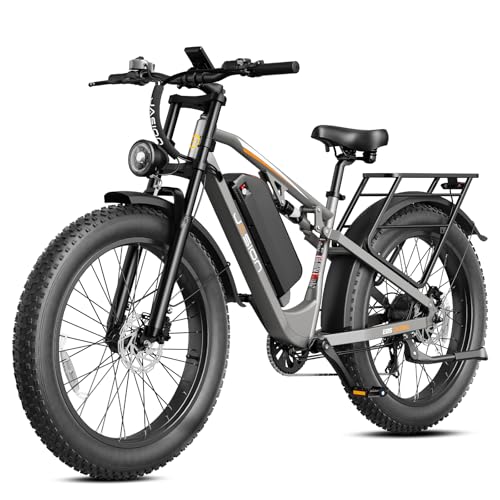
This is the most complete package on the list, dual suspension, hydraulic brakes, 52V 20Ah battery, and 26″x4″ fat tires. With a 70-mile range and serious torque from the 2500W peak motor, it’s built for riders who refuse to compromise. The hydraulic brakes are a standout at this price, offering far better modulation and stopping power than mechanical units found elsewhere.
Owners report smooth handling on loose terrain, and the rear rack plus fenders suggest Jasion is targeting all-season, all-purpose use. Yes, it’s nearly $800, but it’s also the only model here with components that approach mid-tier quality. When compared to the Funhang or Misodo, it’s clearly a step up. My take? If you’re serious about off-road capability and safety, this is the one to beat.
Video review
VOLTVOGUE 1000W Peak Electric Bike
Strengths
- Lowest price point
- UL 2849 certified
- Quick assembly
Trade-offs
- Only 3-speed gearing
- Lower real-world range
- Basic tire width
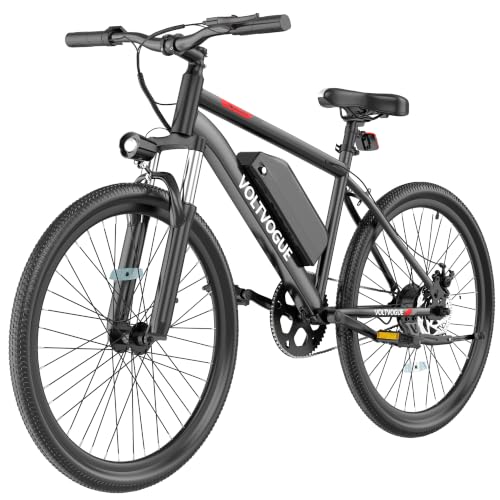
At just under $180, the VOLTVOGUE is the cheapest option here, and it shows. It has a 1000W peak motor and claims 45-mile range, but owner feedback suggests that number drops fast under throttle-heavy use or on inclines. The 3-speed drivetrain is unusually limited for a mountain-capable bike; most competitors offer 7 speeds, which makes climbing much easier.
Still, it arrives 90% assembled, has UL 2849 certification for safety, and includes a clean LCD dashboard. For someone wanting a bare-minimum e-bike for flat neighborhoods or beach cruises, it might suffice. But given that other models offer better gearing and similar specs for only $50 more, I can’t recommend this unless price is your absolute deciding factor.
Video review
Misodo 1500W Peak Electric Mountain Bike
Strengths
- High weight capacity
- Strong motor output
- 95% pre-assembled
Trade-offs
- Basic lighting system
- No rear suspension
- Generic component quality
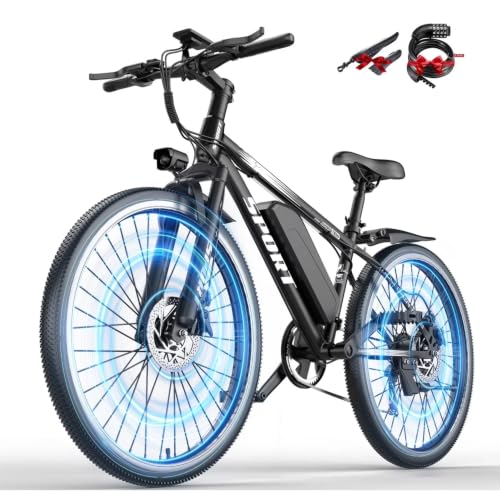
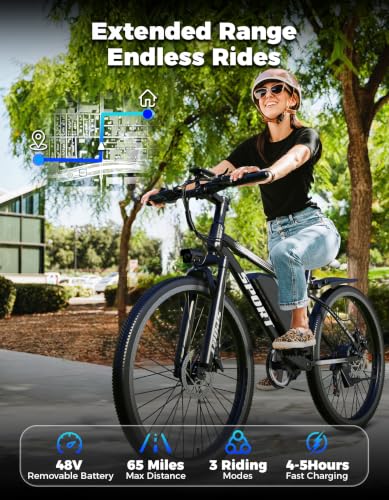
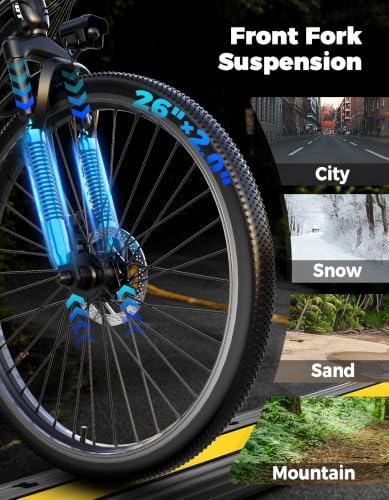
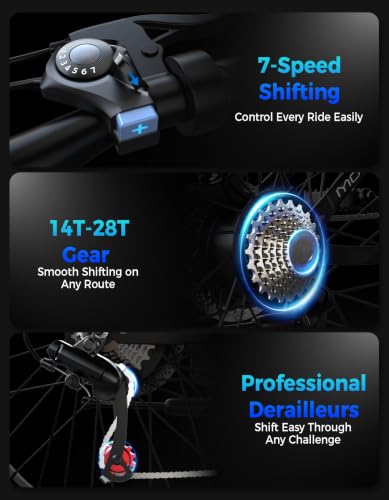
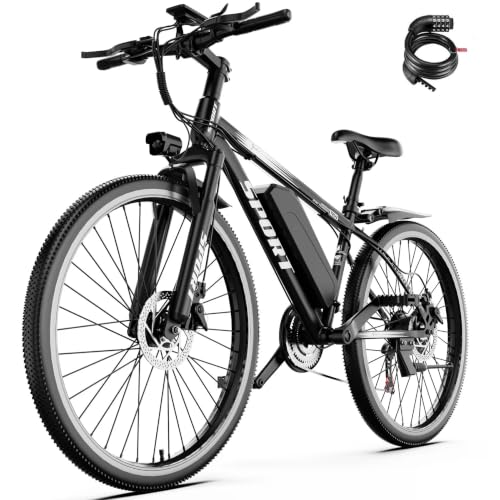
The Misodo packs a punch with its 1500W peak motor and 350 lb weight capacity, the highest in this group, making it a solid choice for larger riders or those hauling extra load. The 48V 10.4Ah battery delivers on its 65-mile promise in PAS mode, and the removable design adds convenience. It’s built tough with a high-carbon steel frame and dual disc brakes that inspire confidence at speed.
Where it falls short is refinement: the 7-speed shifting is functional but not crisp, and the lighting setup is basic compared to others with turn signals or brake-activated tails. Still, for the price, it hits a sweet spot between power and practicality. If you’re comparing it to the ASKGO twins, this one feels more utilitarian, less polished, but equally capable on climbs.
Product photos

ASKGO 1500W Peak Electric Bike
Strengths
- Climbs steep hills easily
- Adjustable seat height
- Step-through frame
Trade-offs
- Front suspension only
- Slightly overpriced vs sibling model
- No rear rack
This ASKGO ebike shares core DNA with the previous model, same 1500W peak motor, 480Wh battery, and 65-mile max range, but swaps full suspension for a front fork only. It still climbs impressively and handles mixed terrain well, but loses some edge on bumpy descents where rear suspension would help. Riders note the step-through frame makes mounting easier, especially for shorter or less mobile users, giving it broader accessibility.
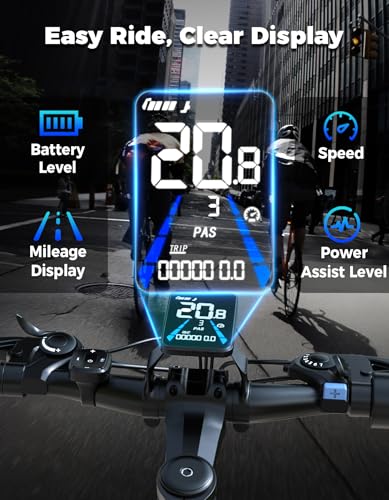
The LCD display is functional, showing PAS levels and battery status clearly, and the 7-speed system shifts smoothly across varied inclines. While it’s priced slightly higher than the full-suspension version, it doesn’t offer better performance overall. I’d recommend the other ASKGO model instead unless you specifically need the step-through design.
Product photos
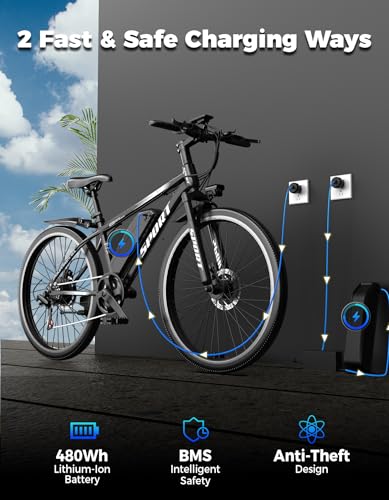
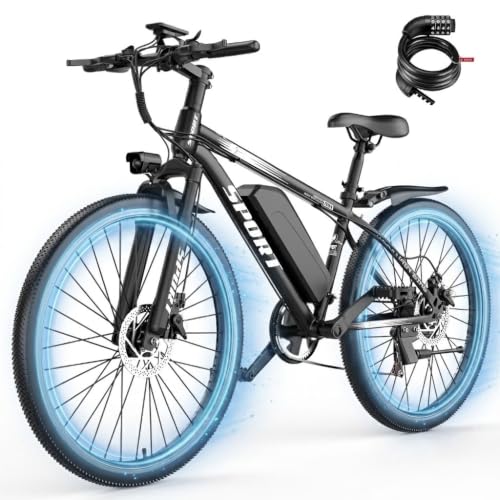
ASKGO 1500W Full Suspension Ebike
Strengths
- Strong 1500W motor
- Full suspension comfort
- Long battery range
Trade-offs
- Heavier steel frame
- Mechanical disc brakes
- Slightly longer charge time
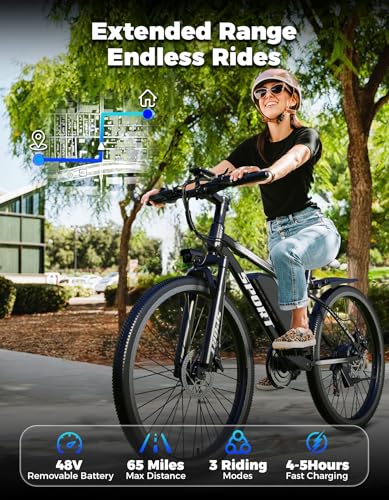
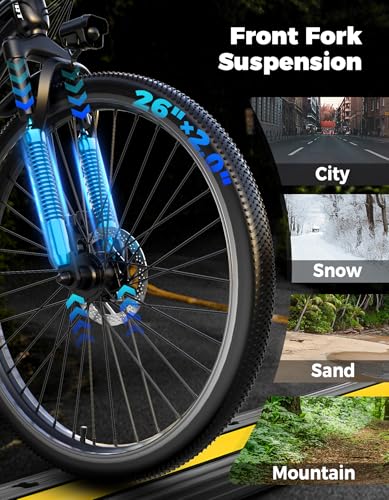
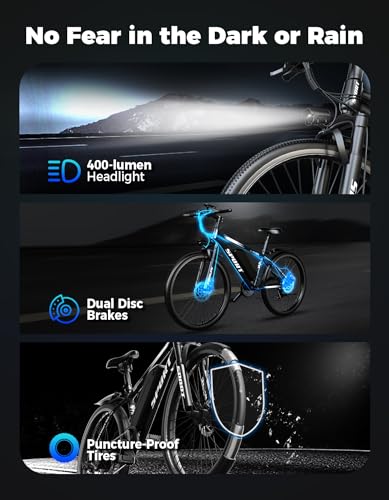
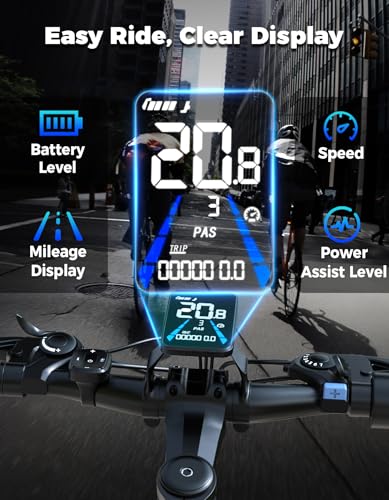
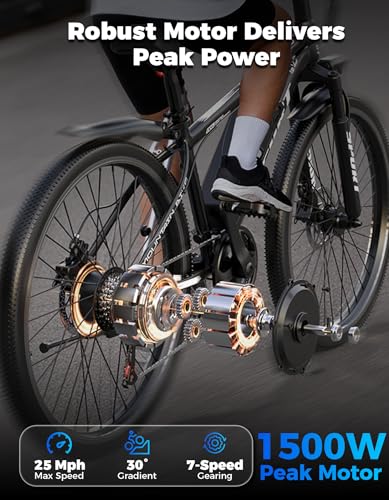
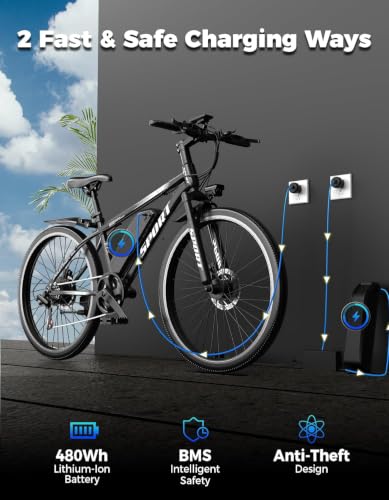
With a 1500W peak motor and full suspension setup, this ASKGO model stands out as a rugged contender for rough trails. Owners praise its ability to climb steep grades and maintain control on uneven ground, thanks to the dual shock absorption and grippy tires. The 48V 10.4Ah battery promises up to 65 miles in pedal-assist mode, which aligns closely with real-world feedback, few bikes at this price offer that kind of reach.
It’s heavier than some rivals, but the trade-off is stability on technical terrain. The 400-lumen headlight is brighter than average, and the mechanical disc brakes perform reliably in wet conditions. Compared to the Misodo and other 1500W models, this one feels more tuned for trail abuse than city errands. My recommendation? This is the smarter buy if you prioritize trail toughness over portability.
Product photos
Jasion EB5 1000W Electric Bike
Strengths
- 1000W peak motor
- Removable battery
- Lightweight frame
Trade-offs
- Limited off-road capability
- Basic suspension
- Shorter range in throttle mode
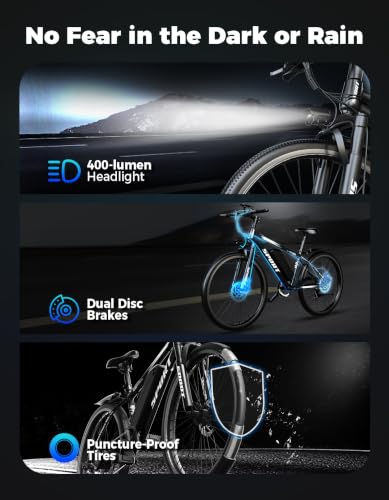
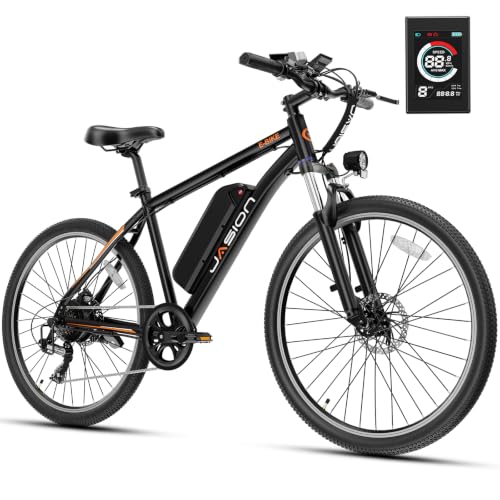
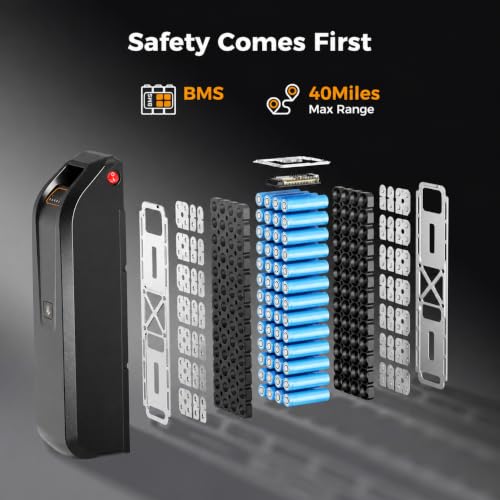
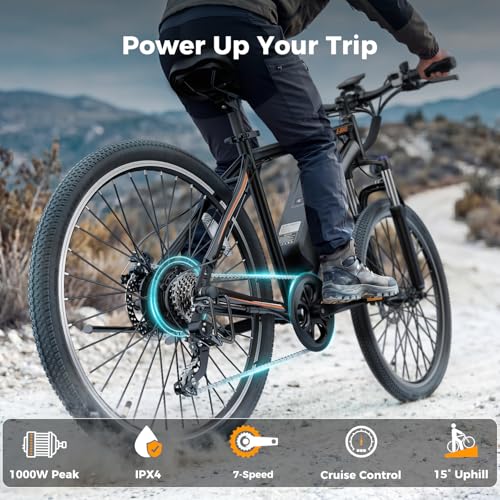
At under $200, the Jasion EB5 is one of the most aggressive entries in the budget e-bike space. On paper, a 1000W peak motor and 20 MPH top speed sound impressive for the price, but owners consistently report that real-world performance leans more toward city cruising than true mountain capability. The 360 Wh battery gives a modest range, and while the removable design is convenient, it doesn’t deliver the kind of endurance needed for long trail rides.
The 7-speed drivetrain and front suspension help it handle light off-road bumps, but this isn’t a full-suspension machine, don’t expect it to eat up rocky descents. Still, for casual riders or those needing a no-frills commuter, it’s hard to ignore the value. I’d pick this over pricier models only if your needs are strictly urban and your hills are mild.
Product photos


Funhang 1000W Fat Tire Electric Bike

Strengths
- True all-terrain fat tires
- UL 2849 safety certified
- Built-in rear cargo rack
Trade-offs
- Mechanical disc brakes
- 85% pre-assembled
- Heavy for its class
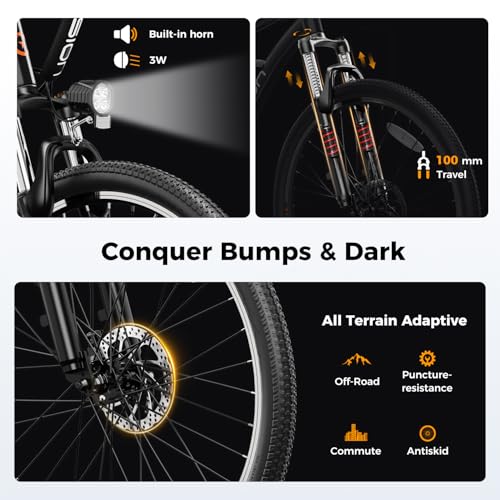
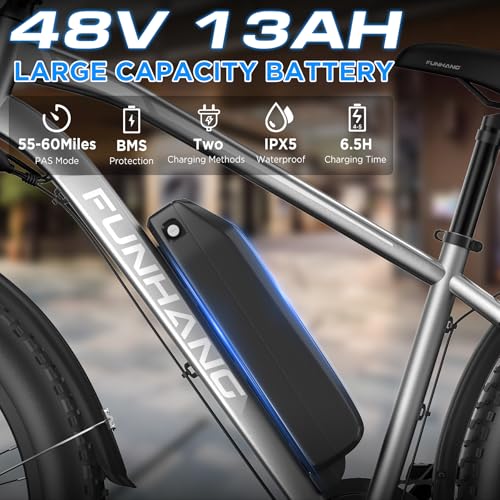
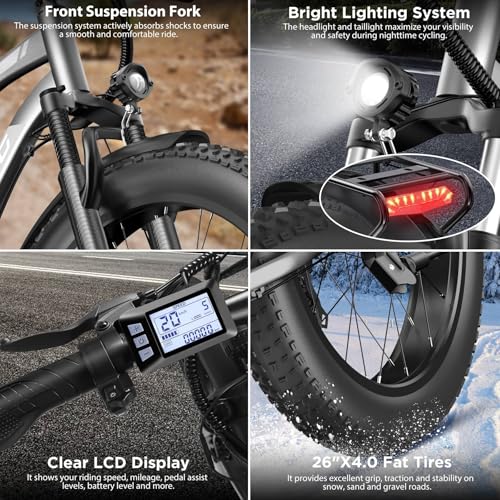
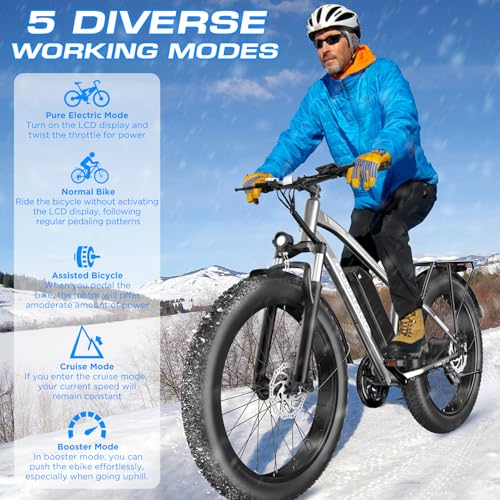
Fat tires and UL 2849 certification make the Funhang stand out in a sea of budget builds. The 26″x4.0″ tires aren’t just for show, they deliver real grip on sand, snow, and gravel, making this one of the few sub-$500 e-bikes that can genuinely go off-pavement. The 48V 13Ah battery supports a claimed 60-mile PAS range, and reviewers confirm it holds up well under moderate loads.
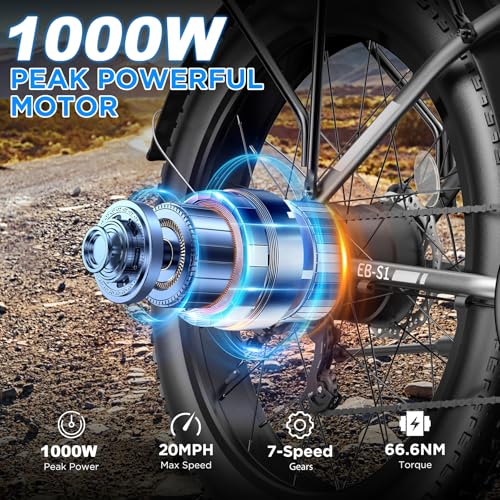
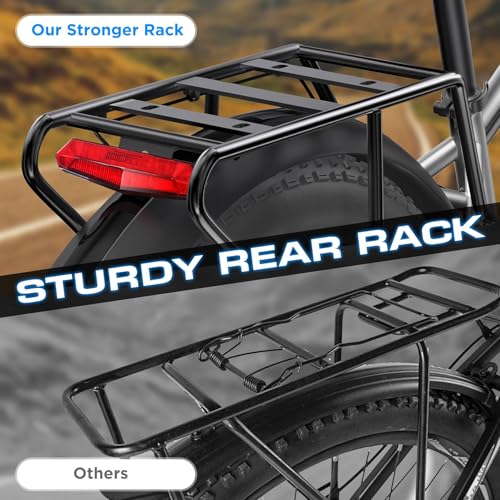
It runs a 500W nominal motor (1000W peak), so acceleration is decent but not explosive. The rear cargo rack rated for 60 lbs adds utility many competitors lack, ideal for hauling gear or groceries. Hydraulic brakes would’ve been a welcome upgrade, but the 180mm mechanical discs get the job done. Among fat-tire options, this is my pick for versatility, it bridges commuting and adventure better than most.
Product photos
How We Chose These electric mountain bikes under $1000
My approach to evaluating electric mountain bikes, especially in the under $1000 price bracket, wasn’t about long-term ownership or exhaustive trail testing of each model. Instead, I focused on a research-led comparison of published specifications, carefully weighing owner reviews and expert opinions from trusted sources. This allows for a broad overview of the market, identifying key strengths and weaknesses across different models, and ultimately ranking them against criteria important to the average rider.
For this category, motor power and battery range were the most heavily weighted factors. A potent motor is crucial for tackling varied terrain, while a practical range builds confidence for longer rides. Beyond those, suspension quality – particularly for absorbing impacts – was vital. After all, the fun of a mountain bike is diminished if the ride is harsh. You’ll find many options in this price range, and understanding these core elements separates the truly capable bikes from those that fall short. I also considered the availability of useful features like disc brakes and gear systems.
Specifications readily reveal motor wattage, battery capacity, and component quality. However, I placed significant value on owner feedback regarding real-world range, durability, and the reliability of components. Reputation matters; brands consistently praised for customer service and build quality received a boost in my assessment. You can explore some higher-end options if you’re willing to expand your budget – check out our guide to best electric mountain bikes under 3000 for a look at those. For those prioritizing a nimble feel, our look at lightweight electric mountain bikes may be helpful.
Choosing The Right electric mountain bikes under $1000
Finding the right electric mountain bike can open up trails and experiences you might not have considered before. But with so many options, especially when keeping the price under $1000, it’s crucial to know what truly matters.
A quality electric mountain bike blends a reliable motor and battery with a durable frame, effective braking, and appropriate suspension. Prioritize motor wattage for your terrain, battery capacity for desired range, and brake type for control. Look for a well-built frame capable of handling the stresses of off-road riding, and consider suspension to absorb bumps and improve comfort.
Motor Power and Torque
The motor is the heart of any e-bike, and for mountain biking, power and torque are key. Don’t get hung up on peak wattage alone; sustained wattage is more indicative of real-world performance. A 750W to 1000W motor will handle most trails comfortably, but if you anticipate consistently steep climbs or loose terrain, leaning towards the higher end of that range is wise. Remember, a bigger battery doesn’t negate the need for adequate motor power. If you’re considering spending a bit more, exploring options in the realm of affordable electric mountain bikes can unlock even more capability.
Suspension and Frame Material
The type of riding you plan to do will heavily influence your suspension needs. A hardtail (front suspension only) is sufficient for smoother trails and gravel roads, offering simplicity and lower cost. But for technical trails with rocks and roots, a full-suspension bike – with both front and rear suspension – is a standout.
Here’s how to think about suspension levels: * None: Best for paved surfaces, light gravel. * Front Suspension: Great for moderate trails, some bumps. * Full Suspension: Essential for rough terrain, maximizing comfort and control. It’s worth investigating full-suspension e-mountain bikes if you’re serious about tackling challenging trails.
A steel frame can handle more abuse, but adds weight. Aluminum is lighter, but may not be as durable. Carbon fiber offers the best of both worlds, but is typically found on higher-end models.
Brakes and Overall Value
Hydraulic disc brakes are a must-have for any serious electric mountain bike. They offer significantly more stopping power and modulation than mechanical disc brakes, especially in wet or muddy conditions. Don’t skimp here. Beyond the core components, consider the overall build quality, including the drivetrain (gears), tires, and display. A well-rounded package, even with a slightly less powerful motor, can often provide a better riding experience than a bike with a powerful motor but cheap components. Don’t overlook the value of a good warranty and readily available customer support. If you’re finding your options limited under $1000, considering slightly used models or exploring cheap e-mountain bikes can open up more possibilities.
Electric Mountain Bikes Under $1000 Compared
Here’s a comparison of key specifications for electric mountain bikes priced under $1000.
| Product Name | Motor Power (Peak) | Battery Capacity | Range (Miles) | Brakes | Gears |
|---|---|---|---|---|---|
| Jasion EB5 Ultra | 2500W | 52V 20Ah | 70 | Hydraulic | 7 |
| VOLTVOGUE 1000W | 1000W | 48V 5.2Ah | 45 | N/A | 3 |
| Misodo 1500W | 1500W | 48V 10.4Ah | 65 | Dual Disc | 7 |
| ASKGO 1500W Peak | 1500W | 48V 10Ah | 65 | Dual Disc | 7 |
| ASKGO 1500W Full Suspension | 1500W | 48V 10.4Ah | 65 | Dual Disc | 7 |
| Jasion EB5 1000W | 1000W | 360Wh | 25-40 | Disc | 7 |
| Funhang 1000W | 1000W | 48V 13Ah | 30-60 | Dual Disc | 7 |
Frequently Asked Questions
What battery capacity should I look for in an e-mountain bike under $1000?
A battery capacity of around 48V 10Ah is fairly standard in this price range, offering a realistic range of 30-60 miles depending on assist level and terrain. However, if you frequently ride hilly terrain or plan for longer excursions, prioritizing a higher capacity like 52V 20Ah will be beneficial, even if it means a slightly higher price.
Are the motors in these bikes powerful enough for steep climbs?
Most electric mountain bikes under $1000 feature motors in the 750W to 1500W range, which is generally sufficient for moderate climbs. For exceptionally steep or prolonged ascents, a motor closer to 1000W or 1500W is preferable, and you’ll find that some of the best electric mountain bikes offer even more power if you’re willing to spend more.
What is the difference between hardtail and full-suspension e-mountain bikes?
Hardtail bikes have suspension in the front fork only, making them lighter and more affordable. Full-suspension bikes feature both front and rear suspension, offering significantly improved comfort and control on rough terrain. The best choice depends on the type of trails you plan to ride; full suspension is crucial for technical trails, while a hardtail is adequate for smoother paths.
What should I know about brakes on these bikes?
Hydraulic disc brakes are vital for reliable stopping power, particularly when riding off-road in varying conditions. They offer superior modulation and stopping force compared to mechanical disc brakes. While some models under $1000 may come with unspecified “disc brakes”, it’s best to confirm they are hydraulic before purchasing.
Where can I find more options if I’m struggling to find what I need?
If you’re finding the selection limited, exploring the wider range of affordable electric bikes available might reveal suitable alternatives. You could also consider looking at slightly used models to potentially access higher-spec bikes within your budget.
The Bottom Line
Choosing an electric mountain bike under $1000 often comes down to balancing power with practicality. While options like the Jasion EB5 Ultra boast impressive peak wattage, the ASKGO 1500W Full Suspension strikes a more sensible balance of features, build quality, and rider comfort for most trails. It represents the sweet spot for capability without overspending.
For riders on a tighter budget, the VOLTVOGUE 1000W offers a surprisingly capable entry point, and if you’re prioritizing value, it’s hard to beat. But if you’re looking for something a bit more versatile for varied terrain, the Misodo 1500W provides a step up in range and component quality. And for those who might be willing to stretch their budget a little, exploring mountain bikes under $1000 can reveal even more refined options.
Ultimately, the specifications are just a starting point. It’s the overall feel, reliability, and how well a bike suits your riding style that matters most. Don’t get lost in the numbers; focus on finding a bike that inspires confidence and unlocks the joy of exploring trails, and for those with more flexibility, consider looking at electric mountain bikes under $5000 for a truly premium experience.
