
9 Best Electric Car Heaters of 2026
This post contains affiliate links. As an Amazon Associate, we earn from qualifying purchases.
The CYDZSW 12V 800W Car Heater stands out as the best overall for its powerful defrosting and solid build, while the Therwen 3 Pcs 150W offers strong versatility with its 360-degree rotation and compact design. For budget-focused buyers, the Sealy Heated Car Blanket delivers reliable warmth without drawing heavily on your vehicle’s electrical system.
Winter driving shouldn’t mean shivering through your commute or struggling with a fogged-up windshield. Many drivers overlook how much a well-chosen electric heater can improve both comfort and safety when temperatures drop. In this guide, I break down the top options based on real-world feedback, technical specs, and the kind of practical reliability you need when you’re relying on your vehicle day in and day out.
Top 9 Electric Car Heaters in the Market
The Best Electric Car Heaters, Reviewed
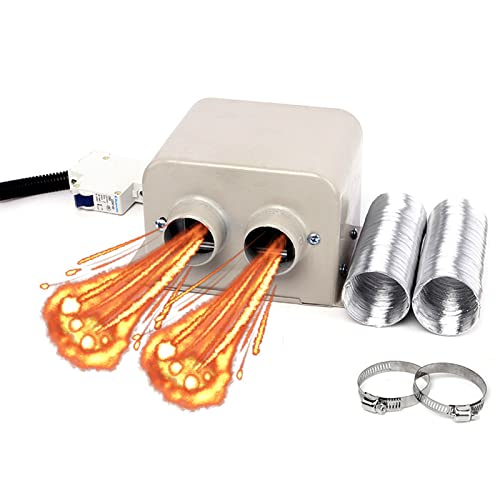
CYDZSW 12V 800W Car Heater
Strengths
- 800W high output
- PTC ceramic heating
- Durable alloy body
Trade-offs
- Hardwiring needed
- Not portable
- Risk of battery drain
At 800W, this is the most powerful heater on the list, and it shows in owner feedback, many call it a ‘standout’ for large cabins or overnight use in cold climates. The PTC ceramic heating core is a big upgrade: it self-regulates temperature, preventing overheating and reducing strain on your battery. Since it’s hardwired, it delivers full power without relying on a cigarette lighter, which is critical for high-draw applications.
Installation is straightforward with included clamps and brackets, and the aluminum alloy housing resists corrosion. Some users noted the instructions could be clearer, but video guides help. Compared to the 500W CYDZSW model, this one heats faster and sustains warmth better. If you’re running a truck, camper, or UTV in freezing conditions, this is the smarter buy.
Video review
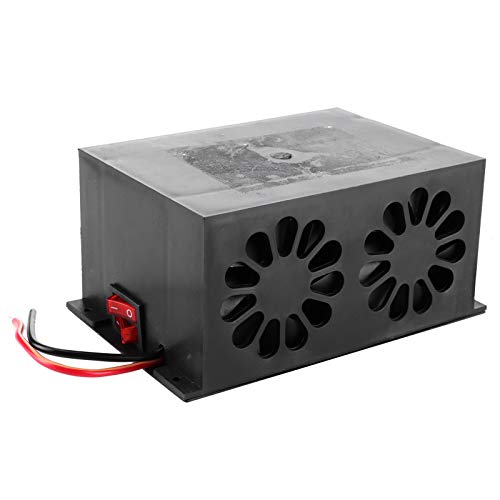
Portable Car Heater 600W
Strengths
- 600W strong output
- PTC ceramic heating
- Multiple mounting options
Trade-offs
- No auto shut-off
- Basic controls
- Cord management issues
This floor-mounted 600W heater hits a sweet spot between power and price. With three air outlets and a PTC ceramic core, it delivers solid warmth to the footwell and lower windshield, exactly where you need it in winter. The PVC and aluminum build feels sturdier than most plug-in models, and owners report it’s effective at defogging even in sub-30°F conditions.
It can be mounted under the seat or on the floor, giving flexibility over airflow direction. Unlike suction-mounted units, this one stays put. The double-gear switch lets you adjust output, though it lacks a timer. For the budget-friendly category, this is the one I’d recommend over basic fan heaters, it’s more durable and actually moves meaningful heat.
Video review
12V Car Heater with Suction Mount

Strengths
- Fast defrosting
- Overheat protection
- Suction mount
Trade-offs
- Limited heat output
- Not for large cabins
- May trip weak circuits
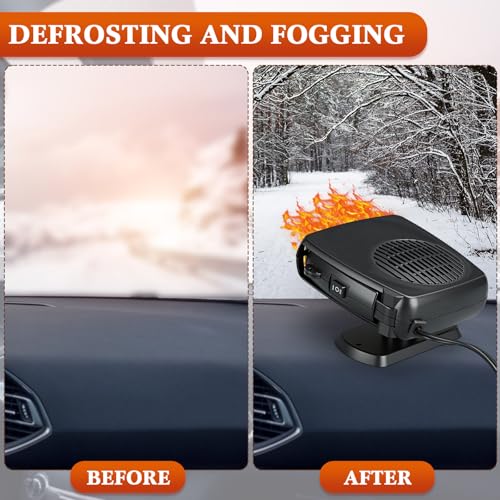
This is a no-frills, plug-and-play solution for drivers who just want to clear their windshield fast without scraping ice or waiting for the cabin to warm up. On paper, the 2-in-1 heating and cooling function sounds useful, but owners consistently report that the real value is in its defrosting speed, especially during early morning commutes. The 180° rotatable suction mount works well on most windshields, letting you aim the airflow precisely where frost builds up. It’s not going to heat the whole cabin, but that’s not what it’s for.
I’d rank this slightly above basic fan-only defoggers thanks to its alloy heating element, but it’s not as powerful as hardwired units. If your car has a weak cigarette lighter circuit, you might see voltage drops or tripped fuses, something several reviewers noted. Still, for the price, it’s a solid pick if you need targeted defrosting and don’t want to mess with wiring.
Product photos


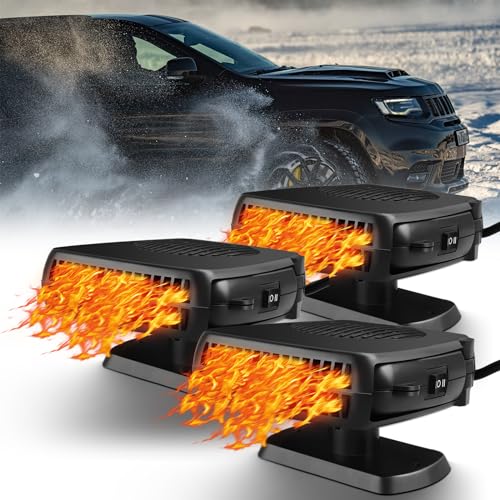
Therwen 3 Pcs 150W Car Heater
Strengths
- Affordable 3-pack
- 360° rotation
- Plug-and-play
Trade-offs
- Low heating power
- Plastic build
- Not for heavy ice
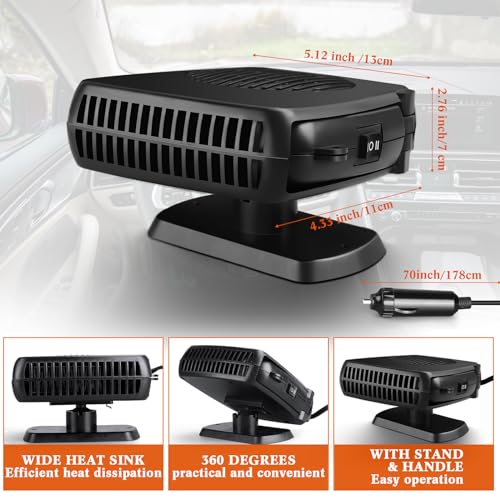
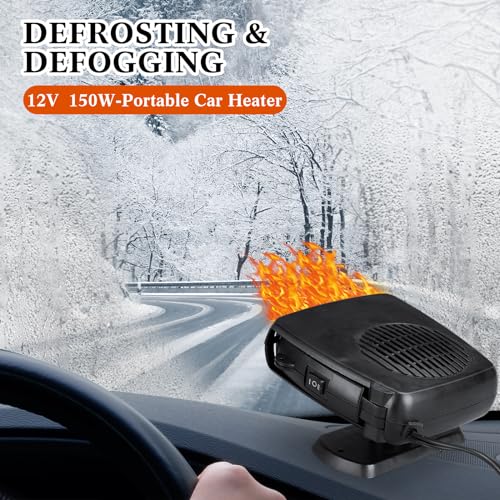
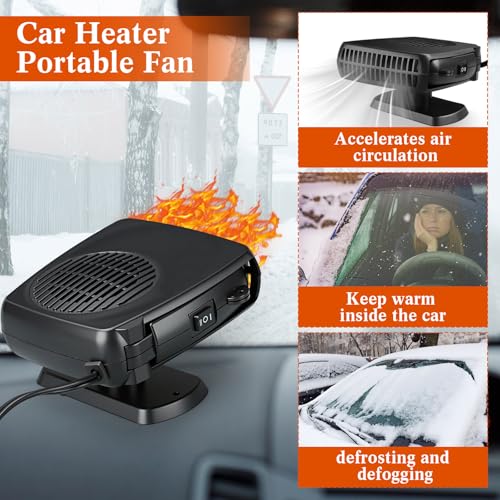
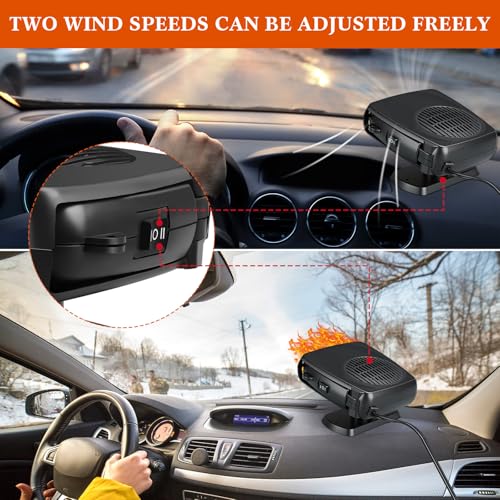
Selling as a 3-pack, this set is clearly aimed at budget buyers who want multiple units for different vehicles or to cover more windshield area. Each unit is basic, 150W output means slow heating, and owners report it works best as a defogger rather than a true heater. The 360° swivel mount is functional, and the dual heating/cooling mode is a novelty, though the cooling is just fan-only airflow.
It’s the lowest-wattage heater in this list, so don’t expect it to melt thick ice. But for light frost or fog in smaller cars, it does the job. The real value is in buying three for the price of one higher-end model. I’d recommend this as a backup or secondary unit, not as a primary winter solution. Still, for the price, it’s a decent value for someone with multiple 12V vehicles.
Product photos
CYDZSW 12V 500W Battery Heater
Strengths
- Direct battery power
- Durable metal build
- Good airflow coverage
Trade-offs
- Requires wiring
- Not plug-and-play
- Basic mounting hardware
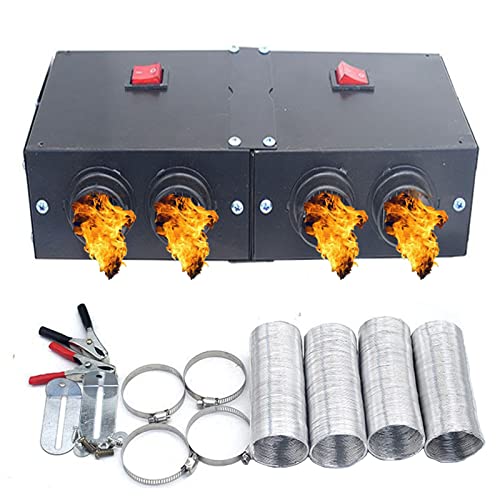
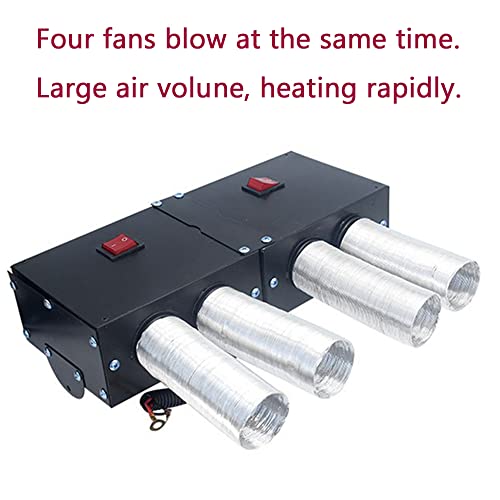
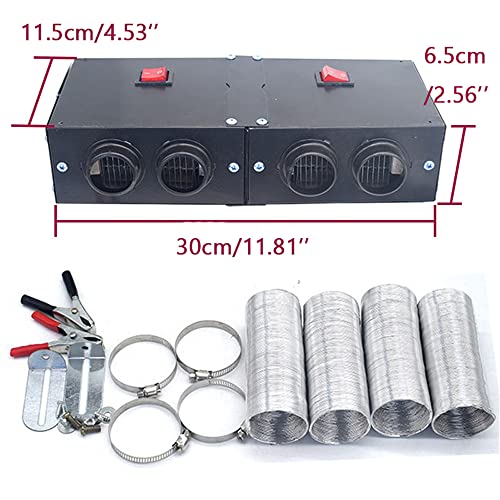
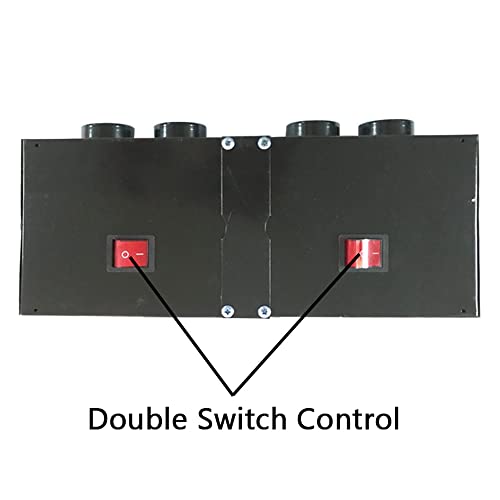
With 500W of output and a direct battery connection, this heater steps up in power over plug-in models, making it better suited for larger cabins like those in UTVs, trucks, or older RVs. The all-metal construction stands out, owners praise its durability compared to plastic-bodied units that warp over time. Since it taps directly into the battery, it bypasses the cigarette lighter’s amp limits, which means more consistent performance even in subzero temps.
The four air outlets help distribute warmth, but installation requires some basic wiring knowledge. It’s not plug-and-play, and a few users reported confusion with polarity during setup. Still, once installed, it delivers strong, steady heat with low noise. I’d pick this over lower-wattage models if you’re running a work truck or off-road vehicle where quick cabin warming matters.
Product photos
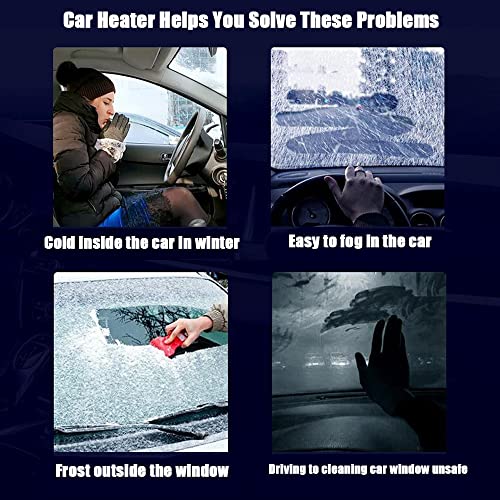
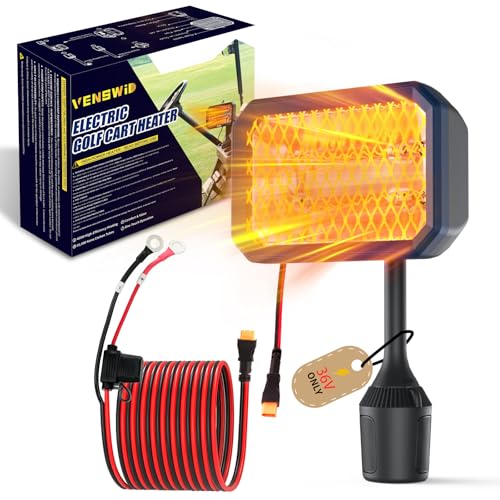
36V Golf Cart Heater
Strengths
- Instant carbon fiber heat
- 360° adjustable
- Energy efficient
Trade-offs
- 36V only
- Hardwiring required
- Not for street vehicles
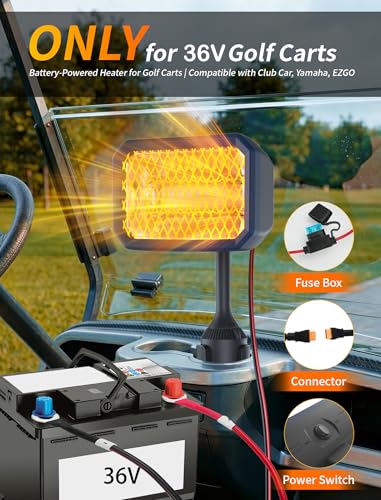
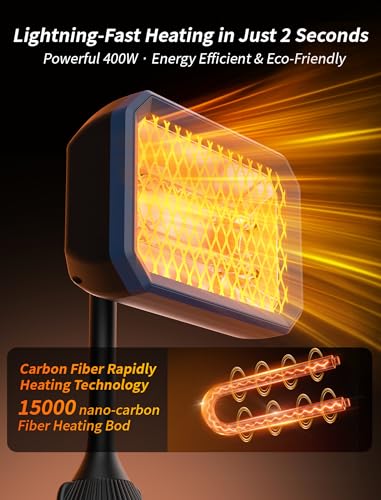
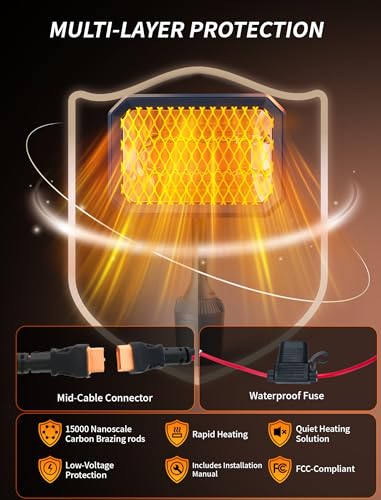
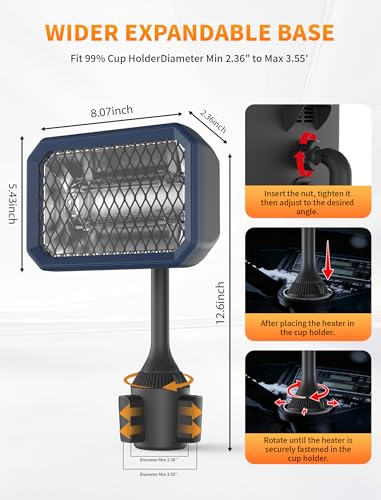
This heater is built specifically for golf cart owners who hate cutting short their rounds due to cold weather. The carbon fiber heating element heats up in just three seconds, and the 360° rotatable head lets you direct warmth exactly where you need it, whether it’s at your feet or across the bench seat. Since it’s hardwired to the 36V system, it draws efficiently without spiking the circuit, and the mid-cable disconnect is a smart touch for seasonal removal.
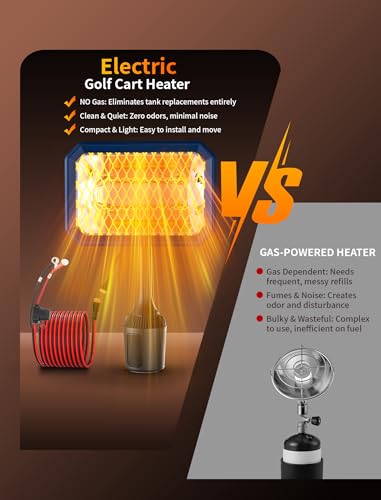
Owners love that it eliminates propane tanks and the risks of carbon monoxide, and the energy draw is low enough that it won’t drain your cart’s battery over a full day of play. The PA66 nylon housing holds up well to sun and moisture, which matters on open-air carts. If you have a 48V system, skip this one, there’s a separate model for that. But for 36V carts, this is the upgrade worth making.
Product photos
Sealy Heated Car Blanket Grey
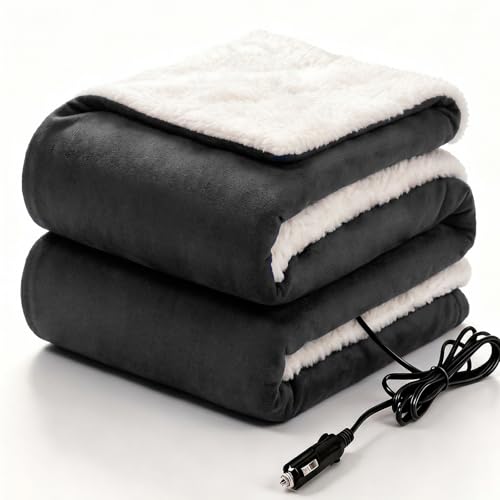
Strengths
- Machine washable
- Three heat levels
- Long power cord
Trade-offs
- Only heats one person
- Takes time to warm up
- Not for rapid defrosting
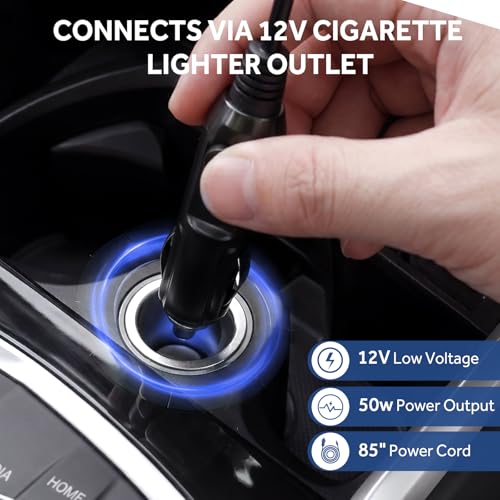
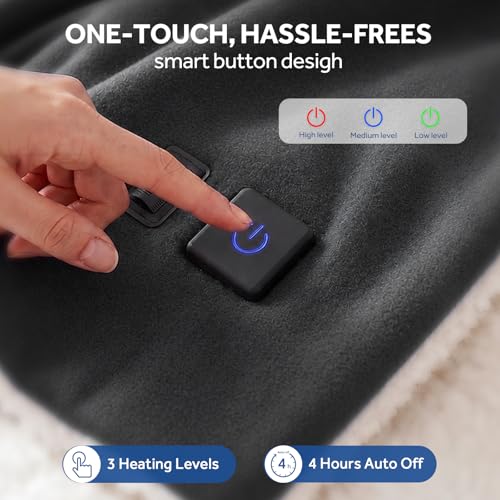
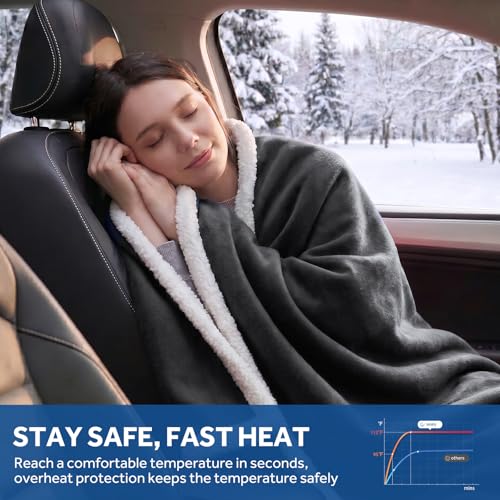
The Sealy heated blanket stands out in a crowded category because it’s actually machine washable, a rare feature most competitors skip. That alone makes it a smarter long-term buy, especially if you’re using it regularly during winter commutes or overnight camping trips. It offers three heat settings and an auto-off timer, which reviewers say prevents battery drain if you accidentally leave it plugged in.
It won’t replace cabin heat, but it does an excellent job of keeping the driver or passenger warm without cranking the whole system. The 85-inch cord is long enough to reach rear seats, and the silicone switch is durable. Compared to the Westinghouse model, this one wins on convenience for frequent use. If you’re someone who spends hours in a parked vehicle, like security, delivery, or over-the-road drivers, this blanket pays for itself in comfort.
Product photos

Westinghouse Heated Car Blanket

Strengths
- Soft polar fleece
- Long power cord
- Affordable price
Trade-offs
- Hand wash only
- No machine wash
- Basic switch design
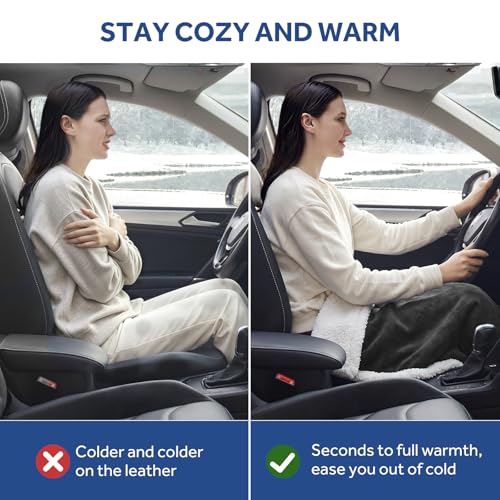
This blanket delivers solid warmth with soft polar fleece and a generous 59″x43″ size, making it great for full-body coverage. The 85-inch cord is a win for rear passengers, and the charcoal color hides wear better than lighter models. It heats up quickly and includes overheat protection, which owners appreciate for safety during long drives.
But the big downside? It’s hand-wash only. That’s a step back from the Sealy model, which is machine washable. For occasional use, it’s fine. But if you’re using it weekly, the maintenance hassle adds up. It’s a good budget blanket, but not the best long-term value. I’d pick it only if you’re on a tight budget and don’t plan to wash it often.
Product photos


Facon 120V Battery Heater Pad

Strengths
- Prevents battery freeze
- Auto thermostat
- Thin and durable
Trade-offs
- Needs 120V outlet
- Not for lithium batteries
- Garage-only use
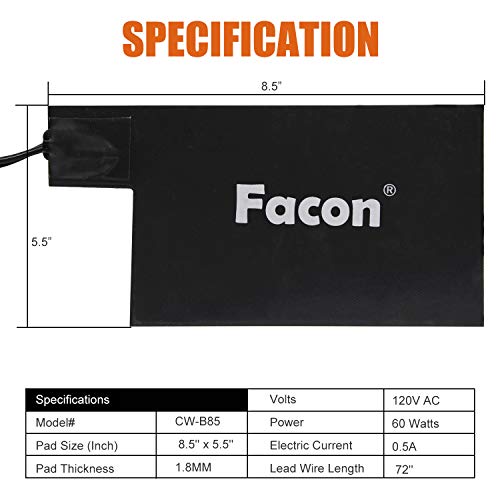
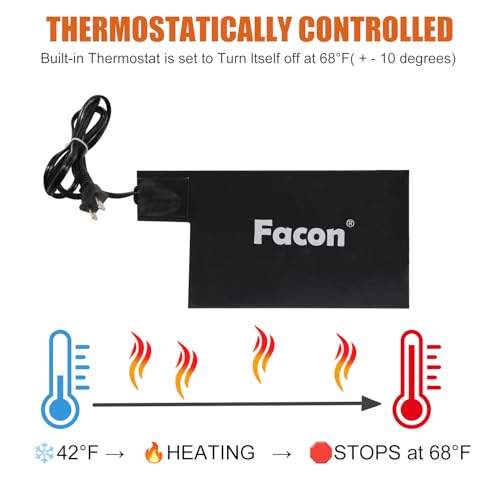
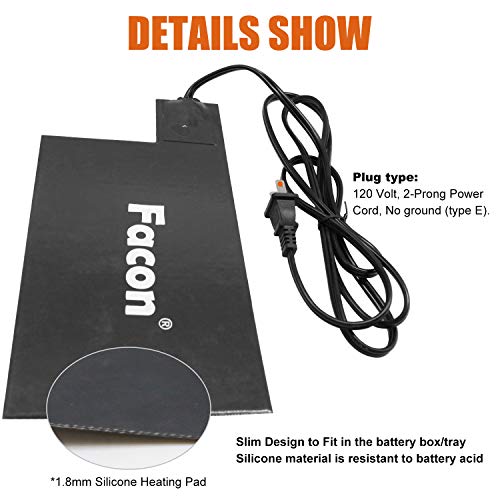
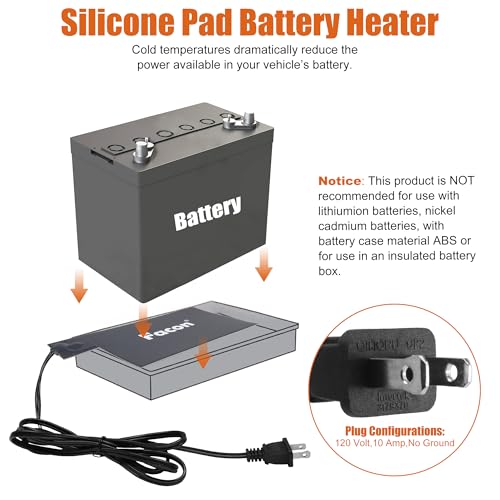
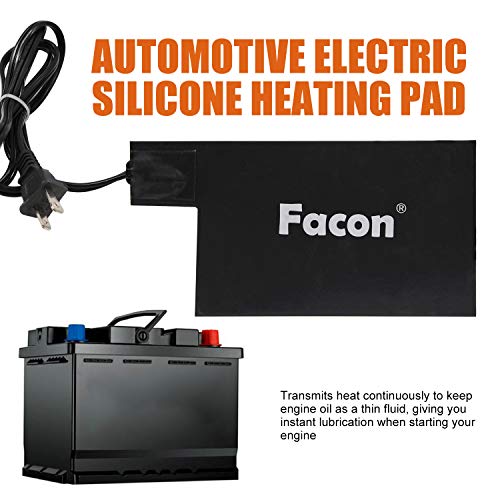
This isn’t a cabin heater, but it solves a critical winter problem: dead batteries. The Facon pad wraps under your battery and keeps it at a stable 68°F when plugged into a 120V outlet, preserving cold cranking amps so your engine starts reliably. It’s slim, waterproof, and silicone-coated, ideal for under-hood use where oil and acid exposure are concerns.
Owners in northern states swear by it for classic cars or vehicles that sit unused for days. The thermostat auto-shuts off when the battery is warm, so you don’t have to monitor it. But it’s AC-powered, so you need garage access. If you park outside without outlets, this won’t help. Still, for preventing morning no-starts, it’s one of the most effective tools available.
Product photos
How We Picked These electric car heaters
As someone who spends a lot of time thinking about vehicles – from restorations to road trips – I understand the desire for comfort behind the wheel. To recommend the best electric car heaters, I didn’t rely on personal long-term use with each model. Instead, my approach was research-led: a comparison of published specifications, a careful review of owner feedback from multiple sources, and applying my understanding of automotive electrical systems and heating technology. I weighed these factors against clear criteria like heating speed, safety features, and overall value.
The most important factors in an electric car heater are heating efficiency and safety. A heater needs to quickly raise the temperature inside the vehicle, but it must do so without posing a fire risk or draining the battery excessively. I prioritized models with PTC ceramic heating elements, as they’re known for rapid heating and automatic temperature regulation. Beyond that, build quality and user-friendliness – how easily it installs and operates – were key differentiators. You’ll find many options, including those discussed in our guide to portable car heaters.
Specifications tell you a lot about potential performance – wattage, voltage, materials used – but owner reviews reveal real-world experiences. I paid close attention to comments regarding durability, ease of installation, and whether the heater actually delivered on its promises. Reputable expert reviews helped validate claims and identify potential red flags. For those planning winter adventures, exploring heaters for car camping can provide additional options for staying warm during your travels.
How To Pick The Right electric car heaters
Finding the right electric car heater can make a huge difference in winter comfort, but there’s more to it than just blasting hot air. A truly effective heater needs to address the specific challenges of a vehicle environment, from limited power to the need for rapid defrosting.
A good electric car heater prioritizes safety with features like overheat protection and quality wiring. It should offer sufficient wattage for the vehicle size, efficient heating elements (typically PTC ceramic), and a design suited to its intended purpose – whether it’s supplemental cabin warmth, rapid defrosting, or maintaining battery performance in frigid temperatures. Look for durable materials and consider ease of installation and use.
Wattage and Vehicle Size
The wattage of a car heater is a crucial factor, but it’s not a simple case of “more is better.” A higher wattage heater will draw more power from your car’s electrical system. Most passenger vehicles have a 12V system, and exceeding the circuit’s capacity can drain the battery quickly or even blow a fuse. For smaller cars or just supplemental heat, a 150W-500W heater may be sufficient. Larger vehicles, vans, or those in extremely cold climates might benefit from options up to 800W, but be mindful of the potential strain. If you’re looking at options for larger vehicles, you might also want to explore some of the best car heaters available, which often offer higher output.
Defrosting and Airflow Design
Many of us reach for a car heater primarily to clear a frosted or fogged windshield. In these cases, airflow design is paramount. A heater with multiple adjustable vents or a focused nozzle will be far more effective than one that simply blows warm air in a general direction. The CYDZSW 12V 800W model, for example, emphasizes defrosting in its feature set. Consider where the heater will be mounted; a suction-cup mount allows for precise aiming, while a floor-standing unit might be better suited for general cabin warming.
- A heater with a 360-degree rotating bracket, like the Therwen, provides maximum flexibility in directing airflow.
- Models specifically designed for windshield defrosting often feature a more focused and powerful airflow pattern.
- Don’t underestimate the value of a simple, robust fan; even a low-wattage heater can be effective at defrosting if it moves air efficiently.
Specialized Applications and Value
Beyond basic cabin heating, certain vehicles benefit from specialized heater designs. Golf carts, for instance, often require 36V heaters, as demonstrated by the dedicated 36V Golf Cart Heater. Similarly, maintaining battery temperature in UTVs and trucks in sub-freezing conditions calls for a dedicated battery heater like the CYDZSW 12V 500W Battery Heater.
A practical rule of thumb: if you live in a climate with consistently below-freezing temperatures, investing in a battery heater is a smart preventative measure to avoid starting problems.
For everyday use, consider a heated blanket. Options like the Sealy Heated Car Blanket are a cost-effective way to stay warm without relying solely on the car’s heating system, and can be particularly useful for passengers. If you’re preparing for harsh winter conditions, researching heaters for winter will ensure you’re equipped for the cold.
Electric Car Heaters Compared
Here’s a comparison of key specifications for the electric car heaters described.
| Product Title | Power (Watts) | Voltage (V) | Features | Mounting/Type | Dimensions (in) |
|---|---|---|---|---|---|
| CYDZSW 12V 800W Car Heater | 800 | 12 | Defrost, Defog, De-ice | Portable | N/A |
| Portable Car Heater 600W | 600 | 12 | 3 Outlets, Dual Temp | Floor/Portable | N/A |
| 12V Car Heater w/ Suction Mount | N/A | 12 | Fast Heat, Defog | Suction Mount | N/A |
| Therwen 3 Pcs 150W Car Heater | 150 | 12 | Heat/Cool, 360° Rotation | Portable | 5.12×4.33×2.76 |
| CYDZSW 12V 500W Battery Heater | 500 | 12/24 | Defrost, Defog, 4 Outlets | Portable | N/A |
| 36V Golf Cart Heater | N/A | 36 | Carbon Fiber, 360° Rotation | Cup Holder/Hardwire | N/A |
| Sealy Heated Car Blanket Grey | N/A | 12 | 3 Heat Levels, Auto-Off | Blanket | N/A |
| Westinghouse Heated Car Blanket | N/A | 12 | Polar Fleece, 85″ Cord | Blanket | 59×43 |
| Facon 120V Battery Heater Pad | 60 | 120 | Battery Warmer | Pad | 8.5×5.5×0.18 |
Frequently Asked Questions
What wattage heater is safe for most cars?
A heater between 150W and 500W is generally safe for most cars, as it won’t overly strain the 12V electrical system. Higher wattage options exist, but exceeding your car’s circuit capacity can drain the battery or blow a fuse.
Can an electric car heater also defrost my windshield?
Yes, many electric car heaters are designed with defrosting in mind. Look for models with adjustable vents or a focused nozzle to direct airflow specifically at the windshield, like the CYDZSW 12V 800W model.
Are there heaters specifically for golf carts?
Yes, golf carts often require a 36V heater due to their electrical systems. The 36V Golf Cart Heater is a purpose-built option designed to provide warmth in these vehicles.
What’s the benefit of a heated blanket versus a traditional heater?
A heated blanket offers a cost-effective way to stay warm, especially for passengers, and uses less power than a full-cabin heater. Consider options like the Sealy Heated Car Blanket if you want focused warmth without taxing the electrical system.
Where can I find options to add warmth to my seats?
If you’re looking for more targeted warmth, explore options for aftermarket car seat heaters. These kits allow you to install heated seats in vehicles that didn’t originally come equipped with them.
The Bottom Line
Choosing an electric car heater often comes down to balancing immediate warmth with the potential draw on your vehicle’s electrical system. While a powerful unit like the CYDZSW 12V 800W Car Heater delivers rapid heating and strong defrosting capabilities, it demands more from your battery. For overall performance and a good blend of power and efficiency, I believe the Portable Car Heater 600W strikes the best balance for most drivers.
If you have specific needs, several options stand out. For those needing a dedicated solution for a golf cart, the 36V Golf Cart Heater is purpose-built and effective. And for anyone prioritizing personal comfort, particularly on longer drives, exploring options like the Sealy Heated Car Blanket Grey or other car seat heaters can provide a focused and efficient warmth.
Ultimately, wattage and airflow are important, but don’t get lost in the specs. A reliable heater is one that’s safe, well-constructed, and appropriate for the size of your vehicle. It’s about finding a solution that provides consistent warmth and peace of mind, and understanding the capabilities of your vehicle’s system – whether you’re looking at standard 12-volt car heaters or [12V heaters] for a quick supplemental heat boost.
