
7 Best Electric Boat Trailer Winches of 2026
This post contains affiliate links. As an Amazon Associate, we earn from qualifying purchases.
The Megaflint 3500lbs with Dyneema rope stands out as the best overall electric boat trailer winch for its strong rolling pull, reliable dual controls, and modern synthetic line. For budget-focused buyers, the Nilight 3500 lbs offers solid specs with steel cable, while the Megaflint 6000 lbs gives extra power for heavier boats without sacrificing key features.
Boat owners know the frustration of a winch that quits mid-retrieve or struggles on a slick ramp. A dependable electric winch isn’t a luxury, it’s what stands between a smooth launch and a stranded boat.
After comparing specs and owner feedback across the category, I focused on real-world performance, durability, and smart features like synthetic rope and dual-control systems. This guide cuts through the marketing to show you which winches actually deliver when you’re at the water’s edge.
Top 7 Electric Boat Trailer Winches in the Market
The Best Electric Boat Trailer Winches, Reviewed
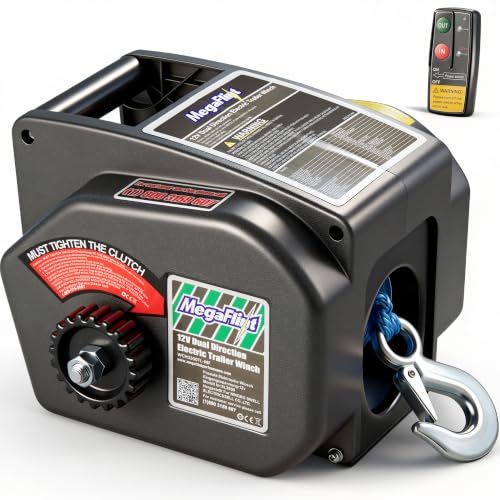
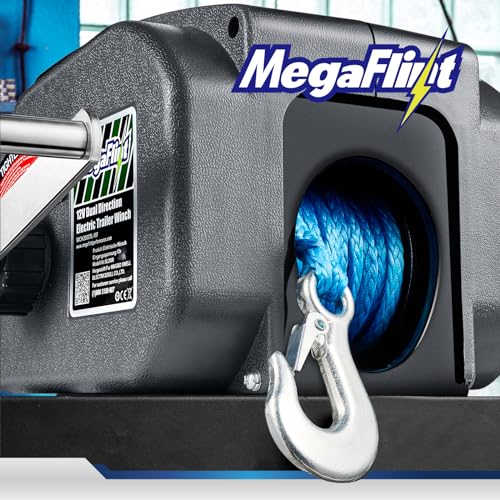
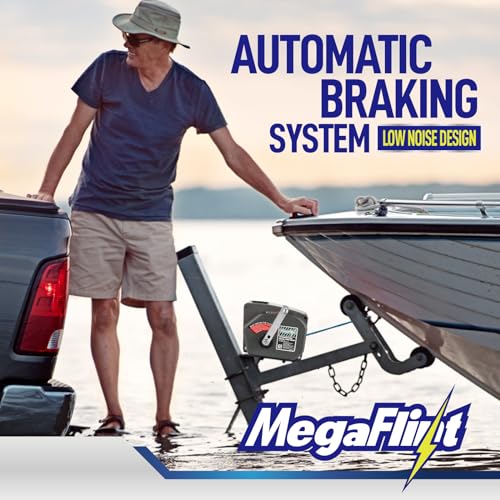
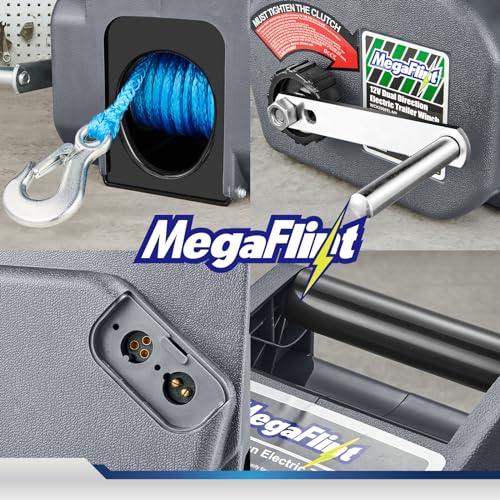
Megaflint 3500lbs Electric Boat Winch
Strengths
- 15X stronger Dyneema rope
- Waterproof sealed plug
- Low noise operation
- Dual remote controls
- Includes emergency hand crank
Trade-offs
- Slightly heavier than minimalist models
- Gear ratio may slow retrieval under max load
- Not rated for boats over 5,000 lbs
This Megaflint model hits a sweet spot in specs and owner satisfaction. With a 3500 lb rated pull and 15X stronger Dyneema rope, it offers serious durability gains over steel-cable units while staying lightweight. The dual remote controls, wireless and wired, are a thoughtful touch, especially when launching solo in wet or windy conditions.
Its 265:1 gear reduction delivers smooth, low-noise operation, and reviewers frequently highlight how quiet it runs compared to older ratcheting models. The waterproof plug adds confidence for marine use, and the inclusion of a hand crank means you’re never stranded. Compared to similarly priced units like the Nilight, this one edges ahead with better rope tech and slightly more refined engineering.
Video review
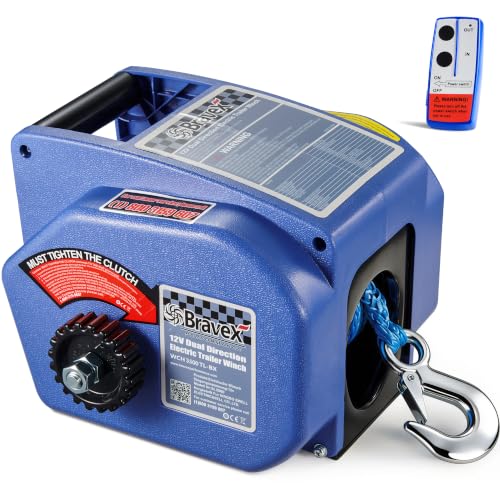
Boat Trailer Winch 8750 lbs
Strengths
- High pulling capacity
- Dyneema synthetic rope
- Triple control options
- Tool-free installation
- Wide hitch compatibility
Trade-offs
- Pull strength drops sharply on inclines
- Rope requires frequent inspection
- Higher price point
On paper, this winch stands out with its unusually high rated pulls, 8750 lbs marine and 10500 lbs rolling. That’s 20% more power than standard units, which sounds impressive for heavier boats up to 18 feet. The triple-control setup (wireless, wired, and manual) is a smart fail-safe design, giving operators real flexibility whether the battery’s dead or conditions turn rough.
The use of Dyneema synthetic rope is a major plus, it’s lighter than steel and safer on the hands, though owners consistently report checking it regularly since synthetic lines can wear without obvious signs. At this capacity, I’d want that auto brake system to be rock solid, and feedback suggests it performs well under load. Still, some users note the listed pull ratings assume ideal conditions, so steep ramps will cut performance fast.
Video review
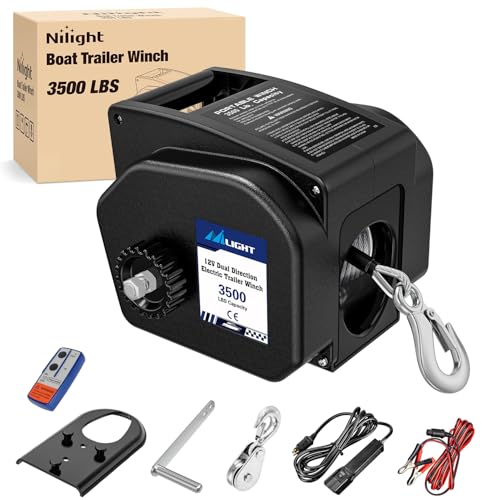
Nilight 3500 lbs Electric Winch
Strengths
- Affordable pricing
- Galvanized steel cable
- Auto brake system
- Dual remote controls
- Tool-free mounting plate
Trade-offs
- Heavier steel cable
- Noisy compared to premium models
- Cable harder to handle manually
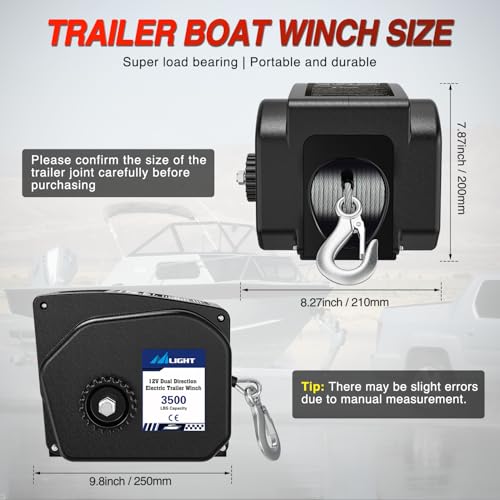
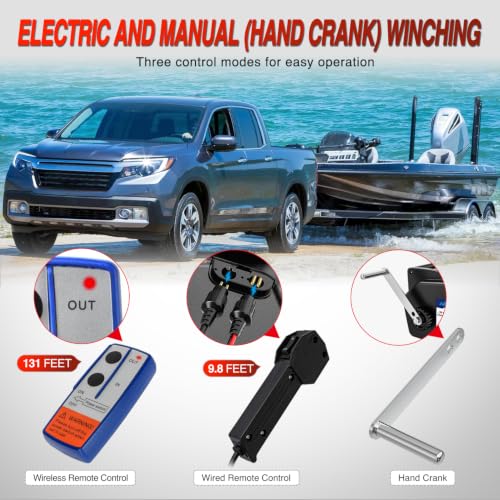
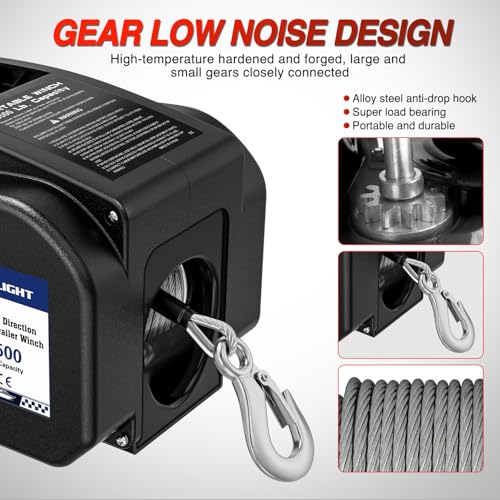
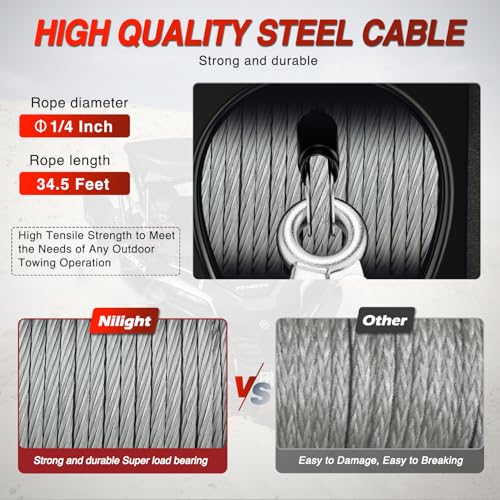
If value matters most, the Nilight is hard to ignore. It matches many mid-tier models with a 3500 lb rated pull, 265:1 gear reduction, and both wireless and wired remotes, all at a lower entry cost. Owners appreciate the galvanized steel cable for its rust resistance, though it’s heavier and less safe than synthetic lines if it snaps.
It handles standard 18-foot boats without issue, and the automatic braking system gets consistent praise for reliability. While not as quiet as some competitors, it’s still a big step up from mechanical winches. I’d pick the Megaflint over this if you want Dyneema rope, but if you’re okay with steel cable and just need solid, no-frills performance, this is the smarter buy.
Product photos

VEVOR 2000 lbs Electric Boat Winch
Strengths
- Very affordable
- Fast line retrieval
- Lightweight design
- Manual crank backup
- Simple setup
Trade-offs
- Limited to small boats
- Plastic housing less durable
- Lower overall build quality
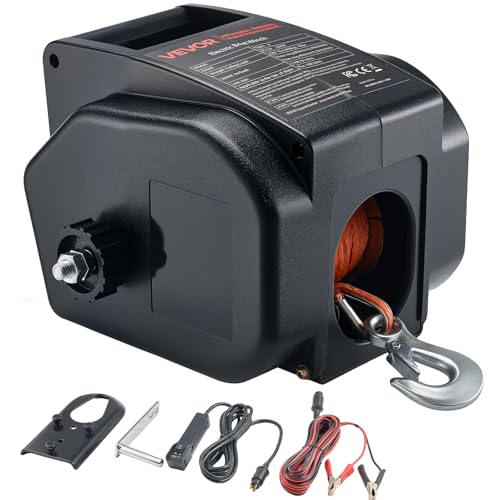
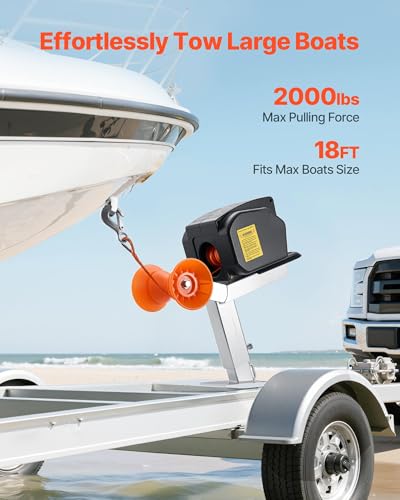
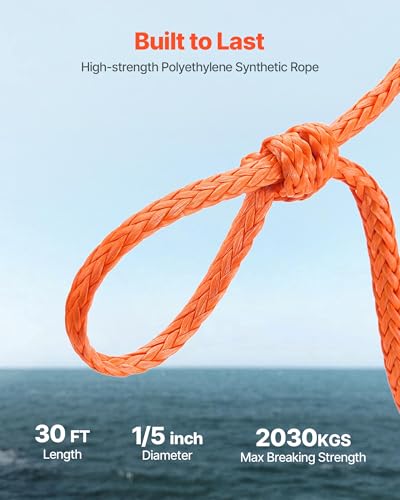
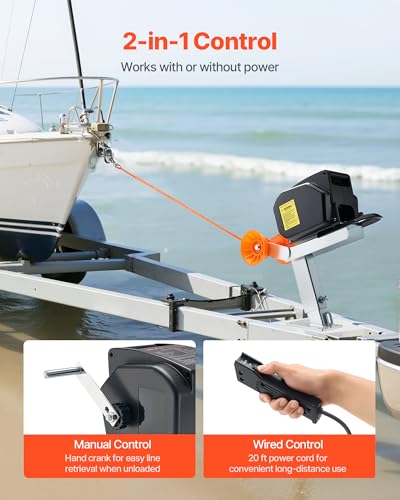
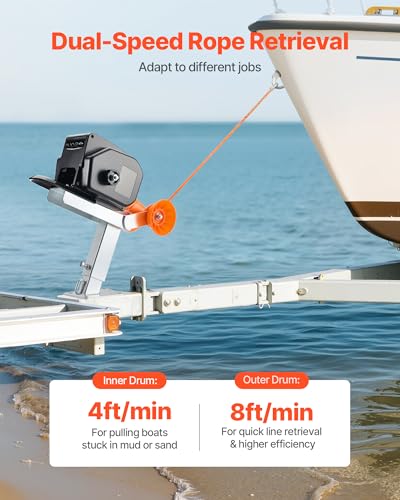
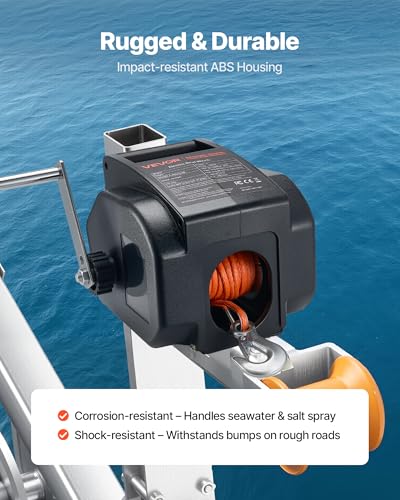
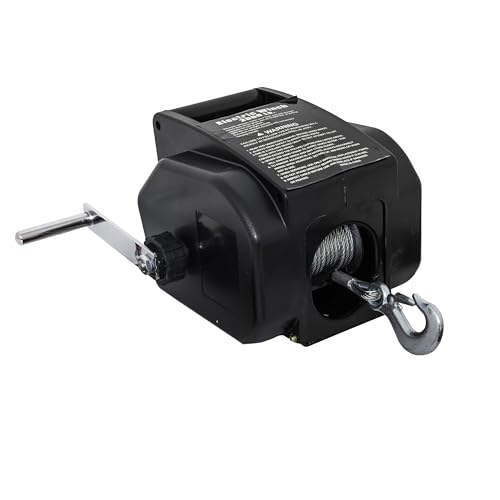
At under $80, the VEVOR is clearly built for small trailers and light-duty use. Its 2000 lb pulling capacity suits smaller craft, think inflatables, jon boats, or car-top kayaks on wheeled dollies. The polyethylene rope is decent for the price, but it’s not in the same league as Dyneema or even heavy steel cables.
What stands out is the fast retrieval speed, up to 8 ft/min on outer layers, which makes loading quicker than manual cranking. However, the ABS housing feels thin compared to steel-bodied units, and long-term durability is a question mark. For occasional users or backup setups, it works. But for daily launches or saltwater exposure, I’d spend more.
Product photos
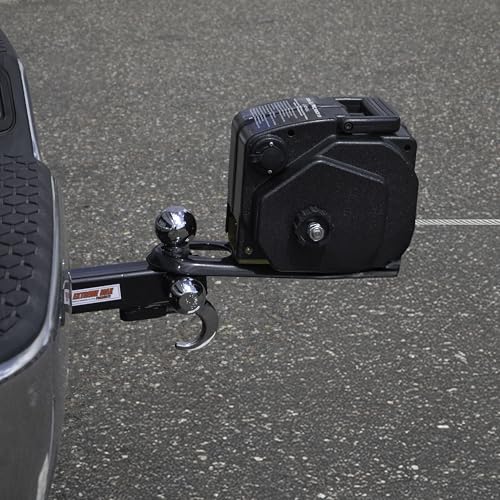
Extreme Max 6000 lbs Electric Winch
Strengths
- True marine-grade build
- Reversible power operation
- Quiet braking system
- High rolling capacity
- Robust mechanical design
Trade-offs
- No synthetic rope included
- Higher amperage draw
- Remote cord length could be longer
Extreme Max has a reputation in marine hardware, and this model shows why. It claims ~30% more force than standard winches, and while exact benchmarks vary, owner feedback confirms it pulls smoothly under load. The dynamic and mechanical braking combo keeps things stable, and the low-noise design is a real upgrade from clunky ratchets.
It supports full reversible operation, power-in, power-out, freewheel, and manual, which gives excellent control during delicate launches. Compared to the similarly rated Megaflint, it feels more purpose-built for marine use, with tighter seals and better weather resistance. I’d recommend it for anyone routinely launching in tidal zones or slippery ramps where precision matters.
Product photos
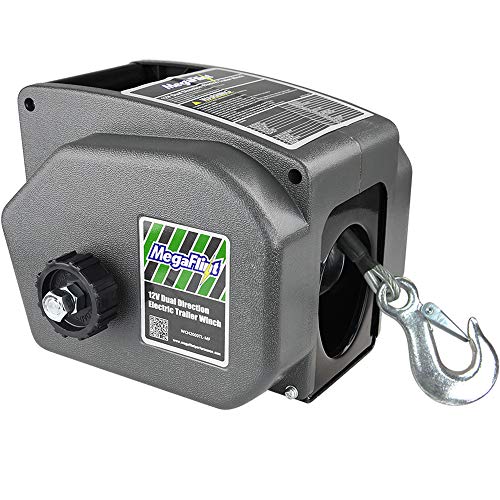
Megaflint 6000 lbs Reversible Electric Winch
Strengths
- Dyneema synthetic rope
- 30% more power than standard
- Freewheel and power-out modes
- Rugged rocker switch remote
- Good value for capacity
Trade-offs
- Lower straight-pull rating
- Motor can overheat
- Installation instructions lacking detail
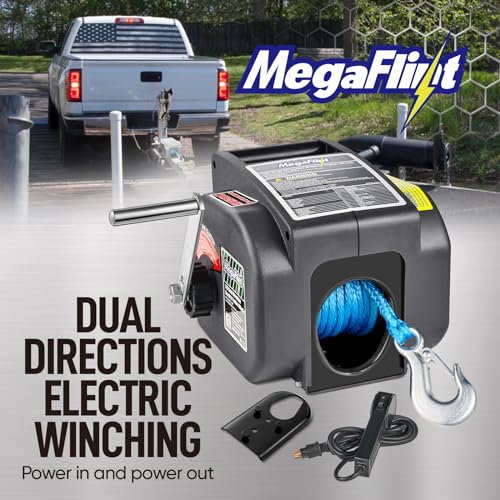
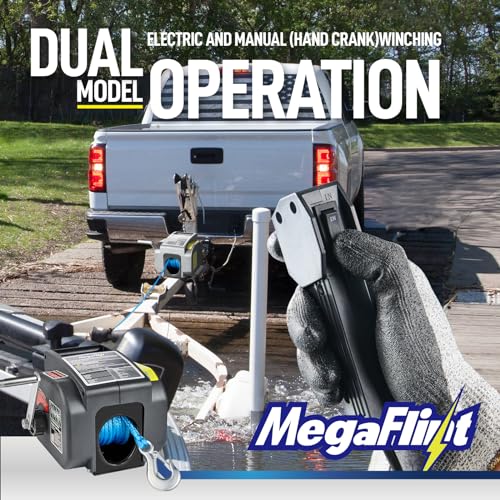
This Megaflint unit earns its ‘Best Synthetic Rope’ tag thanks to the Dyneema fiber line, flexible, strong, and far safer than steel when under tension. Rated at 6000 lbs rolling and 5000 lbs marine, it’s designed for serious trailering work, though the actual straight pull is only 2000 lbs, which can be misleading if you’re not reading carefully.
The rocker switch remote is simple and rugged, and the freewheel/power-out functions add versatility. Some owners mention the motor heating up during extended use, but that’s common in this class. Compared to the Extreme Max, it offers similar capacity but with better rope material. My pick if you want synthetic line safety without stepping into premium pricing.
Product photos
PLITEDDE 2000 lbs Electric Trailer Winch
Strengths
- Extremely affordable
- Overload protection
- Heavy-duty steel construction
- Long steel cable
- Complete mounting kit
Trade-offs
- No wireless remote
- Steel cable prone to rust
- Basic plastic housing sections
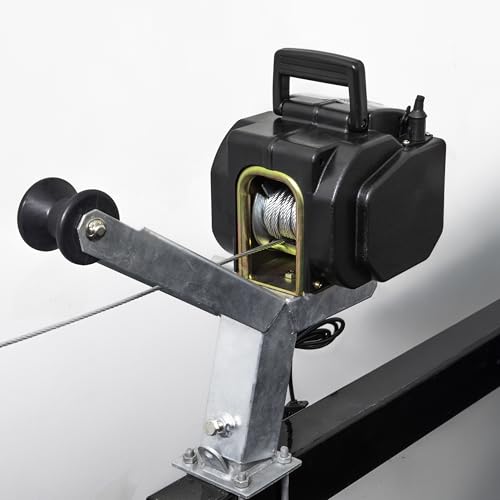
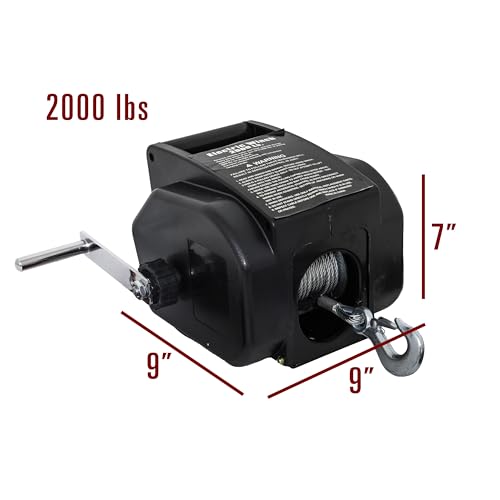
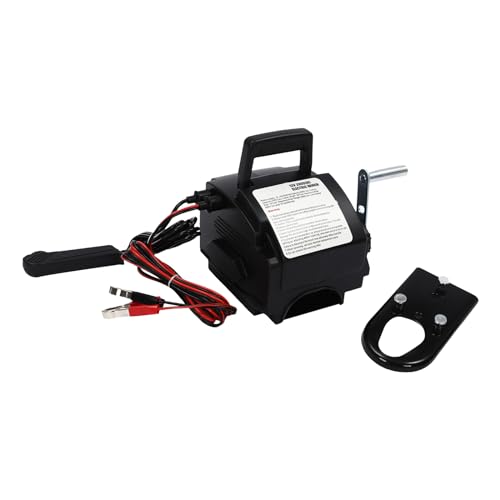
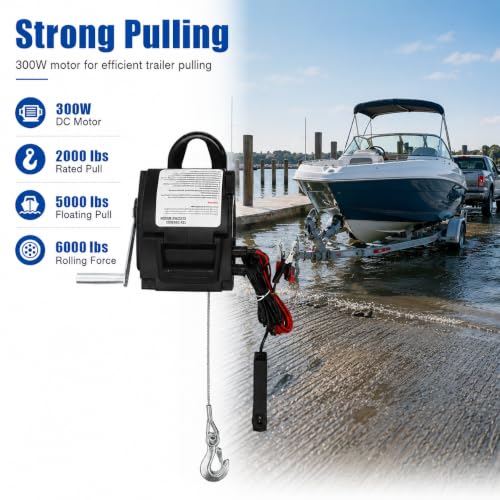
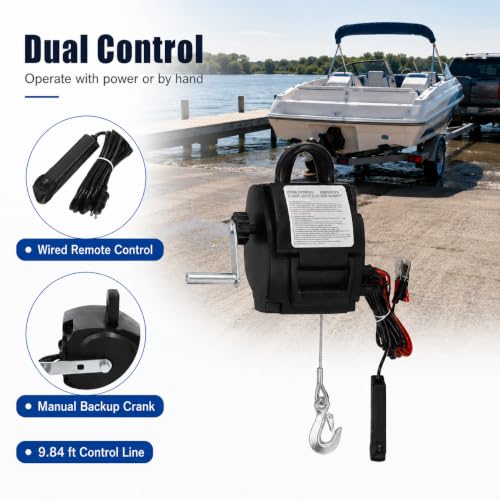
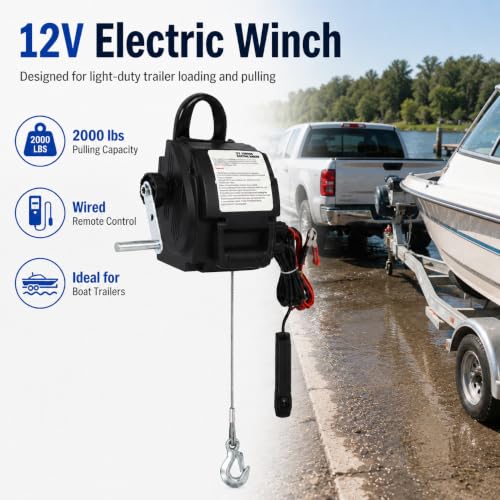
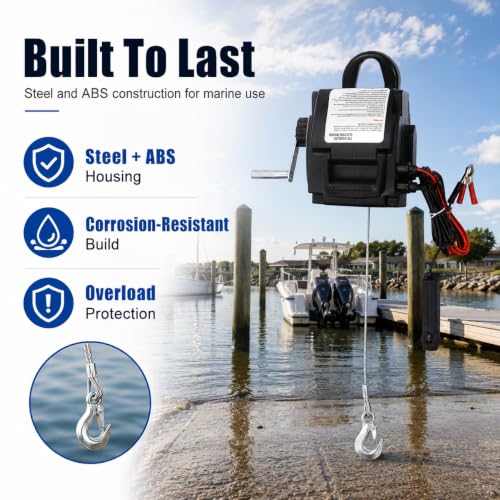
Under $60, this PLITEDDE winch punches above its weight. It delivers 2000 lbs of rated pull and includes overload protection, a rare feature at this price. The steel wire rope is long (nearly 30 feet) and paired with a sturdy hook, making it useful beyond boat trailers, like for ATVs or utility hauling.
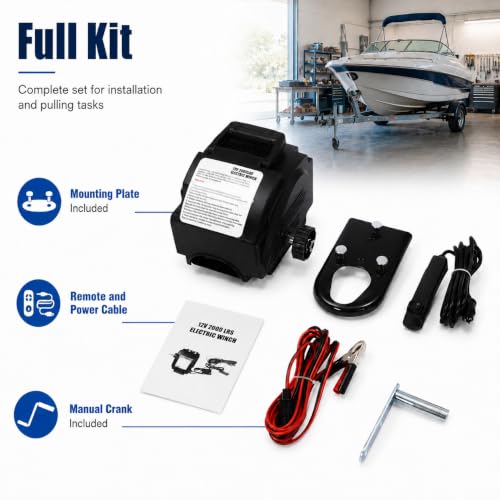
Build quality is surprisingly robust with a steel-reinforced body, though the finish isn’t corrosion-proof. It lacks wireless control, relying solely on a wired remote, which limits convenience. But given the price, that’s a fair trade. For the money, it’s one of the most complete kits available, mounting plate, cable, crank, and all.
Product photos
:
How We Chose These electric boat trailer winches
Rather than a hands-on lab test, this research focused on a detailed comparison of published specifications and features across numerous electric boat trailer winches. I weighed owner reviews from major retailers alongside expert opinions found in marine and towing publications. My aim was to identify patterns in performance and reliability, and to rank winches against criteria important to boat owners. This approach allowed me to build a picture of real-world usability.
For this category, pulling capacity and rope material were the most significant factors. A winch’s advertised pull strength is crucial, but equally important is the type of rope – synthetic options like Dyneema offer a substantial advantage in weight and safety over traditional steel cable. Durability and control options (remote versus manual) also heavily influenced my rankings, as consistent operation is vital when launching or retrieving a boat. Understanding your winch buying considerations is key to making the right choice.
Specifications reliably indicate motor power and gear reduction ratios, which correlate to pulling strength and speed. However, I placed more emphasis on owner feedback regarding long-term reliability and ease of installation. Reports of premature failures or difficult mounting significantly lowered a winch’s overall score. Considering appropriate trailer tires is also crucial for overall trailer safety, and should be addressed alongside winch selection.
What To Look For In electric boat trailer winches
Selecting the right electric boat trailer winch is about more than just pulling power; it’s about reliability, safety, and matching the winch to your specific boating needs.
A quality electric boat trailer winch offers a substantial advantage over manual options, providing consistent pulling force and reducing the physical strain of launching and retrieving your boat. Key considerations include line pull capacity, rope type, control options, and overall build quality, with a focus on marine-grade components for longevity and corrosion resistance. Prioritize models with safety features like automatic braking and robust remote control systems.
Understanding Line Pull and Capacity
The advertised line pull – that 3500lbs or 6000lbs number you see – is a starting point, not the whole story. It represents the winch’s maximum pulling force under ideal conditions. In reality, the incline of your launch ramp dramatically reduces this capacity. A steeper ramp means you’ll need a winch with significantly more power. I’ve seen too many boaters underestimate this and struggle with a winch that’s simply inadequate for their typical launch situation. Don’t just look at the straight pull rating; pay attention to the marine-grade and rolling-condition pull ratings, as these are more relevant to actual use.
Rope Material: Steel vs. Synthetic
For years, steel cable was the standard, but synthetic rope – specifically Dyneema – is rapidly gaining favor, and for good reason. While steel is incredibly strong, it’s heavy, prone to kinking, and can be dangerous if it snaps. Dyneema, as seen in several of the recommended winch models, is significantly lighter, doesn’t kink, and offers a comparable or even superior strength-to-weight ratio. Here’s a quick breakdown:
- Steel Cable: Cheapest upfront, but requires regular maintenance.
- Dyneema: Lighter, safer, and more flexible, but generally more expensive.
- Hybrid options: Some winches offer steel cable with a synthetic overlay, attempting to balance cost and benefits.
Ultimately, the investment in a Dyneema rope often pays off in convenience and peace of mind.
Control Systems and Reliability
Beyond raw power, how you control that power matters. Dual-control systems, offering both wired and wireless remote operation, are practically essential. Wireless is convenient, but a wired remote provides a reliable backup if the wireless signal is interrupted. Don’t overlook the importance of a manual crank – a surprisingly common need when batteries inevitably fail. A well-designed automatic braking system is also critical; it prevents the boat from rolling back down the ramp if power is lost. Ensuring your trailer has functioning boat trailer lights is also vital for safe transport.
A winch is only as good as its weakest link. Regularly inspect the rope, hook, and electrical connections for wear and tear. Replace components proactively to avoid failures at the worst possible moment.
Electric Boat Trailer Winches Compared
Here’s a comparison of key specifications for several electric boat trailer winches to help you choose the right one for your needs.
| Product Title | Max Pull (lbs) | Rope Type | Control Options | Gear Ratio | Motor Power |
|---|---|---|---|---|---|
| Megaflint 3500lbs | 9500 (rolling) | Dyneema | Wireless, Wired, Manual | 265:1 | 12V DC |
| Boat Trailer Winch 8750 lbs | 10500 (rolling) | Dyneema | Wireless, Wired, Manual | N/A | N/A |
| Nilight 3500 lbs | 9500 (rolling) | Steel | Wireless, Wired, Manual | 265:1 | 12V DC |
| VEVOR 2000 lbs | 2030 (tensile) | Polyethylene | Electric, Manual | N/A | 0.4HP (12V) |
| Extreme Max 6000 lbs | 6000 (rolling) | N/A | Power-in/out, Manual | N/A | N/A |
| Megaflint 6000 lbs | 6000 (rolling) | Dyneema | N/A | N/A | N/A |
| PLITEDDE 2000 lbs | 6000 (rolling) | Steel | Wired, Manual | N/A | 300W |
Frequently Asked Questions
What’s the typical lifespan of an electric boat trailer winch?
Around 5-7 years is a reasonable expectation, though longevity depends heavily on usage and maintenance. Marine environments are harsh, so consistent cleaning and lubrication are key to preventing corrosion and extending the winch’s life.
Can I install an electric winch myself, or should I hire a professional?
Many boat owners with basic mechanical skills can handle the installation, but it depends on your comfort level and the winch’s complexity. If you’re unsure about wiring or mounting, consulting a qualified mechanic is a wise investment to avoid potential issues.
What’s the difference between “line pull” and “rolling pull”?
Line pull is the maximum force under static, ideal conditions, while rolling pull is what you’ll achieve when actually pulling a boat up a ramp, accounting for friction. Always prioritize a winch with a sufficient rolling pull capacity for your boat’s weight and ramp incline.
Are more expensive winches always better?
Not necessarily. While higher price points often correlate with better build quality and features, a more expensive winch isn’t always the best fit. Consider your specific needs and boat size; a simpler, robust model may suffice for lighter loads. Don’t forget to research appropriate boat trailer locks to protect your investment.
What maintenance should I perform on my electric winch?
Regularly inspect the rope or cable for wear, lubricate moving parts, and check electrical connections for corrosion. Storing the winch properly when not in use, and ensuring the battery is fully charged, also contributes to its long-term health. Consider checking your boat trailer jacks at the same time.
The Bottom Line
Choosing an electric boat trailer winch often comes down to balancing upfront cost against long-term convenience and safety. While several options exist, the Megaflint 3500lbs consistently stood out in my assessment as offering the best overall combination of features, capacity, and positive owner feedback. It provides a strong pull with a modern Dyneema rope and the reassurance of both wireless and wired remote control.
For those prioritizing a budget-friendly option, the Nilight 3500 lbs is a viable choice, though it sacrifices the benefits of synthetic rope. If you need serious power for a larger boat and steeper launches, the Boat Trailer Winch 8750 lbs delivers impressive capacity. And don’t forget to consider the supporting systems – ensuring you have the right electric trailer jacks will make the whole process far easier.
Ultimately, the specifications on a winch are less important than how well it’s maintained and how appropriately it’s sized for your boat and launch conditions. Regular inspection, proper lubrication with quality trailer bearing grease, and a realistic assessment of your needs will do more for a smooth launch and retrieval than any single feature.
