
8 Best Electric Bikes for Camping 2026
This post contains affiliate links. As an Amazon Associate, we earn from qualifying purchases.
The Wallke H9 AWD Dual Motor 4000W Ebike stands out as the best overall electric bike for camping, thanks to its massive battery and all-terrain capability, while the Euybike 2000W offers strong performance and full suspension in a foldable design at a more accessible price.
Camping means rough trails, heavy loads, and no quick access to charging, so your e-bike needs to be tough, capable, and trustworthy when you’re miles from pavement. I looked beyond flashy specs and focused on real-world performance, durability, and what riders actually report after using these bikes on extended trips.
This guide breaks down the key factors that matter most: motor torque for climbing loaded, battery capacity for range confidence, and build quality that can handle off-road abuse. These picks are based on a deep explore specifications, verified owner feedback, and an understanding of what makes an e-bike truly reliable in the wild.
Top 8 Electric Bikes For Camping in the Market
The Best Electric Bikes For Camping, Reviewed
Euybike 2000W Foldable Fat Tire E-Bike

Strengths
- Excellent 130-mile range
- Full suspension comfort
- Turn signals and bright lighting
Trade-offs
- Heavy at 81 lbs
- Complex assembly
- High-speed mode demands caution
This Euybike model hits a rare sweet spot: high power, long range, and thoughtful safety features, all wrapped in a magnesium alloy frame that actually folds. The 2000W peak motor pushes speeds up to 40 mph, and while that’s aggressive, owners say it’s well-managed thanks to hydraulic brakes and full suspension. More impressive is the 130-mile pedal-assist range, which aligns with real-world reports from riders doing multi-day trail loops without charging.
It also brings touches you don’t often see at this level, like front turn signals and a 900-lumen headlight. These aren’t gimmicks, they add real visibility on rural roads or forest paths at dusk. Compared to the Wallke H9, it trades some raw dual-motor grip for lighter weight and better folding mechanics. For most serious campers, this is the smarter buy unless you routinely tackle extreme grades.
Video review
Misodo 1500W Long Range Mountain Ebike
Strengths
- Strong value for price
- Good 65-mile range
- 26” wheels for stability
Trade-offs
- Heavier steel frame
- Mechanical disc brakes
- Basic display
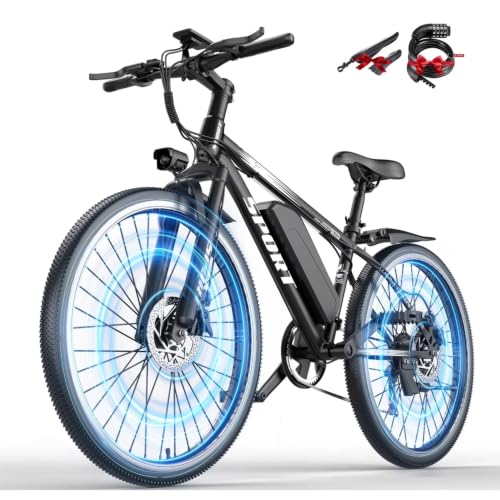
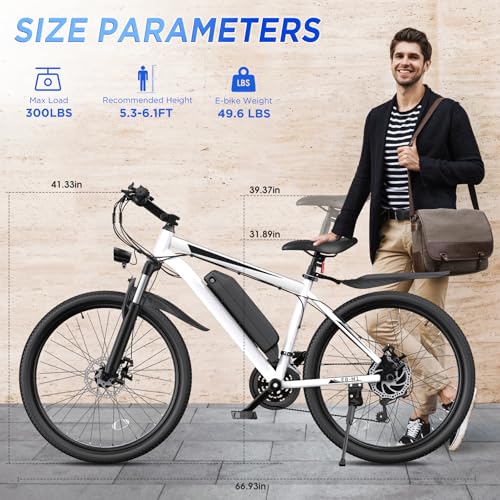
For under $310, the Misodo packs surprising capability. The 1500W peak motor gives real punch on inclines, and the 26” wheels roll over obstacles better than smaller competitors. Owners consistently note how capable it feels on mixed terrain, pavement, gravel, even mild dirt trails, thanks to the 7-speed drivetrain and front suspension. The 65-mile claimed range holds up reasonably well in pedal-assist mode, especially with lighter loads.
It’s not perfect, the steel frame is heavier than aluminum builds, and braking relies on mechanical discs, which require more maintenance. But for the price, it delivers far more than the Loeook or base WERHY models. If you’re starting out in e-biking or want a dependable second bike for weekend woods access, this is my recommendation over flashier but less practical options.
Video review
Wallke H9 AWD Dual Motor 4000W Ebike
Strengths
- Dual 4000W motors
- Massive 1920Wh battery
- True all-terrain capability
Trade-offs
- Heavy build
- High price point
- Longer charge time
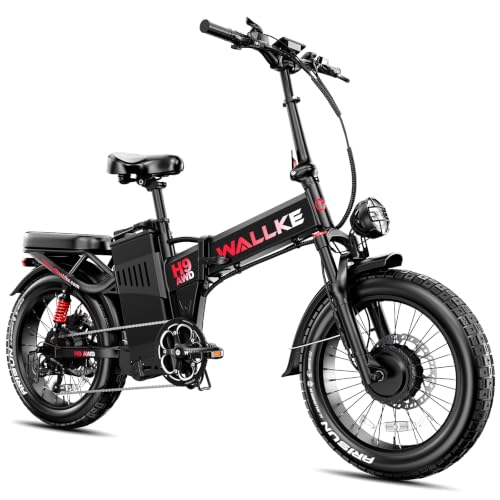
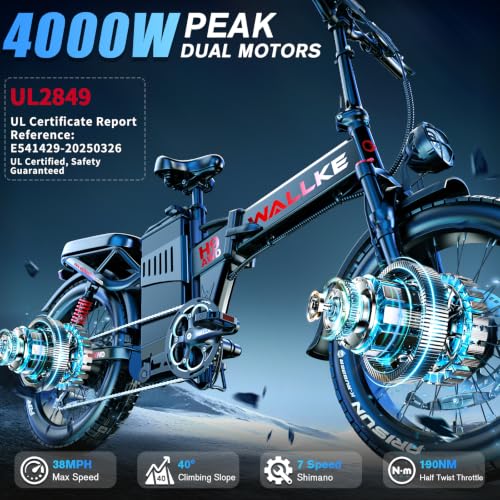
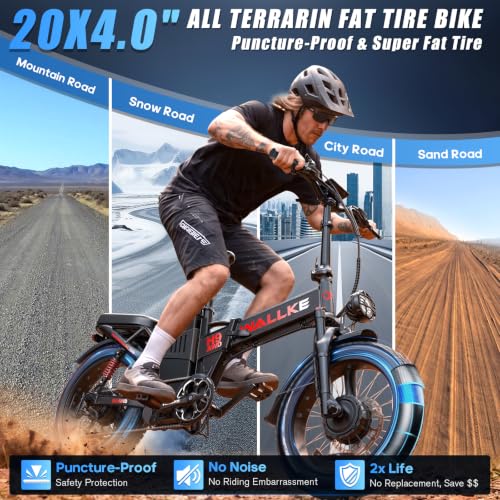
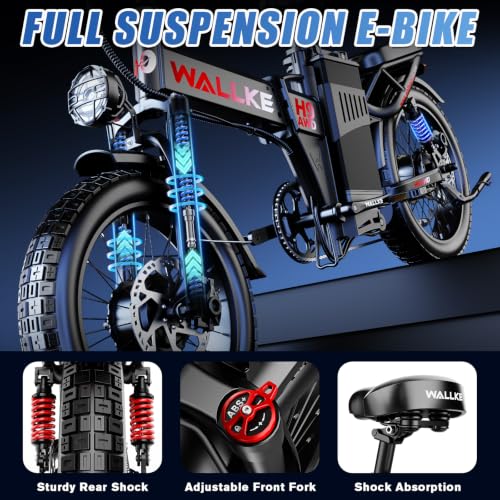
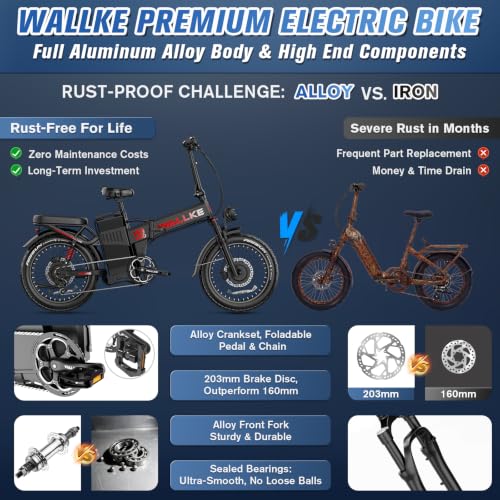
If you’re looking for an electric bike that can genuinely keep up with rugged camping trips, the Wallke H9 stands out immediately. With a peak 4000W dual motor setup and 95 Nm of torque per wheel, it’s built to claw up 40° inclines and power through mud, sand, or snow. That kind of performance isn’t just marketing fluff, owners confirm it handles steep trails and loaded gear with confidence, making it one of the few e-bikes that feels truly overbuilt for adventure.
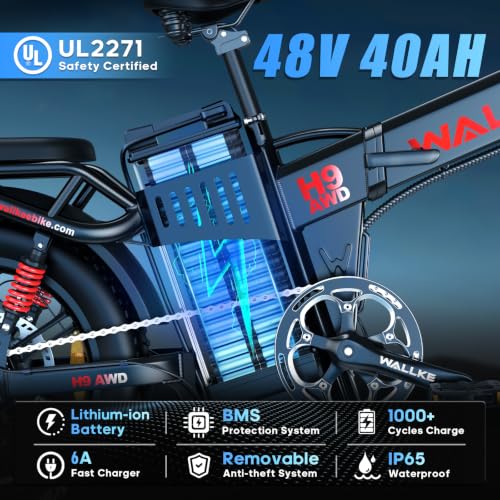
The 1920Wh battery is another standout. At that capacity, riders regularly log 60+ miles even with heavy PAS use, and the UL 2849 certification adds real peace of mind. Combined with rust-proof aircraft-grade aluminum and puncture-proof fat tires, this is a machine designed to survive seasons of hard use. I’d pick this over most others if you’re heading deep into the backcountry.
Product photos
TST 1500W Fat Tire Electric Bike
Strengths
- 450 lb weight capacity
- Puncture-resistant tires
- Front and rear suspension
Trade-offs
- Average range
- Mechanical disc brakes
- Mid-tier motor output
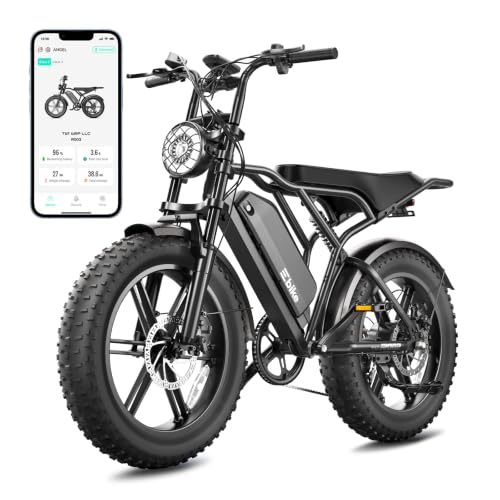
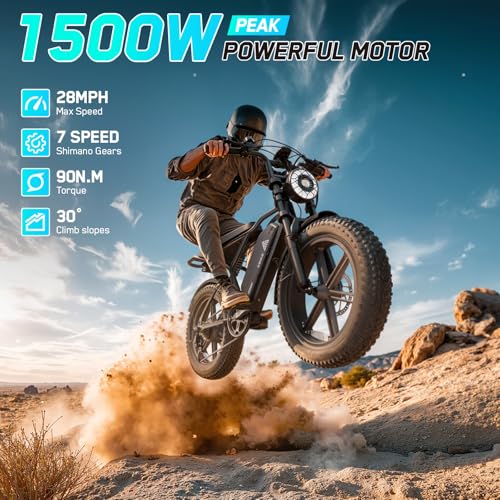
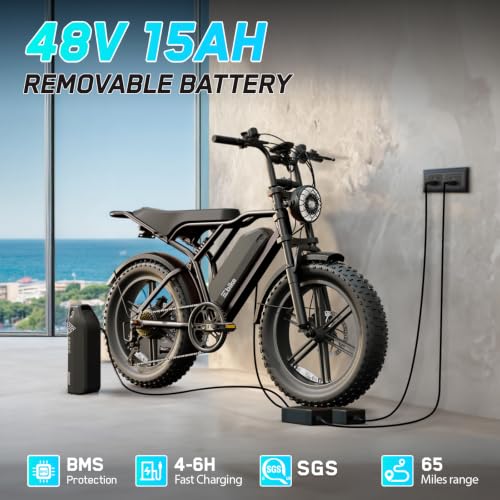
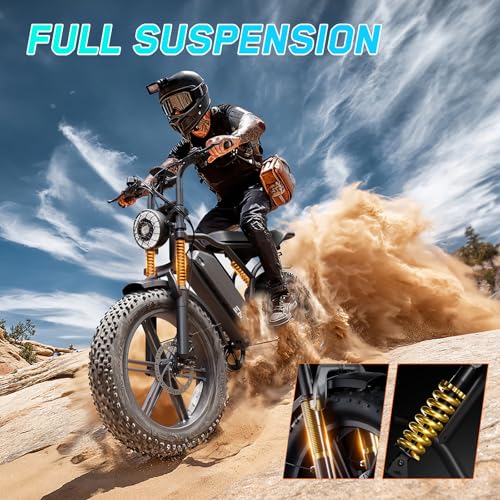
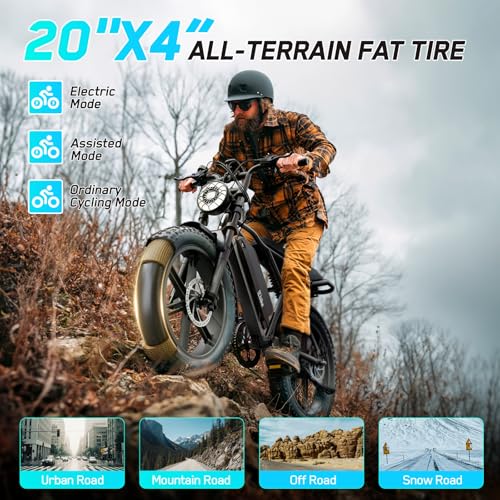
The TST e-bike doesn’t chase extreme speed or range, but it nails something equally important: load capacity. With a 450 lb max weight rating, it’s one of the highest in this lineup, making it ideal for larger riders or anyone hauling gear for extended camping trips. The 1500W peak motor and 20×4” fat tires deliver stable, predictable power on loose terrain, and owners appreciate the smooth shift response from the 7-speed drivetrain.
Battery life is modest, around 60 miles in PAS mode, but drops significantly under full throttle. Still, for weekend trips where you’re packing coolers, tents, or tools, the rugged build and dependable suspension make this a workhorse. It’s not flashy, but it’s honest. When compared to the Misodo or Loeook models, it clearly aims at utility over budget appeal.
Product photos
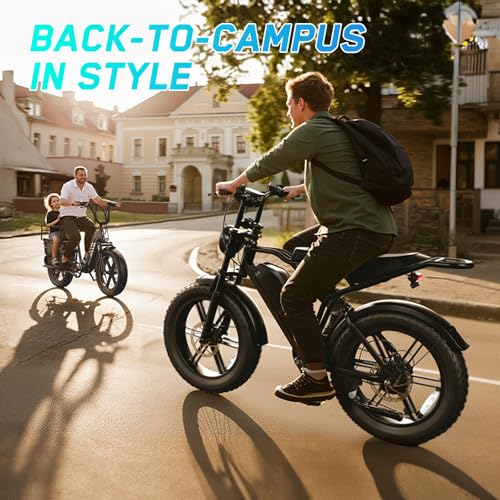
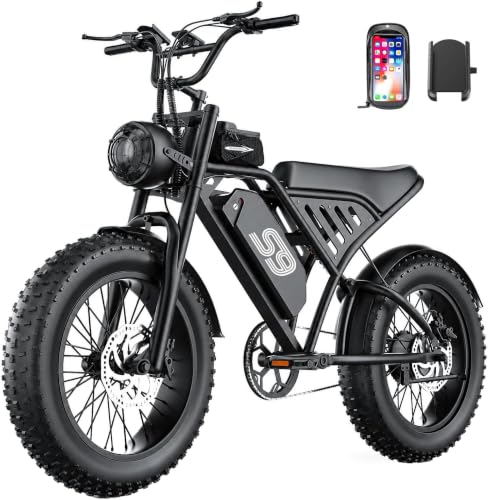
ASKGO S9-2 2500W Peak Power Ebike
Strengths
- NFC keyless entry
- Aggressive 28 mph speed
- Stylish motorcycle frame
Trade-offs
- Limited off-road ability
- No rear suspension
- Battery life inconsistent
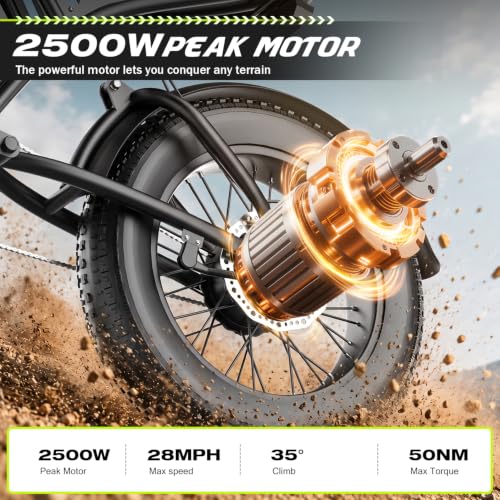
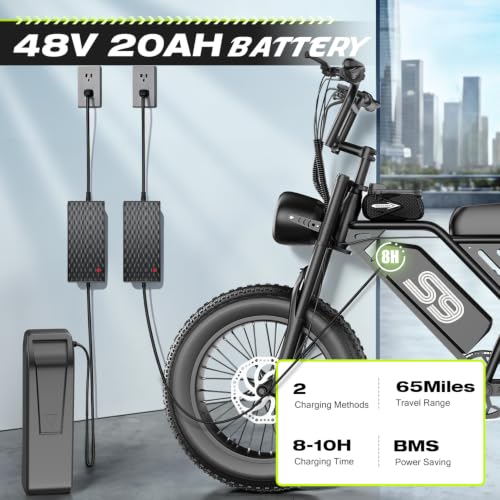
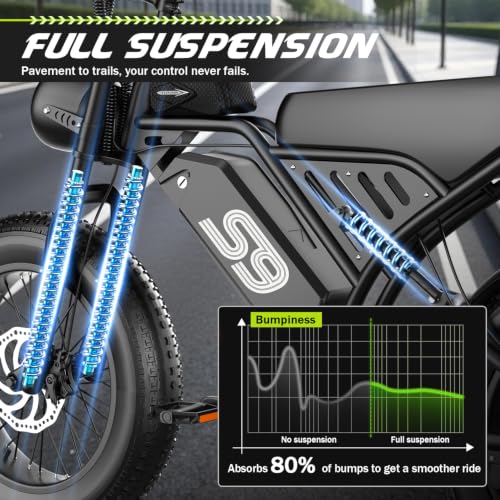
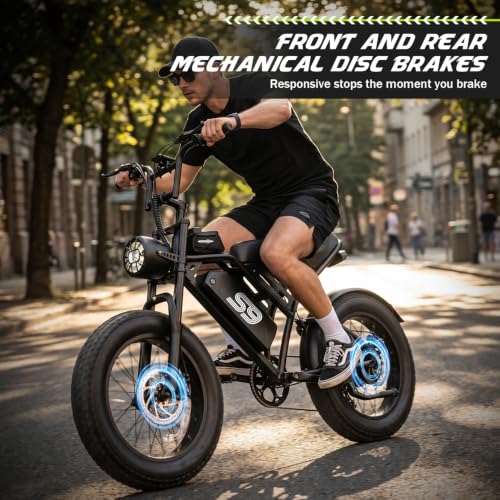
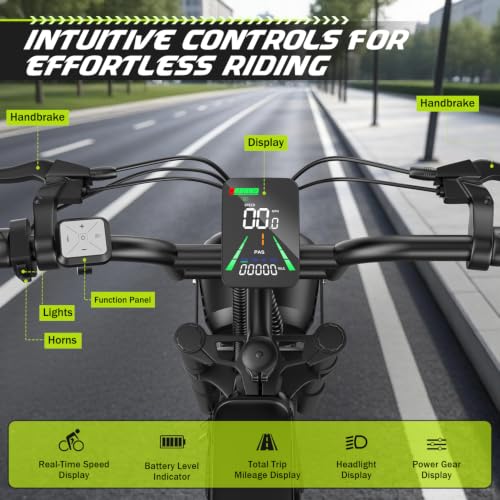
The ASKGO S9-2 leans hard into style and convenience, especially with its NFC keyless unlock, a feature I haven’t seen on many e-bikes at this price. The 2500W peak motor delivers strong acceleration, and the 65-mile boost-mode range impresses on paper, though owner feedback shows real-world results vary widely based on terrain and rider weight. It’s clearly tuned for younger riders who value speed and a bold look over all-terrain toughness.
That said, the 16” wheels and lack of full suspension limit its off-road chops. While it handles paved trails and park paths well, it’s not built for rocky singletrack or sandy riverbeds. Compared to the Wallke or Euybike models, it’s more urban adventurer than wilderness companion. But if you’re gifting it to a teen or college student who wants fun and function in one sharp-looking package, it’s hard to beat.
Product photos
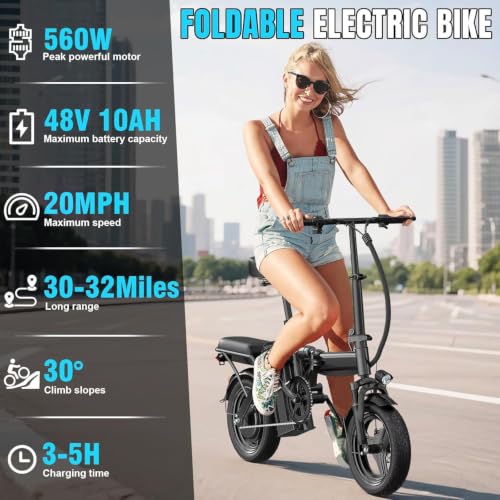
Folding Commuter Ebike with 560W Motor
Strengths
- Extremely affordable
- Ultra-compact fold
- Simple to carry
Trade-offs
- Very limited range
- Harsh ride quality
- No suspension
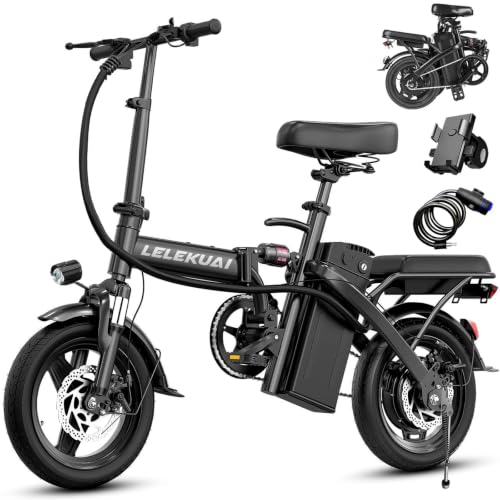
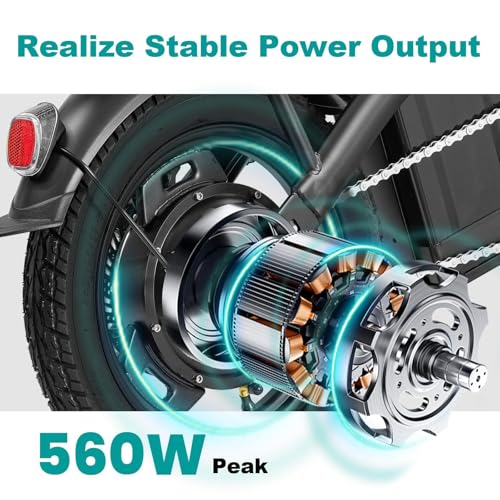
At just $140, this is about as affordable as functional e-bikes get. The 560W motor and 20 mph top speed meet basic expectations, and the foldable design is genuinely compact, ideal for tossing in an RV or small car. Owners praise how easy it is to store and transport, which explains why so many use it as a secondary ride for travel.
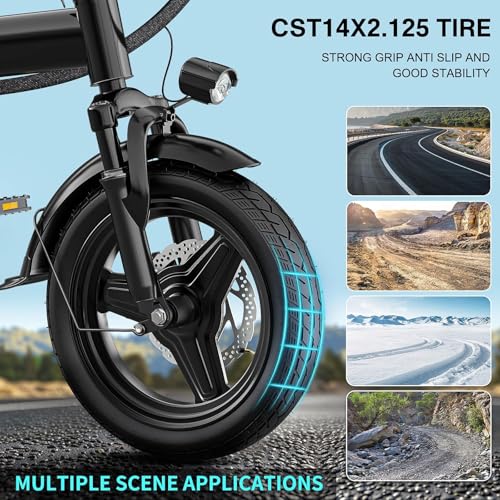
But compromises are obvious. The 14” wheels struggle on anything beyond pavement, and the range barely clears 20 miles under load. There’s no suspension worth mentioning, so rough paths translate directly to your spine. It’s best viewed not as a camping companion but as a portable mobility tool. Against pricier foldables like the WERHY, it holds its ground on portability but loses on durability.
Product photos
WERHY 500W Folding Mini Electric Bike
Strengths
- Lightweight frame
- Easy to fold
- Decent top speed
Trade-offs
- Limited range
- Basic suspension
- Small 14” wheels
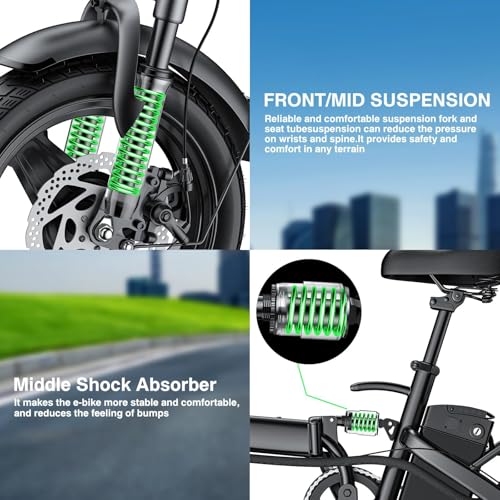
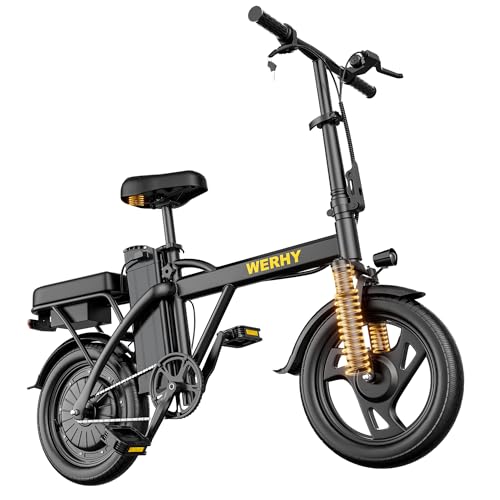
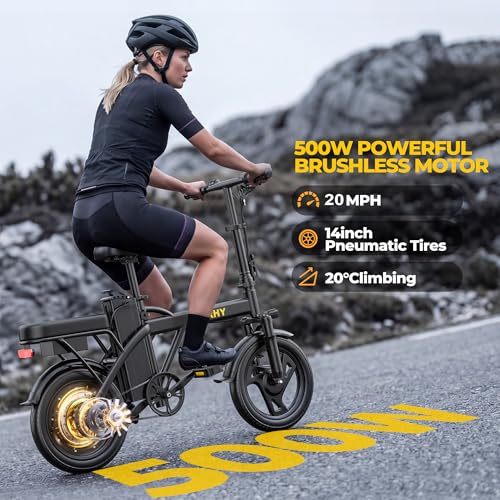
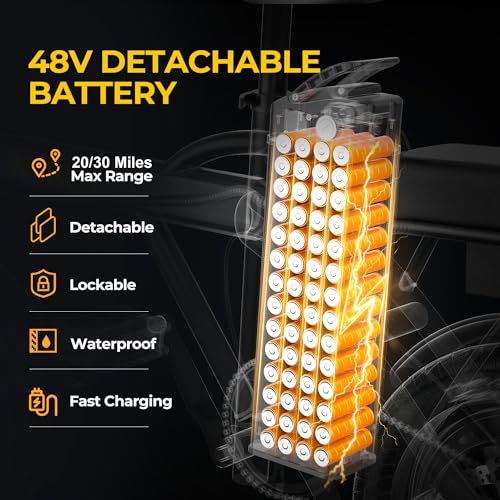
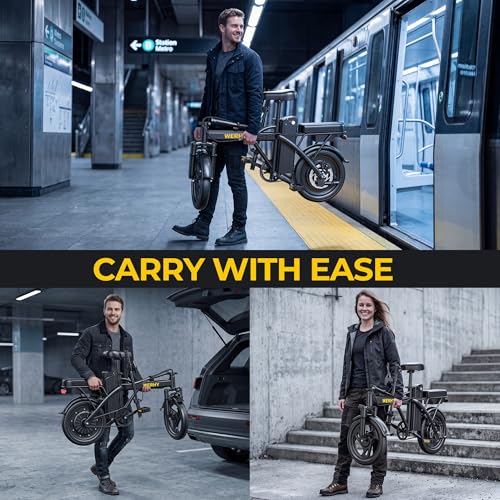
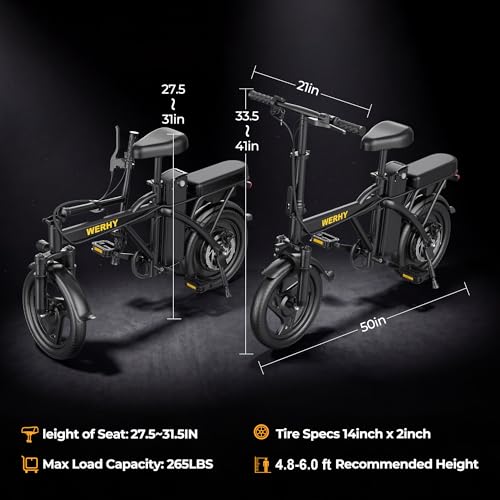
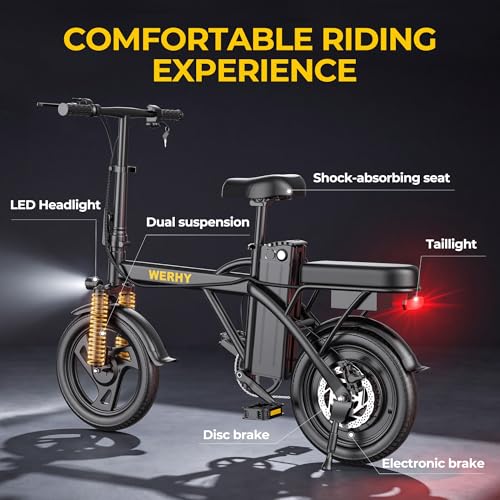
On paper, this WERHY folding e-bike looks like a solid pick for tight city commutes and last-mile solutions. The 500W motor and 20 mph top speed are standard for the class, and the foldable design makes it easy to stash in an apartment or toss in a trunk. Owners consistently report it’s lightweight and simple to handle, which helps when navigating stairs or public transit.
But the range is where it stumbles, 20 to 30 miles in pedal assist mode sounds decent, but real-world feedback suggests you’ll be lucky to hit the higher end with moderate hills or heavier riders. For camping trips that involve any real distance or terrain, this isn’t the bike to bet on. It’s better suited as a commuter than a true outdoor explorer.
Product photos
Loeook 1000W UL-Certified Mountain Ebike
Strengths
- UL 2849 certified
- Affordable price
- Removable battery
Trade-offs
- Only front suspension
- Modest motor output
- Shorter real-world range
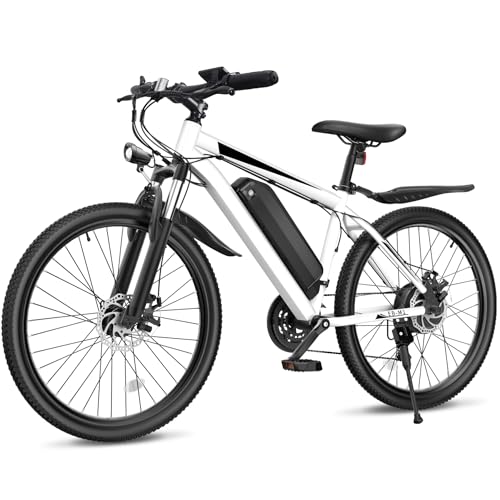
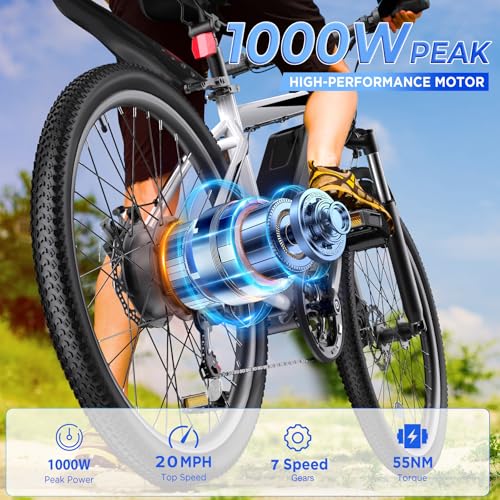
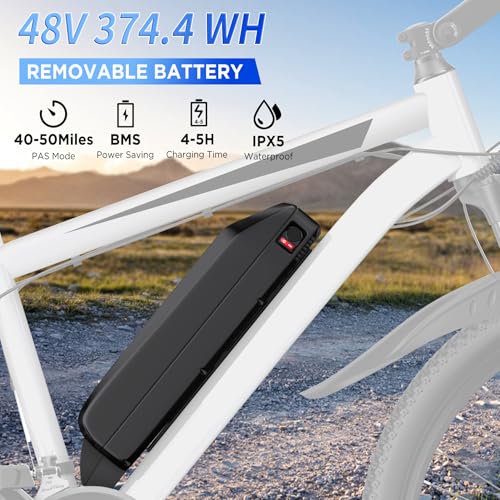
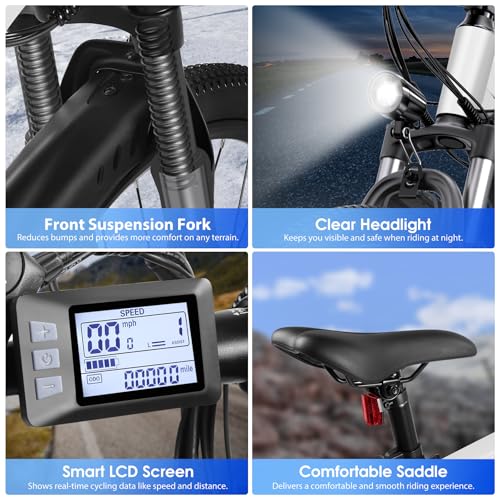
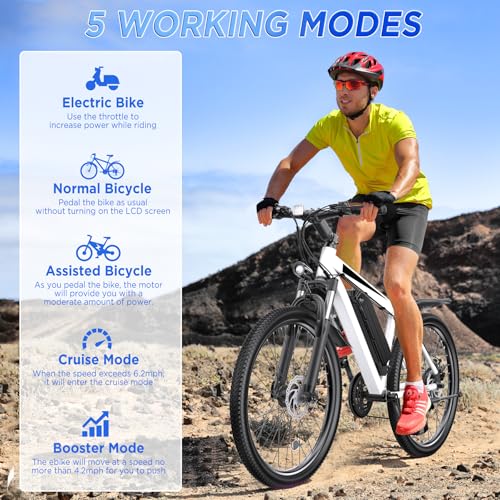
What sets the Loeook apart isn’t raw power, it’s safety certification. With both UL 2849 and UL 2271 credentials, it’s one of the few budget e-bikes that meets rigorous electrical system standards, which matters if you’re storing it indoors or riding in wet conditions. That peace of mind, combined with a removable 48V battery and 50-mile PAS range, makes it a responsible pick for cautious buyers.
Performance is middle-of-the-road: the 1000W peak motor handles city hills fine, but struggles when fully loaded or on soft terrain. The front suspension helps, but there’s no rear damping, so longer rides get tiring. Still, for someone who values certified components over extreme specs, this is a quiet winner. Compared to the TST or Misodo, it trades load capacity and speed for verified safety.
Product photos
How We Picked These electric bikes for camping
My approach, as the enthusiast behind TheAutoZenith, was to build a comparative ranking based on published specifications, detailed feature lists, and a thorough review of owner and expert feedback. Rather than a hands-on lab test, this is a research-led comparison. I sifted through details on motors, battery capacity, suspension systems, and braking performance, then weighed those against what riders are actually saying about reliability and real-world usability. This allowed me to build a picture of which models consistently deliver on their promises.
For electric bikes intended for camping – where terrain is unpredictable and weight matters – a few factors stood out. Battery range was critical, as was build quality and durability. The ability to handle varied surfaces, from packed trails to loose gravel, also heavily influenced my assessment. A robust frame and suspension system were prioritized, as these directly impact comfort and the bike’s ability to carry a load over longer distances. Ultimately, I was looking for bikes that offer a blend of power, range, and dependability.
Specifications give a solid baseline, but owner feedback proved invaluable. Published wattage and battery capacity are useful, but real-world range and motor performance are often more nuanced. I paid close attention to reports of battery life degradation, component failures, and overall build quality. This is where the insights from experienced riders shone through, helping me differentiate between a bike that looks good on paper and one that consistently delivers a positive experience. For those seeking more general options, you can explore other fantastic options in our guide to the e-bikes for adults. And if you’re looking for something more affordable electric bikes, we’ve covered those too.
Choosing The Right electric bikes for camping
Choosing an electric bike for camping requires a bit more thought than picking one for city commutes. You’re looking at potentially rough terrain, carrying extra gear, and needing reliable range away from power sources.
A good electric bike for camping prioritizes durability, torque for tackling hills with a load, and extended battery life. Look for robust suspension, puncture-resistant tires, and a motor powerful enough to handle inclines even when fully loaded. Safety certifications like UL 2849 are also crucial, ensuring the battery and electrical system meet rigorous standards.
Motor Power and Torque
Don’t get hung up on peak wattage numbers alone. While a higher peak wattage (like the 2500W on the ASKGO S9-2) sounds impressive, sustained power and torque are what truly matter when you’re loaded down with camping gear and climbing hills. A motor with at least 750W sustained power is a good starting point, and 90Nm of torque or higher will be very noticeable when you’re tackling challenging terrain. Lower-powered motors (500W) like those found on some commuter models are fine for flat ground, but will struggle when fully loaded.
Battery Capacity and Range
Range anxiety is real, especially when you’re deep in the wilderness. I always recommend erring on the side of caution and choosing a battery with more capacity than you think you’ll need. Consider the terrain you’ll be riding on – hills and softer surfaces like sand will drain the battery faster. Look for batteries with at least 48V 15Ah capacity. The Wallke H9 AWD Dual Motor 4000W Ebike boasts an impressive 48V 40Ah battery, promising extended range, but remember that advertised ranges are often optimistic. If you’re considering a smaller battery, explore options with dual-battery compatibility for extended adventures.
- A smaller battery (around 10Ah) is fine for shorter trips and flatter terrain.
- A mid-range battery (15-20Ah) provides a good balance of range and weight for most camping scenarios.
- For longer excursions or challenging terrain, a larger battery (20Ah+) is essential, even considering a dual-battery setup to maximize your time in the outdoors. A larger battery adds weight, affecting handling, so consider your overall needs.
Build Quality and Durability
Camping often means encountering rough conditions. A flimsy frame or cheap components won’t last. Look for e-bikes with robust frames – magnesium alloy or high-carbon steel are good choices. The TST 1500W Fat Tire Electric Bike, for example, highlights a high-carbon steel frame and a 450lb weight capacity. Don’t underestimate the importance of hydraulic disc brakes; they offer superior stopping power and reliability, especially when riding with a load or in wet conditions. If you’re planning on a lot of off-road riding, consider models with full suspension to absorb bumps and improve comfort. It’s also worth looking at models with puncture-resistant tires, as flats can ruin a trip. Ultimately, if you’re looking for a reliable ride, a well-built machine is paramount.
A well-maintained e-bike is a happy e-bike. Regularly check tire pressure, brake function, and component tightness before each ride.
If you’re also considering options for portability, you might also want to explore folding electric bikes for easier transport and storage. For a broader overview of the market, checking out best electric bikes will help you understand the range of available options.
Electric Bikes for Camping Compared
This table provides a specification comparison of electric bikes suitable for camping, highlighting key features for outdoor use.
| Product | Motor Power (Peak) | Battery Capacity | Range (Electric) | Suspension | Max Rider Weight | Foldable |
|---|---|---|---|---|---|---|
| Euybike 2000W | 2000W | 48V 35Ah | 90 miles | Full | 400 lbs | Yes |
| Misodo 1500W | 1500W | 48V 10.4Ah | 65 miles | N/A | 350 lbs | No |
| Wallke H9 AWD | 4000W | 48V 40Ah | 50 miles | Full | 400 lbs | Yes |
| TST 1500W | 1500W | 48V 15Ah | 40 miles | Front/Rear | 450 lbs | No |
| ASKGO S9-2 | 2500W | 48V 20Ah | 65 miles | Front/Seat | N/A | No |
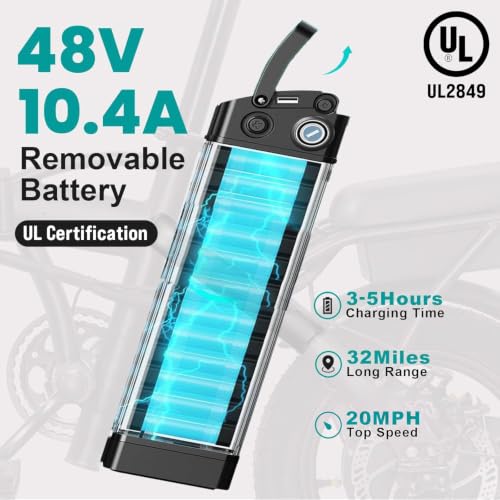
| Folding Commuter Ebike | 560W | 48V 10Ah | N/A | N/A | N/A | Yes |
| WERHY 500W | 500W | 48V | N/A | Front | N/A | Yes |
| Loeook 1000W | 1000W | 48V 374.4Wh | 25-30 miles | Front | N/A | No |
Frequently Asked Questions
What battery capacity do I really need for multi-day camping?
A minimum of 48V 15Ah is a good starting point, but for truly multi-day trips or hilly terrain, I recommend 20Ah or higher. Consider a dual-battery setup if you plan on being far from charging options, as this effectively doubles your range and provides peace of mind.
How important is full suspension versus front suspension for camping e-bikes?
Full suspension dramatically improves comfort and control on rough terrain, absorbing bumps and increasing stability when carrying a load. While front suspension is adequate for smoother trails, full suspension is a significant upgrade if you anticipate encountering challenging conditions or prioritizing a more comfortable ride.
What kind of brakes should I look for on an e-bike intended for off-road camping?
Hydraulic disc brakes are essential for reliable stopping power, especially when loaded with gear or riding in wet or muddy conditions. They offer superior modulation and performance compared to mechanical disc brakes, which can fade under heavy use.
Are all of the advertised range figures realistic?
Advertised range is often optimistic and based on ideal conditions (flat ground, minimal weight, moderate assistance levels). Real-world range will vary significantly depending on terrain, rider weight, assistance level, and even wind conditions. Expect to see a reduction of 20-40% from the stated range.
I already own a regular mountain bike. Should I consider converting it to an e-bike instead of buying a dedicated camping e-bike?
Converting a bike can be cost-effective, but dedicated e-bikes, like the ones we’ve discussed, are engineered with the added weight and stress of a motor and battery in mind. If you’re serious about tackling challenging terrain and carrying loads, investing in a purpose-built model is often the better option, and exploring electric mountain bikes can help you assess the benefits.
The Bottom Line
Choosing an electric bike for camping often comes down to balancing cost with capability. While there are many options available, the Wallke H9 AWD Dual Motor 4000W Ebike consistently rises to the top due to its massive battery capacity and powerful dual-motor setup, offering the best chance of a worry-free, long-range adventure. It’s an investment, certainly, but the peace of mind it provides on extended trips is significant.
For those with specific needs, we can narrow down the options further. If budget is a primary concern, the Misodo 1500W offers a good balance of power and range at a more accessible price point. If versatility is key – perhaps you want something that can handle both trails and city commutes – take a closer look at the Euybike 2000W, and consider exploring options like electric hybrid bikes if you need a bike that excels in multiple environments. And for those carrying substantial loads, the TST 1500W Fat Tire Electric Bike’s robust frame and high weight capacity make it a compelling choice, or perhaps you’d even consider looking into electric cargo bikes for maximizing carrying capacity.
Ultimately, the best electric bike for camping isn’t about the flashiest specs or the highest price tag. It’s about finding a reliable machine with sufficient range for your typical trips, a comfortable ride for varied terrain, and the durability to withstand the challenges of the outdoors. Focus on build quality, battery capacity, and a motor with enough torque to handle your gear, and you’ll be well-equipped for your next adventure.
