
8 Best E-Bikes for 300 lb Man 2026
This post contains affiliate links. As an Amazon Associate, we earn from qualifying purchases.
The overall best e-bike for a 300 lb man is the DEEPOWER QS7 2000W Fat Ebike, thanks to its massive motor, long range, and rugged build. For those on a tighter budget, the TST Fat Tire Electric Bike delivers strong performance and a 450 lb capacity at a lower price. If you need versatility and comfort, the ESKUTE M300F Full Suspension offers excellent handling on rough terrain.
Finding an e-bike that truly supports a heavier rider isn’t just about hitting a weight number on paper. Too many models claim to handle 300 lbs but skimp on brakes, wheels, or frame design, leading to shaky rides or premature wear. As someone who’s spent years analyzing how machines carry load, I know the real test is in the components and how they work together.
This guide cuts through the marketing by focusing on verified specs and real rider feedback. We looked at motor reliability, battery efficiency under load, braking power, and frame durability, key factors that determine whether an e-bike performs safely and lasts. These picks are based on deep research into what actually holds up over time.
Top 8 E Bikes For 300 Lb Man in the Market
The Best E Bikes For 300 Lb Man, Reviewed
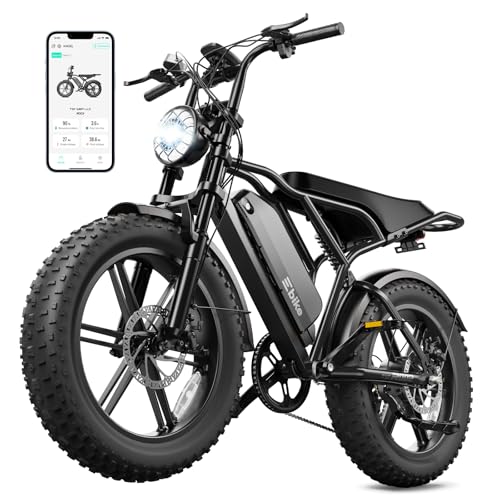
TST Fat Tire Electric Bike
Strengths
- 450 lb weight capacity
- Full suspension comfort
- Puncture-proof fat tires
Trade-offs
- Heavier than average
- Shorter warranty period
- Basic motor tuning
The TST e-bike earns its ‘Best Overall’ label by balancing strength, comfort, and load capacity. With a 1500W peak motor, front and rear suspension, and a 450 lb weight limit, it’s clearly engineered with heavier riders in mind. That extra 150 lbs margin over most models is meaningful, it means gear, cargo, or body mass won’t push it to its limits. The 20″x4″ fat tires provide excellent grip on loose surfaces, and owners praise the plush ride quality even on cracked sidewalks.
It’s not the fastest or most feature-rich, but everything works well together. Compared to the Jasion Roamer, it’s better built and more durable, and unlike the Luckfarm, it carries proper safety credentials. I’d recommend this as the default choice for most 300 lb riders who want one bike for commuting, errands, and weekend trail loops without worrying about breakdowns.
Video review
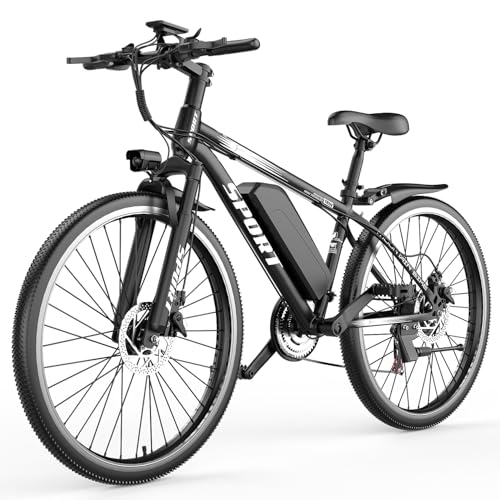
Luckfarm 1500W Electric Mountain Bike
Strengths
- Extremely low price
- 1500W peak motor
- Hydraulic disc brakes
Trade-offs
- No UL certification
- Build quality concerns
- Limited customer support history
At just $250, the Luckfarm e-bike shocks with a 1500W peak motor and removable 48V battery, features usually seen in much pricier models. It promises up to 65 miles of range, and while real-world results vary, owners confirm it handles extended commutes and moderate hills without issue. The dual hydraulic disc brakes are a standout at this price, offering strong, fade-resistant stopping power even when loaded.
But here’s the catch: no UL certification, and the build quality reflects the bargain tag. It may work fine initially, but long-term reliability is questionable, especially under consistent 300 lb loads. Still, for someone needing raw power on a tight budget, this is hard to ignore. I’d say it’s the smarter buy over similarly priced no-name brands, even if I wouldn’t trust it for years of daily abuse.
Video review
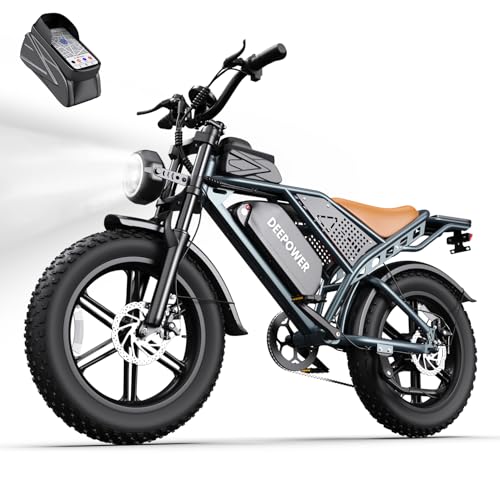
DEEPOWER QS7 2000W Fat Tire Ebike
Strengths
- 2000W peak motor
- Battery size options
- Dual suspension system
Trade-offs
- Heavy and bulky
- Inconsistent UL labeling
- Expensive at top config
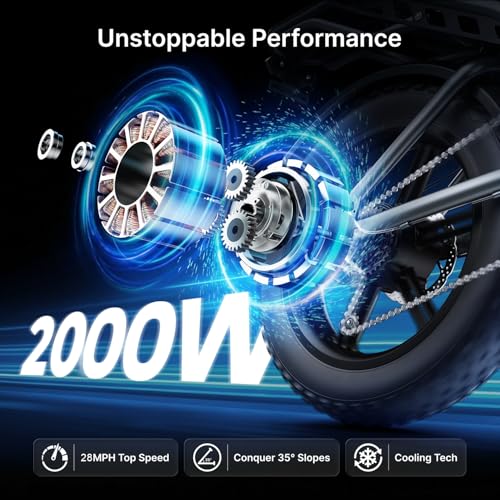
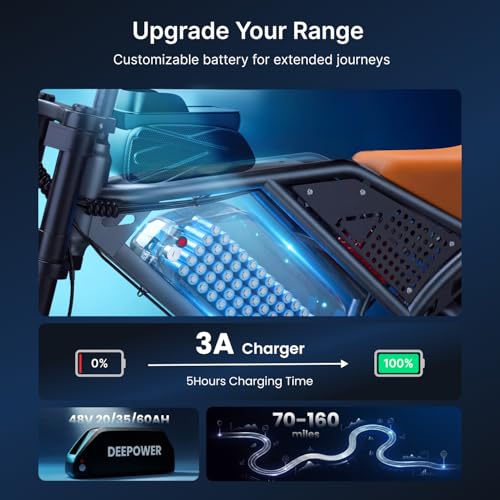
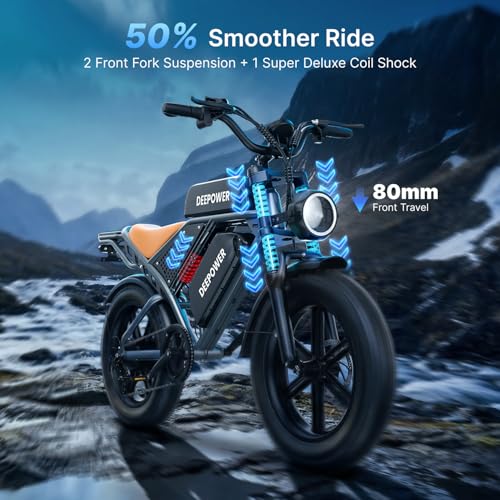
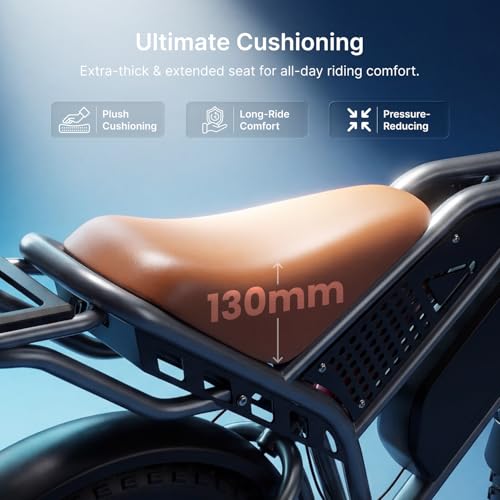
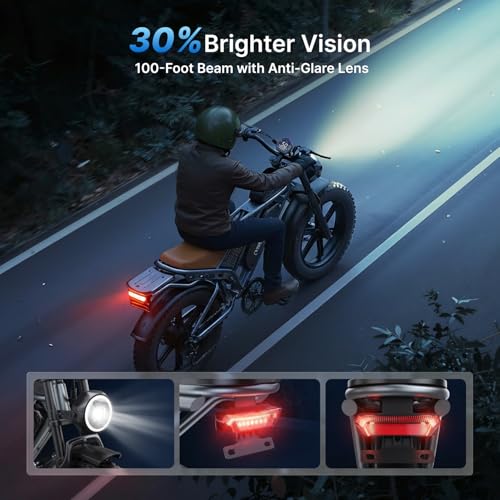
If brute force is your priority, the DEEPOWER QS7 delivers with a 2000W peak motor, one of the strongest here, and options for massive 35Ah or 60Ah batteries. This isn’t just an e-bike; it’s closer to an electric moped in feel. Riders near 300 lbs won’t struggle on steep grades, and the 20″x4″ fat tires with dual suspension absorb punishment well. On pavement or packed trail, it remains stable even at 28MPH.
Owner reports highlight excellent torque and hill performance, though the weight and size make it less nimble in traffic. Compared to the ESKUTE M300F, it’s more powerful and better built, but also bulkier. The lack of UL 2849 on some configurations is a red flag, but the available certifications on newer batches help. For thrill-seekers or rural riders needing muscle, this is my top pick.
Product photos
YorkE 1000W Long-Range Electric Bike
Strengths
- High-capacity 720Wh battery
- Up to 80-mile range
- Color LCD display
Trade-offs
- No rear suspension
- Heavy for city use
- Price vs. feature gap
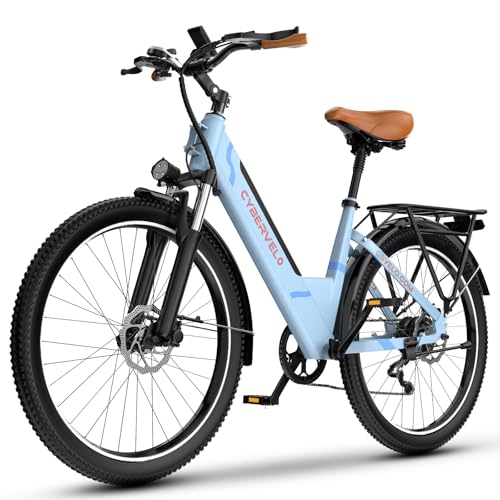
YorkE goes all-in on range with a 720Wh hidden removable battery claiming up to 80 miles per charge, a number that stands up reasonably well in owner tests, especially in PAS mode. That kind of endurance is rare outside premium brands, and for a 300 lb rider doing long commutes or touring, it reduces charging anxiety significantly. The 1000W peak motor provides steady climbs, and the dual disc brakes offer dependable stopping power, though the frame lacks rear suspension.
Build quality is generally positive, and the color LCD display is a nice upgrade over monochrome screens. But like the Jasion, it’s priced high without offering clear advantages over more balanced picks like the TST or ZNH. I’d only choose this if battery life is your absolute top priority.
Product photos
ESKUTE M300F Full Suspension Ebike
Strengths
- 1200W peak motor
- Full suspension comfort
- 20″x4″ fat tires
Trade-offs
- Overstated range claims
- Basic 7-speed gearing
- Frame durability concerns
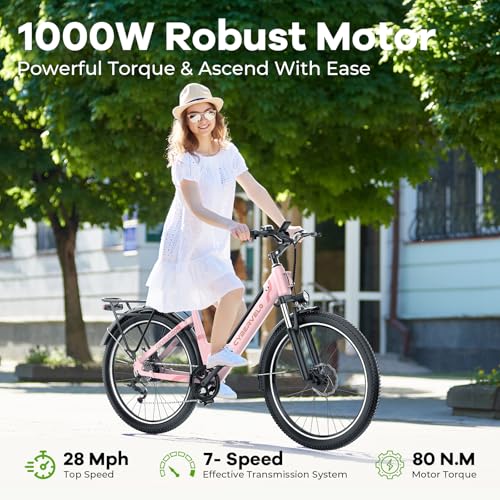
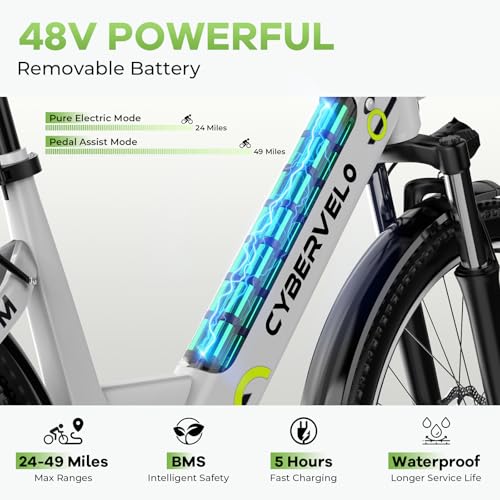
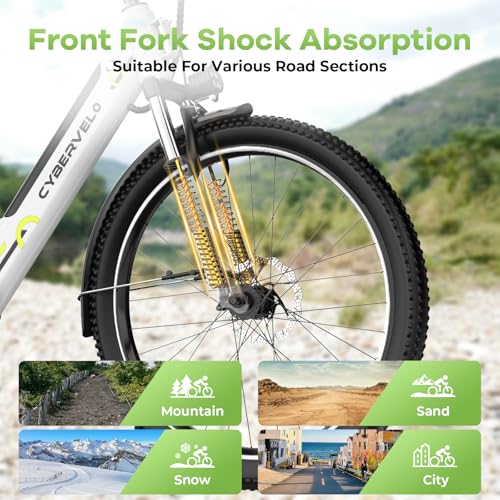
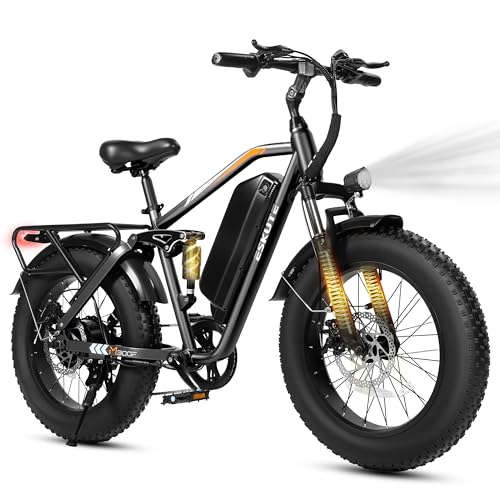
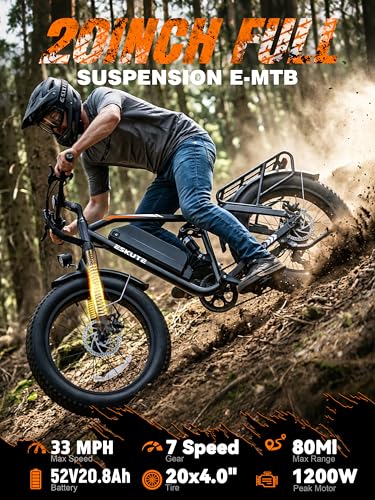
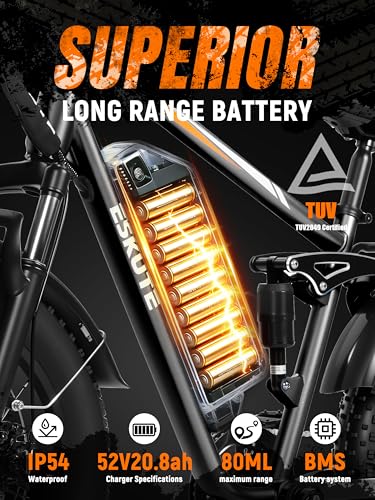
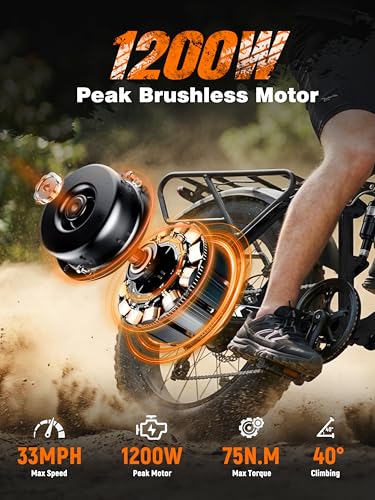
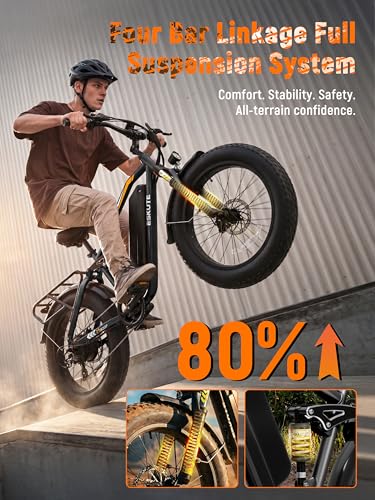
The ESKUTE M300F stands out with its 1200W peak motor and 52V 20.8Ah battery, specs that suggest serious range and hill-climbing ability, on paper, it’s one of the most capable in this list. Owners consistently report solid performance on sand, snow, and uneven trails, thanks to those aggressive 20″x4″ fat tires and full suspension setup. For a heavier rider near 300 lbs, the dual suspension makes a real difference in comfort, especially off-road.
Still, I’m skeptical about the claimed 80-mile range under PAS mode, it’s likely achievable only under ideal conditions with lighter riders. The 7-speed drivetrain feels basic compared to higher-end models, and while the build supports the weight limit fine, the frame doesn’t inspire long-term confidence for constant heavy use. Compared to the DEEPOWER QS7, it lacks raw power, but it’s more accessible for casual trail riders who value cushioning over speed.
Product photos

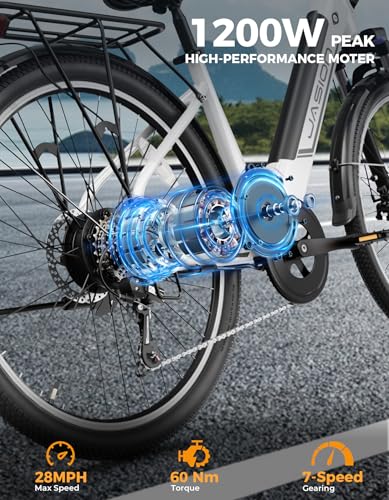
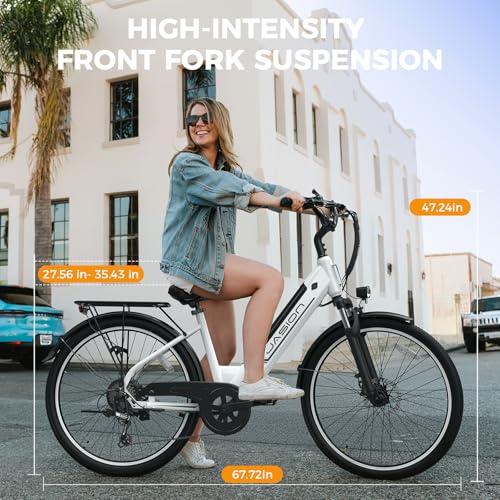
Jasion Roamer/ST Step-Thru Ebike
Strengths
- Step-thru frame access
- Bright 180° lighting
- UL2849 certified
Trade-offs
- Overpriced for specs
- Heavy steel frame
- No rear suspension
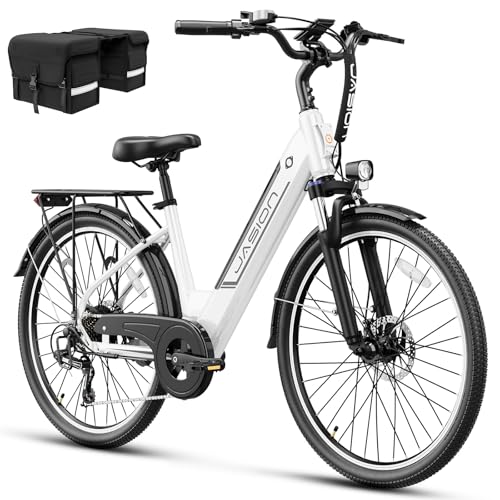
At nearly $720, the Jasion Roamer ST demands a premium, but the specs don’t fully justify the price. It pushes 28MPH with a 1200W peak motor and has UL2849 certification, which is good, but other bikes in this list offer similar or better power for less. The step-thru frame is genuinely useful for easier mounting, and the 95% pre-assembly helps get it rolling fast. Urban commuters will appreciate the 180° night lighting and clean LCD display, though owner feedback suggests the steel frame feels heavy at 66+ lbs.
For a 300 lb rider focused on city travel, the ride quality is acceptable, but the lack of rear suspension hurts on rough pavement. Compared to the TST or YorkE models, it offers fewer tangible benefits despite costing hundreds more. My recommendation? Save the money and go for something with better value unless you specifically need the step-thru geometry.
Product photos



ZNH 1000W Electric Mountain Bike
Strengths
- 21-speed drivetrain
- UL 2849 certified
- Dual disc brakes
Trade-offs
- Smaller tires than fat models
- Average battery capacity
- No rear suspension
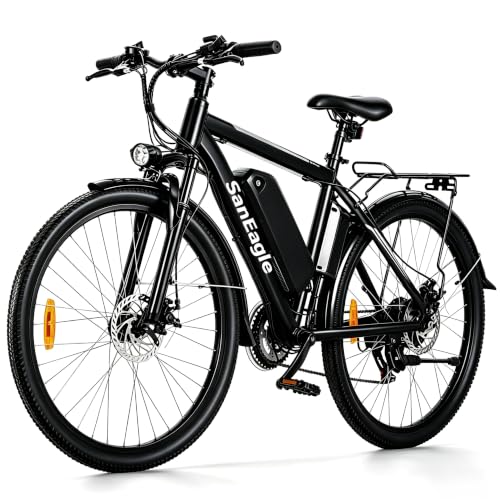
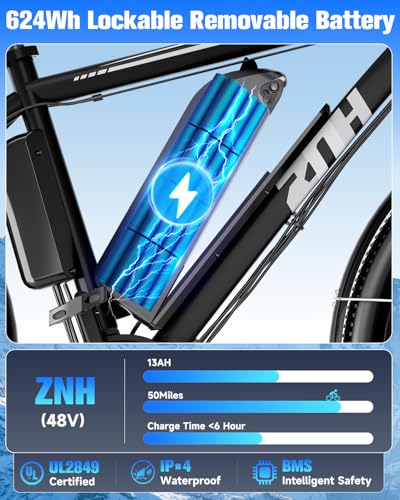
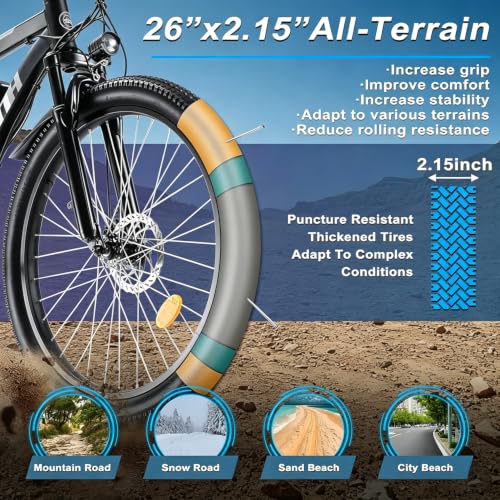
With a 1000W peak motor, 21-speed gears, and dual disc brakes, the ZNH e-bike brings mountain bike DNA into the electric space. That gear range is rare at this level and gives riders far more control when climbing or descending, especially valuable for a 300 lb rider managing momentum. The 26″x2.15″ all-terrain tires aren’t as burly as fat tires, but they roll faster on pavement and still grip well on gravel or dirt paths.
Reviewers note smooth power delivery and reliable braking, and the UL 2849 certification adds real peace of mind over cheaper clones. It’s not the fastest or longest-ranged, but for someone wanting a balanced commuter that handles weekend trails without breaking down, this hits a sweet spot. I’d pick it over the Luckfarm model any day for its superior transmission and braking system.
Product photos


Funhang 1000W Step-Thru Commuter Ebike
Strengths
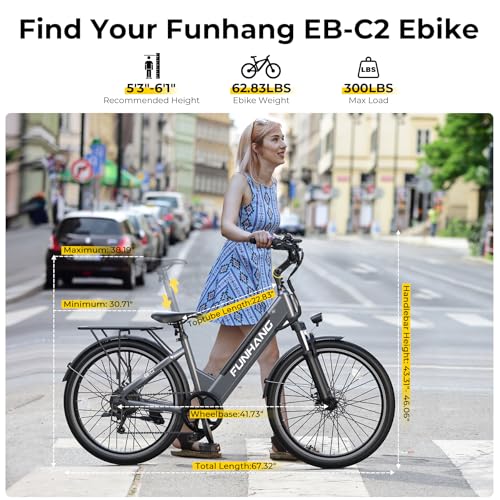
- Step-thru frame design
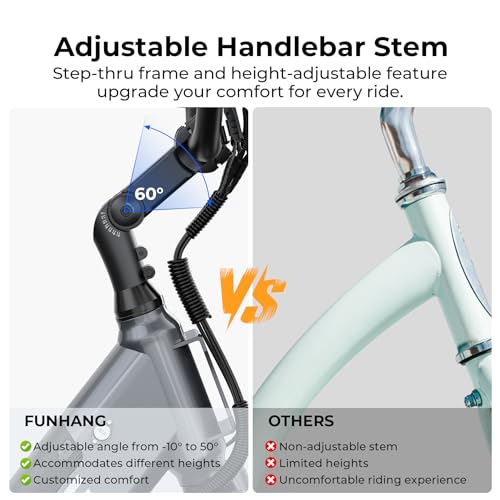
- Adjustable stem & seat
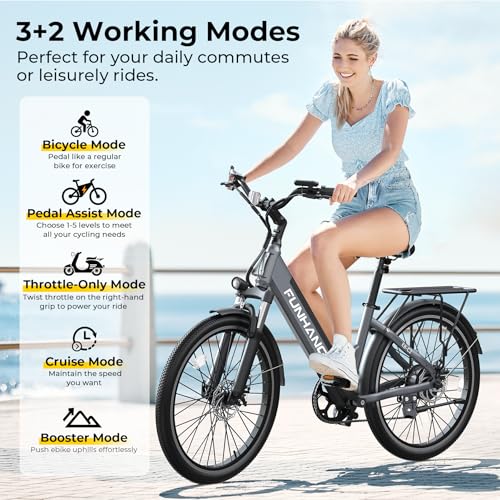
- 5 riding modes
Trade-offs
- Lower top speed
- Average range
- No rear suspension
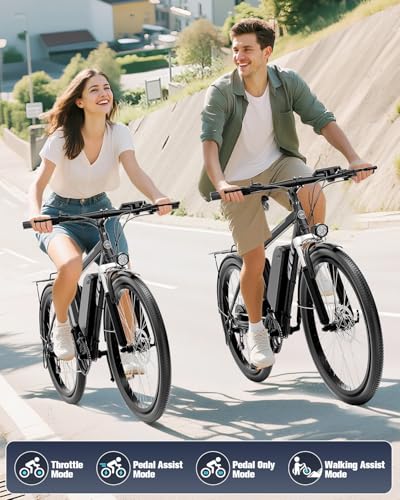
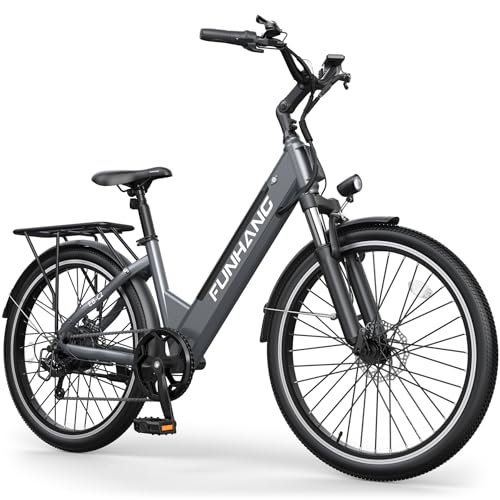
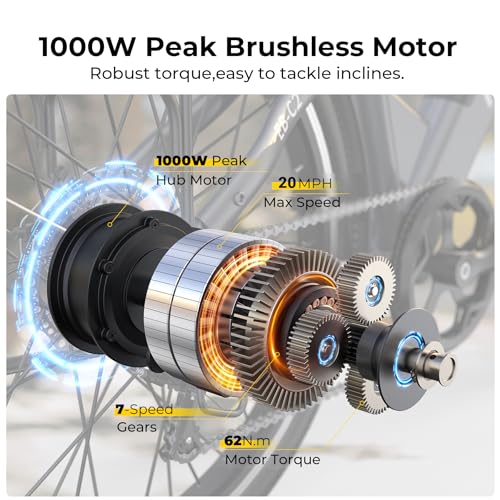
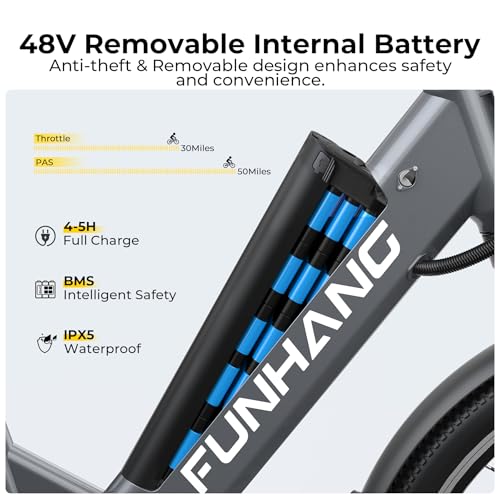
The Funhang ebike shines with its step-thru frame and adjustable stem, making it one of the most accessible models here for riders with limited flexibility or mobility. At 300 lbs, getting on and off a standard frame can be awkward, but this design removes that barrier. The 48V removable battery supports a realistic 40–50 mile PAS range, and the 5 riding modes, including a helpful booster function, add versatility.
It’s not built for speed or rugged trails, the 1000W peak motor is adequate but unremarkable, but for urban cruising, grocery runs, or relaxed neighborhood rides, it performs reliably. Compared to the YorkE, it trades range for convenience, but wins on ergonomics. If ease of use matters more than power, this is a smart play.
Product photos
How We Picked These e bikes for 300 lb man
My approach at TheAutoZenith is always rooted in understanding the mechanics and needs of the rider. Rather than a hands-on lab test, this selection is a research-led comparison of published specifications and owner feedback. I carefully reviewed each e-bike’s stated weight capacity, motor power, battery range, and component quality. This was balanced with a deep explore owner reviews and expert opinions from cycling publications to gauge real-world performance and reliability.
For riders needing extra support, the motor’s peak wattage and battery capacity were heavily weighted. A larger motor provides climbing power and acceleration, while a larger battery directly impacts range – crucial for longer commutes or recreational rides. Equally important was frame and component durability; we prioritized models explicitly noted for robust construction and the ability to handle heavier loads, as detailed in our broader guide to bikes for 300 lb man.
Specifications reliably indicate a bike’s potential, but owner feedback reveals how it performs in practice. I paid close attention to reports on component longevity, suspension performance, and braking effectiveness. While specs outline motor power, reviews highlight if that power translates to a smooth, confident ride. We also considered expert opinions to identify models with a reputation for quality and value, building on our recommendations for recommended bicycles for 300 pounds.
Choosing The Right e bikes for 300 lb man
Finding the right electric bike when you’re a larger rider requires more than just looking at motor wattage. We need to consider frame strength, component quality, and overall design to ensure a safe and enjoyable ride.
A good e-bike for a heavier rider prioritizes a robust frame, typically aluminum alloy or steel, capable of handling increased weight. Look for models with a high weight capacity (at least 300lbs, but ideally more), a powerful motor (750W or higher), quality brakes (hydraulic disc are best), and sturdy wheels with wider tires for added stability and comfort. Pay attention to battery capacity for sufficient range and suspension for a smoother ride.
Frame Material and Weight Capacity
The foundation of any e-bike, and especially crucial for riders needing a 300 lb man e-bike, is the frame. Skip bikes with vague weight limits. Aluminum alloy is a good balance of strength and weight, but steel frames often offer superior durability. Don’t assume a higher price automatically means a stronger frame; research the specific alloy used and read owner reviews. Many manufacturers don’t explicitly advertise the frame’s load capacity, so contacting customer support is sometimes necessary.
Motor Power and Battery Range
A powerful motor is essential for tackling hills and maintaining speed, but don’t get hung up on peak wattage alone. Consistent power delivery is more important than a brief burst of acceleration. Consider the terrain you’ll be riding on most often. For primarily flat surfaces, a 750W motor might suffice, but for hills, I recommend 1000W or higher. Equally important is battery range.
Here’s what to think about: * PAS Mode: This is key if you want to extend your range. * Terrain: Hills drastically reduce range. * Rider Weight: Heavier riders consume more battery power. A 48V 15Ah battery is a good starting point, but bigger is better if you plan on longer rides.
A rule of thumb: if you anticipate frequent long rides or hilly terrain, prioritize battery capacity over peak motor power.
Brakes, Tires, and Suspension
Stopping safely is paramount, and stock brakes on many e-bikes are a weak point, especially if you’re a heavier rider. Hydraulic disc brakes offer superior stopping power and modulation compared to mechanical disc brakes or V-brakes. Look for models with larger rotor sizes (180mm or 203mm) for even more braking force. For comfortable riding, wider tires (20” x 4” or similar) provide better stability and shock absorption. If you’ll be riding on rough terrain, a full suspension system (front and rear) is a worthwhile investment. If you’re looking for other options, check out our guide to the best bikes for 300 pound person to explore traditional options. For a wider look at options, you may want to review our e-bikes for a 300-pound person.
E Bikes for 300 lb Man Compared
This table compares key specifications of e-bikes designed to accommodate riders up to 300 lbs.
| Product Name | Motor Power (W Peak) | Battery (V/Ah) | Range (Miles – PAS) | Weight Capacity (lbs) | Brakes |
|---|---|---|---|---|---|
| TST Fat Tire Electric Bike | 750 (1500) | 48/15 | 60 | 450 | Disc (Mech.) |
| Luckfarm 1500W Electric MTB | 1500 | 48/10.4 | 65 | N/A | Disc (Hyd.) |
| DEEPOWER QS7 2000W Fat Ebike | 2000 | 48/20 | 70 | N/A | Disc (Dual) |
| YorkE 1000W Long-Range Ebike | 1000 | 48/720WH | 80 | N/A | Disc (Dual) |
| ESKUTE M300F Full Suspension | 1200 | 52/20.8 | 80 | N/A | Disc |
| Jasion Roamer/ST Step-Thru | 1200 | 48/11 | 62 | 300 | Disc (Mech.) |
| ZNH 1000W Electric Mountain | 1000 | 48/15 | 30-60 | 300 | Disc |
| Funhang 1000W Step-Thru | 1000 | 48/374.4WH | 40-50 | 300 | Disc |
Frequently Asked Questions
What tire pressure should I use for my e-bike if I weigh 300 lbs?
Generally, you should increase the tire pressure beyond the range printed on the tire sidewall. Look for a pressure around 5-10 PSI higher than the maximum recommended for optimal support and to reduce the risk of pinch flats, but never exceed the maximum listed on the tire.
Are full suspension e-bikes necessary for heavier riders?
While not always essential, a full suspension system significantly improves comfort and control, especially on rough terrain. It absorbs bumps and reduces stress on the frame, which is beneficial for riders needing strong bikes for 300lb riders.
What’s the difference between mechanical and hydraulic disc brakes, and which is better?
Hydraulic disc brakes offer much stronger and more consistent stopping power than mechanical disc brakes due to their fluid-based system. For a rider weighing 300 lbs, the enhanced braking performance of hydraulic discs is a crucial safety feature, particularly when descending hills.
What battery voltage is ideal for an e-bike for a larger rider?
A higher voltage (48V or 52V) generally provides more power and efficiency than a lower voltage (36V). Combined with sufficient amp-hour (Ah) rating, this translates to better hill-climbing ability and potentially longer range, which is often sought after by those exploring e-bikes for tall riders.
How often should I inspect my e-bike if I’m a heavier rider?
I recommend increasing your inspection frequency to before every ride. Pay close attention to tire pressure, brake function, and the tightness of all bolts. Heavier riders place more stress on components, so proactive maintenance is vital for safety and longevity.
The Bottom Line
Choosing an e-bike often comes down to balancing initial cost against long-term satisfaction and durability. While many options exist, the TST Fat Tire Electric Bike stands out as the strongest overall pick, offering a high weight capacity and a good balance of power and features for the price. It’s a solid choice for riders who want a dependable e-bike without breaking the bank.
If specific needs take priority, several models shine. For those wanting maximum power, the DEEPOWER QS7 2000W Fat Ebike delivers exceptional performance, while the YorkE 1000W Long-Range Ebike is ideal for extended rides thanks to its impressive battery capacity. And for those seeking a more traditional step-thru style, the Jasion Roamer/ST Step-Thru provides a comfortable and accessible option, though it’s important to verify it meets your specific weight requirements and consider the best bikes for 300 pound man if you’re close to that limit.
Ultimately, the wattage, battery size, and brake type are all details. The fundamentals of a robust frame, quality construction, and a comfortable fit matter far more. Don’t chase the highest numbers on a spec sheet; instead, focus on finding an e-bike that feels stable, handles well, and inspires confidence – and remember to explore the broader world of best electric bikes to find the perfect fit for your riding style.
